From my Twitter feed: Sports Illustrated, free shipping, daughter helping with QSLs

w0sun
Ham Radio in 1958 Sports Illustrated #Hamr#Hamradio - The Article -http://t.co/h7hCkdzeJx

kQ2RP
Need parts? Jameco is offering free ground shipping in continental US with Code OLP05951Y until April 12.

oh3ggq
My daughter helping me with QSL cards.#hamr http://t.co/Gm1S6XjUVU

From my inbox: amateur radio video, new NIST time code, Arduino-like RF board

This video is an introduction to amateur radio produced by a club in Quebec. It’s a very slick production.

New NIST time code. From the 3/5/13 NIST Tech Beat:

The National Institute of Standards and Technology (NIST) is changing the way it broadcasts time signals that synchronize radio-controlled “atomic” clocks and watches to official U.S. time in ways that will enable new radio-controlled timepieces to be significantly more robust and reliable. This new time broadcast protocol will not only improve the performance of new radio-controlled clocks and watches, but will encourage the development of new timekeeping products that were not practical with the old broadcast system because of local interference or other limitations. For example, appliances such as refrigerators, microwave ovens and thermostats, as well as traffic light timers and sprinkler systems will be able to take advantage of this new phase modulation broadcast.

Open-source RF. EETimes reports:

Lime Microsystems Ltd., a developer of configurable multi-band radio transceiver ICs, has launched an open-source RF hardware project that it says is intended to further innovation in wireless systems. The non-profit initiative has been launched under the name Myriad-RF with its own website and includes pre-made RF boards with editable design files that developers can freely download and use in their own designs.

I like this idea a lot, and I think it deserves a good look by radio amateurs.

Interesting stuff about printed circuit boards

Karl, W4KRL, posted this to the AMRAD mailing list….Dan

Dr. Paul Eisler is credited with inventing the printed circuit board.

Printed circuit board technology was invented by Paul Eisler (right), an Austrian refugee to England in 1936. Its first significant use was in anti-aircraft proximity fuses by the US Army. Eisler made little money from his invention. His autobiography is My Life With the Printed Circuit.

He set up a company called TechoGraph, in England, to promote the printed-circuit board. Their online history, notes:

But for both Eisler and Technograph, getting the printed circuit off the ground was to take some time. Not only had development work to be undertaken, but the electronics industry had to be persuaded to drop point-to-point wiring in favour of an interconnection medium that, although inherently more consistent and more reliable, was, at least initially, considerably more expensive. Not an easy task.

Prior to the PCB almost all construction was point-to-point except for a few high-end and military products that used turret boards. Some people still use turret boards, and you can still roll your own.

From my Twitter feed: Lids, EDA, TV

PD3EM
@KL8DX Publish your LID list onhttp://t.co/8hLu0GOy #LOTA #LidsOnTheAir


KD4E_73
http://t.co/Rq3ZqVgr links to Electronic Design Automation (EDA) tools that are released under the GPL.

Radio_2_Radio
Amateur Radio: Ham Radio in upcoming episode of Last Man Standinghttp://t.co/ME9vPCth

From the trade magazines, selecting crystals, understanding measurement uncertainty, Maxwell’s equations

Another selection of articles from the electronics engineering trade magazines……Dan

Selecting Crystals For Stable Oscillators
Understanding how quartz-crystal resonators operate can lead to designing crystal oscillators with improved stability and better noise performance.

Tutorial on Maxwell’s Equations
There’s a lot of math here, but cracking Maxwell’s equations will give you a lot of insight on how radio works. Registration required.

Understand Uncertainty For Better Test Accuracy
How sure are you of that measurement you just made with your multimeter or wattmeter? This article might open your eyes as to the accuracy of your measurements.


Video: AA2YV, build a receiver, Wouxoun review

Bill, AA2YV, is not only a fine amateur radio operator, but a professor of German at Nazareth College in New York.

Build a SW receiver with only four transistors!

A video review of the KG-UVD1P, my latest acquisition. Short version: he likes it.

Amateur Radio Videos: Velveeta, soldering PL259s, antenna polarization

Here’s a collection of ham radio-related videos that I’ve run across in the last week or so. I need to start doing videos. Anyone wan to help me out?

Velveeta? Really? Kraft is using ham radio to plug Velveeta cheese. It’s pretty cheezy (pun intended), but funny, too. Seriously, though, I hope not too many of you out there eat this stuff. If you need a recipe to make some “real” macaroni and cheese, I’ll post my recipe here.

PL-259 Connector Installation. Thanks to Alex, N3DER, for posting a link to this video on the Tacos mailing list. The video’s creator, Murray, W9EHQ, is very thorough and presents a very good technique for installing PL-259s onto coax. Lately, however, I’ve been using crimp-on PL-259s. Crimping the connectors is much easier than soldering them. Phil, M1GWZ, is also not sold on this technique. He notes, “I didn’t find the video entirely convincing. For a start, he remembered to put the plug cover on the cable before soldering the connector on. I’ve never seen anyone do that before.  :-)”

Yagi and Lightbulb Antenna – K0NR. Bob, K0NR, demonstrates polarization using a simple 2m dipole with a lightbulb connected between the two elements. I’ve done this demonstration down at the Hands-on Museum. It’s a really good way to show how polarization works.

Amateur Radio in the News: Michigan, Kansas, Colorado

Central Middle School radio club students work on projects
The future of amateur radio in Midland was in room 127 of Central Middle School on Wednesday afternoon.Bill Albe brought kits to build the FET crystal radios he designed, along with tools sure to excite middle schoolers — drills, solder, means to measure electrical resistance across their bodies — plus ample adult supervision.

I’m trying to find out more about this project so that I can do something similar at the Hands-On Museum….Dan

Back to the Future — amateur radio enthusiasts bring transmitter back to life
The wait – four weeks short term and 40 years and counting long term – was well worth it when the 75-year-old transmitter built by amateur radio pioneer Marshall Ensor was reactivated Saturday evening at Ensor Park and Museum south of Olathe.

Ham radio alive and well in Boulder County
This is a nice profile of the Boulder Amateur Radio Club (BARC). BARC Juniors is a program of the club, which encourages kids to get involved in amateur radio. Great club, great program.

Having trouble finding tube sockets?

If you’re having trouble finding tube sockets, Hack a Day recently ran a story on a guy who uses a 3D printer to make his own tube sockets. How cool is that?

Here’s the video that shows how he did it:

There’s also an cool post on Hack a Day showing how to build a tube prototyping station.

From my Twitter feed: ham hijinks, modernizing ham radio, ham helper

K5KVNA new source for ham radio news of the funny variety: http://t.co/dC31DPie#hamhijinks #hamr

Funny stuff. They ought to slow down, though, so they can maintain it over the long haul.

yv5venet
My Submission to FCC to Modernize Ham Radio Rules: Here’s my submission to FCC to modernize ham radio rules rega…http://t.co/zUCTVK1I

Bruce Perens talks about rules for digital modes.

KC8GRQ
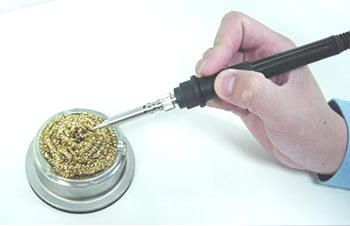
I didn’t know@HarborFreight sold a helping hands & solder pencil holder. Ill have to get one for my #hamr projects.http://t.co/Ux8ibEDi

Apparently, it uses cheap LEDs, but KC8GRQ plans to replace them with high-intensity LEDs.