
 In this episode, I join Martin Butler M1MRB, Caryn Eve Murray KD2GUT and Ed Durrant DD5LP to discuss the latest Amateur / Ham Radio news. Topics we discuss in this episode include:
Building/Homebrew
From the trade magazines: The difference between NPN and PNP transistors, Radio Shack and Heathkit, resistors
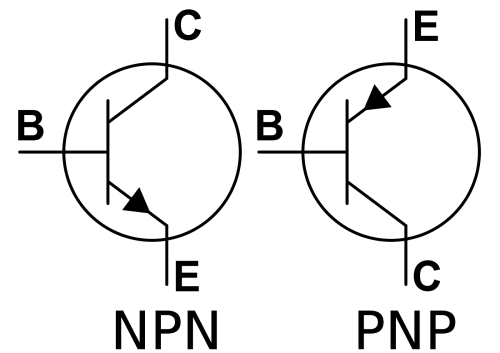
 What’s the Difference Between PNP and NPN Transistors?
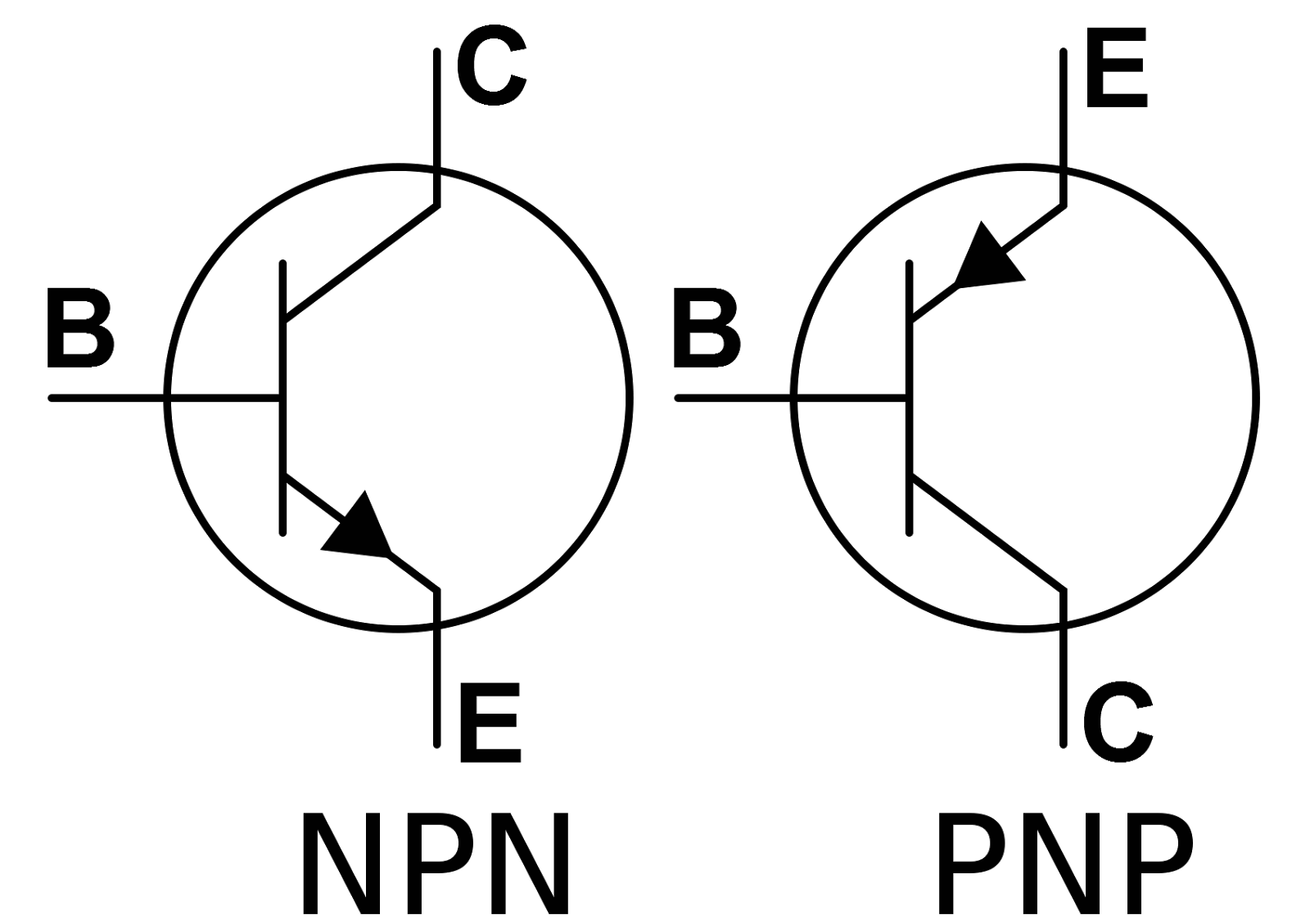
There are numerous differences between NPN and PNP transistors, and even though both are bipolar junction transistors, the direction of current flow is the name of the game.
Both are used in various amplification and modulating circuits; the most frequent among its applications is being fully ON and OFF, which is referred to as switch mode. It’s easy to remember that NPN stands for Negative-Positive-Negative and PNP stands for Positive-Negative-Positive.
Rise and Fall of Radio Shack and Heathkit
Radio Shack and Heathkit are long gone but these companies had a major impact on young engineers.These articles touch on the companies, their impact, and what happened along the way.
- Electronics Still Thrives as a Hobby
- Heathkit: A Right-Time, Right-Place Business
- The Shack Is Back
- Update: The Shack Is Back
- RadioShack: Tragedy or Inevitable?
- Radio Shack to Close Most Retail Stores
- Heathkit Closes, Again. This time for good?
- What’s Happening With Heathkit and Radio Shack?
- The Rise And Fall Of Heathkit—And Rise Of SparkFun (available as .PDF download)
- Have Chip Vendors Taken Over Where Heathkit Left Off?
- Heathkit: An Employee’s Look Back

Resistors: Types and Applications
An ohm is an ohm, right? Not so fast — there are many different types of resistors. To insure that your circuit works and stays working, use the right type of resistor. In this article, you’ll learn about the common types of resistors and their special characteristics.
Artificial intelligence and machine learning for amateur radio
Artificial intelligence (AI) and machine learning (ML) are becoming more and more widely used, but up to this point, haven’t really made any inroads into ham radio. One of the reasons for this is that it’s hard. Another is that I’m not sure that we have enough of the data that AI/ML systems use to do what they do.
Even so, it’s coming. Michelle, W5NYV, has some ideas on the topic. Rather than try to summarize them, I’ll let her presentation to the latest QSO Today Virtual Ham Expo speak for itself.
Filtering with neural networks
On a related topic, Kurt, AD0WE, of Morse Code Ninja fame, posted an interesting message to the Long Island CW Club mailing list. Titled “Bleeding edge tech — Filtering with Neural Networks,” it asks the question, “Can the noise of received HF transmissions be removed using Artificial Intelligence?”
“Yes!” he answers, “The amateur radio community could create a version of DeepFilterNet that is user-friendly for amateur radio operators and has all the knobs to tweak its performance in real-time. It requires modest hardware for real-time filtering.”
This looks like it could be an interesting project for someone with the time and talent to pursue it.
In the video, Michelle points out that whether we like it or not, artificial intelligence is coming. I agree with her, and the sooner, someone, be it one of the ham radio manufacturers or an individual ham, figures out how to take advantage of it, the better.
Amateur radio videos: Maxwell’s Equations, AI and amateur radio, how transistors work
You don’t have to know Maxwell’s Equations to be a ham, but they’re kind of cool.
This is a talk given by Michelle, W5NYV, at the latest QSO Today Virtual Ham Expo.
Bob, K0NR recommended this video about how transistors work. It’s not very deep, but if you have no clue about transistors, this is a nice introduction to the topic. This is just about all you need to know about transistors to pass the Technician Class license test.
ICQ Podcast Episode 389: Hams assist law enforcement, ask a ham for EMI/RFI help, Taiwanese hams prepare for war
In this episode, I join Martin Butler M1MRB, Caryn Eve Murray KD2GUT, Edmund Spicer M0MNG and Ed Durrant DD5LP to discuss the latest Amateur / Ham Radio news, including:
This episode’s feature is Part two of the RSGB National Hamfest Round-up.
Amateur radio videos: Fast Fourier Transforms, worldwide ham populations, homebrew one-tube CW transmitter
The most important algorithm of all time
The Fast Fourier Transform (FFT) is arguably the most important algorithm of all time. Whether it is or not, it’s certainly the most-used algorithm. I found it interesting that one of the first applications of the FFT wasn’t in communications at all, but rather for detecting underground nuclear explosions.
Worldwide ham radio operators (2000-2022)
A visual depiction of how the number of amateur radio operators have changed since 2000. What’s amazing to me is how the number of radio amateurs has declined in Japan. Watch it on YouTube to see how the author came up with the numbers.
A QRP one-tube CW transmitter (with an Arduino-based oscillator)
One of the attractions of amateur radio—to some at least—is that it includes both the most modern technology (FFTs) as well as those that have been around for 100 years or more (vacuum tubes). Here’s an example of the latter.
Amateur radio videos: Building a fan dipole, testing toroids, end-fed antennas
From the trade magazines: Impedance matching basics, digital electronics course, S-parameters
Here are some articles from recent issues of electronics trade magazines that you might find interesting and useful…Dan
 The term “impedance matching” is rather straightforward. It’s simply defined as the process of making one impedance look like another. Frequently, it becomes necessary to match a load impedance to the source or internal impedance of a driving source. A wide variety of components and circuits can be used for impedance matching. This series summarizes the most common impedance-matching techniques.
Digital Electronics Course — Part 1: Binary Logic and Signals
 Today, we are surrounded by digital electronics. Devices that work with analog electronics are very rare. Computers, telephones, cameras, CD players, printers, radios, and TVs all operate with digital technology. We hear about digital electronics every day, but few people probably really know its meaning and function. There are several definitions to describe it. Digital electronics deals with systems for processing and handling numerical data. The term is derived from the word “digit,” which in turn is derived from the Latin word “digitum” (finger). To fully understand the concept, it is necessary to be perfectly clear about the difference between the words “analog” and “digital,”
This article might help you learn how to use that NanoVNA you have…Dan
RF Demystified: The Different Types of Scattering Parameters
Scattering parameters (S-parameters), which describe the fundamental characteristics of RF networks, come in many flavors, including small signal, large signal, pulsed, cold, and mixed mode. They quantify how RF energy propagates through a system and thus contain information about its fundamental characteristics.Using S-parameters, we can represent even the most complex RF device as a simple N-port network. Figure 1 shows an example of a two-port unbalanced network, which can be used to represent many standard RF components such as RF amplifiers, filters, or attenuators, to name a few.How do we make hamfests more fun?

On the amateur radio subreddit, someone complained about the amount of junk that one finds at a hamfest. I can’t seem to find the exact post right now, but the gist of it was that if you expect people to show up at hamfests, then there has to be something more than just junk for them to buy. The fellow opined that it wasn’t any fun going to hamfests and coming back empty-handed because all he could find for sale was junk.
I can’t say that I don’t sympathize with that argument. I realize that one ham’s junk is another man’s treasure, but the volume of junk at hamfests does seem to be increasing, and I’ve gone to many hamfests and returned disappointed that I didn’t find anything worth buying.
I’ve thought for quite a while that it might be possible to make a few bucks by selling microcontrollers, like Arduinos and Raspberry Pi Picos. Of course, I’d also have to sell related boards, such as audio boards, relay boards, etc.
I may just give this a go. Even if I don’t make much money doing this, perhaps it will spur others to start playing around with these things, and ultimately, have more fun with amateur radio.
What do you think? Is there a market for microcontroller stuff at hamfests? What would I need to do to be successful? What could other vendors sell that would make hamfests more fun?
Trade magazine articles: home lab equipment, antennas 101, AC grounding
Here are some articles from the electronics trade magazines (well, online “magazines,” anyway) that I found interesting:
Equipment Recommendations for a Home Electronics Lab
 Some of the author’s suggestions may seem a bit pricey for a radio amateur’s home lab, but good test equipment will yield good results. He writes:
With one exception, I like test equipment with knobs. That refers to scopes, signal sources, and power supplies. Siglent makes a nice, economical line of these kinds of instruments and they’re all available tomorrow via Amazon. You will probably need multiple power supplies, and you’ll want an old-school linear supply for audio work. Once upon a time, I’d have said buy only HP T&M gear (because I worked there, so I have a preference), and older HP gear from eBay can be nice, but the Siglent stuff comes with a warranty.”
Welcome to Antennas 101
 In a very short space, the author does a pretty good job of explaining antennas and some of their parameters. For example, here’s how he explains antenna efficiency:
Antenna efficiency is like efficiency in general—the ratio of power out to power in. However, it’s designated in several different ways. In most cases, efficiencies account for the I2R losses, losses in any dielectric, and losses based on coupling to other devices. What may not be included is any loss related to antenna and transmission- line mismatch losses, resulting in reflected power and a higher SWR.
However, some measures of efficiency factor in any change in antenna radiation resistance variation. Most small antennas aren’t that efficient. Anything better than 50% to 60% is usually good, but always seek to improve it if you can.
AC grounding: essential, dangerous or both?
 The first thing that the author of this piece does is to explain that, “A large part of the confusion comes from the ambiguous and this sloppy terminology associated with that innocent-sounding seven-letter word.” He then explains that the word ground can refer to any one of three types of circuit connections:
- Earth ground where the circuit is actually connected to Earth, which acts as an infinite source and sink for electrons;
- Common (may also be called signal ground), which establishes a 0-V point in a circuit (and there is often more than one of these in the circuit). It’s usually very misleading to even use the word ground with this one.
- Chassis ground, which connects all nominally zero-volt potential points in a circuit; it may be connected to Earth ground, but often cannot be as there is no Earth ground for many devices such as most portable, battery-operated ones; here, it may be misleading to use the word ground if it is not connected to a real Earth ground.
The rest of the article is equally enlightening.