On the air this weekend at WA2HOM

WA2HOM is our club station at the Ann Arbor Hands-On Museum. I go down there nearly every weekend and operate for anywhere from two to eight hours. This weekend, I had a lot of fun down there.

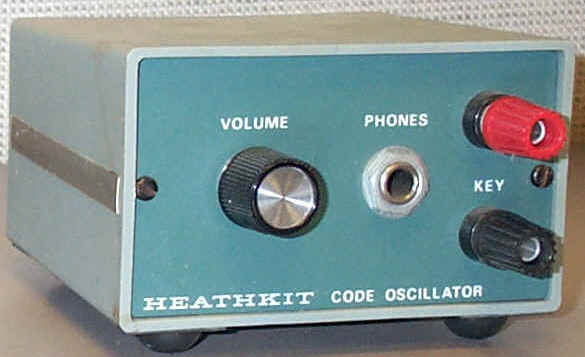
This photo, from the Boy Scouts of America website, shows one Cub Scout sending code to another.

Late last week, I was contacted by a woman who was a Cub Scout pack leader, asking if she could bring some Scouts by. Silly question. Of course, she could! We arranged to meet around 1:45 on Saturday. Well, right on time, she arrived with three Cub Scouts in tow.

Fortunately, I had just made contact with Jim, K0JIM, and he had a really solid signal here in Ann Arbor. That’s important because it’s sometimes difficult for inexperienced operators to hear a weak signal or one that’s accompanied by a lot of noise. When signals are weak or hard to copy for any reason, the kids get frustrated.

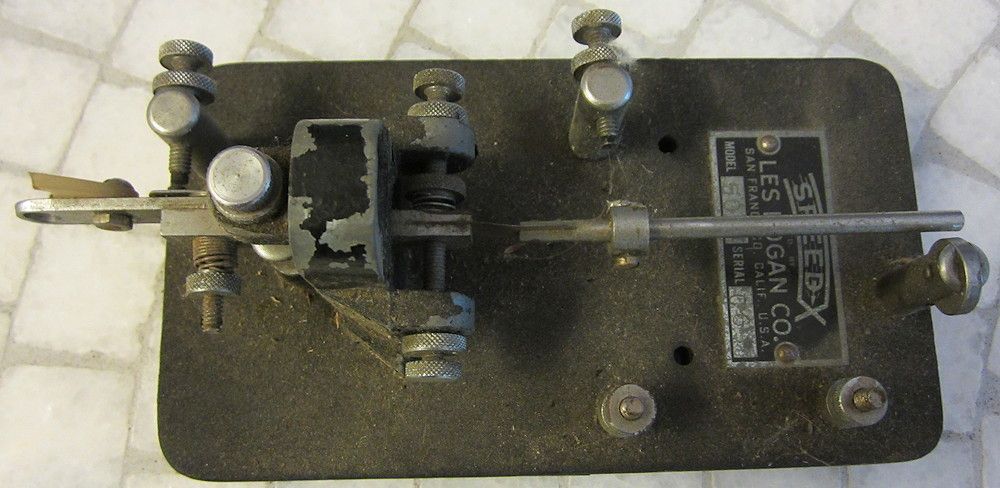
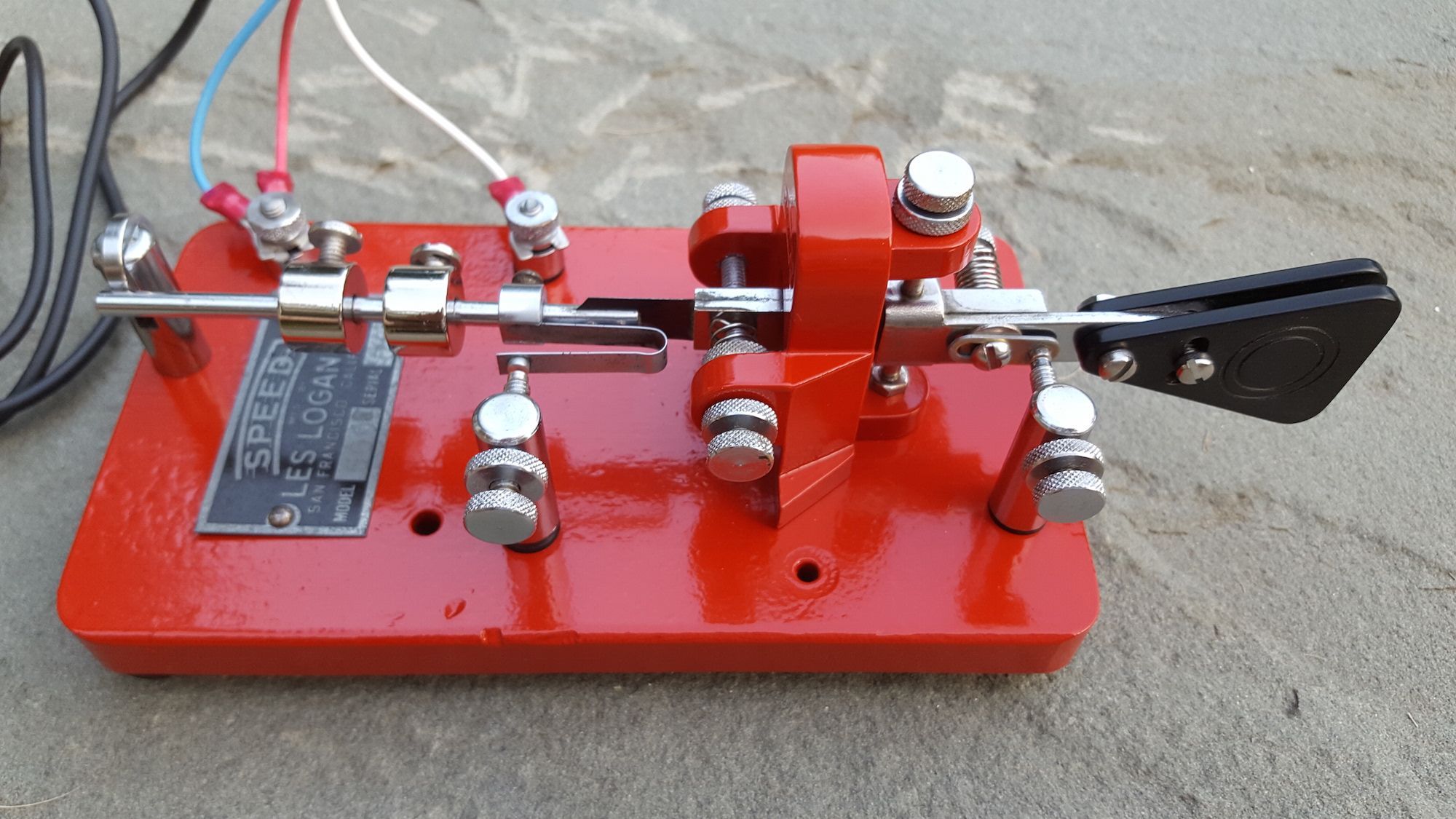
We were doubly fortunate in that Jim was just great with the kids. He asked each their name and got them to tell him a little bit about themselves. And, none of the kids were mike-shy, so it was a good experience for everyone involved. In addition to having them talk on the air, I took them over to our Morse Code display and showed them how to send their names in Morse Code.

I really hadn’t planned to go down on Sunday, but after doing some things around the house, I decided to zip down there about 2:30 pm to check into the Rotarians on Amateur Radio net. It’s so much easier to do from down at the museum because of the beam antenna. I didn’t hear a peep on the net frequency (14287 kHz) at either 3 pm or 4 pm (2000Z, which is the time listed on the ROAR website), though, so I’m not sure what’s going on there.

When I’m at the museum, I’m usually also tweeting. (I’m @kb6nu on Twitter.) I tweeted that 20m sounded kind of quiet, and got a reply from @hamradioireland, EI2KC, suggesting that we give it a try. After agreeing on a frequency, I pointed the beam northeast and gave him a call. Unfortunately, the propagation didn’t cooperate, and we could barely hear one another. Even so, it was still pretty cool using Twitter to arrange a DX QSO.

Tuning around after my short QSO with EI2KC, I found a couple of interesting nets. The first was the Collins Collectors Association Net on 14263 kHz. I could really only hear the net control station, but it sounded as though everyone checking in was running some kind of Collins gear. It was interesting to listen to, but not being a Collins operator, I didn’t check in.

Around 4 pm, I started looking for the ROAR net again. I never did find that net, but I did find the Heathkit Net on 14293 kHz. According to the Web page Heathkit Resources, the net starts at 2030Z, but I’m guessing that it really started at 1930Z.

Since I have a bunch of Heathkits—several that I still use regularly—I did check into this net. They’re a great group of guys, and I will definitely be checking into this net again. Who knows? It may even spur me to get my HW-101 back on the air.

From my Twitter feed: SDR, Hallicrafters, digital voice

KD4E_73
Just found this resource:http://t.co/wlqb30CF Coverage down to 50mHz is possible with one type & down to 22mHz with another.

Wish I had the time to play with these things…..Dan

w7dtg
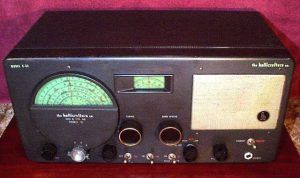
W7DTG: Another boatanchor receiver demonstration Hallicra…http://t.co/QXZn29Pe


Ham_Radio_News
Amateur Radio – FreeDV – Digital Voice Software for Amateur Radio http://t.co/u01JTDMa #hamradio #hamr #dx#swl

I’m still not sold on digital voice, but if it were easy to set up, like say PSK-31, I’d give it a try, at least….Dan<

Mr. Frank: Radio Man

Mr. Frank: Radio Man

A link to this video was posted to the Glowbugs mailing list by Bob, W9RAN. He writes, “I think many of you will enjoy this short film, ‘Mr. Frank, Radio Man,’ which was  accepted into the Magic City Shorts Film Festival in Billings, Montana in 2012.

Thanks, Bob!

On the Internet: W2AEW videos, Raspberry Pi programming, classic radio

Here are a couple of Internet resources to start off the week:

W2AEW on YouTube. Alan, W2AEW, has a great selection of cool videos on YouTube. Some of the latest cover the basics of phase-locked loops, how to zero-beat WWV to check out a frequency counter’s accuracy, and a tutorial on resonant circuits. Good stuff!

Baking Pi – Operating Systems Development. This course, published by the University of Cambridge Computer laboratory, is a free online course that takes you through the basics of operating system development. The Web page notes, “[This course]  is aimed at people aged 16 and upwards, although younger readers may still find some of it accessible, particularly with assistance….I have tried not to assume any prior knowledge of operating systems development or assembly code. It may be helpful to have some programming experience, but the course should be accessible without.”

Classic Exchange. Mac, WQ8U, wrote to the Glowbugs mailing list, “The Classic Exchange (CX) is a low-key, on-air celebration of rigs of days gone by – particularly boat anchors. The latest CX Newsletter is available on the CX web site, as well as details for the next CX on September 16th (for AM and SSB) and September 23nd (for CW). Please enjoy the newsletter, spread the word and join in the fun during the next CX.”

Vintage video touts the wonders of telegraphy

Jim Wades, WB8SIW, International President of the Morse Telegraph Club, posted a link to this video on the slowspeedwire Yahoo Group. He writes:

This video is just too good.  Both land line and radiotelegraphers will enjoy this immensely.  Sounders in resonators, early teleprinters, NZ HRO receiver copies, mercury vapor rectifier tubes,  shortwave transmitters, a great view of the Queen Mary’s shipboard radio room.  It’s all here.  Enjoy!

Ham radio in the news – October 14, 2011

Here’s another edition of Ham Radio in the News:

Gloucester County 4-H club leader encourages ham radio hobby. I liked this article because it didn’t talk only about emergency communications. It quotes Corey Sickles, WA3UUV, president of the Gloucester County 4-H Amateur Radio Club, as saying, “It ties into that whole engineering, how do things work, mindset.”

Museum welcomes “spook” donation. No, this does not have anything to do with Halloween. Instead, it describes the donation to a Coventry (England) Herbert Art Gallery and Museum of a radio “used during the Second World War by one of Coventry’s “secret listeners” to help defend the country…The national treasure was used by the city’s very own secret ‘spook’ – Frederick Arthur Noakes (Arthur) – between 1940 and 1945. He was one of at least four secret listeners in Coventry who were recruited by MI5 for their ability to read Morse code under difficult conditions, use and maintain a shortwave radio and their steadfast ability to keep a secret.”

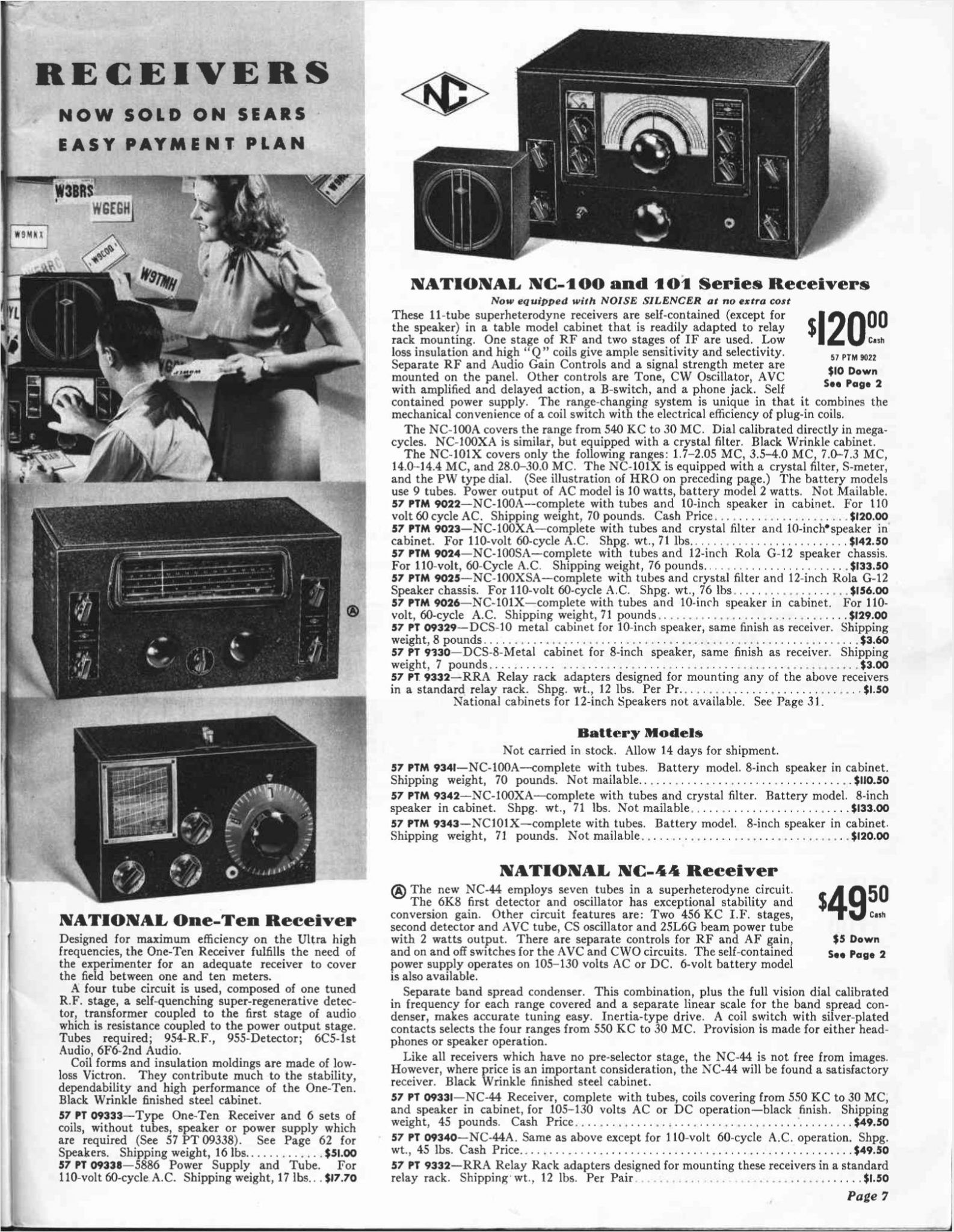
Heathkit Nostalgia Event

On July 23rd, 1954, “Mr. Heathkit,” Howard E. Anthony was killed in a plane crash. To honor “Mr. Heathkit,” The Great Outdoor Radio Club, or GORC, is proud to sponsor the First Heathkit Nostalgia Event. This event is open to any licensed amateur radio operator. The main objective of the event is to communicate with classic Heathkit Radios. This is not a sprint nor is it a contest. This is a friendly gathering of amateur radio operators who own and operate Heathkit radios. If you don’t own a Heathkit radio, you still may join the fun!

Sponsor: The Great Outdoor Radio Club – GORC
Date: October 1st, 2011
Time: 0000 UTC – 2300 UTC
Bands: 160m, 80m, 40m, 20m, 15m, 10m, 6m
Modes: SSB, CW

A certificate will be issued to any amateur radio operator who makes contact with a minimum of ten Heathkit radio stations. A special certificate will be issued to any amateur radio operator who operates his or her Heathkit radio station outdoors and makes a minimum of ten contacts. This certificate will have a graphic your Heathkit radio model on it.

Exchange: Call, RST, Heathkit Model (or Power Level if no Heathkit radio used)

Please email all logs to: heathkitevent@wa3wsj.org

Or
Mail to:
Heathkit Nostalgia Event
775 Moonflower Ave.
Reading, PA 19606-3447

Gear and Gadget Notes – 9/10/11

Here are some gear and gadget notes:

  1. Ed, WA3WSJ, has opened up the Hot Water Corner, a website devoted to Heathkit HW-xxx radios.  He says, “If you have any pictures of your Heathkit HW-xxx radios, please send then to me with a story about the rig(s). I’m sure others would like to read your story.” I need to dig out my HW-101 and take some pics of it.
  2. On the AMRAD mailing list, Terry, WB4JFI recommends the SDR Cube.  He says,

    I wanted to say how impressed that I am with George Heron’s (and OH2NLT) SDR Cube kit. I have an SDR Cube Development setup sent by George, as I am considering how to interface it to the Charleston SDR & Digilent FPGA boards. I have since ordered and received a complete SDR Cube kit, less the Softrock 6.3, which I already have. I anticipate cutting some traces, and soldering additional wires directly onto the dsPIC chip for the Charleston interfacing, so I needed my own boardset.

    The kit has excellent instructions, see the sdr-cube.com website. Each board comes prepackaged with its own parts, with SMT resistors and capacitors taped to a paper sheet, and ICs in a small anti-static bag. I have put together almost two boards so far, and everything went together very nicely. Almost Heathkit quality instructions and construction techniques.

    I normally don’t like to push a vendor, but this kit is very well done.

  3. Looking for a club construction project? Consider the Sure PS-LP11111 5~16 VDC linear DC voltage power supply kit. I think this fits the bill perfectly for a club construction project. It’s inexpensive, relatively simple to build, and when it’s complete, the builder has something useful. As one of our club members pointed out, this isn’t actually a complete power supply—it’s missing a transformer and enclosure—but it costs less than $9 in quantity. Suitable wallwart transformers can be purchased for about $5 mail order, probably less if you snoop around the next hamfest.

Operating Notes – 9/10/11

Some operating notes covering the past couple of weeks:

  1. The bands have been in fine fettle most evenings lately. I’ve been getting great reports and stations have been booming in here. It’s made operating a lot of fun.
  2. Despite that, conditions on 20m seemed kind of poor today while operating down at the museum. I made a couple of contacts in the Arkansas QSO Party, then turned the beam NW and worked a station in Luxembourg that was operating some European DX contest. Luxembourg is a new country for us.
  3. I don’t know if our 40m dipole has deteriorated, or the conditions have been marginal, or if it’s the difference in antenna performance between the beam and the dipole, but operating on 40m is now just a real pain. We’re scheduled to move the dipoles on Thursday, and I’m hoping that rebuilding the dipole and moving it to the other side of the roof will help.

Two Radios for You to Build

On the AMRAD mailing list, Andre, N4ICK, posted a link to the YouTube video, “12AU7 regenerative radio on a tin bake plate” (see photo at right) It’s a very cool regenerative radio made with a single 12AU7 vacuum tube. The only problem is that there are no links to the schematic for the radio.

So, I Googled a bit, and came up with this circuit. The cool thing about this circuit is that it uses a 12V power supply, not the high voltage power supply normally required for a tube circuit.

Over the weekend, I went to a big rummage sale sponsored by the local Kiwanis club. They had quite a few aluminum baking pans there for very little money. I should have picked up a couple of them. :)

Simliar Radios
VK3YE has also posted a YouTube video
of his experiments with a similar circuit. Unfortunately, he also doesn’t include a link to a schematic.

Another related YouTube video is for a one-transistor radio. This is actually a very well-done video. It shows you step-by-step how to build the radio. This is something that we may actually be able to do down at the museum with some kids.

At the very least, watching the videos is amusing. At best, maybe they’ll inspire you to do a little experimenting.