From my Twitter stream – 5/9/12

This is cool. What a great concept. (key lending library) http://t.co/fyNvn1Lt
Heathkit Educational Systems Closes Up Shop: For the second time since 1992, Heathkit Educational Services (HES)…http://t.co/DWsxlgYm
GM8LFB
Solar Alert big time two M class flares plus Aurora alert. http://t.co/4Oekkfov

Solar storm a dud

Forget all those dire predictions of widespread power failures, satellites going belly up, and flight cancellations. What was touted to be the biggest solar storm in years is apparently a dud.

The Associated Press reports:

Hours after the storm arrived, officials said there were no reports of problems with power grids, GPS, satellites or other technologies that are often disrupted by solar storms.

National Public Radio (NPR) reports:

The forecasters weren’t aware of any significant impact to electrical or technological systems, but said there was a two-hour blackout of high frequency radio communications — affecting mainly ham radio operations — stretching from eastern Africa to eastern Australia.

Seeing as how that swath is not really a hotbed of activity, I think we can safely say that we can all go back to chasing DX now.

Two Gems from G0KYA

10m Slim Jim antenna

At more than 9m tall, this antenna isn't very stealthy, but if you have a tall tree to hang it from, it should be a great performer.

Steve, G0KYA blogs about HF propagation and antennas. Recently, he posted plans for a 10m “Slim Jim” antenna made from 450-ohm ladder line. At more than 9m tall, this antenna isn’t very stealthy, but if you have a tall tree to hang it from, it should be a great performer.

While you’re on Steve’s site, make sure you check out his two books, Stealth Antennas, and Understanding LF and HF Propagation. The latter is a compilation of articles he wrote with Alan Melia G3NYK for the Radio Society of Great Britain’s (RSGB) RadCom magazine.  You can’t beat the price. It’s a free download!

Extra Class question of the day: meteor scatter propagation

Perseid meteor

Amateur radio operators use many different ways to get signals from one spot to another. Perhaps one of the most interesting is meteor scatter propagation.

Meteor scatter propagation is possible because when a meteor strikes the Earth’s atmosphere, a cylindrical region of free electrons is formed at the E layer of the ionosphere. (E3A08) 28 – 148 MHz is the frequency range that is well suited for meteor-scatter communications. (E3A09)

Unfortunately, these ionization trails are relatively short-lived, so to communicate via meteor scatter, you need to either be able to detect when these paths are available or be transmitting when the paths are available. All of these choices are correct when talking about  good techniques for making meteor-scatter contacts (E3A10):

  • 15 second timed transmission sequences with stations alternating based on location
  • Use of high speed CW or digital modes
  • Short transmission with rapidly repeated call signs and signal reports

For more information on meteor scatter, go to:

Rugged Transistors, Designing Radio Systems

Here are a couple of links to articles in electronics engineering trade magazines that I’ve run across lately that I think are of interest to amateur radio operators:

  • Some new transistors can withstand VWSRs up to 65:1.Gauging Ruggedness In RF Power Transistors. This article, written by editor Jack Browne, who is himself a ham, covers some of the new power transistors on the market. Some of them are capable of withstanding VSWRs on the output of up to 65:1!
  • The Radio Link: A Tutorial. This series of articles is a bit heavy on math for most radio amateurs, but the point of the series is to think of radio communication as a system whose behavior can be predicted. Thinking about how we use radio in this way could help us to become better radio amateurs.

And here’s something entirely out of left field. Scientists have published a paper that shows that random noise can actually make signals clearer. The process is called stochastic resonance, and while the article doesn’t explain the theory in much depths, and I’m not sure that it’s something that’s applicable to radio communication, it seems like it might be something to look into.

Gray Line Notifier

I’ve always been kind of fascinated by gray-line propagation. The gray line is a band around the Earth where night is turning into day and day is turning into night. Theories differ as to why, but radio propagation along the gray line is often very efficient. NA5N has one explanation of the phenomenon.

This morning, while walking to our ham radio club breakfast get-together, I got to thinking about how I might be better able to take advantage of gray-line propagation.Because this phenomenon is so short-lived, it’s easy to miss the gray line. How cool, I thought, would it be if I could come up with a program that would inform me when my QTH was beginning its transit through the grayline.

I thought up several ways to get my computer to do this. Then, it occurred to me that I should be able to write a Web application that hams could sign up for that would either send them an e-mail or send them a Tweet when their QTH was about to enter the gray line. And, coincidentally, I might be able to sell some advertising to pay for this and maybe make a few bucks off it.

I’m tentatively calling this application the Gray Line Notifier. I talked up this idea a bit at our breakfast this morning, and the guys noted that there are already may gray line maps on the Web, but none of them can be programmed to send you notices. We chatted a bit more about this, and came up with a couple of features for this app, including:

  1. Will send either an e-mail or a Tweet, when a ham’s QTH is about to enter the gray line.
  2. Include information about other countries/grid squares that are also along the gray line.
  3. Perhaps interface with a DX spotter to see if there is good gray line propagation at the time.
  4. Beam headings to take advantage of gray line propagation.
What do you think? Would you sign up for this service? Can you think of any other features that I might include?

Auroral flutter an interesting phenomenon

Aurora

An aurora over Alaska. Source: NASA

Last night, it was reported that there was a coronal mass ejection (CME) that resulted in an aurora being seen as far south as Atlanta, GA. The aurora, more commonly known as the Northern Lights, are usually only visible as far south as the northern tier of the United States.

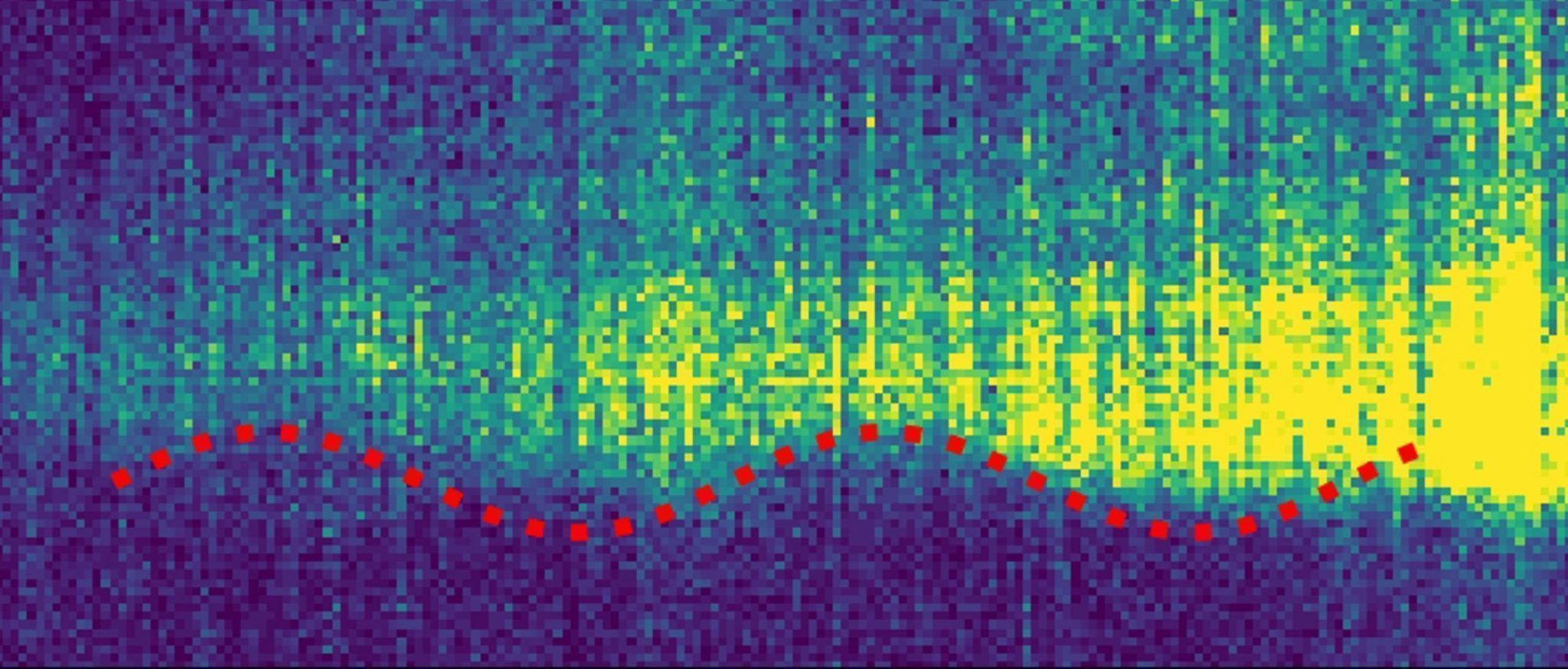
I knew something was up as soon as I turned on my rig last night. Nearly every signal had some auroral flutter on it. Auroral flutter is caused by radio waves bouncing off the ever-changing aurora or passing through it. When severe, auroral flutter can make a signal nearly unreadable.

Auroral flutter is usually limited to signals that pass over the North Pole. I first became aware of this phenomenon when I worked several stations in Northern Russia. Last night, though, even U.S. stations had this characteristic flutter. I was a little flummoxed by this. I’d never heard this on domestic QSOs.

I got to talking about this with Steve, N4LQ. He said that he was at first a little taken aback by the auroral flutter, because he had been fooling around with the receiver section of the HW-16 he was using and didn’t know if the odd sound he was hearing was the result of his experiments or band conditions. I assured him that it wasn’t the receiver. :)

If the ionosphere has D, E, and F layers, what happened to the A, B, and C layers?

On Google+, Bob, K0NR posted,

Interesting question from a 10-year-old student in the ham radio class today: Why do we always talk about the D, E and F layers of the ionosphere…are there A, B or C layers? I don’t know the answer to that one.

Now, I’d always heard that the reason the lowest layer is the D layer is because when scientists first started studying the ionosphere, they found these three layers and postulated that they would find three layers below them, i.e. the A, B, and C layers. They did not find them, but never went back and relabeled ones that they did find.

I posted this as a reply, and Bob asked if I had a reference. Well, I Googled all over for one, but came up empty. Do any of you know if this explanation is true, or if this is a ham radio urban legend?

Let the Sun Shine!

It looks as though solar activity is picking up, and with that propagation on the HF bands. The ARRL Letter reports:

Solar FlareTad “Somewhere the Sun is shining” Cook, K7RA, reports: Compared to the uneventful past few years, sunspot activity was truly remarkable this week. The daily sunspot number for September 16 was 173. We haven’t see numbers like this in more than six years, when the sunspot number was 181, way back on July 5, 2005 in Solar Cycle 23. The solar flux reached 150.1 on September 18. Just six months ago it was slightly higher, 153 on March 7 and 155 on March 8, but prior to that the only higher number was 157.3 on August 22, 2005, about 7 weeks after the sunspot number of 181. Currently, the solar flux and planetary A index forecast from USAF/NOAA calls for solar flux of 144 on September 22-23, 140 on September 24-25, 145 on September 26-28, 130 on September 29 through October 1, and 135 on October 2-5. The planetary A index is predicted at 5 on September 22-24, 8 on September 25, 5, 8, 5, 5, 15 and 8 on September 26 through October 1, and 5 on October 2-7. Look for more information on the ARRL website on Friday, September 23. For more information concerning radio propagation, visit the ARRL Technical Information Service Propagation page.

On Tuesday, I worked a guy on 40m, and he reported that 10m was wide open all day. Time for some DX!

Space Weather Prediction Center to Continue Broadcasts on WWV and WWVH

From the June 30, 2011 ARRL Letter:

In April 2011, the Space Weather Prediction Center (SWPC) informed the public that as of September 6, 2011, it would no longer broadcast its geophysical alert message on WWV and WWVH. The ARRL has now learned that the SWPC has changed its mind and will keep broadcasting these messages that inform listeners of the solar flux, the mid-latitude A and K indices and space weather storms, both current and predicted. Due to listener feedback, the SWPC is considering updating the broadcast; in addition to providing the current daily solar flux at 2800 MHz, the SWPC is evaluating adding more frequent observations at 2695 MHz. According to the SWPC website, other improvements to the message content will also be evaluated.