
• Skip to primary navigation
  • Skip to main content
  • Skip to primary sidebar
  • Skip to footer

KB6NU's Ham Radio Blog

KB6NU's Ham Radio Blog
  • HOME
  • Study Guides
  • Teach a One-Day Tech Class
  • W8SRC Repeater Guide
  • Advertise
  • Hire Me

Ham researcher to investigate effects of solar eclipse

July 18, 2017 By Dan KB6NU Leave a Comment

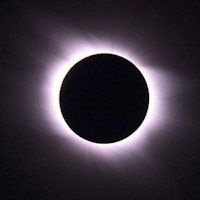
August 21 is a once-in-a-lifetime opportunity for many in the U.S. to see a total eclipse. It’s also an opportunity for a team of Virginia Tech researchers to study the effects of the eclipse on changes in the upper atmosphere that have an impact on HF propagation and the global positioning system (GPS). Backed by research funding from NASA and the National Science foundation, the team is headed by Dr. Greg Earle, W4GDE.

The Virginia Tech team plans to gather data from a variety of sources, including radar systems, transceivers, satellites, ham radio, and GPS receivers, in order to analyze the effects of the solar eclipse on the conductive region of the atmosphere. 

“Whether military radar, or consumer GPS signals, the eclipse is going to have effects on the medium that we would like to understand better, so that we can either mitigate them or use them to our advantage,” said Earle. 

Here are a couple of links to news stories on the research team and the experiments:

  • Virginia Tech team prepares for special project during total solar eclipse
  • Virginia Tech expert to study August solar eclipse effects on radar, ham radio, GPS

And, here’s another link to an experiment called the “Eclipse Mob:”

  • A massive atmospheric experiment is planned for August solar eclipse

Let’s party!

In conjunction with the eclipse, the HamSCI and the ARRL are sponsoring the Solar Eclipse QSO Party. (SEQP). According to an article in the August 2017 issue of QST, the goal of the SEQP is to “flood the airwaves with contacts, all measured by the automated receiver networks of the Reverse Beacon Network, PSKReporter, and WSPRNet.” Once all the logs are in, researchers will analyze the data to see what effect the eclipse had on radio propagation.

The SEQP will run from 1400Z – 2200Z on Monday, August 21. This is well before the eclipse is due to begin on the West Coast. The reason it starts before the eclipse is to establish a baseline for radio propagation conditions.

SEQP organizers urge you to make as many contacts as you can on as many bands as you can operate. Like nearly every contest, contacts are not allowed on 60m, 30m, 17m, and 12m. CW, RTTY, and PSK31 are the preferred modes because automated receivers can record those contacts, but phone and other digital modes count, too.

An interesting twist to this contest is that, like Field Day, you can earn a number of bonus points, including:

  • Operating outdoors (100 points)
  • Operating in a public place (100 points)
  • Operating a wide-band automated receiver at your station (100 points)

Hams have had a long history of supporting scientific research. They provided communications for some of the early polar explorations and listened for Sputnik as it flew overhead. The Solar Eclipse QSO Party continues this tradition, and it’s going to be a lot of fun as well. Visit the HamSCI website for more information.

Related posts:

  1. 2015 General Class study guide: Section G3A – Sunspots and solar radiation, ionospheric disturbances, propagation forecasting, and indices
  2. Solar eclipse spawns special event stations
  3. Operating Notes: The Solar Eclipse QSO Party
  4. Amateur radio in the news: Solar eclipse edition

Filed Under: Communications Theory, Contests Tagged With: HamSci, solar eclipse

Reader Interactions

Leave a Reply Cancel reply

Your email address will not be published. Required fields are marked *

This site uses Akismet to reduce spam. Learn how your comment data is processed.

Primary Sidebar

No Nonsense Technician Class License Study Guide (for tests given between July 2026 and June 2030)

New No Nonsense Technican Class Study Guide now available!

The 2026 version of my Tech Class study guide is now available, and as always, the PDF version is FREE!. The ePub version costs $11.97, and a Kindle version and paperback version will be available on Amazon shortly.

Click here to get all of my "No Nonsense" study guides.

Also available: The CW Geek's Guide to Having Fun with Morse Code

W5SWL.Com
Retevis Ailunce H1 DMR Radio
DXpander: Cobweb antennas, Laser Cutting

You’ve got mail!

Enter your email address below and get an email every time I publish a new post.

Email


I frequently teach classes to help newcomers get their licenses. The next class will take place on Saturday, February 7, 2026 on the University of Michigan campus. Click here for more information.

If you can't make the class, subscribe to the mailing list to be notified of when the next class will be held.

You can always download my free study guide, and if you have any questions about the classes, or amateur radio in general, please feel free to email me directly.

Support KB6NU.Com

Donate $7.30 and get two of these cool stickers. Measuring 4.25-in. W by 2.75-in. H, it's perfect for your car, your shack, or wherever!

Contact me

If you have a question or comment about one of my blog posts, or a question about any of the material in my study guides, or just a question about ham radio in general, you can email me at [email protected].

Blogs You Should Also Read

  • AE5X: A CW-centric blog from Kingswood, Texas
  • K0LWC Blog
  • LA3ZA Ham Radio Blog
  • Little Radios, Big Fun – WB3GCK
  • Mr. Vacuum Tube's Blog
  • Radio Artisan – K3NG
  • The K0NR Weblog
  • VE3WDM's QRP Ham Radio Blog
  • W2LJ’s Blog

Ham Radio Websites

  • Dashtoons – The Hammin' Comedy by Jeff K1NSS

Podcasts

  • ICQ Podcast
  • Linux in the Ham Schack
  • No Nonsense Amateur Radio Podcast
  • Resonant Frequency Amateur Radio Podcast

Recent Comments

  • Dan KB6NU on Finally, a Loop for 10m.
  • Dan KB6NU on 1930s cards for my collection of QSLs from stations whose callsigns spell words
  • Sean on Finally, a Loop for 10m.
  • Bill Waslo on 1930s cards for my collection of QSLs from stations whose callsigns spell words
  • C M Wetzel KD8TNF on The Wesco BN-1

Meta

  • Log in
  • Entries feed
  • Comments feed
  • WordPress.org

Footer

Copyright © 2026 Daniel M. Romanchik, KB6NU · Log in