• Skip to primary navigation
  • Skip to main content
  • Skip to primary sidebar
  • Skip to footer

KB6NU's Ham Radio Blog

KB6NU's Ham Radio Blog
  • HOME
  • Study Guides
  • Teach a One-Day Tech Class
  • W8SRC Repeater Guide
  • Advertise
  • Hire Me

Communications Theory

Videos: Single sideband, HAMNET update, HF propagation

March 21, 2025 By Dan KB6NU Leave a Comment

Introduction to SSB

This is an Air Traffic Command instructional video describing the theory behind single side band (SSB) modulation. Dig that jazzy intro music!

HAMNet Update

HAMNET (Highspeed Amateur radio Multimedia NETwork) is a fully-independent amateur radio wireless network that provides data services. It’s a wireless internet, so to speak. It covers many regions in Europe and is even now growing fast beyond its European border. Hamnet is using international coordinated IP-address space of the AMPRNet (44.0.0.0/8) and Autonomous System (AS) numbers out of the 16-bit and 32-bit private AS number space to interconnect active regions by external Border Gateway Protocol (BGP) routing.

Here is an up date on HAMNET given at the recent FOSDEM conference.

Rohde & Schwarz on HF Propagation

Rohde & Schwarz produces some of the finest RF instrumentation in the world. They also produce great videos on RF topics. This one explains HF propagation.
Filed Under: Communications Theory, Digital Modes, Networking, Propagation, Videos Tagged With: HAMNet, single sideband

NIST demonstrates sensor that determines direction of incoming radio signal

April 5, 2021 By Dan KB6NU Leave a Comment

From the National Institute of Standards and Technology (NIST), April 5, 2021.


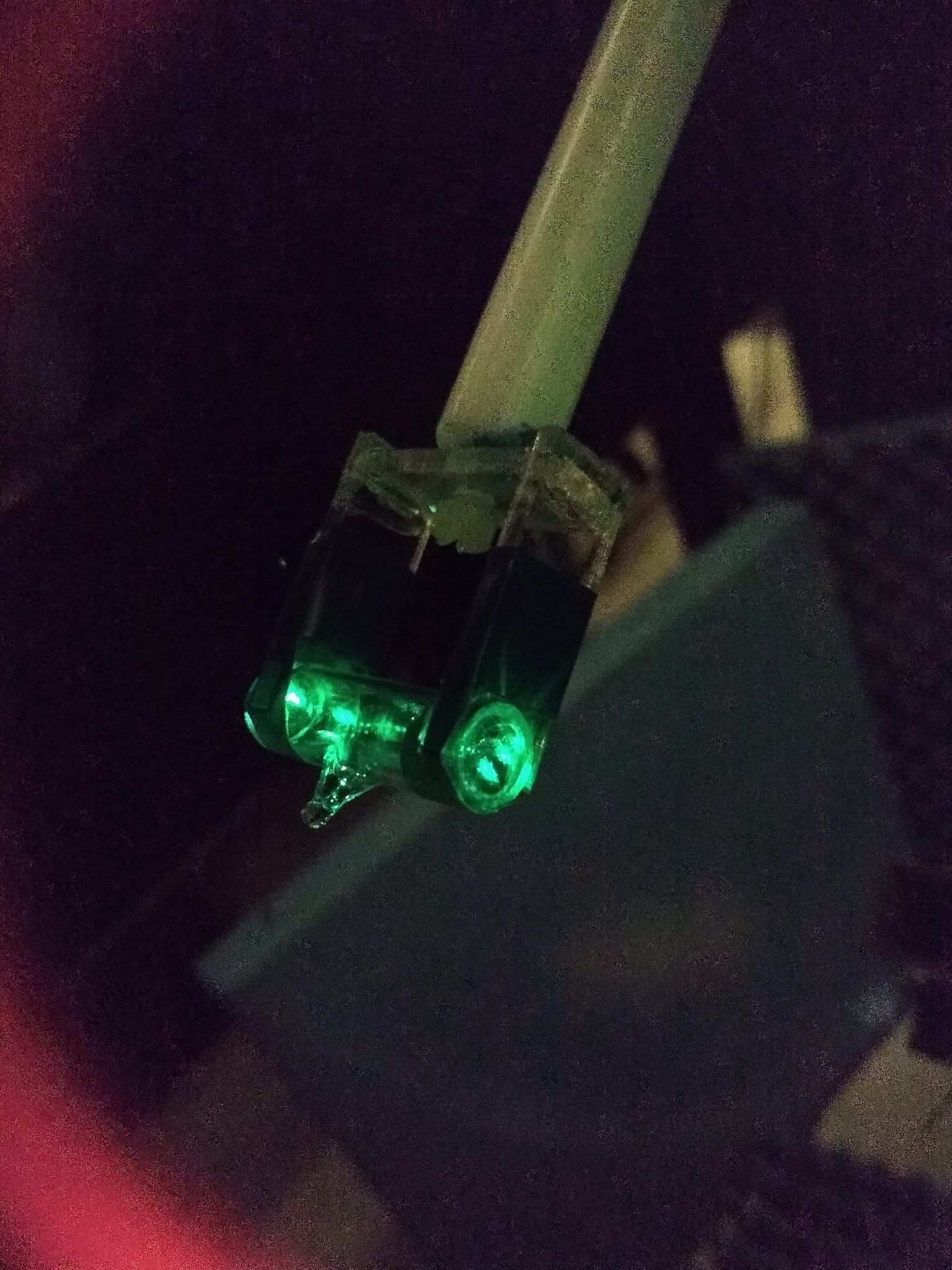
NIST researchers and collaborators determined the direction of an incoming radio signal based on laser measurements at two locations in this sensor filled with a gas of cesium atoms. Credit: NIST

Researchers at the National Institute of Standards and Technology (NIST) and collaborators have demonstrated an atom-based sensor that can determine the direction of an incoming radio signal, another key part for a potential atomic communications system that could be smaller and work better in noisy environments than conventional technology.

NIST researchers previously demonstrated that the same atom-based sensors can receive commonly used communications signals. The capability to measure a signal’s “angle of arrival” helps ensure the accuracy of radar and wireless communications, which need to sort out real messages and images from random or deliberate interference.

“This new work, in conjunction with our previous work on atom-based sensors and receivers, gets us one step closer to a true atom-based communication system to benefit 5G and beyond,” project leader Chris Holloway said.

In NIST’s experimental setup, two different-colored lasers prepare gaseous cesium atoms in a tiny glass flask, or cell, in high-energy (“Rydberg”) states, which have novel properties such as extreme sensitivity to electromagnetic fields. The frequency of an electric field signal affects the colors of light absorbed by the atoms.

An atom-based “mixer” takes input signals and converts them into different frequencies. One signal acts as a reference while a second signal is converted or “detuned” to a lower frequency. Lasers probe the atoms to detect and measure differences in frequency and phase between the two signals. Phase refers to the position of electromagnetic waves relative to one another in time.

The mixer measures the phase of the detuned signal at two different locations inside the atomic vapor cell. Based on the phase differences at these two locations, researchers can calculate the signal’s direction of arrival.

To demonstrate this approach, NIST measured phase differences of a 19.18 gigahertz experimental signal at two locations inside the vapor cell for various angles of arrival. Researchers compared these measurements to both a simulation and a theoretical model to validate the new method. The selected transmission frequency could be used in future wireless communications systems, Holloway said.

The work is part of NIST’s research on advanced communications, including 5G, the fifth-generation  standard for broadband cellular networks, many of which will be much faster and carry far more data than today’s technologies. The sensor research is also part of the NIST on a Chip program, which aims to bring world-class measurement-science technology from the lab to users anywhere and anytime. Co-authors are from the University of Colorado Boulder and ANSYS Inc. in Boulder.

Atom-based sensors in general have many possible advantages, notably measurements that are both highly accurate and universal, that is, the same everywhere because the atoms are identical. Measurement standards based on atoms include those for length and time.

With further development, atom-based radio receivers may offer many benefits over conventional technologies. For example, there is no need for traditional electronics that convert signals to different frequencies for delivery because the atoms do the job automatically. The antennas and receivers can be physically smaller, with micrometer-scale dimensions. In addition, atom-based systems may be less susceptible to some types of interference and noise.


Paper: A.K. Robinson, N. Prajapati, D. Senic, M.T. Simons and C.L. Holloway. Determining the Angle-of-Arrival of a Radio-Frequency Source with a Rydberg Atom-Based Sensor. Applied Physics Letters. Published online March 15, 2021. DOI: 10.1063/5.0045601

Filed Under: Communications Theory Tagged With: NIST

Cool stuff on the Internet: Fourier Transform tutorial, impedance matching network calculators

November 22, 2020 By Dan KB6NU Leave a Comment

An Interactive Introduction to Fourier Transforms

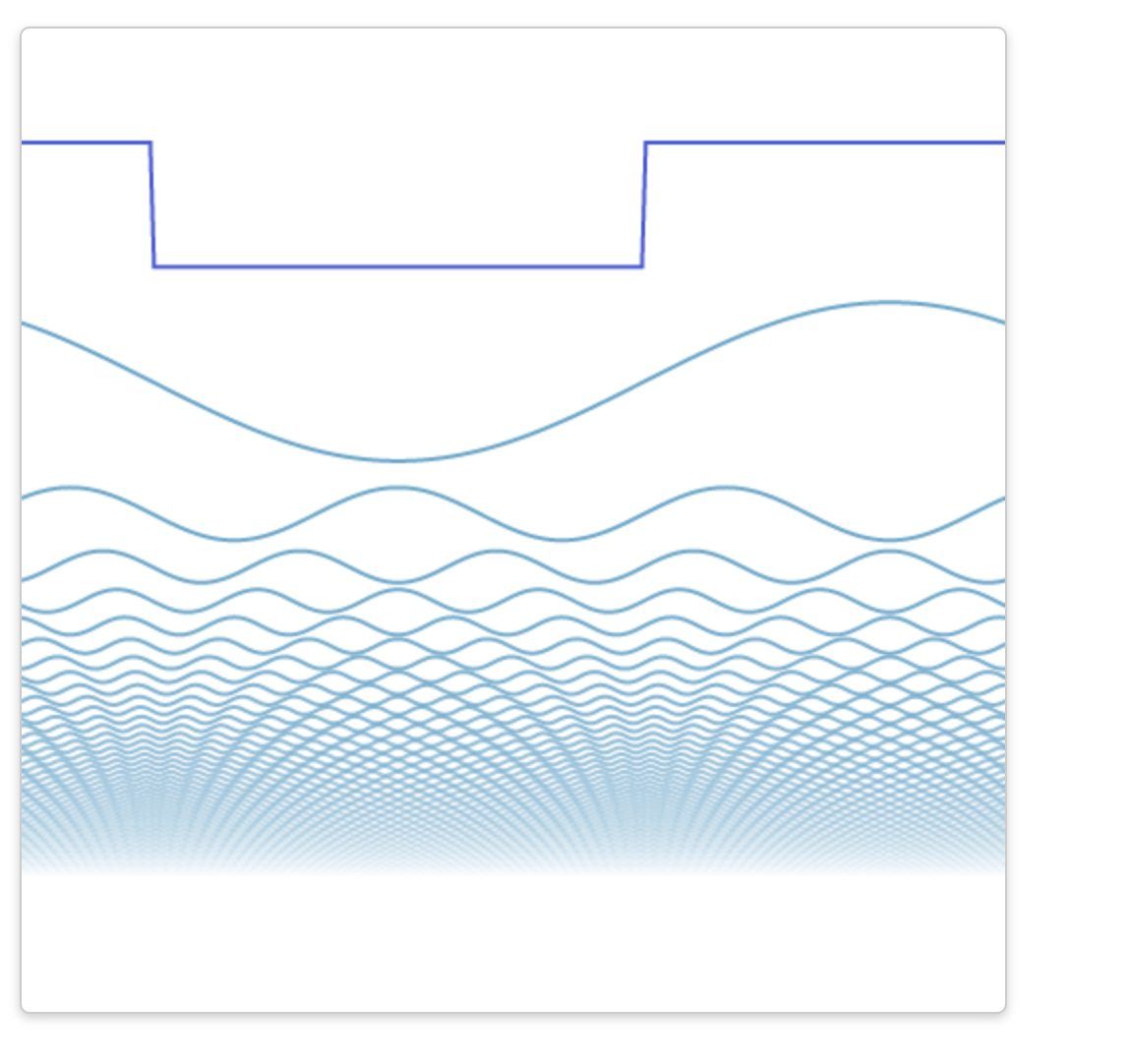
Using a series of animations, the author of this page, Jez Swanson, shows how Fourier transforms work. One of the first animations shows how a square wave is made up of an infinite series of harmonically-related sine waves. A frame of this animation is shown at right.

One of the cool things about these animations is that you can control how many of the sine waves are included in the reconstruction of the square wave and see in real time how that affects the “squareness” of the wave.

Overall, this is a very nice introduction to the topic. There aren’t any examples of how the Fourier Transform is used in software-defined radio, but you can extrapolate from the examples that are given.

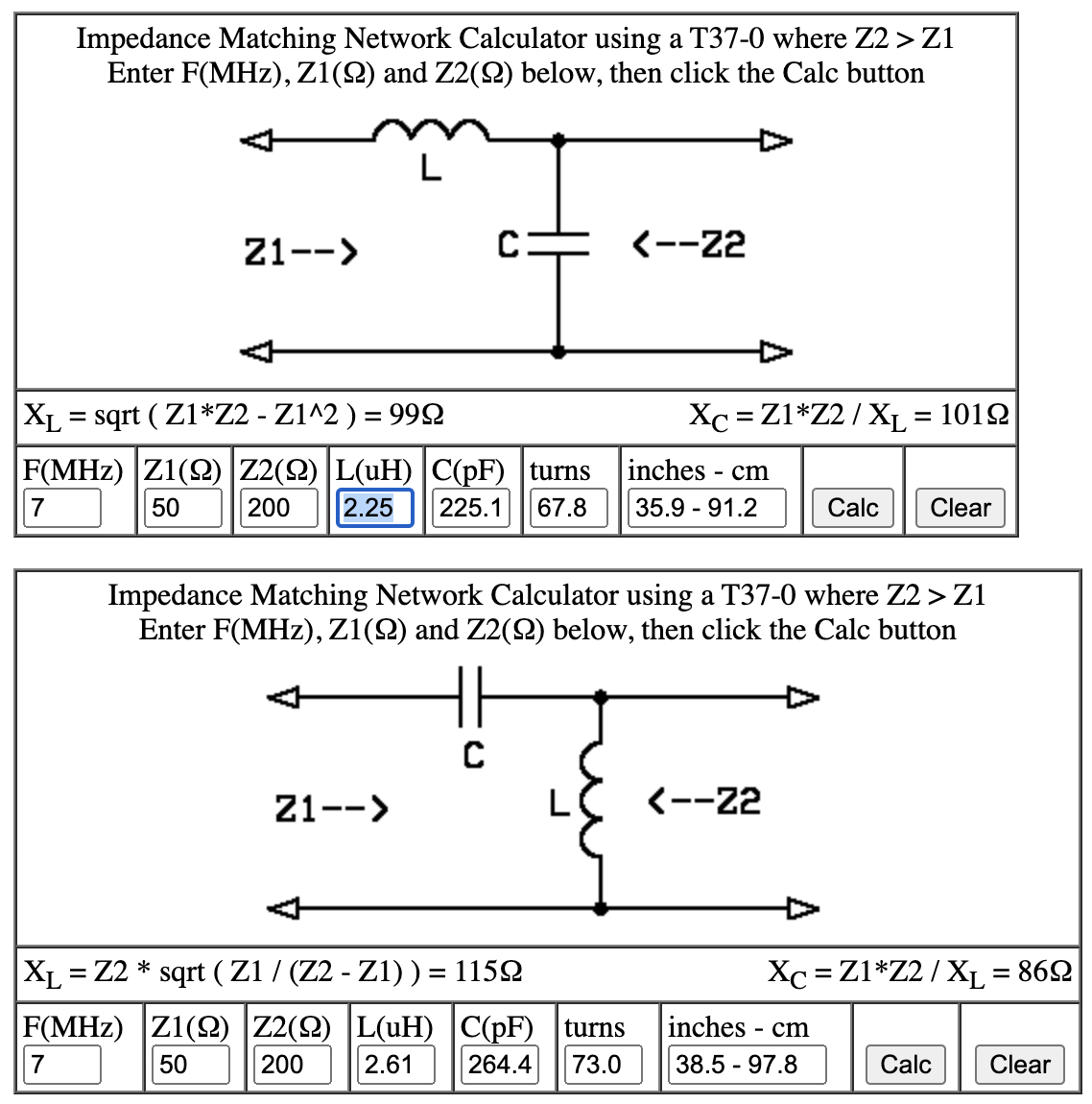
Toroid King adds impedance matching network calculator

W8DIZ, the “toroid king,” runs the website toroids.info, where you can find all kinds of information on how to use toroids, including the physical dimensions and usable frequency range for a wide variety of toroids . The latest tool to be added to this list is the impedance matching network calculator. All you need to do is to select the type of toroid that you wish to use, input a frequency, and the input and output impedances, and the calculator will calculate not only the inductance and capacitance required, but also the number of turns and length of wire needed to wind the toroidal inductor.

In the [email protected] message that Diz used to announce the calculator, two other online impedance matching network  calculators were mentioned:

  • LeLeivre.Com LC Impedance matching network designer
  • Analog Devices RF Impedance Matching Calculator

Filed Under: Building/Homebrew, Communications Theory Tagged With: Fourier Transform, impedance matching, toroids

The rebirth of HF?

July 1, 2020 By Dan KB6NU 3 Comments

Being a member of the IEEE, I get a number of different emails from them. A week ago, I got an email from the IEEE Communications Society advertising a new white paper from Rohde&Schwartz titled, The Rebirth of HF. The blurb reads:

High frequency (HF) communications were once the primary means of global connectivity until terrestrial Internet and satellites.  Recent technological advancements have led to a “rebirth” of HF as a viable alternative for mission-critical connectivity. Learn the fundamentals behind HF propagation, plus new developments that make HF a practical means of modern, global communications.

The white paper does a pretty good job of describing the fundamentals of HF. I think that I’ll be recommending it as a primer to hams that take my classes.

It goes on, though, to describe how some companies are now using HF frequencies in sophisticated ways to enhance digital communications. In particular, it describes how some systems are now using 48 kHz wide channels to achieve data rates up to 240 kilobits per second.

One thing that this white paper makes clear is that commercial and military interests have not given up on HF. We need to stay vigilant about that.

To download the paper for yourself, click here. You’ll be asked for some information, but you’ll be quickly sent the download link, and if you note that you’re a ham radio operator, it’s doubtful that the company will try to contact you. I’ve downloaded a bunch of R&S white papers, and they’ve never tried to sell me anything.

Filed Under: Communications Theory, Propagation

Tidbits from the trade magazines: Modulation, digital logic, single-board computers

September 14, 2018 By Dan KB6NU 3 Comments

Modulation basics, part 1: Amplitude and frequency modulation. Modulation is perhaps one of the most complicated things that I have to explain in my one-day Tech class. Perhaps if I could get my students to read this article before I try to explain it, they would understand it a bit more.

An amplitude-modulated (AM) signal.

How to Read Datasheets: Logic ICs. This is #5 in a series of articles on digital ICs. This particular articles discusses the evolution of complementary metal-oxide semiconductor (CMOS) technology and how CMOS technology differs from transistor-transistor logic (TTL) technology.

10 Best Single Board Computers for 2018. Arduinos and Raspberry Pis are all the rage in amateur radio, but there are a number of other single-board computers that might be worth looking at for your amateur radio projects.

Filed Under: Building/Homebrew, Communications Theory, Computers, Digital Logic, Gear/Gadgets

From ACM Tech News: THz wireless, longer-life batteries, hot chips

June 27, 2018 By Dan KB6NU 3 Comments

DARPA Project to Examine Terahertz for Wireless Communications

The U.S. Defense Advanced Research Projects Agency (DARPA), in collaboration with the New York University Tandon School of Engineering; the Universities of California at Santa Barbara, Berkeley, and San Diego; Cornell University, and the Massachusetts Institute of Technology, as well as several industrial partners, has launched a hub for advanced wireless and sensing research. Researchers at the ComSenTer hub are developing technologies to take advantage of the high gigahertz and terahertz spectrum for imaging and sensing applications. NYU researcher Sundeep Rangan notes the results of initial millimeter-wave field trials suggest such transmissions provide people with more coverage than had been anticipated.

Full Article


New Device Could Increase Battery Life of Electronic Devices by More Than a Hundred-Fold

Battery-operated electronics users often complain that battery life is too short and the devices generate too much heat, and researchers at the University of Missouri (MU) have developed a material that could solve both problems. Led by MU’s Deepak K. Singh, the team developed a two-dimensional, nanostructured material by depositing a magnetic permalloy on the honeycomb structure template of a silicon substrate. The new material conducts unidirectional current, and when built into a diode, dissipates significantly less power compared to a conventional semiconducting diode. The new magnetic diode could be used to create new magnetic transistors and amplifiers that dissipate very little power, thus boosting the efficiency of the power source in electronic devices.

Full Article


Making Radio Chips for Hell

Researchers at the University of Arkansas and KTH Royal Institute of Technology in Sweden have developed a wireless radio mixer integrated circuit, known as a mixer IC, which can operate at temperatures up to 500 degrees Celsius. The mixer IC was designed by KTH’s Ana Rusu, packaged by Arkansas researcher Alan Mantooth’s group, and then tested by Rusu’s group. The new device translates a 59-megahertz radio frequency signal to a 500-kilohertz signal to enable signal processing. The researchers are also developing sensors for the interior of diesel engine combustion chambers so computers can better control engine efficiency, as well as developing power electronics for actuating a drill bit at the bottom of an oil well, where temperatures can reach 150 degrees Celsius.

Full Article

Filed Under: Batteries, Communications Theory, Electronic Components

From the trade magazines: Telephone museum teaches kids about electricity, how to use a VNA, noise cancellation

March 16, 2018 By Dan KB6NU 1 Comment


Telephone Museum Inspires Young Engineers to Take Things Apart. WALTHAM, MA—A city long known for mechanical timepieces now has a museum dedicated to electrical devices. The Telephone Museum opened here in November 2017. EE Times visited the museum on Feb. 22, 2018. Here, aspiring engineers can not only see historical telephones but learn about electricity, measurements, and how to fix their broken mobile phones.

Learn the ABCs of VNAs. This primer gives an in-depth overview of the vector network analyzer (VNA), explaining its functionality, types of measurements that can be performed, and more. This is perhaps more than most hams will need, but it’s interesting nonetheless.

What’s the Difference Between Passive and Active Noise Cancellation? Increased use of smartphones and other devices for music playback gives more weight to features like noise cancellation. So how can system developers determine the best noise-cancellation option to differentiate their products and still appeal to discerning consumers?

Filed Under: Communications Theory, Gear/Gadgets, Kids, Test Equipment Tagged With: musuem, telephone, VNA

Ham researcher to investigate effects of solar eclipse

July 18, 2017 By Dan KB6NU Leave a Comment

August 21 is a once-in-a-lifetime opportunity for many in the U.S. to see a total eclipse. It’s also an opportunity for a team of Virginia Tech researchers to study the effects of the eclipse on changes in the upper atmosphere that have an impact on HF propagation and the global positioning system (GPS). Backed by research funding from NASA and the National Science foundation, the team is headed by Dr. Greg Earle, W4GDE.

The Virginia Tech team plans to gather data from a variety of sources, including radar systems, transceivers, satellites, ham radio, and GPS receivers, in order to analyze the effects of the solar eclipse on the conductive region of the atmosphere. 

“Whether military radar, or consumer GPS signals, the eclipse is going to have effects on the medium that we would like to understand better, so that we can either mitigate them or use them to our advantage,” said Earle. 

Here are a couple of links to news stories on the research team and the experiments:

  • Virginia Tech team prepares for special project during total solar eclipse
  • Virginia Tech expert to study August solar eclipse effects on radar, ham radio, GPS

And, here’s another link to an experiment called the “Eclipse Mob:”

  • A massive atmospheric experiment is planned for August solar eclipse

Let’s party!

In conjunction with the eclipse, the HamSCI and the ARRL are sponsoring the Solar Eclipse QSO Party. (SEQP). According to an article in the August 2017 issue of QST, the goal of the SEQP is to “flood the airwaves with contacts, all measured by the automated receiver networks of the Reverse Beacon Network, PSKReporter, and WSPRNet.” Once all the logs are in, researchers will analyze the data to see what effect the eclipse had on radio propagation.

The SEQP will run from 1400Z – 2200Z on Monday, August 21. This is well before the eclipse is due to begin on the West Coast. The reason it starts before the eclipse is to establish a baseline for radio propagation conditions.

SEQP organizers urge you to make as many contacts as you can on as many bands as you can operate. Like nearly every contest, contacts are not allowed on 60m, 30m, 17m, and 12m. CW, RTTY, and PSK31 are the preferred modes because automated receivers can record those contacts, but phone and other digital modes count, too.

An interesting twist to this contest is that, like Field Day, you can earn a number of bonus points, including:

  • Operating outdoors (100 points)
  • Operating in a public place (100 points)
  • Operating a wide-band automated receiver at your station (100 points)

Hams have had a long history of supporting scientific research. They provided communications for some of the early polar explorations and listened for Sputnik as it flew overhead. The Solar Eclipse QSO Party continues this tradition, and it’s going to be a lot of fun as well. Visit the HamSCI website for more information.

Filed Under: Communications Theory, Contests Tagged With: HamSci, solar eclipse

AFCCE making some noise over noise

July 16, 2017 By Dan KB6NU 1 Comment

Last year, the FCC’s Technical Advisory Council formed a working group to study the problem. Inquiry ET-16-191, released in June 2016, sought public comments.

About 100 individuals, companies and organizations, from a broad array of RF users including broadcasters, equipment manufacturers, consulting engineers, radio astronomers, amateur radio groups (including the ARRK), and users of other spectrum services such as cellular, GPS and public safety communications. Many different noise sources were identified, such as power lines, modern lighting systems, and switching power supplies. Almost all of the respondents requested that the FCC undertake an official study and many called for more effective enforcement of current regulations.

A working group was formed, and in December 2016, they issued a report recommending that the FCC issue a Notice of Inquiry or Notice of Proposed Rulemaking to resolve unanswered questions and take corrective action. A recent article in RadioWorld describes the recommendations further.

The article goes on to say that on April 11, 2017, representatives of the Association of Federal Communications Consulting Engineers (AFCCE) met with FCC Chairman Ajit Pai to discuss the problem of the rising radio noise floor. The AFCCE noted that:

  • There has been no systematic study of RF noise since the 1970s.
  • Many radio services are being compromised due to the rising noise floor.
  • “Internet of Things” system performance is suffering due to the background noise.
  • The FCC should re-establish the random sampling program to test products for compliance.
  • The FCC should stop turning a blind eye toward “at variance” practices.

They also pointed out that the FCC Interference Handbook for consumers was published in 1993 and is woefully out of date.

I’m pessimistic about this. I normally don’t get political on this blog, but this is an issue where technology intersects with politics, and in this political environment, I don’t see the FCC really tackling this issue. I really hope I’m wrong, though.

Filed Under: Communications Theory Tagged With: AFCCE, FCC, noise

Modulation Recognition? How did I miss this?

April 21, 2017 By Dan KB6NU 2 Comments

The other day I found this short item in the ACM Tech News:

DARPA Pop-Up Testbed Takes On Spectrum Management
Government Computer News
George Leopold
April 7, 2017

The U.S. Defense Advanced Research Projects Agency (DARPA) sponsored a recent event to test new modulation recognition strategies for navigating the radio frequency spectrum. The desired objectives included demonstrating new modulation recognition methods for identifying signal origins and types, and finding better techniques for sending and receiving information over the least trafficked spectral bands. “Modulation recognition is that first step towards getting beyond just describing ‘presence’ or ‘absence’ [and] actually describing what is present,” says Paul Tilghman with DARPA’s Microsystems Technology Office. The event employed about 30 modulation schemes, with hand-coded expert systems matched against newer machine-learning platforms. The former did better in identifying signal characteristics, but DARPA program manager Tom Rondeau expects the machine-learning method to catch up. DARPA says modulation recognition is vital for achieving “wireless situational awareness” that could help extract more capacity from congested electromagnetic spectrum, and then predict spectrum use and increase throughput.

After reading this, I said to myself, “How cool is this? what a great new use for artificial intelligence.” When I did a little Googling on the topic, though, I found out that modulation recognition has been around for at least 20 years. Now, I’m saying to myself, “How did I miss this?”

I’m not an AI expert, but it seems to me that whoever can crack this nut will be years ahead of the competition. Instead of setting up your radio for CW, SSB, or one of the digital, just let the radio do it. Instead of you or me extracting the information from a noisy signal, we’ll let the computer do it instead. And you know what, chances are the radio will do a lot better job than we can. The future’s going to look a lot more different than we can imagine.

Filed Under: Communications Theory, Digital Communications, DSP Tagged With: DARPA, modulation recognition

  • Page 1
  • Page 2
  • Go to Next Page »

Primary Sidebar

No Nonsense Technician Class License Study Guide (for tests given between July 2026 and June 2030)

New No Nonsense Technican Class Study Guide now available!

The 2026 version of my Tech Class study guide is now available, and as always, the PDF version is FREE!. The ePub version costs $11.97, and a Kindle version and paperback version will be available on Amazon shortly.

Click here to get all of my "No Nonsense" study guides.

Also available: The CW Geek's Guide to Having Fun with Morse Code

W5SWL.Com
Retevis Ailunce H1 DMR Radio
DXpander: Cobweb antennas, Laser Cutting

You’ve got mail!

Enter your email address below and get an email every time I publish a new post.

Email


I frequently teach classes to help newcomers get their licenses. The next class will take place on Saturday, October 10, 2026 on the University of Michigan campus. Click here for more information.

If you can't make the class, subscribe to the mailing list to be notified of when the next class will be held.

You can always download my free study guide, and if you have any questions about the classes, or amateur radio in general, please feel free to email me directly.

Support KB6NU.Com

Donate $7.30 and get two of these cool stickers. Measuring 4.25-in. W by 2.75-in. H, it's perfect for your car, your shack, or wherever!

Contact me

If you have a question or comment about one of my blog posts, or a question about any of the material in my study guides, or just a question about ham radio in general, you can email me at [email protected].

Blogs You Should Also Read

  • AE5X: A CW-centric blog from Kingswood, Texas
  • K0LWC Blog
  • LA3ZA Ham Radio Blog
  • Little Radios, Big Fun – WB3GCK
  • Mr. Vacuum Tube's Blog
  • Radio Artisan – K3NG
  • The K0NR Weblog
  • VE3WDM's QRP Ham Radio Blog
  • W2LJ’s Blog

Ham Radio Websites

  • Dashtoons – The Hammin' Comedy by Jeff K1NSS

Podcasts

  • ICQ Podcast
  • Linux in the Ham Schack
  • No Nonsense Amateur Radio Podcast
  • Resonant Frequency Amateur Radio Podcast

Recent Comments

  • Bulin 47 AI on ICQPodcast Episode 485 – World Cup Special Event Station
  • Jesse Alexander on What do you think of this artwork for the ham radio EMF Explorer
  • CADProps on My first go at 3D printing not quite a success
  • Dan KB6NU on A Media Guide to Amateur Radio
  • Steve Stroh N8GNJ on A Media Guide to Amateur Radio

Meta

  • Log in
  • Entries feed
  • Comments feed
  • WordPress.org

Footer

Copyright © 2026 Daniel M. Romanchik, KB6NU · Log in