• Skip to primary navigation
  • Skip to main content
  • Skip to primary sidebar
  • Skip to footer

KB6NU's Ham Radio Blog

KB6NU's Ham Radio Blog
  • HOME
  • Study Guides
  • Teach a One-Day Tech Class
  • W8SRC Repeater Guide
  • Advertise
  • Hire Me

Digital Modes

Videos: Single sideband, HAMNET update, HF propagation

March 21, 2025 By Dan KB6NU Leave a Comment

Introduction to SSB

This is an Air Traffic Command instructional video describing the theory behind single side band (SSB) modulation. Dig that jazzy intro music!

HAMNet Update

HAMNET (Highspeed Amateur radio Multimedia NETwork) is a fully-independent amateur radio wireless network that provides data services. It’s a wireless internet, so to speak. It covers many regions in Europe and is even now growing fast beyond its European border. Hamnet is using international coordinated IP-address space of the AMPRNet (44.0.0.0/8) and Autonomous System (AS) numbers out of the 16-bit and 32-bit private AS number space to interconnect active regions by external Border Gateway Protocol (BGP) routing.

Here is an up date on HAMNET given at the recent FOSDEM conference.

Rohde & Schwarz on HF Propagation

Rohde & Schwarz produces some of the finest RF instrumentation in the world. They also produce great videos on RF topics. This one explains HF propagation.

Filed Under: Communications Theory, Digital Modes, Networking, Propagation, Videos Tagged With: HAMNet, single sideband

Videos: QRP FT-8 Transceiver, vintage FD video, QSO with SV8ANW

January 19, 2025 By Dan KB6NU 1 Comment

DX FT8: A QRPp, five-band, standalone transceiver

I recently swapped some email with a fellow who purchased a quantity of Tech study guides for a class he’s teaching (only $11/copy!). In addition to talking about the study guides, we got to talking about microcontroller projects. He wrote, “I assume you’ve seen the microcontroller based, standalone FT8 transceiver already, but if not it’s worth a peek: https://www.youtube.com/watch?v=8b2WOxESAVU.”

Well, I hadn’t heard of it, so I did give it a peek. The DX FT8  looks like a very cool project. If I didn’t already have a dozen half-finished projects already, I might give this one a go.

Vintage Field Day 1962

This video reminds me of the home movies that my dad used to take back in the 1960s. Instead of Christmas and birthday parties, however, these show hams setting up and operating on Field Day 1962. Like the video says, there are “lots of vintage ham radio equipment, antennas, portable generators (look at the size of that thing at the 6:00 mark!), baked beans, and radio fun.

Couple observations:

  • The participants seem to be, on average, younger than today’s FD participants.
  • Note that there are two hams per station, one operating and one logging on paper. We do this by computer now.
  • There was probably more cigarette smoking and beer drinking than you’d find at today’s Field Day operations.

KB6NU de SV8ANW

Shortly after working Dimitris (Jim), SV8ANW, he sent me an email with a link to a YouTube video of our contact. Notice that he has a very nice bug fist.

Filed Under: Building/Homebrew, Digital Modes, Operating Tagged With: DX, Field Day, FT8

Interesting Stuff: Pico-based SDR runs standalone, texting over HF, HamClock on WiFi

November 27, 2024 By Dan KB6NU Leave a Comment

There’s so much interesting stuff out there that I’m never going to get to it all. I blog about these projects, though, so that I don’t forget about them and to let others know about them. If you’v ever built or used one of these projects, please leave a comment below or email me directly.

Pico-based SDR runs stand-alone

Microcontrollers are getting to be very powerful. The Raspberry Pi Pico, for example, feature dual core processors, running at frequencies up to 150 MHz, with 520 kB of SRAM, and 4 MB of on-board flash memory. They’re very inexpensive, too. You can get one of these microcontrollers from reputable dealers for less than $8. If you’re willing to take a flyer on Ali Express, some of them are going for less than $2.

As shown in the video, this lets one build a software-defined radio (SDR) without a PC!

Think of the possibilities. One of the things that comes to my mind is to couple this with an Si5351 module and amplifier to make a small HF transceiver.

For more information:

  • Article discussing how it works.
  • Discussion on [email protected].

Chirp to send text messages

PA3FWM has developed a new digital mode he calls LongChat that uses chirp signals with an audio bandwidth 300 Hz–2700 Hz. Pieter claims that LongChat is very power-efficient and offers good performance even at very low power.

For more information:

  • Article: Signal/noise ratio of digital amateur modes.
  • Free LongChat software and setup instructions.

HamClock on a Raspberry Pi Zero 2W

Small printed-circuit board connected to a laptop via a USB cable.
Adam Drake, VE7SAL, coerced this Raspberry Pi Zero 2W to run HamClock.

The September-October 2024 issue of the Surrey Amateur Radio Club (SARC) Communicator has a great article on using a RPi Zero 2W to run HamClock. The unique thing about this implementation is that is uses the WiFi capability of the RPi Zero 2W to make, in effect, a HamClock server. With this running, you could then display HamClock on your laptop, a tablet, or even your phone.

For more information, see PE4BAS’s implementation of this project.

Filed Under: Digital Modes, Software-Defined Radio (SDR), Station accessories Tagged With: HamClock, LongChat, Raspberry Pi Pico, SDR

Videos: POTA with 1930s gear,

October 24, 2024 By Dan KB6NU Leave a Comment

Think you need modern gear to do POTA? Think again.

Rattlegram: Text over FM

Send text via an FM radio using an app on your Android or iPhone.

Go to https://www.aicodix.de/cofdmtv/rattlegram/ for more info.

Hallicrafters: The Amazing World of Shortwave Radio

This isn’t a video, per se. It’s a video made from an audio recording originally released on a 45 rpm vinyl record. It gives you a taste of what shortwave broadcasting used to be.

Filed Under: Digital Modes, Parks on the Air, SWLing, Vintage Radio Tagged With: Halicrafters, Rattlegram

From the Fediverse: Ham gallery, M17 mailing list, 44-ft. doublet

June 6, 2024 By Dan KB6NU Leave a Comment

I’ve quit Twitter/X, and am now part of the Fediverse. There are quite a few radio amateurs in the Fediverse, and if you’d like to follow me there, you can follow @[email protected]. Mastodon.radio is a space for radio amateurs and SWLs, but it’s not the only radio-focused Fediverse server. It connects with the servers listed on fediverse.radio, including mastodon.hams.social, a server here in the U.S.

Mastodon seems to have a much higher signal-to-noise ratio than Twitter. Here’s a few links I found and things I learned on Mastodon last night:

K8CX Ham Gallery. K8CX has an interesting collection of photos from Dayton, DX sound clips, and a QSL card museum. I’ve submitted a couple photos of me and the ICQ Podcast crew at Dayton 2024.

M17 Users mailing list. The  home page for this mailing list says, “The primary assumption of this mailing list is that M17 is (in June, 2024) in usable (enough) form for actual deployment and use in amateur radio.” They believe that all the pieces are there now.  Typically, to use M17, you’ll have to be “somewhat of an experimenter” to work around the inevitable glitches in using M17, but in the opinion of this list founder, “all the pieces are there now”.

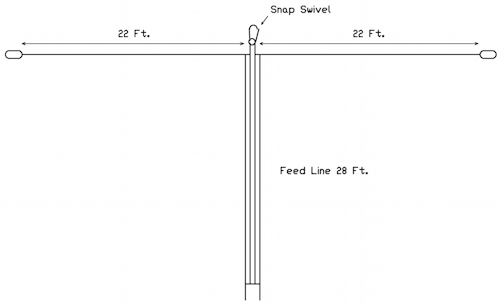
44-foot doublet. Last night, there was some discussion of portable antennas, mainly the 44-ft. doublet antenna. This is the antenna that L. B. Cebik describes on the web page, “1 Wire, 7 Bands, 2 Directions, or The 44′ Doublet as a 40-10 Meter Antenna.” There’s a similar antenna out there called the NorCal Doublet. The NorCal Doublet uses ribbon cable as the feedline to reduce weight. These two antennas look like they’d be worth experimenting with.

Schematic diagram of an antenna.
The NorCal Doublet.

See you in the Fediverse!

Filed Under: Antennas, Digital Modes, On the Internet Tagged With: doublet, gallery, M17

Random noise: My first Olivia contact, antenna efficiency, Straight Key Night

January 2, 2024 By Dan KB6NU 7 Comments

My first Olivia contact

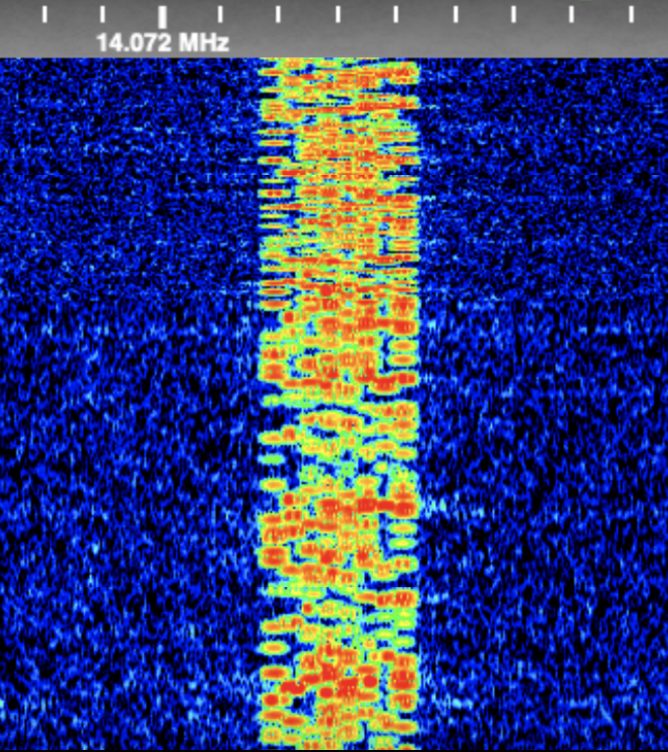
An Olivia 8/250 signal on an SDR waterfall.

I just made my first Olivia contact. The biggest hurdle was getting fldigi to work with my IC-7610. When I first ran fldigi, it received just fine, but I couldn’t get it to transmit. One of the problems was that, for some reason, there’s no official fldigi RigCAT XML file for the IC-7610, despite it being a very popular radio. 

Fortunately, I was able to find a couple of web pages that helped me get fldigi set up properly:

  • fldigi Failures Troubleshooting by N8GD
  • Configuring Icom radio for USB operation by SM7IUN

Thanks, guys, and thanks to M1GEO for coming up with a RigCAT XML file that works.

For more information on Olivia, go to the Olivia Digital Mode on HF web page. It has a bunch of information that will help you get started include a list of frequencies, links to videos by NW7US, and a link to join the Olivia Discord.

Antenna efficiency

On the X-6100 mailing list—as on many amateur radio mailing lists—there’s a discussion about the best antenna to use for portable operation. I like my 66-ft. doublet. I’ve had good success with it, and I have to believe that it’s more efficient than loaded verticals and end-fed antennas. I said as much on the list.

Of course, I can’t verify that. Not only am I not an antenna guru, there’s really no instrument that can measure antenna efficiency. Maybe some measurements could be made with a field strength meter to determine relative antenna efficiencies. Anyone have any thoughts on that?

Straight Key Night 2023

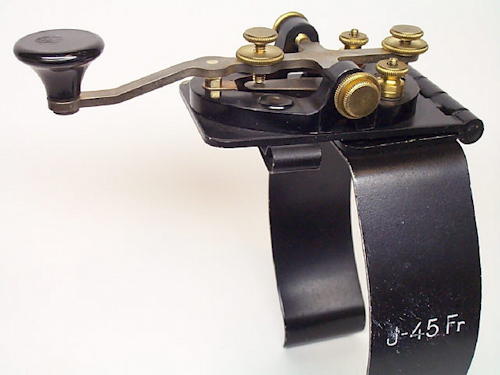
I’ve never been a big straight key guy, but even so, I dug out my J-45 key (a J-37 mounted on a leg clamp, see above) and hooked it up to the radio last night. The first contact I made was with SP7ASJ, which was nice. I made another contact before I decided to call it quits. I had intended  to make a couple more today, but I just never got around to it.

Filed Under: Antennas, CW, Digital Modes Tagged With: doublet, J-45, Olivia

Let the innovation begin! FCC eliminates baud rate limitation

November 13, 2023 By Dan KB6NU 2 Comments

This email from the FCC showed up in my email this afternoon. Let the innovation begin!

For Immediate Release

FCC ADOPTS RULES TO MODERNIZE AMATEUR RADIO SERVICE AND FOSTER INNOVATION

WASHINGTON, November 13, 2023—The Federal Communications Commission today adopted new rules to incentivize innovation and experimentation in the amateur radio bands by removing outdated restrictions and providing licensees with the flexibility to use modern digital emissions.

The Report and Order adopted today eliminates the baud rate limitation—the rate at which the carrier waveform amplitude, frequency, and/or phase is varied to transmit information—in certain amateur radio bands.  Instead, the Commission establishes a 2.8 kHz bandwidth limitation in the applicable amateur radio bands.  The changes will enable the amateur radio community to operate more efficiently, including in support of emergency situations when appropriate, and foster experimentation, which is a core principle of the amateur radio service.

The FCC also adopted a Further Notice of Proposed Rulemaking which proposes and seeks comment on the removal of the baud rate – sometimes called the symbol rate—limitation in the VHF and UHF bands and in the 2200 meter and 630 meter bands, which the Commission allocated for amateur radio use after it released the Notice of Proposed Rulemaking in 2016.  It also seeks comment on the appropriate bandwidth limitation for the 2200 meter band, the 630 meter band, and the VHF/UHF bands.

Filed Under: Digital Modes, Rules, Regulations, Enforcement

Amateur radio videos: FCC to replace symbol rate limits with bandwidth limits, K5ATA’s vision for the role of ham radio in STEM education, rain gutter POTA antenna

November 2, 2023 By Dan KB6NU 2 Comments

FCC to lift symbol rate limitations

This is a topic that’s been in the news lately. The FCC is planning to remove the baud rate limitation on digital transmissions and replace it with a 2.8 kHz bandwidth limitation. This video goes into quite some detail on this.

You can find the complete text of the Report and Order and Further Notice of Proposed Rulemaking at https://docs.fcc.gov/public/attachments/DOC-397992A1.pdf.

K5ATA’s vision for the role of ham radio in STEM education

Steve, K5ATA, ARRL Education and Learning Manager, gave the keynote speech at the 2023 ARRL Pacific Division Ham Radio Convention Pacificon. I love the vision. The question now is how to turn that vision into reality.

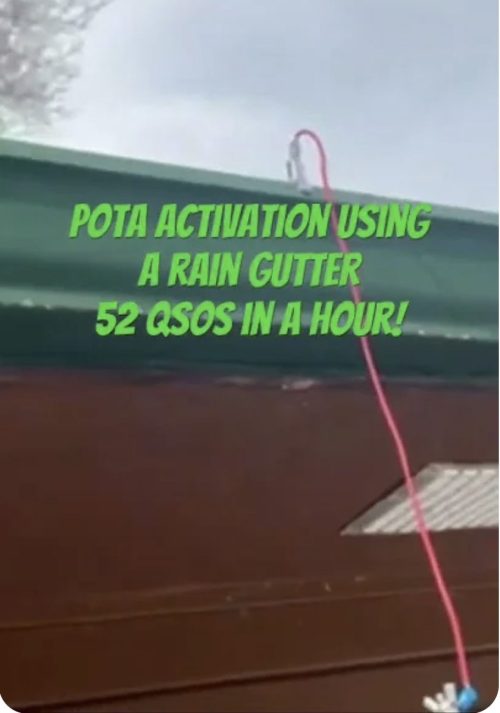
POTA activation rain gutter


Mr MUD, VA5MUD, forgot to bring an antenna to one of his latest POTA activations. That didn’t stop him, though. As he shows in this video, he simply clips a wire to a nearby rain gutter.

Filed Under: Antennas, ARRL, Digital Modes, Kids, Parks on the Air, Rules, Regulations, Enforcement Tagged With: Canada, STEM, symbol rate

Videos: Tying knots, chatting on HF with VarAC, and the tech behind POTA

March 29, 2023 By Dan KB6NU 1 Comment

Useful knots for portable hams

After watching  this video, I’m actually able to tie a taut hitch.


VarAC HF Chat

I’m not a big digital guy, but this looks interesting.


W8TAM: Powering POTA

Parks on the Air (POTA) is arguably one of the coolest things in ham radio today. Here, Thom, W8TAM, a friend of mine and one of the masterminds behind the technology, explains some of the tech that makes it so popular.


Filed Under: Digital Modes, Operating, Parks on the Air Tagged With: knots, POTA, VarAC

ICQ Podcast #399 – Hamzilla 2023

March 26, 2023 By Dan KB6NU Leave a Comment

In this episode, I joined Martin Butler M1MRB, Caryn Eve Murray KD2GUT and Edmund Spicer M0MNG and discussed the following topics:

  • Echo of BBC’s first broadcast in Scotland 100 years ago is heard from centenary event at Pacific Quay

  • Steubenville-Weirton Amateur Radio Club Donates Books to Library System

  • Is there a Better Way to Safeguard Vital Repeaters?

  • In the Car, Podcasts and Online Audio Continue to Grow

  • FreeDV Aims to Bring Open-Source HF Digital Voice Into the Mainstream

  • Astronauts from UAE Taking on Space Education

The episode’s feature is about Hamzilla 2023, a hamfest in the U.K.

Hams actually listen to us?

I’m always pleasantly surprised when I run across hams who say that they listen to the podcast. Mostly, it just seems like we’re babbling when we record the podcast, but when people say that they enjoy listening to it, it makes doing it all worthwhile.

Last week, at the HamSCI Workshop, I introduced myself to a fellow who said, “I know who you are. I recognized your voice from the podcast.” We proceeded to have a really nice conversation about the workshop.

Last night, I worked someone on 30 meters, and my being on the podcast made it possible. He emailed me after contact saying, “I’m a new CW operator and I heard your call tonight and recognized it from podcast fame, so I answered. I appreciated that you slowed down right away, but I immediately regretted my decision when you sent more than RST and state.” That is to say that he probably wouldn’t have answered my CQ if he hadn’t recognized my call sign.

I replied, “I could tell that were a bit unaccustomed to ragchewing, but kudos to you for trying!” I went on to say that I hoped that he should feel free to call me anytime. The only way to get better, after all, is to make contacts. I hope that I get to work him many times in the months ahead.

I’ll extend that invitation to all of you. If you ever hear me on the air, or see me at an amateur radio event, please feel free to say hi.

Filed Under: Clubs, Digital Modes, SWLing, VHF/FM/Repeaters Tagged With: BBC, FreeDV, libraries

  • Page 1
  • Page 2
  • Page 3
  • Interim pages omitted …
  • Page 7
  • Go to Next Page »

Primary Sidebar

No Nonsense Technician Class License Study Guide (for tests given between July 2026 and June 2030)

New No Nonsense Technican Class Study Guide now available!

The 2026 version of my Tech Class study guide is now available, and as always, the PDF version is FREE!. The ePub version costs $9.97, and a Kindle version and paperback version will be available on Amazon shortly.

Click here to get all of my "No Nonsense" study guides.

Also available: The CW Geek's Guide to Having Fun with Morse Code

W5SWL.Com
Retevis Ailunce H1 DMR Radio
DXpander: Cobweb antennas, Laser Cutting

You’ve got mail!

Enter your email address below and get an email every time I publish a new post.

Email


I frequently teach classes to help newcomers get their licenses. The next class will take place on Saturday, February 7, 2026 on the University of Michigan campus. Click here for more information.

If you can't make the class, subscribe to the mailing list to be notified of when the next class will be held.

You can always download my free study guide, and if you have any questions about the classes, or amateur radio in general, please feel free to email me directly.

Support KB6NU.Com

Donate $7.30 and get two of these cool stickers. Measuring 4.25-in. W by 2.75-in. H, it's perfect for your car, your shack, or wherever!

Contact me

If you have a question or comment about one of my blog posts, or a question about any of the material in my study guides, or just a question about ham radio in general, you can email me at [email protected].

Blogs You Should Also Read

  • AE5X: A CW-centric blog from Kingswood, Texas
  • K0LWC Blog
  • LA3ZA Ham Radio Blog
  • Little Radios, Big Fun – WB3GCK
  • Mr. Vacuum Tube's Blog
  • Radio Artisan – K3NG
  • The K0NR Weblog
  • VE3WDM's QRP Ham Radio Blog
  • W2LJ’s Blog

Ham Radio Websites

  • Dashtoons – The Hammin' Comedy by Jeff K1NSS

Podcasts

  • ICQ Podcast
  • Linux in the Ham Schack
  • No Nonsense Amateur Radio Podcast
  • Resonant Frequency Amateur Radio Podcast

Recent Comments

  • Skip K4EAK on Button, button. Who’s got the button?
  • Ed K8MEJ on Is anyone running for the board this year in the Great Lakes Division?
  • Skip Behnke on 2020 Extra Class study guide: E9F – Transmission lines: characteristics of open and shorted feed lines; coax versus open-wire; velocity factor; electrical length; coaxial cable dielectrics
  • Mike on Map your contest QSOs
  • Phillip Cardwell on J-Poles

Meta

  • Log in
  • Entries feed
  • Comments feed
  • WordPress.org

Footer

Copyright © 2026 Daniel M. Romanchik, KB6NU · Log in