• Skip to primary navigation
  • Skip to main content
  • Skip to primary sidebar
  • Skip to footer

KB6NU's Ham Radio Blog

KB6NU's Ham Radio Blog
  • HOME
  • Study Guides
  • Teach a One-Day Tech Class
  • W8SRC Repeater Guide
  • Advertise
  • Hire Me

Rules, Regulations, Enforcement

ICQPodcast Episode 479 – Baofeng UV-5R Mini

March 22, 2026 By Dan KB6NU Leave a Comment

ICQ Podcast logo.In this episode, I join Martin Butler M1MRB, Caryn Eve Murray KD2GUT, Edmund Spicer M0MNG and Ed Durrant DD5LP to discuss the latest Amateur / Ham Radio news, including:
  • FO-29 Enters Full Sunlight: Veteran Satellite Sees Renewed Activity in 2026
  • New Indiana Law Protects Ham Radio Antennas, Towers
  • Radio Interference Has Landed U.S. Airlines With an $8 Million Bill to Fix Faulty Equipment on Boeing 787s
  • Tennessee Approves Credentials for Amateur Radio Technician License

Colin, M6BOY, also reports on the following:

  • 630M at Dayton Hamvention
  • New Microwave Capabilities for the NRC
  • Start Planning for ARRL Field Day 2026
  • Judge Orders Voice Of America Back On The Air
  • WRTC 2026 Not Permitting National Flags, Symbols

This month’s feature is a report on the new Baofeng UV-5R Mini.

Filed Under: Antennas, Podcasts, Rules, Regulations, Enforcement, Satellites, SWLing Tagged With: Field Day, Indiana, Tennessee, Voice of America

ICQPodcast Episode 452 – Disqualified ARRL board nominees tell their stories

March 23, 2025 By Dan KB6NU Leave a Comment

In this episode, I join Martin Butler M1MRB, Caryn Eve Murray KD2GUT, Edmund Spicer M0MNG, and Ed Durrant DD5LP to discuss the latest amateur/ham radio news:

  • ISS FM Repeater, APRS Digipeater Could Be Sunset in Two Years
  • ISS Astronauts Reject Call for Early Retirement of the ISS
  • VOA, Other International News Services, Marked for Cuts
  • Questions Loom After Cuts at United States Weather Agency
  • FCC Seeks Public Suggestions On Possible Deregulation
  • Work at Repeater Site Costs Ham His County Job In Washington State

From my point of view, the big news is this episode’s feature, which starts at approximately the 1:25:00 mark. In the feature, Frank K4FMH and I interview the three hams who were disqualified from last year’s ARRL board elections. They are:

  • Jim Talens, N3JT
  • Dan Marler, K7REX
  • Fred Hopengarten, K1VR

Each of them tells the story of how they came to be disqualified, and I’m sure that these stories are sure to raise an eyebrow or two. After hearing their stories, we all discuss how the recent board decision to modfy ByLaw 18 will make the ARRL even less democratic and what that might mean for ARRL membership. (TL;DR it’s not a positive thing.)

Filed Under: ARRL, ICQ Podcast, On the Internet, Podcasts, Rules, Regulations, Enforcement Tagged With: ARRL Board of Directors, FCC, ISS

ITU offers spectrum-management classes

January 15, 2025 By Dan KB6NU Leave a Comment

I’m not sure how I got on this particular ITU mailing list, but I got an email this morning announcing some spectrum management courses that the ITU is offering:

  • SMTP – Advanced spectrum authorization regimes
    3 – 28 February 2025 | Online
    Explore modern spectrum management approaches, focusing on advanced allocation, dynamic access, flexible use, and innovative licensing to optimise spectrum resources.
  • Satellite coordination procedures & fillings 
    17 February – 14 March 2025 | Online
    Learn about ITU’s Radio Regulations, covering orbit spectrum allocation, satellite filings, coordination procedures, regulatory examinations, and BR space tools and databases.
  • SMTP – Opportunistic spectrum access & cognitive radio
    17 February – 14 March 2025 | Online
    Gain insights into opportunistic spectrum access, spectrum sensing techniques, white space utilisation, and current regulations on Cognitive Radio and White Spaces.

The cost for these is $300 each, so I’m not sure that individual hams will want to sign up for these classes, but perhaps it might be worthwhile for someone at the ARRL to sign up for one or more. That is, if there is anyone left there whose job it is to keep up with advances in spectrum management.

One free event that hams certainly might be interested in attending is the seminar E1 – LEO Satellite Constellation Fundamentals, 30 January 2025, 14:30 to 16:30 CET. The description for this seminar reads:

Kickstart your 2025 space journey with our inaugural Space Connect session! In this first installment of our exciting new series, we’re diving into the revolution happening in Low Earth Orbit.  Discover the orbital choreography of modern satellite constellations and the radio spectrum that makes global connectivity possible. ITU Secretary-General Doreen Bogdan-Martin and Director of Radiocommunications Mario Maniewicz will open this session, followed by expert insights into the technology and market forces driving the LEO satellite boom. Join us for this first step into the future of space communications. Save your spot now – and stay tuned for more fascinating Space Connect sessions throughout 2025!

I think that they’re probably going to be talking about things like Starlink, but perhaps this could get some hams thinking about doing a ham radio version of Starlink.

Filed Under: On the Internet, Rules, Regulations, Enforcement, Satellites Tagged With: spectrum management

Amateur radio in the news: Wicker, Blumenthal sponsor ham radio bill; young people still drawn to ham radio, student starts ham club at Marshall University

March 23, 2024 By Dan KB6NU Leave a Comment

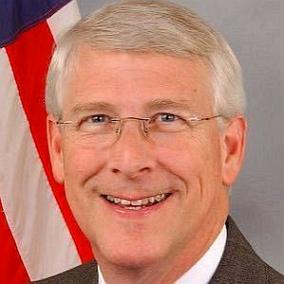
Sen. Wicker co-introduces Amateur Radio Emergency Preparedness Act

Senator Roger Wicker (R-MS)

[BROOKHAVEN, MS] U.S. Sen. Roger Wicker (R-Miss.) and Sen. Richard Blumenthal (D-Conn.) have introduced legislation to give amateur radio operators the right to install their antennas and serve the community. Homeowner association rules prevent amateur radio operators from installing outdoor antennas on residential properties even though this communication method has proven to be essential in emergencies and natural disasters, such as hurricanes in states like Mississippi and Connecticut.

Among other provisions, this legislation would:

  • Prohibit homeowner association rules that would prevent or ban amateur radio antennas
  • Clarify the approval process for installing amateur radio antennas
  • Give amateur radio operators a private right of action

The full text of the legislation can be found here.

…read more


The Athens County Amateur Radio Association finds that young people are still drawn to old-school communication

ATHENS, Ohio (WOUB) – Long before cell phones and the internet, ham radios were linking people around the world. And this old-school technology continues to fascinate hobbyists of all ages in the Athens County Amateur Radio Association.
“What really brought me into radio is the fact it’s such a unique hobby,” said Josh Senefeld. “Everyone uses (wireless communications) every day without even realizing it.”

Senefeld first became interested in the world of amateur radio at age 13 after he became a cadet in the Civil Air Patrol. Four years later, he got his amateur radio license.

Now 20, Senefeld is one of the younger members of the Athens County Amateur Radio Association, though it is open to people of all ages.

…read more


Ham Radio Club Revives Alternative Communication

The president of Marshall University’s ham radio club said he believes radio communication is a great way to bring people together.

Jacob Wriston, the president of the Thundering Herd Amateur Radio Club, said his experience with ham radio began in high school. He said that when he was looking at Marshall, he had hoped there would be a radio club similar to WVU’s amateur radio club. In July of 2022, he started a discord for the group before making it an official organization in the 2022 Fall Semester.

“I saw that WVU has a radio club,” Wriston said. “They’ve actually had one since like 1913 as the oldest club on campus, and, so, I was hoping that Marshall would have the same thing, and they don’t. So, I just started a discord server over the summer.”

Wriston said the club’s main goal is to promote the hobby of amateur radio.

…read more

Filed Under: Clubs, Rules, Regulations, Enforcement

Senate Bill S.3690 Introduced to Eliminate Private Land Use Restrictions on Amateur Radio  

February 22, 2024 By Dan KB6NU 1 Comment

This bulletin was sent  out by the ARRL last week. Getting legislation like this passed takes a long time, so let’s not just dismiss this out of hand. One positive thing about this bill is that it had bipartisan support. Wicker is a Republican, while Blumenthal is a Democrat. Contact your senators and tell them that you’d like them to support this bill, too……Dan


SB QST @ ARL $ARLB003
ARLB003 Senate Bill S.3690 Introduced to Eliminate Private Land Use Restrictions on Amateur Radio

ZCZC AG03
QST de W1AW
ARRL Bulletin 3 ARLB003
From ARRL Headquarters
Newington CT February 15, 2024
To all radio amateurs

SB QST ARL ARLB003
ARLB003 Senate Bill S.3690 Introduced to Eliminate Private Land Use Restrictions on Amateur Radio

On January 30, 2024, US Senators Roger Wicker (MS) and Richard Blumenthal (CT) introduced S.3690, the Senate companion bill to H.R.4006, introduced last June. Both bills reflect the Congressional campaign efforts by the ARRL to eliminate homeowner association land use restrictions that prohibit, restrict, or impair the ability of an Amateur Radio Operator to install and operate amateur station antennas on residential properties they own.

The text of bill S.3690 can be found at https://www.congress.gov/bill/118th-congress/senate-bill/3690/text .

Amateur radio operators repeatedly are relied upon to provide essential communications when disaster strikes, but their ability to do so is being impaired by the exponential growth of residential private land use restrictions that hinder their ability to establish stations in their homes with which to train and provide emergency communications when called upon.

In announcing the introduction of S.3690, Senator Wicker said, “Because communication during natural disasters is often hindered, we should be making every attempt to give folks more options. Reliable access can make the difference between life and death in an emergency. Our legislation removes roadblocks for amateur radio operators looking to help their friends, families, and neighbors.”

In a similar announcement, Senator Blumenthal stated: “Our measure will help clarify the rules so ham radio enthusiasts can successfully continue their communications. In the face of emergency or crisis, they help provide vital, life-saving information that allow listeners to properly and safely respond, but prohibitive home association rules and confusing approval processes for installing antennas have been an unnecessary impediment. The Amateur Radio Emergency Preparedness Act resolves these bottlenecks and ensures that radio operators can function successfully.”

ARRL President Rick Roderick, K5UR, and Director John Robert Stratton, N5AUS, Chair of the ARRL’s Government Affairs Committee, both extended on behalf of ARRL, its Members, and the Amateur Radio community their thanks and appreciation for the leadership of Senator Wicker and Senator Blumenthal in their continuing efforts to support and protect the rights of all Amateur Radio Operators.

NNNN
/EX

Filed Under: ARRL, Rules, Regulations, Enforcement Tagged With: Amateur Radio Emergency Preparedness Act, Blumenthal, S.3690, Wicker

Let the innovation begin! FCC eliminates baud rate limitation

November 13, 2023 By Dan KB6NU 2 Comments

This email from the FCC showed up in my email this afternoon. Let the innovation begin!

For Immediate Release

FCC ADOPTS RULES TO MODERNIZE AMATEUR RADIO SERVICE AND FOSTER INNOVATION

WASHINGTON, November 13, 2023—The Federal Communications Commission today adopted new rules to incentivize innovation and experimentation in the amateur radio bands by removing outdated restrictions and providing licensees with the flexibility to use modern digital emissions.

The Report and Order adopted today eliminates the baud rate limitation—the rate at which the carrier waveform amplitude, frequency, and/or phase is varied to transmit information—in certain amateur radio bands.  Instead, the Commission establishes a 2.8 kHz bandwidth limitation in the applicable amateur radio bands.  The changes will enable the amateur radio community to operate more efficiently, including in support of emergency situations when appropriate, and foster experimentation, which is a core principle of the amateur radio service.

The FCC also adopted a Further Notice of Proposed Rulemaking which proposes and seeks comment on the removal of the baud rate – sometimes called the symbol rate—limitation in the VHF and UHF bands and in the 2200 meter and 630 meter bands, which the Commission allocated for amateur radio use after it released the Notice of Proposed Rulemaking in 2016.  It also seeks comment on the appropriate bandwidth limitation for the 2200 meter band, the 630 meter band, and the VHF/UHF bands.

Filed Under: Digital Modes, Rules, Regulations, Enforcement

ICQ Podcast Episode 416 – Amateur Radio Someone Else’s Problem

November 6, 2023 By Dan KB6NU Leave a Comment

In this episode, I join Martin Butler M1MRB, Caryn Eve Murray KD2GUT, Edmund Spicer M0MNG, and Ed Durrant DD5LP to discuss the latest Amateur / Ham Radio news, including:

  • Club opens arms to the Radio Community for a “build-a-long”.

  • FCC Eyes New Approach to Wireless Alerts

  • FCC To Vote on Removing Symbol Rate Restrictions

  • Northern India State Makes Hams Top Priority

  • End of Teletext Service in Ireland

  • Saved by 2 Metres

  • RFI from above is Anything but Heavenly Interference

  • Broadcast Celebrates 80 Years for UK Shortwave Site

  • D.A.R.C. Celebrates 100 years of Broadcast Radio in Germany with a Transmission on Medium Wave and other Activities.

This episode’s feature is Amateur Radio, Someone Else’s Problem. In this feature, Martin, M1MRB, and Colin, M6BOY, discuss what rank-and-file amateurs to help amateur radio grow and prosper.

Filed Under: Building/Homebrew, Rules, Regulations, Enforcement, Satellites, SWLing Tagged With: India, symbol rate

Amateur radio videos: FCC to replace symbol rate limits with bandwidth limits, K5ATA’s vision for the role of ham radio in STEM education, rain gutter POTA antenna

November 2, 2023 By Dan KB6NU 2 Comments

FCC to lift symbol rate limitations

This is a topic that’s been in the news lately. The FCC is planning to remove the baud rate limitation on digital transmissions and replace it with a 2.8 kHz bandwidth limitation. This video goes into quite some detail on this.

You can find the complete text of the Report and Order and Further Notice of Proposed Rulemaking at https://docs.fcc.gov/public/attachments/DOC-397992A1.pdf.

K5ATA’s vision for the role of ham radio in STEM education

Steve, K5ATA, ARRL Education and Learning Manager, gave the keynote speech at the 2023 ARRL Pacific Division Ham Radio Convention Pacificon. I love the vision. The question now is how to turn that vision into reality.

POTA activation rain gutter


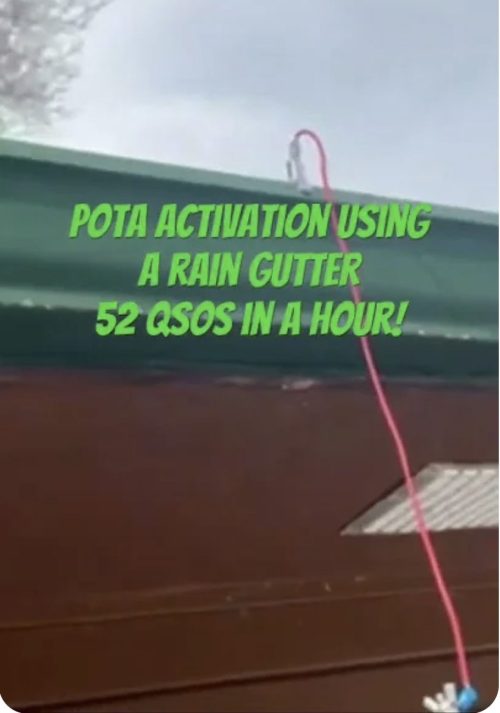
Mr MUD, VA5MUD, forgot to bring an antenna to one of his latest POTA activations. That didn’t stop him, though. As he shows in this video, he simply clips a wire to a nearby rain gutter.

Filed Under: Antennas, ARRL, Digital Modes, Kids, Parks on the Air, Rules, Regulations, Enforcement Tagged With: Canada, STEM, symbol rate

Please comment on the 60-meters Notice of Proposed Rulemaking

October 26, 2023 By Dan KB6NU 2 Comments

I got this email today from Dale Williams, WA8EFK, the ARRL Great Lakes Division Director:

Dear ARRL Great Lakes Division Member:

We need your assistance, and we need it NOW. We strongly encourage you to assist the ARRL and the entire U.S. Amateur Radio community by submitting comments to the Federal Communications Commission (FCC) before October 30th to save the privileges we have fought to gain on 60 meters. Even if you are not currently active on 60 meters, the proposed reduction in power from 100 watts to an equivalent of less than 10 watts is the most sweeping reduction of HF privileges in decades. If Amateur Radio (sic. “amateur radio” should not be capitalized) opposition to this proposed change is weak and the FCC goes through with the change, will a lackluster response from the Amateur Radio community embolden the FCC to remove or modify more HF privileges?

Please read this message in full to understand why your help is needed prior to submitting your comments.

The FCC has issued Notice of Proposed Rulemaking’s (NPRM) Docket Number 23-120 which would reduce power on 60 meters from 100 watts ERP (Effective Radiated Power) to the equivalent of 9.5 watts ERP. The NPRM would replace the current five channels (currently each with a 100-watt power limit) with a 15 KHz continuous spectrum from 5351.5 to 5366.5 KHz, but limiting power to the equivalent of 9.5 watts ERP. ARRL is proposing to keep the current five channels AND add the docket’s proposed 15 KHz of continuous spectrum, all at a power level of 100 watts ERP.

It’s important to note that in 2022 our neighbor, Canada, enacted ARRL’s position by keeping the five current channels AND adding the expanded 15 KHz of continuous spectrum, all at 100 watts. ARRL is advocating for the FCC to adopt the identical allocations and power limits which Canada put in place over a year ago.

When the FCC authorized 60-meter access for Amateur Radio operators in July 2003, the Commission cited the positive propagation attributes for emergency communications. Over the past twenty years during hurricanes, Caribbean Amateur Radio stations used 60 meters to relay critical weather and situational reports to U.S. operators. Clearly, 9.5 watts ERP would be woefully inadequate to maintain communications for these purposes.

In the May 2023 ARRL survey, members overwhelmingly pointed to Spectrum Defense as the #1 priority of the League. The Great Lakes Division takes this priority seriously. For the maximum impact, the FCC needs to hear from ARRL members in Kentucky, Michigan and Ohio to underscore the importance of 60 meters in our densely populated region on the eastern seaboard situated between active hurricane zones and our nation’s capital of Washington, DC. Having a consistent bandplan with Canada will also ensure harmonious communications throughout most of North America.

PLEASE support the ARRL’s filing in this matter.

To learn more about the NPRM and its impact on our 60-meter privileges, please visit https://www.arrl.org/60-meter-band . On this webpage you will find the links to file comments with the FCC. Please don’t delay. A  substantial response from the Ham community before the October 30 deadline is the only way to forestall the loss of our valued operating privileges. Please urge your fellow Hams to file comments as well. Protection of our Amateur Radio spectrum is our number one priority.

73

– Dale WA8EFK

Filed Under: ARRL, Rules, Regulations, Enforcement, Spectrum Defense Tagged With: 60 meter band

Random and partly-baked thoughts: ARRL email addresses, pics on QRZ.Com, amateur radio advocate to quit Congress

October 21, 2023 By Dan KB6NU 2 Comments

One of the features of WordPress is that you can create a draft post by jotting down an idea or cutting and pasting a URL into a blank post. I  do this frequently, then abandon the drafts. There are several reasons for this:

  • The idea was only partly-baked or just a random thought.
  • I was too lazy to write a whole post about it.
  • It wasn’t that great of an idea to start with.

I think that some of these ideas do deserve to see the light of day, however. They may get others thinking and spur discussion about a particular issue or technology. That being the case, here are some things that have crossed my mind lately.

arrl.org vs arrl.net email addresses

If you’re an ARRL member, you can request an ARRL email address. If you’re an ARRL staff member or a mucky-muck volunteer, such as section manager, you get an arrl.org email address. If you’re not one of the chosen few, they give you an arrl.net email address.

This is something that has griped me for a long time. It’s just another indication of how the ARRL views its members and makes it clear that members are second-class citizens in the ARRL hierarchy. By contrast, I am also a member of the Institute of Electrical and Electronic Engineers (IEEE). The IEEE has many more members than the ARRL, but when you apply for an IEEE email address you receive an ieee.org address, no matter if you are a Nobel Prize winner or a student member.

Photos on QRZ.Com

One thing that always bugs me is that when I look up someone on QRZ.com, I find a photo of their radios or their shack. Pictures of equipment, such as the one at right, do nothing for me.

What I want to see is your face like the one at left. That will tell me a lot more about you than the brand of radio that you operate.

Amateur radio advocate will not seek re-election to Congress

Representative Debbie Lesko (R-AZ) has announced that she will not seek re-election in 2024. In May, the ARRL reported that Lesko (AZ-08) introduced The Amateur Radio Communications Improvement Act (H.R. 3241) on May 11, 2023, to require that the Federal Communications Commission (FCC) eliminate the obsolete HF digital symbol rate limit with a 2.8 kHz bandwidth limit. Hopefully, someone else will pick up the ball and run with it.


Filed Under: ARRL, On the Internet, Rules, Regulations, Enforcement

  • Page 1
  • Page 2
  • Page 3
  • Interim pages omitted …
  • Page 19
  • Go to Next Page »

Primary Sidebar

No Nonsense Technician Class License Study Guide (for tests given between July 2026 and June 2030)

New No Nonsense Technican Class Study Guide now available!

The 2026 version of my Tech Class study guide is now available, and as always, the PDF version is FREE!. The ePub version costs $11.97, and a Kindle version and paperback version will be available on Amazon shortly.

Click here to get all of my "No Nonsense" study guides.

Also available: The CW Geek's Guide to Having Fun with Morse Code

W5SWL.Com
Retevis Ailunce H1 DMR Radio
DXpander: Cobweb antennas, Laser Cutting

You’ve got mail!

Enter your email address below and get an email every time I publish a new post.

Email


I frequently teach classes to help newcomers get their licenses. The next class will take place on Saturday, February 7, 2026 on the University of Michigan campus. Click here for more information.

If you can't make the class, subscribe to the mailing list to be notified of when the next class will be held.

You can always download my free study guide, and if you have any questions about the classes, or amateur radio in general, please feel free to email me directly.

Support KB6NU.Com

Donate $7.30 and get two of these cool stickers. Measuring 4.25-in. W by 2.75-in. H, it's perfect for your car, your shack, or wherever!

Contact me

If you have a question or comment about one of my blog posts, or a question about any of the material in my study guides, or just a question about ham radio in general, you can email me at [email protected].

Blogs You Should Also Read

  • AE5X: A CW-centric blog from Kingswood, Texas
  • K0LWC Blog
  • LA3ZA Ham Radio Blog
  • Little Radios, Big Fun – WB3GCK
  • Mr. Vacuum Tube's Blog
  • Radio Artisan – K3NG
  • The K0NR Weblog
  • VE3WDM's QRP Ham Radio Blog
  • W2LJ’s Blog

Ham Radio Websites

  • Dashtoons – The Hammin' Comedy by Jeff K1NSS

Podcasts

  • ICQ Podcast
  • Linux in the Ham Schack
  • No Nonsense Amateur Radio Podcast
  • Resonant Frequency Amateur Radio Podcast

Recent Comments

  • Dan KB6NU on Finally, a Loop for 10m.
  • Dan KB6NU on 1930s cards for my collection of QSLs from stations whose callsigns spell words
  • Sean on Finally, a Loop for 10m.
  • Bill Waslo on 1930s cards for my collection of QSLs from stations whose callsigns spell words
  • C M Wetzel KD8TNF on The Wesco BN-1

Meta

  • Log in
  • Entries feed
  • Comments feed
  • WordPress.org

Footer

Copyright © 2026 Daniel M. Romanchik, KB6NU · Log in