• Skip to primary navigation
  • Skip to main content
  • Skip to primary sidebar
  • Skip to footer

KB6NU's Ham Radio Blog

KB6NU's Ham Radio Blog
  • HOME
  • Study Guides
  • Teach a One-Day Tech Class
  • W8SRC Repeater Guide
  • Advertise
  • Hire Me

FCC

ICQPodcast Episode 452 – Disqualified ARRL board nominees tell their stories

March 23, 2025 By Dan KB6NU Leave a Comment

In this episode, I join Martin Butler M1MRB, Caryn Eve Murray KD2GUT, Edmund Spicer M0MNG, and Ed Durrant DD5LP to discuss the latest amateur/ham radio news:

  • ISS FM Repeater, APRS Digipeater Could Be Sunset in Two Years
  • ISS Astronauts Reject Call for Early Retirement of the ISS
  • VOA, Other International News Services, Marked for Cuts
  • Questions Loom After Cuts at United States Weather Agency
  • FCC Seeks Public Suggestions On Possible Deregulation
  • Work at Repeater Site Costs Ham His County Job In Washington State

From my point of view, the big news is this episode’s feature, which starts at approximately the 1:25:00 mark. In the feature, Frank K4FMH and I interview the three hams who were disqualified from last year’s ARRL board elections. They are:

  • Jim Talens, N3JT
  • Dan Marler, K7REX
  • Fred Hopengarten, K1VR

Each of them tells the story of how they came to be disqualified, and I’m sure that these stories are sure to raise an eyebrow or two. After hearing their stories, we all discuss how the recent board decision to modfy ByLaw 18 will make the ARRL even less democratic and what that might mean for ARRL membership. (TL;DR it’s not a positive thing.)
Filed Under: ARRL, ICQ Podcast, On the Internet, Podcasts, Rules, Regulations, Enforcement Tagged With: ARRL Board of Directors, FCC, ISS

FCC seeks comments on effects of May 2024 geomagnetic storm

May 29, 2024 By Dan KB6NU Leave a Comment

The FCC recently released this public notice:

PUBLIC SAFETY AND HOMELAND SECURITY BUREAU SEEKS COMMENT ON THE IMPACTS OF THE MAY 2024 GEOMAGENTIC STORM ON THE U.S. COMMUNICATIONS SECTOR
PS Docket No. 24-161

Comments Due: June 24, 2024

The Federal Communications Commission’s Public Safety and Homeland Security Bureau (PSHSB or Bureau) seeks comment on any observed impacts to communications that resulted from the May 2024 severe geomagnetic storm. On Thursday, May 9, 2024, the National Weather Service Space Weather Prediction Center (SWPC) issued a severe (G4) Geomagnetic Storm Watch, forecasting a series of coronal mass ejections (CMEs) that merged with the Earth’s electromagnetic fields between May 7-11, 2024.1 On May 11, 2024, the storm reached extreme (G5) conditions, the first time this severity has been observed since 2003.2 According to the SWPC, CMEs are large expulsions of plasma and magnetic field from the Sun’s corona.3 Electromagnetic currents generated by CMEs, when merged with the Earth’s electromagnetic fields, may distort the propagation of radio frequency waves.

On May 11, 2024, the FCC High Frequency (HF) Direction Finding Center, which supports the public safety community and federal partners by locating interference to radio spectrum below 30 MHz, observed significant disturbance in the propagation of HF radio signals. This disturbance resulted in the disruption of voice and data communications passed over HF frequencies. To better understand the impacts of the geomagnetic storm on the U.S. communications sector, the Bureau is requesting information from communications service providers and the public regarding disruptions in communications between May 7 and 11, 2024, that it believes to be a result of the storm. The Bureau is encouraging commenters to provide any available evidence, particularly electromagnetic spectrum analyses, imagery, or chronological logs relating the storm’s impacts. Where possible, the Bureau asks that commenters include the description of the impacts; make and model of affected communications equipment, which could include transmitters, receivers, transceivers, switches, routers, amplifiers etc.; make, model, and type of affected antennae and their composition; frequencies affected; type and composition of cable adjoining communications equipment and the antennae, if applicable; duration of the impact; and any residual effects observed in the hours following restoration.

You can find the entire document, including footnotes and instructions on how to file a comment, at https://docs.fcc.gov/public/attachments/DA-24-493A1.pdf. It will be interesting to see a report on this after the comments are in.

Filed Under: Propagation Tagged With: FCC, solar flare

ICQ Podcast Episode 408 – Expanding your Ham Radio Activity HamRadio 2023

July 22, 2023 By Dan KB6NU Leave a Comment

In this episode, I joined Martin Butler M1MRB, Caryn Eve Murray KD2GUT, Edmund Spicer M0MNG and Ed Durrant DD5LP to discuss:

  • WRTC 2026 Announced – ICQPodcast Joins as Official Media Partner

  • Student journalist makes video of GB23C SSES

  • Michigan Hams Exempt from “distracted driving” Law

  • Hams Honour Retired Search and Rescue Planes

  • Study: Commercial Satellite Constellations EMIT RFI

  • New N Class licence for Germany – Entry Level Licence to come in in July 2024

  • Commercial Interests Petition FCC for High Power Allocation on Shortwave Spectrum

The final story on a new, commercial use for HF  is an interesting one, and I’ll be blogging more about this later today or tomorrow. The story about EMI from commercial satellites is also an interesting one. This is going to be more of a problem as we go forward.

Filed Under: ICQ Podcast, Podcasts, Rules, Regulations, Enforcement Tagged With: FCC, Michigan, Satellites

FCC to start looking at receiver specs

March 5, 2022 By Dan KB6NU 1 Comment

As hams, we are aware—or should be aware—of the spectral purity requirements spelled out in the Part 97 rules (§ 97.307). The purpose of these rules is to prevent unintentional interference. Well, as the recent brouhaha over the 5G rollout here in the United States has pointed out, it’s not just about transmitters.

In a word, the airlines were upset about the 5G rollout, especially near airports, because they contended that 5G transmissions in the 3.7 to 3.98 GHz  band could possibly interfere with aircraft altimeters receiving signals in the 4.2 to 4.4 GHz band. The FAA have said aircraft at 50 U.S. airports might possibly be vulnerable to this interference.

There’s a good explanation of this situation here, but the crux of the matter is that the altimeter receivers weren’t designed with enough filtering to reject the 5G signals. The airlines could replace those altimeters with newer ones with better filtering, but that’s expensive and takes time. Hence, the conflict between the airlines and cell providers.

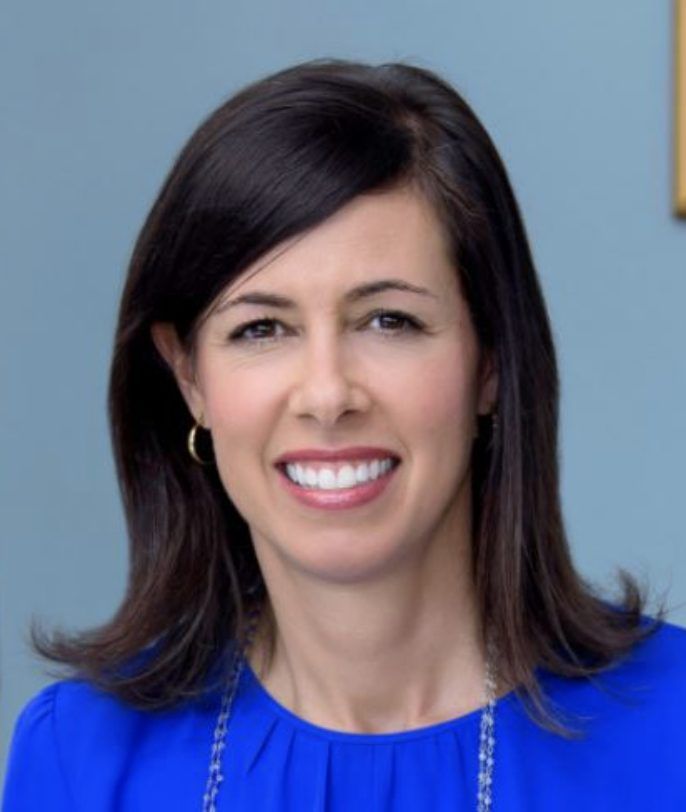
FCC Chairwoman Jessica Rosenworcel

So, in order to avoid this kind of thing from happening in the future, new FCC Chairwoman Jessica Rosenworcel is planning to launch a Notice of Inquiry (NOI) that would try to determine what, if any, rules are needed for radio receivers to ensure that services occupying adjoining frequency allocations don’t interfere with one another. An Urgent Communications article reports that this NOI may get underway as early as April. The article quotes Rosenworcel as saying, “We face a hard truth. Greenfield spectrum—open and cleared for use—will not be as simple or easy to find.  We will have to invest in new technologies to promote efficiency and use a range of spectrum policy tools, including shared access, priority and preemption, lightweight leasing, and dynamic database coordination to ensure access to our airwaves.”

She also noted, “This inquiry would ask how receiver improvements could provide greater opportunities for access to spectrum. It would explore how these specifications could come in the form of incentives, guidelines, or regulatory requirements—in specific frequency bands or across all bands. And it would seek comment on legal authority and market-based mechanisms that could help create a more transparent and predictable radiofrequency environment for all spectrum users—new and old.”

So, while the current focus is on the 5G/FAA situation, be aware that this will affect amateur radio sometime in the future.


Filed Under: Rules, Regulations, Enforcement Tagged With: FCC

Will we finally see some action on amateur radio rules?

October 31, 2021 By Dan KB6NU Leave a Comment

In Zero Retries 0016, Steve, N8GNJ writes:

We May Soon Have a Fully Empowered FCC

Those of us watching the FCC for other than Amateur Radio purposes have been puzzled by President Biden’s seeming indifference to date that a lot of activity at the FCC is stalled because there are only four FCC commissioners (two appointed by Democrats, two appointed by Republicans) and that often results in a stalemate.

The wait for President Biden to weigh in on staffing up the FCC is finally over:

  • Acting Chairperson Jessica Rosenworcel was nominated as Chairperson and was renominated for a new term (her original term had expired),
  • Gigi Sohn was nominated for the vacant FCC Commissioner position,
  • Alan Davidson was nominated for the Administrator / Assistant Secretary for for National Telecommunications and Information Administration (NTIA).

I won’t go into why these individuals are considered excellent picks (here’s a telecom-centric perspective from someone I respect), but it’s very encouraging to me that the FCC will soon be fully staffed and thus able to tackle issues that it’s been unable to work on without a full commission.

I feel that with this FCC “at full strength” and with these competent people in place, this is going to be about the best “moment” that U.S. amateur radio will have in the foreseeable future to accomplish rules reform, such as not specifying data rates. I hope the movers and shakers in U.S. amateur radio immediately begin working on advocating for amateur radio rules reform at the FCC.

All that I have to add to this is that I hope that the folks at the ARRL are on top of this.

If you haven’t yet subscribed to Zero Retries, you might want to take a look. N8GNJ publishes an issue every week and covers a lot of very interesting topics. In addition to this item on the FCC, issue 0016 also covers new Raspberry Pis, Direworf improvements, packet radio, VARA, Dragon OS (a Linux distribution for amateur radio), and Kraken SDR.


Filed Under: Rules, Regulations, Enforcement Tagged With: FCC, NTIA

Who knew that the FCC had a new seal?

May 28, 2021 By Dan KB6NU 4 Comments

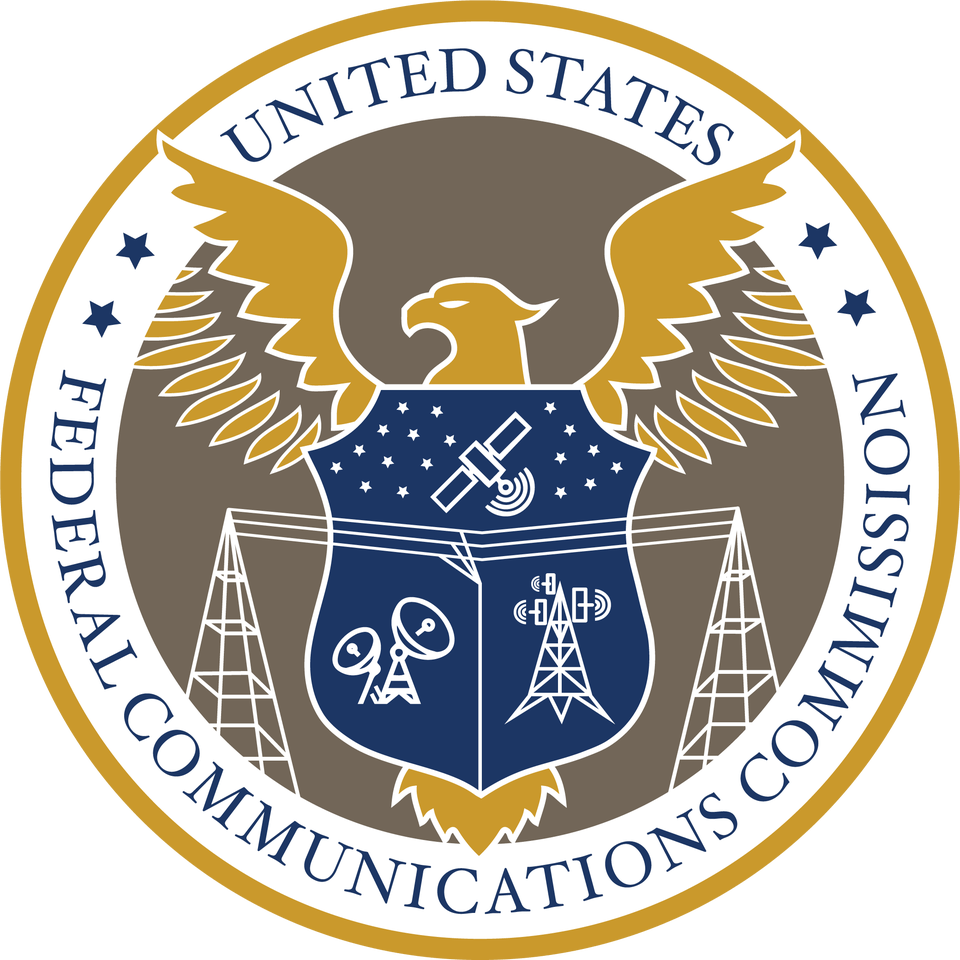
On reddit this morning, I learned that the FCC has a new seal:

Apparently, it’s been around for a while, although I was unable to find an FCC press release announcing the new seal. “About a year ago,” Broadcasting + Cable reported:

The FCC has unveiled a new logo in anticipation of its upcoming move out of its current headquarters. 

The new seal was the winner in an agency-wide contest among commission employees and contractors, who voted on the submissions. The winning logo was submitted by Umasankar Arumugam, picked by a vote of employees and contractors. 

The FCC said the logo reflects the following elements: 

  • “Communications technologies currently transforming our world;
  • “Four stars on the outer seal border, drawing from the legacy of the original seal of the Federal Radio Commission, the predecessor agency to the FCC;
  • “Eighteen stars on the shield, recognizing the current number of Bureaus and Offices; and 
  • “The eagle and shield, identifying the FCC as an agency of the Federal Government.”

The FCC will take the next few months to incorporate the logo into stationery, business cards and publications and other materials, both physical and online, but will not adopt the seal officially until it moves into new headquarters. 

The FCC’s move has been delayed by the pandemic. 

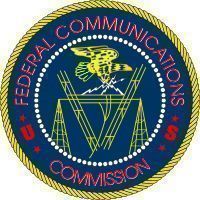
The folks on reddit were pretty critical of the new FCC seal, but I kind of like it. One element I like that they held over from the old seal (see below) is the Marconi T antenna supported by two towers.


Filed Under: Everything Else Tagged With: FCC

License fee date still not set

March 21, 2021 By Dan KB6NU Leave a Comment

There’s been some talk going around that the FCC will begin charging the $35 license fee real soon now. According to the ARRL, this IS NOT the case. In an email to Great Lakes Division members, director Dale Williams, WA8EFK, writes:

Several individual have incorrectly reported that the proposed fees for amateur Radio licensing have taken effect.

This is NOT TRUE.

The FCC fees Report and Order adopted last December was published in the Federal Register this past week. To quote from ARRL’s Legal Counsel, “I want to note to everyone that although generally the rules take effect on April 19, collection of the amateur fees will NOT begin on that date.

‘The effective date for new amateur radio fees has not yet been established. The FCC explicitly states in the published Notice (at p. 15061, para. 44) that the fees ‘will not take  effect until the requisite notice has been provided to Congress, the FCC’s information technology systems and internal procedures have been updated, and the Commission publishes notice(s) in the Federal Register announcing the effective date of such rules.’ I expect that the effective date will be some time this summer, but in any event we will have advance notice.’

Please, let us not contribute to the spread of incorrect information.

Filed Under: Rules, Regulations, Enforcement Tagged With: FCC, license fee

FCC reminds us not to do anything illegal

January 17, 2021 By Dan KB6NU 7 Comments

I got this odd email from the FCC this morning:

From: FCC Office of Media Relations <[email protected]>
Subject: Enforcement Advisory to Amateur & Personal Radio Service Licenses & Operators
Date: January 17, 2021 at 9:45 AM

The FCC’s Enforcement Bureau today issued an Enforcement Advisory warning amateur and personal radio services licensees and operators that they may not use radio equipment to commit or facilitate criminal acts.  The Enforcement Advisory says: “The Bureau has become aware of discussions on social media platforms suggesting that certain radio services regulated by the Commission may be an alternative to social media platforms for groups to communicate and coordinate future activities.  The Bureau recognizes that these services can be used for a wide range of permitted purposes, including speech that is protected under the First Amendment of the U.S. Constitution.  Amateur and Personal Radio Services, however, may not be used to commit or facilitate crimes.  Specifically, the Bureau reminds amateur licensees that they are prohibited from transmitting ‘communications intended to facilitate a criminal act’ or ‘messages encoded for the purpose of obscuring their meaning.’”

The full enforcement advisory is available at: https://docs.fcc.gov/public/attachments/DA-21-73A1.pdf

Media Contact: Will Wiquist, [email protected]

This is, of course, in response to the call by some to use amateur radio in place of social media outlets, such as Twitter and Parler. Here’s a CNN story reporting on this. And, of course, preppers have been getting licenses for years.

I find it kind of funny that the FCC would issue such a statement. After all, isn’t it obvious that using personal radio services for illegal purposes is also illegal?

As for using amateur radio as a substitute for Twitter or Parler, I think that those that try this will be very disappointed. Amateur radio really isn’t set up for one-to-many or many-to-many communications like social media websites are. I think those that try to use ham radio in place of social media are going to find that it’s too much work for too little gain. Who knows, though? Maybe they’ll come up with a novel approach.

If I were in law enforcement, I might be more worried about the use of DMR encryption. I’m certainly no expert, but it sounds like it would be awful tough to decrypt a DMR communication if they use the 40-bit encryption mode.

At any rate, I haven’t heard of any unusual activity in this area, but I’m curious if you have where you are. If so, please let us—and perhaps the Volunteer Monitor Program—know.

Filed Under: Rules, Regulations, Enforcement Tagged With: FCC, Volunteer Monitor Program

Random stuff: HamAlert, fuse replacements, FCC in action

March 27, 2019 By Dan KB6NU 1 Comment

HamAlert

HamAlert is a system that allows you to get notifications when a desired station appears on the DX cluster, the Reverse Beacon Network, SOTAwatch, or PSK Reporter. You can receive alerts via Email, Push notification, SMS or URL GET/POST. You can also filter spots by various criteria, including:

  • DXCC (both actual and callsign home DXCC)
  • Callsign
  • IOTA group reference
  • SOTA summit reference
  • WWFF division/reference
  • CQ zone
  • Continent
  • Band
  • Mode
  • Time and days of week
  • Source
  • Spotter callsign and DXCC

Furthermore, you can set limits on the number of alerts in a certain time period so you don’t receive duplicate spots, but are still notified if for example the station changes to another frequency.

This looks like a very cool service. Thanks to Manuel, HB9DQM.


A simple guide to fuse replacement


See how the FCC works

Yesterday, I saw a Tweet that mentioned that the FCC was live-streaming a Technical Advisory Committee (TAC) meeting. I tuned in and found it very interesting. It turned out to be a presentation on antennas, and how advances in antenna technology might affect FCC rulemaking.

You can find a record of this meeting and of previous meeting on the Archived Events page. Where available, there is a video recording of the meeeting. (As I write this, the video of the TAC meeting was not yet available.)

In addition to the TAC meeting, archived events that might be of interest to amateur radio operators include the Seventh Meeting of WRC-19 Advisory Committee and the Forum on Artificial Intelligence and Machine Learning.

Filed Under: Just for Fun, Rules, Regulations, Enforcement, Software Tagged With: FCC

From the October 1948 CQ–Radio Clubs: Making ’em Work

March 19, 2019 By Dan KB6NU 4 Comments

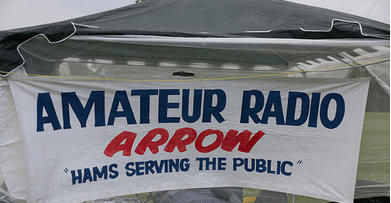
Our club banner hanging on the public information tent at the entrance to our Field Day site.

I recently came across the October 1948 issue of CQ Magazine. In this issue, Herb Brier, W9EGQ (later W9AD), who wrote for both CQ and Popular Electronics, and for whom the ARRL Instructor of the Year Award is named, write about how to make radio clubs work. It’s amazing to me how much of his advice is still good today.

For example, he writes about the importance of a suitable meeting place and gives several suggestions about how to find one. This has certainly been true for our club, ARROW. We’ve met at the Red Cross, at the local community college, and now, under the aegis of a couple of members who are university employess, in a room at the University of Michigan.

Herb also writes, “What names interesting meeting depends on a number of things…Entertainment and refreshments are the principle ingredients. If both can be supplied, so much the better, but light refreshments, like coffee and doughnuts, or ice cream and cookies, are often better pullers than routine entertainment.”

By entertainment he means presentations. He gives a few suggestions for presentations, including getting club members to give talks on their projects and demonstrations of new equipment. Being responsible for scheduling speakers for our club, I took these suggestions to heart.

There are also a few cautions, too. For example, start meetings on time. Herb says, “Late starts often tie in with uninteresting meetings.” Also, don’t make the monthly meetings business meetings. “Most members have no more interest in such details than in the minutes of the Ladies’ Aid Society,” he writes.

Taking this advice to heart, we start our meetings now with the featured speaker and take care of any club business afterwards. Members who don’t want to stick around for the boring business meeting are free to leave.

There are also several paragraphs on sustaining member interest. Field Day is number one on Herb’s list. It’s a great way to mobilize the troops.

Another suggestion Herb makes is to have a picnic. I know some clubs regularly hold their meetings outside in the summer. We’ve done that in the past here, and I think that this summer, we should try to do that again. Who wants to be cooped up in a stuffy room when you can get outside and enjoy the summer weather?

So, all told some good advice. I would also add two other bits of advice: teach classes and organize a Volunteer Examiner team. For a club to survive, it needs to continually add new members.


At the end of the article, there was an unrelated, but interesting item on a recent change to “Part 12 of the Rules Governing the Amateur Radio Service.” The change itself wasn’t so extraordinary, but my question is when did the amateur radio rules change from Part 12 to Part 97?

Filed Under: Clubs Tagged With: FCC, Part 12

  • Page 1
  • Page 2
  • Page 3
  • Go to Next Page »

Primary Sidebar

No Nonsense Extra Class License Study Guide: for tests given between July 2024 and June 2028

New No Nonsense Extra Class Study Guide now available!

The 2024 version of my Extra Class study guide is available in PDF, ePub, Kindle, and print versions.

Click here to get all of my "No Nonsense" study guides.

Also available: The CW Geek's Guide to Having Fun with Morse Code

W5SWL.Com
Retevis Ailunce H1 DMR Radio
DXpander: Cobweb antennas, Laser Cutting

You’ve got mail!

Enter your email address below and get an email every time I publish a new post.

Email


I frequently teach classes to help newcomers get their licenses. The next class will take place on Saturday, February 7, 2026 on the University of Michigan campus. Click here for more information.

If you can't make the class, subscribe to the mailing list to be notified of when the next class will be held.

You can always download my free study guide, and if you have any questions about the classes, or amateur radio in general, please feel free to email me directly.

Support KB6NU.Com

Donate $7.30 and get two of these cool stickers. Measuring 4.25-in. W by 2.75-in. H, it's perfect for your car, your shack, or wherever!

Contact me

If you have a question or comment about one of my blog posts, or a question about any of the material in my study guides, or just a question about ham radio in general, you can email me at [email protected].

Blogs You Should Also Read

  • AE5X: A CW-centric blog from Kingswood, Texas
  • K0LWC Blog
  • LA3ZA Ham Radio Blog
  • Little Radios, Big Fun – WB3GCK
  • Mr. Vacuum Tube's Blog
  • Radio Artisan – K3NG
  • The K0NR Weblog
  • VE3WDM's QRP Ham Radio Blog
  • W2LJ’s Blog

Ham Radio Websites

  • Dashtoons – The Hammin' Comedy by Jeff K1NSS

Podcasts

  • ICQ Podcast
  • Linux in the Ham Schack
  • No Nonsense Amateur Radio Podcast
  • Resonant Frequency Amateur Radio Podcast

Recent Comments

  • Mike on Map your contest QSOs
  • Phillip Cardwell on J-Poles
  • Dan KB6NU on Dayton Hamvention 2026: Day 1, Wednesday, May 13
  • Randy Shake on Dayton Hamvention 2026: Day 1, Wednesday, May 13
  • John Hislop on New edition of my No Nonsense Technician Class License Study Guide now ready for review

Meta

  • Log in
  • Entries feed
  • Comments feed
  • WordPress.org

Footer

Copyright © 2026 Daniel M. Romanchik, KB6NU · Log in