• Skip to primary navigation
  • Skip to main content
  • Skip to primary sidebar
  • Skip to footer

KB6NU's Ham Radio Blog

KB6NU's Ham Radio Blog
  • HOME
  • Study Guides
  • Teach a One-Day Tech Class
  • W8SRC Repeater Guide
  • Advertise
  • Hire Me

spectrum management

ITU offers spectrum-management classes

January 15, 2025 By Dan KB6NU 3 Comments

I’m not sure how I got on this particular ITU mailing list, but I got an email this morning announcing some spectrum management courses that the ITU is offering:

  • SMTP – Advanced spectrum authorization regimes
    3 – 28 February 2025 | Online
    Explore modern spectrum management approaches, focusing on advanced allocation, dynamic access, flexible use, and innovative licensing to optimise spectrum resources.
  • Satellite coordination procedures & fillings 
    17 February – 14 March 2025 | Online
    Learn about ITU’s Radio Regulations, covering orbit spectrum allocation, satellite filings, coordination procedures, regulatory examinations, and BR space tools and databases.
  • SMTP – Opportunistic spectrum access & cognitive radio
    17 February – 14 March 2025 | Online
    Gain insights into opportunistic spectrum access, spectrum sensing techniques, white space utilisation, and current regulations on Cognitive Radio and White Spaces.

The cost for these is $300 each, so I’m not sure that individual hams will want to sign up for these classes, but perhaps it might be worthwhile for someone at the ARRL to sign up for one or more. That is, if there is anyone left there whose job it is to keep up with advances in spectrum management.

One free event that hams certainly might be interested in attending is the seminar E1 – LEO Satellite Constellation Fundamentals, 30 January 2025, 14:30 to 16:30 CET. The description for this seminar reads:

Kickstart your 2025 space journey with our inaugural Space Connect session! In this first installment of our exciting new series, we’re diving into the revolution happening in Low Earth Orbit.  Discover the orbital choreography of modern satellite constellations and the radio spectrum that makes global connectivity possible. ITU Secretary-General Doreen Bogdan-Martin and Director of Radiocommunications Mario Maniewicz will open this session, followed by expert insights into the technology and market forces driving the LEO satellite boom. Join us for this first step into the future of space communications. Save your spot now – and stay tuned for more fascinating Space Connect sessions throughout 2025!

I think that they’re probably going to be talking about things like Starlink, but perhaps this could get some hams thinking about doing a ham radio version of Starlink.
Filed Under: On the Internet, Rules, Regulations, Enforcement, Satellites Tagged With: spectrum management

K1ZZ lays out amateur radio’s agenda at the upcoming World Radio Conference

October 25, 2019 By Dan KB6NU Leave a Comment

Dave Sumner, K1ZZ, may not be the ARRL CEO anymore, but he’s still working for amateur radio. He’s the secretary of the International Amateur Union (IARU) and will be a big part of ham radio’s presence at the upcoming World Radio Conference 2019. The confence starts on October 28 and runs through November 22.

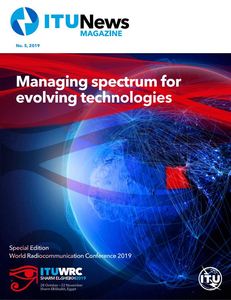
In the latest issue of ITU News Magazine, K1ZZ describes the issues that the IARU will be addressing at the conference. They include:

  • Global harmonization of the amateur 50–54 MHz allocation.
  • Maintenance of existing spectrum access for amateurs.
  • Strengthening protections for radiocommunication services against interference from other generators of radiofrequency (RF) energy.

The article goes into more detail on these issues, and I would encourage  you to read it. The magazine also includes articles from other radio frequency spectrum users on their agenda items. The article immediately following K1ZZ’s article, for example is titled, WRC‑19 agenda items related to space science and Earth observation. Reading these articles will give you a better understand of what the IARU folks are up against at WRC-19.

Filed Under: Rules, Regulations, Enforcement Tagged With: itu, spectrum management, World Radio Conference

IARU Region 3 tackles spectrum management issues

October 11, 2018 By Dan KB6NU 1 Comment

The 17th IARU Region 3 Regional Conference was held September 10-14, 2018 in Seoul, South Korea. Many papers were presented, but the one that caught my eye was “The evolution of spectrum management in the era of hyper-connectivity and its impact on the amateur service.” The introduction reads:

This document provides an overview of emerging global changes in the way the radio frequency spectrum may be managed in the future. While the paper uses Australian documents for source material it is highly likely that similar situations are developing in many countries. Much of the context is based upon observations at ITU-R and APG meetings over the last few years and the purpose of the document is to highlight the global challenges that may emerge in coming years with respect to current and future amateur service allocations.

The paper discusses preparations for the 2019 World Radiocommunication Conference, and what changes will be made to the Radio Regulations, specifically what will happen to our amateur radio allocations. The outlook isn’t rosy:

During the last two WRCs the proposed new amateur allocations were fiercely opposed by many administrations and the amateur service was lucky to get two small allocations following very lengthy and difficult discussions. The opposition is largely around “why do you need another band?”, “the bands you have aren’t being used”, etc. The old fall back of “emergency communications” is no longer seen as an adequate reason so we need more relevant reasons to get any new bands, and going into the future, to maintain access to our existing bands.

Basically, this boils down to “use it or lose it,” and with the use of some of the UHF and microwave bands being so low, it’s hard to see how we manage to hold on to all of our allocations. The paper does have some suggestions for how we might better make use of the bands:

  • While the advantages of narrow bandwidth applications are very important when band conditions are poor or band occupancy is high, what about the rest of the time? What about the VHF bands and above where propagation conditions are relatively favourable and stable, why limit the application bandwidth?
  • Why not consider developing modes that use more bandwidth, or at least are adaptive and can use more bandwidth when band conditions permit? Wider band modes offering better voice quality are certainly easier on the ear. Other information could also be transmitted which would enhance the communications experience. Reduced Bandwidth Digital TV is a possibility for UHF bands and above, possibly even on 6 m and 2 m. Acceptable video quality can be achieved using bandwidths of 300 kHz or less.
  • How about moving away from our reliance on internet mediated modes, or at least supplement the internet with an amateur equivalent. HAMNET in Germany and Broadband-Hamnet in the US are examples of this. Why not use some of our spectrum assets to transmit amateur-specific and non-commercial information (DX clusters, WSPR reports, etc.) instead of commercial internet services? Considering that amateurs have exclusive use of the 44.xx.xx.xx IP address range (AMPRNet) we could build an independent, though internet-linked amateur-specific network. Given the low population density in many Region 3 countries an extensive broadband network using any of the microwave bands is unlikely to be feasible, but perhaps lower frequency bands could be used for (relatively) broadband links if the application data rate is kept low enough.

All of the papers presented at this conference are available online. Other papers that look interesting are Amateur Radio for Kids and Using New Digital Modes to Improve Participation.

Filed Under: Kids, Rules, Regulations, Enforcement Tagged With: spectrum management

From ACM Tech News: Emcomm, AI, cellphone with no battery

July 7, 2017 By Dan KB6NU Leave a Comment

I am a member of the Association for Computing Machinery (ACM) and get a daily digest of news items. Many of these are also of interest to amateur radio operators. Here are som from the last couple of weeks….Dan


NIST Awards $38.5 Million to Accelerate Public Safety Communications Technologies
CCC Blog
Helen Wright
June 20, 2017

The U.S. National Institute of Standards and Technology (NIST) has awarded grants totaling $38.5 million to 33 research and development (R&D) projects committed to advancing broadband communications technologies for first responders. The goal of the NIST grants is to modernize public safety communications and operations by supporting the transfer of data, video, and voice communications from mobile radio to a nationwide public safety broadband network, as well as expediting critical indoor location-tracking and public safety analytics technologies. The awardees encompass five technology areas with the potential to significantly augment public safety communications and operations, including mission-critical voice, location-based services, public safety analytics, research and prototyping platforms, and resilient systems. Among the winning projects are the University of Michigan’s Body-Worn Camera Analytics in Public Safety initiative, the University of Virginia’s Towards Cognitive Assistant Systems for Emergency Response effort, and Carnegie Mellon University’s Real-Time Video Analytics for Situation Awareness project. Full Article


How AI Helped the FCC Auction Off $19-Billion Worth of Radio Spectrum
UBC Science
Chris Balma
June 26, 2017

Researchers at the University of British Columbia (UBC) in Canada and Stanford University in March organized a $19-billion auction of 84 megahertz of radio spectrum using artificial intelligence (AI). The team of computer scientists and economists designed and developed a reverse auction solution in which the price was set by how low TV broadcasters were willing to go to turn over their unused airwaves. The implication was that in densely populated areas, broadcasters made more money for their sales, while those in less populous regions were paid less for their spectrum. The system also factored in other variables, including the number of trades occurring at once and property rights. The AI-based system may be helpful as countries prepare to sell bandwidth for the future 5G mobile network, while UBC professor Kevin Leyton-Brown says the design could serve as a model for similar auctions even on a much smaller scale. Full Article


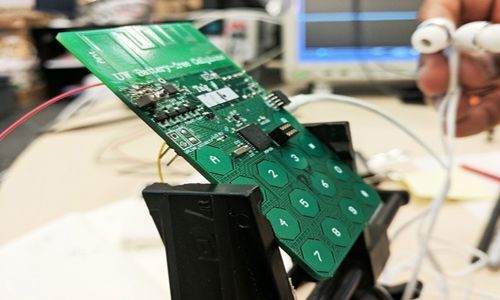
This Cellphone Can Make Calls Even Without a Battery Wired
Mark Harris
June 28, 2017

Researchers at the University of Washington in Seattle (UW) have developed a prototype cellphone that functions without a battery, drawing power from the surrounding environment. The researchers created the handset by developing a new technique called backscatter, which enables a device to communicate by reflecting incoming radio waves. The cellphone uses digital signals to dial numbers, while the backscatter process for voice calls is analog. To develop the phone commercially, the new circuitry could be built into a home Wi-Fi router or a traditional cell tower. “Real cell towers have a hundred times as much power, and would increase the range to perhaps a kilometer,” says UW researcher Vamsi Talla. However, the system can only run on very low power. For example, the large touchscreens that are common on modern smartphones require about 400 milliwatts of power, more than 100,000 times as much power as the new device needs. Full Article

Filed Under: Amateur Radio in the News, Emergency Communications / Public Service Tagged With: AI, cellphones, spectrum management

Primary Sidebar

No Nonsense Technician Class License Study Guide (for tests given between July 2026 and June 2030)

New No Nonsense Technican Class Study Guide now available!

The 2026 version of my Tech Class study guide is now available, and as always, the PDF version is FREE!. The ePub version costs $11.97, and a Kindle version and paperback version will be available on Amazon shortly.

Click here to get all of my "No Nonsense" study guides.

Also available: The CW Geek's Guide to Having Fun with Morse Code

W5SWL.Com
Retevis Ailunce H1 DMR Radio
DXpander: Cobweb antennas, Laser Cutting

You’ve got mail!

Enter your email address below and get an email every time I publish a new post.

Email


I frequently teach classes to help newcomers get their licenses. The next class will take place on Saturday, October 10, 2026 on the University of Michigan campus. Click here for more information.

If you can't make the class, subscribe to the mailing list to be notified of when the next class will be held.

You can always download my free study guide, and if you have any questions about the classes, or amateur radio in general, please feel free to email me directly.

Support KB6NU.Com

Donate $7.30 and get two of these cool stickers. Measuring 4.25-in. W by 2.75-in. H, it's perfect for your car, your shack, or wherever!

Contact me

If you have a question or comment about one of my blog posts, or a question about any of the material in my study guides, or just a question about ham radio in general, you can email me at [email protected].

Blogs You Should Also Read

  • AE5X: A CW-centric blog from Kingswood, Texas
  • K0LWC Blog
  • LA3ZA Ham Radio Blog
  • Little Radios, Big Fun – WB3GCK
  • Mr. Vacuum Tube's Blog
  • Radio Artisan – K3NG
  • The K0NR Weblog
  • VE3WDM's QRP Ham Radio Blog
  • W2LJ’s Blog

Ham Radio Websites

  • Dashtoons – The Hammin' Comedy by Jeff K1NSS

Podcasts

  • ICQ Podcast
  • Linux in the Ham Schack
  • No Nonsense Amateur Radio Podcast
  • Resonant Frequency Amateur Radio Podcast

Recent Comments

  • Dan KB6NU on The EMF Explorer: A badge for ham radio?
  • Travis Good on The EMF Explorer: A badge for ham radio?
  • MARTIN ROBERT ROTHFIELD on The EMF Explorer: A badge for ham radio?
  • Mike Chen on Operating Notes, January 5, 2026
  • Rob W4ZNG on The EMF Explorer: A badge for ham radio?

Meta

  • Log in
  • Entries feed
  • Comments feed
  • WordPress.org

Footer

Copyright © 2026 Daniel M. Romanchik, KB6NU · Log in