• Skip to primary navigation
  • Skip to main content
  • Skip to primary sidebar
  • Skip to footer

KB6NU's Ham Radio Blog

KB6NU's Ham Radio Blog
  • HOME
  • Study Guides
  • Teach a One-Day Tech Class
  • W8SRC Repeater Guide
  • Advertise
  • Hire Me

AI

AI still not ready for prime time…at least not ready for my study guides

January 24, 2026 By Dan KB6NU 2 Comments

Yesterday, someone on the ARRL_Education mailing list asked if anyone is using AI to generate images for educational presentations. That got me thinking that perhaps I could use an AI to generate more images for my study guides. So, I signed up for an account on OpenArt.AI.

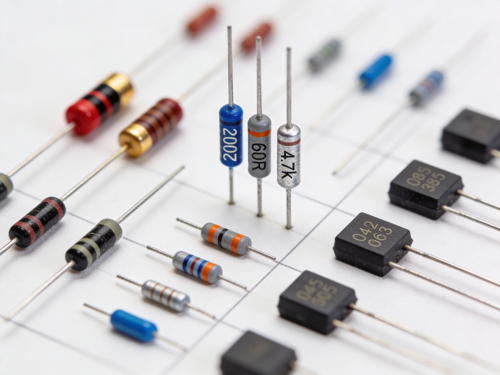
I asked it to generate an image with a “variety of resistors.” This is what I got:
AI-generated image of resistors.


As you can see, it’s almost right, but not right enough to put into the study guide. I guess that’s the thing about AI in general. It’s “almost right,” but really still not good enough. Not good enough for a study guide, for sure.

Satya Nadella, the CEO of Microsoft, might want us to quit using the term “AI slop,” but for that to happen, AI is going to have to actually quit producing slop like what we have above.


Filed Under: Classes/Testing/Licensing Tagged With: AI, study guides

ChatGPT doesn’t really live up to its hype

December 20, 2022 By Dan KB6NU 9 Comments

The hype around ChatGPT, the latest artificial intelligence (AI) chatbot  has gotten intense in the last couple of weeks. CNET says that it’s “mindblowing.” Lifehacker called it the “coolest (and most terrifying) tech of 2022.”

All this hype made me curious as to how useful it might be to me in writing blog posts about amateur radio. So, I asked it a couple of questions. Here’s what ChatGPT generated:

Question #1: What’s the best antenna for 2-meter fm amateur radio operation?

For 2-meter FM amateur radio operation, a Yagi antenna or a vertical antenna may be a good choice.

Yagi antennas are directional antennas that can provide good gain and performance on the 2-meter band, making them suitable for long-distance communication or for reaching distant repeaters. They consist of a driven element and several parasitic elements arranged in a line, and they are relatively easy to build and tune. However, Yagi antennas can be more complex and require more space than other types of antennas, and they may not be suitable for portable or stealthy operation.

Vertical antennas are antennas that are installed upright, with the radiating element extending vertically from the ground. They can be used for a wide range of frequencies, including the 2-meter band, and are suitable for local and regional communication. Vertical antennas can be simple or complex, and they may require a ground plane or radials for proper operation. They are relatively easy to install and tune, and they can be used indoors or outdoors. However, vertical antennas may not provide as much gain as Yagi antennas, and they may not be as suitable for long-distance communication.

Ultimately, the best antenna for 2-meter FM amateur radio operation will depend on the specific needs and goals of the operator. Experimenting with different antennas and trying out different configurations can be a rewarding aspect of the hobby.

Question #2: What are the advantages of software defined radio (SDR)?

Software defined radio (SDR) is a type of radio communication system that uses software to perform the functions of a traditional hardware-based radio. SDR technology offers a number of advantages over traditional radio systems, including:

  • Flexibility: SDR allows you to change the operating frequency, mode, and other parameters of the radio simply by changing the software, rather than replacing hardware components. This makes it easy to adapt the radio to different communication needs and to use it for multiple purposes.
  • Cost-effectiveness: SDR can be less expensive than traditional radio systems because it requires fewer hardware components and can be implemented using off-the-shelf computer hardware.
  • Compact size: SDR systems can be smaller and lighter than traditional radio systems because they don’t require as many hardware components. This makes them more portable and easier to use in a variety of environments.
  • Upgradability: SDR systems can be easily upgraded and expanded by adding new software or hardware components, allowing them to keep pace with the latest technology and applications.
  • Performance: SDR systems can offer improved performance compared to traditional radio systems because they can take advantage of the processing power and flexibility of software to optimize the radio’s performance for a particular application.

Overall, SDR technology offers a number of advantages that make it an attractive option for a wide range of radio communication applications. It is being used in a variety of settings, including amateur radio, military communications, and public safety, as well as in research and development.

Definite limitations

After reading these results, I breathed a sigh of relief. While these results aren’t bad, they only go so far. For example, in the response about 2-meter FM antennas, there’s no distinction between quarter-wave verticals and 5/8-wave verticals. The response to the second question is also pretty generic.

I doubt that ChatGPT is going to replace me or any other ham radio blogger. At least not any time soon. Who knows how good these chatbots will get in the next five to ten years?

Filed Under: Everything Else Tagged With: AI, ChatGPT

From the trade magazines: Impedance matching, AM flutter, DIY AI

November 21, 2021 By Dan KB6NU 4 Comments

Back to Basics: Impedance Matching By Lou Frenzel, W5LEF

The term “impedance matching” is rather straightforward. It’s simply defined as the process of making one impedance look like another. Frequently, it becomes necessary to match a load impedance to the source or internal impedance of a driving source. A wide variety of components and circuits can be used for impedance matching. This series summarizes the most common impedance-matching techniques.

  • Impedance Matching: Essential Design Knowledge
  • Back to Basics: Impedance Matching – Part 1
  • Back to Basics: Impedance Matching – Part 2
  • Back to Basics: Impedance Matching – Part 3
  • Automatic Impedance Matching in RF Design
  • Impedance Matching Basics: Smith Charts

The entire series is available as a downloadable ebook.


While I’m not sure, I’d guess that something similar happens on 160 meters or even the HF bands….Dan

AM Radio ‘Flutter’

Sometimes I like to listen to a couple of AM radio stations that transmit from southern New Jersey, which is rather far from here on Long Island. Their signals are pretty strong during the daytime but now and then there is a rapid in-and-out fading effect, which sounds very much like a flutter.

I’ve sometimes heard that same effect when listening to shortwave radio and I initially assumed it was an ionosphericphenomenon but now I don’t think so. There seems to be an alternative explanation.

…read the complete article


I haven’t tried these yet, but they look like fun….Dan

Google’s AIY kits offer do-it-yourself artificial intelligence

There’s plenty of low-cost hardware out there feasible for implementing deep learning training and (especially, along with being your likely implementation focus) inference, as well as plenty of open source (translation: free) and low-priced software, some tied to specific silicon and other more generic. Tying the two (hardware and software) together in a glitch-free and otherwise robust manner is the trick; select unwisely and you’ll waste an inordinate amount of time and effort wading through arcane settings and incomplete (and worse: incorrect) documentation, trying to figure out why puzzle pieces that shouldfit together perfectly aren’t.

That’s where Google’s AIY (which stands for “Artificial-Intelligence-Yourself,” a play on DIY, i.e., “Do-It-Yourself) Project Kits come in. They’re targeted at hobbyists and professionals alike: in Google’s own words, “With our maker kits, build intelligent systems that see, speak, and understand.

…read complete article

Filed Under: Building/Homebrew, Electronics Theory, Kits, Propagation Tagged With: AI, flutter, impedance matching

From ACM Tech News: Spray on a user interface, AI improves battery life, easier 3D electronics

May 13, 2020 By Dan KB6NU Leave a Comment

Here are some items of interest from the Association of Computing Machinery’s ACM Tech News…


Sprayable User Interfaces
MIT News
April 8, 2020

Researchers at the Massachusetts Institute of Technology’s Computer Science and Artificial Intelligence Laboratory (CSAIL) have developed a technique for spraying on user interfaces. The SprayableTech system automatically generates cardboard stencils of artwork users create in a three-dimensional editor, which can be used to apply the art to surfaces by airbrushing on functional inks. The user can add sensors and displays that control various appliances, and a microcontroller is attached to link the interface to the board that runs the code. The researchers tested SprayableTech on multiple items, including a musical interface on a concrete pillar, an interactive sofa connected to a TV, and a wall display for controlling lighting levels. CSAIL’s Michael Wessely said, “We view this as a tool that will allow humans to interact with and use their environment in newfound ways.”

read more….


AI Techniques Used to Improve Battery Health, Safety
University of Cambridge (UK)
April 6, 2020

A machine learning method developed by researchers at the University of Cambridge and Newcastle University in the U.K. can predict battery health with 10 times greater accuracy than the current industry standard. The new method could help develop safer, more reliable batteries for electric vehicles and consumer electronics. An add-on compatible with any existing battery system, the method monitors batteries by sending electrical pulses into them, measuring the results, and processing those measurements with a machine learning algorithm to predict the battery’s health and useful lifespan. The researchers trained the model by performing more than 20,000 experimental measurements. Said Cambridge’s Alpha Lee, “By improving the software that monitors charging and discharging, and using data-driven software to control the charging process, I believe we can power a big improvement in battery performance.”

read more….


UCLA Engineers Develop Simpler, Faster Way to Build Complex, Better-Performing 3D Electronics
UCLA Samueli Newsroom
April 20, 2020

Engineers at the University of California, Los Angeles (UCLA) Samueli School of Engineering have developed a faster, simpler method for three-dimensionally (3D)-printing electronics, shortening fabrication times from hours to minutes. The researchers patterned 3D shapes with pre-programmed electrostatic charges in an optical 3D printer, then dipped printed components into a solution with a dissolved material, like copper; the material cohered into desired configurations within seconds. UCLA’s Xiaoyu Zheng said the new method “can open the door to integrating new classes of 3D electronics, such as lighter, more compact antennas for the next generation of smart phones and 5G communications, or new classes of sensors and smart materials for wearables.”

read more….

Filed Under: Electronics Theory Tagged With: AI, user interfaces

From ACM Tech News: Emcomm, AI, cellphone with no battery

July 7, 2017 By Dan KB6NU Leave a Comment

I am a member of the Association for Computing Machinery (ACM) and get a daily digest of news items. Many of these are also of interest to amateur radio operators. Here are som from the last couple of weeks….Dan


NIST Awards $38.5 Million to Accelerate Public Safety Communications Technologies
CCC Blog
Helen Wright
June 20, 2017

The U.S. National Institute of Standards and Technology (NIST) has awarded grants totaling $38.5 million to 33 research and development (R&D) projects committed to advancing broadband communications technologies for first responders. The goal of the NIST grants is to modernize public safety communications and operations by supporting the transfer of data, video, and voice communications from mobile radio to a nationwide public safety broadband network, as well as expediting critical indoor location-tracking and public safety analytics technologies. The awardees encompass five technology areas with the potential to significantly augment public safety communications and operations, including mission-critical voice, location-based services, public safety analytics, research and prototyping platforms, and resilient systems. Among the winning projects are the University of Michigan’s Body-Worn Camera Analytics in Public Safety initiative, the University of Virginia’s Towards Cognitive Assistant Systems for Emergency Response effort, and Carnegie Mellon University’s Real-Time Video Analytics for Situation Awareness project. Full Article


How AI Helped the FCC Auction Off $19-Billion Worth of Radio Spectrum
UBC Science
Chris Balma
June 26, 2017

Researchers at the University of British Columbia (UBC) in Canada and Stanford University in March organized a $19-billion auction of 84 megahertz of radio spectrum using artificial intelligence (AI). The team of computer scientists and economists designed and developed a reverse auction solution in which the price was set by how low TV broadcasters were willing to go to turn over their unused airwaves. The implication was that in densely populated areas, broadcasters made more money for their sales, while those in less populous regions were paid less for their spectrum. The system also factored in other variables, including the number of trades occurring at once and property rights. The AI-based system may be helpful as countries prepare to sell bandwidth for the future 5G mobile network, while UBC professor Kevin Leyton-Brown says the design could serve as a model for similar auctions even on a much smaller scale. Full Article


This Cellphone Can Make Calls Even Without a Battery Wired
Mark Harris
June 28, 2017

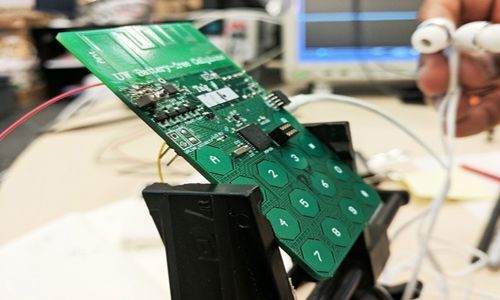
Researchers at the University of Washington in Seattle (UW) have developed a prototype cellphone that functions without a battery, drawing power from the surrounding environment. The researchers created the handset by developing a new technique called backscatter, which enables a device to communicate by reflecting incoming radio waves. The cellphone uses digital signals to dial numbers, while the backscatter process for voice calls is analog. To develop the phone commercially, the new circuitry could be built into a home Wi-Fi router or a traditional cell tower. “Real cell towers have a hundred times as much power, and would increase the range to perhaps a kilometer,” says UW researcher Vamsi Talla. However, the system can only run on very low power. For example, the large touchscreens that are common on modern smartphones require about 400 milliwatts of power, more than 100,000 times as much power as the new device needs. Full Article

Filed Under: Amateur Radio in the News, Emergency Communications / Public Service Tagged With: AI, cellphones, spectrum management

What’s your version of the next generation of ham radio?

June 10, 2017 By Dan KB6NU 8 Comments

Amazon EchoAmazon EchoIn a recent episode of Ham Radio Now, Gary, KN4AQ, chides Jason, KC5HWB, of Ham Radio 2.0, about the name of his podcast. Gary thinks that we’re up to at least version 4.0 by now. (I don’t remember the exact episode. Maybe Gary can comment on this.)

Whatever the next version number really is, things certainly are changing. Recently, for example, someone commented on my Twitter feed, that he was seeing lots of digital activity on 20m, but little or no SSB or CW activity. That’s certainly to be expected in the future. For whatever reason, new hams—both young and old—don’t seem to be ragchewers. (Coincidentally, or maybe not, it’s odd that the next generation of ham radio will have such a big social media, i.e. Twitter, component.)

I’m just going to throw out some ideas here, and then hopefully, get some ideas back from you:

  • Voice control. I’ve become enamored with my Amazon Echo. I listen to radio stations on it, I ask for spellings of words, and I’d play music on it if I’d popped for the more expensive version with better speakers. It’s pretty amazing technology. What I’d like to do is develop a box that would allow me to control my HF rig. I want to be able to say, “Alexa: Set IC-7300 to 7.o27 MHz, CW mode,” and have that happen.
  • Artifical intelligence. Amazon is, I’m sure, using artificial intelligence techniques to do speech recognition. Can the use of AI to demodulate signals be far behind? Not only that, I’d guess that AI could be used to select an appropriate frequency/channel/mode in the first place.
  • JT9, JT65. I’d like to see an extension of these modes to allow some real communication. I don’t see why this isn’t possible, except, I guess, that this code isn’t open source. Is anyone working on an open source version? Are any extensions being considered?

Well, that’s all for now. I gotta go work some CW on 40m. Let me know what you think.

Filed Under: Everything Else Tagged With: AI, voice recognition

How can we use machine learning in amateur radio?

December 10, 2016 By Dan KB6NU 7 Comments

toptal-blog-image-1407508081138If you are as old as I am (61), you’re probably skeptical about anything labelled artificial intelligence, or AI. Over the course of my engineering career, many claims have been made about AI, and few really panned out. This includes stuff like expert systems and neural networks.

Having said that, though, researchers continued to work in this field, and they have made some gigantic strides. We don’t really call it AI anymore, but products like the Amazon Echo Dot, that can decipher what your saying to it, and services like Netflix, that suggest movies and TV shows that it thinks you might like to watch, are using AI techniques. The amazing thing is that these products and services are actually learning about you and are using that knowledge to serve you better. (Will put aside, at least for now, how they, or their corporate overlords, might use that knowledge to take advantage of you.)

With that in mind, when I saw Machine Learning: The New AI by Ethem Alpaydin, I checked it out. It’s a very well-written book. It explains the concepts without any deep mathematics or code listings. I think that in itself is a remarkable achievement.

Reading this book has, of course, has gotten me to thinking about how we will use machine learning in amateur radio. A couple of years ago, Mauri, AG1LE, started a Kaggle competition to use machine learning to copy Morse Code. He’s also continued working on this, and some of his work can be seen on his Google+ page.

I’m thinking that maybe I can use Amazon’s Alexa technology to control my radio. How cool would it be to say, “Alexa, QSY to 7035 kHz, mode CW?” A little more ambitious project might be to collect data on troubles for a particular radio, or maybe antenna, and then use that database to diagnose problems.

I think the possibilities are endless. What do you think that we could use machine learning for in amateur radio?

Filed Under: Everything Else Tagged With: AI, machine learning

From ACM Tech News: Cars talking, implants use wi-fi, AI

September 19, 2016 By Dan KB6NU Leave a Comment

Here’s another selection of items from the Association of Computing Machinery’s ACM Tech News. A lot of modern computing relies on wireless technology, i.e. radio. If you’re thinking of getting involved in any of these wireless technologies, it would be an advantage for you to get an amateur radio license.

The first article below discussses how cars could wirelessly network with one another to avoid crashes. The second discusses how implanted medical can use Bluetooth to connect to external systems.

The third article isn’t really amateur radio related, but I found it to be very interesting. China’s Baidu is making its artificial intelligence (AI) software, PArallel Distributed Deep LEarning (PaddlePaddle), publicly available on GitHub. According to the company, the software can be used by a wide range of coders, even those who are not expert in AI. As far as I know, AI isn’t widely used in amateur radio so far, but perhaps this release will spur this use.


Saving Lives by Letting Cars Talk to Each Other, The Conversation (09/11/16) Huei Peng

Wireless connectivity enabling communication between vehicles, the surrounding infrastructure, and others who share the road offers to improve safety as semi-autonomous and fully autonomous cars mature and proliferate, according to University of Michigan professor Huei Peng. “Connectivity enables smart decisions by individual drivers, by self-driving vehicles, and at every level of automation in between,” he says. Peng says connected vehicles securely communicate to each other and the surrounding infrastructure via Dedicated Short Range Communications, exchanging data 10 times each second via messages that can be securely relayed at least 1,000 feet in any direction, and through inclement weather. The U.S. federal government calculates vehicle-to-vehicle connectivity could prevent or mitigate the severity of approximately 80 percent of crashes that do not involve drug- or alcohol-impaired motorists. “Perhaps the greatest benefit of connectivity is that it can transform a group of independent vehicles sharing a road into a cohesive traffic system that can exchange critical information about road and traffic conditions in real time,” Peng says. He notes the University of Michigan Mobility Transformation Center seeks to advance connected/automated vehicle development. Peng also cites the need “to more fully understand how to fuse information from connectivity and onboard sensors effectively.” View Full Article


Interscatter Communication Enables First-Ever Implanted Devices, Smart Contact Lenses, Credit Cards That ‘Talk’ Wi-Fi, UW Today (08/17/16) Jennifer Langston

University of Washington (UW) researchers’ interscatter communication method enables brain implants, contact lenses, credit cards, and smaller wearables to exchange data with smartphones, watches, and other everyday gadgets. The technique, to be detailed next week at the ACM Special Interest Group on Data Communication (SIGCOMM 2016) conference in Brazil, uses reflections to convert Bluetooth signals from nearby mobile devices into Wi-Fi transmissions over the air. The system relies only on common mobile devices to produce Wi-Fi signals that consume 10,000 times less energy than conventional techniques. “Bluetooth devices randomize data transmissions using a process called scrambling,” says UW professor Shyam Gollakota. “We figured out a way to reverse-engineer this scrambling process to send out a single tone signal from Bluetooth-enabled devices such as smartphones and watches using a software app.” To remove the unwanted, bandwidth-hungry mirror image copy of signals created by the backscattering process, the researchers employed “single sideband backscatter,” says UW doctoral student Bryce Kellogg. “That means that we can use just as much bandwidth as a Wi-Fi network and you can still have other Wi-Fi networks operate without interference,” he notes. Among the proof-of-concept demos the team built were a smart contact lens and an implantable neural recording device. View Full Article


China’s Baidu to Open Source Its Deep Learning AI Platform, SiliconANGLE (08/31/16) Robert Hof

China’s Baidu on Thursday announced it will make its artificial intelligence (AI) software, PArallel Distributed Deep LEarning (PaddlePaddle), publicly available on GitHub. PaddlePaddle lead developer Xu Wei says the software is designed to be used by a wide range of coders, even those who are not expert in deep learning. “You don’t need to be an expert to quickly apply this to your project,” Xu notes. “You don’t worry about writing math formulas or how to handle data tasks.” Xu also says PaddlePaddle needs considerably less code than certain alternatives. For example, he says a machine-translation model based on PaddlePaddle requires only a fraction of the written code other AI platforms need, while existing models can be applied to new problems without demanding complex equations. Xu says the advantage of open sourcing AI algorithms is the potential to attract more deep-learning engineers. More important as a competitive differentiator than the algorithms themselves is the data they collect, with 451 Research’s Peter Christy noting, “the breakthroughs are much more in how you gather and use training datasets.” View Full Article

Filed Under: Computers, Everything Else Tagged With: AI, automotive, Bluetooth, wifi

Primary Sidebar

No Nonsense Technician Class License Study Guide (for tests given between July 2026 and June 2030)

New No Nonsense Technican Class Study Guide now available!

The 2026 version of my Tech Class study guide is now available, and as always, the PDF version is FREE!. The ePub version costs $11.97, and a Kindle version and paperback version will be available on Amazon shortly.

Click here to get all of my "No Nonsense" study guides.

Also available: The CW Geek's Guide to Having Fun with Morse Code

W5SWL.Com
Retevis Ailunce H1 DMR Radio
DXpander: Cobweb antennas, Laser Cutting

You’ve got mail!

Enter your email address below and get an email every time I publish a new post.

Email


I frequently teach classes to help newcomers get their licenses. The next class will take place on Saturday, February 7, 2026 on the University of Michigan campus. Click here for more information.

If you can't make the class, subscribe to the mailing list to be notified of when the next class will be held.

You can always download my free study guide, and if you have any questions about the classes, or amateur radio in general, please feel free to email me directly.

Support KB6NU.Com

Donate $7.30 and get two of these cool stickers. Measuring 4.25-in. W by 2.75-in. H, it's perfect for your car, your shack, or wherever!

Contact me

If you have a question or comment about one of my blog posts, or a question about any of the material in my study guides, or just a question about ham radio in general, you can email me at [email protected].

Blogs You Should Also Read

  • AE5X: A CW-centric blog from Kingswood, Texas
  • K0LWC Blog
  • LA3ZA Ham Radio Blog
  • Little Radios, Big Fun – WB3GCK
  • Mr. Vacuum Tube's Blog
  • Radio Artisan – K3NG
  • The K0NR Weblog
  • VE3WDM's QRP Ham Radio Blog
  • W2LJ’s Blog

Ham Radio Websites

  • Dashtoons – The Hammin' Comedy by Jeff K1NSS

Podcasts

  • ICQ Podcast
  • Linux in the Ham Schack
  • No Nonsense Amateur Radio Podcast
  • Resonant Frequency Amateur Radio Podcast

Recent Comments

  • Michael Burkhardt on One lump or two (or three)?
  • Eric on POTA notes, 7/27/26
  • Steve KB3JC on How to “ragchew” on CW
  • Dan KB6NU on Yaesu FT-710: What’s the big deal?
  • Andrei on Yaesu FT-710: What’s the big deal?

Meta

  • Log in
  • Entries feed
  • Comments feed
  • WordPress.org

Footer

Copyright © 2026 Daniel M. Romanchik, KB6NU · Log in