
• Skip to primary navigation
  • Skip to main content
  • Skip to primary sidebar
  • Skip to footer

KB6NU's Ham Radio Blog

KB6NU's Ham Radio Blog
  • HOME
  • Study Guides
  • Teach a One-Day Tech Class
  • W8SRC Repeater Guide
  • Advertise
  • Hire Me

Bluetooth

Random stuff: Circuit debugging tips, choke cookbook, Bluetooth observation

March 24, 2024 By Dan KB6NU 1 Comment

8 Tips for Debugging Electronic Circuits
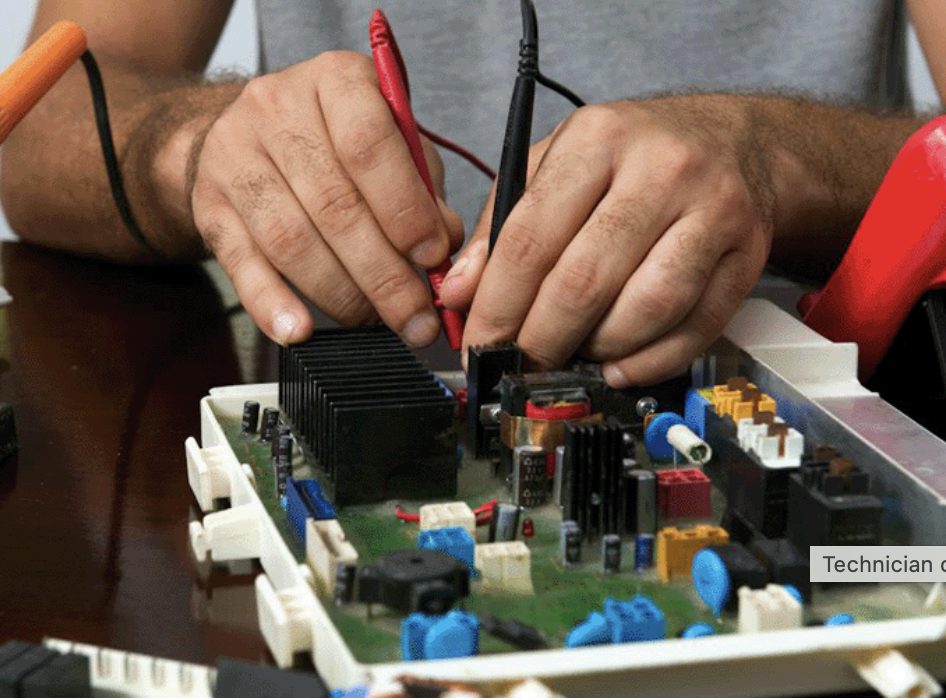
Technician probing an electronic circuitJameco’s eight tips for debugging circuits include:

  1. Understand the circuit.
  2. Do a visual inspection.
  3. Use the right tools.
  4. Check power supply and ground connections.
  5. Consider signal tracing and analysis.
  6. Conduct incremental testing and isolation.
  7. Learn from documentation and community resources
  8. Develop a methodical approach

For a more complete description, visit the Jameco website. My advice would include a combination of #2 and #4. After doing a visual inspection, the first thing I do is to check all the cables and connectors. It’s been my experience that bad cables and connections account for approximately 80% of electronics problems.
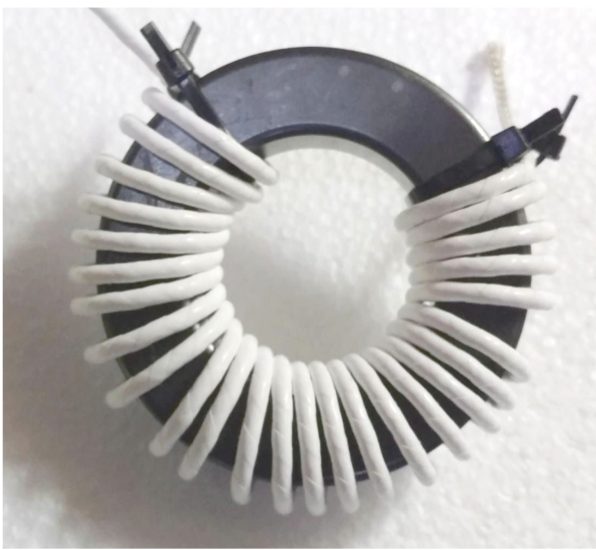

Toroid core wound with RG-179 coax
An RG-179 choke.

A New Choke Cookbook for the 160–10M Bands
Using Fair-Rite #31 2.4-in o.d. (2631803802) and 4-in o.d. (2631814002) Toroids

This article by K9YC is chock-full of information about RF chokes for HF antenna systems, including circuit theory and practical construction techniques. The introduction reads:

Common mode chokes are added as series elements to a transmission line to kill common mode current. The line may be a short one carrying audio or control signals between a computer and a radio, video between a computer and a monitor, noisy power wiring, or feedlines for antennas. This application note focuses on the use of chokes on the feedlines of high power transmitting antennas to suppress received noise, to minimize RF in the shack (and a neighbor’s living room) and to minimize crosstalk between stations in multi-transmitter environments.


Bluetooth multi-path distortion

I’ve started using a set of Bluetooth ear pods to listen to podcasts on my Android phone when walking around town. (I do a lot of walking.) I’ve noticed that when I’m walking around downtown, sometimes the sound will go out in one or both ear pods.

At first, I thought that might be because my hand or my body was shielding the Bluetooth signal when my phone was in my pocket. Thinking more about it, though, I’ve decided that I’m losing the signal due to reflections from buildings as I walk by them. It’s multipath distortion!

I should have realized this right off the bat, as I’ve been teaching this very thing in my one-day Tech classes for at least the last ten years.

Filed Under: Antennas, Building/Homebrew Tagged With: Bluetooth, Chokes, debugging

From ACM Tech News: Cars talking, implants use wi-fi, AI

September 19, 2016 By Dan KB6NU Leave a Comment

Here’s another selection of items from the Association of Computing Machinery’s ACM Tech News. A lot of modern computing relies on wireless technology, i.e. radio. If you’re thinking of getting involved in any of these wireless technologies, it would be an advantage for you to get an amateur radio license.

The first article below discussses how cars could wirelessly network with one another to avoid crashes. The second discusses how implanted medical can use Bluetooth to connect to external systems.

The third article isn’t really amateur radio related, but I found it to be very interesting. China’s Baidu is making its artificial intelligence (AI) software, PArallel Distributed Deep LEarning (PaddlePaddle), publicly available on GitHub. According to the company, the software can be used by a wide range of coders, even those who are not expert in AI. As far as I know, AI isn’t widely used in amateur radio so far, but perhaps this release will spur this use.


Saving Lives by Letting Cars Talk to Each Other, The Conversation (09/11/16) Huei Peng

Wireless connectivity enabling communication between vehicles, the surrounding infrastructure, and others who share the road offers to improve safety as semi-autonomous and fully autonomous cars mature and proliferate, according to University of Michigan professor Huei Peng. “Connectivity enables smart decisions by individual drivers, by self-driving vehicles, and at every level of automation in between,” he says. Peng says connected vehicles securely communicate to each other and the surrounding infrastructure via Dedicated Short Range Communications, exchanging data 10 times each second via messages that can be securely relayed at least 1,000 feet in any direction, and through inclement weather. The U.S. federal government calculates vehicle-to-vehicle connectivity could prevent or mitigate the severity of approximately 80 percent of crashes that do not involve drug- or alcohol-impaired motorists. “Perhaps the greatest benefit of connectivity is that it can transform a group of independent vehicles sharing a road into a cohesive traffic system that can exchange critical information about road and traffic conditions in real time,” Peng says. He notes the University of Michigan Mobility Transformation Center seeks to advance connected/automated vehicle development. Peng also cites the need “to more fully understand how to fuse information from connectivity and onboard sensors effectively.” View Full Article


Interscatter Communication Enables First-Ever Implanted Devices, Smart Contact Lenses, Credit Cards That ‘Talk’ Wi-Fi, UW Today (08/17/16) Jennifer Langston

University of Washington (UW) researchers’ interscatter communication method enables brain implants, contact lenses, credit cards, and smaller wearables to exchange data with smartphones, watches, and other everyday gadgets. The technique, to be detailed next week at the ACM Special Interest Group on Data Communication (SIGCOMM 2016) conference in Brazil, uses reflections to convert Bluetooth signals from nearby mobile devices into Wi-Fi transmissions over the air. The system relies only on common mobile devices to produce Wi-Fi signals that consume 10,000 times less energy than conventional techniques. “Bluetooth devices randomize data transmissions using a process called scrambling,” says UW professor Shyam Gollakota. “We figured out a way to reverse-engineer this scrambling process to send out a single tone signal from Bluetooth-enabled devices such as smartphones and watches using a software app.” To remove the unwanted, bandwidth-hungry mirror image copy of signals created by the backscattering process, the researchers employed “single sideband backscatter,” says UW doctoral student Bryce Kellogg. “That means that we can use just as much bandwidth as a Wi-Fi network and you can still have other Wi-Fi networks operate without interference,” he notes. Among the proof-of-concept demos the team built were a smart contact lens and an implantable neural recording device. View Full Article


China’s Baidu to Open Source Its Deep Learning AI Platform, SiliconANGLE (08/31/16) Robert Hof

China’s Baidu on Thursday announced it will make its artificial intelligence (AI) software, PArallel Distributed Deep LEarning (PaddlePaddle), publicly available on GitHub. PaddlePaddle lead developer Xu Wei says the software is designed to be used by a wide range of coders, even those who are not expert in deep learning. “You don’t need to be an expert to quickly apply this to your project,” Xu notes. “You don’t worry about writing math formulas or how to handle data tasks.” Xu also says PaddlePaddle needs considerably less code than certain alternatives. For example, he says a machine-translation model based on PaddlePaddle requires only a fraction of the written code other AI platforms need, while existing models can be applied to new problems without demanding complex equations. Xu says the advantage of open sourcing AI algorithms is the potential to attract more deep-learning engineers. More important as a competitive differentiator than the algorithms themselves is the data they collect, with 451 Research’s Peter Christy noting, “the breakthroughs are much more in how you gather and use training datasets.” View Full Article

Filed Under: Computers, Everything Else Tagged With: AI, automotive, Bluetooth, wifi

Primary Sidebar

No Nonsense Technician Class License Study Guide (for tests given between July 2026 and June 2030)

New No Nonsense Technican Class Study Guide now available!

The 2026 version of my Tech Class study guide is now available, and as always, the PDF version is FREE!. The ePub version costs $11.97, and a Kindle version and paperback version will be available on Amazon shortly.

Click here to get all of my "No Nonsense" study guides.

Also available: The CW Geek's Guide to Having Fun with Morse Code

W5SWL.Com
Retevis Ailunce H1 DMR Radio
DXpander: Cobweb antennas, Laser Cutting

You’ve got mail!

Enter your email address below and get an email every time I publish a new post.

Email


I frequently teach classes to help newcomers get their licenses. The next class will take place on Saturday, October 10, 2026 on the University of Michigan campus. Click here for more information.

If you can't make the class, subscribe to the mailing list to be notified of when the next class will be held.

You can always download my free study guide, and if you have any questions about the classes, or amateur radio in general, please feel free to email me directly.

Support KB6NU.Com

Donate $7.30 and get two of these cool stickers. Measuring 4.25-in. W by 2.75-in. H, it's perfect for your car, your shack, or wherever!

Contact me

If you have a question or comment about one of my blog posts, or a question about any of the material in my study guides, or just a question about ham radio in general, you can email me at [email protected].

Blogs You Should Also Read

  • AE5X: A CW-centric blog from Kingswood, Texas
  • K0LWC Blog
  • LA3ZA Ham Radio Blog
  • Little Radios, Big Fun – WB3GCK
  • Mr. Vacuum Tube's Blog
  • Radio Artisan – K3NG
  • The K0NR Weblog
  • VE3WDM's QRP Ham Radio Blog
  • W2LJ’s Blog

Ham Radio Websites

  • Dashtoons – The Hammin' Comedy by Jeff K1NSS

Podcasts

  • ICQ Podcast
  • Linux in the Ham Schack
  • No Nonsense Amateur Radio Podcast
  • Resonant Frequency Amateur Radio Podcast

Recent Comments

  • mike on Instant Character Recognition is the key to CW speed
  • Matt W1CDN on A completely different picture of Wayne Green, W2NSD (SK)
  • Chana Walsh on Rethinking ham radio education
  • Rob WfourZNG on Videos: What’s next for POTA, ham radio helps rescue man trapped in cave
  • Dan KB6NU on The EMF Explorer: A badge for ham radio?

Meta

  • Log in
  • Entries feed
  • Comments feed
  • WordPress.org

Footer

Copyright © 2026 Daniel M. Romanchik, KB6NU · Log in