• Skip to primary navigation
  • Skip to main content
  • Skip to primary sidebar
  • Skip to footer

KB6NU's Ham Radio Blog

KB6NU's Ham Radio Blog
  • HOME
  • Study Guides
  • Teach a One-Day Tech Class
  • W8SRC Repeater Guide
  • Advertise
  • Hire Me

POTA

ICQPodcast Episode 460 – Ham Radio Friedrichshafen 2025 Part One

July 16, 2025 By Dan KB6NU Leave a Comment

In this episode, I joined Martin Butler M1MRB, Caryn Eve Murray KD2GUT, Edmund Spicer M0MNG, and Ed Durrant DD5LP to discuss the latest Amateur / Ham Radio news. Topics included:
  • PRESENTER OPINION : Is it time to bring back the club leadership course?
  • POTA Activator Dies in Accidental Electrocution
  • Volunteers Bring Last Commercial Maritime Station Back on Air for 26th Year
  • Hamshack Hotline To Be Discontinued
  • Grant to Aid Clublog Operations Upgrade

This episode’s feature is a selection of interviews from HAM Radio Friedrichshafen.
Filed Under: ICQ Podcast Tagged With: ClubLog, HamShack Hotline, KPH, POTA

A POTA procedural proposal

July 10, 2025 By Dan KB6NU 13 Comments

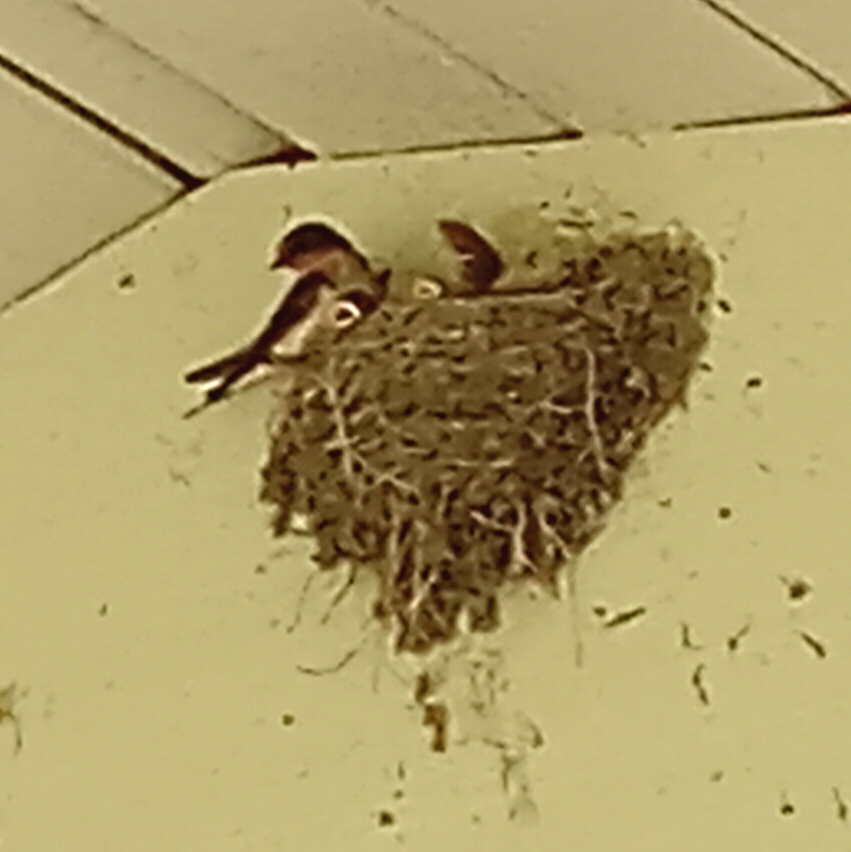
A swallow's nest attached to a beam of a picnic shelter.
A swallow’s nest attached to the picnic  shelter where we operated from this morning. Mama swallow was not happy with me taking this picture. In fact, she dive-bombed me earlier. She had at least three chicks in the nest.

I often do POTA activations with two friends: Paul, KW1L and Rick, K8BMA. We almost always operate CW. On a recent activiation, Paul asked if there was a way to do a joint activation like many phone operators do. If you hunt phone POTA activators, they often say something like, “Stand by for a second operator,” then the second operator gets on and makes their contact.

This rarely happens on CW. In fact, I don’t think that there’s a standard procedure for doing this, and sending something like “QRX for a second operator” probably wouldn’t’ work. For one thing, it’s too long to send. For another, many POTA CW ops are not very experienced and probably wouldn’t know what QRX means.

Even so, Paul and I wanted to be able to set up one station and then make contacts jointly. Paul emailed Tom, K4SWL, if he had any suggestions. Tom wrote back, suggesting a possible way to do this, but added, “I’ll be honest. I think that this would throw off most hunters.”

Paul and I tended to agree with him, but we thought we’d give it a go anyway. This morning, Paul, Rick, and I headed out to the Pinckney State Recreation Area (US-3322). After getting set up, I suggested that what we might do is for me to spot myself and call CQ, and after getting a reply somehow indicate that a second operator, and therefore QSO, was available. The first transmission was pretty much standard, but after the hunter replied, I would send something to indicate that Paul was also there. Here’s an example:

CQ CQ POTA KB6NU KB6NU POTA

W1ABC

W1ABC 599 MI BK

599 MA BK

TU NW W1ABC DE KW1L 599 MI BK (This is the crucial step. With this transmission, we’re telling the hunter that there’s a second station that want a contact, too.)

If the hunter responded with an exchange, we counted that as a contact for KW1L. If not, we didn’t count it.

We experimented with slight variations of this format.  For example, instead of just a single KW1L, we sent it twice. If neither transmission elicited a response, I would give another call, simply:

W1ABC DE KW1L 599 MI

This would sometimes get them to reply. Another trick that we tried was to slow down when sending that final transmission, thinking that that would be a clue that there was a second operator present. That seemed to work sometimes.

Overall, a little less than half the time, the hunter would get the idea and realize that we had a second operator. The other times, the hunters either didn’t understand what we were sending or tuned away after their transmission and didn’t hear ours. If the latter, it’s a shame because they could have had a second contact.

We made 12 contacts for Paul, after which, he decided to call it quits. So, he now has his first legal activation under his belt!

As a result of this experience, I would like to suggest that CW hunters listen to the final transmission of the activator in case there is a second operator present. I would also like to suggest that activators use the format:

TU NW <hunter call sign> DE <second activator call sign> <second activator call sign> 599 <state> BK

I’m not wedded to this, though, so if you have a better suggestion, please let me know.


Filed Under: Operating, Parks on the Air Tagged With: POTA

Operating Notes: 40-meter DX, two Ohio POTA activations

May 23, 2025 By Dan KB6NU 1 Comment

Recently, there have been some complaints about propagation on the HF bands. Last night, however, propagation was pretty good on the 40-meter band. I managed to work four DX stations, including one LU (Argentina), one YT (Serbia), and two HAs. All of them were S6-S7 and very good copy.

The two stations from Hungary were both from the same town (Miskolc). I’m wondering if the first one called up the second and let him know that propagation was good to the U.S.

Finally got Ohio in the POTA log

Last year, on my way down to the Dayton Hamvention, I activated two parks: Van Buren State Park and Grand Lake St. Marys State Park. Unfortunately, those logs never got uploaded. As I was leaving the second park, my phone died. And, it wasn’t just that the battery needed recharging. It was completely dead. I lost both logs, and when I got to Dayton, I had to buy a new phone.

This time, I had much better luck. Van Buren State Park is right off the I-75 freeway. As soon as you get off the freeway, you’re in the town of Van Buren. Drive through town (about four or five blocks) and you come to the park. I set up in a shelter close to the entrance because there was a possibility of rain. Despite complaints about poor band conditions, I made 30 contacts in an hour, including a couple of DX contacts. I would have stayed longer, but that evening, I was meeting some people for dinner, so I packed up and headed to the second park.

Lighthouse next to a lake.
Even though it’s an inland lake, Grand Lake St. Mary’s is so big that has a lighthouse.

The second park I activated was Grand Lake St. Mary’s State Park. I like this park because, even though it’s an inland lake, it has a lighthouse (see above). So, I get both a park activation and a lighthouse activation.

Grand Lake St. Marys is a man-made lake that was constructed in the early 19th century as a reservoir for the Miami and Erie Canal, which connected the Ohio River with Lake Erie. At one time the lake was the world’s largest man-made lake.

The threat of rain was even more real here, so I found another shelter to set up in. That kept me nice and dry. Unfortunately, the shelter I decided on was very close to some homes near the lake. The problem with that was that it was very noisy there. I managed to make 15 contacts in about an hour, but I know I missed at least one because he was down in the noise. I would have been able to make that contact if I’d been at Van Buren State Park.

After I packed up, it was off to Dayton. This time, my phone didn’t flake out on me, and I made it to the hotel in plenty of time to get ready for dinner. Overall, it was a great way to kick off my Dayton 2025 trip.

Filed Under: Hamfests, Lighthouses, Parks on the Air Tagged With: Hamvention, POTA

Tinkering with an antenna

September 28, 2024 By Dan KB6NU 6 Comments

I don’t know that I’d call Clay Mitchell, W8JNZ (SK), my mentor exactly, but I did look up to him, both as a ham and as a person. I’ll always remember one thing that he told me. “Dan,” he said, “one of the best ways to learn about something is to ‘tinker’ with it.” He’d gotten this bit of advice from Dr. Richard Crane, W8CWN, who taught physics at the University of Michigan and was a a well-known science educator and great tinkerer.

I applied this bit of wisdom to the antenna that I use for portable ops. It’s nothing fancy—just a 66-ft. doublet—but by tinkering with it over the years, it’s a much better antenna than it was when I first built it. 

It started with a KX1

It all started about 20 years ago when I decided that I wanted to operate portable and bought and built an Elecraft KX-1. Out of the box, the KX1 covers 40 meters and 20 meters, and you can buy an option to add 80 meters and 30 meters to the radio. I also purchased and built the optional automatic antenna tuner.

The user manual for the KX1 antenna tuner suggested using a wire antenna of 24 – 28 feet and one or more radials of at least 1/8-wavelength. It also suggests connecting these directly to the radio without a feed line. I cut four, 24-ft. lengths of wire from a spool of wire-wrap wire that I had scavenged from the dumpster of one of my employers, purchased a BNC-binding post adapter, connected the driven element to the red binding post and the three radials to the black binding post. 

Antenna
The KX1 antenna featured a 24-ft. driven element and three 24-ft. radials.

The tuner found a match for this antenna, but I was never really thrilled with the performance. I made some contacts, but with only 4 watts output, most of those contacts were a struggle. I struggled with this setup for a couple of years, but since I was really enjoying portable operation, I decided that some tinkering was in order.  

A new antenna is born

In 2007, my 66-ft. doublet was born. Our club here in Ann Arbor, MI, ARROW, conducts mini-Field Days the we call AMP Team meetings every month. (AMP is short for ARROW Mobile and Portable.) We haul all kinds of radio gear out to a park and set up and operate. The gear you’ll find at one of these events includes HF, VHF, UHF, and even some microwave gear. Some club members, for example, are experimenting with AREDN mesh networking, and these meetings are a good place to test out their nodes without having to worry if their node’s antenna is line-of-sight with another node.

As I was contemplating what to use for an antenna for one of these outings, I scanned the shelves in my shack for antenna-making materials. I still had a fair amount of wire-wrap wire that I could use for the antenna itself, but what to use for feed line? When my eyes lit on a spool of twisted-pair wire, I thought why not give that a try? I cut two 33-ft. lengths of wire-wrap wire for the antenna elements and one 33-ft. length of twisted-pair wire to use as feed line. 

As this was going to be an experimental antenna, I didn’t care too much how kludgey the thing looked. For the center insulator, I dug a ceramic dog bone insulator out of my box of antenna parts. To connect the feed line to the antenna elements, I used a couple of small wire nuts.

Antenna
Rev. A of my POTA antenna used wire-wrap wire for the elements, 
a ceramic dogbone insulator, and twisted-pair wire for the feed line.

Cutting a 33-ft. length of wire for the feed line was actually a mistake. I figured that if I made the twisted pair feed line a half-wavelength long, then I’d have a relatively low impedance at the rig. Instead, in my haste, I cut it too short. 33 feet is only a quarter wavelength at 40 meters, which theoretically should have yielded a high impedance at the antenna input. In practice, however, the KX-1 managed to tune that antenna and feed line on 40 meters and 20 meters just fine. That just goes to show how much I know.

To hang up the antenna, I made a small loop at the end of each wire, and to that I tied some mason twine. I threw that twine up into a tree using a weighted tennis ball, and pulled up the antenna. One problem with this approach is that I was never able to get the antenna up all that high. Sometimes the antenna was less than 15 feet off the ground.

Another problem is that it took a long time to do this. It takes time to get two lines up into trees, raise the antenna, then tie off the lines. Not to mention that you need two trees relative close to one another. Sometimes, I would set up this antenna as an inverted-V, but I still had to find an appropriate tree for this.

Enter the KX3

In 2015, I bought a used KX3. Being a KX1 user, I had subscribed to the Elecraft-KX mailing list, and when someone offered to sell a KX3 with antenna tuner for about $1,200, I jumped on it. At first, I had visions of outfitting with with a PX3 band scope and some kind of amplifier to make a base station out of it, but when I found a good deal on a Flex 6400, I decided against that approach. The KX3 would be devoted to portable operation.

Because the KX3 antenna tuner has a wider range than the KX1 antenna tuner, I wasn’t anticipating any problems with it tuning the doublet. And, in fact, that was the case. The KX3 easily tunes the doublet on all bands between 40 meters and 10 meters.

POTA improvements

Improvements to the antenna accelerated once I started operating Parks on the Air (POTA). One of the first improvements was to purchase a 10-meter, telescoping, Spiderbeam fiberglass mast. With the Spiderbeam mast, I no longer have to throw lines up into trees. I slide a small eyelet into the top section of the telescoping mast and attach the center insulator of the antenna to the eyelet. I extend the mast and operate the doublet as an inverted V. No trees needed.

To anchor the telescoping mast, I pound three garden stakes into the ground at 120-degree intervals around the mast, then put a strap around the stakes and mast to hold the mast  upright. This arrangement is much easier to set up than others that I’ve seen that use ropes and tent stakes, and it is very stable. It’s certainly stable enough for a two- or three-hour POTA activation.

To anchor the elements, I use two-pound exercise weights that I bought for a buck each at a local thrift shop. Using the weights, it’s easy to extend the elements to whatever length I need quickly. Overall, setting up the antenna is very quick. I can be on the air within 20 minutes of arriving at a park.

The next improvement that I thought I’d make is to find a center insulator that would provide better strain relief for the feed line. Searching the internet, I found a 3D-printed center insulator by an eBay seller who calls himself thecrazyham. He didn’t have anything designed for a twisted-pair feed line, but I guessed that a center insulator designed for 300 Ω twinlead would work just fine. It did work just fine, and as a bonus, it only cost five dollars!

After acquiring the new center insulator, my friend, Rick, K8BMA gave me some 26-ga. Poly-STEALTH antenna wire. I cut two,  33-ft. lengths and connected them to the feed line with wire nuts again. I hadn’t had any trouble with the wire-wrap wire I was using, but this wire was made with antennas in mind. It’s really first-rate stuff. I don’t think it works any better than the wire-wrap wire, but it coils up neatly and fits nicely into the small toolbox I use to carry around POTA station. 

antenna
Rev. B. of my POTA antenna uses Poly-STEALTH antenna wire and a 3D-printed center insulator.

A “real” feed line

Whenever I was asked about my POTA antenna, I would brag about the twisted-pair feed line. I was rather proud that I thought to use twisted-pair wire as a feed line, and that it actually worked. But, a  couple of months ago, my friend Paul, KW1L, bought a Cobra antenna. Before putting it up at his house, he asked if we could take it on a POTA activation and try it out. I agreed, and one morning, we took it up to the Island Lake Recreation Area.

Band conditions were good that morning, but even so, it seemed like the antenna was performing at least a little better than my doublet. Paul said, “Well, sure, it’s because the Cobra antenna has a real feed line.”

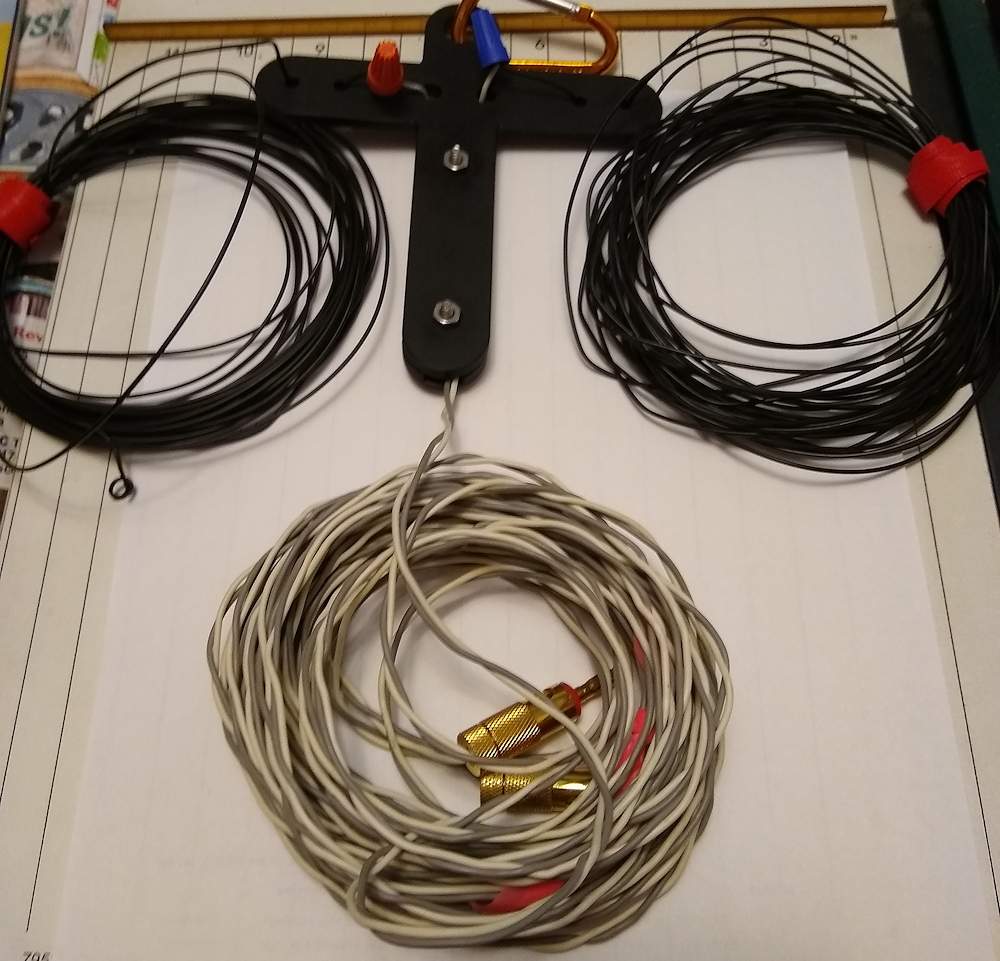
So, I decided to try a “real feed line” on my doublet. It just so happened that I had a 100-ft. roll of  300 Ω twinlead that I purchased at a dollar store many years ago. I cut off a 35-ft. hunk of it, soldered it to the antenna elements, and put some banana plugs on the other end of it. After using this  antenna for a couple of months now, I feel that I have to swallow my pride a little and say that the antenna with the 300 Ω feed line does work a little better than it did with the twisted-pair feed line. I’m guessing that it’s because the twisted-pair feedline has a higher loss than the twinlead.

Antenna
The major difference between the Rev B and this Rev C antenna is the 300-ohm twinlead feed line.

My latest improvement is to use a 4:1 balun between the feedline and the antenna tuner. Until just recently, I was connecting the feedline directly to the KX3 antenna tuner, but the fellow who sells Cobra antennas recommends using a 4:1 balun, so I thought that doing so might improve my antenna’s performance as well.

Several years ago, I purchased a couple of W1CG  current balun kits at a hamfest, and now was the time to build one. This is a really great kit, and if you ever see one at a hamfest or wherever, buy it. The New Jersey QRP Club that sponsored this kit is now defunct (despite the website still being online), and the kits are no longer available. (I’ve been thinking about kitting up some and selling them, but that’s  a discussion for another day.) The instruction manual is still available, though, and it’s not hard to find the parts. 

If you’re at all interested in baluns and how they work, you should download the instructions. They contain a great description of how baluns work and the difference between voltage baluns and current baluns.

At any rate, I built one of the kits, and have started to use the balun on my POTA activations. I can’t say for sure how much the balun has improved my results, but it certainly hasn’t hurt them, so I’m going to continue to use it. 

Tinkering gets results 

If you take away only one thing from this article, take away the idea that tinkering with something gets results. The antenna that I’m using today is basically the same antenna that I built 20 years ago, but the tweaks that I’ve made have significantly improved its performance and its ease of use.

One final note: I recognize that much of my success is due to the magic of the Elecraft antenna tuner. I have used this antenna with other antenna tuners, including the inexpensive Z-match tuners you can get from Ali Express or Amazon. It should also work well with the Emtech ZM-2 antenna tuner. If you purchase and tinker with this antenna and one of these tuners, please let me know how it works out for you.

Filed Under: Antennas Tagged With: POTA

ICQ Podcast Episode 414 – Simple Test Gear You Can Build

October 8, 2023 By Dan KB6NU Leave a Comment

In Episode 414, I join Martin Butler M1MRB, Caryn Eve Murray KD2GUT, Edmund Spicer M0MNG and Ed Durrant DD5LP to discuss:

We would like to thank our monthly and annual subscription donors for keeping the podcast advert free. To donate, please visit – http://www.icqpodcast.com/donate

  • RSGB Director’s SOTA challenge

  • YL in Philippines is net controller, Aged 10!

  • Hams Enjoy a “SOTA ECLIPSE”

  • Radio Event in Serbian Parks Honours Pioneering Activator – SK

  • The YL CW Net is Back

The episode’s feature is Simple Test Gear You Can Build.

Filed Under: Operating Tagged With: HamSci, nets, Phillipines, POTA, SOTA

Videos: Tying knots, chatting on HF with VarAC, and the tech behind POTA

March 29, 2023 By Dan KB6NU 1 Comment

Useful knots for portable hams

After watching  this video, I’m actually able to tie a taut hitch.


VarAC HF Chat

I’m not a big digital guy, but this looks interesting.


W8TAM: Powering POTA

Parks on the Air (POTA) is arguably one of the coolest things in ham radio today. Here, Thom, W8TAM, a friend of mine and one of the masterminds behind the technology, explains some of the tech that makes it so popular.


Filed Under: Digital Modes, Operating, Parks on the Air Tagged With: knots, POTA, VarAC

A belle time on Belle Isle

August 21, 2022 By Dan KB6NU 8 Comments

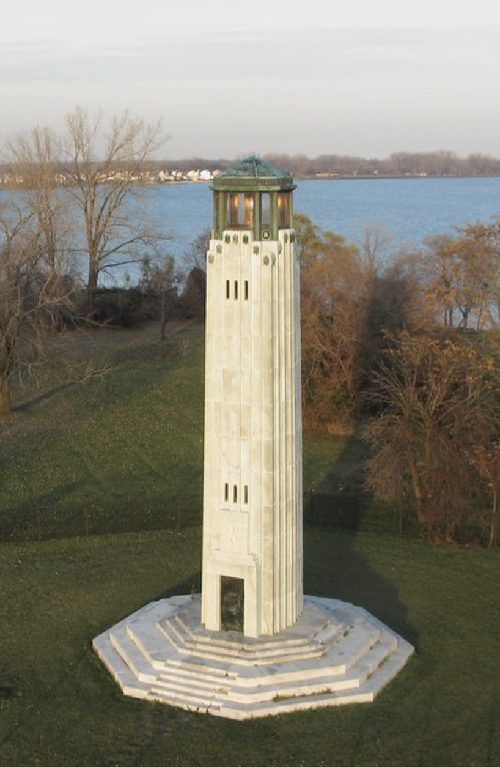
The Livingstone Memorial Lighthouse.  Credit: Juan N Only.

After announcing  the Michigan Lighthouse Award, I felt bad about not qualifying for it myself. So, since this weekend is International Lighthouse and Lightship Weekend (ILLW), I decided to activate lighthouse number 5, so that I could award myself certificate #1.

The lighthouse closest to me is the Livingstone Memorial Lighthouse on Belle Isle, in the middle of the Detroit River. So, yesterday, despite my wife warning me that I was going to get rained on, I threw my KX-3 into the car, along with a folding table and chair and a simple lunch, and headed to Belle Isle.

Belle Isle was established as a city park, back when Detroit was in its heyday. It was designed by Frederick Law Olmstead, the landscape designer of New York City’s Central Park, the Biltmore Estate in Asheville, NC, and many other famous parks and campuses. As did the city of Detroit, it fell on some hard times, but now, under the supervision of the Michigan state park system, it’s enjoying a renaissance. Its 982 acres really are a jewel.

The Livingstone Lighthouse

Livingstone Memorial Lighthouse was named after William Livingstone of Detroit. Born in 1844, Livingstone was president of the Dime Bank, owner of the Detroit Evening Journal, and long-time president of the Lake Carriers Association. He was also responsible for several important navigational improvements on the Great Lakes, including the creation of a deep-water channel in the lower Detroit River which became known as the Livingstone Channel. Following his death in 1925, friends and colleagues across the city rallied to build an appropriate monument in Livingstone’s memory.

Designed by renowned Detroit architect Albert Kahn, the Livingstone Memorial Lighthouse is located on the northern end of Belle Isle, facing Lake St. Clair, and is one of only two lighthouses that are also memorials. Hungarian sculptor Geza Maroti designed the ornamentation of the lighthouse in 1930. It’s very Art Deco style, with a classical fluted pillar. The 58-foot-tall lighthouse was sculpted out of Georgia marble – the only such structure in North America.

The lighthouse’s bronze and glass lens, originally from the older Belle Isle Lighthouse that was demolished in 1941 to make room for the Coast Guard station, generates an 8600-candlepower beacon visible for up to fifteen miles.

My operation

I arrived at the lighthouse about 12:30 and took a short hike down a trail to see the lighthouse up close and enjoy the view upriver. During this short hike, I did feel a few sprinkles, but after inspecting the clouds, I decided to set up anyway.

Just off the parking lot, there’s a set of three picnic tables, sitting under a pergola. The pergola looked like a good, if kind of low, support for my 28-ft. vertical antenna, and the picnic table looked like a perfect operating position. I threw then antenna up into the pergola, and in less than 20 minutes, I was on the air. Almost, anyway.

This antenna consists of a 28-ft. vertical radiator and three radials. Normally, I’d just lay the radials on the ground. That didn’t seem to work here. I couldn’t get the SWR below about 2:1. It was a little puzzling, as it had never behaved like this before.

I played around with different configurations, but what worked the best was elevating the radials off of the concrete floor. I’m not sure if the concrete had some metal reinforcement that was detuning the antenna, but elevating the radials brought the SWR on 40m down to 1:1.

I spotted myself on pota.app, and over the next hour and half, I made 24 contacts. Towards the end, activity really dropped off, so I started to think about packing up. Before packing it in, I decided to give out one more CQ, and I’m really glad that I did. The last contact proved to be my best contact of the day.

W2RC, with Neil, KC2KY at the key, replied to my CQ. W2RC is the club call sign of the Radio Central Amateur Radio Club, and they were operating from the Old Field Point Lighthouse, on the north shore of Long Island, NY. This was my first lighthouse-to-lighthouse contact of the day. After a nice ragchew with Neil, I said my 73s and packed up my stuff.

I ended my day on Belle Isle by visiting the Dossin Great Lakes Museum. Its exhibits include many models of ships that sailed the Great Lakes; the pilot house of the SS William Clay Ford, an iron ore freighter; and the Miss Pepsi, one of the hydroplanes that raced the Detroit River. All these exhibits tell the story of more than 300 years of Detroit’s maritime history. It was a great way to end the day.

Filed Under: Lighthouses, Operating, Parks on the Air Tagged With: Belle Isle, lighthouses, POTA

My new WTH Card

August 7, 2022 By Dan KB6NU 8 Comments

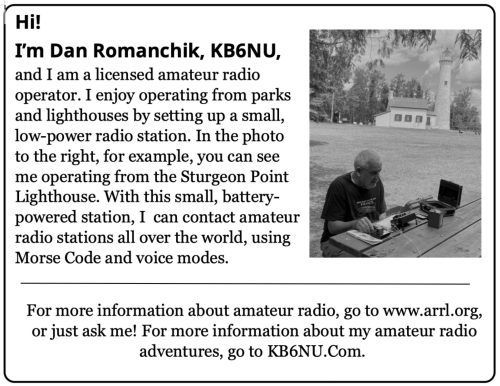
I’ve updated my WTH card, a card that I can give out to folks when I’m doing a POTA or lighthouse activation that tells them what the heck I’m doing.

What do you think? One thing that I’m having trouble with is getting the black-and-white photo to look good. I started with a 300 ppi color image, but I must have done something bad in turning it into a b/w image. Any ideas would be appreciated.

Filed Under: Lighthouses, Operating, Parks on the Air Tagged With: portable ops, POTA, wth card

ICQ Podcast Episode 353 – Parks on the Air and Xiegu G90 SDR Transceiver Review

June 21, 2021 By Dan KB6NU Leave a Comment

On this episode, I joined Martin M1MRB, Leslie Butterfield G0CIB, and Edmund Spicer M0MNG to discuss:
  • Fly Me to the Moon. An amusing story about the first Bitcoin transaction using EME communications.

  • WIA Seeks Review of Amateur Radio Exam System

  • International Space Station to be in Cross-Band Repeater Mode for Field Day. Get out the satellite antenna for Field Day!

  • Aluminium-Ion Battery Development. Scientists in Australia have developed a graphene aluminium-ion battery that they claim has up to three times the capacity of a lithium-ion battery and can charge up to sixty times faster. Now, we just have to wait and see if this battery can be manufactured in quantity at a reasonable price.

  • IARU Workshop Future of Amateur Radio – Strengths, Weaknesses, Opportunities and Threats. A good first step in understand where we are and the challenges that amateur radio will have to confront in the future.

The features for this episode include coverage of Parks on the Air (POTA) by Bill Barnes WC3B, and review of the Xiegu G90 SDR Transceiver by Ed Durrant DD5LP.

Filed Under: Podcasts Tagged With: ICQPodcast, POTA, Xiegu

Awwww. How cute!

June 10, 2020 By Dan KB6NU 1 Comment

Yesterday, I got this press release from James Hannibal, KH2SR, the proprietor of QuirkyQRP:

Finger Morse Straight Key

For portable CW opera-ng

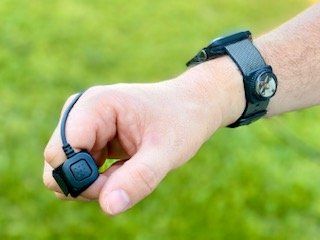
Finger Morse is a fun, inexpensive, & ultra lightweight Morse code straight key that allows you to easily stay on the air making CW QSO’s with your QRP rig while you are walking.

It’s a great option for staying on the air while hiking to/from your next SOTA/POTA activation location or while on a backpacking trip.

It’s also nice to have as an inexpensive backup straight key incase you forget your main straight key/paddle, or if your main key/paddle happens to fail while you are in the backcountry.

No more being stuck sitting down while operating. Go for a walk, get some exercise and keep making CW contacts!

With the Finger Morse CW Straight Key by QuirkyQRP Ham Radios, you can finally try operating QRP pedestrian portable.

I have no idea how well this thing actually works, but it’s cute, isn’t it? I also like the company name: QuirkyQRP. :)


If you make or sell ham radio products, please be sure to send me a press release when you introduce new products. If you include a sample, I’ll even do a more in-depth review.

Filed Under: CW Tagged With: portable, POTA, SOTA

Primary Sidebar

No Nonsense Extra Class License Study Guide: for tests given between July 2024 and June 2028

New No Nonsense Extra Class Study Guide now available!

The 2024 version of my Extra Class study guide is available in PDF, ePub, Kindle, and print versions.

Click here to get all of my "No Nonsense" study guides.

Also available: The CW Geek's Guide to Having Fun with Morse Code

W5SWL.Com
Retevis Ailunce H1 DMR Radio
DXpander: Cobweb antennas, Laser Cutting

You’ve got mail!

Enter your email address below and get an email every time I publish a new post.

Email


I frequently teach classes to help newcomers get their licenses. The next class will take place on Saturday, February 7, 2026 on the University of Michigan campus. Click here for more information.

If you can't make the class, subscribe to the mailing list to be notified of when the next class will be held.

You can always download my free study guide, and if you have any questions about the classes, or amateur radio in general, please feel free to email me directly.

Support KB6NU.Com

Donate $7.30 and get two of these cool stickers. Measuring 4.25-in. W by 2.75-in. H, it's perfect for your car, your shack, or wherever!

Contact me

If you have a question or comment about one of my blog posts, or a question about any of the material in my study guides, or just a question about ham radio in general, you can email me at [email protected].

Blogs You Should Also Read

  • AE5X: A CW-centric blog from Kingswood, Texas
  • K0LWC Blog
  • LA3ZA Ham Radio Blog
  • Little Radios, Big Fun – WB3GCK
  • Mr. Vacuum Tube's Blog
  • Radio Artisan – K3NG
  • The K0NR Weblog
  • VE3WDM's QRP Ham Radio Blog
  • W2LJ’s Blog

Ham Radio Websites

  • Dashtoons – The Hammin' Comedy by Jeff K1NSS

Podcasts

  • ICQ Podcast
  • Linux in the Ham Schack
  • No Nonsense Amateur Radio Podcast
  • Resonant Frequency Amateur Radio Podcast

Recent Comments

  • Mike on Map your contest QSOs
  • Phillip Cardwell on J-Poles
  • Dan KB6NU on Dayton Hamvention 2026: Day 1, Wednesday, May 13
  • Randy Shake on Dayton Hamvention 2026: Day 1, Wednesday, May 13
  • John Hislop on New edition of my No Nonsense Technician Class License Study Guide now ready for review

Meta

  • Log in
  • Entries feed
  • Comments feed
  • WordPress.org

Footer

Copyright © 2026 Daniel M. Romanchik, KB6NU · Log in