• Skip to primary navigation
  • Skip to main content
  • Skip to primary sidebar
  • Skip to footer

KB6NU's Ham Radio Blog

KB6NU's Ham Radio Blog
  • HOME
  • Study Guides
  • Teach a One-Day Tech Class
  • W8SRC Repeater Guide
  • Advertise
  • Hire Me

nets

ICQ Podcast Episode 414 – Simple Test Gear You Can Build

October 8, 2023 By Dan KB6NU Leave a Comment

In Episode 414, I join Martin Butler M1MRB, Caryn Eve Murray KD2GUT, Edmund Spicer M0MNG and Ed Durrant DD5LP to discuss:

We would like to thank our monthly and annual subscription donors for keeping the podcast advert free. To donate, please visit – http://www.icqpodcast.com/donate

  • RSGB Director’s SOTA challenge

  • YL in Philippines is net controller, Aged 10!

  • Hams Enjoy a “SOTA ECLIPSE”

  • Radio Event in Serbian Parks Honours Pioneering Activator – SK

  • The YL CW Net is Back

The episode’s feature is Simple Test Gear You Can Build.

Filed Under: Operating Tagged With: HamSci, nets, Phillipines, POTA, SOTA

Operating notes: Club net, DXpeditions, 30 meters

November 26, 2022 By Dan KB6NU 1 Comment

For the last year or so, I’ve been the net control station for our club’s 2-meter net, which takes place on Monday evenings at 8 pm Eastern time on our club repeater on 146.96 MHz. Lately, we’ve had a couple of youngsters check in. Last week, one of them had his sister check in (well, say hi, at least).

We’ve had a great turnout, too. On November 14, we had 17 check-ins, and on November 21, we had 22 check-ins.

Working the DXpeditions

Over the last few weeks, I’ve been fortunate to work three of the African DXpeditions, including:

  • D60AE – Comoros. See the video above.
  • 5V7RU – Togo
  • J28MD – Djibouti

All three were new countries for me, and I worked all of them on 30 meter CW. In addition, I worked 5V7RU on 40 meter CW.

I’m not a big DXer, but it is fun to work them when you can. For a list of current and upcoming DXpeditions, see NG3K’s Announced DX Operations.

30 meter propagation

Speaking of 30 meters, propagation was kind of rough this evening. I headed over there because the CQWW CW contest is on this weekend, so using 40 meters or 80 meters was out of the question, unless I wanted to participate in the contest. I did manage to eke out on QSO, but the signals were so weak that we couldn’t really continue past the first exchange. So much for the WARC bands (30 meters, 17 meters, and 12 meters) being alternatives during contest weekends.

Filed Under: Everything Else Tagged With: 30 meters, Comoros, Djibouti, nets, Togo

Make amateur radio club nets fun

June 16, 2021 By Dan KB6NU 7 Comments

If your club owns a repeater, or has access to one, your club should have a weekly net. These nets inform members about club events, provide a forum for club members to get help with any technical problems they may have, build camaraderie among club members, and are just fun. At least they should be fun.

Too often, these nets turn out to be a drudge-fest. Net controls slog through a list of check-ins, who dutifully say when called upon, “No traffic.” If your net is like this, you’re missing an opportunity.

When I’m net control, I like to get personal to get people talking. When I call a station, I’ll say things like, “Next is W8ABC. How’s life in your part of town tonight, Joe?” or “What are you up to tonight, Sam?” or “How’s that antenna project coming, Don?” or “Worked any DX lately, Steve?” If someone has joined the net from outside our local area, I’ll say something like, “K8XYZ, you’re our DX station tonight. How are things in your part of the world?”

Often, I’ll continue a conversation  by asking a question about a topic brought up by a previous station. For example, if one guy says that he’s having tacos for dinner, I’ll ask the next person what they’re having for dinner or what kind of tacos they like.

To get people to show up in the first place, make sure that your club members know about the net. An announcement should be in every club newsletter, and if your club has a mailing list, send out an email announcement every week. People are busy, and things like this can often slip through the cracks. After the net, reply to the announcement email with a list of who checked in and what you discussed. If someone sees that their buddy checked in to a net, they are more likely to check in the next week. Similarly, if they see that a topic of interest was discussed, they might join the net next week to chime in on the topic.

You might try doing some different things, too. For example, before this week’s net, one guy asked if he could try sending an SSTV image over the repeater during the net. What a great idea! I, of course, said yes. On his first transmission, this guy mentioned that he was going to try this at the beginning of the second round and then pointed people towards an app—Robot36—that they could download to their Android phones. I downloaded Robot36 to my Android phone, and on his second transmission, I was able to copy the image. That was something different and fun. I’m thinking that we might even try RTTY or some other digital mode in the future.

I think you get the idea. Making a net fun will draw members, and more members means more fun. I think it’s working here in Ann Arbor. Last Monday’s net had 17 check-ins and a run time of 70 minutes.

Now, tell me how you make your club net fun.

Filed Under: Clubs Tagged With: nets

Operating Notes: Gray Line, Snail Net

March 8, 2019 By Dan KB6NU 1 Comment

Yogi Berra is purported to have said, “You can observe a lot by just watching.” Well, I Yogi had been an amateur radio operator, he might have said, “You can hear a lot by just listening.” The first and third notes below are examples of this…..Dan


Gray line to the rescue

A couple of evenings ago, I was banging out CQs on 10115 kHz. The band didn’t seem particularly good, but you never know what might happen, so I continued to hit the CQ key on my keyer. After a while, I got distracted by some thread on Twitter (I’m @kb6nu there. Follow me.) and had neglected to send CQ for about five minutes. In the meantime, I noticed that it had gotten dark outside.

I was thinking of QSYing to 40m, when all of a sudden, I hear OA4DX call CQ right on the frequency that I’d been using. Of course, I called him immediately.

I’d like to say that signals were 599 both ways, but honestly he was having a bit of trouble copying my call. After a couple of repetitions, however, he got it.

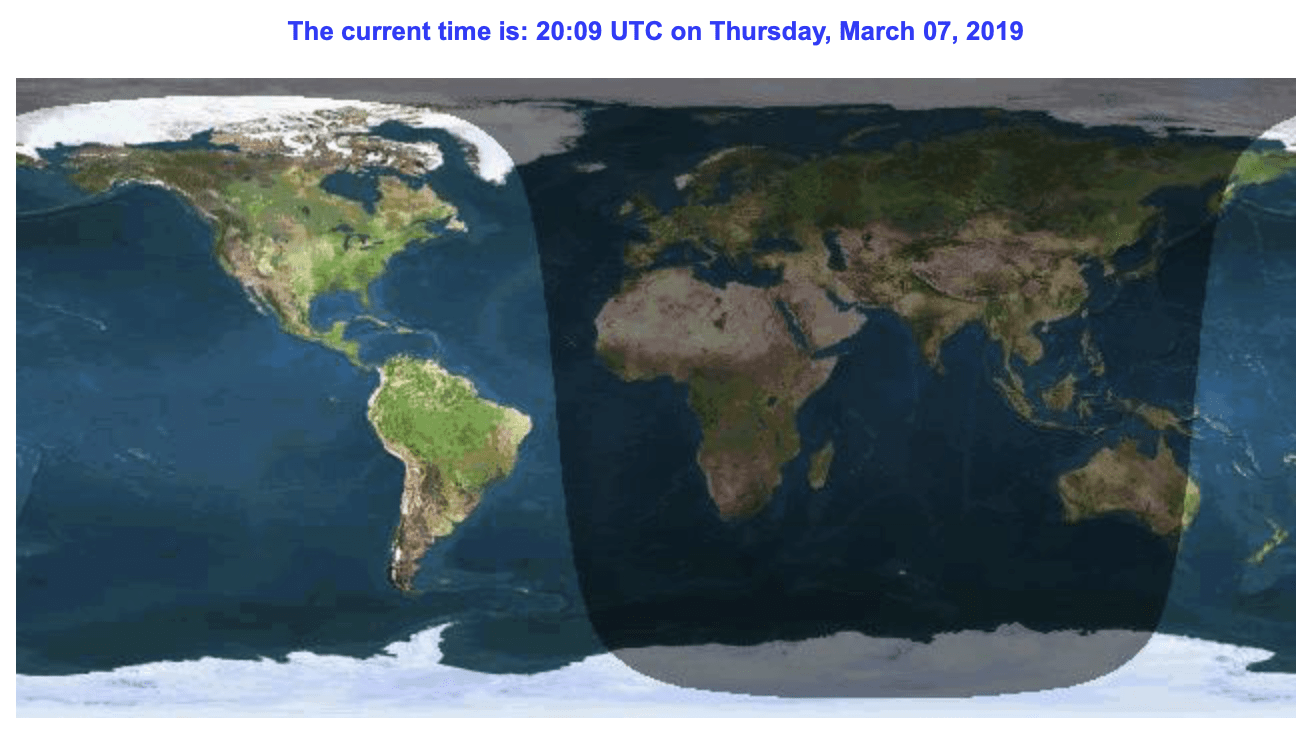
Right after the contact, I looked at a gray line map (see below), and sure enough, both of us were just to the dark side of the gray line. Pretty cool, I’d say.

Screenshot of a gray line map at about 3 pm EST.

I work the guy that wrote the book

Yesterday evening, I got on 40m, and after tuning up, I tuned around and heard a few European stations. Hopeful of working some DX, I started calling CQ on 7028 kHz. After two calls, John, ON4UN (author of ON4UN’s Low-Band DXing replied.

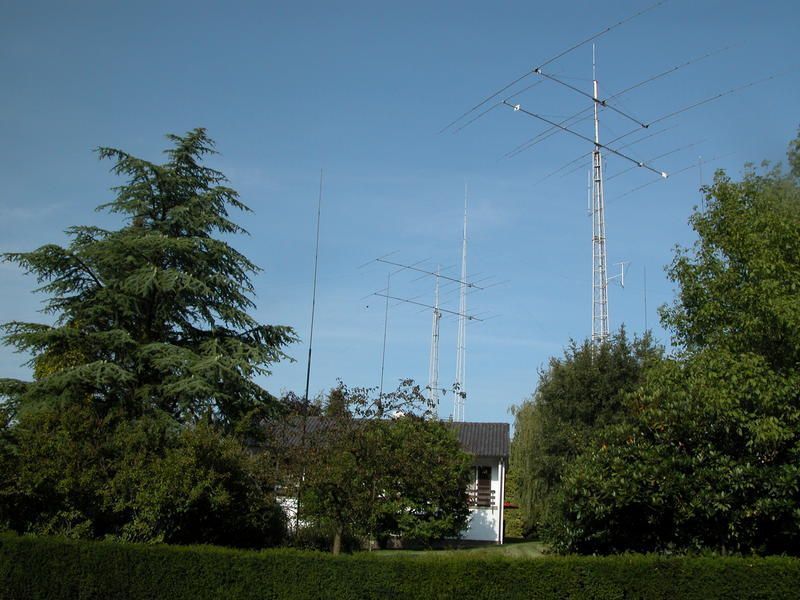
He was a solid 599 here. Well, of course he was. A quick check of his QRZ.Com page shows that he has a three-element Yagi for 40m at 30 m in height. See below for a shot of his antenna farm.


You never know who you’re going to run into on the ham bands

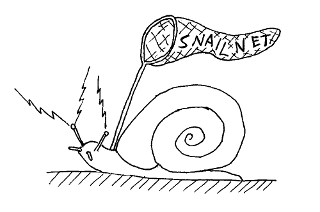
Sometime after working ON4UN, I QSYed to 80 m, and was puttering around the shack, and for whatever reason had the rig tuned to 3532 kHz. Right at 0100Z, I hear the call, “SNAIL NET de KU1N QNI? K.”

At first, I thought that this was perhaps a slow-speed traffic net. When I Googled, SNAIL NET, though, I found their web page. According to the web page,

For several years a group of FCARC members have been holding an informal slow speed CW practice net on the 80 meter band. We call ourselves the Snail Net. Some of us never had to take a Morse Code test to get our licenses, others had not used code for a while, felt rusty, and wanted to rebuild the skill.

I thought, what the heck, signals are good, so why not check in? The net control station surprised me by saying “HI DAN” when he recognized my check-in. As it turns out, we’d worked a couple of times before, and like me, he must have been using a computer logging program.

There were five check-ins total (including the net control station), and we all got a chance to make a transmission. The net lasted about 20 minutes and was quite fun. I know I’ll be checking in again. If you’d like to check in as well, look for them on Sunday and Wednesday evenings between 3530 and 3535 kHz at 8 pm Eastern Time (0100Z or 0000Z during the summer).

Filed Under: CW, DX, Operating Tagged With: nets

Primary Sidebar

No Nonsense Technician Class License Study Guide (for tests given between July 2026 and June 2030)

New No Nonsense Technican Class Study Guide now available!

The 2026 version of my Tech Class study guide is now available, and as always, the PDF version is FREE!. The ePub version costs $11.97, and a Kindle version and paperback version will be available on Amazon shortly.

Click here to get all of my "No Nonsense" study guides.

Also available: The CW Geek's Guide to Having Fun with Morse Code

W5SWL.Com
Retevis Ailunce H1 DMR Radio
DXpander: Cobweb antennas, Laser Cutting

You’ve got mail!

Enter your email address below and get an email every time I publish a new post.

Email


I frequently teach classes to help newcomers get their licenses. The next class will take place on Saturday, February 7, 2026 on the University of Michigan campus. Click here for more information.

If you can't make the class, subscribe to the mailing list to be notified of when the next class will be held.

You can always download my free study guide, and if you have any questions about the classes, or amateur radio in general, please feel free to email me directly.

Support KB6NU.Com

Donate $7.30 and get two of these cool stickers. Measuring 4.25-in. W by 2.75-in. H, it's perfect for your car, your shack, or wherever!

Contact me

If you have a question or comment about one of my blog posts, or a question about any of the material in my study guides, or just a question about ham radio in general, you can email me at [email protected].

Blogs You Should Also Read

  • AE5X: A CW-centric blog from Kingswood, Texas
  • K0LWC Blog
  • LA3ZA Ham Radio Blog
  • Little Radios, Big Fun – WB3GCK
  • Mr. Vacuum Tube's Blog
  • Radio Artisan – K3NG
  • The K0NR Weblog
  • VE3WDM's QRP Ham Radio Blog
  • W2LJ’s Blog

Ham Radio Websites

  • Dashtoons – The Hammin' Comedy by Jeff K1NSS

Podcasts

  • ICQ Podcast
  • Linux in the Ham Schack
  • No Nonsense Amateur Radio Podcast
  • Resonant Frequency Amateur Radio Podcast

Recent Comments

  • Dan KB6NU on Finally, a Loop for 10m.
  • Dan KB6NU on 1930s cards for my collection of QSLs from stations whose callsigns spell words
  • Sean on Finally, a Loop for 10m.
  • Bill Waslo on 1930s cards for my collection of QSLs from stations whose callsigns spell words
  • C M Wetzel KD8TNF on The Wesco BN-1

Meta

  • Log in
  • Entries feed
  • Comments feed
  • WordPress.org

Footer

Copyright © 2026 Daniel M. Romanchik, KB6NU · Log in