• Skip to primary navigation
  • Skip to main content
  • Skip to primary sidebar
  • Skip to footer

KB6NU's Ham Radio Blog

KB6NU's Ham Radio Blog
  • HOME
  • Study Guides
  • Teach a One-Day Tech Class
  • W8SRC Repeater Guide
  • Advertise
  • Hire Me

DX

Amateur radio in the news: Students learn how to use ham radio, Saline resident reaches remote island, ham radio open house a success

May 1, 2026 By Dan KB6NU Leave a Comment


Saline Resident Reaches One of Earth’s Most Remote Islands

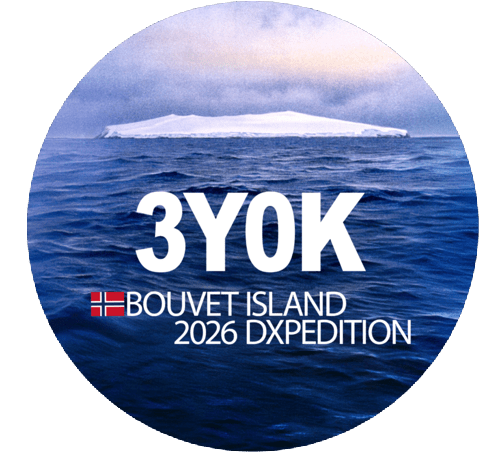
For most travelers, a trip halfway around the world is enough of an adventure. For Saline resident Dennis Ward, it was just the beginning. Ward recently returned from a rare expedition to Bouvet Island, a remote, glacier-covered outpost in the South Atlantic Ocean, where he joined a small international team of amateur radio operators seeking to connect with the world from one of its most isolated places.

read more…


I like this story for a couple of reasons. First, it was a collaboration of three different clubs. Second, the Great Bend Radio Group is about more than just amateur radio. Judging by their banner, they welcome anyone involved with any of the personal radio services. Unfortunately, the reporter got some of the details wrong…..Dan

Ham Radio Open House a big success

PARKERSBURG – Members of three regional amateur radio clubs contacted ham radio operators worldwide for World Amateur Radio Day (WARD) Saturday at Fort Boreman Park in Parkersburg. WARD, also known as the Ham Radio Open House (sic), was a collaboration of Great Bend Radio Group of Meigs County, Ohio, the Parkersburg Amateur Radio Klub and Wood County Emergency Communications. The three clubs working together on this project fulfills this year’s American Radio League (sic) emphasis on “Year of the Club.”

Man and woman hanging banner at park gazebo.
From left, Beth Edwards, WB3TH and Brian Taylor, KZ8U, from Meigs County, Ohio, hang their club banner at Fort Boreman Park.

Filed Under: Clubs, DX, Kids Tagged With: Bouvet Island, New York City, West Virginia

Bouvet (3Y0K) Update

February 23, 2026 By Dan KB6NU Leave a Comment

One of our local club members—Dennis, KT8X—is one of the operators on the Bouvet Island DXpedition team. He just posted this to our club mailing list:

News Update – February 23 2026

The team is excitedly preparing for arrival at Bouvet – which depending on some factors (mostly weather) will either be Wednesday evening or Thursday morning.

Everything is going well on the vessel; it handles the sea very well and has no problem running at 14 knots+. The weather has been fantastic for the past 2 days, but tomorrow we expect the sea to be a bit rough.

All team members are in good spirits and only a few persons are seasick; meanwhile, our preparations continue. We’ve fine-tuned our logistical approach and have established a flight plan with all equipment going onshore, and we have had meetings with pilots, vessel, and expedition crew. All merge very well into the team, and we are on this mission together.

We are evaluating various scenarios that may unfold and discuss / mitigate what we see as obvious risks. We’re confident that the preparations we’ve made based on our experience will take us one step closer to getting onshore and will adjust as we see necessary.

The helicopter, being a workhorse and a solid aircraft, the pilots are very confident in this machine and express that this helicopter is the right choice for such an operation.
We have published a band plan on our website (link below), where our team will have a strong focus on the human modes, but digital modes are also being strategized.
We will release more information soon; the next update can be expected once we are onshore the island.

Visit 3y0k.com/#bandplan for the Band Plan.

We have devised an ideal method to get around the usual DQRM – we think it will work well. As always, LISTEN to the Operators stating Where they are listening and How they want you to call!

The 3Y0K Team appreciates your continued support of this adventure.

See you in the pileups…

Filed Under: DX Tagged With: 3Y0K, Bouvet Island

Operating Notes: DX, AllStarLink

September 7, 2024 By Dan KB6NU 2 Comments

CY9C

When CY9C began operations back on August 26, there were huge pileups. On 30-meter CW, the pileup was at least 5 kHz wide. One of the reasons for this, of course, is that St. Paul Island is part of Canada and not that far from most of the United States. That made it a lot more accessible to hams here in the U.S.

Lighthouse and buildings on rocky island.
CY9C operated from St. Paul Island from August 25, 2024 to September 5, 2024.

I waited, and on the evening of August 31, I actually heard them calling CQ on 30 meters managed to work them on the second call.

As it turns out, I probably could have skipped it entirely. I just checked Logbook of the World (LOTW) and see that I worked CY9C on August 21, 2016; CY9SS on July 5, 2005; ;and Cy9A on July 31, 2003.

VUs in the log

For some reason—maybe because I don’t really have a DX station—I had never managed to work anyone in India. Well, in the last  month or so, I’ve managed to work two Indians, VU2GSM and VU2TMP. VU2TMP has QSLed via LOTW, making my current DXCC count 174.

AllStarLink

And now for something completely different, as they used to say on Monty Python’s Flying Circus….

AllStarLink logo.
Several months ago, the University of Michigan Amateur Radio Club (UMARC) upgraded their repeater system (145.23-, 100Hz). As part of this upgrade, they became a node on the AllStarLink network, which they have been proudly announcing on their Sunday night net. 

After last Sunday’s net, I decided to find out how to access the network. The first thing I did was to take a look at the UMARC website, or I should say websites. UMARC actually has four different web pages. Unfortunately, none of them had any information on how to access the AllStarLink network.

Then, I asked one of the club’s advisors. He wasn’t really sure how to do it either, and advised me to search for the information on the web. I did this and found a Beginner’s Guide, but this isn’t really what I was looking for. The Beginner’s Guide directs someone on how to set up their own node, not really how to use the network.

I kept looking and found the page AllStarLink Standard Commands. This is exactly what I was looking for. This page describes the DTMF sequences a user needs to connect and disconnect from nodes. Fortunately, the UMARC repeater uses this standard command set.

Next, I had to find a repeater to connect to. That shouldn’t be so difficult, I reasoned, since the network boasts that they have 34,720 users and 35,345 nodes. I started with the AllStarLink Node List. I was able to connect to a couple of repeaters, but most of them seemed either offline or inaccessible for some reason. One of the active nodes that I was able to connect to was WW8GM, the General Motors Amateur Radio Club repeater in Detroit, but I got no reply to my call there.

So, I asked on /r/amateurradio if anyone had suggestions for active or interesting nodes.  I was directed to a list of “keyed nodes,” which I guess are nodes that are currently active. Currently, this page is showing 30-35 active nodes.

One of the nodes that looked promising was a repeater in Seattle. The page showed that it was connected to at least a dozen other repeaters. When I connected to that repeater, I heard a net with everyone giving weather reports! I didn’t find that very interesting, so I quickly disconnected.

I’m told that the UMARC repeater connects to a net of student stations on Saturday afternoon. I’ll be listening for that, but really would like to know of other interesting nets or nodes on the AllStarLink network. If you know of any, please comment below.


Filed Under: DX, VHF/FM/Repeaters Tagged With: AllStar, AllStarLink, India, St. Paul Island

Operating Notes: LOTW still down, lots of dahs

June 9, 2024 By Dan KB6NU 1 Comment

A couple of days ago, it occurred to me that I hadn’t backed up my computer log or uploaded to Logbook of the World (LOTW) for a while. The backup went well, but when I tried to upload my latest contacts to LOTW, I got an error message. It puzzled me for a bit, but then I remembered that the ARRL had been hacked about a month ago, and that LOTW probably was still down.

I tried just now to log in to LOTW via the ARRL website. There was no notice on the LOTW home page, but when I clicked on the login link, nothing happens, and the attempt just times out. I think it would be a courtesy to note that LOTW is still down and that you can’t log in just yet, but it’s not that big a deal.

Lots of dahs

I recently worked Miloš, OM0MM. If you’re a CW operator, you know that’s a lot of dahs (14, to be exact). I actually had to listen to it a couple of times before I copied the call correctly.

Being a Slovak-American, whenever I work an OM station, I like to send them an email. I asked Milos if this was a vanity call sign. He replied:

Ahoj Dan,

Thank you for nice QSO and for an email.  Sorry for my bad English. 😁

About my call, yes I requested for this call sign and I lucikly get it 😁 My father (OM0EE) recommended it to me because I am only a CW operator, and I liked the idea of “all dashes.” 😁

So you have a Slovak roots? Very nice to hear that. You are the first Slovak ham in USA I have met. 😁

Miloš
OM0MM

Of course, Miloš’ English is a lot better than my Slovak, so no worries there. In making this off-air contact, I feel that I’m doing my part to “enhance international goodwill” as describe in Part §97.1(e).

Pro tip

While it is sad that more Americans don’t know more than one language, it would be difficult for U.S. hams to master all the languages out there. Having said that, when I want to gauge how well a ham that I’ve contacted is comfortable with English, I look at their QRZ.Com page. If it’s written in English, then I reach out to them in English, as I did with Miloš.

I have also tried doing a Google translate to send an email, but my results have been mixed. I’m not sure if it’s because I’m sending a Google translation (I always note that I used Google to translate the message) or what, but I get fewer replies with a translated email.

Filed Under: ARRL, DX Tagged With: lotw, OM0MM

Operating Notes: Bandscope observations, a pirate on 2m, VU2

March 31, 2024 By Dan KB6NU 1 Comment

Bandscope observations

If you who read my blog regularly, you know I’m a big fan of bandscopes. Here are a couple of relevant observations:

  1. I almost missed a DX contact because the DX station called about 250 Hz below my frequency. Because I had my bandpass set to 300 Hz (+/-150 Hz), I couldn’t hear him at all. I did seem him on the bandscope, though, and after I adjusted my receive incremental tuning (RIT), I worked him just fine.
  2. Not having a radio with a bandscope can lead you to be more pessimistic about ham radio than you should be. I worked a fellow who lamented how quiet the band was and how no one operated CW anymore. I found this baffling, as the band looked pretty active to me. It turns out that the guy was using a radio without a bandscope and when he tuned around, he couldn’t hear anything. I, on the other hand, could see the activity.

A pirate on 2m?

I am the main net control station for our club’s Monday night 2-meter net. (The net convenes every Monday night at 8 pm Eastern time on the 146.96- repeater. Join us if you can hit the repeater.)

Last week, a fellow checked in the call sign K1TKE. Since I have a computer in the shack, I like to call up the QRZ.Com page for people I haven’t worked before. There was no page for K1TKE.

Now, I know that there are some licensed amateurs that don’t have a QRZ page for one reason or another, so when it was K1TKE’s turn, I gave him a call. I got no response, so I’m guessing that this guy was unlicensed. That’s the first time this has happened to me.

VU2!

After all these years, I finally worked a VU station, logging VU2GSM on March 10 on 30-meter CW. I know this isn’t the biggest accomplishment in my ham radio career, but nonetheless it’s pretty cool to me.

I must say that Kanti had great ears. He wasn’t all that strong here, so I imagine that I was equally weak there. Even so, he got my call correctly the first time.

Filed Under: DX, Gear/Gadgets, Operating, VHF/FM/Repeaters Tagged With: bandscope

Operating notes: CB0ZA, poor fists, Cherry Valley

February 18, 2024 By Dan KB6NU 3 Comments

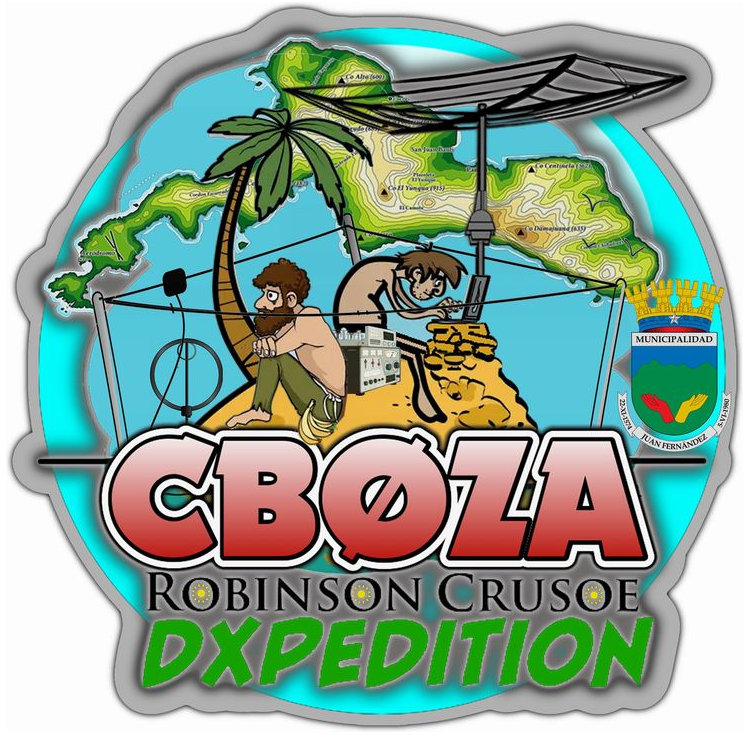
CB0ZA

A couple nights ago, I turned on the radio and could see two big pileups on 30-meter CW. Down towards the lower portion of the band, there was a big pileup, and up towards 10120 kHz, a decidedly smaller one.

So, I fired up DX Summit, the DX spotting website, to see what was going on. As it turned out, it was the 8R7X DXpedition (Uganda) pileup with the bigger pileup, and the CB0ZA DXpedtion with the smaller one. That was just fine with me, not only because I doubt that I would have cracked the 8R7X pileup, but because I’d already worked and confirmed 8R. Plus, CB0ZA would be an all-time new one for me.

So, I turned my attention to CB0ZA. They were a bit weak, but I reckoned that I could still work them, as I had worked a Chilean station several times in the past month. I set up the rig to work split and listened for a bit to see where they were listening, and then called.

I was kind of surprised, but they replied to that very first call! The next day, I discovered that the contact was confirmed in Logbook of the World. That brings my total up to 171 distinct entities confirmed.

Poor keyboard fist?

On the CWops mailing list, there’s a discussion about operators with poor fists and how we might be able to help them. The primary focus was on operators using straight keys and bugs, but tonight, I worked another kind of poor fist. The fellow was using a keyboard and was making a lot of typing mistakes. For example, instead of “HW R U?,” he would type, “HIW SRE YOU?”

Now, he was a nice fellow, and he apologized for being “fat fingered,” so it wasn’t that big a deal. Just remember, though, that when using a keyboard, to try to be as accurate a typist as you can be.

Also remember to use CW abbreviations as you would if sending by hand. It’s easy to type out whole words if you’re using a keyboard, but the operator on the other end will be expecting abbreviations. So use them.

Not many cherries in Cherry Valley

A couple of days ago, I worked a guy in Cherry Valley, NY. When I asked him if there were a lot of cherries in Cherry Valley, he laughed and said that there weren’t that many cherries, but there were a lot of cows!

A quick scan of QRZ.Com shows that there are at least five Cherry Valleys in the U.S—Arkansas, California, Illinois, Massachusetts, and New York—and one in Ontario. Cherry Valley, CA takes the cake (pun intended) with 58 licensees in the QRZ.Com database.


Filed Under: CW, DX Tagged With: CB0ZA, keyboards

Operating notes: First POTA for 2024, 30 meters open to Europe, K1USN SST

February 9, 2024 By Dan KB6NU Leave a Comment

First POTA of 2024!

The weather this week has been unseasonably warm, so I decided to drive up to K-3315, the Island Lake Recreation Area for a POTA activation. I left my house about 1:00 pm and got up to the park about 1:30. It was in the upper 50s and partly sunny.

The first thing I noticed when I got to the picnic area that I frequent is that someone had been using the picnic tables in my absence.

I guess that they thought they didn’t have to clean up the acorn shells.

I made 30 contacts in the next 75 minutes, all but two on 20 meters. 20 meters was in great shape. I tried both 15 meters and 10 meters, but there just wasn’t any activity on those bands.

It’s going to get cold here again overnight, so I’m glad I decided to go yesterday. It was a nice break from winter. Spring is just around the corner, so it’s certainly worth thinking about what improvements you might want to make for your POTA or SOTA rig.

30 meters open to Europe

30 meters has been open to Europe the past couple of evenings. Yesterday, DF7TV answered my CQ, and he was nearly S9 here. He told me he was running 500 W into a vertical antenna. I followed up that contact with an HA4 contact.

Earlier this evening, an IK1 tail-ended a contact with station in Tennessee. He wasn’t real strong, but it was 100% copy.

A question about the K1USN SST

Sunday evening, I loaded up the N1MM contesting software to make a few contacts in the K1USN Slow Speed Test (SST). I don’t operate the SST every week, but every once in a while it’s fun to do. I set my speed to 15 wpm and run a frequency.

This time, however, it seemed that everyone who replied to my CQ was either going much faster than 15 wpm or were seasoned CW ops that I’ve worked at higher speeds in ragchews or contests. It makes me wonder if the SST has perhaps strayed from its original intent, which is to “build CW skills and confidence with short easy exchanges.” I’m not sure what can be done, but I think that some consideration should be given to encouraging veteran operators not to simply work each other.

Filed Under: CW, DX, Parks on the Air Tagged With: 30 meters, SST

ICQ Podcast Episode 422 – GB0ROC Bunkers on the Air Station

February 8, 2024 By Dan KB6NU Leave a Comment

In this episode, I  join Martin Butler M1MRB, Caryn Eve Murray KD2GUT, and Edmund Spicer M0MNG to discuss the following:

  • Young DXPeditioners Prep for Guyana

  • Some ARRL Reversals and Deferred Decisions

  • Ham Club Provides Mobile-Radio Donation to Humanitarian Effort

  • QRP Self-Spotting Website

  • Hams get Credit for Advancing the Information Age

  • HAMSCI Workshop to Review Annular Eclipse Findings

  • “Underground Radio” has a Different Meaning Inside a Bunker

This episode’s feature is GB0ROC Bunkers on the Air Station.

Filed Under: ARRL, Clubs, DX, History, ICQ Podcast, QRP Tagged With: HamSci

Random stuff: Online QSL generator, XYL calling, TX5S

January 28, 2024 By Dan KB6NU 1 Comment

The HamRadar.Com QSL generator gives you a choice of many different background images for your electronic QSL cards.

Online QSL generator

Via a reddit post this morning, I found out about the HamRadar.Com QSL Generator. This is a nice bit of online software that will generate electronic QSL cards quickly for you. Fill in a form, select a background image and bingo, you have a downloadable QSL card. See figure at right for an example.

I love the selection of (presumably public domain and freely usable) background images. As you may know, I love operating from lighthouses, and Michigan has the most lighthouses of any state in the union, so I chose a lighthouse to use as the background image for the example at right.

I know this is a beta version, but here are a few things that I’m hoping the developer will consider:
  • Make it an option to generate a 3×5 image, which would look more like a traditional QSL card.
  • Make an option to make the information box smaller.
  • Be able to move the information box to the right, left, bottom, or top, so that the background image is more visible.

XYL calling

Lately, I’ve had several contacts end with the other operator saying something like, “My XYL is calling, so I have to go” or “My wife needs some help, so I have to QRT.” Just for kicks, I’d like to find out how many really do have a wife who is calling or needs help and how many are just using this as an excuse.
Personally, I never use this excuse on the air. I just say, “Well, time to QRT here” or “time for a break here.” It’s not fair to put the onus on one’s wife.

TX5S

I did not manage to work the Clipperton Island DXpedition. I heard them calling on 30 meter CW last night, but there was still a pretty big pileup. They were S6, so without the pileup, I’m pretty confident that I would have been able to work them.

This morning, I checked their website, and they say that today is the last day of the DXpedition. It’s doubtful that I’ll be able to get them in the log today. Maybe next time.

Filed Under: DX, Operating, QSLs Tagged With: HamRadar.Com, TX5S

ICQ Podcast Episode 420 – Ultra Portable HF Antennas

January 1, 2024 By Dan KB6NU Leave a Comment

In this episode, I  join Martin Butler M1MRB, Caryn Eve Murray KD2GUT, Edmund Spicer M0MNG, and Ed Durrant DD5LP to discuss:
  • 2024 10 Metre SOTA Challenge
  • Hams Help Community Radio Station Get Back on Air
  • Global Response to Signals from Irelands 1st Satellite
  • Tradition Carries on in Sweden
  • A DXPedition Before a DXPedition
This episode’s feature is ultra-portable HF antennas.

Filed Under: DX, ICQ Podcast, Satellites Tagged With: community radio, DXpedition, Ireland, SOTA, Sweden

  • Page 1
  • Page 2
  • Page 3
  • Interim pages omitted …
  • Page 13
  • Go to Next Page »

Primary Sidebar

No Nonsense Extra Class License Study Guide: for tests given between July 2024 and June 2028

New No Nonsense Extra Class Study Guide now available!

The 2024 version of my Extra Class study guide is available in PDF, ePub, Kindle, and print versions.

Click here to get all of my "No Nonsense" study guides.

Also available: The CW Geek's Guide to Having Fun with Morse Code

W5SWL.Com
Retevis Ailunce H1 DMR Radio
DXpander: Cobweb antennas, Laser Cutting

You’ve got mail!

Enter your email address below and get an email every time I publish a new post.

Email


I frequently teach classes to help newcomers get their licenses. The next class will take place on Saturday, February 7, 2026 on the University of Michigan campus. Click here for more information.

If you can't make the class, subscribe to the mailing list to be notified of when the next class will be held.

You can always download my free study guide, and if you have any questions about the classes, or amateur radio in general, please feel free to email me directly.

Support KB6NU.Com

Donate $7.30 and get two of these cool stickers. Measuring 4.25-in. W by 2.75-in. H, it's perfect for your car, your shack, or wherever!

Contact me

If you have a question or comment about one of my blog posts, or a question about any of the material in my study guides, or just a question about ham radio in general, you can email me at [email protected].

Blogs You Should Also Read

  • AE5X: A CW-centric blog from Kingswood, Texas
  • K0LWC Blog
  • LA3ZA Ham Radio Blog
  • Little Radios, Big Fun – WB3GCK
  • Mr. Vacuum Tube's Blog
  • Radio Artisan – K3NG
  • The K0NR Weblog
  • VE3WDM's QRP Ham Radio Blog
  • W2LJ’s Blog

Ham Radio Websites

  • Dashtoons – The Hammin' Comedy by Jeff K1NSS

Podcasts

  • ICQ Podcast
  • Linux in the Ham Schack
  • No Nonsense Amateur Radio Podcast
  • Resonant Frequency Amateur Radio Podcast

Recent Comments

  • Mike on Map your contest QSOs
  • Phillip Cardwell on J-Poles
  • Dan KB6NU on Dayton Hamvention 2026: Day 1, Wednesday, May 13
  • Randy Shake on Dayton Hamvention 2026: Day 1, Wednesday, May 13
  • John Hislop on New edition of my No Nonsense Technician Class License Study Guide now ready for review

Meta

  • Log in
  • Entries feed
  • Comments feed
  • WordPress.org

Footer

Copyright © 2026 Daniel M. Romanchik, KB6NU · Log in