• Skip to primary navigation
  • Skip to main content
  • Skip to primary sidebar
  • Skip to footer

KB6NU's Ham Radio Blog

KB6NU's Ham Radio Blog
  • HOME
  • Study Guides
  • Teach a One-Day Tech Class
  • W8SRC Repeater Guide
  • Advertise
  • Hire Me

VHF/FM/Repeaters

K0NR VHF book gets an update

February 27, 2026 By Dan KB6NU 1 Comment

From Bob Witte, K0NR:

I’m proud to announce that the Second Edition of my book VHF, Summits, and More is now available. I’ve received tons of positive feedback on the first edition, published in 2019, and I decided it was time for an update. This new version is printed in color, which greatly enhances the photos and graphics.

This book is an easy-to-understand introduction to VHF/UHF ham radio with an emphasis on mountaintop VHF operation. I’ve enjoyed ham radio and writing about it ever since I received my first FCC license. Although I’ve used the ham bands from 160m to 10cm (10 GHz), I find the VHF and higher frequencies the most interesting. This is mainly because of the interplay between mountains, Height Above Average Terrain (HAAT), and VHF propagation. VHF has lots of spectrum, lots of modes, and lots of fun challenges.

For the second edition, I gave everything a fresh look. I updated every chapter and added 100 pages of new material. In Part I, the VHF tutorial section, I added new chapters to improve the treatment of basic VHF/UHF: Popular VHF/UHF Bands, Antennas, Coaxial Cables & Connectors, and WSJT-X Digital Modes. Part II covers topics that originated from my blog, often based on questions I hear from newer hams.  In Part III, which is focused on SOTA, I added several chapters on how to be successful doing VHF SOTA, and I added a few new trip reports. I also added some information on combined SOTA/POTA activations.

The book is available in two formats: a color print edition and a Kindle edition, both available from Amazon. The print version ships immediately; the Kindle version will follow shortly.

Order your copy now. Operators are standing by.
(Actually, just use the Amazon site.)

Filed Under: VHF/FM/Repeaters Tagged With: K0NR

Amateur radio in the news: Can ham radio help Taiwan survive?, repeaters now solar-powered, ham radio connects

January 17, 2026 By Dan KB6NU Leave a Comment

Young woman holding a handheld ham radio.
Could ham radio help Taiwan survive wartime internet outage?

In Taiwan, a nonprofit civil defense group, Ganghu, has started training people on how to communicate using amateur radio, also known as ham radio, if the internet is unavailable. This comes as Beijing, which claims democratically self-governed Taiwan as its own territory, faces allegations of sabotaging and damaging Taiwan’s undersea internet cables.

…read more


Ham radio repeater now powered by solar

The Fredericksburg Repeater Operators Group (w5fbg.com), a group of licensed amateur radio operators in Gillespie County, announces its 2-meter, 1.25-meter, and 70-centimeter amateur radio repeaters are now operational on solar power.The solar power system was provided by a grant from the American Radio Relay League (ARRL) Foundation. Dee Hester (K7UD), Dennis Robertson (W5FBG), Barb Schuyler (N9NM), Pete Schuyler (N9OF), Keith Jenkins (KI5DFU), J.B. Neans (KL5GR) and Jim Lindley, (K5EWS) were all contributors. This team designed and implemented the repeaters and the solar power system.

…read more


Ham radio operators meet over a shared hobby that becomes a lifeline during emergencies

A field of large parabolic antennas, followed by a constant piercing sound lingering in the background, is a classic combo in science fiction movies, especially when earthlings receive a message from outer space. On screen, it builds uneasiness and suspense for the viewer.

But for amateur radio (or ham radio) operators, the radio waves around the Earth create connectivity. People use antennas and transceivers to communicate with each other without Wi-Fi or phones. Non-commercial radio not only connects people worldwide but it can be an important tool in emergencies, when other means of communication, such as phones and internet, go down.

…read more


Filed Under: Amateur Radio in the News, Clubs, VHF/FM/Repeaters Tagged With: solar power, Taiwan

Videos: 44 years of 44Net, Linux HT, Super Rybakov antenna

December 17, 2025 By Dan KB6NU Leave a Comment

44 Years of 44 Net

44 years ago, Hank Magnuski, KA6M, asked for some IP addresses for ham radio experimentation. He was assigned a /8 block, or 16,777,216 addresses. We now know this block addresses as 44Net.

The Linux HT

Can you really run Linux on an HT? Yes! Watch this video and see how it’s done.

The Super Rybakov

This talk by Max, G4SDX, to the Halifax & District Amateur Radio Society introduces a hands-on build of the “Super Rybakov” – an improved version of the classic end-fed vertical antenna. This looks like a great limited space antenna with efficient, multiband, HF performance.

Filed Under: Antennas, Digital Communications, Gear/Gadgets, Software, VHF/FM/Repeaters Tagged With: 44Net, LinHT, Rybakov

AllStar Link is definitely worth a donation of time or treasure

August 19, 2025 By Dan KB6NU Leave a Comment

Only recently, have the repeaters here in Ann Arbor implemented All Star Link capabilities. It’s a pretty cool way to connect repeaters. I received the message below, and thought it deserved more publicitiy. I just sent them a $12 donation myself…..Dan


AllStar Link logoOn behalf of the Board of Directors, we would like to graciously thank all the volunteers and donors; especially those who have set up recurring donations. Without them, none of this would be possible.

The unpaid AllStarLink Board of Directors and volunteers have been busy overseeing the daily operations of the AllStarLink network.  It is worth noting, AllStarLink network availability is over 99.99%.

Over the last four years, AllStarLink has seen phenomenal growth.  Four years ago, approximately 2,000 nodes were logged into our servers at any one time.  We are now seeing more than 10,000 nodes.  This growth has brought increased expenses and we are currently running at an operational deficit.  We could really use your help.

If you find value in the AllStarLink service, we are asking for a voluntary donation of $12/yr per node to help us maintain and improve the AllStarLink eco-system.  For those wishing to support our ongoing efforts please see our 501(c)3 donations page at AllStarLink | Donate.

As you may have heard, we have some exciting news.  With a generous grant from the ARDC, last year, we released ASL 3.  It is the first new client in 15 years for AllStarLink.  ASL 3 has been redesigned to run on Asterisk 22 LTS with the latest version of Debian 12 Linux and modern hardware.  This is a significant update from the current clients running Asterisk Version 1.4.  The new version incorporates over 15 years of Asterisk bug fixes, major security improvements, and enhancements.  The update required “app_rpt”, the Asterisk application that is Allstar, to be heavily modified.  Many memory leaks have been addressed, modules now load or refresh more reliably, and many bugs have been squashed.  All of this adds up to improved stability and uptime.  We recommend that all users of AllStarLink upgrade their appliances, PC’s and Raspberry Pi’s to use the latest version of ASL 3.

Over 3,700 nodes have already upgraded and are currently using ASL 3.  This includes nodes using Raspberry Pi’s 3, 4’s or 5’s (many that had been running Hamvoip), x86_64/AMD PCs and cloud nodes, Kits4Hams SHARI boxes, Node-Ventures ClearNodes, Repeater Builder, and Hotspot Radios.
To learn more, visit the ASL3 Manual or log into the AllStarLink Community.  You can also view how-to videos here.  If you are using a hotspot appliance, we recommend contacting the hardware manufacturer for specific upgrade instructions.

We are also looking for volunteers; especially developers with PHP/Laravel and JavaScript experience.  If you have these skill sets and are willing to help, please reach out to us at [email protected].

We thank you in advance,
Pete Elke /WI6H – President
Todd Lesser /KM6RPT – Secretary
David Shaw /WB6WTM – Treasurer
Kevin Custer /W3KKC – Board Member

Filed Under: VHF/FM/Repeaters Tagged With: AllStarLink

Videos: Dick Norton N6AA on the ARRL, KL7AJ on the ionosphere, new HT has 10 m SSB capability

January 31, 2025 By Dan KB6NU 3 Comments

Dick Norton, N6AA, on the state of the ARRL

Every year, Dick Norton, N6AA, the Southwest Division Director, reports on the ARRL at Quartzfest. As one of the audience members noted, this is perhaps the bleakest report that Dick has ever given on the state of the League.

One item that you might want to especially note is that at the 25:30 mark, Dick comments on the ARRL’s shift from a membership-based organization to being a corporation. If we’re no longer a membership-based organization, why pay to be members?

Eric Nichols, KL7AJ, on the ionosphere

The ionosphere is more complex than just a simple mirror for radio waves.

New Quansheng HT has 10-meter SSB capability

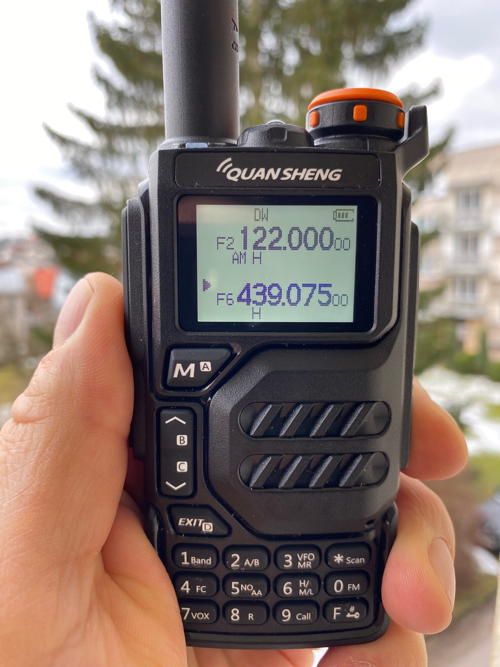
OM0ET gives us a little teaser video about an upcoming release from Quansheng. The TK-11 will operate on 70 cm, 2 m, 6m, and 10 m, including SSB capability on the 10-meter band. He notes that he’s not sure whether the firmware will be modifiable as it is for the Quansheng UV-K5.

Filed Under: ARRL, Gear/Gadgets, Propagation, VHF/FM/Repeaters Tagged With: ionosphere, Quansheng

Operating Notes: DX, AllStarLink

September 7, 2024 By Dan KB6NU 2 Comments

CY9C

When CY9C began operations back on August 26, there were huge pileups. On 30-meter CW, the pileup was at least 5 kHz wide. One of the reasons for this, of course, is that St. Paul Island is part of Canada and not that far from most of the United States. That made it a lot more accessible to hams here in the U.S.

Lighthouse and buildings on rocky island.
CY9C operated from St. Paul Island from August 25, 2024 to September 5, 2024.

I waited, and on the evening of August 31, I actually heard them calling CQ on 30 meters managed to work them on the second call.

As it turns out, I probably could have skipped it entirely. I just checked Logbook of the World (LOTW) and see that I worked CY9C on August 21, 2016; CY9SS on July 5, 2005; ;and Cy9A on July 31, 2003.

VUs in the log

For some reason—maybe because I don’t really have a DX station—I had never managed to work anyone in India. Well, in the last  month or so, I’ve managed to work two Indians, VU2GSM and VU2TMP. VU2TMP has QSLed via LOTW, making my current DXCC count 174.

AllStarLink

And now for something completely different, as they used to say on Monty Python’s Flying Circus….

AllStarLink logo.
Several months ago, the University of Michigan Amateur Radio Club (UMARC) upgraded their repeater system (145.23-, 100Hz). As part of this upgrade, they became a node on the AllStarLink network, which they have been proudly announcing on their Sunday night net. 

After last Sunday’s net, I decided to find out how to access the network. The first thing I did was to take a look at the UMARC website, or I should say websites. UMARC actually has four different web pages. Unfortunately, none of them had any information on how to access the AllStarLink network.

Then, I asked one of the club’s advisors. He wasn’t really sure how to do it either, and advised me to search for the information on the web. I did this and found a Beginner’s Guide, but this isn’t really what I was looking for. The Beginner’s Guide directs someone on how to set up their own node, not really how to use the network.

I kept looking and found the page AllStarLink Standard Commands. This is exactly what I was looking for. This page describes the DTMF sequences a user needs to connect and disconnect from nodes. Fortunately, the UMARC repeater uses this standard command set.

Next, I had to find a repeater to connect to. That shouldn’t be so difficult, I reasoned, since the network boasts that they have 34,720 users and 35,345 nodes. I started with the AllStarLink Node List. I was able to connect to a couple of repeaters, but most of them seemed either offline or inaccessible for some reason. One of the active nodes that I was able to connect to was WW8GM, the General Motors Amateur Radio Club repeater in Detroit, but I got no reply to my call there.

So, I asked on /r/amateurradio if anyone had suggestions for active or interesting nodes.  I was directed to a list of “keyed nodes,” which I guess are nodes that are currently active. Currently, this page is showing 30-35 active nodes.

One of the nodes that looked promising was a repeater in Seattle. The page showed that it was connected to at least a dozen other repeaters. When I connected to that repeater, I heard a net with everyone giving weather reports! I didn’t find that very interesting, so I quickly disconnected.

I’m told that the UMARC repeater connects to a net of student stations on Saturday afternoon. I’ll be listening for that, but really would like to know of other interesting nets or nodes on the AllStarLink network. If you know of any, please comment below.


Filed Under: DX, VHF/FM/Repeaters Tagged With: AllStar, AllStarLink, India, St. Paul Island

Loop the loop on 6 meters

August 3, 2024 By Dan KB6NU 4 Comments

Question T3C07 in the Technician Class question pool reads:

What band is best suited for communicating via meteor scatter?

  1. 33 centimeters
  2. 6 meters
  3. 2 meters
  4. 70 centimeters

The answer, of course, is B. 6 meters.

I make a big deal out of this question when I teach my one-day Tech classes because I think meteor scatter is probably one of the coolest things that Techs can do. Have I ever done it? Well, no, at least not yet.

Two months ago, I came across this video:

After watching this video, I said to myself, “Hey, that looks simple enough that even I can do it.” Not only that, after looking around the shack, I realized that I had all the parts necessary to make it. I had a piece of PVC pipe that I bought for some other antenna project, and I had a terminal strip in my junk box to connect the loop to the coax.

I also had a bunch of 75Ω coax that was installed back in 1985 when the house was built to distribute cable TV to the living room, bedroom, etc. I’ve never had cable TV in the nearly 25 years I’ve lived here, so I just cut a length from one of the cable runs. So, not only did the antenna look easy to build, I wouldn’t have to spend a dime on it.

Today, I finally got around to putting it all together. As you can see from the photo below, I used the military surplus fiberglass mast to get it up off the ground.

The photo below shows how I connect the loop  to the matching stub using a terminal strip.

Troubleshooting the antenna

When I first connected my antenna analyzer to the antenna, I was a little dismayed that the SWR was 14:1! I hadn’t expected it to be perfect, but I did expect it to be a lot lower than that.

The first thing I did was make sure that the wires were connected to the terminal strips properly. When that proved not to be the problem, I thought that maybe it was too close to my other antennas, so I moved it to the other side of the yard. That didn’t change a thing, either.

My next guess was that perhaps the coax was bad somehow, so I disconnected the matching stub and measured the SWR again. At 50.1 MHz, the SWR was now a much better 1.76:1. Since the feed point impedance of just the loop is supposed to be about 100Ω, I knew the problem was the matching stub.

In another video, I’d seen the coax used for the matching stub coiled around a PVC pipe. The theory behind this is that not only the stub matching impedances, but also acting as a choke. I didn’t have any PVC pipe big enough, so I simply coiled the 75Ω coax and taped it together. WRONG! When I uncoiled the matching stub, the SWR came down dramatically, measuring about 1.1:1 at 52 MHz. Down at the bottom of the band, where I planned on playing, it was a bit higher, but it was still less than 1.5:1, and that is easily handled by my IC-7610’s antenna tuner.

Of course, now that I have the antenna, the band is just dead. I’ve been monitoring for the last hour or so, with nary a signal received. That’s just how it goes with 6 meters, I guess.

Meteor scatter here I come

I think that to be more successful on 6 meters, I’ll need to make some improvements to the antenna. For example, I’ll have to figure out a way to make the connections more robust and maybe add a little wire to the loop to bring the resonant frequency down a little. I probably should get the antenna up a little higher, too.

Building this antenna has been fun, and even though I still  haven’t made any contacts, I’m looking forward to operating 6 meters in the future. Maybe I’ll even get lucky and make some meteor scatter contacts. Then, when I cover that question in class, I can say that I’ve operated meteor scatter and it’s pretty cool.

Filed Under: Antennas, VHF/FM/Repeaters Tagged With: 6 meters, delta loop

Amateur radio in the news: Hackable ham radio, ham radio at the museum, club hosts Scouts

April 5, 2024 By Dan KB6NU Leave a Comment

The Most Hackable Handheld Ham Radio Yet

The [Quansheng] UV-K5, released last year, might be the most hackable handheld ever, with a small army of dedicated hams adding a raft of software-based improvements and new features. I had to have one, and $30 later, I did.

Like Baofeng’s 5R, Quansheng’s K5 as a radio transceiver is fine. (I’m using K5 here to refer to both the original K5 and the new K5(8) model.) The key technical distinction between the 5R and K5 is a seemingly minor design choice. With Baofeng’s 5R, the firmware resides in read-only memory. But Quansheng stores the K5’s firmware in flash memory and made it possible to rewrite that memory with the same USB programming cable used to assign frequencies to preset channels.

…read more


ICHMS collaborates with IRARC

CASPIAN, MI – The Iron County Historical & Museum Society (ICHMS) will have two new exhibits this summer thanks to a collaboration with the Iron Range Amateur Radio Club (IRARC) and a grant from the Crystal Falls/Dickinson Area Community Foundation. “We couldn’t be any more excited about this collaboration and the exhibits that will come from it”, states museum director Kathlene Long. The club members are in here helping build the exhibits and are bringing their expertise along with their own artifacts to build these exhibits in time for this coming summer season.

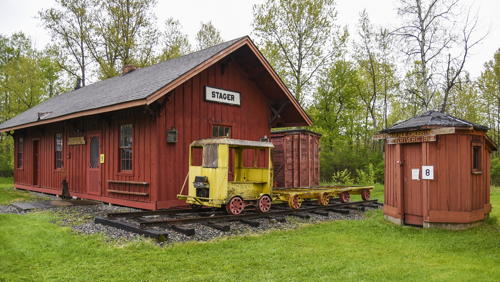
Railroad depot building
The Stager Depot at the Iron County Historical Museum in Caspian, MI.

The Club is building a working ham radio station in the museum. It will be fully functional. Museum visitors will be able to see the exhibit and signs will help visitors understand the importance ham radios – and amateur operators – have played in our county’s, and our country’s history. They will also learn why they continue to be so important. In addition, the Club is recreating a display of a vintage WIKB studio from pieces they have collected over the years. All of this is being paid for, in part, from a $500 grant from the Crystal Falls/Dickinson Area Community Foundation. “All in all, this is a lot of moving parts finally coming together to make this happen.” Long explains.

…read more


SIERA hosts Scout amateur radio merit badge day

METROPOLIS, IL — Boy Scouts talked to amateur radio operators as far away as Puerto Rico and Arizona during a radio merit badge class hosted by the Southernmost Illinois Emergency Radio Association (SIERA). Five scouts from Troop 2007, out of St. Thomas More Catholic Church in Paducah, attended the class on Saturday, March 23, at Trinity Church in Metropolis.

Scouts experimented with tuning forks and a wave generator and had the opportunity to talk on both handy-talkie and high-frequency base radios during the class. They also learned about the science and mechanics of radio as well as important safety measures.

…read more


Filed Under: Amateur Radio in the News, Clubs, Gear/Gadgets, VHF/FM/Repeaters Tagged With: Illinois, Iron County, Michigan, Quansheng UV-K5, scouting

Operating Notes: Bandscope observations, a pirate on 2m, VU2

March 31, 2024 By Dan KB6NU 1 Comment

Bandscope observations

If you who read my blog regularly, you know I’m a big fan of bandscopes. Here are a couple of relevant observations:

  1. I almost missed a DX contact because the DX station called about 250 Hz below my frequency. Because I had my bandpass set to 300 Hz (+/-150 Hz), I couldn’t hear him at all. I did seem him on the bandscope, though, and after I adjusted my receive incremental tuning (RIT), I worked him just fine.
  2. Not having a radio with a bandscope can lead you to be more pessimistic about ham radio than you should be. I worked a fellow who lamented how quiet the band was and how no one operated CW anymore. I found this baffling, as the band looked pretty active to me. It turns out that the guy was using a radio without a bandscope and when he tuned around, he couldn’t hear anything. I, on the other hand, could see the activity.

A pirate on 2m?

I am the main net control station for our club’s Monday night 2-meter net. (The net convenes every Monday night at 8 pm Eastern time on the 146.96- repeater. Join us if you can hit the repeater.)

Last week, a fellow checked in the call sign K1TKE. Since I have a computer in the shack, I like to call up the QRZ.Com page for people I haven’t worked before. There was no page for K1TKE.

Now, I know that there are some licensed amateurs that don’t have a QRZ page for one reason or another, so when it was K1TKE’s turn, I gave him a call. I got no response, so I’m guessing that this guy was unlicensed. That’s the first time this has happened to me.

VU2!

After all these years, I finally worked a VU station, logging VU2GSM on March 10 on 30-meter CW. I know this isn’t the biggest accomplishment in my ham radio career, but nonetheless it’s pretty cool to me.

I must say that Kanti had great ears. He wasn’t all that strong here, so I imagine that I was equally weak there. Even so, he got my call correctly the first time.

Filed Under: DX, Gear/Gadgets, Operating, VHF/FM/Repeaters Tagged With: bandscope

Amateur radio videos: ARDC community meeting, Hamvention award winners, send texts over VHF/UHF

March 11, 2024 By Dan KB6NU 3 Comments

ARDC Community Meeting 2024-02-24

Here’s the latest update from ARDC on their activities.

Hamvention 2024 award winners

The winners this year include:

  • Special Achievement Award: Anthony Luscre, K8ZT
  • Technical Achievement: Ward Silver, N0AX
  • Club of the Year: Young Ladies Radio League
  • Amateur of the Year: Edward Engleman, KG8CX

Text over radio with Rattlegram

This might be something interesting to try on a repeater that’s not very active.

Filed Under: ARDC, Hamfests, VHF/FM/Repeaters, Videos Tagged With: ARDC, Hamvention, Rattlegram

  • Page 1
  • Page 2
  • Page 3
  • Interim pages omitted …
  • Page 14
  • Go to Next Page »

Primary Sidebar

No Nonsense Technician Class License Study Guide (for tests given between July 2026 and June 2030)

New No Nonsense Technican Class Study Guide now available!

The 2026 version of my Tech Class study guide is now available, and as always, the PDF version is FREE!. The ePub version costs $9.97, and a Kindle version and paperback version will be available on Amazon shortly.

Click here to get all of my "No Nonsense" study guides.

Also available: The CW Geek's Guide to Having Fun with Morse Code

W5SWL.Com
Retevis Ailunce H1 DMR Radio
DXpander: Cobweb antennas, Laser Cutting

You’ve got mail!

Enter your email address below and get an email every time I publish a new post.

Email


I frequently teach classes to help newcomers get their licenses. The next class will take place on Saturday, February 7, 2026 on the University of Michigan campus. Click here for more information.

If you can't make the class, subscribe to the mailing list to be notified of when the next class will be held.

You can always download my free study guide, and if you have any questions about the classes, or amateur radio in general, please feel free to email me directly.

Support KB6NU.Com

Donate $7.30 and get two of these cool stickers. Measuring 4.25-in. W by 2.75-in. H, it's perfect for your car, your shack, or wherever!

Contact me

If you have a question or comment about one of my blog posts, or a question about any of the material in my study guides, or just a question about ham radio in general, you can email me at [email protected].

Blogs You Should Also Read

  • AE5X: A CW-centric blog from Kingswood, Texas
  • K0LWC Blog
  • LA3ZA Ham Radio Blog
  • Little Radios, Big Fun – WB3GCK
  • Mr. Vacuum Tube's Blog
  • Radio Artisan – K3NG
  • The K0NR Weblog
  • VE3WDM's QRP Ham Radio Blog
  • W2LJ’s Blog

Ham Radio Websites

  • Dashtoons – The Hammin' Comedy by Jeff K1NSS

Podcasts

  • ICQ Podcast
  • Linux in the Ham Schack
  • No Nonsense Amateur Radio Podcast
  • Resonant Frequency Amateur Radio Podcast

Recent Comments

  • C M Wetzel KD8TNF on The Wesco BN-1
  • Raymond on Getting a License in Uganda
  • Richard A. Golden on Guest Post: ARRL needs new blood
  • Skip K4EAK on Button, button. Who’s got the button?
  • Ed K8MEJ on Is anyone running for the board this year in the Great Lakes Division?

Meta

  • Log in
  • Entries feed
  • Comments feed
  • WordPress.org

Footer

Copyright © 2026 Daniel M. Romanchik, KB6NU · Log in