• Skip to primary navigation
  • Skip to main content
  • Skip to primary sidebar
  • Skip to footer

KB6NU's Ham Radio Blog

KB6NU's Ham Radio Blog
  • HOME
  • Study Guides
  • Teach a One-Day Tech Class
  • W8SRC Repeater Guide
  • Advertise
  • Hire Me

History

Videos: HS ham club in NH, yet another Heathkit history, Cruz thanks ham radio

May 25, 2026 By Dan KB6NU Leave a Comment

Students go hands on with ham radio

Here’s a nice news story about a new ham club at a high school in New Hampshire.

Yet another Heathkit history

Here’s another YouTube video on the history of Heathkit. The author has disabled embedding, so you have to watch it on YouTube.

Heathkit advertisement from the 1950s.

Senator Ted Cruz on Ham Radio

In this short video, Cruz thanks ham radio operators for their service. This has gotten some people excited because I believe that Cruz is the chair of the Senate committee working on the Amateur Radio Emergency Preparedness Act. I’d be more excited if Cruz would sign on as a co-sponsor, but he has not yet. So, at this point, these are just words.

Filed Under: Clubs, Emergency Communications / Public Service, History Tagged With: Heathkit, NH, Ted Cruz

Some Ham-Vention History

June 16, 2025 By Dan KB6NU 2 Comments

A couple of weeks ago, I attended a Zoom meeting for the ARDC Grant Evaluation Team. The talk naturally turned to the Dayton Hamvention, which the ARDC folks and I recently attended. At the mention of Hamvention, Lad, WA3EEC, mentioned that he had a brochure for the 1952 Southwestern Ohio Ham-Vention, which was sponsored by the Dayton Amateur Radio Association and held at the Dayton Biltmore Hotel on March 22, 1952. This was the first year that what we now know as the Dayton Hamvention was held.

Lad scanned it for me, and I’m sharing it with you here.

1952 Ham-Vention brochure inside.

1952 Ham-Vention brochure inside

The first thing I’ll note is the strong technical program. The second is the prize list. The third is the manufacturer exhibits. All of these continue to be an important part of Hamvention to this day.

In his email to me, Lad noted, “For the record, Dayton ARA VP,  Ed Pompea, W8FHJ (now SK) was my uncle. He was married to my father’s sister. He passed away more than 30 years ago in Colorado Springs, CO where his call was K0ZPG. He was career Air Force.”

I think that this is a very cool piece of history, and I’d bet that the founders would be amazed at what the Dayton Hamvention has become, namely the pre-eminent amateur radio event in the world.

Filed Under: History Tagged With: Dayton, Hamvention

ICQ Podcast Episode 422 – GB0ROC Bunkers on the Air Station

February 8, 2024 By Dan KB6NU Leave a Comment

In this episode, I  join Martin Butler M1MRB, Caryn Eve Murray KD2GUT, and Edmund Spicer M0MNG to discuss the following:

  • Young DXPeditioners Prep for Guyana

  • Some ARRL Reversals and Deferred Decisions

  • Ham Club Provides Mobile-Radio Donation to Humanitarian Effort

  • QRP Self-Spotting Website

  • Hams get Credit for Advancing the Information Age

  • HAMSCI Workshop to Review Annular Eclipse Findings

  • “Underground Radio” has a Different Meaning Inside a Bunker

This episode’s feature is GB0ROC Bunkers on the Air Station.

Filed Under: ARRL, Clubs, DX, History, ICQ Podcast, QRP Tagged With: HamSci

NIST and the Titanic: How the Sinking of the Ship Improved Wireless Communications for Navigating the Sea

April 16, 2022 By Dan KB6NU Leave a Comment

This post is shamelessly ripped off from the National Institute of Standards and Technology (NIST) website. Before you jump all over me, anything published by the U.S. government is in the public domain.


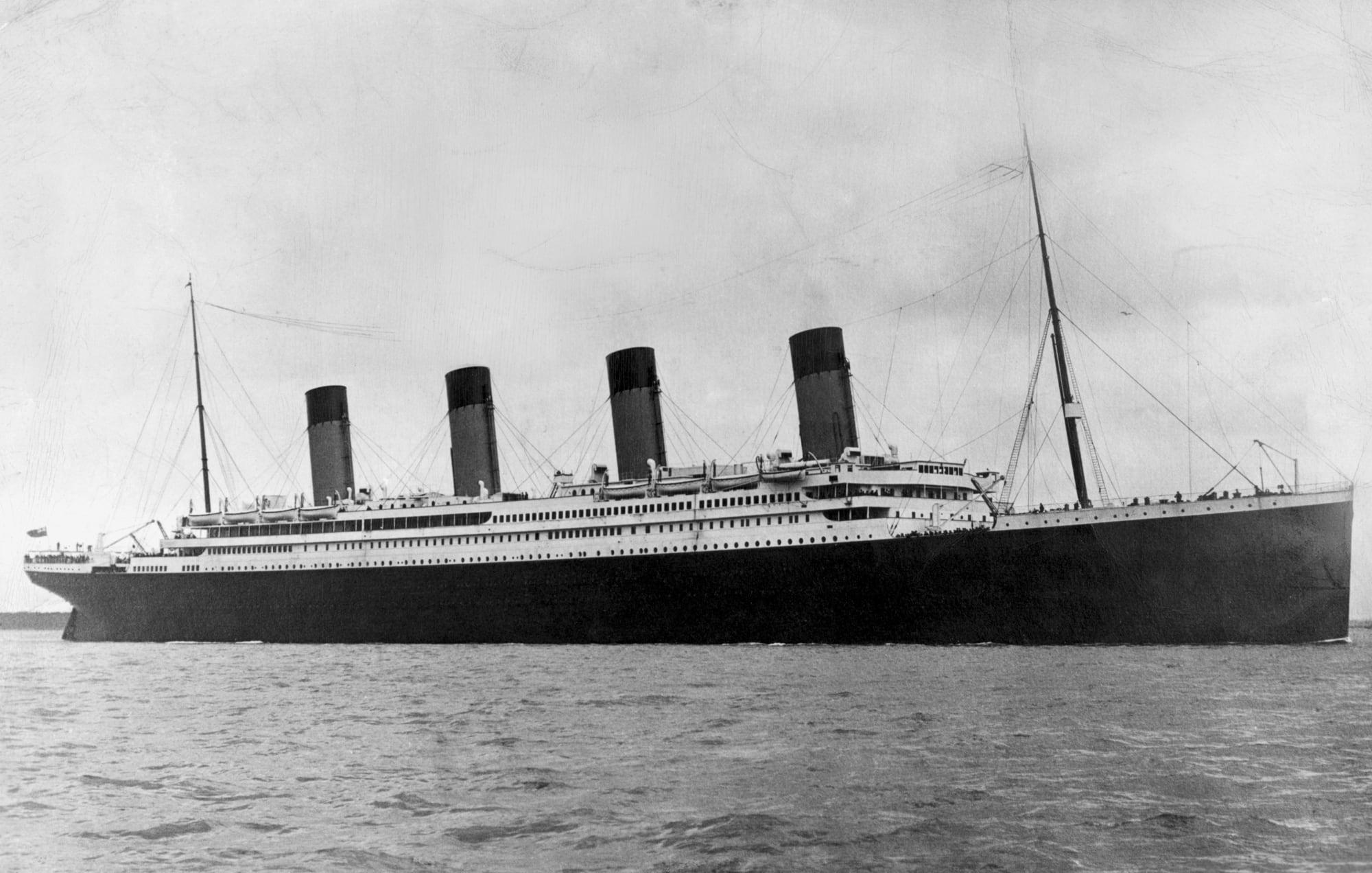
Historical photo shows RMS Titanic from the side, with four prominent funnels.

If you’ve seen the movie Titanic starring Kate Winslet and Leonardo DiCaprio, then you’ve watched the star-crossed lovers’ untimely end and the tragic sinking of the Royal Mail Ship (RMS) Titanic. What the movie didn’t show is that radio played a role in the ship’s communication efforts — though it lacked standards that could have saved many more lives.

The tragedy of the Titanic raised awareness that improvements to wireless communication were needed and led to new regulations and legislation by Congress to improve wireless technology, radio equipment and standards for maritime navigation. Leading the charge to make this happen was the National Institute of Standards and Technology (NIST).

The Role of Wireless Technology in the Titanic Tragedy

The RMS Titanic was a luxury passenger liner making its first trans-Atlantic voyage from Southampton, England, to New York City. The ship was an impressive 269 meters long, just a little shorter than the 300-meter height of the Eiffel tower (minus the tip). In the late evening hours of April 14, 1912, the Titanic struck an iceberg about 640 kilometers (400 miles) off the coast of Newfoundland. By 2:20 a.m. on April 15, the ship had sunk, and only about 710 people survived. More than 1,500 people, including passengers and crew, were lost.

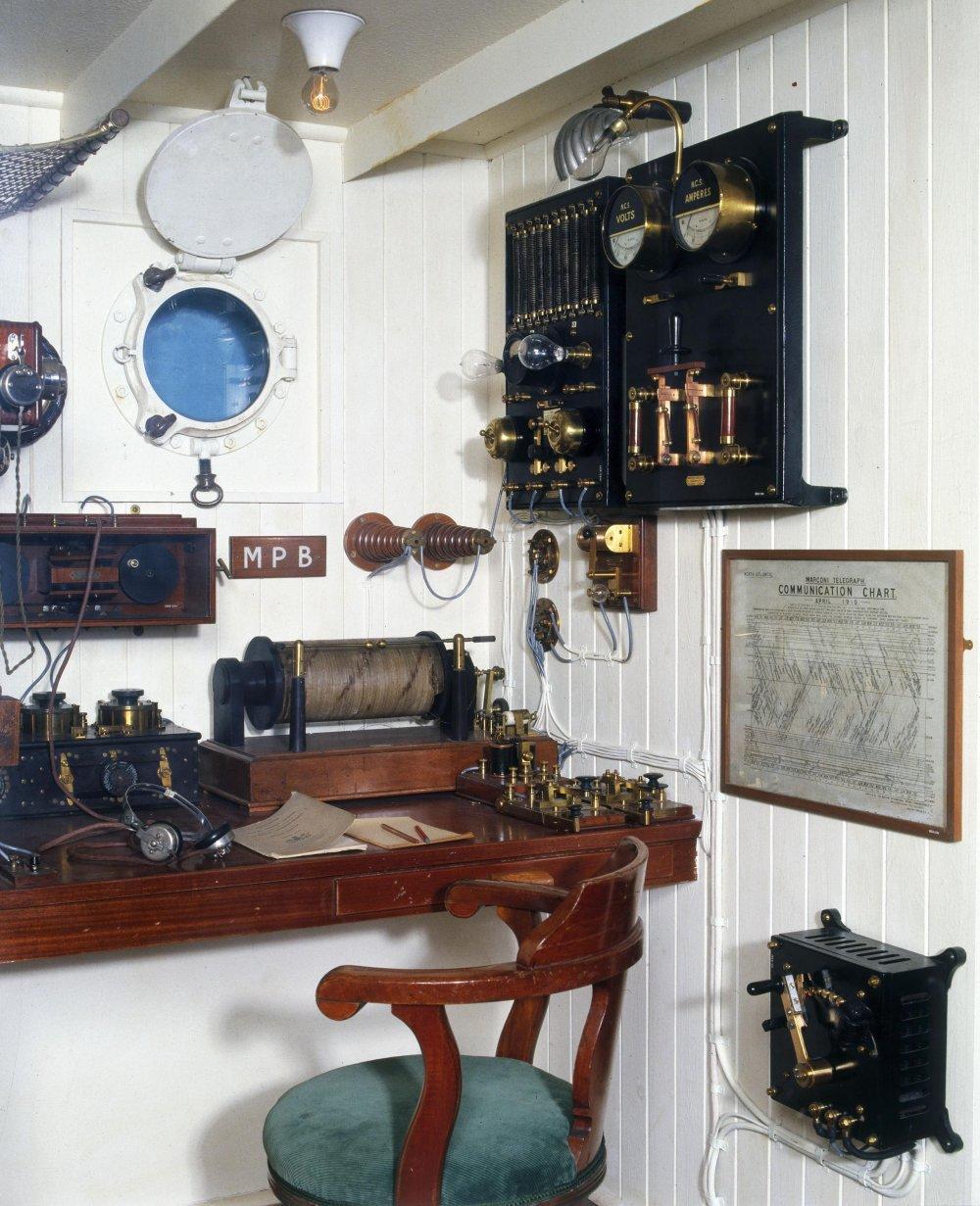
A small room features a wooden desk, a porthole, and historical telegraph equipment on the walls.
Reconstruction of a ship’s radio room from around 1910, at the Science Museum in London.
At that time, the use of wireless systems, such as wireless telegraphs, on ships was relatively new. Passengers and crew could use these telegraphs to send messages back to land, and they played a role in ship operations like communicating between different areas of the ship. The technology relied on radio frequencies to transmit telegraph signals as coded messages without relying on telegraph lines.
The wireless telegraph on the Titanic was owned and operated by the Marconi Company and was considered one of the best systems in the world, with a range of up to 1,600 kilometers (1,000 miles). However, the system’s electronics created so much “noise” that it disrupted the wireless systems of other ships in the area.

Throughout the day of April 14, four ships — all within 60 miles (96.6 kilometers) of the Titanic — had warned of icebergs in the area. The closest ship, the Californian, was 10 miles (16 kilometers) away when the Titanic’s wireless telegraphers sent out the SOS signal for help. Unfortunately, the Californian’s telegrapher had been rebuffed by the Titanic’s telegrapher earlier in the day for interfering with the Titanic’s private messages sent ashore and therefore had shut down for the night. The Carpathia, which was 58 miles away, responded to the signal for help but didn’t arrive until an hour after the Titanic had sunk.

The sinking of the Titanic also highlighted the lack of trained telegraphers. Since the wireless technology was relatively new, many of the ships’ wireless telegraphers were inexperienced. They had a hard time catching signals sent to them, had difficulty relaying messages and were frequently sending repeats of their messages so they made sense on shore.

This disaster would spur government officials, researchers and lawmakers to address the shortcomings in wireless technology.

International Radiotelegraph Conference and Radio Act of 1912

A few months after the Titanic sunk, the second International Radiotelegraph Conference was held in London to immediately address the technical aspects of radio. Two wavelengths were used at the time, and leaders of the conference agreed the 600-meter wavelength would be used solely for ships at sea. They also implemented rulings to reduce interference from spark transmitters, a popular type of radio transmitter on ships, which used electric sparks to generate brief pulses of radio waves.

Wireless telegraphers turned the transmitter on and off with each pulse to send messages in Morse code. The pulsed or damped radio waves diminish in strength as they travel, and the rate at which they decay is expressed in a quantity known as the decrement. The damped radio waves also have a wide bandwidth with continuous frequencies that diminish exponentially over time. When the measurement of decrement is high, the radio signal becomes broader, increasing the chance for interference from other signals with similar frequencies.

The new ruling set limits with a lower measurement of decrement from spark transmitters, allowing telegraphers to fine-tune or sharpen their receivers to catch the radio signal because it was on a narrower frequency band. The exception to the ruling was for SOS signals, so multiple parties could intercept them.

The rulings from the conference were implemented by Congress on July 23, 1912, through amendments to the 1910 Radio Ship Act. This resulted in the 1912 Radio Ship Act, which required an additional auxiliary power supply on ocean liners, and trained wireless telegraphers with at least two in charge of radio equipment.

Congress also passed the 1912 Radio Act, which required licensing of commercial and amateur radio stations, minimizing interference communication between stations, addressing types of wavelengths used and prohibiting interference in radio communication, to name a few. Congress delegated the task of investigating how to implement these measures to NIST, known at the time as the National Bureau of Standards.

Kolster and the Decremeter

At the aforementioned International Radiotelegraph Conference was the recently hired NIST research engineer Frederick A. Kolster. His first assignment was to attend the conference as an observer and technical adviser to a NIST official, Louis Winslow Austin, who was one of 12 U.S delegates. Austin directed the Naval Radio Telegraphic Laboratory, housed and operated at NIST in Washington, D.C., but owned by the U.S. Navy; it later became one of the founding units of the Naval Research Laboratory.

Kolster also assisted Professor Arthur Gordon Webster of Clark University, who had a paper published at the conference about regulations on using radio communications as a safety aid in navigation. Early drafts of the paper were reviewed by NIST for technical accuracy.

At NIST, Kolster was tasked with designing a device to help ensure radio communications would not suffer interference from other electrical devices on ships. His device, called a decremeter, measured the radio signal’s rate of decay, and could be used by inspectors to determine that a ship was complying with the new regulation. The regulation led to the use of damped radio waves with a narrower frequency range that was less likely to cause interference with another ship’s communications.

Kolster developed the original device between 1912 and 1914 and then designed a portable version that fit inside a suitcase-like structure, making it easier to move around. Once completed, the decremeter was accepted by the U.S Department of Defense and the Bureau of Navigation, whose functions would later be absorbed by the U.S Customs Service and the Coast Guard.

Other Inventions

During this time, Kolster also developed other instruments to aid in regulating maritime navigations and communications. The Bureau of Navigation needed a radio beacon system to help ships navigate in inclement weather, such as heavy fog or rainy conditions. Kolster designed an improved radio compass — the forerunner to modern aviation landing systems — that let a ship establish its current position by accurately figuring out the direction of signals coming from stations on land.

The technology was ready for deployment by 1915. However, the Bureau of Lighthouses, later absorbed into the U.S Coast Guard, was reluctant to install the beacons until ships were equipped with the radio compasses. Most ship captains were hesitant to introduce more equipment out of fear that it would further clutter up their ships. It wasn’t until around 1919 that an agreement was reached between the lighthouse managers and the ship captains, and the radio compass was officially approved by the U.S Department of Defense and implemented.

Kolster wasn’t the only NIST researcher working on maritime navigation. NIST researchers C.W. Waidner and Hobart Cutler Dickinson boarded Navy patrol boats in the summer of 1912 to investigate possible methods of detecting how close or far away icebergs were. One possible method seemed to focus on analyzing temperature variations of the seawater, but their research proved inconclusive. Later in the 1930s, a team of NIST researchers (Frank Wenner, Edward H. Smith and Floyd M. Soule) developed a salinity meter for the International Ice Patrol to help it locate icebergs.

The sinking of the Titanic triggered immediate actions to prevent further tragedies at sea. Though it’s not likely that a movie will be made about the safety regulations and laws that followed, NIST played a prominent role in developing the necessary standards and technology to support them.

About the Author

portrait of Alex Boss

Alex Boss is a general assignment writer in the NIST Public Affairs Office and covers standard reference materials (SRM). She has a B.S. in biology from Rhodes College and an M.A. in health and medical journalism from the University of Georgia. Her favorite pastimes include playing in DC’s recreational soccer leagues and drinking chai lattes.

Filed Under: History Tagged With: NIST, Titanic

Purchase Radio now really just a memory

June 30, 2021 By Dan KB6NU 8 Comments

When I first moved to Ann Arbor in 1985, I drove down Hoover St. and thought I was in heaven. Right next to one another was Purchase Radio and a bike shop whose name I forget. These were my two biggest hobbies at the time.

The bike shop, as I recall, didn’t last long at that location. Purchase Radio, however, persisted until 2007, at which point it closed because the last proprietor–the founder’s son-in-law–decided to retire. I actually thought about buying the business, but for one reason or another, that just wasn’t to be.

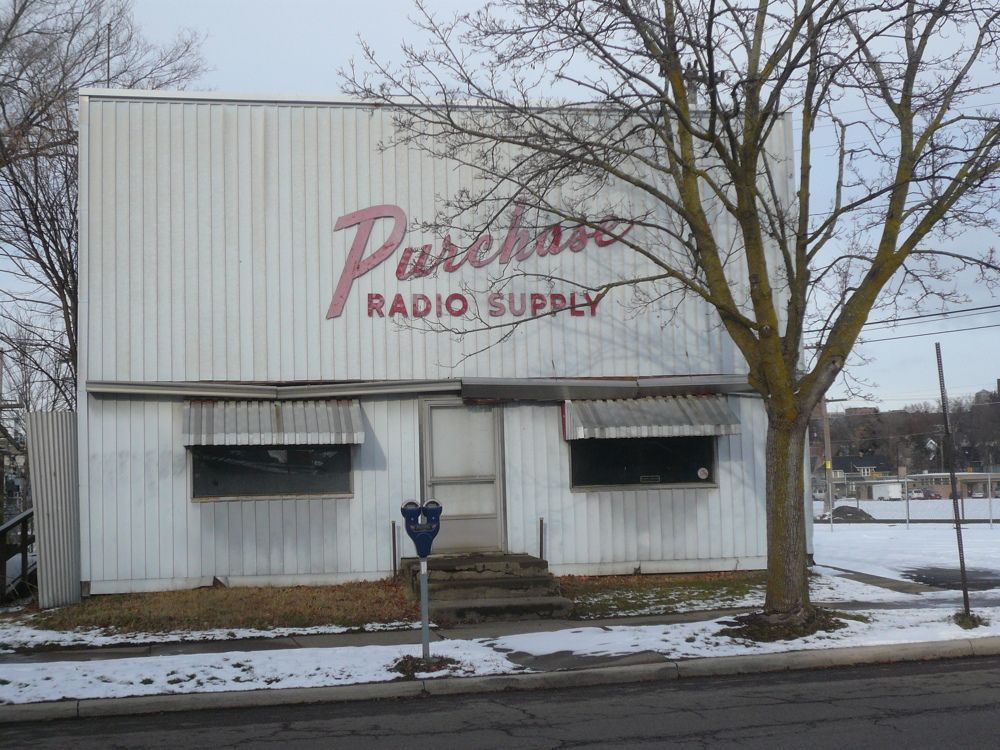
Purchase Radio when it closed in 2007.

The building has been vacant since then……until now anyway. I drove by there yesterday, and discovered that the building had been razed.

Purchase Radio, June 29, 2021.

I don’t know what’s planned for that site, but life moves on.

Filed Under: History Tagged With: Purchase Radio

Operating notes: Basic operating procedures, last weekend’s QSO parties, Maritime Radio Day

April 15, 2021 By Dan KB6NU Leave a Comment

I hate to sound like a curmudgeon, but I would like to again encourage all you new operators out there to learn basic standard operating procedures. They became standard operating procedures for a reason. They really do make contacts easier.

I bring this up now because more and more I’m running across operators who don’t seem to know them or just ignore them. About a week ago, I worked a relative newcomer to amateur radio. He replied to my CQ by just sending his callsign one time. This was wrong on two counts:

Since he didn’t send my call sign, I didn’t know if he was replying to me or not.
Since he only sent my call sign once, I didn’t get it all. There was a burst of noise as he was sending his call, and I missed one of the letters in his suffix.
In this case, the standard operating procedure is to send the other station’s call three times, then “DE,” then your call three times. So, if your call is W1ABC and you’re replying to my CQ, send, “ KB6NU KB6NU KB6NU DE W1ABC W1ABC W1ABC.”

Last weekend’s QSO parties

Last weekend, I took part in four state QSO parties: Nebraska, New Mexico, Georgia, and North Dakota. I only managed to work one station in NE, but I did work at least two in the other contests. The Georgia QSO Party was by far the most active. I managed to work 35 Georgia stations in a couple hours of work.

This weekend, the Michigan and Ontario QSO Parties will take place. Listen for me on 20 meters, 40 meters, and 80 meters. I’ll most be on CW, but I’ll work some phone, too.

Maritime Radio Day

Last night, I had one of those great, unexpected experiences that sometime happens in amateur radio. At about 11:00 pm (0300Z), I was thinking about hitting the sack, but wasn’t quite tired enough yet. So, I decided to head down to the shack and see what was happening on 40 meters.

The band was fairly busy with stations working the CWops CWT, but I noticed a station on 7022 kHz calling “CQ MRD.” It wasn’t real strong, but workable, and when I heard the call sign—K6KPH—I decided that I had to work them. As it turns out, MRD stands for “Maritime Radio Day,” and it is held annually on April 14, the day that the Titanic sank in 1912.

For those of you that don’t know, K6KPH is the station of the Maritime Radio Historical Society. The station is located on the site of the the historic ex-RCA coast station KPH, which is now part of the Point Reyes National Seashore, part of the National Park Service. Here’s a cool video of the station.

After working K6KPH, I heard II3IQW calling CQ MRD on 7020 kHz. I was actually copying II3IQW better than I was copying K6KPH, so working them was easier. Ennio, the operator of II3IQX, was commemorating IQX, the coastal radio station at Trieste, Italy. There’s a short, but interesting history of this station on the II3IQX QRZ page.

Filed Under: Contests, History, Operating Tagged With: Maritime Radio Day

TIL: Heath Co. founder Howard Anthony owned a Frank Lloyd Wright house

March 23, 2021 By Dan KB6NU 2 Comments

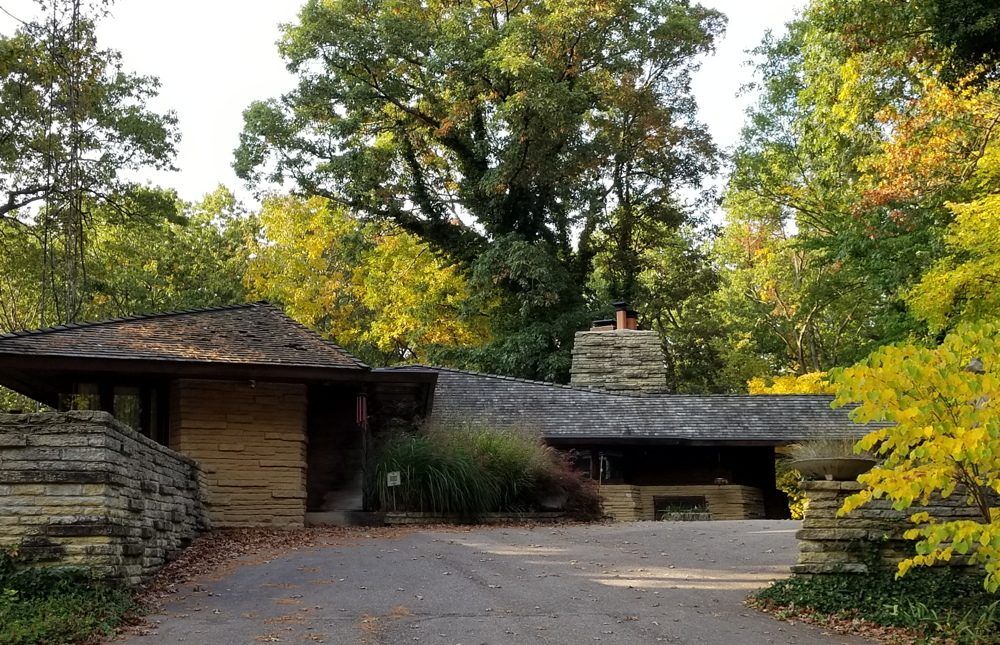
You learn things related to ham radio in some of the oddest places. For example, in the January/February 2021 issue Michigan History, I found the article, “Wright Here in Michigan’s Twin Cities.” Now, I’m not a big Frank Lloyd Wright fan, but my interest was certainly piqued when I read that Howard Anthony, the founder of the Heath Company, had owned a Wright-designed home in St. Joseph, MI, which borders Benton Harbor.

The Frank Lloyd Wright house of Howard Anthony, founder of the Heath Company. Doesn’t that tree look like a great support for an antenna? Photo: Stephen W. Smith

Stephen W. Smith, the article’s author writes:

What Frank Lloyd Wright was to architecture in 1950, Howard Anthony was to electronics: an innovator.

After noting that the company actually started selling aircraft parts, and then aircraft kits, it started selling electronic kits after World War II, taking advantage of the supply of surplus military electronic components.

[Anthony] acquired parts to construct an oscilloscope—an instrument that tests and displays voltage over time—and soon, the company offered a kit for consumers to construct their own device for a fraction of the cost of a manufactured one.

Smith writes about a newspaper article describing the house’s design:

Considering Wright’s involvement, it was a given that the house was ‘of unique design.’ Despite claiming that the ‘over-all structure will be of an odd shape, one extremely difficult to describe,’ the article did, in fact, describe the design for the house in great detail, including its extensive use of natural materials, such as Wisconsin limestone and cypress; its nonuniform angles and construction into a hillside; and its features intended to make the house seem spacious—namely ‘the slanting roof interior, the huge fireplace, and partitions between some of the rooms which do not reach entirely to the slanting ceiling.’ The article also noted that Anthony’s new house would include a laboratory.

How cool is that?

A modest grave

While researching this post, I also came across an interesting QRZ.Com post by Dave, W7UU, describing his visit to Riverside Cemetery, in Cass County, MI, where Howard Anthony is buried. As you may know, Howard Anthony died at the age of 42, in an airplane crash.

In this post, Dave describes how he cleaned up the gravesite and installed a laser-engraved photo of Anthony on the headstone, as well as his visit to the Heathkit factory. It’s quite an interesting post.

Filed Under: History Tagged With: Frank Lloyd Wright, Heathkit

Amateur radio in the news: Young ham wins Congressional App Challenge

February 13, 2021 By Dan KB6NU 1 Comment

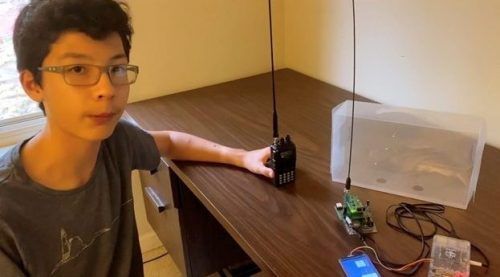
Concord Student Wins Congressional App Challenge

CONCORD, CA — A Concord teen won the 2020 Congressional App Challenge – CAC – for California’s 11th District. The CAC is a public initiative to encourage young people to learn how to code in an effort to inspire creativity and encourage interest in STEM — Science, Technology, Engineering and Mathematics — education. The winner of the challenge was Sean Donelan, who lives in Concord and attends Northgate High School. Donelan designed and created, “NetHam: The Public Service Event Coordinator’s Third Hand.”

…read more


How Wendell King Found His Frequency in Erie

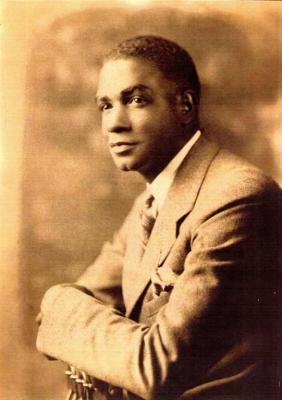
It was June of 1917 and the United States was at war. The first American infantry troops had arrived in Europe that month and stateside manufacturers were working around the clock to keep up with wartime demand. In Schenectady, N.Y., the sprawling General Electric plant, which employed 20,000 workers, hired a few dozen students from nearby Union College for the summer. This included Wendell Wilford King, a brilliant 20-year-old North Troy local who had just finished his freshman year studying electrical engineering. Instead of having him work in the yard like most college hires, he was put on a drill press.

…read more


World Radio Day: How Heroic Ham Operators Use Radio Waves to Carry Out Post-Disaster Rescue Ops

Imagine this: you have just encountered an intense cyclone—a storm so strong that it has damaged buildings, uprooted trees, brought down electric poles and power lines, and destroyed everything in its path. The electricity is already down, and all your usual modes of communication—cell phones, landlines, the internet—have stopped functioning. What do you do in such a situation? How do you make those emergency calls for medical assistance? How do you seek immediate help after being completely cut-off from the rest of the world?

Be it natural disasters like cyclones and earthquakes, or man-made ones like bomb-blasts or terror attacks, the loss of communication in such times can often push a delicate situation from bad to worse; it can often be the difference between life and death.

But even in such blacked-out circumstances, a glimmer of sunshine can be found, and contact with the outside world can be established through a mode of communication that many wrongly believe to be obsolete: radio. On the occasion of the 2021 World Radio Day—an international United Nations observance held on February 13 every year—let us explore the underappreciated yet ever-so-crucial role played by amateur radio and the supermen that operate it, in saving lives during calamities.

…read more

Filed Under: Emergency Communications / Public Service, History, Kids

Amateur radio in the news: Wireless and steam museum, Halifax amateurs get on the air, SDR tunes in new world of broadcasting

January 8, 2021 By Dan KB6NU 1 Comment

Finally, a good reason to visit Rhode Island (just kidding, just kidding)….Dan

Wireless Steam Museum reaches out

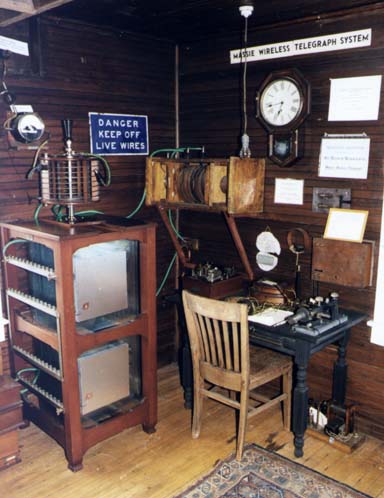
Massie Spark Station at the NE Wireless and Steam Museum, East Greenwich, RI.

E. GREENWICH, RI – For nearly 60 years, a small sign on Frenchtown Road has led visitors to a historic collection of ancient machines, one of East Greenwich’s best-kept secrets. This just-passed fall, the New England Wireless and Steam Museum turned outward – using a new technology (the internet) to share its collection of communication devices and steam engines with the wider world.

Museum director Randy Snow says he hopes the new video program will spread appreciation for mechanics and engineering: “We’re trying to hold onto those tangible skills, those lost arts, that aren’t taught anymore.”

…read more


This sounds like a good activity for any club…..Dan

Open frequencies: Halifax amateur radio operators make contact for Get on the Air

HALIFAX, NS — With the sound of Saturday’s noon gun from atop Citadel Hill, John Bignell was off and running. Or at least his handheld radio set was as the Halifax Amateur Radio Club’s Get on the Air winter event got underway. Dozens of radio operators around the city switched on their home transmitters or took to the snow-covered streets with portable units to make as many contacts as possible before the 4 p.m. deadline.

…read more


Software-defined radio tuning in new world of broadcasting

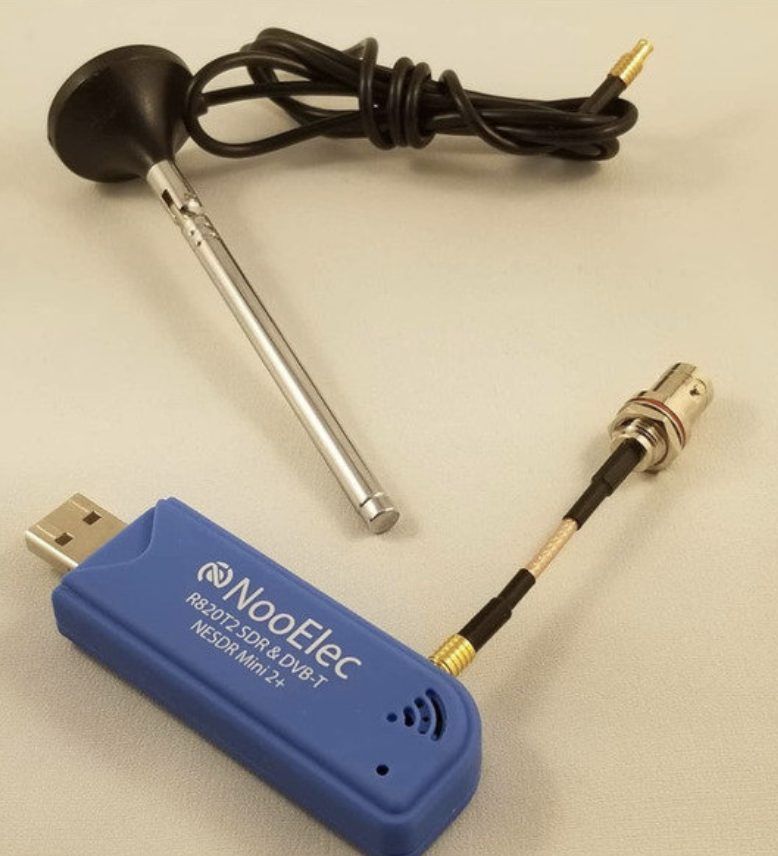
About two years ago a friend handed me a small blue device that plugs into the USB port of a computer. As he handed it to me he said it would completely change the way I thought of radio. I grew up in a household where radio was important. It enabled my immigrant parents, who had left western Europe for the Antipodes in the wake of the Second World War, to listen over shortwave to broadcasts from their home country. As such, radio and antennas were commonplace to me, and I remember building crystal sets to pull in whatever signals I could. Eventually that led me to getting my amateur radio operator certificate in Canada.

…read more

Filed Under: History, Operating, Software-Defined Radio (SDR)

Who are the top ten figures in the history of amateur radio?

January 6, 2021 By Dan KB6NU 13 Comments

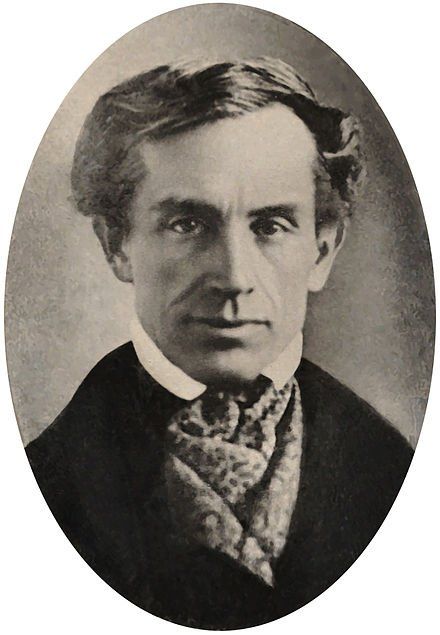
Should we consider Samuel Morse to be one of the top ten figures in amateur radio?

I’m working with an author who is working on amateur radio reference book. It will have a glossary of terms, a list of Q-signals, and some other good stuff. Yesterday, he sent me a link to the Wikipedia page for Samuel Morse, the inventor of the Morse Code. He asked, “Would this be useful? Can we use it?”

We’re having enough trouble getting this book done without adding material to it, so I jokingly replied, “Maybe this is the start of your next book, something like Profiles in Amateur Radio, short biographies of the 10 most important figures in the history of amateur radio.” I did mean it as a joke, but the more I think about it, the more I like this idea. I’m thinking maybe short biographies of perhaps the ten most influential people in the history of amateur radio.

The question, then, is who are these ten people? Here’s a list that I’ve come up with off the top of my head:

  1. Samuel Morse, inventor of Morse Code
  2. Guglielmo Marconi, the “inventor” of radio
  3. Lee de Forest, inventor of the vaccum tube
  4. Hiram Percy Maxim, the first president of the ARRL
  5. Hugo Gernsback, one of the first publishers of radio magazines and the founder of the Wireless Association of America
  6. Arthur A. Collins founder of Collins Radio
  7. William Halligan, founder of the Hallicrafters Company
  8. Joseph Taylor, Nobel laureate and inventor of many weak-signal digital modes
  9. Howard Anthony, the man who got Heathkit into the electronics business
  10. Wayne Green, W2NSD, editor of CQ and editor/publisher of 73 and various computer magazines

I’d love to get your input on this. Please email me with your recommendations, or comment below.

Filed Under: Books and Magazines, History

  • Page 1
  • Page 2
  • Page 3
  • Page 4
  • Go to Next Page »

Primary Sidebar

No Nonsense Technician Class License Study Guide (for tests given between July 2026 and June 2030)

New No Nonsense Technican Class Study Guide now available!

The 2026 version of my Tech Class study guide is now available, and as always, the PDF version is FREE!. The ePub version costs $11.97, and a Kindle version and paperback version will be available on Amazon shortly.

Click here to get all of my "No Nonsense" study guides.

Also available: The CW Geek's Guide to Having Fun with Morse Code

W5SWL.Com
Retevis Ailunce H1 DMR Radio
DXpander: Cobweb antennas, Laser Cutting

You’ve got mail!

Enter your email address below and get an email every time I publish a new post.

Email


I frequently teach classes to help newcomers get their licenses. The next class will take place on Saturday, February 7, 2026 on the University of Michigan campus. Click here for more information.

If you can't make the class, subscribe to the mailing list to be notified of when the next class will be held.

You can always download my free study guide, and if you have any questions about the classes, or amateur radio in general, please feel free to email me directly.

Support KB6NU.Com

Donate $7.30 and get two of these cool stickers. Measuring 4.25-in. W by 2.75-in. H, it's perfect for your car, your shack, or wherever!

Contact me

If you have a question or comment about one of my blog posts, or a question about any of the material in my study guides, or just a question about ham radio in general, you can email me at [email protected].

Blogs You Should Also Read

  • AE5X: A CW-centric blog from Kingswood, Texas
  • K0LWC Blog
  • LA3ZA Ham Radio Blog
  • Little Radios, Big Fun – WB3GCK
  • Mr. Vacuum Tube's Blog
  • Radio Artisan – K3NG
  • The K0NR Weblog
  • VE3WDM's QRP Ham Radio Blog
  • W2LJ’s Blog

Ham Radio Websites

  • Dashtoons – The Hammin' Comedy by Jeff K1NSS

Podcasts

  • ICQ Podcast
  • Linux in the Ham Schack
  • No Nonsense Amateur Radio Podcast
  • Resonant Frequency Amateur Radio Podcast

Recent Comments

  • Dan KB6NU on Finally, a Loop for 10m.
  • Dan KB6NU on 1930s cards for my collection of QSLs from stations whose callsigns spell words
  • Sean on Finally, a Loop for 10m.
  • Bill Waslo on 1930s cards for my collection of QSLs from stations whose callsigns spell words
  • C M Wetzel KD8TNF on The Wesco BN-1

Meta

  • Log in
  • Entries feed
  • Comments feed
  • WordPress.org

Footer

Copyright © 2026 Daniel M. Romanchik, KB6NU · Log in