• Skip to primary navigation
  • Skip to main content
  • Skip to primary sidebar
  • Skip to footer

KB6NU's Ham Radio Blog

KB6NU's Ham Radio Blog
  • HOME
  • Study Guides
  • Teach a One-Day Tech Class
  • W8SRC Repeater Guide
  • Advertise
  • Hire Me

Heathkit

Videos: HS ham club in NH, yet another Heathkit history, Cruz thanks ham radio

May 25, 2026 By Dan KB6NU Leave a Comment

Students go hands on with ham radio

Here’s a nice news story about a new ham club at a high school in New Hampshire.

Yet another Heathkit history

Here’s another YouTube video on the history of Heathkit. The author has disabled embedding, so you have to watch it on YouTube.

Heathkit advertisement from the 1950s.

Senator Ted Cruz on Ham Radio

In this short video, Cruz thanks ham radio operators for their service. This has gotten some people excited because I believe that Cruz is the chair of the Senate committee working on the Amateur Radio Emergency Preparedness Act. I’d be more excited if Cruz would sign on as a co-sponsor, but he has not yet. So, at this point, these are just words.

Filed Under: Clubs, Emergency Communications / Public Service, History Tagged With: Heathkit, NH, Ted Cruz

Videos: The Heathkit story, how orchards became Silicon Valley, and a propagation monitor

May 5, 2026 By Dan KB6NU 2 Comments

The mistake that built Heathkit

I hadn’t heard the story about the boxcars of electronic components before.

How orchards became Silicon Valley

I worked in Silicon Valley right after I got out of college.It’s interesting to see how it’s changed since then.

Shortwave propagation monitor

I’m not sure how useful thing would actually be, but it’s a simple project and could be interesting.

Filed Under: Amateur radio business, Gear/Gadgets, Propagation Tagged With: Heathkit, Silicon Valley

From the trade magazines: The difference between NPN and PNP transistors, Radio Shack and Heathkit, resistors

December 3, 2022 By Dan KB6NU 3 Comments

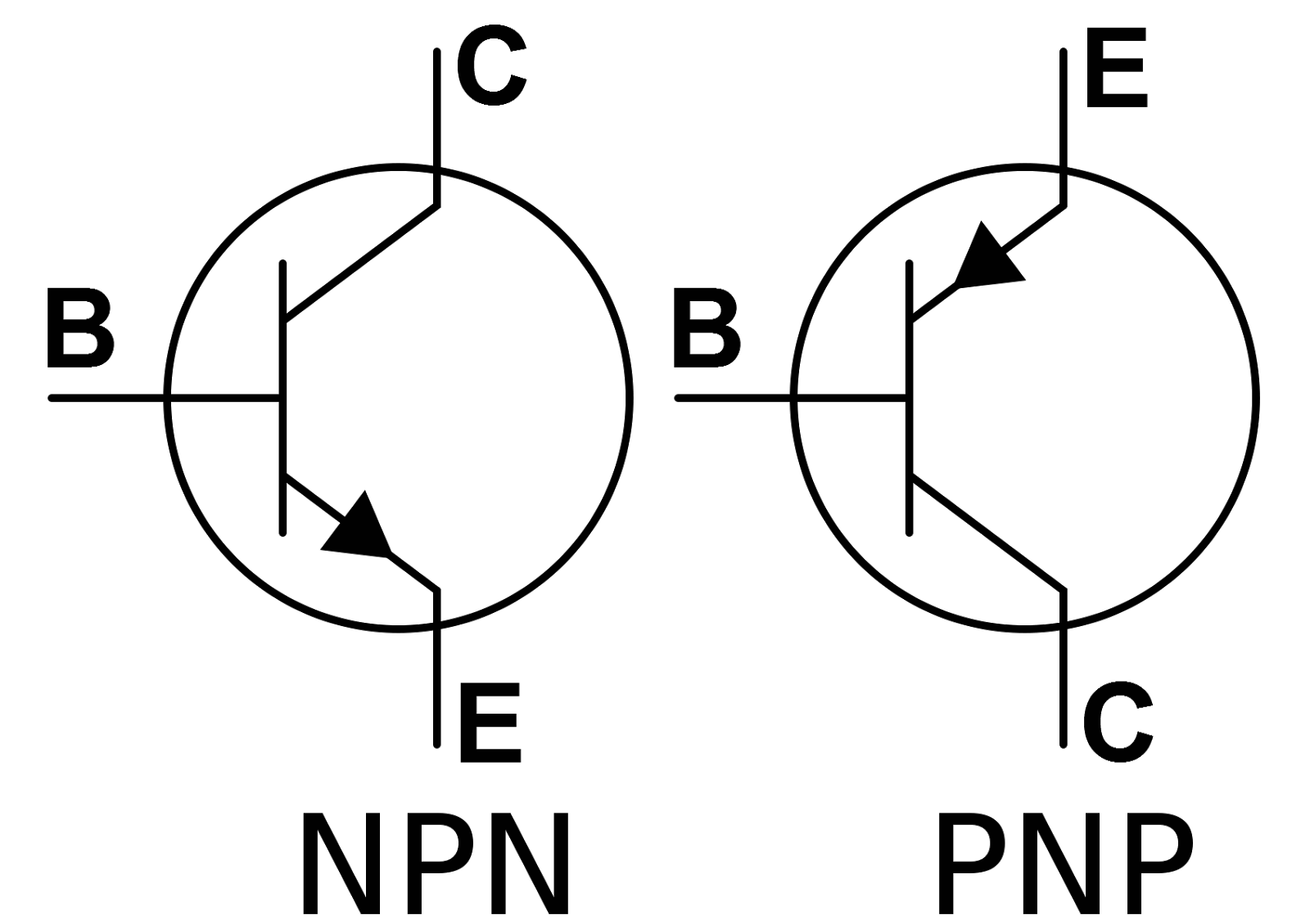
What’s the Difference Between PNP and NPN Transistors?

There are numerous differences between NPN and PNP transistors, and even though both are bipolar junction transistors, the direction of current flow is the name of the game.

Both are used in various amplification and modulating circuits; the most frequent among its applications is being fully ON and OFF, which is referred to as switch mode. It’s easy to remember that NPN stands for Negative-Positive-Negative and PNP stands for Positive-Negative-Positive.


Rise and Fall of Radio Shack and Heathkit

Radio Shack and Heathkit are long gone but these companies had a major impact on young engineers.These articles touch on the companies, their impact, and what happened along the way.

  • Electronics Still Thrives as a Hobby
  • Heathkit: A Right-Time, Right-Place Business
  • The Shack Is Back
  • Update: The Shack Is Back
  • RadioShack: Tragedy or Inevitable?
  • Radio Shack to Close Most Retail Stores
  • Heathkit Closes, Again.  This time for good?
  • What’s Happening With Heathkit and Radio Shack?
  • The Rise And Fall Of Heathkit—And Rise Of SparkFun (available as .PDF download)
  • Have Chip Vendors Taken Over Where Heathkit Left Off?
  • Heathkit: An Employee’s Look Back

Resistors: Types and Applications

An ohm is an ohm, right? Not so fast — there are many different types of resistors. To insure that your circuit works and stays working, use the right type of resistor. In this article, you’ll learn about the common types of resistors and their special characteristics.

Filed Under: Electronic Components, Electronics Theory Tagged With: Heathkit, Radio Shack, resistors, transistors

TIL: Heath Co. founder Howard Anthony owned a Frank Lloyd Wright house

March 23, 2021 By Dan KB6NU 2 Comments

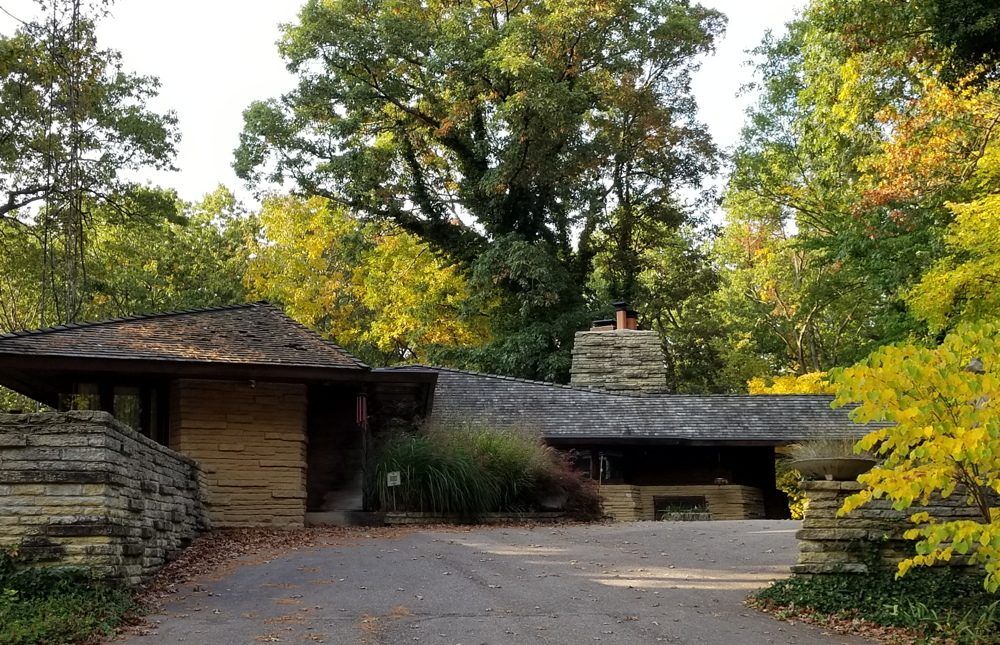
You learn things related to ham radio in some of the oddest places. For example, in the January/February 2021 issue Michigan History, I found the article, “Wright Here in Michigan’s Twin Cities.” Now, I’m not a big Frank Lloyd Wright fan, but my interest was certainly piqued when I read that Howard Anthony, the founder of the Heath Company, had owned a Wright-designed home in St. Joseph, MI, which borders Benton Harbor.

The Frank Lloyd Wright house of Howard Anthony, founder of the Heath Company. Doesn’t that tree look like a great support for an antenna? Photo: Stephen W. Smith

Stephen W. Smith, the article’s author writes:

What Frank Lloyd Wright was to architecture in 1950, Howard Anthony was to electronics: an innovator.

After noting that the company actually started selling aircraft parts, and then aircraft kits, it started selling electronic kits after World War II, taking advantage of the supply of surplus military electronic components.

[Anthony] acquired parts to construct an oscilloscope—an instrument that tests and displays voltage over time—and soon, the company offered a kit for consumers to construct their own device for a fraction of the cost of a manufactured one.

Smith writes about a newspaper article describing the house’s design:

Considering Wright’s involvement, it was a given that the house was ‘of unique design.’ Despite claiming that the ‘over-all structure will be of an odd shape, one extremely difficult to describe,’ the article did, in fact, describe the design for the house in great detail, including its extensive use of natural materials, such as Wisconsin limestone and cypress; its nonuniform angles and construction into a hillside; and its features intended to make the house seem spacious—namely ‘the slanting roof interior, the huge fireplace, and partitions between some of the rooms which do not reach entirely to the slanting ceiling.’ The article also noted that Anthony’s new house would include a laboratory.

How cool is that?

A modest grave

While researching this post, I also came across an interesting QRZ.Com post by Dave, W7UU, describing his visit to Riverside Cemetery, in Cass County, MI, where Howard Anthony is buried. As you may know, Howard Anthony died at the age of 42, in an airplane crash.

In this post, Dave describes how he cleaned up the gravesite and installed a laser-engraved photo of Anthony on the headstone, as well as his visit to the Heathkit factory. It’s quite an interesting post.

Filed Under: History Tagged With: Frank Lloyd Wright, Heathkit

Operating Notes: Heathkits on the air, 1929 rig, DX QRM

December 21, 2020 By Dan KB6NU 1 Comment

Heathkits still on the air

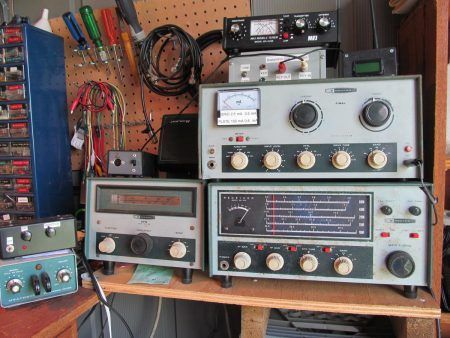
VE3AIH’s vintage Heathkit station.

About a week ago, I worked KA7U, who was operating a set of “Heathkit Twins,” a combination of the SB-300 receiver and the SB-400 transmitter. It sounded pretty good, too!

My very next contact was with VE3AIA. He was running the DX-60B transmitter (with HG-10 VFO) and an HR-10 receiver, shown at right.

These old Heathkits keep plugging along. Maybe one day I’ll get my HW-101 back on the air. :)

Chirp, chirp chirp

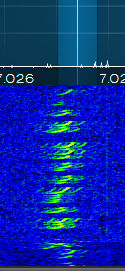
On Saturday, I heard a guy calling CQ whose signal had some serious chirp. As you can see from the screenshot at right, instead of a nice straight display on the waterfall, his transmit frequency varied by several hundred Hz.

At first, I wasn’t going to work him, but I thought that he might want to know about his signal, so I gave him a call. As it turns out, he was using a homebrew transmitter that consisted of a couple of Type 27 tubes. The circuit was basically a Hartley oscillator, with the two tubes connected in parallel for increased power output. My contact was guessing that he was running about 5 W output.

I hope he does get his chirp problem under control, but he should get points for homebrewing the thing in the first place, shouldn’t he?

DX QRM

Yesterday, I called CQ on 7028 kHz, a fellow returned my call, and we proceeded to have a chat. Shortly after, an LZ1 station pops up on frequency and begins to call CQ himself. No problem, my friend says, and suggests we QSY to 7024 kHz.

So, we get down there and start chatting again, when another DX station pops up on frequency and starts calling CQ, completely oblivious to our complaints that the frequency was already in use. It was about time to end the contact, anyway, and we’ve since corresponded by email, but it was a little annoying. I guess, though, that I should be glad that propagation was good enough to hear the DX stations at all.


Filed Under: Operating Tagged With: chirp, Heathkit

New Heathkit power meter

July 21, 2017 By Dan KB6NU 10 Comments

Heathkit has finally announced their next amateur radio product – the HM 1002 Precision RF Power Meter. I say announced because it’s really not available yet. Instead, you can “pre-order” it for shipment in “late summer.”

Here’s what the HM-1002 web page says:

The HM-1002 Heathkit® Precision RF MeterTM is our first new amateur radio station accessory and our first test equipment product in over 30 years. This is a solder kit, suitable for people with no prior electronics experience. We believe it is a landmark in RF meters, in both technical features and price/performance.

Initial early pre-ordering is available for devoted fans, patient experienced kitbuilders and Heathkit Insiders, with payment by check, USPS money order, or eCheck. Regular sales may not open for a month or more.

Final product specifications, and product price for future orders, are subject to change. If lab tests show our design achieves our target goals for accuracy (better than nominals below), the price for orders placed later may increase. [[The pre-order price is $575….Dan]] Pre-orders are limited to two units per customer.  Price shown includes one power+frequency sensor.

THIS KIT WILL START TO SHIP IN LATE SUMMER 2017. 
This product will not ship when you order. You will be waiting but “first in line.” Orders will be processed on a first-paid first-shipped basis. 
Due to high expected demand, the earliest pre-orders have an estimated ship date of August or September. That’s an estimate, not a confirmed ship date, and if you wait to order and are not among the first 1,000 orders you likely will receive yours later than that. Initial pre-orders are a make-to-order, and it takes time to manufacture the First Production Run of a groundbreaking new product.

I’m just as befuddled by this product as I was by their first product—a $150 TRF AM radio. I just don’t see a big demand for this product when there are already so many good wattmeters on the market already, not to mention all of the Bird wattmeters floating around. Sure, this may have better specs than some of those wattmeters, but hams don’t need that kind of accuracy even if they could figure out what to do with it.

Hack-a-Day seems equally befuddled. For their take on the HM-1002, read Heathkit’s New RF Meter. Who is it for?.

Have any of you built one of the new Heathkits? If so, I’d like to hear your take on your experience building the kit and whether it was worth the money.

Filed Under: Gear/Gadgets, Kits, Test Equipment Tagged With: Heathkit, wattmeter

A new Heathkit! So, why am I not excited?

October 8, 2015 By Dan KB6NU 27 Comments

Heathkit_TM-logo_smallYesterday, I got an e-mail from Heathkit. It’s kind of funny because I was thinking about them just the other day. A couple of years ago, there was all this hype about a “new” Heathkit and how they were going to start designing new kits as well as revive popular old designs.

Then, nothing. They went completely quiet—until yesterday. In an e-mail sent to their “insiders,” they say:

Dear Heathkit Insider,

“What I really hope Heathkit will produce,” a Silicon Valley colleague recently told me, “is a new radio kit with a beautiful finish, maybe in rosewood.” Something great to enjoy building and learn from, and also visually stunning, so he could put it in his living room and keep it forever.

Today, my friend gets his wish.

Exciting news. More on that in a moment.

They then go on to explain all of the work they’ve been doing in relocating Heathkit to Santa Cruz, CA, acquiring a second company, and securing all the intellectual property rights to the old Heathkit manuals and logos (meaning no more bootleg copies on the Internet).

They go on, though:

That’s a lot, but there’s more. We’ve designed and developed a wide range of entirely new kit products. We authored the manuals for these kits, complete with the beautiful line art you rely on, preserving and respecting our iconic historic Heathkit style. We developed many new inventions and filed patents on them……We built the back office infrastructure, vendor and supply chain relationships, systems, procedures, operations methods, and well-thought-out corporate structure that a manufacturing company needs to support its customers, to allow us to scale instantly the day we resume major kit sales. All this effort enables us to introduce a fleet of new kits and helps ensure Heathkit can grow, prosper, and continue to bring you great new products for a very long time.

So, what’s the exciting news? A new QRP transceiver? Maybe a shortwave radio? A new 100-in-1 experimenter kit for Makers?

Uh-uh. Sorry. The “exciting” news is a tuned radio frequency (TRF) AM band (yes, I said AM band) radio kit that costs $150. Not only is that crazy expensive for an AM radio, it doesn’t even come with a speaker. On top of that, there’s no soldering. You screw all of the components to the board. I’m speechless (well, figuratively, not literally).

I’m not sure what the target market is for this product. It’s certainly not amateur radio operators, who expect a lot more (in terms of both functionality and “fun”) for their money. Nor is it the “Maker” folks. I think that if I took this to show off at the local Ann Arbor Maker group, they’d laugh me out of the place.

I really hope that they got something better up their sleeves.

Filed Under: Kits Tagged With: Heathkit

Primary Sidebar

No Nonsense Technician Class License Study Guide (for tests given between July 2026 and June 2030)

New No Nonsense Technican Class Study Guide now available!

The 2026 version of my Tech Class study guide is now available, and as always, the PDF version is FREE!. The ePub version costs $11.97, and a Kindle version and paperback version will be available on Amazon shortly.

Click here to get all of my "No Nonsense" study guides.

Also available: The CW Geek's Guide to Having Fun with Morse Code

W5SWL.Com
Retevis Ailunce H1 DMR Radio
DXpander: Cobweb antennas, Laser Cutting

You’ve got mail!

Enter your email address below and get an email every time I publish a new post.

Email


I frequently teach classes to help newcomers get their licenses. The next class will take place on Saturday, February 7, 2026 on the University of Michigan campus. Click here for more information.

If you can't make the class, subscribe to the mailing list to be notified of when the next class will be held.

You can always download my free study guide, and if you have any questions about the classes, or amateur radio in general, please feel free to email me directly.

Support KB6NU.Com

Donate $7.30 and get two of these cool stickers. Measuring 4.25-in. W by 2.75-in. H, it's perfect for your car, your shack, or wherever!

Contact me

If you have a question or comment about one of my blog posts, or a question about any of the material in my study guides, or just a question about ham radio in general, you can email me at [email protected].

Blogs You Should Also Read

  • AE5X: A CW-centric blog from Kingswood, Texas
  • K0LWC Blog
  • LA3ZA Ham Radio Blog
  • Little Radios, Big Fun – WB3GCK
  • Mr. Vacuum Tube's Blog
  • Radio Artisan – K3NG
  • The K0NR Weblog
  • VE3WDM's QRP Ham Radio Blog
  • W2LJ’s Blog

Ham Radio Websites

  • Dashtoons – The Hammin' Comedy by Jeff K1NSS

Podcasts

  • ICQ Podcast
  • Linux in the Ham Schack
  • No Nonsense Amateur Radio Podcast
  • Resonant Frequency Amateur Radio Podcast

Recent Comments

  • Dan KB6NU on Finally, a Loop for 10m.
  • Dan KB6NU on 1930s cards for my collection of QSLs from stations whose callsigns spell words
  • Sean on Finally, a Loop for 10m.
  • Bill Waslo on 1930s cards for my collection of QSLs from stations whose callsigns spell words
  • C M Wetzel KD8TNF on The Wesco BN-1

Meta

  • Log in
  • Entries feed
  • Comments feed
  • WordPress.org

Footer

Copyright © 2026 Daniel M. Romanchik, KB6NU · Log in