• Skip to primary navigation
  • Skip to main content
  • Skip to primary sidebar
  • Skip to footer

KB6NU's Ham Radio Blog

KB6NU's Ham Radio Blog
  • HOME
  • Study Guides
  • Teach a One-Day Tech Class
  • W8SRC Repeater Guide
  • Advertise
  • Hire Me

Electronic Components

Amateur radio videos: Delta loop antennas, Morse Code speed vs. proficiency, matching diodes

October 6, 2023 By Dan KB6NU Leave a Comment

Here are some videos that folks have recommended either on reddit or one of the many #hamradio mailing lists that I subscribe to.

DX Commander on delta loop antennas

Delta loops are great antennas. Here’s a tutorial on how to build one.

AD0WE on Morse Code speed vs. proficiency

Kurt, AD0WE, has done a great deal of thinking about how we learn and get better at CW—way more than I have. He has a lot more info on his Morse Code Ninja website.

M0NTV on matching diodes

M0NTV likes homebrewing diode mixers, and because one of the keys to success is using matched diodes, he’s developed a methodology for doing this.


Filed Under: Antennas, Building/Homebrew, CW, Electronic Components Tagged With: delta loop, diodes

From the trade magazines: Semiconductor workforce shortage, vector network analyzer intro, DC-DC converters

August 16, 2023 By Dan KB6NU Leave a Comment

U.S. Semiconductor Workforce Shortage Reaching Critical Stage

The U.S. is on the brink of a new semiconductor manufacturing boom, leaving companies in urgent need of technicians to staff their new fabs and engineers to design the chips that these facilities will churn out. And unless things change, there soon may not be enough skilled chip workers in the U.S. to go around.

A top trade group for the U.S. semiconductor industry issued a report claiming there will not be enough skilled engineers and other workers to support their expansion plans, leaving it 67,000 workers short by 2030.

The way the semiconductor industry is growing, it will need a U.S. workforce of about 460,000 by the end of the decade, up from about 345,000 this year, according to a new study released by the Semiconductor Industry Association (SIA) and Oxford Economics.

…read more

Wayne Green, W2NSD, publisher of 73 Magazine, always used to tout the opportunities that an amateur radio license afforded hams. I’m sure that he’d be writing about this topic if he were still with us and editorializing today…Dan


An Introduction to the VNA and Vector Network Analysis

Most design engineers are familiar with tools of the trade such as voltmeters, oscilloscopes, signal generators, and spectrum analyzers. Some may not have had the opportunity to use a vector network analyzer (VNA). It’s the intent of this article to introduce VNA measurement and present a few typical applications.

What you’ll learn:

  • What does a VNA measure?
  • What can one do with the measured data?
  • What devices are measured with a VNA?

…read more

Although written by a a company that makes engineering-grade VNAs, you might find this an interesting article to read if you just purchased a nanoVNA…Dan


DC-DC Converter Design Basics (Part 1): Buck Converters

DC-DC converters are widely used to efficiently produce a regulated voltage from a source that may or may not be well-controlled to a load that may or may not be constant. This article shows how DC-DC converters can be built using the Renesas SLG47105 GreenPAK programmable mixed-signal matrix.

DC-DC converters are high-frequency power-conversion circuits that use high-frequency switching and inductors, transformers, and capacitors to smooth out switching noise into regulated DC voltages. Closed feedback loops maintain constant voltage output even when changing input voltages and output currents. At 90% efficiency, they’re generally much more efficient and smaller than linear regulators. Their disadvantages are noise and complexity.

…read more


Filed Under: Antennas, Electronic Components, Electronics Theory, Test Equipment Tagged With: Jobs, VNA

A nice find at the local library

February 20, 2023 By Dan KB6NU 2 Comments

We have a really great library here in Ann Arbor. It’s won “library of the year” honors in the past, and it continues to do a fabulous job. In addition to books and magazines and music, you can borrow stuff like telescopes, energy meters, thermal cameras, and a bunch of other cool stuff.

One of the best features, however, is the Friends of the Library book sale. Ann Arbor is home to the University of Michigan, and as you might expect, people here have a lot of books. So many books that we don’t have enough shelf space to store them all. So, when shelf space needs to be freed up, many of these books get donated to the Friends of the Library and get sold in the Friends’ shop. This shop is open every day, and you never know what you might find.

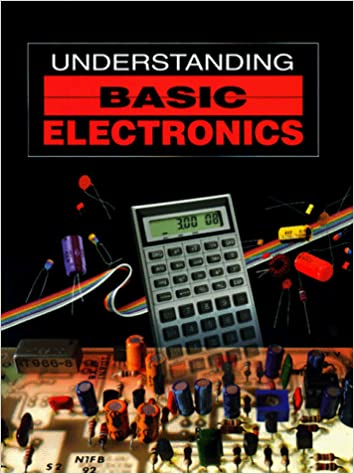
I’ve purchased many technical books from the Friends of the Library book shop. My latest find is Understanding Basic Electronics, 1st edition. I snagged it for two dollars. I would never have purchased this book new. After all, I think that I’m pretty well versed in basic electronics. But, for $2, I couldn’t pass it up.

I’m glad I didn’t. It explains some of the basic concepts in ways that makes these concepts understandable to newcomers. For example, instead of just saying that the phase angle between voltage and current in a capacitor is 90º, it explains why this is:

It appears that capacitors don’t like the applied voltage to change. They react to a voltage change as to oppose that change. When the voltage is increasing, they take energy from the voltage supply. You could view this as an attempt to prevent the voltage from increasing. When the voltage is decreasing, the capacitor returns stored energy to the circuit. Think of this action as working to prevent the voltage from decreasing.

There are similar explanations of concepts such as resonance and how transistors are made and how they work. I’m hoping that by reading this book, I’ll come up with new ways to explain how some of this stuff to the folks taking my ham radio classes.

Before you buy the book, note that there’s nothing in the book about antennas and very little about electronic circuits. That’s because this book is really devoted to the basics of electronics.

Also note that there is a second edition that was published in 2010. I haven’t seen that edition, but I’d guess that it’s even better than the first.

Filed Under: Books and Magazines, Electronic Components, Electronics Theory Tagged With: ARRL

From my reading list: The inner beauty of electronics

January 23, 2023 By Dan KB6NU 1 Comment

Safari, the web browser that I use most often, has a feature called the “reading list.” It’s like a bookmark, but much more temporary. The list is meant to be a parking lot for sites that you want to read, but not read over and over. Once you’ve read it, you’re supposed to delete the site from the list.

Of course, a lot of sites get stuck on the list, so periodically I actually go through it and read some of the sites on the list. Here are three that I think hams will be as interested in as I am.

The Inner Beauty of Basic Electronics

Many components are not only marvels of electronics engineering, but mechanical engineering as well. Open Circuits: The Inner Beauty of Basic Electronics shows us how beautiful electronic components can be. The authors, Windell Oskay and Eric Schlaepfer, have painstaking opened many electronic components and taken some really amazing cross-section photographs. Here’s an example of a 15-turn potentiometer.

Also included in the book are photographs of transistors, integrated circuits, printed circuit boards, and more. Even if you don’t buy the book, taking a look at some of the photograph’s on the book’s web site is well worth it.


RFZero

I found out about this board via a Tweet by one of the designers. The RFzero is a multi-purpose, GPS-controlled Arduino shield that uses a Si5351A clock generator to generate all kinds of RF signals. Designed by designed by Johan, 5Q7J; Bo, OZ2M; Hans, OZ2XH; and Steen, OZ5N, the web page says that it can be used for all kinds of things, such as a beacon (IBP, SPB, CW, FST4, FST4W, FT4, FT8, JS8, JT9, ModeX (JT65, Q65, …), PI4, WSPR, …), stand alone WSPR/FST4W transmitter, signal generator, VFO, QO-100 dual LO, low cost GPSDO, e.g. for 10 MHz, IC-9700 LO, 90 MHz frequency counter, and more. Being Arduino-based, you can, of course, write or modify the software yourself.

It looks like a very cool board. I might even get one myself. The price is 500 DKK, or about $73.


SIGpi: A signal-intelligence-focuese Linux “go kit”

I came across this via a tweet from RTL-SDR.Com. RTL-SDR.Com is one of those websites that you really want to read if you’re doing anything with software-defined radio (SDR).

Joe, NE2Z,  has developed this Linux distribution called SIGpi. SIGpi is an installable Linux distribution for Ubuntu and Raspberry Pi 3/4 that focuses on providing multiple open source SDR programs that can be used for signal intelligence. with emphasis on capabilities in the VHF, UHF, and SHF spectrum. Optionally, you can install HF SDR software, too. For a complete list, see the SIGpi wiki.

SIGpi runs on the following platforms:

  • Raspberry Pi4 4GB RAM or Raspberry Pi 400 with 32GB microSD card running Raspberry Pi OS Full (64-bit)
  • Ubuntu 22.04 LTS on arm64 and amd64

This sounds like something fun to try on my under-utilized RPi4. Now, I just have to find the time for it.

Filed Under: Electronic Components, Microcontrollers, Software-Defined Radio (SDR) Tagged With: Arduino, Raspberry Pi, RFZero, SIGpi

From the trade magazines: The difference between NPN and PNP transistors, Radio Shack and Heathkit, resistors

December 3, 2022 By Dan KB6NU 3 Comments

What’s the Difference Between PNP and NPN Transistors?

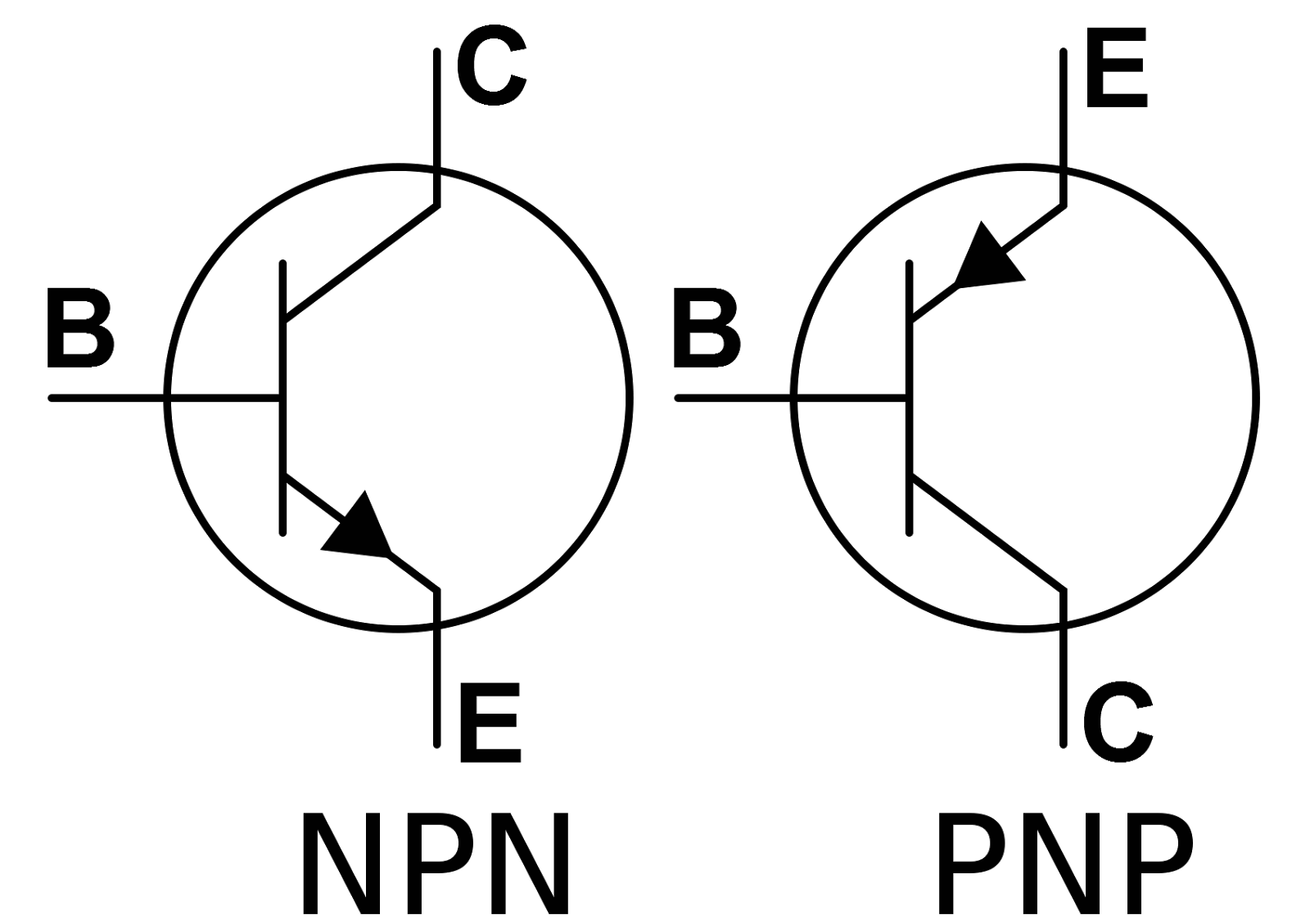
There are numerous differences between NPN and PNP transistors, and even though both are bipolar junction transistors, the direction of current flow is the name of the game.

Both are used in various amplification and modulating circuits; the most frequent among its applications is being fully ON and OFF, which is referred to as switch mode. It’s easy to remember that NPN stands for Negative-Positive-Negative and PNP stands for Positive-Negative-Positive.


Rise and Fall of Radio Shack and Heathkit

Radio Shack and Heathkit are long gone but these companies had a major impact on young engineers.These articles touch on the companies, their impact, and what happened along the way.

  • Electronics Still Thrives as a Hobby
  • Heathkit: A Right-Time, Right-Place Business
  • The Shack Is Back
  • Update: The Shack Is Back
  • RadioShack: Tragedy or Inevitable?
  • Radio Shack to Close Most Retail Stores
  • Heathkit Closes, Again.  This time for good?
  • What’s Happening With Heathkit and Radio Shack?
  • The Rise And Fall Of Heathkit—And Rise Of SparkFun (available as .PDF download)
  • Have Chip Vendors Taken Over Where Heathkit Left Off?
  • Heathkit: An Employee’s Look Back

Resistors: Types and Applications

An ohm is an ohm, right? Not so fast — there are many different types of resistors. To insure that your circuit works and stays working, use the right type of resistor. In this article, you’ll learn about the common types of resistors and their special characteristics.

Filed Under: Electronic Components, Electronics Theory Tagged With: Heathkit, Radio Shack, resistors, transistors

Trade magazine articles: Op amps, microcontroller measures frequency and period, antenna basics

January 22, 2022 By Dan KB6NU Leave a Comment

All three articles in this post are from Electronic Design….Dan

Op Amps for Linear Designs: Back to the Basics

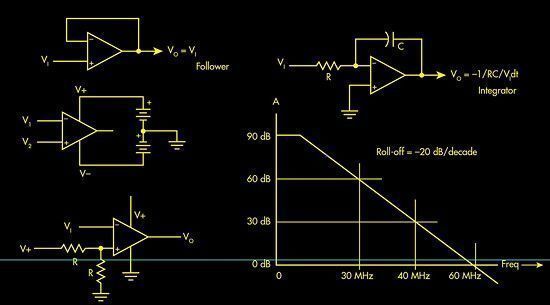
Op amps are the basic building blocks for much of linear circuit design. You probably learned about them in college and even designed some products containing an op amp.  As an electronic engineer, you will at some point in your career probably need to design a linear circuit.

If you’re not an advanced linear or analog circuit designer, perhaps the best way to fulfill your linear design needs is to use an op amp. These ICs are widely available, inexpensive, and can be configured in hundreds if not thousands of ways to satisfy most linear requirements. Here’s a summary and update on these versatile devices…..more


Microcontroller Efficiently Measures Frequency and Period

When you need to take accurate timing measurements in hardware without overloading a microcontroller, the signal measurement timer module (SMT) in the Microchip16F1619 PIC microcontrolleris perfectly suitable for this application. The SMT module captures features of a signal such as Period and Frequency, among others. This design measures input frequency signals within the range of 8 Hz to 10 MHz, and Period signals within the range of 0.1 µs to 125 ms…..more


Welcome To Antennas 101

Antennas are much more than simple devices connected to every radio. They’re the transducers that convert the voltage from a transmitter into a radio signal. And they pick radio signals out of the air and convert them into a voltage for recovery in a receiver.

Typically taken for granted and left for the last minute in a design, antennas are nonetheless critical for establishing and maintaining a reliable radio connection. They may look complex and enigmatic to most engineers, especially EEs working with wireless applications for the first time—not to mention that they come in a seemingly infinite variety of sizes and shapes. However, a brief review of the essentials can help allay any design worries….more

Filed Under: Antennas, Building/Homebrew, Electronic Components, Electronics Theory, Microcontrollers Tagged With: op amps, PIC

Random stuff: Circuits for kids, replace a 555 with a PIC microcontroller, HF sports net

September 28, 2021 By Dan KB6NU 1 Comment

Circuits for kids

A reader writes:

I wanted to thank you for putting together your links page. My daughter MaryAnne’s Girl Scout troop is currently working on their ‘Think Like an Engineer’ Badge as part of the STEM series, and the radio schematics resources on your page helped us a bunch!

MaryAnne’s troop leader encouraged the parents to work with our girls at home to ensure we stay on track! The girls will be building a working radio, so the troop leader wanted the girls to learn the basics about simple electronics, circuits and electricity. She asked the girls to do some research online and to share their findings with the troop. Your page led us to some great websites to check out, so MaryAnne and I wanted to make sure we thanked you :)

And if it’s not too much trouble, I was hoping you could include a contribution from MaryAnne on your website. She found this circuits guide that I was very impressed with…

All About Electronic Circuits
https://www.speedwaymotors.com/Info/All-About-Electronic-Circuits-for-Kids

I’d love to show MaryAnne and her troop leader! Encouraging girls in the field of science and engineering is so important! And MaryAnne would be thrilled to know she could help! (She really got into tinkering during COVID, so she was very excited to work on this project!)

There you go, MaryAnne. Thanks for the tip and good luck to your troop.

Use a PIC microcontroller to replace a 555

Speaking of circuits, Nuts and Volts has been running a series of articles on how to use a PIC microcontroller in place of a 555 timer chip. Here’s how the first article in the series compares the two:

Some of the advantages of this implementation as compared to a 555 or 556 are:

  • No capacitors
  • Very linear response for pulse width
  • Delayed pulse capability independent of the pulse width
  • Independent control of pulse width and off-time in astable operation
  • Very wide range of pulse width and off-time/delay
  • Output pulse width is independent of the triggering pulse width

Some disadvantages:

  • Shortest trigger to output delay is about 1 µs
  • Shortest pulse is about 3.3 µs
  • Longer minimum time between triggers due to reading the ADC (analog-to-digital converter) and other processing
  • Pulse width and delay use the same range

Some advantages of the 555:

  • Lower cost
  • Very low delay time between the trigger and the output pulse
  • Narrower pulses possible: <500 ns

As of this writing, these are the approximate prices for single pieces:

  • PIC12F1572 (DIP and SOIC) = $0.60
  • NE555PSR (SOIC) = $0.37
  • NE556DR (DIP) = $0.45
  • CSS555 (SOIC) = $1.55

HF sports net?

On the subreddit /r/amateurradio, someone asked if there were any HF sports nets. I don’t know of any, but I think something like that might be fun. If you known of any, please leave a comment.

Filed Under: Electronic Components, Everything Else, Kids, Microcontrollers, Operating

Bob Pease analog design collection online

May 15, 2021 By Dan KB6NU 3 Comments

Bob Pease was one of the premiere analog designers in the late 1900s  and early 2000s. He designed analog ICs for National Semiconductor when, arguably, they were the premiere analog IC company in the world. He also wrote a series for columns for Electronic Design magazine on a variety of analog topics. They’ve started collecting his columns and publishing them as free e-books.

The first collection is now available. (You do have to give them your name and email address, but you can opt out of any further emails.) The columns in this collection cover:

  • Analog Engineering
  • Technical Reading
  • Transimpedance Amplifiers
  • Frequency-to-Voltage Converters
  • Capacitor Leakage
  • Noise Gain
  • Current Limiters
  • Output Impedance

I didn’t always understand these columns back in the day, but I could always appreciate the deep knowledge that Pease had of analog electronics. And, it’s that knowledge that allows you to design circuits and systems that not only work, but work reliably and can be manufactured in volume.

Filed Under: Electronic Components, Electronics Theory

From the trade magazines: Op-amp basics, microcontroller measure frequency and period, PCB design accessible for students

April 26, 2021 By Dan KB6NU Leave a Comment

Op Amps for Linear Designs: Back to the Basics

Op amps are the basic building blocks for much of linear circuit design. You probably learned about them in college and even designed some products containing an op amp.As an electronic engineer, you will at some point in your career probably need to design a linear circuit.

If you’re not an advanced linear or analog circuit designer, perhaps the best way to fulfill your linear design needs is to use an op amp. These ICs are widely available, inexpensive, and can be configured in hundreds if not thousands of ways to satisfy most linear requirements. Here’s a summary and update on these versatile devices.

…read more


Microcontroller Efficiently Measures Frequency and Period

When you need to take accurate timing measurements in hardware without overloading a microcontroller, the signal measurement timer module (SMT) in the Microchip16F1619 PIC microcontroller is perfectly suitable for this application. The SMT module captures features of a signal such as Period and Frequency, among others. This design measures input frequency signals within the range of 8 Hz to 10 MHz, and Period signals within the range of 0.1 µs to 125 ms.

…read more


Engineering Startup Makes PCBs Accessible to Next-Generation Electrical Engineers

Every circuit design project starts somewhere, whether it’s breadboarded or built up bug-style. Eventually, that project will need to be prototyped. Gerber Labs, a startup based in Tustin, CA, is rolling out a platform that makes custom printed circuit boards (PCBs) accessible to electrical engineering students, hobbyists, and small businesses.

Getting your hands on a custom PCB can sometimes present hassles. If you’re a large business or manufacturer, a traditional PCB house will spin you a prototype in anticipation of a large order down the road. But that often entails working through salespeople and/or overseas reps. PCB’s traditionally have only been accessible for large businesses and manufacturers. Gerber Labs is changing this by making PCBs available in prototype quantities to the consumer and small-business markets.

…read more

Filed Under: Electronic Components, Microcontrollers, PCB design Tagged With: Gerber, op-amp, PIC

From ACM Tech News: Single-atom transistors, better capacitors, GPS tracking

July 9, 2020 By Dan KB6NU Leave a Comment

Here are some interesting electronics and communications stories from the Association for Computing Machinery’s Tech News:

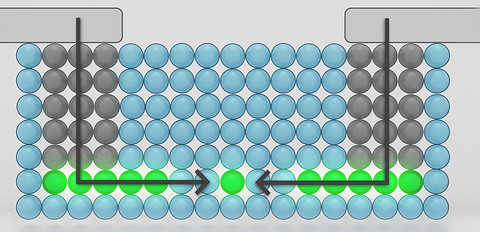
Artist’s illustration of part of the method developed at NIST to make single-atom transistors. Credit: S. Kelley/NIST

NIST Scientists Create New Recipe for Single-Atom Transistors
NIST
Ben P. Stein
May 11, 2020

Researchers at the National Institute of Standards and Technology (NIST) and the University of Maryland have developed a step-by-step recipe to produce single-atom transistors, a breakthrough that could lead to a new generation of computers with unmatched memory and processing power. The team used these steps to construct a single-atom transistor and fabricate a series of single-electron transistors with atom-scale control over the devices’ geometry. The researchers demonstrated they could precisely adjust the rate at which individual electrons flow through a physical gap or electrical barrier in their transistor, known as quantum tunneling. Precise control over quantum tunneling enables the transistors to become “entangled” in a way only possible through quantum mechanics and allows for the possibility of creating qubits that could be used in quantum computing.

…….read more


Researchers Develop Computational Model to Build Better Capacitors
NC State University News
Matt Shipman
July 1, 2020

North Carolina State University (NC State) researchers have developed a computational model that helps users understand how changes in the nanostructure of materials impact their conductivity, in order to inform the design of better capacitors. NC State’s Doug Irving said the model considers multiple spatial scales simultaneously, accounting for characteristics that include defects and grain boundaries. Said Irving, “The model gives us insights that can be used to engineer materials to meet the demands of specific applications. In other words, we’re optimistic that the model can help us keep the cost of future capacitors low, while ensuring that they’ll work well and last a long time.”

….read more


GPS Collars for Lions, Cheetahs: How IoT, Open Source Are Protecting Rare Animals
ZDNet
Charles McLellan
June 15, 2020
Smart Parks, the Netherlands/U.K.-based social enterprise that offers technology solutions for wildlife protection, is testing lightweight GPS collars that can be fitted to lions and cheetahs in Liwonde, Malawi. The collars, which use LoRaWAN (a Low Power, Wide Area networking protocol) connectivity, allow for high-frequency GPS tracking and a battery life in terms of years. Liwonde National Park’s Craig Reid said the collars offer near-live tracking at a lower cost than traditional satellite GPS collars. Smart Parks’ Laurens de Groot said machine learning could provide “more situational awareness that leads to actionable intelligence,” helping determine, for instance, optimal ranger deployment.

….read more

Filed Under: Electronic Components Tagged With: capacitors, GPS, transistors

  • Page 1
  • Page 2
  • Page 3
  • Interim pages omitted …
  • Page 9
  • Go to Next Page »

Primary Sidebar

No Nonsense Technician Class License Study Guide (for tests given between July 2026 and June 2030)

New No Nonsense Technican Class Study Guide now available!

The 2026 version of my Tech Class study guide is now available, and as always, the PDF version is FREE!. The ePub version costs $11.97, and a Kindle version and paperback version will be available on Amazon shortly.

Click here to get all of my "No Nonsense" study guides.

Also available: The CW Geek's Guide to Having Fun with Morse Code

W5SWL.Com
Retevis Ailunce H1 DMR Radio
DXpander: Cobweb antennas, Laser Cutting

You’ve got mail!

Enter your email address below and get an email every time I publish a new post.

Email


I frequently teach classes to help newcomers get their licenses. The next class will take place on Saturday, October 10, 2026 on the University of Michigan campus. Click here for more information.

If you can't make the class, subscribe to the mailing list to be notified of when the next class will be held.

You can always download my free study guide, and if you have any questions about the classes, or amateur radio in general, please feel free to email me directly.

Support KB6NU.Com

Donate $7.30 and get two of these cool stickers. Measuring 4.25-in. W by 2.75-in. H, it's perfect for your car, your shack, or wherever!

Contact me

If you have a question or comment about one of my blog posts, or a question about any of the material in my study guides, or just a question about ham radio in general, you can email me at [email protected].

Blogs You Should Also Read

  • AE5X: A CW-centric blog from Kingswood, Texas
  • K0LWC Blog
  • LA3ZA Ham Radio Blog
  • Little Radios, Big Fun – WB3GCK
  • Mr. Vacuum Tube's Blog
  • Radio Artisan – K3NG
  • The K0NR Weblog
  • VE3WDM's QRP Ham Radio Blog
  • W2LJ’s Blog

Ham Radio Websites

  • Dashtoons – The Hammin' Comedy by Jeff K1NSS

Podcasts

  • ICQ Podcast
  • Linux in the Ham Schack
  • No Nonsense Amateur Radio Podcast
  • Resonant Frequency Amateur Radio Podcast

Recent Comments

  • Dan KB6NU on The EMF Explorer: A badge for ham radio?
  • Travis Good on The EMF Explorer: A badge for ham radio?
  • MARTIN ROBERT ROTHFIELD on The EMF Explorer: A badge for ham radio?
  • Mike Chen on Operating Notes, January 5, 2026
  • Rob W4ZNG on The EMF Explorer: A badge for ham radio?

Meta

  • Log in
  • Entries feed
  • Comments feed
  • WordPress.org

Footer

Copyright © 2026 Daniel M. Romanchik, KB6NU · Log in