• Skip to primary navigation
  • Skip to main content
  • Skip to primary sidebar
  • Skip to footer

KB6NU's Ham Radio Blog

KB6NU's Ham Radio Blog
  • HOME
  • Study Guides
  • Teach a One-Day Tech Class
  • W8SRC Repeater Guide
  • Advertise
  • Hire Me

transistors

From the trade magazines: The difference between NPN and PNP transistors, Radio Shack and Heathkit, resistors

December 3, 2022 By Dan KB6NU 3 Comments

What’s the Difference Between PNP and NPN Transistors?
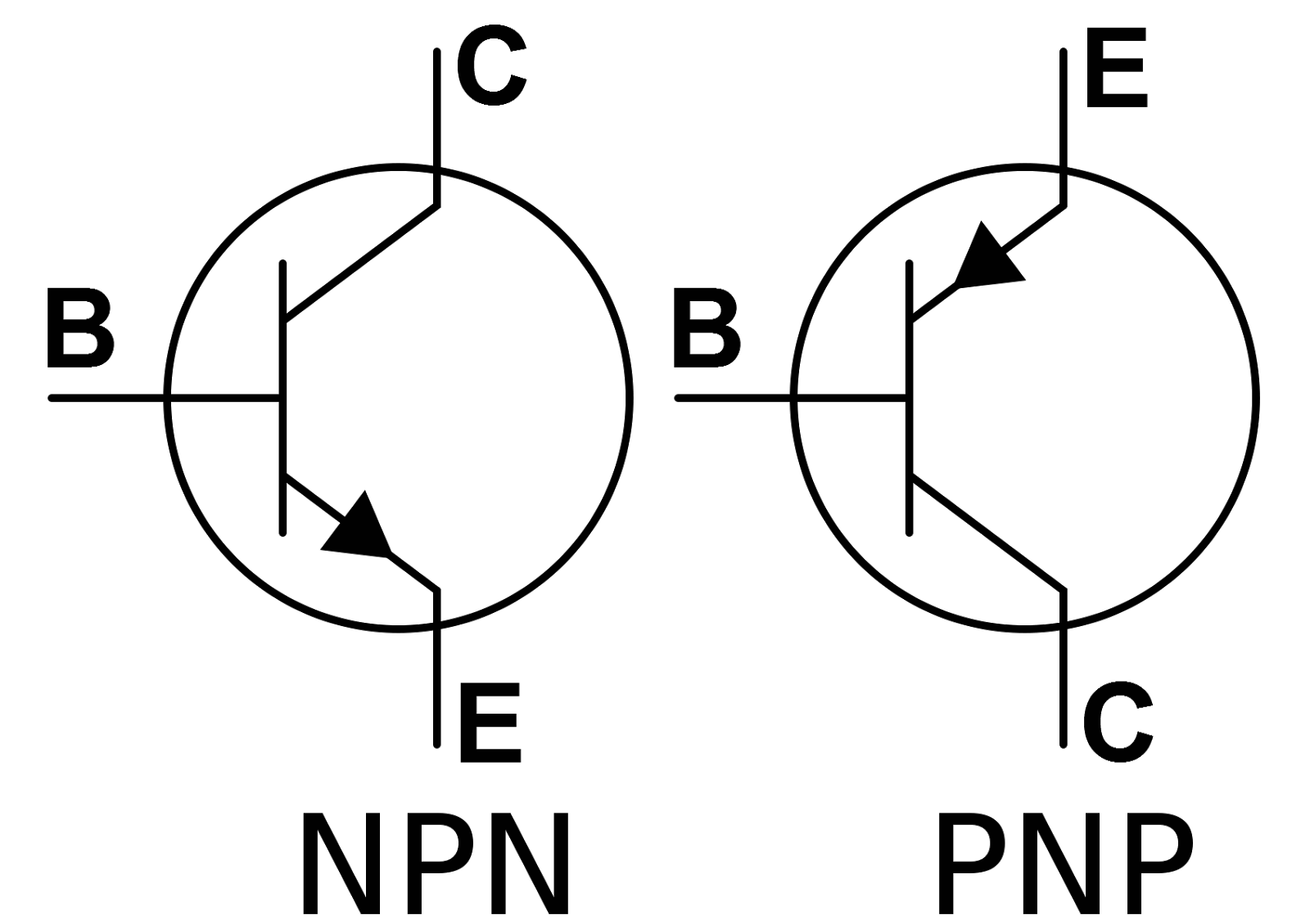
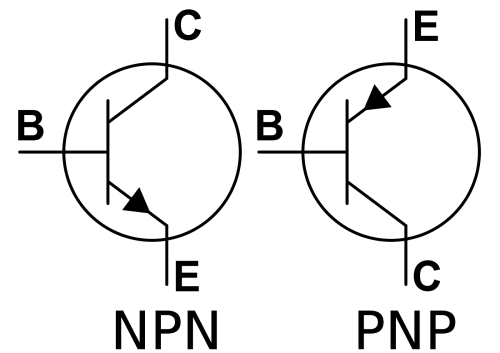
There are numerous differences between NPN and PNP transistors, and even though both are bipolar junction transistors, the direction of current flow is the name of the game.

Both are used in various amplification and modulating circuits; the most frequent among its applications is being fully ON and OFF, which is referred to as switch mode. It’s easy to remember that NPN stands for Negative-Positive-Negative and PNP stands for Positive-Negative-Positive.


Rise and Fall of Radio Shack and Heathkit

Radio Shack and Heathkit are long gone but these companies had a major impact on young engineers.These articles touch on the companies, their impact, and what happened along the way.

  • Electronics Still Thrives as a Hobby
  • Heathkit: A Right-Time, Right-Place Business
  • The Shack Is Back
  • Update: The Shack Is Back
  • RadioShack: Tragedy or Inevitable?
  • Radio Shack to Close Most Retail Stores
  • Heathkit Closes, Again.  This time for good?
  • What’s Happening With Heathkit and Radio Shack?
  • The Rise And Fall Of Heathkit—And Rise Of SparkFun (available as .PDF download)
  • Have Chip Vendors Taken Over Where Heathkit Left Off?
  • Heathkit: An Employee’s Look Back

Resistors: Types and Applications

An ohm is an ohm, right? Not so fast — there are many different types of resistors. To insure that your circuit works and stays working, use the right type of resistor. In this article, you’ll learn about the common types of resistors and their special characteristics.

Filed Under: Electronic Components, Electronics Theory Tagged With: Heathkit, Radio Shack, resistors, transistors

Amateur radio videos: Maxwell’s Equations, AI and amateur radio, how transistors work

November 12, 2022 By Dan KB6NU 1 Comment

You don’t have to know Maxwell’s Equations to be a ham, but they’re kind of cool.


This is a talk given by Michelle, W5NYV, at the latest QSO Today Virtual Ham Expo.


Bob, K0NR recommended this video about how transistors work. It’s not very deep, but if you have no clue about transistors, this is a nice introduction to the topic. This is just about all you need to know about transistors to pass the Technician Class license test.

Filed Under: Electronics Theory Tagged With: artificial intelligence, Maxwell's equations, transistors

From ACM Tech News: Single-atom transistors, better capacitors, GPS tracking

July 9, 2020 By Dan KB6NU Leave a Comment

Here are some interesting electronics and communications stories from the Association for Computing Machinery’s Tech News:

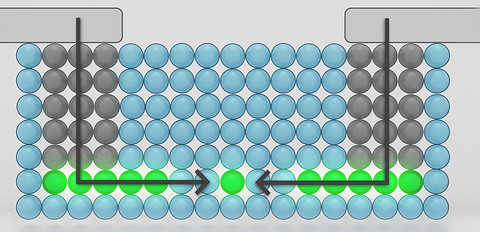
Artist’s illustration of part of the method developed at NIST to make single-atom transistors. Credit: S. Kelley/NIST

NIST Scientists Create New Recipe for Single-Atom Transistors
NIST
Ben P. Stein
May 11, 2020

Researchers at the National Institute of Standards and Technology (NIST) and the University of Maryland have developed a step-by-step recipe to produce single-atom transistors, a breakthrough that could lead to a new generation of computers with unmatched memory and processing power. The team used these steps to construct a single-atom transistor and fabricate a series of single-electron transistors with atom-scale control over the devices’ geometry. The researchers demonstrated they could precisely adjust the rate at which individual electrons flow through a physical gap or electrical barrier in their transistor, known as quantum tunneling. Precise control over quantum tunneling enables the transistors to become “entangled” in a way only possible through quantum mechanics and allows for the possibility of creating qubits that could be used in quantum computing.

…….read more


Researchers Develop Computational Model to Build Better Capacitors
NC State University News
Matt Shipman
July 1, 2020

North Carolina State University (NC State) researchers have developed a computational model that helps users understand how changes in the nanostructure of materials impact their conductivity, in order to inform the design of better capacitors. NC State’s Doug Irving said the model considers multiple spatial scales simultaneously, accounting for characteristics that include defects and grain boundaries. Said Irving, “The model gives us insights that can be used to engineer materials to meet the demands of specific applications. In other words, we’re optimistic that the model can help us keep the cost of future capacitors low, while ensuring that they’ll work well and last a long time.”

….read more


GPS Collars for Lions, Cheetahs: How IoT, Open Source Are Protecting Rare Animals
ZDNet
Charles McLellan
June 15, 2020
Smart Parks, the Netherlands/U.K.-based social enterprise that offers technology solutions for wildlife protection, is testing lightweight GPS collars that can be fitted to lions and cheetahs in Liwonde, Malawi. The collars, which use LoRaWAN (a Low Power, Wide Area networking protocol) connectivity, allow for high-frequency GPS tracking and a battery life in terms of years. Liwonde National Park’s Craig Reid said the collars offer near-live tracking at a lower cost than traditional satellite GPS collars. Smart Parks’ Laurens de Groot said machine learning could provide “more situational awareness that leads to actionable intelligence,” helping determine, for instance, optimal ranger deployment.

….read more

Filed Under: Electronic Components Tagged With: capacitors, GPS, transistors

Cleaning out my inbox: Grounding, soldering, transistors

December 26, 2017 By Dan KB6NU Leave a Comment

I’m really one of the worst when it comes to inbox management. I currently have close to 1,000 emails in my inbox. Some of them, as you’ll see below were in there for more than ten years.

It’s all good stuff, though. That’s why I’ve kept them. In an attempt clean out the silly inbox, I’ll post some of the best here. Here are two of the oldest, plus another that I found while paging through the inbox.


Nov 20, 2007
From: Jerry Karlovich, KD5OM
To: [email protected]
Subject: [HamRadioHelpGroup] Re: Grounding

There are all sorts of opinions on this subject of grounding. Some good
and some, well, not so good. I think I learn a little something more
every time I read the article, RF Ground Systems on the RadioWorks website.

Several buddies of mine who are big shot electrical engineers at
some of the different electronics factories around here in north Texas refer
to this article. I’m no expert on the subject.


73,

Jerry KD5OM
http://www.kd5om.com


September 2, 2008
Steve WD8DAS
To: [email protected]
Re: Soldering tips

Speaking of soldering… I’d recommend an excellent old article on the very basic subject, “How to Solder“. Whenever I’m teaching someone to solder, both at work and in the ham community, I also give them a copy of this article. Most seem to find it helpful.

Steve WD8DAS
http://www.wd8das.net/


Jan. 20, 2013
From: Ron McKenzie
To: Dan Romanchik KB6NU
Subject: Something for your blog

Hi, Dan,

I ran across this Radio World article on protecting transistor amplifiers from over voltage events:

Prevent transistor failures with science by Mark Persons, W0MH

The bio piece at the end of the article:

Mark Persons, WØMH, is a professional broadcast engineer, certified by the Society of Broadcast Engineers. He has more than 30 years’ experience and has written numerous articles for industry publications over the years. His website is www.mwpersons.com.

Filed Under: Building/Homebrew, Electronic components, Electronic Components, Everything Else, Gear/Gadgets, Installation/Grounding Tagged With: soldering, transistors

From ACM Tech News: new transistors

May 5, 2017 By Dan KB6NU Leave a Comment

These are some news items gathered by the Association for Computing Machinery (ACM). Looks like some new types of transistors are in the works….Dan

DARPA Wants to Cultivate the Ultimate Transistor of the Future
Network World
Michael Cooney
March 17, 2017

The U.S. Defense Advanced Research Projects Agency (DARPA) this month will present the Dynamic Range-enhanced Electronics and Materials (DREaM) program, which aims to develop a new generation of radiofrequency (RF) and millimeter-wave transistors to address the power and range requirements for wireless devices in a range of applications. DARPA program manager Dan Green says DREaM transistors will transmit and receive the large and complex RF signals of the future, and they will do so in smaller packages while consuming minimal power. DREaM researchers will try to solve the performance tradeoffs between four key characteristics of RF transistors, including signal power, power efficiency, the range of frequencies in which the transistors work, and the measure of the fidelity at which a receiver can amplify signals. In addition, DREaM will focus on developing new materials that can handle more electrical charge and voltage without degrading.

Full Article


How Graphene Could Cool Smartphone, Computer, and Other Electronics Chips
Rutgers Today
Todd B. Bates
March 27, 2017

Researchers at Rutgers University have discovered a way to use graphene to cool tiny chips. The researchers demonstrated a powerful and efficient cooling mechanism using graphene combined with a boron nitride crystal substrate. “We’ve achieved a power factor that is about two times higher than in previous thermoelectric coolers,” says Rutgers professor Eva Y. Andrei. She notes if a piece of metal has one hot end and one cold end, the metal’s atoms and electrons move quickly at the hot end and slowly at the cold end. The researchers applied voltage to the metal, sending a current from the hot end to the cold end. They say this process spurred the electrons to carry away the heat much more efficiently than via passive cooling techniques, such as little fans in computers.

Full Article


Singing Posters and Talking Shirts: UW Engineers Turn Everyday Objects Into FM Radio Stations
UW Today
Jennifer Langston
March 1, 2017

Researchers at the University of Washington (UW) are enabling everyday objects to communicate directly with smartphones and car radios and transmit information to them. “The challenge is that radio technologies like Wi-Fi, Bluetooth, and conventional FM radios would last less than half a day with a coin cell battery when transmitting,” says UW’s Vikram Iyer. “So we developed a new way of communication where we send information by reflecting ambient FM radio signals that are already in the air, which consumes close to zero power.” The UW team’s “backscattering” system sends messages by reflecting and encoding audio and data within outdoor FM radio transmissions without disrupting the original signals. A demonstration of a “singing poster” is one example of the backscattering system the team implemented. They also are exploring “smart fabric” applications such as sensor-outfitted apparel to monitor vital signs that are sent to a user’s phone.

Full Article


Filed Under: Electronic Components Tagged With: graphene, transistors

One-Day Tech Class Videos: Semiconductors, Schematics

October 6, 2016 By Dan KB6NU Leave a Comment

Here are two more videos from the One-Day Tech Class that I held on January 30, 2016:

Filed Under: Classes/Testing/Licensing, Electronic Components, Electronics Theory Tagged With: diodes, Figure T-1, schematics, semiconductors, transistors, videos

From my Twitter feed: EveryCircuit, WebSDRs, small transistors

May 6, 2016 By Dan KB6NU Leave a Comment

tlrosstech's avatar T L Ross Tech @tlrosstech
EveryCircuit fb.me/8is0QTbev

StrangeBeacons's avatar Strange Beacons @StrangeBeacons
Links to a Large Collection of Online WebSDR Radios: websdr.org #SoftwareDefinedRadio #shortwave pic.twitter.com/7kR95VWbKb


alinaselyukh's avatar Alina Selyukh @alinaselyukh
“At some point in the near future, we’ll be building transistors out of just a handful of atoms… The gig is up.” twitter.com/npralltech/sta…
All Tech Considered @npralltech
After Moore’s Law: Predicting The Future Beyond Silicon Chips n.pr/1rXxJg9

Filed Under: Circuit Design, Circuit Simulation, Electronic Components, Electronics Theory, Online Resources, Software-Defined Radio (SDR) Tagged With: transistors, WebSDR

Teaching is hard work

March 24, 2016 By Dan KB6NU 6 Comments

aadl-secret-labI’ve started teaching some basic electronics classes at the Ann Arbor District Library. They recently setup a makerspace they’re calling The Secret Lab and hired a guy named Steve Teeri to run it. I got hooked up with Steve after I inquired about the possibility of teaching some basic electronics classes. As it turned out, they had recently gotten to the point where they could start doing things like electronics classes in the Secret Lab so my inquiry had come at a fortuitous moment. I’ve since become the de-facto electronics/ham radio consultant to the library.
The first class we held was on how to use a digital multimeter. Five people showed up, and it turned into a class on circuits as much as a class on how to use a DMM. Overall, it went pretty well, and we followed that up with a class on how to use an oscilloscope.

This evening, we held a class on basic transistor circuits. This evening, we had nine people show up. There were a couple of  older guys, three younger guys, two women, one who brought her two kids. The kids were eight and ten.

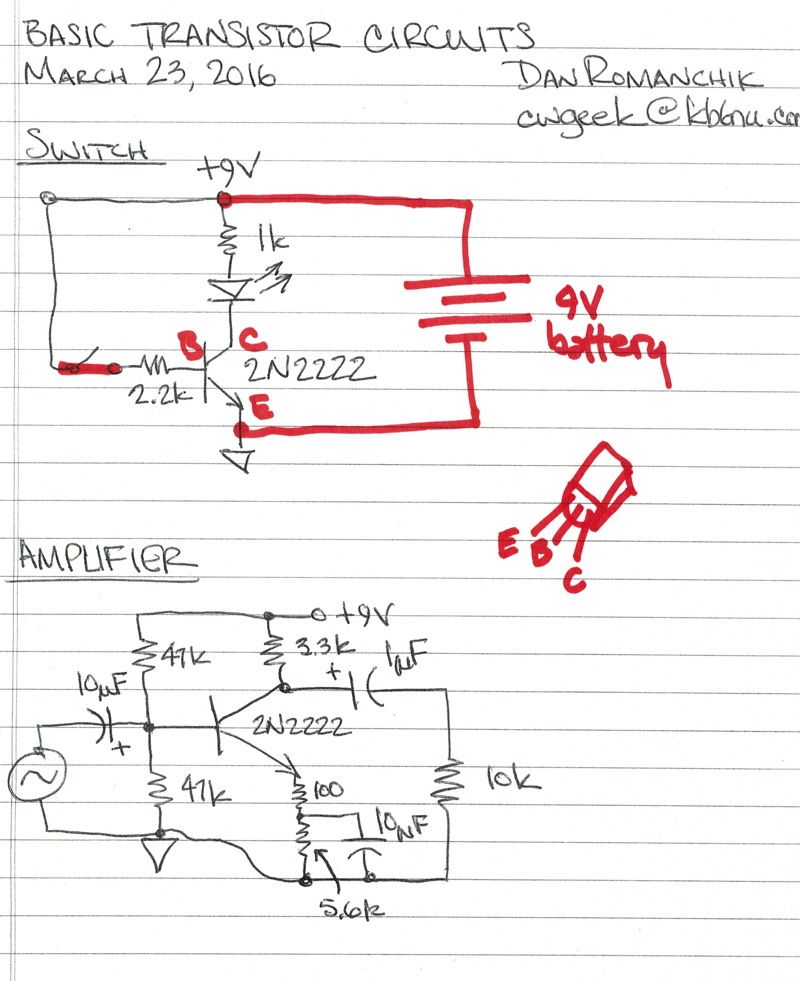
Initially, I had planned to have the students breadboard two circuits – a simple switch circuit and a common-emitter amplifier circuit. Both of these circuits can be found on the sheet below.

transistor-circuits

I figured that we’d be able to blow through the switch circuit, then dig into the amplifier circuit. WRONG! It took us nearly the entire class for everyone to get the switch circuit to work.

Some of it was my fault. First of all my schematic was lacking. It was a schematic that I got off the Internet, and while it was correct, it wasn’t detailed enough. As you can see from the red ink above, there were several omissions and errors:

  1. On the schematic, I didn’t explicitly show which pins on the transistor were the emitter (E), base (B), and collector (C).
  2. I didn’t include a diagram showing which pins on the transistor package were the emitter (E), base (B), and the collector (C).
  3. I didn’t explicitly show how to connect the battery.
  4. I included a switch that we did not use in class.

An added complication was that the resistors that the library had purchased had blue bodies and very thin color bands. The result was that it was really difficult to really read the color code. At first, I thought it was just me and my failing eyesight, but I was relieved when one of the students had the same complaint. We actually had to dig out the multimeters and measure the resistors to make sure that we had the right ones.

Another reason that it took us so long is that I had to teach the students some really basic stuff, even before we got to the point where they could put the circuits together. This included the resistor color code and how to use the proto boards that we were using. This was certainly OK, but I hadn’t anticipated having to do that.

After about 45 minutes, all of the circuits were built, and the LEDs were lit. I asked them to disconnect the 2.2 k resistor to demonstrate how removing the base current turns off the transistor, and I think they all got that idea. I also explained how in practice that 2.2 k resistor wouldn’t be connected directly to a power supply but to perhaps an Arduino’s digital output. I also mentioned that instead of just turning an LED on and off, we might use the transistor to do some real work like switch a relay on and off. I think they got those ideas, too.

One guy asked how much current that the 2N2222 could switch. I had brought along with me a 2N2222 data sheet, and we looked up the maximum collector current for a 2N2222 (1.0 A). We then discussed how running the transistor at its maximum current rating might not be a good idea.

There was just enough time to go over the amplifier circuit quickly. Fortunately, I had the foresight to bring my own protoboard with the amplifier circuit already assembled on it. I quickly hooked up the scope probes, the signal generator, and the 9 V battery, and demonstrated how the circuit turned a 100 mV signal into a 2 V signal. For those who were interested, I was also able to talk a little bit about biasing.

So, the first thing that I take away from this experience is that I really need to gear down the level of the presentations. Second, I need to be a little more explicit with my instructions to students.

I’m hoping to do a lot more with the Ann Arbor District Library. I think that perhaps the next class will be an Arduino Basics class. At some point, too, I’ll want to reprise my DMM and oscilloscope class. I really love it that the library is giving me the opportunity to do this.

Filed Under: Building/Homebrew, Classes/Testing/Licensing, Electronic Components, Electronics Theory Tagged With: amplifiers, teaching, transistors

From the trade magazines: coding Morse Code, cables and connectors, bendable transistors

September 17, 2015 By Dan KB6NU 3 Comments


What’s the best way to store Morse Code dots and dashes in C?
Max Maxfield explores this weighty (pun intended) issue.

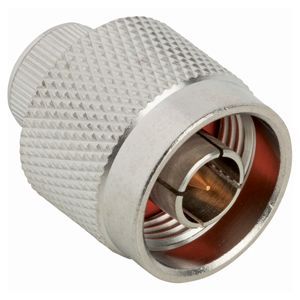
The N connector was developed in the 1940s, and, ironically, is a much better connector to use at UHF frequencies and above than UHF connectors, such as the PL-259 and SO-239.

Making Links with Cables and Connectors. At HF frequencies, cable design is not all that critical, but get up into the VHF, UHF, and microwave regions, and it’s a different matter.

Bend, punch and step on these transistors. Japanese researchers have developed stretchable, tough electronics that could be incorporated into clothing, transforming wearable technology.

Filed Under: Gear/Gadgets, Software Tagged With: cables, connectors, transistors

From my Twitter feed: bipolar transistors, homebrew Buddipole, Dayton survival

March 11, 2014 By Dan KB6NU Leave a Comment

Planet Analog ?@PlanetAnalog 11m
Bipolar Transistor Circuit Design & Analysis, Part 1 – There are many applications for one or two transistors. Th… http://ow.ly/2EzTJR 


n1pce's avatarJohn Ryan @n1pce
Homebrew Buddipole with Modifications: youtu.be/Z6ATX2Z9ews via @YouTube

You don’t have to pay a lot for a Buddipole. By making one yourself, you can not only save money, but learn something in the process.

ke9v's avatarJeff Davis @ke9v
Dayton Survival Guide ke9v.net/articles/dayto…

The Dayton Hamvention, still the largest gathering of amateur radio enthusiasts in the world, takes place May 16-18, 2014. While I disagree with Jeff’s statement, “There’s simply no way to facilitate that size of a crowd for three days in an ultra modern facility,” the rest is pretty much spot on.

Filed Under: Antennas, Circuit Design, Just for Fun Tagged With: Dayton, transistors

  • Page 1
  • Page 2
  • Go to Next Page »

Primary Sidebar

No Nonsense Technician Class License Study Guide (for tests given between July 2026 and June 2030)

New No Nonsense Technican Class Study Guide now available!

The 2026 version of my Tech Class study guide is now available, and as always, the PDF version is FREE!. The ePub version costs $11.97, and a Kindle version and paperback version will be available on Amazon shortly.

Click here to get all of my "No Nonsense" study guides.

Also available: The CW Geek's Guide to Having Fun with Morse Code

W5SWL.Com
Retevis Ailunce H1 DMR Radio
DXpander: Cobweb antennas, Laser Cutting

You’ve got mail!

Enter your email address below and get an email every time I publish a new post.

Email


I frequently teach classes to help newcomers get their licenses. The next class will take place on Saturday, October 10, 2026 on the University of Michigan campus. Click here for more information.

If you can't make the class, subscribe to the mailing list to be notified of when the next class will be held.

You can always download my free study guide, and if you have any questions about the classes, or amateur radio in general, please feel free to email me directly.

Support KB6NU.Com

Donate $7.30 and get two of these cool stickers. Measuring 4.25-in. W by 2.75-in. H, it's perfect for your car, your shack, or wherever!

Contact me

If you have a question or comment about one of my blog posts, or a question about any of the material in my study guides, or just a question about ham radio in general, you can email me at [email protected].

Blogs You Should Also Read

  • AE5X: A CW-centric blog from Kingswood, Texas
  • K0LWC Blog
  • LA3ZA Ham Radio Blog
  • Little Radios, Big Fun – WB3GCK
  • Mr. Vacuum Tube's Blog
  • Radio Artisan – K3NG
  • The K0NR Weblog
  • VE3WDM's QRP Ham Radio Blog
  • W2LJ’s Blog

Ham Radio Websites

  • Dashtoons – The Hammin' Comedy by Jeff K1NSS

Podcasts

  • ICQ Podcast
  • Linux in the Ham Schack
  • No Nonsense Amateur Radio Podcast
  • Resonant Frequency Amateur Radio Podcast

Recent Comments

  • Bulin 47 AI on ICQPodcast Episode 485 – World Cup Special Event Station
  • Jesse Alexander on What do you think of this artwork for the ham radio EMF Explorer
  • CADProps on My first go at 3D printing not quite a success
  • Dan KB6NU on A Media Guide to Amateur Radio
  • Steve Stroh N8GNJ on A Media Guide to Amateur Radio

Meta

  • Log in
  • Entries feed
  • Comments feed
  • WordPress.org

Footer

Copyright © 2026 Daniel M. Romanchik, KB6NU · Log in