• Skip to primary navigation
  • Skip to main content
  • Skip to primary sidebar
  • Skip to footer

KB6NU's Ham Radio Blog

KB6NU's Ham Radio Blog
  • HOME
  • Study Guides
  • Teach a One-Day Tech Class
  • W8SRC Repeater Guide
  • Advertise
  • Hire Me

Circuit Simulation

Interesting stuff from the trade magazines: circuit simulation, linearity, circulators and isolators

August 25, 2017 By Dan KB6NU Leave a Comment

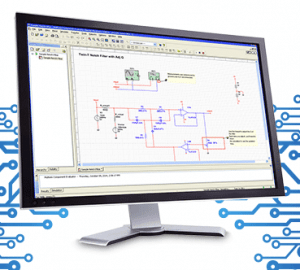
EETimes10 Circuit Design Simulation Apps for Pros & DIYers. Whether you’re a professional printed circuit board designer or do-it-yourselfer, you know that testing your circuit board design is a must. Testing can save you money and time avoiding faulty PCB fabrication because it gives you a chance to fix what doesn’t work before the board is made.

It’s best to test your design out virtually. In other words, make a digital (virtual) prototype of your board and simulate (model) how it will behave in the real world. Here are some popular tools to do virtual testing. These software packages cost money but can save you costly mistakes.


Underlining the Meaning of Linearity. Linearity in an RF/microwave component or system is fairly easy to understand in concept: It refers to the ability of a component or system to provide an output signal that is directly proportional to an input signal. As a result, the relationship of the signal input to the signal output as a function of frequency is a straight line.

Achieving good linearity, on the other hand, is not quite so simple, even though it is crucial to preserving key pulse characteristics in a radar and modulation quality in a communications system. Whether it is a frequency mixer, an amplifier, or a complete system, many barriers to linearity must be overcome, often at the expense of some other performance parameter.


A Primer on Circulators and Isolators. Circulators and isolators are three-port passive electronic devices that help direct the flow of microwave signals in RF equipment and systems [including repeaters…Dan]. A port is defined as a connection point for either an input signal, output signal, or termination.

Filed Under: Building/Homebrew, Circuit Simulation, Electronics Theory, Everything Else, VHF/FM/Repeaters

From my Twitter feed: EveryCircuit, WebSDRs, small transistors

May 6, 2016 By Dan KB6NU Leave a Comment

tlrosstech's avatar T L Ross Tech @tlrosstech
EveryCircuit fb.me/8is0QTbev

StrangeBeacons's avatar Strange Beacons @StrangeBeacons
Links to a Large Collection of Online WebSDR Radios: websdr.org #SoftwareDefinedRadio #shortwave pic.twitter.com/7kR95VWbKb


alinaselyukh's avatar Alina Selyukh @alinaselyukh
“At some point in the near future, we’ll be building transistors out of just a handful of atoms… The gig is up.” twitter.com/npralltech/sta…
All Tech Considered @npralltech
After Moore’s Law: Predicting The Future Beyond Silicon Chips n.pr/1rXxJg9

Filed Under: Circuit Design, Circuit Simulation, Electronic Components, Electronics Theory, Online Resources, Software-Defined Radio (SDR) Tagged With: transistors, WebSDR

Mouser, NI offer free design/simulation/layout tool

January 8, 2015 By Dan KB6NU 2 Comments

multisim-blueNational Instruments and Mouser have teamed up to offer an integrated design tool called MultiSIM Blue. Here’s what the Web page has to say:

With MultiSIM BLUE, the entire tool chain is fully integrated. Easily scheme, simulate, PCB layout, BOM and purchase all in one integrated tool. Discover an easy-to-use, seamless environment for the functional simulation of linear circuits using the Berkeley SPICE engine and over 100,000 components from the industry’s leading manufacturers – built-in from the start. Plus, parts will be frequently added to your Mouser parts database with the newest authorized components from Mouser.

System Requirements for MultiSIM BLUE

  • Windows Operating System
  • Pentium 4/M class microprocessor or equivalent
  • 512 MB of memory (256 MB minimum)
  • 2 GB of free hard disk space
  • Open GL capable 3D graphics card recommended (SVGA resolution video adapter with 800 × 600 video resolution minimum, 1024 × 768 or higher preferred)

Supported Operating System Requirements

  • Windows XP (32-bit)
  • Windows Vista (32-bit & 64-bit)
  • Windows 7 (32-bit & 64-bit)
  • Windows Server 2003 R2 (32-bit)
  • Windows Server 2008 R2 (64-bit)
  • Windows 8 (32-bit & 64-bit)
  • Windows 8.1 (32-bit & 64-bit)

I haven’t tried it yet, but it looks like an interesting piece of software, and you can’t beat the price–it’s free! I’m a little surprised that it only runs on Windows as NI really got started in the software biz with LabView for the Mac. That shouldn’t be a big deal for hams, though, as most of us have Windows machines in our shacks.

Filed Under: Circuit Design, Circuit Simulation

From the trade magazines: satellite tracking, online circuit design, open-source test board

August 20, 2013 By Dan KB6NU Leave a Comment

More cool stuff from the electronics engineering trade magazines….Dan

LEO satellite tracking in your backyard. Learn how one guy built his own satellite tracking system in his backyard.

The rise of the online circuit-design collective. Though still in the infancy stage, design and simulation tools that run entirely in the browser are pushing their way onto the EDA landscape. The ultimate goal is that they become essential players within the realm of professional design.

Test and measurement  turns to open source, Kickstarter. The field of test and measurement is set to benefit from open-source software applications if a Kickstarter fundraising project is successful. The Red Pitaya is a credit card-sized, reconfigurable measurement board with 60MHz of input bandwidth and an onboard Xilinx Zinq FPGA to perform signal processing.

Filed Under: Circuit Design, Circuit Simulation, Satellites, Test Equipment

From the trade magazines: spectrum sharing, active filters, real capacitors

June 10, 2013 By Dan KB6NU Leave a Comment

Passive components aren’t really so passive (Part 1): Capacitors. Transistors and ICs are considered active components because they change signals using energy from the power supply. Capacitors, resistors, inductors, connectors, and even the printed-circuit board (PCB) are called passive because they don’t seem to consume power. But these apparently passive components can, and do, change the signal in unexpected ways because they all contain parasitic portions. So, many supposedly passive components, like the capacitor shown below, aren’t so passive.

The model above shows that a capacitor adds more than just capacitance when you use it in a circuit.

Peaceful coexistence on the radio spectrum. How two engineers (shown at right) tried to get the military to share some spectrum with their small company.

Signal-chain basics #43: Active filters. While low-frequency filters can be designed with inductors and capacitors, they often require physically large and often expensive inductors. This is where active filters, which combine an operational amplifier (op amp) with some resistors and capacitors, become attractive. Active filters can provide an LCR-like performance at low frequencies

Filed Under: Books and Magazines, Circuit Design, Circuit Simulation, Electronic Components, Spectrum Defense

From my Twitter feed: Lids, EDA, TV

February 16, 2013 By Dan KB6NU 1 Comment

PD3EM
@KL8DX Publish your LID list onhttp://t.co/8hLu0GOy #LOTA #LidsOnTheAir


KD4E_73
http://t.co/Rq3ZqVgr links to Electronic Design Automation (EDA) tools that are released under the GPL.

Radio_2_Radio
Amateur Radio: Ham Radio in upcoming episode of Last Man Standinghttp://t.co/ME9vPCth

Filed Under: Circuit Design, Circuit Simulation, Operating

From the trade magazines – 092612

September 26, 2012 By Dan KB6NU Leave a Comment

Three more articles from recent editions of the electronics trade magazines.

HeathkitHeathkit: A right-time, right-place business. Heathkit was a popular electronics company for decades before its demise earlier this year. Former employees Lou Frenzel and Chas Gilmore share some memories and discuss the factors that led to its closing. Lou Frenzel is W5LEF.

In the article, he notes how he was instrumental in developing the Heath/Zenith line of computer kits. At that time, I was a fledgling test engineer working for Memorex (remember them?) making the 8-in. floppy drives that were an option for those computers.

Real-world testing of wi-fi hotspots. This article talks about both the RF testing and data communications testing needed to ensure a good wi-fi hotspot.

How to simulate cable in SPICE. This article covers the two main loss effects related to cables (the skin effect and dielectric losses) and presents a simple cable modeling method for use in standard SPICE simulators.

Filed Under: Circuit Simulation, Digital Communications, Everything Else, Kits

Primary Sidebar

No Nonsense Technician Class License Study Guide (for tests given between July 2026 and June 2030)

New No Nonsense Technican Class Study Guide now available!

The 2026 version of my Tech Class study guide is now available, and as always, the PDF version is FREE!. The ePub version costs $11.97, and a Kindle version and paperback version will be available on Amazon shortly.

Click here to get all of my "No Nonsense" study guides.

Also available: The CW Geek's Guide to Having Fun with Morse Code

W5SWL.Com
Retevis Ailunce H1 DMR Radio
DXpander: Cobweb antennas, Laser Cutting

You’ve got mail!

Enter your email address below and get an email every time I publish a new post.

Email


I frequently teach classes to help newcomers get their licenses. The next class will take place on Saturday, February 7, 2026 on the University of Michigan campus. Click here for more information.

If you can't make the class, subscribe to the mailing list to be notified of when the next class will be held.

You can always download my free study guide, and if you have any questions about the classes, or amateur radio in general, please feel free to email me directly.

Support KB6NU.Com

Donate $7.30 and get two of these cool stickers. Measuring 4.25-in. W by 2.75-in. H, it's perfect for your car, your shack, or wherever!

Contact me

If you have a question or comment about one of my blog posts, or a question about any of the material in my study guides, or just a question about ham radio in general, you can email me at [email protected].

Blogs You Should Also Read

  • AE5X: A CW-centric blog from Kingswood, Texas
  • K0LWC Blog
  • LA3ZA Ham Radio Blog
  • Little Radios, Big Fun – WB3GCK
  • Mr. Vacuum Tube's Blog
  • Radio Artisan – K3NG
  • The K0NR Weblog
  • VE3WDM's QRP Ham Radio Blog
  • W2LJ’s Blog

Ham Radio Websites

  • Dashtoons – The Hammin' Comedy by Jeff K1NSS

Podcasts

  • ICQ Podcast
  • Linux in the Ham Schack
  • No Nonsense Amateur Radio Podcast
  • Resonant Frequency Amateur Radio Podcast

Recent Comments

  • Dan KB6NU on Finally, a Loop for 10m.
  • Dan KB6NU on 1930s cards for my collection of QSLs from stations whose callsigns spell words
  • Sean on Finally, a Loop for 10m.
  • Bill Waslo on 1930s cards for my collection of QSLs from stations whose callsigns spell words
  • C M Wetzel KD8TNF on The Wesco BN-1

Meta

  • Log in
  • Entries feed
  • Comments feed
  • WordPress.org

Footer

Copyright © 2026 Daniel M. Romanchik, KB6NU · Log in