• Skip to primary navigation
  • Skip to main content
  • Skip to primary sidebar
  • Skip to footer

KB6NU's Ham Radio Blog

KB6NU's Ham Radio Blog
  • HOME
  • Study Guides
  • Teach a One-Day Tech Class
  • W8SRC Repeater Guide
  • Advertise
  • Hire Me

Online Resources

Ready for a challenge?

November 13, 2024 By Dan KB6NU 2 Comments

Fabian Kurz, DJ5CW, has done it again! Fabian is the guy behind Learn CW Online—lcwo.net—a website that has helped hundreds, if not thousands, of radio amateurs learn Morse Code.

Not one to rest on his laurels, Fabian’s latest project is the 52-Week Ham Radio Challenge. Slated to begin on January 1, 2025, the website says this about the challenges:

  • The challenges are meant to inspire you to extend your horizon in amateur radio by weekly challenges through the year that touch all aspects of ham radio (and related fields).
  • A lot of the challenges may be trivial for some participants (because it is what they do all the time), but very challenging to others.
  • Participants of the challenge are encouraged to help each other in any way possible. There’s no cheating and you decide on your own success or failure.
  • The challenges may be done in the suggested chronolgical order, or in any other way you like. For maximum synergy and fun in comparing how it’s going, going chronologically is recommended!
  • Participants are encouraged to post their progress, ideas, questions on Mastodon with the tag #hamchallenge. There is also an IRC channel: irc.libera.chat/#hamchallenge
  • You’re encouraged to make use of your own equipment as much as possible, but it is perfectly OK to use borrowed equipment, or use WebSDRs/KiwiSDRs or other remote setups.
  • Progress is tracked by mentioning the @[email protected] bot on Mastodon in your toots:
    • If you succeeded in a challenge, include HCnnS in your toot (where nn is the week). You will receive a point for the challenge.
    • If you didn’t succeed yet, you can still include HCnn in your toot about the challenge, and it will be linked.
    • The bot will reply with an acknowledgement including your current score and streak length. If your toot was a direct message, the reply will be private, too.

I intend to blog about each challenge prior to the week of the challenge. I’ll explain what the challenge is about and link to some resources that will help a participant complete the challenge.

I think this could be a lot of fun for both new hams and older hams. What do you think?

Filed Under: Getting started in amateur radio, Helping New Hams, On the Internet, Online Resources Tagged With: Ham Challenge

First online General class lesson posted to YouTube

June 2, 2020 By Dan KB6NU 3 Comments

I’ve just posted video #2: Resistors, capacitors, and inductors in series and parallel.

I’ve been playing around with developing an online General class for years now. I never was really happy with my efforts, though, and I would eventually abandon the project.

Well, a couple of weeks ago, in the middle of the pandemic quarantine, I decided to give it another go. This time, my idea was to develop Khan Academy-style videos. There are a ton of resources on the net instructing you on how to do them, but what it seems to boil down to is the ability to draw on a Wacom tablet, while explaining the material at the same time.

This is more difficult than you might imagine. First, is the ability to produce something legible. This takes a lot of practice. On top of that, before I could use the Wacom tablet that I purchased years ago, I had to upgrade the driver. That took the better part of the afternoon, since the “official” driver needed a patch to actually work with MacOS 10.15.4.

Second, it took a lot of experimenting with Adobe SketchBook settings and practice drawing to produce decent drawings. I think I got that down now. The nice thing about using SketchBook is that it’s free for the Mac.

One technique that I hit upon is to use the text tools to set up common text, such as headings and equations. Using the text tools makes them very readable, and by putting them on separate layers, I can make them appear and disappear as needed.

So, finally, I think I have something workable. Below, is the first video that I’m mostly happy with. It’s’ short, but I think that separating the topics into short videos is the right thing to do. I know that some of the topics will be longer because there are more questions for those topics.

Let me know what you think.

Filed Under: Classes/Testing/Licensing, Online Resources

How to get “plugged in” to the amateur radio community

October 28, 2019 By Dan KB6NU 3 Comments

The ICQPodcast is one resource you might want to consider to help you keep up with what’s happening in #hamradio.

This morning, I found this email in my inbox:

Thank you for your website and great content.   I passed the Tech and General tests on Saturday, and I will be taking the Extra exam in November. Your “No Nonsense” guides were very helpful.

I do have a question, though. How do I stay current on what’s happening in the ham world? For example the CQ WW SSB contest was this weekend.  How do newbies know this kind of thing?  How do we find local or regional hamfests and other events?

This is a great question. Like any special interest, it can seem daunting to get plugged in (pun intended) to the community. Here are a few of my suggestions:

Join the ARRL. The American Radio Relay League (ARRL) is really the place to start for information related to amateur radio. QST, the ARRL’s monthly magazine, includes news about upcoming contests and ARRL-sanctioned hamfests. It also reviews new amateur radio products and provides a wealth of technical information.

In addition to QST, the ARRL publishes many email newsletters that members can subscribe to. For example, Contest Update biweekly newsletter that not only lists upcoming contests, but also includes tips on operating contests. The ARES E-Letter is a monthly public service and emergency communications newsletters. There are also email newsletters for ham radio instructors, those interested in DX, legislative matters, and satellite operation.

Join your local club. While the ARRL will help you keep abreast of amateur radio news and events nationally and internationally, if you want to know what going on in amateur radio in your area, you should join your local club. To find clubs near you, go to http://www.arrl.org/find-a-club.

Visit the WA7BNM Contest Calendar. This contest calendar has become my go-to resource for any and all contest information. This site provides detailed information about amateur radio contests throughout the world, including their scheduled dates/times, rules summaries, log submission information and links to the official rules as published by the contest sponsors. Its features include an 8-Day calendar, a 12-Month calendar, and separate calendars for state QSO parties, CW contests, and QRP contests.

You can also get a weekly e-mail of contests taking place in an 8-day period (Monday through Monday), as well as a list of contests scheduled for the next week and a list of log submission information for recent contests. To subscribe to this service, send an e-mail to Bruce, WA7BNM.

Ham radio blogs. Blogs are also a good way to keep up with what’s going on in amateur radio. I like to think that I do a good job of covering what’s going on in amateur radio, but, of course, I can’t do it all. That being the case, you might also want read other blogs. Other amateur radio blogs that you might want to check out include:

  • The K0NR Radio Site
  • QRP–When you care to send the very least
  • Everything Ham Radio

There are a bunch of other good ones out there. Find the ones you like and subscribe to them, so that you get a notification when new items are posted.

Mailing lists. Mailing lists are kind of old school, but if  you have a special interest, chances are that there is a mailing list for it. For example, I own an Elecraft KX-3, so I subscribe to the Elecraft KX User Group mailing list. Many amateur radio mailing lists are migrating to the Groups.io. To find a list, just click on the “Find or Create a Group” link at the top of the page. I just did a search for “amateur radio” and found 910 different amateur radio mailing lists.

Podcasts and videocasts. Podcasts are also another great way to stay up with amateur radio. I’m partial to the ICQPodcast because I am on the panel once a month. The podcast not only includes a discussion of what’s new in amateur radio, but also a feature, which digs a little deeper into a particular topic. Other great podcasts are Ham Radio Workbench, and Linux in the Ham Shack. Internet video shows that are worth checking out are Ham Radio 2.0, Ham Radio Now, and Ham Nation.

This is by no means an exhaustive list. If you have an amateur radio information resource that you find particular helpful, please let me know. Email me or enter a comment below.

Filed Under: ARRL, Books and Magazines, On the Internet, Online Resources, Podcasts

Keep up with what’s going on in amateur radio by reading QRZ.Com ads

October 8, 2017 By Dan KB6NU 2 Comments

Like many of you, I have installed an ad blocker on my browser. I don’t really care about the website that glass lovers are going crazy over or the smartphone accessory that is almost too good.

I don’t, however, run the ad blocker when I’m using QRZ.Com. It’s not that I want Fred, AA7BQ, to make more money. I want to find out about what new goods and services people are offering to amateur radio operators.

Here are three recent QRZ.Com ads that I’ve clicked on:

Hamcestry.com. From the Hamcestry.Com FAQ:


What is Hamcestry?Obviously, it’s a play on the word Ancestry, but for HAM radio. I bet everyone who is an amateur radio operator got involved in the hobby because someone they knew was a HAM and that got them interested. And every HAM probably has influenced at least 1 other person to take up the hobby too. I started Hamcestry as a project I thought would be interesting to see grow. It relies on other people using it. Without that, it goes nowhere, so hopefully there will be enough interest to get that to happen. I am always hearing the stories about how “so-and-so” got started in the hobby, so I know the interest and desire to tell people the who’s, how’s and where’s of how they got started is strong and alive. I thought it would be nice to visualize these connections.

I like this idea, and I’m going to add a few of my Elmerees to the site. The site also offers practice exams and Morse Code practice as well.

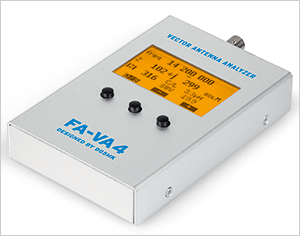
FA-VA4 Antenna Analyzer Kit. The FA-VA4 Antenna Analyzer is an improved version of the IV-Meter from DG5MK, based on his article published in QEX May/June 2017. It has a frequency range 100 kHz to 100 MHz and costs $140. This looks like a very cool project to me.

K3NQT for Vice Director. Lloyd Roach, K3NQT, is running for Vice Director of the ARRL Atlantic Division, and he’s advertising on QRZ.com. I was especially interested in this ad because I (unsuccessfuly) ran for Vice Director of the Great Lakes Division several times in the early 2000s. While Lloyd seems qualified for the position, I found his vision to be a little vague. I emailed him, hoping to get some clarification on what he’d actually do as Vice Director, but he didn’t seem interested in engaging in a discussion with me.

Another interesting twist is that he’s running against Riley Hollingsworth, K4ZDH, the former FCC Special Counsel, who was responsible for enforcing the Amateur Radio Service rules during his last ten years at the FCC. Both men are highly qualified, and this will be an interesting race.

Filed Under: Antennas, ARRL, Elmering, Gear/Gadgets, Online Resources, Test Equipment Tagged With: antenna analyzers, ARRL Board of Directors

.radio Top Level Domain Name Ready for Launch

January 20, 2017 By Dan KB6NU 2 Comments

The European Broadcasting Union (EBU) announced in a press release that it is launching a new Top Level Domain (TLD) name  – .radio – for the radio community which will progressively change the way people are reaching internet resources linked to radio.

.radio can be used for web and email addresses and will be managed by the EBU with the support of the other world broadcasting unions.

For four years the EBU and its partners have been preparing the launch of .radio. The project was endorsed by all the leading radio organizations in the world (including ABU, AER, AIB, AMARC, ASBU, AUB, CBU, EGTA, IAB, NABA, OTI, and URTI).

Exceptionally for the internet world, this project is a Community TLD, run for the benefit of the whole radio industry and amateur enthusiast and reserved for people and companies with active interest in the radio sector.

“We are proposing that the radio community may like to consider securing the integrity of their web presence by requesting appropriate .radio domains for defensive reasons initially,” says the EBU’s .radio TLD Manager Alain Artero.

“The TLD will be focused on content and matters specific to radio and we want to prevent speculators and cybersquatting in this TLD; this extension will therefore rapidly become a high-value internet space for websites, mail systems and other internet applications.”

The following categories will be accepted for the use of a .radio domain:

  • Radio broadcasting stations
  • Unions of Broadcasters
  • Internet radios
  • Radio Amateurs
  • Radio professionals (journalists, radio hosts, DJs, …)
  • Radio-related companies selling radio goods and services

More information is available in this LinkedIn post. The post notes,

The price for registering a .radio domain name will be different for companies and individuals. It will depend on the registrar offering the product, since registrars themselves define their price and their marketing policy. It also depends whether some additional services are included in the yearly fee (like hosting, mailing). For companies, we expect typical prices between 200€ and 250€ per domain each year. For individuals, the price will be much lower.

Unfortunately, it doesn’t say how much lower. I’d certainly be interested in obtaining kb6nu.radio, but not if it’s going to cost a lot more than the .com domain name that I currently own.

Filed Under: Online Resources Tagged With: .radio, TLD

ARRL newsletter feature ideas for instructors and PR for Field Day

June 6, 2016 By Dan KB6NU Leave a Comment

In the last couple of days, I’ve gotten e-mails announcing the latest issues of Radio Waves and Contact, the ARRL newsletters for instructors and public information officers (PIOs). Both have some interesting items.
Radio Waves

The Spring 2016 issue of Radio Waves includes articles on using amateur radio in home schooling, ARISS activities, Girl Scout amateur radio activities (including information on the Girl Scout Radio and Wireless Technology patch), and links to other online instructional resources.

One that I found interesting was a link to the Tait Radio Academy. It offers a number of free courses on different aspects of land mobile radio (LMR) technology, including basic radio awareness, P25, and DMR. As I’ve been getting interested in DMR lately, I’ve started viewing the videos in this course.

arrl-contactThe June 2016 issue of Contact features short articles on Field Day and Dayton. The Field Day article gives the following advice:

  • Get your social media platforms going and earn that new 100 point bonus for engaging the public and your local media on Facebook, Twitter and other social media platforms. Be sure to post lots of photos and short video of your team having fun.
  • If you’re hosting a PR table this year, do more than lay out pamphlets; you will have far greater impact with your visitors if you have a team dedicated to welcoming visitors and showing them around your site. Those team members should be friendly and outgoing, and be able to steer your visitors to relevant areas of your Field Day site based on what your visitors tell you they’re curious about.
  • If you’re going to post signs on the street to drive visitors to your site, be sure to include the phrases “Open House” and “Public Welcome.” Not everybody understands what a Field Day is, but the term Open House is very common.

Filed Under: Classes/Testing/Licensing, Kids, Online Resources, Operating, Promotion & PR Tagged With: DMR, Field Day, Girl Scouts, home schooling

From my Twitter feed: EveryCircuit, WebSDRs, small transistors

May 6, 2016 By Dan KB6NU Leave a Comment

tlrosstech's avatar T L Ross Tech @tlrosstech
EveryCircuit fb.me/8is0QTbev

StrangeBeacons's avatar Strange Beacons @StrangeBeacons
Links to a Large Collection of Online WebSDR Radios: websdr.org #SoftwareDefinedRadio #shortwave pic.twitter.com/7kR95VWbKb


alinaselyukh's avatar Alina Selyukh @alinaselyukh
“At some point in the near future, we’ll be building transistors out of just a handful of atoms… The gig is up.” twitter.com/npralltech/sta…
All Tech Considered @npralltech
After Moore’s Law: Predicting The Future Beyond Silicon Chips n.pr/1rXxJg9

Filed Under: Circuit Design, Circuit Simulation, Electronic Components, Electronics Theory, Online Resources, Software-Defined Radio (SDR) Tagged With: transistors, WebSDR

ARRL Executive Committee discusses enforcement, emcomm, HandiHam, and podcasting

March 31, 2016 By Dan KB6NU 1 Comment

ARRL FlagOn March 12, 2016, the ARRL Executive Committee met in Texas. They recently published the meeting minutes. I found a couple items of interest:

  • Enforcement. The ARRL got Rep. Peter King of New York to bring up the issue of repeater jamming with the FCC. It was noted during the discussion that the closure of some FCC field offices has led to the retirement of several experienced engineers who have been helpful to amateur radio in the past. This led to a discussion of how the Official Observer program could be repositioned to provide more assistance to the FCC, and efforts are already underway to do that.
  • Emcomm. FirstNet is an organization created by the U.S. Congress whose mission is “to build, operate and maintain the first high-speed, nationwide wireless broadband network dedicated to public safety.” The ARRL hopes to be able to participate in this somehow, but it sounds to me like this might be yet another effort to cut amateur radio out of emergency communications.
  • HandiHam. I didn’t know this, but apparently the ARRL is trying to take over the HandiHam program. There are some legal hurdles that they have to jump before this can occur.
  • Podcasting. At its January meeting, the ARRL Board requested that ARRL staff establish a “Digital Media Content Channel.” Apparently, they produced a pilot podcast, so all you ham radio podcasters out there should be looking for some ARRL competition soon.


Filed Under: ARRL, Emergency Communications / Public Service, Online Resources, Rules, Regulations, Enforcement Tagged With: HandiHam, podcasts

Cool Tools: A Whole Earth Catalog for the 21st Century

August 19, 2015 By Dan KB6NU Leave a Comment

wholeearthcatalog-960x1236If you’re as old as I am, then you probably remember the Whole Earth Catalog. For the kid I was at the time, it was a wonderful book to browse and consider the possibilities.

Stewart Brand, the author/editor/compiler of the Whole Earth Catalog characterized the publication this way:

The WHOLE EARTH CATALOG functions as an evaluation and access device. With it, the user should know better what is worth getting and where and how to do the getting.

An item is listed in the CATALOG if it is deemed:

  1. Useful as a tool,
  2. Relevant to independent education,
  3. High quality or low cost,
  4. Not already common knowledge,
  5. Easily available by mail.

For those of us who are still searching for tools like this, we now have a book, Cool Tools: A Catalog of Possibilities. This book is on sale right now for $22.59. Dale Grover, one of the movers and shakers in the Ann Arbor maker movement says, “This is a really cool book. Well worth the $40 price, but a steal at $20.”

There is a Cool Tools website, too. The author of Cool Tools and the proprietor of the website, Kevin Kelly says of the website:

Cool tools really work. A cool tool can be any book, gadget, software, video, map, hardware, material, or website that is tried and true. All reviews on this site are written by readers who have actually used the tool and others like it. Items can be either old or new as long as they are wonderful. We only post things we like and ignore the rest. Suggestions for tools much better than what is recommended here are always wanted.

There are some amateur radio ” cool tools,” including the TenTec Rebel and a couple of posts describing different hams’ go kits.

A request

I think my No-Nonsense study guides are pretty cool tools. If any of you think so, too, perhaps you could submit a review. Here’s a little incentive. The website notes, “We pay $25 for reviews that we decide to run. We submit payment via PayPal, approximately 30 days after the review has run.”

THANKS!

Filed Under: Online Resources

Chat with the Designers is back!

August 13, 2015 By Dan KB6NU Leave a Comment

Rick, K3IND, e-mailed me this morning:

In other news, the “Chat with the designers” NJQRP-affiliated discussion group that meets on Teamspeak is back after a hiatus caused by the medical problems of both of its presenters. Last night’s topic was about ultra-high accuracy frequency measurement techniques. This was the 73rd presentation in this series. More info at CWTD.org as well as the podcasts for the entire series.

 I just took a look at the list of podcasts, and there are a lot of awesome-sounding episodes there, including:

  • Scalar network analyzers
  • Small transmitting loops
  • Troubleshooting techniques
  • Direct digital synthesis

…and much more.

Filed Under: Building/Homebrew, Gear/Gadgets, Online Resources

  • Page 1
  • Page 2
  • Page 3
  • Page 4
  • Go to Next Page »

Primary Sidebar

No Nonsense Technician Class License Study Guide (for tests given between July 2026 and June 2030)

New No Nonsense Technican Class Study Guide now available!

The 2026 version of my Tech Class study guide is now available, and as always, the PDF version is FREE!. The ePub version costs $11.97, and a Kindle version and paperback version will be available on Amazon shortly.

Click here to get all of my "No Nonsense" study guides.

Also available: The CW Geek's Guide to Having Fun with Morse Code

W5SWL.Com
Retevis Ailunce H1 DMR Radio
DXpander: Cobweb antennas, Laser Cutting

You’ve got mail!

Enter your email address below and get an email every time I publish a new post.

Email


I frequently teach classes to help newcomers get their licenses. The next class will take place on Saturday, February 7, 2026 on the University of Michigan campus. Click here for more information.

If you can't make the class, subscribe to the mailing list to be notified of when the next class will be held.

You can always download my free study guide, and if you have any questions about the classes, or amateur radio in general, please feel free to email me directly.

Support KB6NU.Com

Donate $7.30 and get two of these cool stickers. Measuring 4.25-in. W by 2.75-in. H, it's perfect for your car, your shack, or wherever!

Contact me

If you have a question or comment about one of my blog posts, or a question about any of the material in my study guides, or just a question about ham radio in general, you can email me at [email protected].

Blogs You Should Also Read

  • AE5X: A CW-centric blog from Kingswood, Texas
  • K0LWC Blog
  • LA3ZA Ham Radio Blog
  • Little Radios, Big Fun – WB3GCK
  • Mr. Vacuum Tube's Blog
  • Radio Artisan – K3NG
  • The K0NR Weblog
  • VE3WDM's QRP Ham Radio Blog
  • W2LJ’s Blog

Ham Radio Websites

  • Dashtoons – The Hammin' Comedy by Jeff K1NSS

Podcasts

  • ICQ Podcast
  • Linux in the Ham Schack
  • No Nonsense Amateur Radio Podcast
  • Resonant Frequency Amateur Radio Podcast

Recent Comments

  • Dan KB6NU on Finally, a Loop for 10m.
  • Dan KB6NU on 1930s cards for my collection of QSLs from stations whose callsigns spell words
  • Sean on Finally, a Loop for 10m.
  • Bill Waslo on 1930s cards for my collection of QSLs from stations whose callsigns spell words
  • C M Wetzel KD8TNF on The Wesco BN-1

Meta

  • Log in
  • Entries feed
  • Comments feed
  • WordPress.org

Footer

Copyright © 2026 Daniel M. Romanchik, KB6NU · Log in