• Skip to primary navigation
  • Skip to main content
  • Skip to primary sidebar
  • Skip to footer

KB6NU's Ham Radio Blog

KB6NU's Ham Radio Blog
  • HOME
  • Study Guides
  • Teach a One-Day Tech Class
  • W8SRC Repeater Guide
  • Advertise
  • Hire Me

NIST

Articles: Scrappy circuits, ham radio inspires student, why measurements are important, why copper is important

September 12, 2024 By Dan KB6NU Leave a Comment

Here are some articles I found intersting. The first details a cheap way to teach kids (and adults, too!) about circuits….Dan

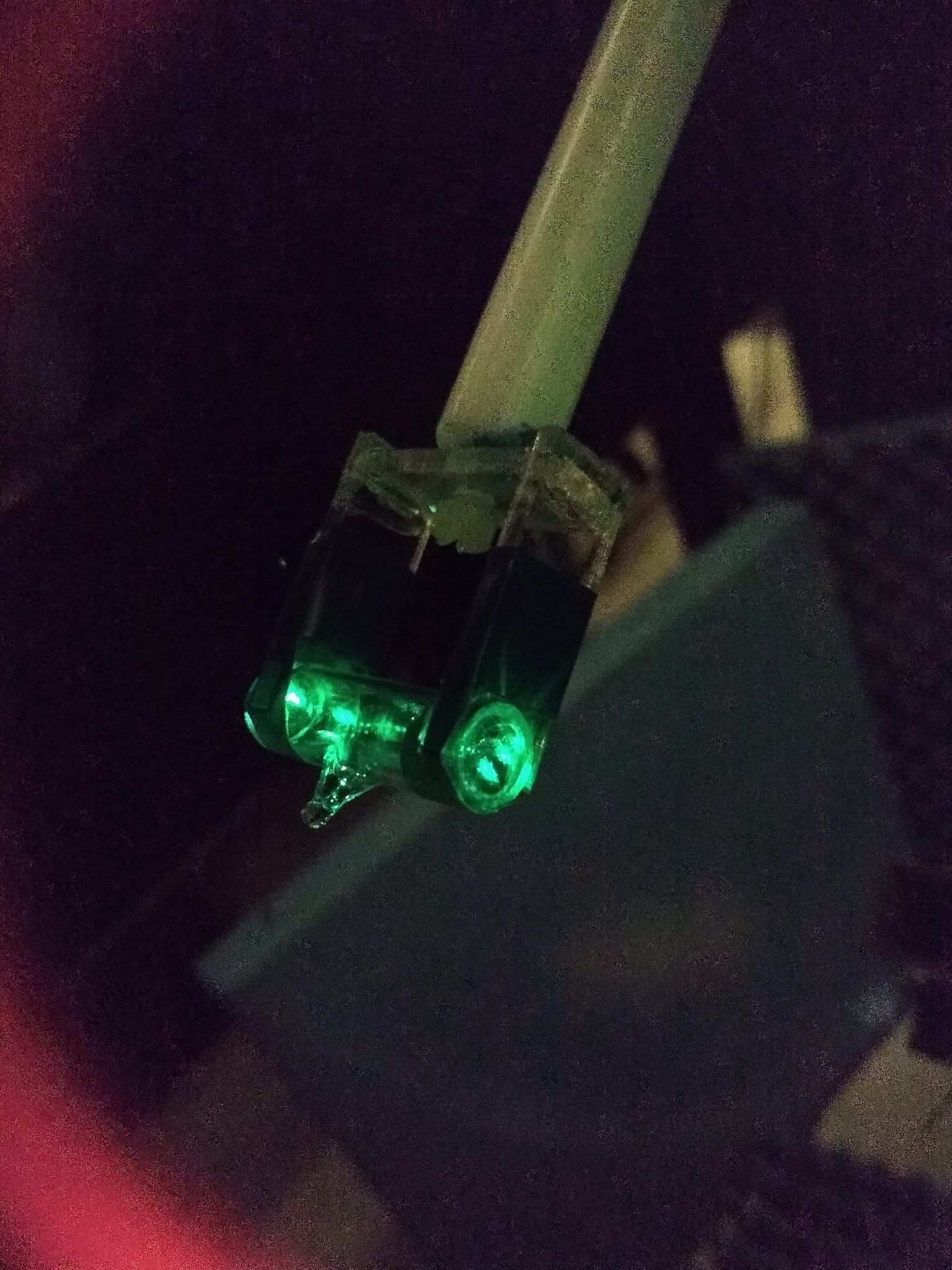
Scrappy circuits

Circuit components made from dollar-store items.
The best dollar you can spend on a child’s STEAM education is to take them to the dollar store, buy an electronic item, and then take it apart. Learning how a handheld fan, LED light, remote control, or headphones work will help show how wind turbines, traffic lights, speakers, keyboards, and other modern devices function. The next step is to take apart a dollar store item and make it better — combine two items, replace a switch, create something new and unique. Scrappy Circuits is the perfect way to get started. I first developed Scrappy Circuits with Chris Connors and Eva Luna while working at Xraise, an education outreach program at Cornell University. What began as an exploration of DIY switches ended later as a self-made invention system sourced from a fifty-cent LED tea light. Educators can build it with their class for about $20. Anyone with access to office supplies and a dollar store can make the five Core Bricks for about $1. Here’s how to create each one.

…read more


I think that we short-change ham radio’s usefulness in getting people to pursue STEM careers…..Dan

Ham radio inspired this Scranton University student to pursue engineering

Many college students participate in sports, listen to music, or play video games in their spare time, but IEEE Student Member Gerard Piccini prefers amateur radio, also known as ham radio. He’s been involved with the two-way radio communication, which uses designated frequencies, since his uncle introduced him to it when he was a youngster. His call sign is KD2ZHK.

…read more


I’ve always been something of a measurement nerd……Dan

Why measurements are important

Practically everything you use in your everyday life works because of measurement science. Without precise measurements, your car wouldn’t run, your phone wouldn’t work, hospitals couldn’t function, and the ATM would fail. NIST is the national measurement institute of the United States. Most people in the U.S. have no idea that there is a single organization within the federal government that makes sure all measurements in the U.S. are correct and trustworthy — and that they are accepted by other governments worldwide.

…read more


Copper is one of those things that we take for granted…..Dan

Copper: Conductivity Benefits and Environmental Impact

Most circuit designers probably aren’t thinking about, much less worrying about, the metal copper. But as the electrification of the world continues, copper conductors used in applications from microchips, other components and circuit boards, to household, industrial, and automotive wiring, and critical workhorses like batteries and electric motors, points to the need to spotlight its starring role.

…read more

Filed Under: Gear/Gadgets, People, Test Equipment Tagged With: copper, NIST, Scranton University, STEM

NIST studies first-responder communications needs

January 31, 2023 By Dan KB6NU 2 Comments

This article was published by NIST yesterday. I think that if amateur radio wants to remain relevant in emergency communications, someone needs to be reading these kinds of reports. 

Based on this survey, NIST produced 14 different reports. Here’s a quote from one of them, Voice of First Responders – Identifying Public Safety Communications Problems: Findings from User-Centered Interviews Phase 1, Volume 1:

The public safety community is in the process of transitioning from the use of land mobile radios (LMR) to a technology ecosystem including a variety of broadband data sharing platforms. Successful deployment and adoption of new communication technology relies on efficient and effective user interfaces based on a clear understanding of first responder needs, requirements and contexts of use.

–Dan


America’s First Responders Give NIST Their Communications Tech Wish Lists

NIST’s nationwide survey aims to improve communications devices for fire, police, EMT and 911 crews.

January 30, 2023

Four clipboards appear, each representing one of the four first responder communities: 911, EMT, fire, police.
Credit: B. Hayes/NIST

Our first responders have spoken. An extensive research project conducted by experts at the National Institute of Standards and Technology (NIST) reveals what our country’s police, fire, emergency medical and 911 dispatch responders think about the communications technology they use on a regular basis and how they would like developers to improve it in the future.

More than five years in the making, the Voices of First Responders project reflects the input of 7,182 respondents to a survey NIST conducted of first responders hailing from across the country, from large cities and suburbs to small towns and rural areas. The results of the study, the largest of its kind ever to investigate public safety personnel user experiences, provide a wealth of data intended to help developers of communications technology create more useful devices for the field.

“First responders are people who go to the scene with the goals of saving lives and protecting the public,” said Yee-Yin Choong, an industrial engineer at NIST. “We set out to understand this technology from their perspective, to find out what is working for them and what isn’t.”

While the results fill more than a dozen publications, some overarching messages stand out, including three interrelated requests that first responders made: Public safety communications technology should be trustworthy, be controllable and reduce user frustration.

“Our findings are aimed at the research and development community, but we are also trying to reach administrators who make purchases,” she said. “Technology needs to be trustworthy, and the users need autonomy over it. Our results indicate that if you focus on those things, the users will be happier.”

The team also distilled the study data into six guidelines for future technology development:

  • Improve current technology — more important than developing new technology is improving what first responders currently have.
  • Reduce unintended consequences — develop technology that does not interfere with or distract from first responders’ attention to their primary tasks.
  • Recognize that “one size does not fit all” — technology must accommodate public safety’s wide variety of needs, across disciplines, districts and contexts of use.
  • Minimize “technology for technology’s sake” — develop technology with and for first responders driven by their user characteristics, needs and contexts of use.
  • Lower product and service costs — develop technology at price points that departments find affordable and also scalable for widespread distribution.
  • Require usable technology — technology should make it easy for the user to do the right thing, hard to do the wrong thing, and easy to recover when the wrong thing happens.

The team began its investigation by interviewing about 200 first responders from across the country to gain a general understanding of how they used communications devices. From this information, the team developed a more detailed survey about particular pieces of technology — from radios and phones to laptops to the headsets and earpieces that call center dispatchers use — and details about them, such as frequency of use and the problems they presented.

After obtaining the raw survey results, the team spent three years analyzing the interview and survey data and developed a total of 14 publications detailing the findings. Four are NIST Special Publications (SPs), each of which concerns the technology needs of one of the four first responder communities. The remaining 10 are NIST Interagency Reports (NISTIRs), which focus on the interview and survey data across all four communities.

The data are freely available online, and the team has made it possible to enter specific queries and create charts that allow for more effective analysis.

“For a developer, the data might help you design a better radio, but it also might give you information you never thought of,” Choong said. “One police officer said his body camera needs to show the court exactly what he saw. It should indicate that he was upside down and in the dark, but it shouldn’t change the video contrast, which can make it appear that something in that dark room was plainly visible.”

The study fills a gap in public safety communications technology research. Previous research efforts by other organizations have focused on the technology itself, not users’ interactions with it in real-world situations, Choong said.

“Before our project there was no systematic method for looking at the users’ needs and the problems they have faced,” she said. “We did not have any preconceived ideas of what we would learn, but we were rigorous in our methodology for obtaining the data. We include the details so that it can be useful in domains beyond public safety communications research.”

Filed Under: Emergency Communications / Public Service Tagged With: NIST

NIST and the Titanic: How the Sinking of the Ship Improved Wireless Communications for Navigating the Sea

April 16, 2022 By Dan KB6NU Leave a Comment

This post is shamelessly ripped off from the National Institute of Standards and Technology (NIST) website. Before you jump all over me, anything published by the U.S. government is in the public domain.


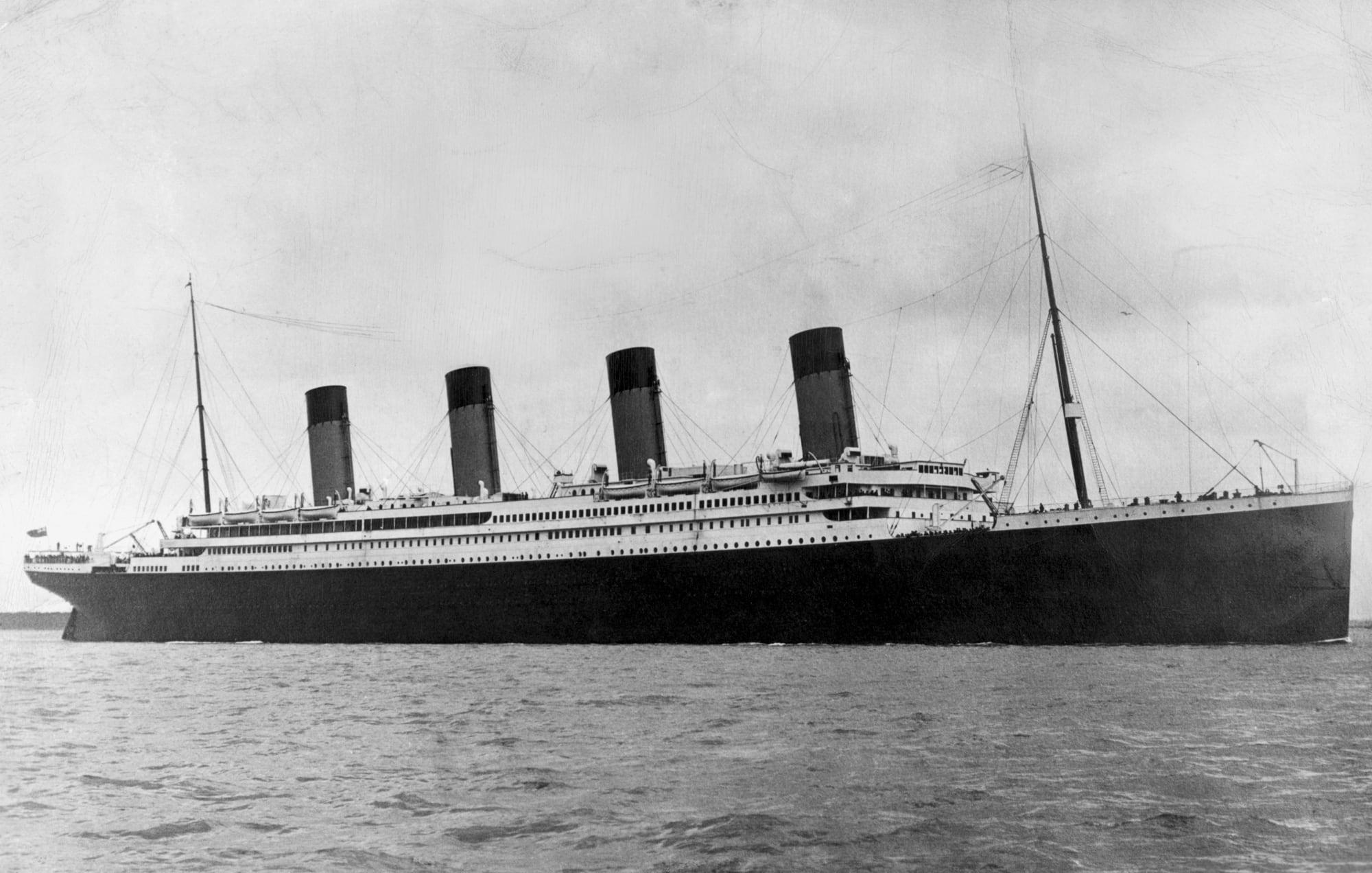
Historical photo shows RMS Titanic from the side, with four prominent funnels.

If you’ve seen the movie Titanic starring Kate Winslet and Leonardo DiCaprio, then you’ve watched the star-crossed lovers’ untimely end and the tragic sinking of the Royal Mail Ship (RMS) Titanic. What the movie didn’t show is that radio played a role in the ship’s communication efforts — though it lacked standards that could have saved many more lives.

The tragedy of the Titanic raised awareness that improvements to wireless communication were needed and led to new regulations and legislation by Congress to improve wireless technology, radio equipment and standards for maritime navigation. Leading the charge to make this happen was the National Institute of Standards and Technology (NIST).

The Role of Wireless Technology in the Titanic Tragedy

The RMS Titanic was a luxury passenger liner making its first trans-Atlantic voyage from Southampton, England, to New York City. The ship was an impressive 269 meters long, just a little shorter than the 300-meter height of the Eiffel tower (minus the tip). In the late evening hours of April 14, 1912, the Titanic struck an iceberg about 640 kilometers (400 miles) off the coast of Newfoundland. By 2:20 a.m. on April 15, the ship had sunk, and only about 710 people survived. More than 1,500 people, including passengers and crew, were lost.

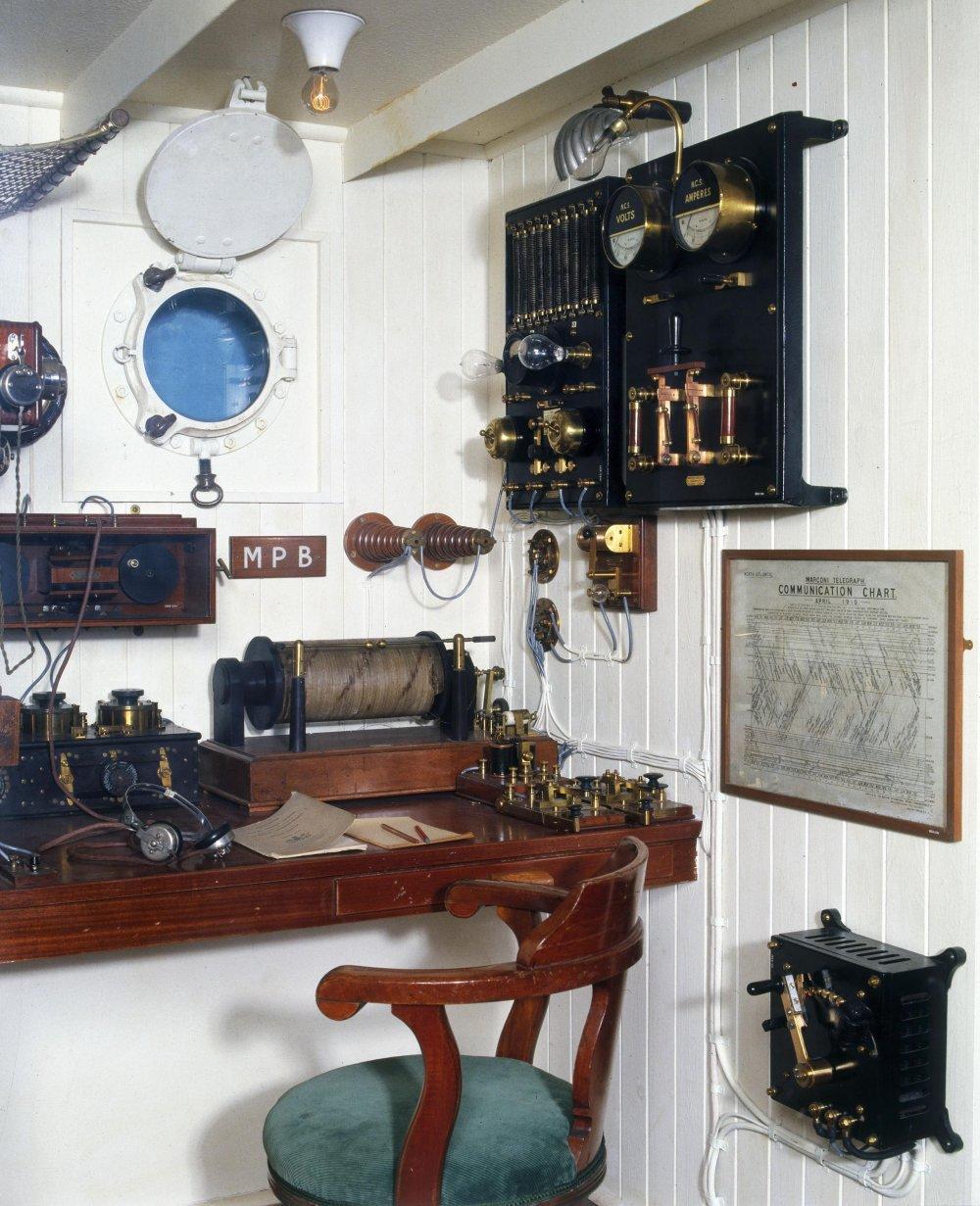
A small room features a wooden desk, a porthole, and historical telegraph equipment on the walls.
Reconstruction of a ship’s radio room from around 1910, at the Science Museum in London.
At that time, the use of wireless systems, such as wireless telegraphs, on ships was relatively new. Passengers and crew could use these telegraphs to send messages back to land, and they played a role in ship operations like communicating between different areas of the ship. The technology relied on radio frequencies to transmit telegraph signals as coded messages without relying on telegraph lines.
The wireless telegraph on the Titanic was owned and operated by the Marconi Company and was considered one of the best systems in the world, with a range of up to 1,600 kilometers (1,000 miles). However, the system’s electronics created so much “noise” that it disrupted the wireless systems of other ships in the area.

Throughout the day of April 14, four ships — all within 60 miles (96.6 kilometers) of the Titanic — had warned of icebergs in the area. The closest ship, the Californian, was 10 miles (16 kilometers) away when the Titanic’s wireless telegraphers sent out the SOS signal for help. Unfortunately, the Californian’s telegrapher had been rebuffed by the Titanic’s telegrapher earlier in the day for interfering with the Titanic’s private messages sent ashore and therefore had shut down for the night. The Carpathia, which was 58 miles away, responded to the signal for help but didn’t arrive until an hour after the Titanic had sunk.

The sinking of the Titanic also highlighted the lack of trained telegraphers. Since the wireless technology was relatively new, many of the ships’ wireless telegraphers were inexperienced. They had a hard time catching signals sent to them, had difficulty relaying messages and were frequently sending repeats of their messages so they made sense on shore.

This disaster would spur government officials, researchers and lawmakers to address the shortcomings in wireless technology.

International Radiotelegraph Conference and Radio Act of 1912

A few months after the Titanic sunk, the second International Radiotelegraph Conference was held in London to immediately address the technical aspects of radio. Two wavelengths were used at the time, and leaders of the conference agreed the 600-meter wavelength would be used solely for ships at sea. They also implemented rulings to reduce interference from spark transmitters, a popular type of radio transmitter on ships, which used electric sparks to generate brief pulses of radio waves.

Wireless telegraphers turned the transmitter on and off with each pulse to send messages in Morse code. The pulsed or damped radio waves diminish in strength as they travel, and the rate at which they decay is expressed in a quantity known as the decrement. The damped radio waves also have a wide bandwidth with continuous frequencies that diminish exponentially over time. When the measurement of decrement is high, the radio signal becomes broader, increasing the chance for interference from other signals with similar frequencies.

The new ruling set limits with a lower measurement of decrement from spark transmitters, allowing telegraphers to fine-tune or sharpen their receivers to catch the radio signal because it was on a narrower frequency band. The exception to the ruling was for SOS signals, so multiple parties could intercept them.

The rulings from the conference were implemented by Congress on July 23, 1912, through amendments to the 1910 Radio Ship Act. This resulted in the 1912 Radio Ship Act, which required an additional auxiliary power supply on ocean liners, and trained wireless telegraphers with at least two in charge of radio equipment.

Congress also passed the 1912 Radio Act, which required licensing of commercial and amateur radio stations, minimizing interference communication between stations, addressing types of wavelengths used and prohibiting interference in radio communication, to name a few. Congress delegated the task of investigating how to implement these measures to NIST, known at the time as the National Bureau of Standards.

Kolster and the Decremeter

At the aforementioned International Radiotelegraph Conference was the recently hired NIST research engineer Frederick A. Kolster. His first assignment was to attend the conference as an observer and technical adviser to a NIST official, Louis Winslow Austin, who was one of 12 U.S delegates. Austin directed the Naval Radio Telegraphic Laboratory, housed and operated at NIST in Washington, D.C., but owned by the U.S. Navy; it later became one of the founding units of the Naval Research Laboratory.

Kolster also assisted Professor Arthur Gordon Webster of Clark University, who had a paper published at the conference about regulations on using radio communications as a safety aid in navigation. Early drafts of the paper were reviewed by NIST for technical accuracy.

At NIST, Kolster was tasked with designing a device to help ensure radio communications would not suffer interference from other electrical devices on ships. His device, called a decremeter, measured the radio signal’s rate of decay, and could be used by inspectors to determine that a ship was complying with the new regulation. The regulation led to the use of damped radio waves with a narrower frequency range that was less likely to cause interference with another ship’s communications.

Kolster developed the original device between 1912 and 1914 and then designed a portable version that fit inside a suitcase-like structure, making it easier to move around. Once completed, the decremeter was accepted by the U.S Department of Defense and the Bureau of Navigation, whose functions would later be absorbed by the U.S Customs Service and the Coast Guard.

Other Inventions

During this time, Kolster also developed other instruments to aid in regulating maritime navigations and communications. The Bureau of Navigation needed a radio beacon system to help ships navigate in inclement weather, such as heavy fog or rainy conditions. Kolster designed an improved radio compass — the forerunner to modern aviation landing systems — that let a ship establish its current position by accurately figuring out the direction of signals coming from stations on land.

The technology was ready for deployment by 1915. However, the Bureau of Lighthouses, later absorbed into the U.S Coast Guard, was reluctant to install the beacons until ships were equipped with the radio compasses. Most ship captains were hesitant to introduce more equipment out of fear that it would further clutter up their ships. It wasn’t until around 1919 that an agreement was reached between the lighthouse managers and the ship captains, and the radio compass was officially approved by the U.S Department of Defense and implemented.

Kolster wasn’t the only NIST researcher working on maritime navigation. NIST researchers C.W. Waidner and Hobart Cutler Dickinson boarded Navy patrol boats in the summer of 1912 to investigate possible methods of detecting how close or far away icebergs were. One possible method seemed to focus on analyzing temperature variations of the seawater, but their research proved inconclusive. Later in the 1930s, a team of NIST researchers (Frank Wenner, Edward H. Smith and Floyd M. Soule) developed a salinity meter for the International Ice Patrol to help it locate icebergs.

The sinking of the Titanic triggered immediate actions to prevent further tragedies at sea. Though it’s not likely that a movie will be made about the safety regulations and laws that followed, NIST played a prominent role in developing the necessary standards and technology to support them.

About the Author

portrait of Alex Boss

Alex Boss is a general assignment writer in the NIST Public Affairs Office and covers standard reference materials (SRM). She has a B.S. in biology from Rhodes College and an M.A. in health and medical journalism from the University of Georgia. Her favorite pastimes include playing in DC’s recreational soccer leagues and drinking chai lattes.

Filed Under: History Tagged With: NIST, Titanic

NIST Method Uses Radio Signals to Image Hidden and Speeding Objects

June 25, 2021 By Dan KB6NU 1 Comment

People often ask me what good an amateur radio license is. Well, increasingly our technology is using wireless communications, i.e. radio. Radio waves are also being used in other innovative ways, as seen below in this June 25, 2021 NIST report. Being an amateur radio operator can help one learn the skills necessary to be a part of this kind of research and development….Dan


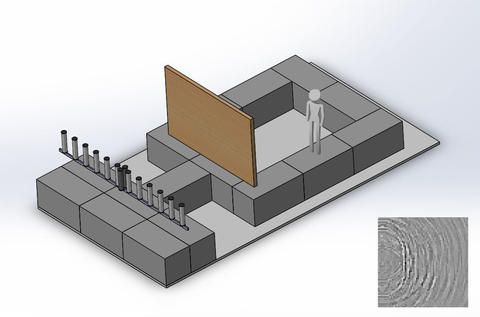
Illustration of the lab setup for m-Widar, with transmitters and receiver at left and person behind wallboard at right. Inset at lower right shows the corresponding image produced by the instrument. Credit: NIST

Researchers at the National Institute of Standards and Technology (NIST) and Wavsens LLC have developed a method for using radio signals to create real-time images and videos of hidden and moving objects, which could help firefighters find escape routes or victims inside buildings filled with fire and smoke. The technique could also help track hypersonic  objects such as missiles and space debris.

The new method, described June 25 in Nature Communications, could provide critical information to help reduce deaths and injuries. Locating and tracking first responders indoors is a prime goal for the public safety community. Hundreds of thousands of pieces of orbiting space junk are considered dangerous to humans and spacecraft.

“Our system allows real-time imaging around corners and through walls and tracking of fast-moving objects such as millimeter-sized space debris flying at 10 kilometers per second, more than 20,000 miles per hour, all from standoff distances,” said physicist Fabio da Silva, who led the development of the system while working at NIST.

“Because we use radio signals, they go through almost everything, like concrete, drywall, wood and glass,” da Silva added. “It’s pretty cool because not only can we look behind walls, but it takes only a few microseconds of data to make an image frame. The sampling happens at the speed of light, as fast as physically possible.”

This demonstration of the m-Widar (micro-Wave image detection, analysis and ranging) system shows, in the video on the left, a person walking and later crouching and lying down in an anechoic chamber. The transmitters and receiver are in a vertical line on the right side of the chamber. The second video on the right shows the instrument’s view of the same scene. About 21 seconds into the video, a wallboard is inserted between the person and the instrument in the anechoic chamber, to show that m-Widar can “see” through walls. Credit: NIST

The NIST imaging method is a variation on radar, which sends an electromagnetic pulse, waits for the reflections, and measures the round-trip time to determine distance to a target. Multisite radar usually has one transmitter and several receivers that receive echoes and triangulate them to locate an object.

“We exploited the multisite radar concept but in our case use lots of transmitters and one receiver,” da Silva said. “That way, anything that reflects anywhere in space, we are able to locate and image.”

Da Silva has applied for a patent, and he recently left NIST to commercialize the system under the name m-Widar (microwave image detection, analysis and ranging) through a startup company, Wavsens LLC (Westminster, Colorado).

The NIST team demonstrated the technique in an anechoic (non-echoing) chamber, making images of a 3D scene involving a person moving behind drywall. The transmitter power was equivalent to 12 cellphones sending signals simultaneously to create images of the target from a distance of about 10 meters (30 feet) through the wallboard.

Da Silva said the current system has a potential range of up to several kilometers. With some improvements the range could be much farther, limited only by transmitter power and receiver sensitivity, he said.

The basic technique is a form of computational imaging known as transient rendering, which has been around as an image reconstruction tool since 2008. The idea is to use a small sample of signal measurements to reconstruct images based on random patterns and correlations. The technique has previously been used in communications coding and network management, machine learning and some advanced forms of imaging.

Da Silva combined signal processing and modeling techniques from other fields to create a new mathematical formula to reconstruct images. Each transmitter emits different pulse patterns simultaneously, in a specific type of random sequence, which interfere in space and time with the pulses from the other transmitters and produce enough information to build an image.

The transmitting antennas operated at frequencies from 200 megahertz to 10 gigahertz, roughly the upper half of the radio spectrum, which includes microwaves. The receiver consisted of two antennas connected to a signal digitizer. The digitized data were transferred to a laptop computer and uploaded to the graphics processing unit to reconstruct the images.

The NIST team used the method to reconstruct a scene with 1.5 billion samples per second, a corresponding image frame rate of 366 kilohertz (frames per second). By comparison, this is about 100 to 1,000 times more frames per second than a cellphone video camera.

With 12 antennas, the NIST system generated 4096-pixel images, with a resolution of about 10 centimeters across a 10-meter scene. This image resolution can be useful when sensitivity or privacy is a concern. However, the resolution could be improved by upgrading the system using existing technology, including more transmitting antennas and faster random signal generators and digitizers.

Da Silva explains the imaging process like this: To image a building, the actual volume of interest is much smaller than the volume of the building itself because it’s mostly empty space with sparse stuff in it. To locate a person, you would divide the building into a matrix of cubes. Ordinarily, you would transmit radio signals to each cube individually and analyze the reflections, which is very time consuming. By contrast, the NIST method probes all cubes at the same time and uses the return echo from, say, 10 out of 100 cubes to calculate where the person is. All transmissions will return an image, with the signals forming a pattern and the empty cubes dropping out.

In the future, the images could be improved by using quantum entanglement, in which the properties of individual radio signals would become interlinked. Entanglement can improve sensitivity. Radio-frequency quantum illumination schemes could increase reception sensitivity.

The new imaging technique could also be adapted to transmit visible light instead of radio signals — ultrafast lasers could boost image resolution but would lose the capability to penetrate walls — or sound waves used for sonar and ultrasound imaging applications.

In addition to imaging of emergency conditions and space debris, the new method might also be used to measure the velocity of shock waves, a key metric for evaluating explosives, and to monitor vital signs such as heart rate and respiration, da Silva said.

This work was funded in part by the Public Safety Trust Fund, which provides funding to organizations across NIST leveraging NIST expertise in communications, cybersecurity, manufacturing and sensors for research on critical, lifesaving technologies for first responders.


Paper: F.C.S. da Silva, A.B. Kos, G.E. Antonucci, J.B. Coder, C.W. Nelson and A. Hati. Continuous Capture Microwave Imaging. Nature Communications. Published online June 25, 2021. DOI: 10.1038/s41467-021-24219-0

Filed Under: Everything Else Tagged With: NIST

Low-Cost NIST demo links public safety radios to broadband wireless network

April 12, 2021 By Dan KB6NU 1 Comment

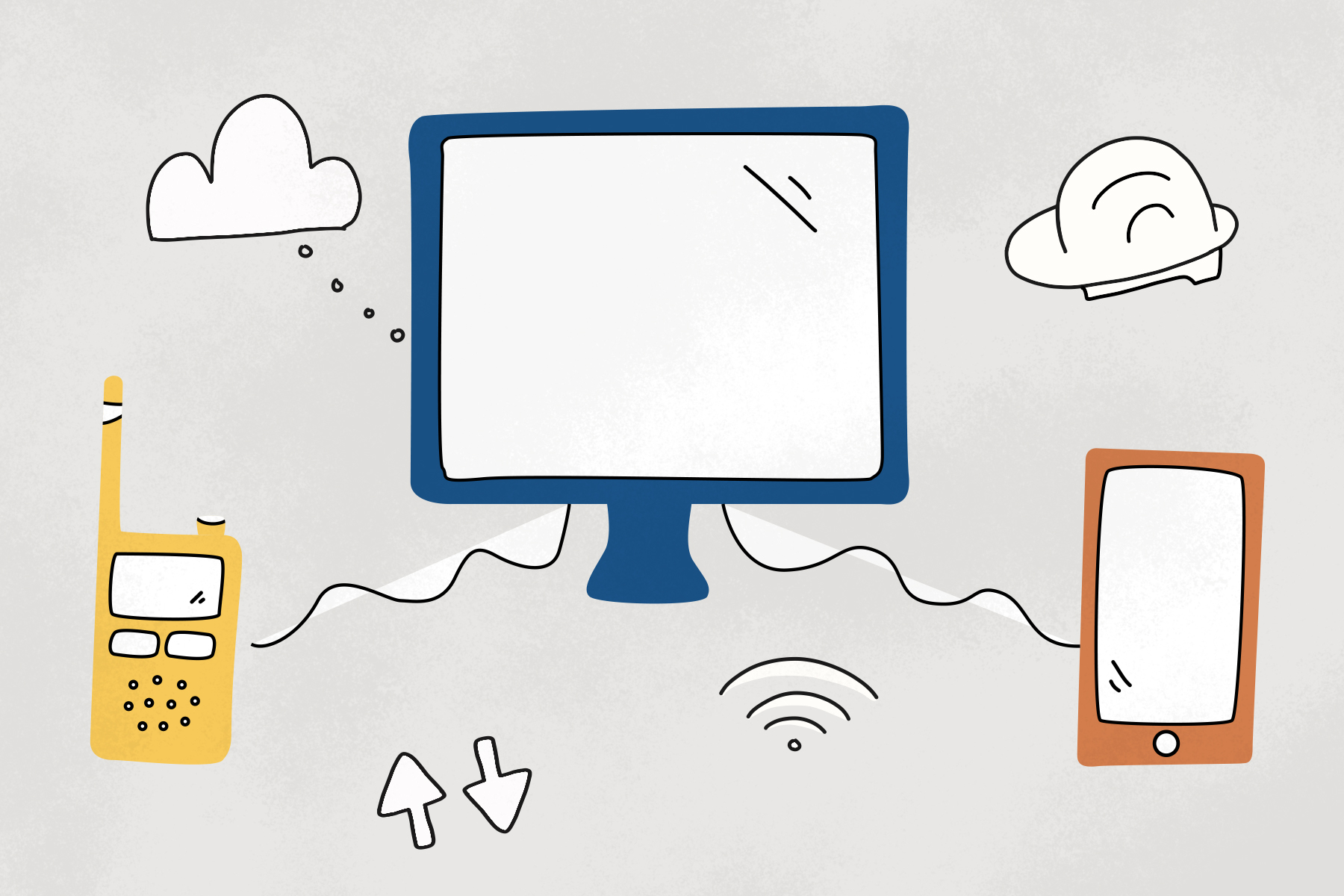
Illustration shows computer monitor linked to walkie talkie on one side and smartphone on the other.
Credit: N. Hanacek/NIST

Engineers at the National Institute of Standards and Technology (NIST) have built a low-cost computer system that connects older public safety radios with the latest wireless communications networks, showing how first responders might easily take advantage of broadband technology offering voice, text, instant messages, video and data capabilities.

NIST’s prototype system could help overcome a major barrier to upgrading public safety communications. Many of the 4.6 million U.S. public safety personnel still use traditional analog radios, due to the high cost of switching to digital cellphones and these systems’ slow incorporation of older “push to talk” features that are both familiar and critical to first responders.

“This NIST project aims to develop a prototype infrastructure that could be used by commercial entities to create a low-cost solution for public safety users, allowing them to interconnect their radio systems to broadband networks,” NIST engineer Jordan O’Dell said.

“There isn’t a commercial option that compares to what we are developing. The goal here is to create a prototype and accelerate technology development in industry that will fill a significant gap.”

The NIST prototype connects analog Land Mobile Radio (LMR) handsets and towers with a Long-Term Evolution (LTE) — the most widespread wireless standard — server that handles operations inside a broadband network. The LTE system is known as Mission Critical Push-to-Talk, which refers to essential aspects of public safety radios such as high availability and reliability, speaker identification, emergency calling and clear audio quality.

As described in a recent report, the NIST system has three main parts:

  • Software-defined radio — using software instead of hardware to enable flexible frequency selection and interface designs — which interacts with the LMR signal interfaces and feeds that data into the next unit;
  • An open-source software environment for managing software radio, which handles digital signal processing; and
  • A user interface for LTE handsets, which allows LMR radio users to talk to LTE network users like they’re both on the same push-to-talk network, with calls initiated from either side.

NIST’s design goals included robustness, low cost and close conformance to existing and future standards. The physical equipment includes computer hardware that runs all three components, suitable software and an antenna. The computer must have an internet connection to the LTE system. The entire setup is about the size of a video game console plus a laptop or desktop computer.

The NIST system costs less than existing industry and government efforts to bridge radio and cellphone networks. One such activity requires a radio system that supports the Project 25 Inter-Radio Frequency Subsystem Interface, which few public safety agencies have or can afford to buy or retrofit. Another effort to connect existing radio handsets to a “box” that bridges into the broadband network requires dedicated “donor” radios and interfaces, also expensive.

“We want public safety agencies to have a very inexpensive option that can interface with old technology when the other options are out of reach,” O’Dell said.

NIST researchers are continuing to work on the prototype, with plans to improve the interface to the broadband network and link to additional types of radios. To promote technology transfer, they intend to publicly release all capabilities on an open source basis for use by anyone.

This work was made possible by the Public Safety Trust Fund, which provides funding to organizations across NIST leveraging NIST expertise in communications, cybersecurity, manufacturing and sensors for research on critical, lifesaving technologies for first responders.


Report: Christopher Walton and Chic O’Dell. Bridging Analog Land Mobile Radio to LTE Mission Critical Push-to-Talk Communications. NISTIR 8338. December 2020.

Filed Under: Emergency Communications / Public Service Tagged With: NIST

NIST demonstrates sensor that determines direction of incoming radio signal

April 5, 2021 By Dan KB6NU Leave a Comment

From the National Institute of Standards and Technology (NIST), April 5, 2021.


NIST researchers and collaborators determined the direction of an incoming radio signal based on laser measurements at two locations in this sensor filled with a gas of cesium atoms. Credit: NIST

Researchers at the National Institute of Standards and Technology (NIST) and collaborators have demonstrated an atom-based sensor that can determine the direction of an incoming radio signal, another key part for a potential atomic communications system that could be smaller and work better in noisy environments than conventional technology.

NIST researchers previously demonstrated that the same atom-based sensors can receive commonly used communications signals. The capability to measure a signal’s “angle of arrival” helps ensure the accuracy of radar and wireless communications, which need to sort out real messages and images from random or deliberate interference.

“This new work, in conjunction with our previous work on atom-based sensors and receivers, gets us one step closer to a true atom-based communication system to benefit 5G and beyond,” project leader Chris Holloway said.

In NIST’s experimental setup, two different-colored lasers prepare gaseous cesium atoms in a tiny glass flask, or cell, in high-energy (“Rydberg”) states, which have novel properties such as extreme sensitivity to electromagnetic fields. The frequency of an electric field signal affects the colors of light absorbed by the atoms.

An atom-based “mixer” takes input signals and converts them into different frequencies. One signal acts as a reference while a second signal is converted or “detuned” to a lower frequency. Lasers probe the atoms to detect and measure differences in frequency and phase between the two signals. Phase refers to the position of electromagnetic waves relative to one another in time.

The mixer measures the phase of the detuned signal at two different locations inside the atomic vapor cell. Based on the phase differences at these two locations, researchers can calculate the signal’s direction of arrival.

To demonstrate this approach, NIST measured phase differences of a 19.18 gigahertz experimental signal at two locations inside the vapor cell for various angles of arrival. Researchers compared these measurements to both a simulation and a theoretical model to validate the new method. The selected transmission frequency could be used in future wireless communications systems, Holloway said.

The work is part of NIST’s research on advanced communications, including 5G, the fifth-generation  standard for broadband cellular networks, many of which will be much faster and carry far more data than today’s technologies. The sensor research is also part of the NIST on a Chip program, which aims to bring world-class measurement-science technology from the lab to users anywhere and anytime. Co-authors are from the University of Colorado Boulder and ANSYS Inc. in Boulder.

Atom-based sensors in general have many possible advantages, notably measurements that are both highly accurate and universal, that is, the same everywhere because the atoms are identical. Measurement standards based on atoms include those for length and time.

With further development, atom-based radio receivers may offer many benefits over conventional technologies. For example, there is no need for traditional electronics that convert signals to different frequencies for delivery because the atoms do the job automatically. The antennas and receivers can be physically smaller, with micrometer-scale dimensions. In addition, atom-based systems may be less susceptible to some types of interference and noise.


Paper: A.K. Robinson, N. Prajapati, D. Senic, M.T. Simons and C.L. Holloway. Determining the Angle-of-Arrival of a Radio-Frequency Source with a Rydberg Atom-Based Sensor. Applied Physics Letters. Published online March 15, 2021. DOI: 10.1063/5.0045601

Filed Under: Communications Theory Tagged With: NIST

Amateur radio videos: SuitSat lives?, Flex S-meter readings, why is a second as long as it is

February 26, 2021 By Dan KB6NU 1 Comment

I like going to the movies and seeing short films. Here’s a good one involving SuitSat, of all things…

DECOMMISSIONED | Sci-Fi Horror Short Film from Perception Pictures on Vimeo.


This video is probably only of interest to Flex owners, but it certainly answered a question of mine as to why the noise level on my Flex is usually around S3/S4.


A video from NIST on how we came to use atomic clocks for measuring time.

Filed Under: Test Equipment, Videos Tagged With: atomic clocks, FlexRadio, NIST, S meter, SuitSat

NIST helps first responders stay connected

January 27, 2021 By Dan KB6NU 1 Comment

The National Institute of Standards and Technology has its fingers in lots of pies. One of them is emergency communications. Below is an article written by an engineer doing research on  human-computer interaction in the area of emergency communications. Whenever I read articles like this, I think that we should somehow get plugged into this kind of research and tailor our emergency-communications efforts accordingly….Dan


How NIST Is Helping First Responders Stay Connected

By Shaneé Dawkins

What do first responders do? It’s an easy question, and I used to think I knew the answer. Firefighters put out fires; police officers enforce the law; EMS workers treat injuries; 911 operators answer 911 calls and dispatch first responders to the scene. Simple, right?

I am a computer scientist at the National Institute of Standards and Technology (NIST) conducting research focused on human-centered computing and human-computer interaction. I have worked in the field for over a decade, researching ways to help people with their real-world technology problems. My research, by nature, requires me to learn about different communities in order to assess their technological needs. For public safety, I thought I had a pretty decent grasp of the community. After all, what they do is woven into all our lives.

As it turns out, I was wrong. I had no idea what I was in for when I joined the NIST Public Safety Communications Research (PSCR) usability team. PSCR aims to drive research and development of communication technologies for first responders, including user interface and user experience research. This research specifically focuses on ensuring that first responder communication tools are designed to meet their users’ operational needs. Our team contributed to this portfolio by investigating the work of first responders to better understand those needs by examining their environments, the tasks they have to perform, and their communication needs. This way, we hoped to gain insight into how the usability of communication technologies can be measured, and ultimately improved.

What Do They Do? Everything

Beginning in 2017, we interviewed nearly 200 first responders across the country, including 911 call takers and dispatchers, EMS personnel, firefighters and law enforcement officers. In 2018 and into 2019, we sent out a nationwide online survey and received over 7,000 responses from first responders across public safety. This resulted in a TON of data.

So, according to their responses, what do they do?

Anything and everything … really. People call 911 for anything from five-alarm fires to requests for help changing a light bulb, from cardiac arrests to paper cuts, and from bomb threats to petty disagreements. First responders are — as enumerated by one of our interviewees — “teachers, doctors, nurses, medics, moms, dads, coaches, counselors, mental health specialists, report takers, problem solvers, crime fighters.” They are like human Swiss Army knives. And yet, first responders often consider themselves public servants first and foremost. They spoke of their passion for and dedication to helping their communities.

It’s been an amazing opportunity to work on this project to further explore and understand how communication technology works — and does not work — for them in their environment. We found that first responders don’t feel like they need new “gadgets” to do their jobs effectively. They are open to new technology, but it needs to be usable, work seamlessly with the technology they already use, and be practical, fulfilling a specific purpose.

Today’s Tech, Just Better

One scenario that I don’t have to imagine is when I dressed up in full firefighter gear, air tank and all, to get a better idea of the challenges that firefighters deal with when trying to use communications technology in the course of their jobs. I experienced firsthand the frustration and potentially scary situation of carrying a super heavy firehose while not being able to find the talk button on the radio because of the very necessary, standard issue, extremely bulky fire protection glove. This was, of course, made more difficult by the fact that I am a small person and don’t have the same level of physical fitness as many first responders, and really, who among us does?
But what first responders expressed far more than wanting new technology was for the communications devices they already had to work better — to be more reliable, more usable, and interoperable. Imagine being a police officer responding to an active shooter scenario where several agencies are involved and not being able to communicate with the other responding units about your response plan. Imagine being a firefighter trying to help someone stuck in a building, but you’re only getting static on the radio when trying to call for help. Imagine you’re dispatching a paramedic to a rural location, and just as you’re about to give that paramedic a critical piece of information, the call is disconnected due to poor cellular service. Imagine being an EMT who always needs to do the same task before you can help a patient, but it requires 10 steps on your computer instead of one.

Or, imagine that none of those scenarios happen because your communication technology works exactly as it should. User interfaces and device interactions are simplified. Communication devices are interoperable so different agencies can communicate even if they don’t have the same equipment. There are fewer dead zones and dropped calls. You can clearly hear what your fellow responder is saying on the radio. Imagine your technology doing what it should!

While the gaps in public safety communication technology are being filled with exciting, new innovations, the devices that first responders currently use have plenty of room for improvement.

First Responders’ Wish List

So, according to our findings, what did first responders say would be especially useful?

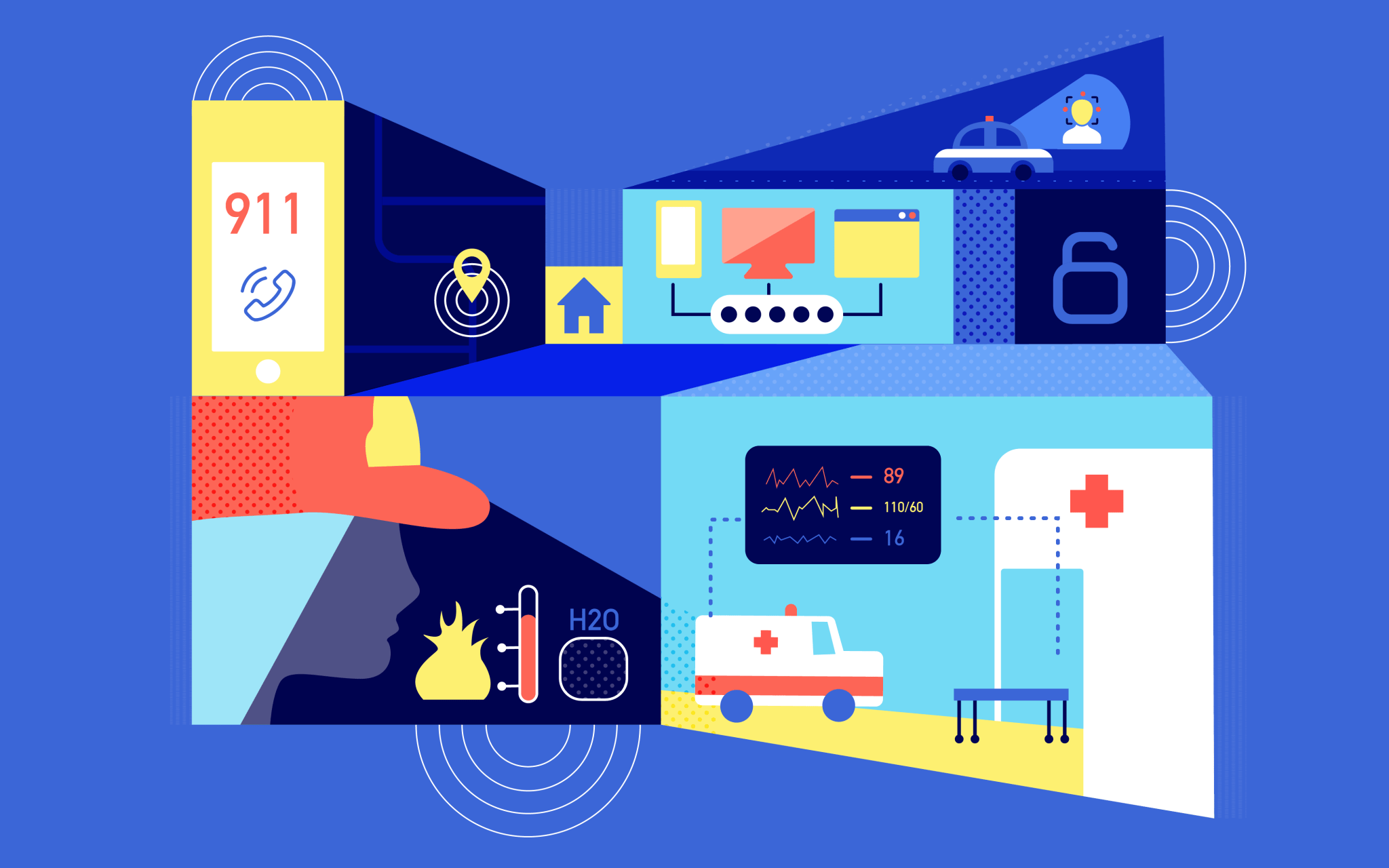
Several technologies that first responders want for their work already exist for consumers in the general public but are not used widely in public safety. Many first responders said that they would like to have a single login for their many applications to reduce the burden on the user having to remember different login and password information for each device or application they use. Another technology pervasive in our lives yet lacking in public safety is GPS mapping and navigation. First responders would rather use their own devices to assist with incident response than the outdated standard-issue computers in their response vehicles. On their personal phones they can access mapping, satellite views, street views and other helpful applications like language translation. First responders think it would be hugely beneficial for services like these to be standard issue, as well as live images or a live video feed of the incident as it unfolds.

Emergency call takers and dispatchers said they would like to have automatic caller location data when people call 911 via a mobile device.

EMS workers would like to have the ability to automatically transmit a patient’s vital information and other details to the hospital so that it is ready to receive the patient right when they come in the door.

Firefighters want to see the development of technologies like automatic vehicle location, which would let dispatchers know which fire engine is closest to the incident, not merely the closest station, allowing for faster response times. Firefighters also want augmented reality displays incorporated into equipment like their helmets, giving them information about things such as the temperature and oxygen levels.

Police officers said that they would benefit from having facial recognition software. They also want technology integrated into their vehicles using a display projected onto their windshield.

No matter the innovation, however, as long as first responders feel it will help them do their jobs better, and it is practical, reliable, easy to use, and works with the technology they already have, they will use it.

PSCR is working to address the communication technology problems and needs of first responders through its research and development efforts. But there is more work to be done.

This journey of understanding first responders better and amplifying their voices has been exciting. When I started, I did not fully understand the job of first responders and their responsibilities, but I am closer to understanding now. I’m excited for what our team will learn next.

ABOUT THE AUTHOR

Shaneé Dawkins is a computer scientist in the Visualization and Usability Group at NIST, where she performs research focusing on human centered design and evaluation as a part of the public safety…
Filed Under: Emergency Communications / Public Service Tagged With: NIST

Can Mobile Networks Connect First Responders in Remote Areas?

February 27, 2020 By Dan KB6NU Leave a Comment

This article was posted on the NIST website yesterday. This is an example of research that the amateur radio community should at least be aware of, if not involved in……Dan


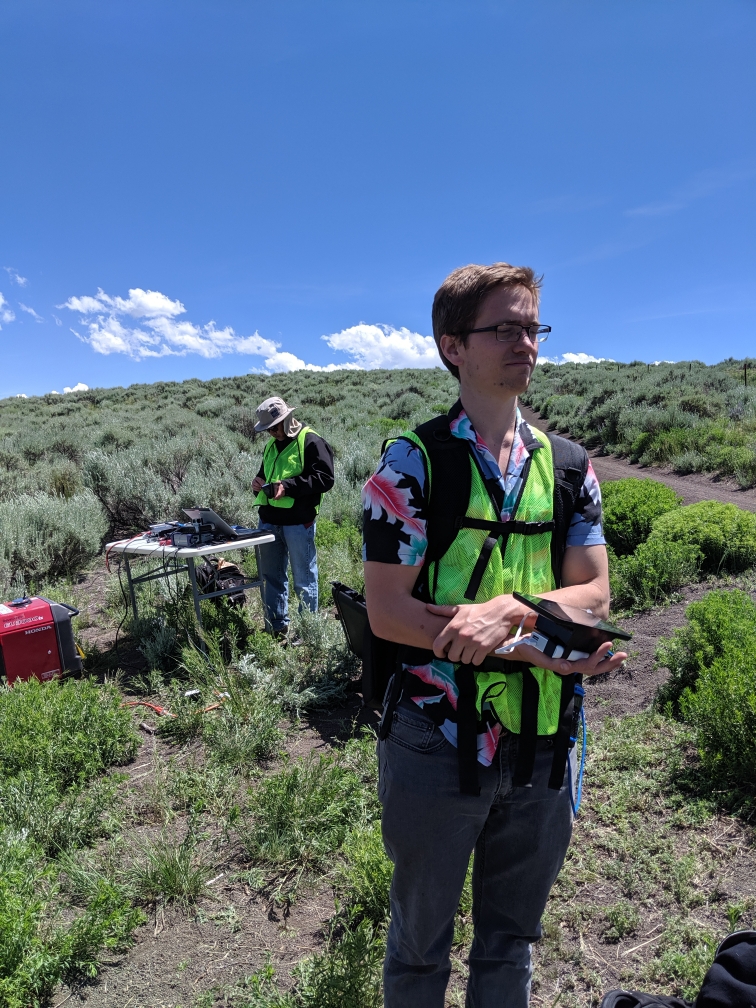
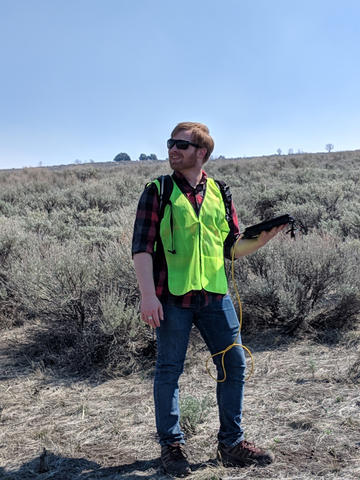
NIST electronics engineer Hien Nguyen sets up test equipment to make cellular signal measurements, while NIST computer science intern Josh Hamel prepares to take a walk to measure signal strength and coverage characteristics. Credit: NIST

The high plateaus of Colorado’s Rocky Mountains, known for panoramic vistas, wildlife, old gold mines and sports of all kinds, are attracting new pioneers: engineers working to improve emergency communications.

First responders face many communications challenges, including a lack of cell towers in uninhabited places and incompatible equipment. Public safety agencies need to find ways to share voice, text, instant messages, video and data reliably while responding to wildland fires and other emergencies.

Researchers with the National Institute of Standards and Technology (NIST), in collaboration with the Department of Homeland Security (DHS) Science and Technology Directorate, are mounting miniature mobile communications networks on pickup trucks and unmanned aerial systems to measure signal strength and coverage in mountain areas lacking wireless infrastructure.

The NIST experiments on federal land near Gypsum, a few hours’ drive west of Denver, showed that mobile networks still leave a lot to be desired. Initial experiments with ground-based systems indicated poor coverage in areas with rough terrain — hills and valleys — but airborne systems provided better coverage.

“Results so far from the test site have confirmed some of our expectations and identified several performance issues that were not evident in the lab,” said electronics engineer Samuel Ray of NIST’s Public Safety Communications Research Division.

“The terrain makes it difficult to provide coverage, especially at the frequencies required for cellular systems,” Ray added. “Responding agencies may also encounter forested areas or urban settings with structures. All of these factors affect coverage, increasing the need for elevating the communications platform.”

NIST researchers study “deployable systems” to help create ad hoc, interoperable networks. Deployable systems are needed not only for rural areas but also for other situations where wireless coverage is compromised or large-scale events cause network congestion. Some deployable systems are available commercially, but NIST is working on generic technologies that could be used by anyone.

NIST engineer Jordan “Chic” O’Dell uses a handheld spectrum analyzer and laptop computer to measure signals broadcast from a truck-mounted cellular network near Gypsum, Colorado. Credit: NIST

The NIST experiments at the Gypsum site use Long Term Evolution (LTE) systems, the latest wireless standards that are widely available for cellphones. The nation’s estimated 5 million public safety personnel have traditionally used walkie-talkies (land mobile radio), but many are supplementing their capabilities with LTE systems, which offer data transmission rates up to 1,000 times higher.

NIST has been measuring deployable systems performance in the Rockies for a year now. The Gypsum site, owned by the U.S. Department of the Interior’s Bureau of Land Management, was chosen in part because it is a large plateau surrounded by relatively flat bushland, a realistic setting for a wildland fire.

NIST’s early experiments used ground-based and truck-mounted antenna masts extending 2-4 meters (7-14 feet) above the ground. The coverage area extended to several hundred feet from the antennas; however, that coverage was very poor, with signals that dropped entirely when crossing hills or trenches, pointing to the need to maintain “line of sight” channels.

More recently, the NIST team used an unmanned aerial system carrying a commercial LTE network system weighing less than 2.3 kilograms (5 pounds). The platform hovered 121 meters (400 feet) above the ground for 15 minutes at a time.

The coverage extended farther than before, with signals extending roughly a half mile from the aerial platform. NIST staff are studying several stability issues and looking for ways to optimize the mobile network platforms for longer flights and more effective antennas, according to Max Maurice, lead engineer for the Gypsum measurement project.

One possible solution is tethered helium balloons with integrated antennas. Such systems are already available and could stay in the air for longer periods of measurement time. But the elevation of the Gypsum site, more than 6,000 feet above sea level where the air becomes thinner, greatly reduces balloon lifting capabilities, Ray said. Balloons would also introduce new requirements for training and operation, and for acquisition, storage and transportation of helium.

“Many vendors are researching better designs for aerial communications networks; the difficulties are around weight and power, or a balance between the two, and there are many physical constraints,” Ray said. “We are continuing to discuss opportunities with industry contacts and to watch for innovative solutions and alternative technologies.

“In 2020, we expect to introduce additional antenna options and resilient network features in field tests and to continue refining the test bed. This is a forward-looking research area with a focus on technologies that are four to five years away from commercial availability, and we expect to continue working at the site a few times per year.”

NIST’s deployable systems research is funded in part by the U.S. DHS Science and Technology Directorate.

Filed Under: Emergency Communications / Public Service Tagged With: NIST

How the National Bureau of Standards helped make “radio”

February 21, 2020 By Dan KB6NU 1 Comment

This was originally published on the National Institute of Science and Technology’s blog, Taking Measure.


NIST’s Role in the Early Decades of Radio (1911-1933)

Even if you weren’t able to watch the recent Super Bowl on TV, you could still listen to the play-by-play commentary on the radio. But radio does more than just broadcasting sporting events or playing music. It plays a major role in emergency response, navigation and science.

The word “radio,” however, didn’t become part of our regular vocabulary until 1911, and it happened thanks in part to J. Howard Dellinger, a radio scientist at the National Bureau of Standards (NBS), the agency that became the National Institute of Standards and Technology (NIST). This came about when the second International Radiotelegraph Conference was being planned in London, and a professor sent Dellinger a paper that he was going to present to the conference for review.

At the time, “wireless” was used as the term for radio communication, especially by the British. However, NIST was charged with revising standards in preparation for the conference, and Dellinger suggested that the professor use “radio,” which was already becoming a popular word in the U.S., instead of “wireless.” The professor agreed, and the word “radio” went on to become the universally accepted term.

Dellinger not only played a role in popularizing the word “radio,” but he also played a role in the first radio work done at NIST. A commercial company asked NIST to calibrate a wavemeter, a device developed by one of its engineers that measures electromagnetic waves like those of radio. Dellinger was known as the wireless expert and took on the project of calibrating the first radio instrument at NIST.

A New Type of Radio Receiver

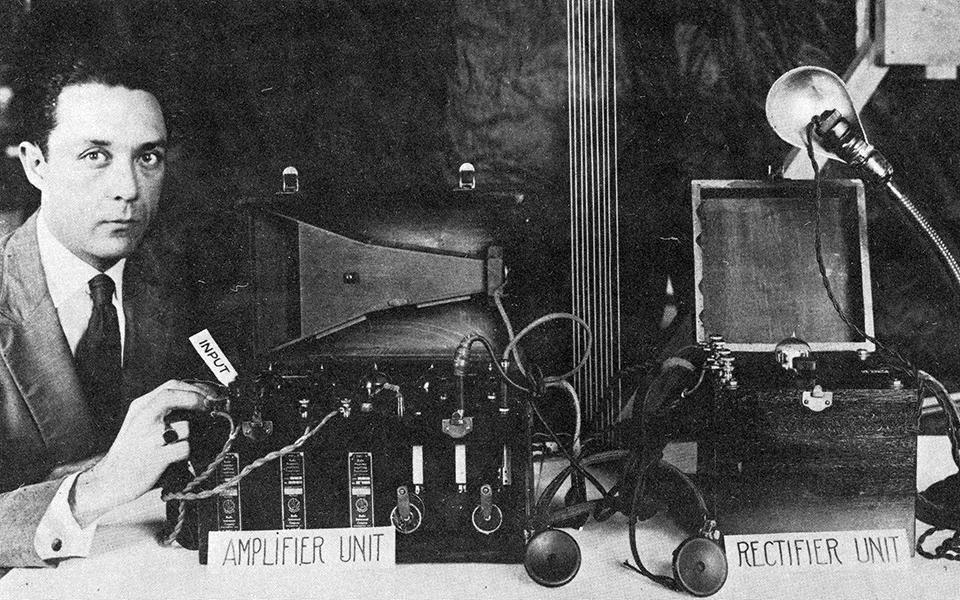
But for radio to become mainstream, it first had to be commercialized, which began with its introduction into households. However, the challenge was building a radio set that used the electrical current, called alternating current (AC), which powered lights, fans and kitchen appliances when plugged into wall sockets. The predecessor to this technology was developed and patented by two researchers, Percival D. Lowell and Francis W. Dunmore, at NBS in 1922. They called their invention the “mousetrap.”

Percival Lowell with his patented radio set powered by alternating current. Credit: NIST

The “mousetrap” was a receiver for a radio amplifier that could run on AC. This was considered a breakthrough because at that time radios were only able to be powered by direct current (DC) provided by batteries. These batteries were bulky and heavy, had to be charged from time to time and were considered dangerous because of the acid used in them. The researchers’ prototype meant the radio could be used in homes without causing damage and with the same performance quality.

Lowell and Dunmore filed two more patents together for other innovations, and for the “mousetrap” they sold the rights to the Dubilier Condenser Corporation. Little did they know that, because there was no uniform policy on patents issued to government employees, their actions would result in more than a decade of litigation over who legally had the rights to the patent.

While they were tied up in court, the Radio Corporation of America (RCA) developed its own model of the AC radio in 1926. Its model later became the first AC-powered radio sold to consumers.

Flying by Radio

During the early years of flight navigation, NIST was doing research to assist pilots while they were flying and landing. Pilots needed three things to get their bearings when flying “blind,” meaning it’s foggy, too dark or too cloudy to see. They needed to know the longitudinal position, altitude and speed of the aircraft, which were all achieved by various beacons installed in the plane. The remaining issue was that there were two frequencies the pilot constantly had to switch between the frequency that the Department of Commerce used to send weather information to planes and ships, which sometimes caused interference for pilots, and the frequency the radio beacon operated on, which gave altitude and other information.

Dunmore created a prototype, but Harry Diamond, a radio engineer who joined NIST in 1927, completed the device, called the radio guidance system. Diamond solved the problem by developing a separate device that allowed for voice communication to the pilot without receiving any outside interference from ships’ radios.

A Curtiss Fledgling, a trainer aircraft developed for the U.S. Navy, was equipped with the device, and flight tests were performed between NIST’s experimental air station at College Park, Maryland, and Newark Airport in New Jersey in foggy weather. After a series of successful tests were performed, the device was turned over to be used by the Department of Commerce in 1933.

Praise From a Famous Inventor

While mostly intended for serious users, some of NIST’s journals and publications were popular with the public. One such book, titled The Principles Underlying Radio Communication, covered topics such as elementary electricity, radio circuits and electromagnetic waves and was also published as a textbook for soldiers in the U.S. Army. The famous inventor Thomas Edison received a copy from NIST and wrote a letter thanking the first director, Samuel W. Stratton, for publishing it, saying it was “the greatest book on this subject that I have ever read.”

As these and other examples show, NIST had a significant influence on radio research between 1911 and 1933. However, NIST’s radio work didn’t end with the first blind landing. NIST would continue to contribute to the field leading up to and during World War II, and research continues to this day in areas such as 5G, public safety communications and spectrum sharing.


ABOUT THE AUTHOR
Alex Boss is a general assignment writer in the NIST Public Affairs Office and covers standard reference materials (SRM). She has a B.S. in biology from Rhodes College and an M.A. in health and…

Filed Under: History Tagged With: NIST

  • Page 1
  • Page 2
  • Go to Next Page »

Primary Sidebar

No Nonsense Technician Class License Study Guide (for tests given between July 2026 and June 2030)

New No Nonsense Technican Class Study Guide now available!

The 2026 version of my Tech Class study guide is now available, and as always, the PDF version is FREE!. The ePub version costs $11.97, and a Kindle version and paperback version will be available on Amazon shortly.

Click here to get all of my "No Nonsense" study guides.

Also available: The CW Geek's Guide to Having Fun with Morse Code

W5SWL.Com
Retevis Ailunce H1 DMR Radio
DXpander: Cobweb antennas, Laser Cutting

You’ve got mail!

Enter your email address below and get an email every time I publish a new post.

Email


I frequently teach classes to help newcomers get their licenses. The next class will take place on Saturday, February 7, 2026 on the University of Michigan campus. Click here for more information.

If you can't make the class, subscribe to the mailing list to be notified of when the next class will be held.

You can always download my free study guide, and if you have any questions about the classes, or amateur radio in general, please feel free to email me directly.

Support KB6NU.Com

Donate $7.30 and get two of these cool stickers. Measuring 4.25-in. W by 2.75-in. H, it's perfect for your car, your shack, or wherever!

Contact me

If you have a question or comment about one of my blog posts, or a question about any of the material in my study guides, or just a question about ham radio in general, you can email me at [email protected].

Blogs You Should Also Read

  • AE5X: A CW-centric blog from Kingswood, Texas
  • K0LWC Blog
  • LA3ZA Ham Radio Blog
  • Little Radios, Big Fun – WB3GCK
  • Mr. Vacuum Tube's Blog
  • Radio Artisan – K3NG
  • The K0NR Weblog
  • VE3WDM's QRP Ham Radio Blog
  • W2LJ’s Blog

Ham Radio Websites

  • Dashtoons – The Hammin' Comedy by Jeff K1NSS

Podcasts

  • ICQ Podcast
  • Linux in the Ham Schack
  • No Nonsense Amateur Radio Podcast
  • Resonant Frequency Amateur Radio Podcast

Recent Comments

  • Dan KB6NU on Finally, a Loop for 10m.
  • Dan KB6NU on 1930s cards for my collection of QSLs from stations whose callsigns spell words
  • Sean on Finally, a Loop for 10m.
  • Bill Waslo on 1930s cards for my collection of QSLs from stations whose callsigns spell words
  • C M Wetzel KD8TNF on The Wesco BN-1

Meta

  • Log in
  • Entries feed
  • Comments feed
  • WordPress.org

Footer

Copyright © 2026 Daniel M. Romanchik, KB6NU · Log in