
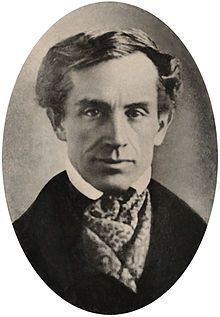
 What self-respecting CW Geek would let this day go unnoticed? Samuel Finley Breese Morse was born on April 27, 1791. Although he is certainly more well-known for inventing telegraphy, he was also a well, known painter. For more information about his life, read:
History
Operating Notes: Kid’s Day, junk, special event stations
Sunday, January 4, 2015 was ARRL Kid’s Day. I know that was like three months ago, but it was such a good experience that I wanted to make note of it.
I got down to the museum about 1:30 pm, and the first station I worked was K3NEM at the National Electronics Museum. He had a bunch of kids ready to go, and I wrangled some at the HOM to talk to them, and we just had a blast. We pointed our beams at one another, and we had a 59+ QSO both ways, and it just worked out great. We were in contact for about two hours.
I had planned on trying to operate digital voice, but that’s OK. Working Kid’s Day was a lot more fun.
The importance of junk
On the way to the museum this morning, I talked to Ed, KD8OQG, on the University of Michigan repeater, W8UM (145.23 MHz). Ed has been working with the RTL SDR dongles. His latest project involves hooking one up to a Raspberry Pi.
We talked about that for a while, but then he mentioned that another project that he was working on was cleaning some of the junk out of his basement so that his son could move down there. He noted that some of the stuff was quite old, but he was excited to discover it anyway. The reason for this is that in the meantime he’s actually learned how to use some of this stuff.
I’ve written in the past about the importance of junk in amateur radio, but this discussion put a whole new spin on it. Not only is it important to have junk that you know about and know how you can use it, but also just random stuff. At some point, as you learn more, you may discover a cool, new use for something in that junk box (closet?).
European special event stations on CW
When I fired up the rig, I found it tuned to 15m phone, right where we left it last week. Since propagation seemed pretty good to Europe, I left it right there and worked a DL and HB before switching to the CW portion of the band.
There, I worked a couple of special event stations:
- DL65DARC. This special event station is commemorating the 65th year of the Deutscher Amateur-Radio Club (DARC), the German version of our ARRL.
- R120RC. Here’s what’s on R120RC’s QRZ.Com page:
On May 7, 1895 a Russian physicist and electrical engineer Alexander Popov presented a device that received signals from the Hertz spark vibrator at a meeting of the Russian Physical and Chemical Society in St. Petersburg.This experiment demonstrated the possibility of transmitting messages over a distance without wires. In Russia and some other countries, May 7 is celebrated as the “Day of Radio”. In connection with the 120th anniversary of this event the SRR (Soyuz Radiolyubitelei Rossii) organizes and conducts the Activity Days “120 Years of Radio.”
I’m always amazed at how much progress we’ve made technologically in the last 100 – 120 years.
Is the term “ham” older than we thought?
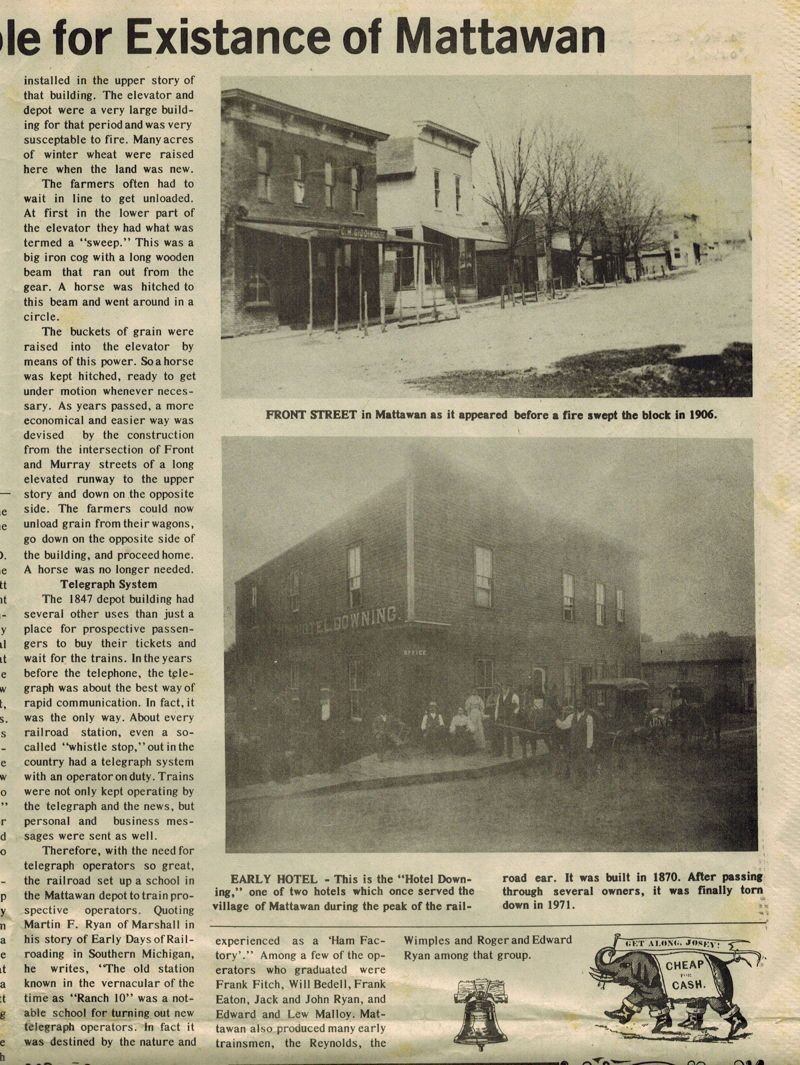
My friend, Jack, WT8N, ran across an article on the history of his hometown, Mattawan, MI, while going through some papers his mother left him. Mattawan, in southwest MI, was established in 1839 as a railroad depot. Shortly after, a telegraph station was set up, and after that, a school for training telegraph operators. In the article, they refer to the school as a “ham factory.”
I think that the story lends credence to the origin of the word “ham operator” as being a poor, or “ham fisted” operator, and it appears that the term is even older than we think.
When I posted this to slowspeedwire, a mailing list for members of the Morse Telegraph Club, J. Chris Hausler noted that the term “ham” was used in a 1901/1902 McClure’s magazine article describing “hog Morse.” Apparently, some operators, often called “hams,” would omit spaces between characters or not allow for enough space between characters when sending messages. For example, the word “home” would become “hog” by leaving out the space between the last two characters.
This being the case, I suppose that it was natural for professional telegraphers, be they landline telegraphers or radiotelegraphers, to call radio hobbyists “hams,” as I’m sure that many of the hobbyists’ fists were not as polished as as the professionals.
UPDATE 10/21/23
The Solder Smoke folks have an image of a page from the December 14, 1895 issue of The Railroad Telegrapher that lends credence to this explanation.
Amateur radio in the news: SkyWarn Recognition, public service, ham radio on the farm
SKYWARN Recognition Day brings amateur radio operators to National Weather Service office. On Saturday the National Weather Service office in La Crosse (WI) recognized amateur radio operators for their contributions to storm tracking as part of the 2014 SKYWARN Recognition Day. The National Weather Service opened its doors to the amateur, or ham, radio operators and their families for a day of connecting with National Weather Service offices across the country.
Putting out the call for the Empty Stocking Fund. When the Gaston Amateur Radio Society put out the call to helpThe Gazette Empty Stocking Fund, members answered, collecting $200 for the campaign that provides Christmas assistance to people in our community who have hit hard times. A few years back, members decided to forgo their annual gift exchange and instead use that money to make Christmas brighter for others. They’ve made that a tradition ever since. But that shouldn’t come as a surprise for anyone since the mission of the Amateur Radio Society is to keep all of us safe.
More clubs should do this….Dan
The early days of amateur radio on the farm. Amateur radio provided a vital link for Canadian cattlemen out in the middle of nowhere in the 1940s.
Amateur radio in the news: community service, radio prepares for war, end is near for Radio Shack
Floyd County hams talk about their work in the community. A meeting sponsored by the Foundation for Amateur International Radio Services (FAIRS), the Floyd Amateur Radio Society (FARS), and Triad on August 26 was an opportunity to spotlight the work of local ham radio operators.
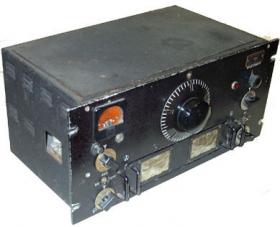
Radio prepares for war, Part 1. As the roaring twenties came to a close, radio technology would continue to evolve with significant improvements to consumer sets, particularly in the area of shortwave reception. The price of radios would continue to fall as availability continued to increase. Herbert Hoover could have added “a radio in every home” to his famous “a chicken in every pot and a car in every garage” campaign slogan. This radio boom would continue right up until December of 1941, when the first bombs were dropped on Pearl Harbor. After that, new radios would be a scarcity as almost all production and materials were diverted to the war effort.
For RadioShack, the end is near. Gentlemen and gentlewomen of a certain age harbor fond memories of trips to RadioShack. In days of yore, ham radios and homemade guitar amplifiers would emerge from the mysterious jumble of wires and audio components hawked by this unpretentious electronic retailer. Among younger generations with a much different view, the business enjoys a nickname: “S–t Shack.” Definition as per the Urban Dictionary: “derisive term describing the quality of products, the prices, and the people that go there.” Whatever one’s view of this American institution with about 27,000 employees, it is near death. On Thursday, RadioShack warned that it may file for Chapter 11 bankruptcy.
Interesting stuff about printed circuit boards
Karl, W4KRL, posted this to the AMRAD mailing list….Dan

Printed circuit board technology was invented by Paul Eisler (right), an Austrian refugee to England in 1936. Its first significant use was in anti-aircraft proximity fuses by the US Army. Eisler made little money from his invention. His autobiography is My Life With the Printed Circuit.
He set up a company called TechoGraph, in England, to promote the printed-circuit board. Their online history, notes:
But for both Eisler and Technograph, getting the printed circuit off the ground was to take some time. Not only had development work to be undertaken, but the electronics industry had to be persuaded to drop point-to-point wiring in favour of an interconnection medium that, although inherently more consistent and more reliable, was, at least initially, considerably more expensive. Not an easy task.
Prior to the PCB almost all construction was point-to-point except for a few high-end and military products that used turret boards. Some people still use turret boards, and you can still roll your own.
Two Vintage Photos
This morning, I found two links to vintage amateur radio photos in my inbox this morning. The first one if from Wystan Stevens’ Flickr photostream. Stevens is a local historian here in Ann Arbor, MI.
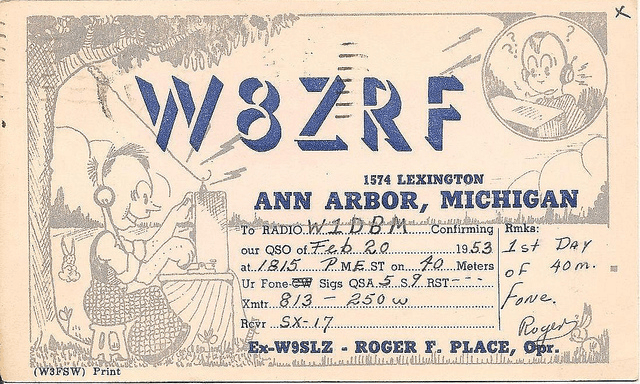
W8ZRF is still alive and kicking and an active member of our local amateur radio club, ARROW.
The second one comes by way of the Glowbugs Google Group:

It comes from an article titled, “The Weirdest Photo Research of 2012.” The caption reads, “Sam Harris, of Medfield, MA, trims his beard with electronic scissors controlled by moon bounce signals. Bettmann/Corbis” Glowbug members quickly identified the ham in the photo as Sam Harris, W1FZJ, who is famous for the first 1296 MHz moonbounce contact.
Not only that, they identified the receiver as the Lafayette HE-10 (fully assembled) or KT-200 (kit). Says, Bob, W9RAN, “Really a nice receiver with and RF stage and transformer isolated power supply – definitely a cut or two above the S-38 that the dial was borrowed from. I like receivers like this for casual listening, as you can just spin the dial and always find something interesting to listen to. It certainly would have been usable by Novices and on AM, although tuning SSB on receivers like this or my Hallicrafters SX-110 kept the operator busy, tuning to compensate for drift and controlling the audio with the RF gain, but this soon became second nature.”
First wireless phone?
I wonder if this phone was running iOS, Android, or Windows?
From my Twitter stream – 5/27/12

10 Ways to Destroy an Arduino : Application Note ANCP01 http://t.co/Of1XM8g4 Good to know. o_O
 G7IGB
G7IGB
Great vintage RSGB video – How to become a radio amateur http://t.co/NKydLm4I via@youtube #hamr #hamradio #rsgb

??????????? ??????????? ???: ??????????? ??????????? ??? ??????!! ?????… http://t.co/wdpY1omR#YoutubeHam3 #Hamrjp
Nuts. I lost the Japaneses characters in the last item above. Apparently, it is two friends talking about amateur radio in Japan. I don’t understand Japanese at all, but you can tell that they are having a lot of fun doing this video.
Brochure tells story of Marconi’s Cape Code station
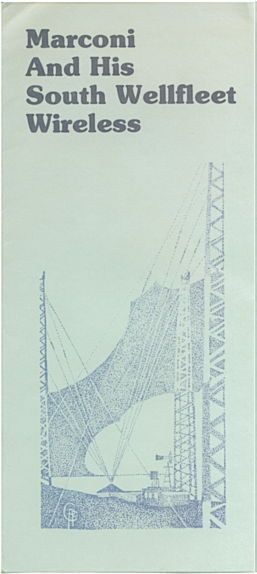 Last spring, I reported on my trip to Cape Cod. Well, about a week ago, while going through some things that had been donated to WA2HOM, I found a brochure produced by the National Park Service that described the South Wellfleet station.
I had scanned the whole brochure and made a PDF file from the scans, but then I found a color version of the brochure on the National Park Service website. It looks much nicer than the scan I made.