
• Skip to primary navigation
  • Skip to main content
  • Skip to primary sidebar
  • Skip to footer

KB6NU's Ham Radio Blog

KB6NU's Ham Radio Blog
  • HOME
  • Study Guides
  • Teach a One-Day Tech Class
  • W8SRC Repeater Guide
  • Advertise
  • Hire Me

White paper describes active antennas

March 21, 2016 By Dan KB6NU 2 Comments

For some receiving applications, active antennas may be a good choice. You can even buy them on Amazon (Sony AN-LP1, MFJ-1020C). Many shortwave listeners use active antennas they can use them over a wide frequency range and are very small.
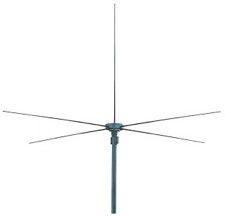
The R&S HE016 Active Antenna System is a combination of the Active Rod Antenna R&S®HE010 and two crossed HF dipole antennas. The two horizontal dipole antennas are combined via a 90° coupler to produce an omnidirectional radiation pattern.

To learn more about active antennas, you can download a new Rohde&Schwarz application note, “Active Antennas for Radiomonitoring.” This application note:

  •  Describes how active antennas work.
  • Explains their characteristic parameters, including:
    • impedance
    • antenna factor
    • antenna noise
    • sensitivity
    • gain
    • non-linear distortion
    • dynamic range
  • Gives examples of how to use them.

The final section, for example, describes how to use them for HF reception. It discusses how the ionosphere affects signal polarization, how to select an appropriate antenna, and the effects of installation height.

The antennas described by this app note are really a step (or two) above the kinds of active antennas that most SWLs and hams use, and the app note includes more than you’ll probably want to know about them. But, it will give you something to think about if you’re tempted to plunk down $100 or more for that Sony or MFJ antenna.

Related posts:

  1. 2016 Extra Class Study Guide: E9H – Receiving antennas
  2. 2016 Extra Class Study Guide: E9C – Wire and phased-array antennas
  3. 2020 Extra Class study guide: E9H – Receiving Antennas: radio direction finding antennas; Beverage antennas; specialized receiving antennas; long-wire receiving antennas
  4. 2020 Extra Class study guide: E7G – Active filters and op-amps: active audio filters; characteristics; basic circuit design; operational amplifiers

Filed Under: Antennas

Reader Interactions

Comments

  1. Marz says

    May 7, 2020 at 3:08 am

    Dear Dan
    Hello, I have a question about Antenna Factor, if we choose the antenna with Low AF, we will have what advantage.
    Hope to hear from you.
    thanks

    Reply
    • Dan KB6NU says

      May 7, 2020 at 7:09 pm

      Hi Marz,
      I’m certainly no expert, but it seems to me that you want an antenna with a high antenna factor, as long as having a high AF doesn’t make it too noisy.

      Reply

Leave a Reply Cancel reply

Your email address will not be published. Required fields are marked *

This site uses Akismet to reduce spam. Learn how your comment data is processed.

Primary Sidebar

No Nonsense Technician Class License Study Guide (for tests given between July 2026 and June 2030)

New No Nonsense Technican Class Study Guide now available!

The 2026 version of my Tech Class study guide is now available, and as always, the PDF version is FREE!. The ePub version costs $11.97, and a Kindle version and paperback version will be available on Amazon shortly.

Click here to get all of my "No Nonsense" study guides.

Also available: The CW Geek's Guide to Having Fun with Morse Code

W5SWL.Com
Retevis Ailunce H1 DMR Radio
DXpander: Cobweb antennas, Laser Cutting

You’ve got mail!

Enter your email address below and get an email every time I publish a new post.

Email


I frequently teach classes to help newcomers get their licenses. The next class will take place on Saturday, October 10, 2026 on the University of Michigan campus. Click here for more information.

If you can't make the class, subscribe to the mailing list to be notified of when the next class will be held.

You can always download my free study guide, and if you have any questions about the classes, or amateur radio in general, please feel free to email me directly.

Support KB6NU.Com

Donate $7.30 and get two of these cool stickers. Measuring 4.25-in. W by 2.75-in. H, it's perfect for your car, your shack, or wherever!

Contact me

If you have a question or comment about one of my blog posts, or a question about any of the material in my study guides, or just a question about ham radio in general, you can email me at [email protected].

Blogs You Should Also Read

  • AE5X: A CW-centric blog from Kingswood, Texas
  • K0LWC Blog
  • LA3ZA Ham Radio Blog
  • Little Radios, Big Fun – WB3GCK
  • Mr. Vacuum Tube's Blog
  • Radio Artisan – K3NG
  • The K0NR Weblog
  • VE3WDM's QRP Ham Radio Blog
  • W2LJ’s Blog

Ham Radio Websites

  • Dashtoons – The Hammin' Comedy by Jeff K1NSS

Podcasts

  • ICQ Podcast
  • Linux in the Ham Schack
  • No Nonsense Amateur Radio Podcast
  • Resonant Frequency Amateur Radio Podcast

Recent Comments

  • Walter Underwood on One lump or two (or three)?
  • Mike, KL7MJ on Question pools should make teaching classes easier
  • Karl Heinz - K5KHK on Question pools should make teaching classes easier
  • CD on Do these radios make ham radio better?
  • Wallace Barron KR4IAA on EchoLink or D-Star?

Meta

  • Log in
  • Entries feed
  • Comments feed
  • WordPress.org

Footer

Copyright © 2026 Daniel M. Romanchik, KB6NU · Log in