• Skip to primary navigation
  • Skip to main content
  • Skip to primary sidebar
  • Skip to footer

KB6NU's Ham Radio Blog

KB6NU's Ham Radio Blog
  • HOME
  • Study Guides
  • Teach a One-Day Tech Class
  • W8SRC Repeater Guide
  • Advertise
  • Hire Me

NASA

ICQPodcast Episode 481: Home Brewing & Kit Building

April 19, 2026 By Dan KB6NU 1 Comment

ICQ Podcast logo.In this episode, I join Martin Butler M1MRB, Caryn Eve Murray KD2GUT, Edmund Spicer M0MNG and Colin Butler M6BOY to discuss the latest amateur/ham radio news, including:

  • ITU Corporation Purchases HyGain and Cushcraft lines from MFJ. My personal opinion is that this is a great thing for ham radio.
  • New Regulations for Hams in Norway. Norway introduces a new entry-level license, or as it is called in the legal text, “limited license”.
  • Students are ‘Over The Moon’. NASA has gotten several universities—and their amateur radio clubs—involved in tracking the Artemis mission.
  • Station’s Experiments Explore Use of 4m and 8m Bands. Despite these experiments, don’t get your hopes up for a 4-meter band any time soon. There are still six analog, Channel 4 stations that are on the air.
  • Arrest for Interference with Emergency Radio Channels
  • Britain Seeks Views Before it Drops the Hammer on Signal Jammers

Colin, M6BOY also reports on the following:

  • 2026 ARRL Field Day Merch Now Shipping
  • VOA Museum Announces Expanded Hours During Hamvention. If you’re going to Dayton, try to carve out some time for this fabulous museum.
  • Your TP-Link Router is Under Attack from Russian State Hackers

The episode’s feature is Home brewing / Kit building.
Filed Under: ICQ Podcast Tagged With: Artemis, MFJ, NASA, Norway

Amateur radio in the news: Halifax ARC Field Day featured on community TV, teaching a new generation, NASA interns

August 8, 2023 By Dan KB6NU Leave a Comment

Halifax ARC Field Day featured on community TV


Teaching a new generation: Amateur radio group holds summer class

The Paducah Amateur Radio Association is working toward getting the younger generation interested in ham radio operation with its new summer class.

The ham radio class has met since July 8 and will last through July 29, with lessons from 2-5 p.m. every Saturday.

There are a total of 10 participants in the class, including students aged 5-14 and their parents. The class is covering basic knowledge of ham radio, etiquette on the radio, and basic knowledge of electronics.

…read more


Meet the NASA Interns Advancing Space Communications & Navigation

This news article features an intern who is also a radio amateur. At the end of the piece, there is information on how you or someone you know can apply for this program….Dan

This summer, NASA’s Space Communications and Navigation (SCaN) Internship Project (SIP) is hosting several students across the agency at NASA Headquarters in Washington; NASA’s Goddard Space Flight Center in Greenbelt, Maryland; and NASA’s Glenn Research Center in Cleveland. SCaN oversees the operations and advancement of NASA’s two primary communications networks – the Near Space Network and the Deep Space Network – which enables spacecraft to send data to and from Earth. SCaN’s interns contribute to the development of network enhancing technologies.

Over a ten-week session, high school, undergraduate, and graduate students work with mentors to complete a summer project that furthers the agency’s capabilities while also gaining professional development experience. Interns leverage backgrounds in engineering, computer science, mathematics, marketing, writing, project management, and more to contribute to NASA’s mission and vision in a meaningful way. Three of NASA SCaN’s 80 interns are highlighted below. These students join NASA with diverse backgrounds and work on different projects – demonstrating the breadth of opportunities available through NASA internships.

…read more

Filed Under: Amateur Radio in the News, Kids Tagged With: Field Day, Halifax, NASA, Nova Scotia

NASA features ARISS in 2021 recap

January 6, 2022 By Dan KB6NU 1 Comment

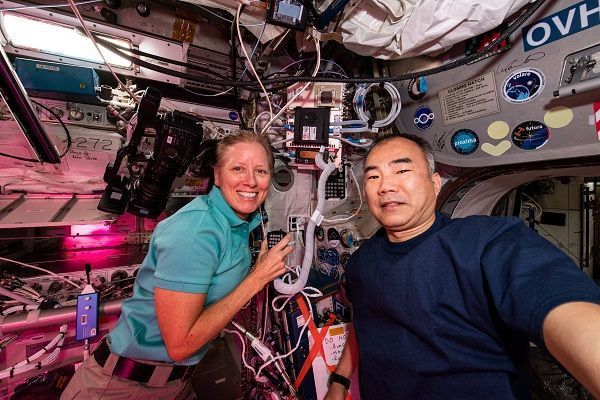
Amateur Radio on the International Space Station (ARISS) is featured on NASA’s recently published web page, Best Space Station Science Pictures of 2021. The first photo (see below) shows NASA astronaut Shannon Walker and JAXA (Japan Aerospace Exploration Agency) astronaut Soichi Noguchi pose for a photo during an Amateur Radio on International Space Station (ARISS) ham radio session with students at Hisagi Junior High School, Zushi, Japan.

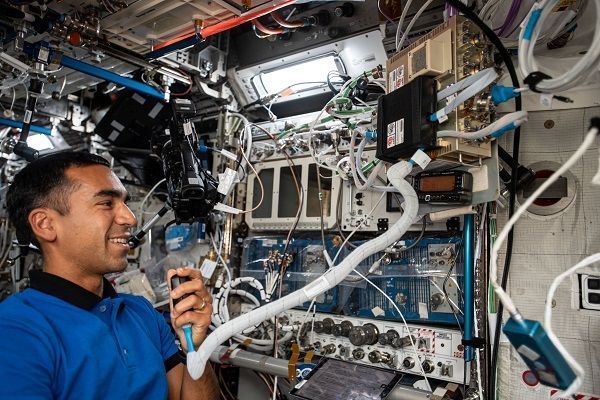
The second photo shows NASA astronaut Raja Chari as he spoke with students from Colegio Pumahue in Chile.

These photos are also part of the YouTubevideo made from the images. The ARISS photos appear at the 1:58 mark.

Filed Under: Kids Tagged With: ARISS, NASA

Amateur radio in the news: 104-year-old ham helped put men on the moon

July 20, 2019 By Dan KB6NU Leave a Comment

He putters around Columbia, Tenn., working on steamer trains (and amateur radio), but few neighbors know that centenarian J. Cary Nettles helped save the U.S. space program in the 1960s…..Read more


Volunteers provide much needed help during disasters and more. Santa Cruz County has a very active Community Emergency Response Team, or CERT, presence as well as a team of ham radio operators who are the unsung heroes during a disaster.

“Good morning, Cucamonga! This is Santa Cruz E.O.C.!”

Each week ham radio operators check the California Office of Emergency Services and network with other ham operators throughout the state. They play a pivotal role in emergencies and natural disasters through groups like the Amateur Radio Emergency Service (ARES) and The Amateur Radio Relay League (ARRL).

STARKVILLE, Miss. (WCBI)- Local amateur radio operators came together today to talk about the importance of ham radios and connect with the community.

The Magnolia and Lowndes County Amateur Radio Clubs joined forces for a radio day in Starkville.

The event lets amateur operators connect with the community and test out their gear.

Filed Under: Amateur Radio in the News Tagged With: CA, MS, NASA, TN

Say “HI” to Juno

October 1, 2013 By Dan KB6NU Leave a Comment

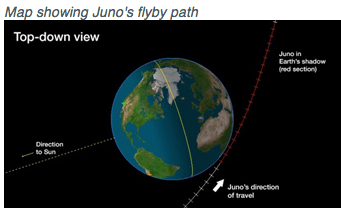
On October 9, 2013, the spacecraft Juno will fly by Earth to get a gravity assist and put it on a course for Jupiter. To celebrate this event, NASA is inviting amateur radio operators around the world to say “HI” to Juno in a coordinated Morse Code message. Juno’s radio and plasma wave experiment, called Waves, should be able to detect the message if enough people participate.

Say HI to Juno

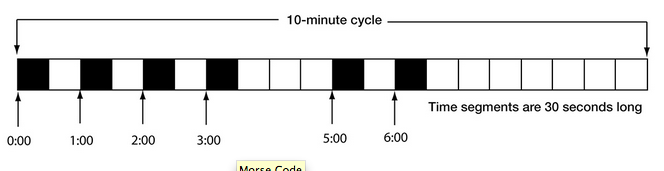
NASA is asking us to send the letters “HI” in verrrrry slow Morse Code on 26 different frequencies in the 10m band. I say verrrrry slow because each dit is 30 seconds long.

The event is to start at 1800 UTC on October 9 and last until 2040 UTC. The “HI” message is to be repeated every 10 minutes, beginning at 18:00, 18:10, 18:20, etc. as shown in the figure below.

Say HI to Juno

The Say HI to Juno Web page has much more information on this event. The page include a table of frequencies on which to transmit and information on how to get a QSL card. There is also a Facebook page.

I think that this is a very cool event, and I hope that if you have the capability of transmitting on 10m that you’ll participate. Let’s all say HI to Juno!

Filed Under: Satellites, Special Events Tagged With: NASA

Primary Sidebar

No Nonsense Technician Class License Study Guide (for tests given between July 2026 and June 2030)

New No Nonsense Technican Class Study Guide now available!

The 2026 version of my Tech Class study guide is now available, and as always, the PDF version is FREE!. The ePub version costs $9.97, and a Kindle version and paperback version will be available on Amazon shortly.

Click here to get all of my "No Nonsense" study guides.

Also available: The CW Geek's Guide to Having Fun with Morse Code

W5SWL.Com
Retevis Ailunce H1 DMR Radio
DXpander: Cobweb antennas, Laser Cutting

You’ve got mail!

Enter your email address below and get an email every time I publish a new post.

Email


I frequently teach classes to help newcomers get their licenses. The next class will take place on Saturday, February 7, 2026 on the University of Michigan campus. Click here for more information.

If you can't make the class, subscribe to the mailing list to be notified of when the next class will be held.

You can always download my free study guide, and if you have any questions about the classes, or amateur radio in general, please feel free to email me directly.

Support KB6NU.Com

Donate $7.30 and get two of these cool stickers. Measuring 4.25-in. W by 2.75-in. H, it's perfect for your car, your shack, or wherever!

Contact me

If you have a question or comment about one of my blog posts, or a question about any of the material in my study guides, or just a question about ham radio in general, you can email me at [email protected].

Blogs You Should Also Read

  • AE5X: A CW-centric blog from Kingswood, Texas
  • K0LWC Blog
  • LA3ZA Ham Radio Blog
  • Little Radios, Big Fun – WB3GCK
  • Mr. Vacuum Tube's Blog
  • Radio Artisan – K3NG
  • The K0NR Weblog
  • VE3WDM's QRP Ham Radio Blog
  • W2LJ’s Blog

Ham Radio Websites

  • Dashtoons – The Hammin' Comedy by Jeff K1NSS

Podcasts

  • ICQ Podcast
  • Linux in the Ham Schack
  • No Nonsense Amateur Radio Podcast
  • Resonant Frequency Amateur Radio Podcast

Recent Comments

  • Richard A. Golden on Guest Post: ARRL needs new blood
  • Skip K4EAK on Button, button. Who’s got the button?
  • Ed K8MEJ on Is anyone running for the board this year in the Great Lakes Division?
  • Skip Behnke on 2020 Extra Class study guide: E9F – Transmission lines: characteristics of open and shorted feed lines; coax versus open-wire; velocity factor; electrical length; coaxial cable dielectrics
  • Mike on Map your contest QSOs

Meta

  • Log in
  • Entries feed
  • Comments feed
  • WordPress.org

Footer

Copyright © 2026 Daniel M. Romanchik, KB6NU · Log in