
Here are some tips from Keysight on how to prevent ESD from damaging your electronics:
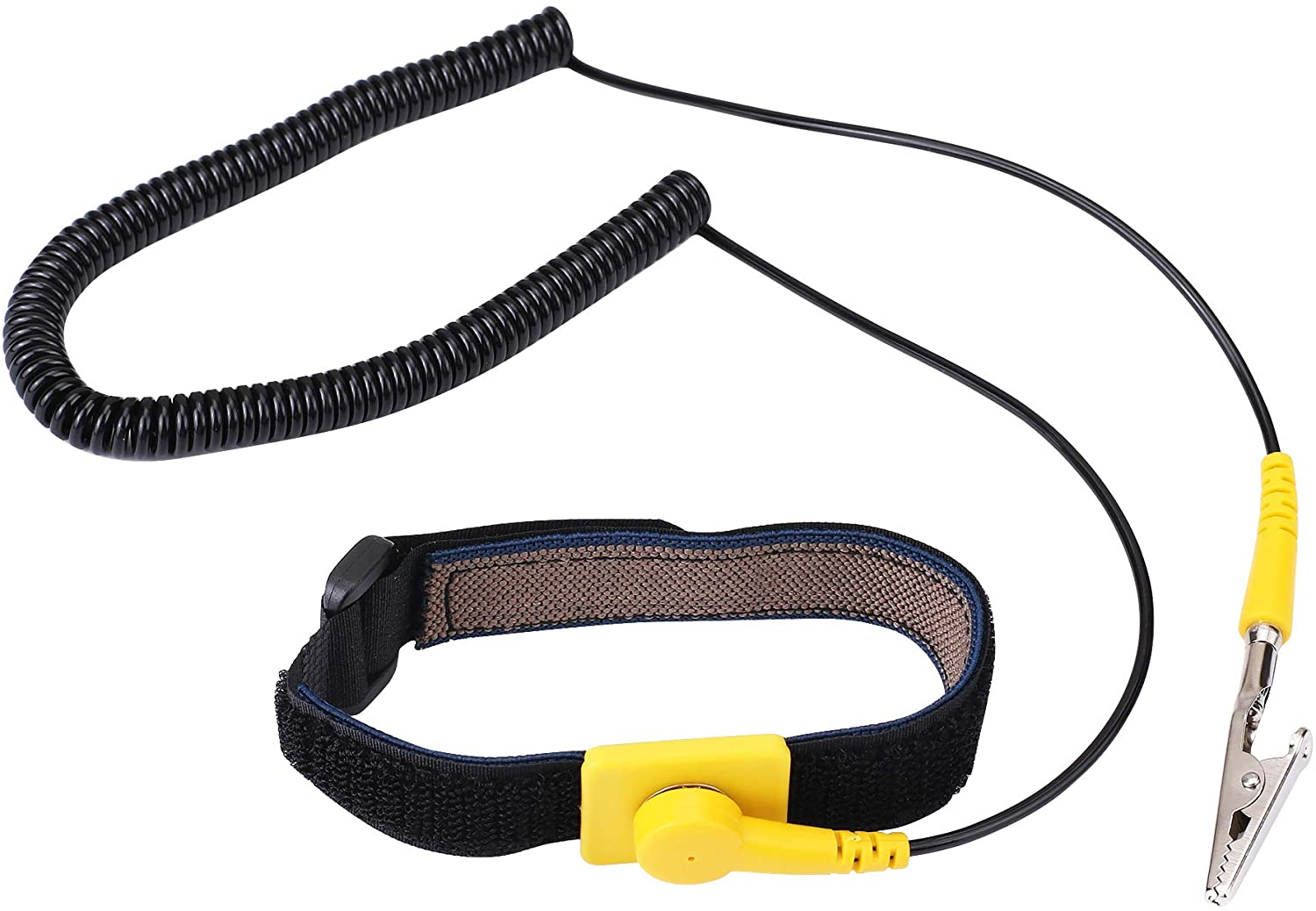
 USE A GROUNDED WRIST STRAP whenever you are handling equipment or boards. Using a grounded wrist strap prevents your body from building up charge and causing damage when this built-up charge discharges into your equipment or test boards. Make sure to connect that alligator clip to ground!
- USE GROUNDED WORK SURFACES OR MATS for your boards. Do NOT use static generating or insulating materials as a work surface. Non-grounded mats and static generating/insulated materials can inductively charge boards, especially exposed ones. When connecting a charged board to equipment, the board can cause damage by discharging into the equipment’s inputs.
- KEEP CHARGED MATERIALS AT LEAST 0.3 METERS FROM EXPOSED ASSEMBLIES. This includes plastics, foam, or other materials that can build up charge. Having a charged material near an exposed assembly can inductively charge the assembly. The assembly can then discharge into the equipment’s inputs.
- DISCHARGE YOUR CABLES BEFORE CONNECTING THEM TO YOUR EQUIPMENT. Cable discharge process:
- Ensure your device is off.
- Connect your cable to your device.
- Attach a 50 Ω shunt to the open end of the cable.
- Remove the shunt and immediately attach your device to your equipment. This prevents the center conductor of your cable from discharging stored charge into your equipment. A charged assembly can charge connected cables.
- USE BOARD STANDOFFS AS NEEDED. In some situations, you need board standoffs to provide extra insulation for your exposed assemblies. This prevents your grounded mats from making unwanted connections on your board.
- NEVER USE “PINK” PACKING MATERIAL FOR BOARD TRANSPORT OR AS A WORK SURFACE. While many people think pink packing material is ESD safe, in most cases it easily builds up unwanted charge. Unless continuous, thorough testing is done, treat pink packing materials as charged.
- CAP UNUSED EQUIPMENT INPUTS to avoid accidental ESD and physical damage. Damage often occurs by accidentally contacting equipment inputs. Capping unused inputs protects them from incidental ESD damage.
- USE ESD-SAFE BAGS WHEN TRANSPORTING BOARDS. This protects boards from ESD damage while moving between ESD-safe locations.
- DO NOT OVERDRIVE EQUIPMENT INPUTS. Start your testing at the least sensitive input setting and zoom in on your signal. Additionally, observe the maximum input levels for your specific equipment. The least sensitive setting is the most resilient, so starting there ensures that your inputs are at safe operating levels
I like to think that I follow ESD-safe procedures, but there are a couple of things here that I hadn’t thought about before. For example, I’d never really thought about discharging test equipment cables before connecting them. I think that’s a good tip
To learn more, go to https://www.keysight.com/find/PreventESD
They forget about grounded heel straps (test them with a floor tester every time you put them on) and a protective lab coat. The floor needs to be somewhat conductive (not metal – that’s a safety hazard for large currents – same goes for conductive workbench tops), so conductive wax on tiles, or conductive carpet (has metal threads in it).
Keeping staticky materials like Styrofoam cups away from your work is tantamount. A Styrofoam cup can generate thousands of volts.
Keep the humidity up in the work area. That helps to keep static generation down, as well.
Motorola Semiconductor used to have a ‘scare’ movie they liked to show, showing semiconductor junctions that had been weakened or blown with small amounts of static. The weakened ones are the real nasties, since the circuit will continue to work, kind of, until it fails catastrophically at some later time.
50 Ohm shunt. Is that like a dummy loady?