• Skip to primary navigation
  • Skip to main content
  • Skip to primary sidebar
  • Skip to footer

KB6NU's Ham Radio Blog

KB6NU's Ham Radio Blog
  • HOME
  • Study Guides
  • Teach a One-Day Tech Class
  • W8SRC Repeater Guide
  • Advertise
  • Hire Me

NPOTA

Do we need to go cold turkey with NPOTA?

January 2, 2017 By Dan KB6NU 5 Comments

On his fine blog, QRP…Doing More with Less, Larry, W2LJ, laments that now that 2016 is over, he has to go cold turkey.  He is, of course, referring to the extremely popular National Parks on the Air (NPOTA) operating event.

NPOTA was an extremely popular event. Thousands of amateurs both activated and chased our national parks. According to the ARRL, more than 1 million contacts were made.

My question is why do we have to go cold turkey? There are several state parks on the air programs that are already in operation or will begin operation shortly. There is, of course, also Summits on the Air (SOTA).

I’m very surprised that no one has picked up the NPOTA program and run with it. I do understand that the way that the ARRL has structured the program it’s a lot of work, but with some simplifications, it could be workable. SOTA is, after all, a worldwide thing, and they seem to be able to keep things working with a volunteer staff.

Am I missing something? Has someone already picked up the NPOTA ball and is running with it? If there are folks out there working on it and need someone with WordPress/PHP skills, I might be able to help out.
Filed Under: Operating Tagged With: NPOTA, W2LJ

Operating Notes: A special (event) July 4th weekend

July 4, 2016 By Dan KB6NU Leave a Comment

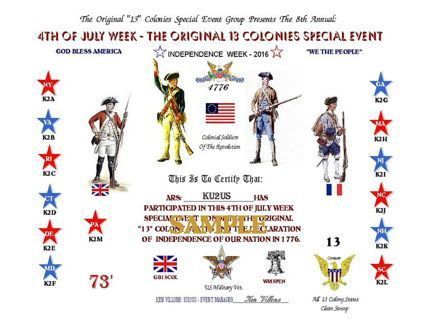
2016SThis weekend was a special (event) weekend here at KB6NU. It all started out by working K2I (NJ) and K2A (NY) Friday evening as part of the 13 Colonies Special Event. I had participated in this event before, but never worked very hard at it, and as a result, always failed to work all 13 colonies.
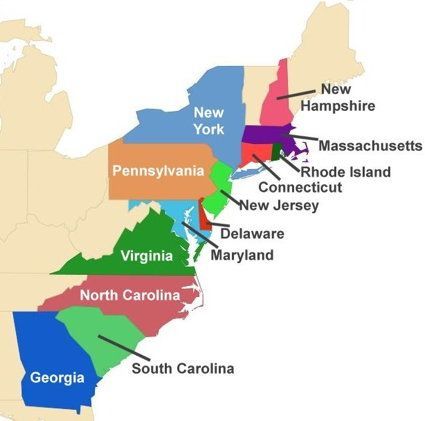
This year was different, though. This year, I was determined to work all of them, and by Saturday afternoon, using a combination of phone and CW contacts, I had.

I kept going, though. I had already worked several of the stations on both phone and CW, so I figured that if I kept at it, I probably could work all of them on both phone and CW. When I called it quits on Saturday evening, I needed only seven contacts—four on phone and three on CW—to complete the dual clean sweep.

I picked up a couple more Sunday morning, then went to visit my in-laws. When I returned later in the evening, I settled in to finish off the clean sweeps. An hour and a half later, at 0318Z, I worked K2D (CT) on 75m phone, completing the job.

Overall, I’d guess that I spent about six hours accomplishing this task, and it was great fun. Thanks to all the operators that worked the K2* stations.

Here are a few observations:

  • The event has become very popular. Some of the stations generated huge pileups, especially when they first came on the air. Generally, I joined the pileups, but if I failed to make contact after a couple of calls, I tuned around for other stations that I needed, then came back after a half hour or so. That strategy worked a couple of times—when I returned, the pileup was a lot smaller and it was easier to get through. Sometimes, though, there was still a huge pileup.
  • Some of the K2* operators were really good. Some weren’t. This isn’t a big complaint, but the phone operators should be advised to call by call areas when there is a big pileup. Several of the guys did this when they were innundated with stations calling, and it made a lot easier for them and for the guys trying to make contact with them.
  • None of the CW stations that I contacted worked split, even when there was a big pileup. I know that split operation might not be a skill that many ops are familiar with, but many W1AW/p operators, including me, used it and it really is the way to go to efficiently work CW pileups.
  • I discovered a new DXSummit.fi feature that really helped me. I don’t know why I didn’t know about this until just now, but you can search the spots on DXSummit by callsign. This was especially useful as I was getting down to the last few K2* stations. I guess that you can also include mode in the search, but I didn’t take the time to figure out how to do that.

thirteen_colonies

But, wait! There’s more!

Saturday afternoon, while searching for the 13 Colonies stations, I ran across three other special event stations, including two NPOTA stations:

  • K4RC operating from TR23, Washington-Rochambeau Revolutionary Route National Historic Trail.
  • W3GKN, operating from the Gettysburg National Military Park.
  • W1G, also operating from Gettysburg. This appears to be a labor of love by Bob, WO4L, and an attractive certificate that includes the text of Lincoln’s Gettysburg Address is available. Bob will be operating until July 10, so there’s still plenty of time to work W1G.

Special events are just that. Thanks to all the operators who made my weekend special.

Filed Under: Operating, Special Events Tagged With: 13 Colonies, NPOTA

Dayton 2016: Design advances make portable operation easier, more fun

May 30, 2016 By Dan KB6NU 2 Comments

dayton-2016At this year’s Dayton Hamvention, the interest in portable operation was everywhere. One of the talks at the QRP-ARCI’s Four Days in May seminar, for example, was titled, “2016: Year of the Portable Operator,” and there were many vendors selling gear for portable operators.
Portable operation is not only becoming more popular, but more sophisticated as well. In fact, it’s a virtuous circle. More sophisticated portable equipment is making portable operation easier and more fun, which is spurring manufacturers to make more sophisticated equipment, which is making portable operation even more popular, and around we go.

This is perhaps most easily seen in the evolution of the Elecraft products. One of their first rigs was the K1, a small rig that was frequently toted out into the field, even though it wasn’t really designed for that purpose. It had a small form factor, but had a conventional front panel layout.

The next evolution was the KX1. This CW-only radio was designed specifically for field work. It originally only covered 40m and 80m, and had a very limited front panel, but its built-in battery pack and KXPD1 paddle made it a great choice for portable operators when it was introduced in 2004.

A big leap forward was made when they introduced the KX3 in 2012. This radio combined a bunch of features never before found in a portable rig. The KX3 features an SDR architecture and covers all modes, including (SSB, CW, Data, FM, AM); used the same full-sized LCD display as the K3; has advanced DSP features; and can be connected to a computer via USB for firmware upgrades and for use with other ham radio software. The KX3 is so full-featured that many operators use it as their main rig with a suitable linear amplifier.

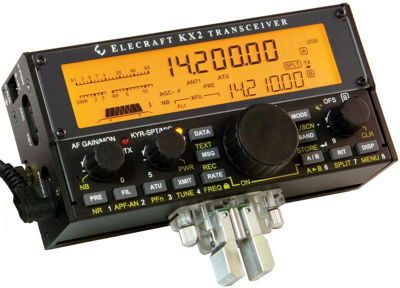
At Dayton 2016, Elecraft took this concept even further and introduced the KX2. It’s about half the size of the KX3, but yet has almost all of the features of the KX3. There was a tremendous amount of buzz over this radio at Dayton among portable operation aficionados. The base price of the KX2 is $750, and with options, will cost you about $1,000.

Of course, Elecraft isn’t the only company making gear for portable ops. LNR Precision sells a radio called the LD-5, and at Dayton, they introduced the LD-11, which like the KX3 and KX2 features an SDR architecture and covers 160m – 6m. This radio goes for about $800, and has also proven to be popular among portable operators.

The KX2 is Elecraft's latest rig for portable operators.
The KX2 is Elecraft’s latest rig for portable operators.

Dayton also had a number of exhibitors that supplied products other than radios to aid portable operation. There were several portable antenna manufacturers, including Buddipole and PackTenna, and BiEnno Power was also there, showing off their new lithium-iron batteries,

sotaWhile radios like the KX2 and LD-11, at relatively low prices, allow operators to easily get out into the field, portable operation would not be as popular as it is without organized activities. Programs like the Summits on the Air (SOTA) and the National Parks on the Air (NPOTA) make portable operation even more fun. These programs do this by providing a structure in which operators can find one another and gain awards for operating. I didn’t see a SOTA booth at Dayton, but NPOTA was a big part of the ARRL section there.
If you aren’t already a portable operator, you should give it a try! You don’t have to invest a bunch of money in a rig to just try it. KX1s have been had for less than $400, and simpler QRP rigs cost a lot less. Getting outside and operating in the fresh air is a lot of fun and could give you a whole new perspective on amateur radio.

Filed Under: Mobile/Portable Tagged With: BioEnno, Buddipole, Elecraft, LNR Precision, NPOTA, PackTenna, SOTA

Amateur radio in the news: club celebrates 50 years, university club reaches out, NPOTA

April 28, 2016 By Dan KB6NU Leave a Comment

Anderson radio club celebrates 50th anniversary. Anderson County Emergency Services Deputy Director Matthew Littleton is an amateur radio operator and so is his son. And his father, James Littleton, is president of the Anderson Radio Club. Speaking at the club’s 50th anniversary celebration on Saturday, Matthew Littleton said the emergence of cellphones and the Internet have not diminished the importance of amateur radio. “In the last couple of years I’ve seen a resurgence in amateur radio because we are beginning to realize how vulnerable things are, how vulnerable systems are,” he said.

Amateur Radio Society revamps, uses radio in unconventional ways. The word radio is often associated with music and talk show chatter, but the Amateur Radio Society is exploring the lesser known side of radio — its role in facilitating communication and winning wars. The club uses radio communications to facilitate an interest for students who would like to explore the hobby of the wavelengths of possibilities that come with amateur radio.

Taking parks to the air, with the help of some hams. What do you pack when you visit a national park? A map, a water bottle and snacks, and a tube of sunscreen? Maybe some camping gear, or a kayak and a paddle? When Sean Kutzko packs for his national park trips, he brings a seven-pound backpack with a battery, a transmitter, and a 30-foot piece of wire. Using this modest equipment, he can communicate with people around the country and sometimes even other parts of the world.

Filed Under: Clubs, Special Events Tagged With: NPOTA

Amateur radio videos: NPOTA, reuse an LCD display

February 2, 2016 By Dan KB6NU 1 Comment


Mike Wendland, of the “PCMike” tech segment on NBC-TV and the roadtreking.com website and podcast, sets up a radio station on the North Country Scenic Trail in Michigan’s Upper Peninsula as part of the ARRL and National Park Service “National Parks on the Air” event.


Having a second monitor for your PC is really helpful sometimes. In this video the author turns the LCD Screen of a broken laptop into a nice looking second monitor for your PC, gaming console or Raspberry Pi.

Filed Under: Gear/Gadgets, Microcontrollers, Operating Tagged With: LCD, NPOTA

Amateur radio in the news: class a huge success, NPOTA, tower woes

January 26, 2016 By Dan KB6NU 2 Comments

Steve and Anita Vibbert and class study for their testing for their Technician license.Amateur radio class a huge success. This year’s Amateur Radio Technician class was a huge success. This class started out with nine inquiring applicants and settled with a group of  five very interested and focused individuals.

Aksarben ARC coming to Homestead. In coordination with the National Park Service Centennial, members of the Aksarben Amateur Radio Club will be communicating around the nation, and possibly outside of the United States, at Homestead National Monument of America on Saturday, Jan. 23, 2016 from 9 a.m. to 4:30 p.m. They will be based out of the Education Center. This is part of the National Parks on the Air program sponsored by the American Radio Relay League. Radio operators throughout the nation will be communicating with each other and spreading information about national parks through 2016 and to show people the capabilities of amateur radio and how it can benefit the general public. “The Centennial of the National Park Service is here and during this year there will be opportunities to engage in unique activities,” Superintendent Mark Engler said in a press release. “We are very excited for the ham radio operators from the area to use the park all year long to participate in this program.”

Ham radio operator asked to take down tower. A federally licensed amateur radio operator said he plans to sue the city for harassment in regards to a radio tower he was forced to remove. Adams Street resident Karl Reed said the city violated his First Amendment rights and failed to give him due process when it threatened to fine his landlord $2,500 a day if the tower was not removed.


Filed Under: Antennas, Classes/Testing/Licensing, Operating, Special Events Tagged With: NPOTA, towers

Primary Sidebar

No Nonsense Technician Class License Study Guide (for tests given between July 2026 and June 2030)

New No Nonsense Technican Class Study Guide now available!

The 2026 version of my Tech Class study guide is now available, and as always, the PDF version is FREE!. The ePub version costs $11.97, and a Kindle version and paperback version will be available on Amazon shortly.

Click here to get all of my "No Nonsense" study guides.

Also available: The CW Geek's Guide to Having Fun with Morse Code

W5SWL.Com
Retevis Ailunce H1 DMR Radio
DXpander: Cobweb antennas, Laser Cutting

You’ve got mail!

Enter your email address below and get an email every time I publish a new post.

Email


I frequently teach classes to help newcomers get their licenses. The next class will take place on Saturday, February 7, 2026 on the University of Michigan campus. Click here for more information.

If you can't make the class, subscribe to the mailing list to be notified of when the next class will be held.

You can always download my free study guide, and if you have any questions about the classes, or amateur radio in general, please feel free to email me directly.

Support KB6NU.Com

Donate $7.30 and get two of these cool stickers. Measuring 4.25-in. W by 2.75-in. H, it's perfect for your car, your shack, or wherever!

Contact me

If you have a question or comment about one of my blog posts, or a question about any of the material in my study guides, or just a question about ham radio in general, you can email me at [email protected].

Blogs You Should Also Read

  • AE5X: A CW-centric blog from Kingswood, Texas
  • K0LWC Blog
  • LA3ZA Ham Radio Blog
  • Little Radios, Big Fun – WB3GCK
  • Mr. Vacuum Tube's Blog
  • Radio Artisan – K3NG
  • The K0NR Weblog
  • VE3WDM's QRP Ham Radio Blog
  • W2LJ’s Blog

Ham Radio Websites

  • Dashtoons – The Hammin' Comedy by Jeff K1NSS

Podcasts

  • ICQ Podcast
  • Linux in the Ham Schack
  • No Nonsense Amateur Radio Podcast
  • Resonant Frequency Amateur Radio Podcast

Recent Comments

  • Dan KB6NU on Finally, a Loop for 10m.
  • Dan KB6NU on 1930s cards for my collection of QSLs from stations whose callsigns spell words
  • Sean on Finally, a Loop for 10m.
  • Bill Waslo on 1930s cards for my collection of QSLs from stations whose callsigns spell words
  • C M Wetzel KD8TNF on The Wesco BN-1

Meta

  • Log in
  • Entries feed
  • Comments feed
  • WordPress.org

Footer

Copyright © 2026 Daniel M. Romanchik, KB6NU · Log in