• Skip to primary navigation
  • Skip to main content
  • Skip to primary sidebar
  • Skip to footer

KB6NU's Ham Radio Blog

KB6NU's Ham Radio Blog
  • HOME
  • Study Guides
  • Teach a One-Day Tech Class
  • W8SRC Repeater Guide
  • Advertise
  • Hire Me

VLF

HamSCI 2023: Some first impressions

March 20, 2023 By Dan KB6NU Leave a Comment

I’m on my way home from the HamSCI 2023 Conference, and while waiting in the airport, I thought I’d record some first impressions. As the date approached, I was feeling kind of reluctant about going. In fact, I almost didn’t go. In the end, though, I’m glad I did.

Impressions:

  1. Scranton seems to be typical of a lot of East Coast and Midwest cities that enjoyed an industrial past, but are not as vibrant today as they once were. It’s in a beautiful spot, and the people are very nice, and I’d say that things will get better in the future.
  2. Scranton is called The Electric City. This is partly due to their steel works’ early adoption electrical power and because they opened they opened what was was recognized as the first street car system in the country to run exclusively on electric power in 1886.
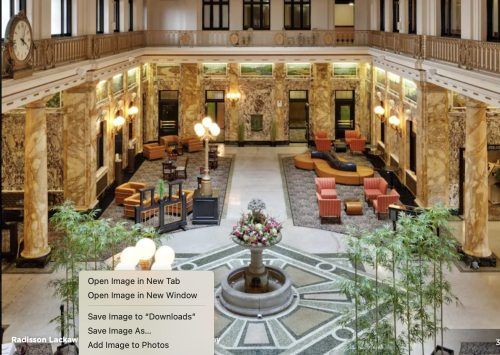
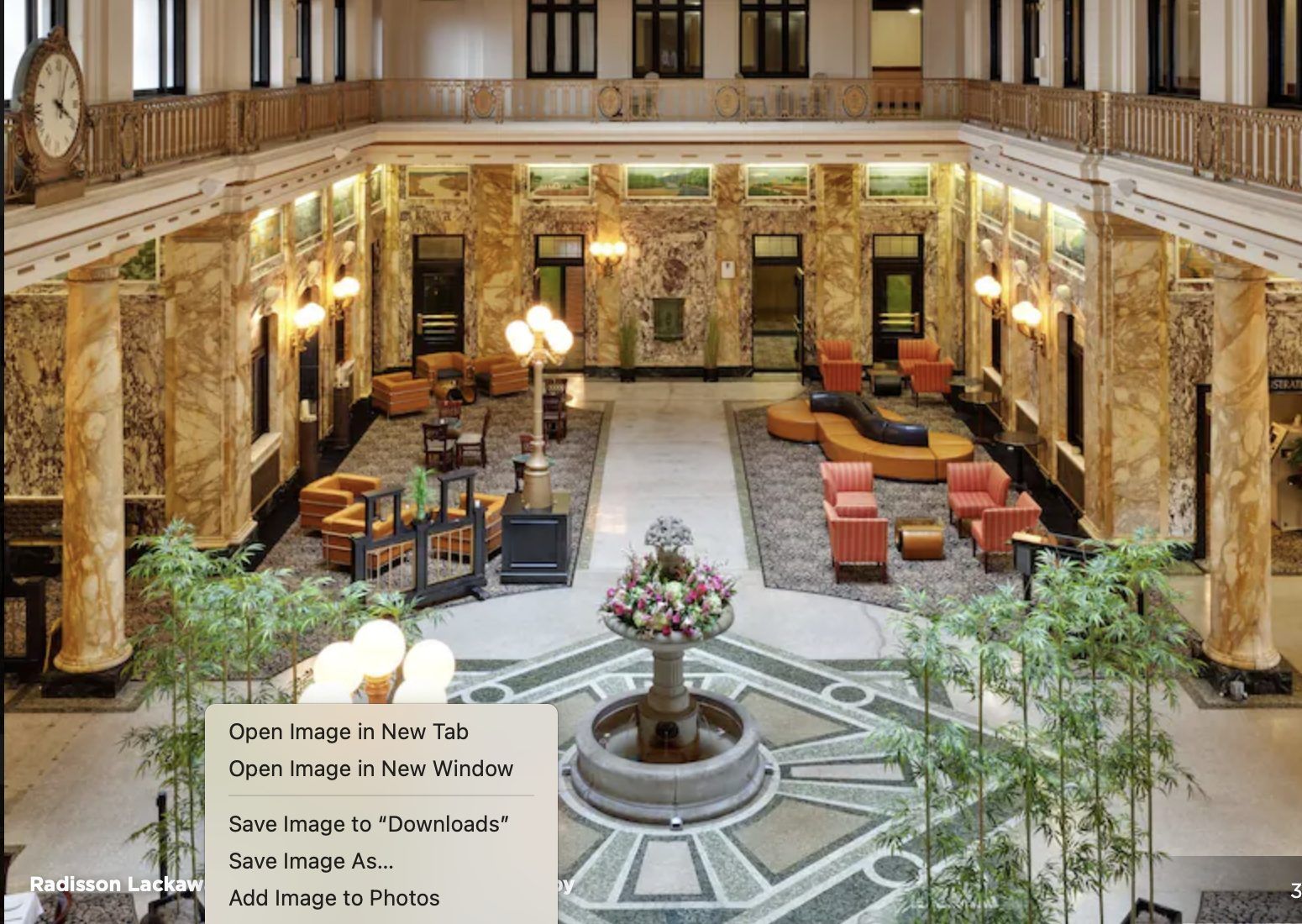
  3. I stayed at the Radisson Lackawanna, which is a very cool hotel (see right). It used to be a train station for the Delaware, Lackawanna and Western Railroad that ran from Hoboken, NJ to Buffalo, NY. From its construction, you can see how prosperous Scranton was at its peak. One of the unique features of this station/hotel are the 36 ceramic portrayals of scenes along the  railroad line. The first depicts the Hoboken ferry. The 36th depicts a resort near Buffalo.
  4. This was a small, but mighty conference. There were lots of presentations because they used the academic format, which gives presenters only 20 minutes instead of the hour that’s usually given to presenters at ham radio conferences.
  5. The focus was on ionospheric research, but there were topics of more general interest as well. For example, because the Doppler shift is of interest when describing the behavior of the ionosphere, there’s also an interest in accurately measuring signal frequencies.
  6. There were lots of students, as you may expect. The median age was, therefore, much lower than at many ham gatherings.
  7. The attendees were more diverse, too. There were many women and people of color present.
As a result of attending this conference, I’ve added a couple of things to my list of projects I’d like to do at some point. The first is connecting a GPS disciplined oscillator (GPSDO) to my IC-7610 in order to make my frequency measurements more accurate.The second is to play around with VLF reception and listen to some of the naturally-occuring phenomena that produce  RF signals, such as “whistlers.”

Filed Under: Antennas, Propagation Tagged With: HamSci, ionosphere, PA, Scranton, VLF

Use VLF to detect lightning

July 2, 2014 By Dan KB6NU Leave a Comment

Yesterday, my friend Ed, KD8OQG tweeeted:

vielmetti's avatarEdward Vielmetti @vielmetti
a lightning detector, picking up lightning signals on VLF (!) blitzortung.org/Documents/TOA_… @kb6nu @hoopycat #hamr

Ed is a bit of a severe weather geek, and is often Tweeting when severe weather rolls through the Ann Arbor area. So, it’s only natural that he would be interested in the Blitzortung project. The Blitzortung website describes the project this way:

Blitzortung.org is a lightning detection network for the location of electromagnetic discharges in the atmosphere (lightning discharges) based on the time of arrival (TOA) and time of group arrival (TOGA) method. It consists of several lightning receivers and one central processing server. The stations transmit their data in short time intervals over the Internet to our server. Every data sentence contains the precise time of arrival of the received lightning discharge impulse (“sferic”) and the exact geographic position of the receiver. With this information from all stations the exact positions of the discharges are computed. The aim of the project is to establish a low budget lightning location network with a high number of stations. The price for the hardware used is less than 200 Euro. The sferic positions are free accessible in raw format to all stations that transmit their data to our server. The station owner can use the raw data for all non-commercial purposes. The lightning activity of the last two hours is additionally displayed on several public maps recomputed every minute.

Blitzortung.org is a community of station operators who transmit their data to the central server, programmers who develop and/or implement algorithms for the location or visualization of sferic positions, and people who assist anyway to keep the system running. There is no restriction on membership. All people who keep the network in operation are volunteers. There is no fee and no contract. If a station stops pooling its data, the server stops providing the access to the archive of sferics positions for the user of that station. A detailed description about how to participate to the network and how to setup an own receiver can be found in the following document.

The website doesn’t say how much a setup costs, but does says, “If you are interested to setup an own station then you can get the latest printed circuit boards and the programmed micro controller from us. If you are not from Germany, Austria, or Switzerland you can even get a complete controller kit, a complete amplifier kit, ferrite rod antennas, and a GPS module for cost price, if desired.”

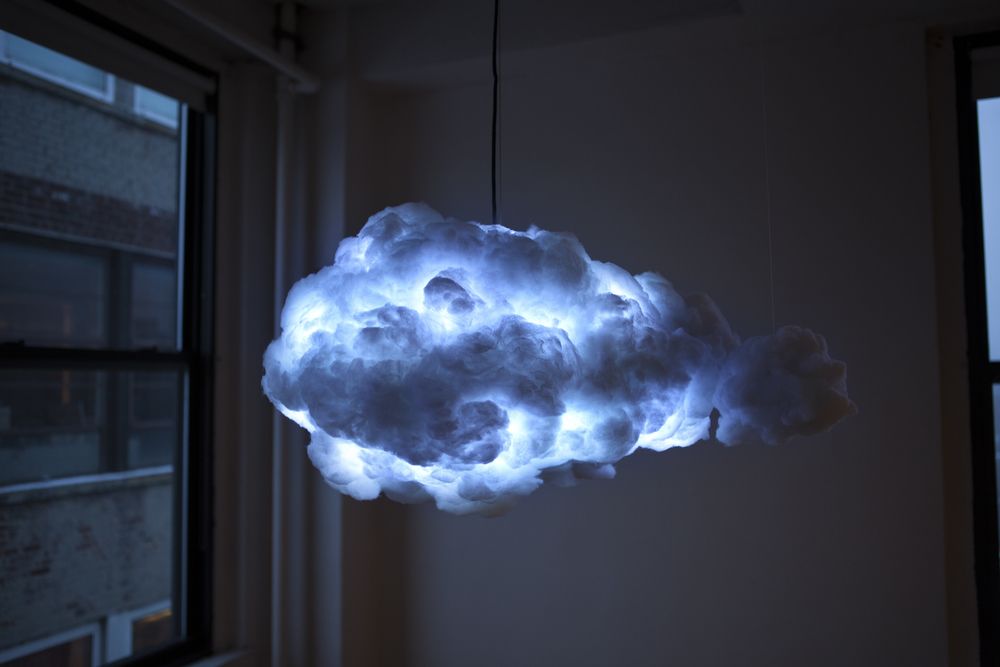
The Cloud is an interactive lamp and speaker system, designed to mimic a thundercloud in both appearance and entertainment. Using motion sensors the cloud detects a user's presence and creates a unique lightning and thunder show dictated by their movement.
The Cloud is an interactive lamp and speaker system, designed to mimic a thundercloud in both appearance and entertainment. Using motion sensors the cloud detects a user’s presence and creates a unique lightning and thunder show dictated by their movement.

Ryan Burns, one of Ed’s followers and head of A2 Geeks, suggested that he get a Cloud and hook it to the detector. According to the Cloud’s website, “The Cloud is an interactive lamp and speaker system, designed to mimic a thundercloud in both appearance and entertainment. Using motion sensors the cloud detects a user’s presence and creates a unique lightning and thunder show dictated by their movement.” We would, of course, have to get a version without the motion sensors so that we could interface our lightning detector.

I volunteered that we could mount the detector’s antenna to the tower at the Hands-On Museum. Ironically, I think that we’d have to use a lightning arrestor on the feedline should we actually mount it outside.

Filed Under: Building/Homebrew, Kits Tagged With: lightning, VLF

Primary Sidebar

No Nonsense Technician Class License Study Guide (for tests given between July 2026 and June 2030)

New No Nonsense Technican Class Study Guide now available!

The 2026 version of my Tech Class study guide is now available, and as always, the PDF version is FREE!. The ePub version costs $11.97, and a Kindle version and paperback version will be available on Amazon shortly.

Click here to get all of my "No Nonsense" study guides.

Also available: The CW Geek's Guide to Having Fun with Morse Code

W5SWL.Com
Retevis Ailunce H1 DMR Radio
DXpander: Cobweb antennas, Laser Cutting

You’ve got mail!

Enter your email address below and get an email every time I publish a new post.

Email


I frequently teach classes to help newcomers get their licenses. The next class will take place on Saturday, October 10, 2026 on the University of Michigan campus. Click here for more information.

If you can't make the class, subscribe to the mailing list to be notified of when the next class will be held.

You can always download my free study guide, and if you have any questions about the classes, or amateur radio in general, please feel free to email me directly.

Support KB6NU.Com

Donate $7.30 and get two of these cool stickers. Measuring 4.25-in. W by 2.75-in. H, it's perfect for your car, your shack, or wherever!

Contact me

If you have a question or comment about one of my blog posts, or a question about any of the material in my study guides, or just a question about ham radio in general, you can email me at [email protected].

Blogs You Should Also Read

  • AE5X: A CW-centric blog from Kingswood, Texas
  • K0LWC Blog
  • LA3ZA Ham Radio Blog
  • Little Radios, Big Fun – WB3GCK
  • Mr. Vacuum Tube's Blog
  • Radio Artisan – K3NG
  • The K0NR Weblog
  • VE3WDM's QRP Ham Radio Blog
  • W2LJ’s Blog

Ham Radio Websites

  • Dashtoons – The Hammin' Comedy by Jeff K1NSS

Podcasts

  • ICQ Podcast
  • Linux in the Ham Schack
  • No Nonsense Amateur Radio Podcast
  • Resonant Frequency Amateur Radio Podcast

Recent Comments

  • mike on Instant Character Recognition is the key to CW speed
  • Matt W1CDN on A completely different picture of Wayne Green, W2NSD (SK)
  • Chana Walsh on Rethinking ham radio education
  • Rob WfourZNG on Videos: What’s next for POTA, ham radio helps rescue man trapped in cave
  • Dan KB6NU on The EMF Explorer: A badge for ham radio?

Meta

  • Log in
  • Entries feed
  • Comments feed
  • WordPress.org

Footer

Copyright © 2026 Daniel M. Romanchik, KB6NU · Log in