In the past two weeks, I’ve taught two one-day Tech classes. The first was at the University of Michigan on Saturday, October 5, 2024. We chose that date because it was the first Saturday this fall when there wasn’t a U-M home football game.
Football games are a big deal around here as you might expect. The university has the largest American football stadium in the world, and won the national championship last year (but this year they aren’t doing quite so well).
My classes are always a mix of university students and the general public. for this class, there were 15 students and 5 folks that signed up via my website. When all was said and done, 16 passed the test (with one passing the General test as well). Of the four that failed, at least two did not prepare at all before the class. James, AE8JF, who headed up the VE team, said, “A couple people that I talked to that failed said that they hadn’t prepared.” *sighs*
Jawning in Philadelphia
This past weekend, I taught a one-day Tech class at JawnCon at Arcadia University in the suburbs of Philadelphia. This is only the second year for JawnCon, and they only sold 250 tickets, so I wasn’t expecting a big class. That being the case, I was pleasantly surprised to find 10 or so in the classroom when it was time to get started.
One of the unique things about teaching at JawnCon was the real chalkboard. Photo: Nicole, AD2IM.
Like all the classes I’ve taught at cons, people wander in and out. I’m OK with that, although it does hurt one’s chances of passing the test. Seven folks stuck with me the whole way, and all seven passed the test.
One of the problems with these con classes is getting information to prospective students. While some students are able to pass the test if they come in cold, they really increase their chances of passing the test if they read through the study guide before the class. Often, some of the people that show up for the class haven’t downloaded the study guide (it’s free!).
Case in point: A young guy showed up just before lunch and sat down close to the front. I chatted with him a bit and asked if he’d gotten the study guide. When a perplexed look crossed his face, I gave him the URL. He downloaded it right away. Despite sitting through the rest of the class, he failed by two questions. I gotta think that if he’d been in the class from the start, or had gotten the study guide before the class, he would have passed.
Of course, I couldn’t have done either of these classes without a VE team. Thanks to all the ARROW VEs that showed up on October 5 and to Nicole, AD2IM and Ed, N2XDD for organizing the team for JawnCon.
A nice mention by ARDC
In their last grantee roundup, ARDC gave us a nice shoutout. They wrote:
Photo: Ed, N2XDD.
Ham Radio Village (K0HRV): Amateur Radio Evangelist
The Ham Radio Village (K0HRV) distributes quality educational content, offers hand-on amateur radio experiences, and hosts license testing sessions. Last year, K0HRV received an ARDC grant for the Amateur Radio Evangelist project, aimed at attending conferences to introduce attendees to amateur radio as a lifelong hobby. Recently, the evangelists made their first stop at Hackers On Planet Earth (HOPE XV), where Dan Romanchik (KB6NU) gave a well-received talk titled Ham Radio for Hackers, where he discussed amateur radio basics, showcased amateur radio projects interesting to hackers, and provided information on getting an amateur radio license. The next day, Dan gave a one-day Technician class to an engaged audience who readily asked questions, followed by a testing session, where 25 hackers got their Technician ticket! To learn more about Amateur Radio Evangelist at HOPE XV, check out Dan’s blog post, as well as a related blog post from Hackaday.
Onward and upward
Even thought the grant was supposed to cover only four conferences, the Ham Radio Village treasurer thinks we can squeeze in a fifth. So, I’ll be headed to Provo, UT for SaintCon in a week and a half, and after that, possibly B-Sides Delaware in early November. That’s a lot of teaching in just over a month, but I really love doing it. In fact, I’m planning to submit another grant proposal for next year and ask for enough funds for six of these events.
I’m not a real fan of Las Vegas, but DEF CON is held in Las Vegas, so if I wanted to teach a one-day Tech class there, I just had to go. It was a fun, but tiring trip.
Getting there
I kinda made my travel arrangements last minute because the Ham Radio Village (HRV) folks weren’t sure that they were going to be able to secure a room for the class. That being the case, the only flight I was able to get was a late afternoon (4:50 pm) flight from Detroit. Same with the return. Instead of an early morning flight, I had to opt for the 1:15 pm flight, meaning that I wouldn’t get back to Detroit until after 8:00 pm. I managed to keep myself busy—there’s always something to do—but Wednesday and Sunday were mostly wasted.
I flew on Spirit. Enough said, I guess. It was packed. It was cheap, though, and the flight was direct to and from Detroit.
The flight out was fine. We even arrived about a half hour early. The return flight, however, was a real mess. We pushed back from the gate about 15 minutes late, but then, we sat on the tarmac for another hour and 45 minutes. I never did get a good explanation for what was happening. We arrived in Detroit an hour and a half late.
What a circus!
I stayed at Circus Circus because that’s what came up on booking.com as being close to the convention center. It was definitely close, but I really should have looked around some more. Circus Circus was built in the early 1960s, and it’s really showing its age. My room was clean enough, but the furniture was kind of banged up, there were spots where the wallpaper was peeling from the walls, and the air conditioner was very loud. Ugh.
There are many hotels around the convention center, and I think that if I shopped around more, I could have found a place with better rooms and a lower price. I took notes, and when I go back next year, I’ll be looking into those places as well.
Que rico!
Like everything in Las Vegas, the food is expensive. I lucked out, though, and found a place that was affordable, close to the Las Vegas Convention Center and my hotel, and delicious: Tacos El Gordo on Las Vegas Blvd.
The food at Tacos El Gordo are worth the wait.
The tacos at Tacos El Gorda are the real deal. They advertise that the tacos are made Tijuna style, and you’d be hard pressed to find better tacos there. They’re made with handmade corn tortillas and homemade guacamole and salsas that are made from scratch daily.
When you enter Tacos El Gorda, you get into one of six lines, depending on the type of taco you want. On my first visit, I opted for the pork (adobada) tacos. In some places, they call this type of of taco a taco al pastor. The meat is sliced from a rotating spit, much like gyros is made, directly onto a tortilla. It really was excellent and only cost $4.12 per taco.
My second visit I decided to get a little more adventurous. I got into the line featuring organ meats, and after waiting in line for about a half hour, I ordered one taco de suadero (beef brisket—not so adventurous), one taco de cabeza (beef head—a little more adventurous), and one taco de buche (pork stomach—really adventurous). I liked the suadero and cabeza, but the buche not so much.
I’’m not really a gambler, but…
I’m not really a gambler, and in 2022 and 2023, I didn’t gamble a single cent. Many years ago, though, I bought some blackjack books and learned some basic strategy. So, this year, when I found a couple of blackjack machines in the Circus Circus casino that would accept $1 bets, I decided to give it a go.
Friday night, I fed a $20 bill into the machine and started playing. This machine was a little complicated in that it had a lot of side bets that you could make, such as whether you were dealt a pair or dealt 19+. I lost three of these sucker bets at a buck a pop before I figured that out.
Once I got that straight, I started playing plain old blackjack using the basic strategy. Using this strategy, your odds about 50-50, and that’s about how it played out. I pretty much broke even over the next half hour. Right at the end, I had a bit of a lucky streak, and when my total hit $20.80, I cashed out.
I say “cashed out,” but what the machine does is print out a ticket that you then have to take to a cashier to actually get cash. I thought that I might play a little again, so I just pocketed the ticket.
Saturday night, I did indeed decide to give it another go. There were only two machines that were working when I got to the casino, so I wandered around for a bit, visiting the circus stage and watching the hotel visitors try their luck at games on the midway. When I got back to the machines, one guy was just getting up, so I took his seat.
At first, I had a run of bad luck, and my total dropped to $15.30. But then, I got on a little bit of a roll, and built my total up to around $20 again. At that point, I played even with the machine for about 10-15 minutes. After a lucky streak bumped my total up to $25.50, I hit the cash out button again, and took the ticket to the cashier to collect my winnings.
My biggest class yet
The class went pretty well. Because we were only allowed to have 100 people in the room, HRV limited the pre-registration to 75. Despite the late start in publicizing the class, it filled up quickly. After getting all the pre-registered people in, they started accepting walk-ins, and we ended up with a class size of 90, making it the biggest class I’ve ever taught!
Since it was a bigger room than the one I taught in at HOPE, the setting wasn’t quite as intimate. The students had questions, but not as many as the HOPE class. Perhaps the size of the room had something to do with that. I’m not sure.
Unfortunately, we only had the room for seven hours, meaning that the students couldn’t test right away. Instead, they would have to take the test at DEF CON itself.
As a results, I’m not sure how many of the 90 students eventually passed the test. I know that over the course of the next couple of days I ran into several students who had passed the test. My guess is that a very high percentage did pass.
Mind-boggled
DEF CON is a truly amazing event. It’s a “hacking” conference, but the definition of hacking is about as broad as it can be. There were special interest groups, or “villages,” for a wide range of activities including hardware hacking, voting, lock picking (physical security), embedded systems, Internet of Things, and many more. And not only were there a couple of speaker tracks designed to appeal broadly, each village had their own series of talks. The enormity of it all just boggles my mind.
On Friday, I checked in at the Ham Radio Village and dropped off some of my No Nonsense business cards. I offered to help out, but they seemed to be all set, so I wandered off to experience the conference. I had a fun day attending talks, including a talk on open-source hardware for conference badges. I’ll be writing more about this later.
On Saturday, I updated my Ham Radio for Hackers slides and spoke on the topic in the Ham Radio Village. Like at HOPE, I had a really good turnout, and it was standing room only.
Immediately after, I went to hear a talk by Cory Doctorow in the main room, where he talked about the “enshittification” of the internet. If you haven’t’ heard this talk or read his articles about the subject, you should.
My wife, Silvia, loved this “friendship bracelet” that I made for her.
After that, I dropped in to the Women in Security and Privacy Village to make a “friendship bracelet” for my wife. I had been wracking my brain for something to bring home for her, and I knew the moment that I saw the program description that this was the right thing. Basically, the bracelets are simply a number of beads strung together on an elastic band. There were some letter beads, too, so I was able to spell out “SILVIA.” My wife loved it because as you can see, she spells her name a little differently than most Sylvias, and has always lamented the lack of things she could buy with her name on it. I scored a lot of points with Silvia when I got home, pulled it out of my bag, and slipped it on her wrist.
HRV Meetups?
After my talk on Saturday, a guy in his 30s (I’m guessing here) came up to me to talk about his experience with amateur radio. He had recently gone to a local amateur radio club meeting and was not received very warmly at all. He was so put off by the experience that he wasn’t sure whether to bother getting his license. Does that sound familiar?
I tried to explain that ham radio was a big hobby, and he unfortunately had just found the wrong crowd. I went on to say that not all hams were like that and encouraged him to get his ticket. Yesterday, I received an email from him that he had indeed passed the Tech test, and with the help of my study guide, also passed the General. That made me extremely happy.
Of course, he still needs to find his people. As I sympathized with him, it occurred to me that we need to create a way for hams like him to find other hams like him. I’m thinking of something along the lines of the 2600 meetups that used to happen around the country before Covid. Maybe we could even piggyback on existing 2600 meetups. I’ll be blogging about this soon, so if you have any ideas, I’d love to hear them.
Thanks to ARDC!
Thanks again to ARDC for funding this trip. The more I teach these classes, the more I’m convinced that we need to continue to reach out to this community. We need more people like the folks that attend DEF CON in amateur radio.
Last fall, under the aegis of Ham Radio Village, I was awarded a grant to take my one-day Tech class on the road. Ham Radio Village believes that more people in technical fields should have amateur radio licenses and that amateur radio is underrepresented in the hacker, STEM/STEAM, and maker communities. Currently, there is little outreach to these communities about the benefits of amateur radio in their fields.
Enter the “ham radio evangelist.” In October of 2o23, we applied for and were awarded an $18,000 grant to reach out beyond the boundaries of traditional amateur radio communities, including scientific, engineering, hacker, maker, and STEM/STEAM focused conferences where attendees might have an interest in amateur radio (e.g., DEFCON, GRCon, Maker Faire, IEEE Communications Conference).
This grant provides funding to both educate these communities about amateur radio and to streamline the process of obtaining an amateur radio license. If accepted, HRV will give a talk about amateur radio, teach a one-day Technician Class license course, and offer a Volunteer Examiner test session at an event. These activities will provide these new hams with a lifelong hobby that aligns with their professional and technical interests. And, it will also enable these new hams to bring their experiences and ideas to amateur radio, thereby advancing the hobby.
HOPE couldn’t have gone any better
HOPE XV was the first event at which we evangelized ham radio. In my mind, it couldn’t have gone any better.
On Friday, I gave a talk entitled “Ham Radio for Hackers.” (Click here to see the slides.) I wandered in about 10 minutes before the talk was to start at 1:00 pm. There were already so many people there that I thought I was in the wrong room.
Adding to my confusion, was the fact that the slide announcing the previous talk was still up on the screen. I turned around and started heading out, but caught myself before I left the room. This had to be the place, and indeed it was.
In the talk, I explained some of the basics of amateur radio, discussed some of the projects that radio amateurs are currently hacking on, and then how to get a hacking, errrr ham radio license. I probably could have gone into a little more depth on some of the projects, but in general, I think that the talk was very well-received.
Tech class yields 25 new hams
On Saturday, I held my one-day Tech class. I was concerned that attendance would be poor because:
They scheduled the class on Saturday, and there were lots of other interesting talks being held that day.
They scheduled the class to start at 10:30 am, which could have thrown off my timing.
As it turned out, the class went really well. The students asked lots of questions—which caused the class to run about an hour longer than usual—but they were all good questions. 25 hackers passed the test and got their licenses. There were some failures, but it’s unclear whether those people were in the class or not. We invited anyone to show up at 5:00 pm and take the test, whether they were in the class or not. I’m going to claim that 100% of the students passed the test.
I can say that all those who passed the test were very excited that they did. Many of them came up to me after the class and thanked me. I can also say that this group was much younger than normal. I’m guessing that there were only two students over the age of 50. There was a good number of women, too. I counted at least six women.
I really want to thank the VE team. Without them, this couldn’t have happened. They were:
Seth, N2SPG
Nicole, AD2IM
Ed, N2XDD
Grant, W4KEK
Vlad, AF7QV
A great start
I think that this is a great start to the ham radio evangelist program. Not only did we license 25 new hams, they all seem very interested in the hobby.
I also talked to a lot of different people about the program. One fellow, a young guy working with the Philadelphia Maker Faire, invited me to contact him about doing a class next spring.
So, onward and upward! I think the hackers at HOPE are just the kind of people we want to get into the hobby. They’re young and interested in hacking ham radio. It will be fun to see what they can do.
My latest One-Day Tech Class took place on Saturday, June 1. There were only 13 in this class, fewer than most classes that I teach. I think the main reason for this is that the university school year had already ended, so there were only a couple of students in this class.
Students in my June 1, 2024 one-day Tech class taking the license exam.
Nine of the thirteen passed the test. This is a little lower than usual, but one of the students was a ten-year-old who seemed more intent on playing with a yo-yo than actually getting a license. Another was a young man who didn’t miss by much. He took the test again on Saturday, at our club’s regularly-scheduled test session, and passed. So, if you don’t count the ten-year-old—and I generally don’t count anyone that young—then the final result is 10/12, which is much closer to my usual pass rate.
I got a kick out of one guy in the class. He was so afraid that he had failed the test. As he was waiting for his exam to be scored, he asked me about one of the questions. Unfortunately, he had chosen the wrong answer, and when I told him this, he got even more anxious. In the end, all of his worrying was for naught, though. He passed with a score of 30/35.
As always, thanks to the VEs who came to administer the test. These included (in alphabetical order by call sign) Dinesh AB3DC, Ed AB8OJ, Don AC8TO, Steve AC8YA, and Mark W8FSA,
I’ll next be teaching at Hackers on Planet Earth (HOPE) in New York City in July. If you know someone who would like to take the class, have them contact me, and I’ll email them when the date is set. After that, I’ll be teaching at DEFCON in Las Vegas in August.
I need an illustrator to do the cover for my updated Extra Class study guide. The fellow who did the covers for the latest Tech and General study guides has taken a full-time job and doesn’t have the time to do one for the Extra. Preferably, I’d like someone who could do it in a style similar to the current covers. If that’s you, or someone you know, email me.
What do you call an apology written in dots and dashes?
Re-Morse Code.
HF-B3G Triple Axis HF RF Analyzer
Handheld EMF meter
On the Tech test, question T0C06 reads:
Which of the following is an acceptable method to determine whether your station complies with FCC RF exposure regulations?
A. By calculation based on FCC OET Bulletin 65
B. By calculation based on computer modeling
C. By measurement of field strength using calibrated equipment
D. All these choices are correct
The correct answer is D. All these choices are correct.
When I teach classes, after giving the students the answer, I quickly qualify it by saying that calculation based on computer modeling is usually impractical because the software is generally pretty expensive and requires some expertise to use effectively. The same is true of measuring the field strength using calibrated equipment.
But, maybe it isn’t. I recently came across the HF-BG3 Triple-Axis HF RF Analyzer on Amazon. The product description says that is has a frequency range 50 MHz to 3.5 GHz and a measurement range of 38 mV/m to 20 V/m. If this meter cost $30, I would have bought one to play with, but at $165, it’s a little outside my “what the heck” range.
It’s still an interesting possibility, though. Have any of you ever purchased or used a similar instrument?
I love repeat customers!
I love getting feedback from readers and repeat customers. This message appeared in my inbox a couple of hours ago:
Hi Dan –
Last year we purchased 15 of your Tech guides to teach a class. We had three instructors, and did a 1-day tech license class. Of our 13 students, 12 are now licensed and have radios… and a good number of those are planning to operate during Winter Field Day with our club!
This year we’d like to help a few of those new hams move up to General by teaching a more extensive course.
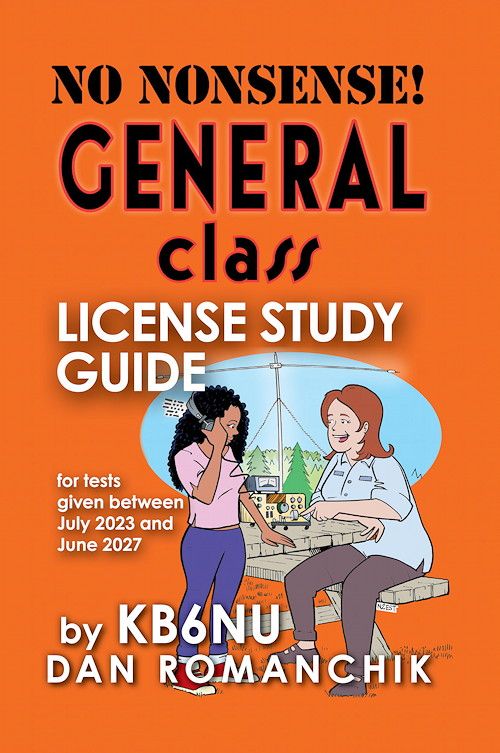
How can we place an order for [15] of your No-Nonsense General Class License Study Guide?
First of all, it’s great that they had 12 of 13 pass the test, second that many of them want to get Generals, and third, they’re going to use my study guide to take the course! I replied that the deal is the same for the General Class study guide as it is for the Tech study guide. And that deal is that they can order as many copies as they’d like for $10 per copy, shipping included. If you have a class coming up, consider taking advantage of this deal yourself.
As many of you know, the U.S. amateur radio license question pools get updated every four years. In 2024, it’s the Extra Class question pool’s turn. The National Conference of Volunteer Examiner Coordinators (NCVEC) released the new question pool on December 7, 2023, and surprisingly, I’ve already started on updating the No Nonsense Extra Class License Study Guide. I’m already done with the first three (out of ten) chapters.
What I’m looking for is some help with the proofreading and editing. In the past, I’ve hired professional proofreaders, but honestly, they didn’t do a very good job. One of them was even a licensed radio amateur.
The first part of the job would be to check that I’ve included all of the questions in the question pool for a particular chapter. Believe it or not, I’ve missed questions in the past. The second would be to critique the text to help ensure that I’m explaining the answer to a question properly.
I don’t expect you to do it for nothing, but I’m not sure what proper compensation would be. We can discuss this.
If you’re interested in helping me out, please email me at [email protected]. You could also leave a comment below. Thanks!
As usual, I have a lot of projects that I’m working……and a bunch that I should be working on.
Projects that I’m currently working on include:
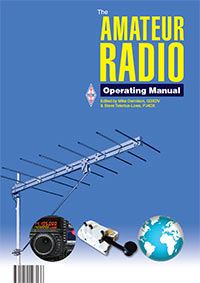
I’m currently working on a section of the next RSGB operating manual.
A chapter on POTA for the next edition of the RSGB Radio Amateur Operating Manual. I don’t have to write an entire book on the topic—it’s only going to be a few pages—but sometimes deciding what to include and what to leave out is harder than just writing more.
Ham evangelist. What’s a ham evangelist, you ask? Well, I got a grant from ARDC, my former employer, to take my one-day Tech class on the road, brining amateur radio to places that should have more amateur radio. We’re in the process now of identifying those places.
Raspberry Pi Pico version of the K3NG Keyer. I’m going to try to make a Raspberry Pi Pico do what the Arduino Nano does and more. Right now, I’m just focusing on learning Python.
Projects that I should be working on or will shortly have to start working include:
The 2024 edition of the No Nonsense Extra Class License Study Guide. The NCVEC has just published the updated question pool, and I’ll need to get started on that sooner or later.
An outline for a book on microcontroller projects that I’ve been talking to the RSGB about.
Lining up panelists for a forum at Dayton 2024 on different methods for learning Morse Code.
Various projects around the house. There are enough of those to keep me busy for years.