
• Skip to primary navigation
  • Skip to main content
  • Skip to primary sidebar
  • Skip to footer

KB6NU's Ham Radio Blog

KB6NU's Ham Radio Blog
  • HOME
  • Study Guides
  • Teach a One-Day Tech Class
  • W8SRC Repeater Guide
  • Advertise
  • Hire Me

Clubs

Minutes of the January 2013 ARRL Board Meeting

February 1, 2013 By Dan KB6NU Leave a Comment

ARRLThe annual meeting of the ARRL Board of Directors was held January 18-19, 2013 in New Orleans, and the minutes of the meeting were recently published. You can download and read the entire minutes yourself, but here are a few items that I found particular interesting:

  • #16. Mr. Kramer presented the report of the Chief Operating Officer. Finding appropriate ways to support the growth and activities of ARRL-affiliated clubs was an issue highlighted during discussion of the report. As chairman of the Programs and Services Committee, Mr. Norris advised the Board that the committee has established a subcommittee to address the issue.
  • #21. Mr. Carlson, as chairman, presented the report of the EMC Committee and entertained questions. There was a discussion of how to stimulate electric utilities to resolve cases of power line interference to amateur stations.
  • #25. The board adopted seven legislative objectives for the 113th Congress. To read them all, download the minutes, but in addition to the usual items such as, keeping and defending our frequencies, #6 aims at ensuring that two-way radio communications be exempt from distracted driver laws, and #7 supports legislation authorizing the FCC to appoint an electrical engineer to their staffs to provide technical expertise.
  • #28. The ARRL has created “the ARRL Amateur Radio Service to Scouting Award, to be administered consistent with the Community Organization Award program of BSA.”
  • #32 The board will appoint an ad hoc committee to look into the recent Logbook of the World problems and provide some recommendations at the July 2013 meeting.
  • #37. Lucy Ann Lance, a local broadcaster here in Ann Arbor, MI was awarded the “Bill Leonard, W2SKE, Professional Media Award, developed to honor professional journalists whose outstanding work best reflects the enjoyment, importance and public service value of the Amateur Radio Service.”

As I was club president here in Ann Arbor for several years, and for several years served as the Michigan Section Affiliated Club Coordinator, I’m especially interested in #16. I’ve e-mailed my director and vice-director to get their takes on it, and I would encourage all of you to do likewise for any of the items that are of interest to you.

Filed Under: ARRL, Clubs, EMI/RFI, Kids

Amateur Radio in the News: Michigan, Kansas, Colorado

January 26, 2013 By Dan KB6NU Leave a Comment

Central Middle School radio club students work on projects
The future of amateur radio in Midland was in room 127 of Central Middle School on Wednesday afternoon.Bill Albe brought kits to build the FET crystal radios he designed, along with tools sure to excite middle schoolers — drills, solder, means to measure electrical resistance across their bodies — plus ample adult supervision.

I’m trying to find out more about this project so that I can do something similar at the Hands-On Museum….Dan

Back to the Future — amateur radio enthusiasts bring transmitter back to life
The wait – four weeks short term and 40 years and counting long term – was well worth it when the 75-year-old transmitter built by amateur radio pioneer Marshall Ensor was reactivated Saturday evening at Ensor Park and Museum south of Olathe.

Ham radio alive and well in Boulder County
This is a nice profile of the Boulder Amateur Radio Club (BARC). BARC Juniors is a program of the club, which encourages kids to get involved in amateur radio. Great club, great program.

Filed Under: Building/Homebrew, Clubs, Kids

Newsletters that run my column

November 5, 2012 By Dan KB6NU Leave a Comment

For several years now, I’ve been sending out a (mostly) monthly column to amateur radio newsletter editors all around the U.S.A. I also send out a few to Canada and a couple of other English-speaking countries. Sometimes, it’s a version of something I’ve posted here on my blog. Sometimes, it’s original material.

Quite often, especially if the newsletter is published electronically, the editor will send me a copy. I like getting these newsletters because it keeps me informed about what’s going on in amateur radio around the country. Below, are links to three newsletters in which my column appear.

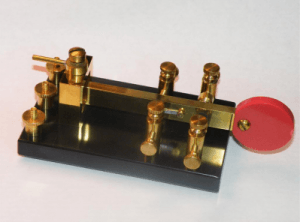
This beautiful key was made by Ed, AD7GR.

Ozark QRP Banner. This publication of the Four States QRP Group includes articles on home-made keys, a a dipole made with paper clips, and a portable QRP station using the NC40A transceiver from Wilderness Radio.

The Kennehoochee Amateur Radio Club (KARC) Hooch. The big news from the November 2012 issue of the Hoochis that they made more than 2,800 contacts from K4D, their special-event station. Their chairman, Joe, WD4FTB, writes, “Everything was great except the last day there was a big storm and we broke 2 antennas. But to sum it all up I loved it and I think everyone should try it once, no experience necessary.”

Muskegon Area Amateur Radio Council Flashovers. The New Ham Corner in the November 2012 issue of Flashovers is a short piece on how to determine if a piece of coax is any good. This issue also includes an article on their hamfest (it was a “rousing success”) and QSLing DX stations, specifically TT8TT.

There are currently more than 300 clubs getting my column each month. If you are a club newsletter editor, I would love to add you to the list.

Filed Under: Clubs

Field Day Report

June 28, 2012 By Dan KB6NU 1 Comment

Field Day 2012I was holding off on reporting on my Field Day activities this year because I thought I would do a comprehensive report on the entire Field Day. Well, that doesn’t look like it’s going to happen, so here’s a report on the operating activities.
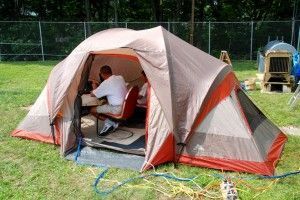
Unlike last year, I  operated with ARROW, our club here in Ann Arbor, MI. I was the main operator of the 40m CW station. We had 866 total QSOs. I made 540, KD8LWR had 197, N8OY made 109, and N8SBE pounded out 19. Here are the top runs as reported by N1MM:

  • 2012-06-23 1806 – 1849Z,    7022 kHz, 51 Qs, 70.5/hr KB6NU
  • 2012-06-23 1903 – 2245Z,    7021 kHz, 214 Qs, 58.1/hr KD8LWR
  • 2012-06-23 2245 – 2311Z,    7021 kHz, 25 Qs, 59.4/hr KD8LWR
  • 2012-06-23 2313 – 0040Z,    7017 kHz, 87 Qs, 60.1/hr KD8LWR
  • 2012-06-24 0051 – 0124Z,    7013 kHz, 37 Qs, 66.5/hr KD8LWR
  • 2012-06-24 0633 – 0655Z,    7023 kHz, 17 Qs, 46.6/hr KB6NU
  • 2012-06-24 0705 – 0909Z,    7035 kHz, 102 Qs, 49.4/hr KB6NU
  • 2012-06-24 0923 – 0938Z,    7023 kHz, 12 Qs, 49.2/hr KB6NU
  • 2012-06-24 0946 – 1033Z,    7036 kHz, 35 Qs, 44.8/hr KB6NU
  • 2012-06-24 1103 – 1211Z,    7030 kHz, 53 Qs, 47.0/hr N8OY

These are the top runs that included more than 10 QSOs.  I don’t know if you can ask it to give you 10-min. or 1-hr. rates, but that would have been interesting to see.

Unfortunately, this station did not operate for about three hours from 11:30pm – 2:30am, when I got back to the FD site. Next year, we’re going to have to find more CW ops and schedule better. It might have been possible to hit 1,000 Qs if it had been operated all 24 hours.

Filed Under: Clubs, Contests, Operating Tagged With: Field Day

21 Things to Do: Go to Field Day

May 7, 2012 By Dan KB6NU 1 Comment

Field Day, held on the last full weekend in June, is the quintessential amateur radio event. It includes elements of just about everything that makes amateur radio the great hobby that it is, and you should make every effort to participate in Field Day the first year that you’re licensed.

Field Day got its start in 1933 as an emergency-communication exercise. Ham radio operators dragged their equipment out into a field somewhere and operated using emergency power sources. The aim was to see how prepared amateur radio operators were to respond to an emergency and to learn how to do it better.

2008 OMARC Field Day
Tents often serve as shelters for Field Day stations. Photo courtesy of Ken Barber, W2DTC.

Emergency communications preparedness is still the primary purpose of Field Day. Amateur radio operators tune up their gasoline-powered generators and test their solar panels to ensure that they will be ready in case of an emergency. And, by hauling out into the field all manner of radio equipment, we find out what radios will work best in that operating environment.

Of course, the only way to tell how well your equipment will work is to actually operate it. That’s where the contest part of Field Day comes in. Stations score points by making contacts with other stations, and those with the most points win. Other things being equal, the stations that work the best will make the most contacts and score high in the contest.

Many Field Day stations have multiple transmitters, and when you have multiple transmitters, you need multiple antennas. Setting up a multiple-transmitter operation can be a lot of work. That’s why Field Day is often a club activity. For some clubs, it’s the biggest event of the year. In addition to all the technical activities, clubs use Field Day as a social event. There’s food and drink and reminiscing about Field Days gone by. For some hams, that’s more fun than actually operating.

Finally, because Field Day is such a big event, the ARRL encourages us all to use the event to reach out to the public, elected officials, and served agencies, such as county emergency management and the Red Cross, and educate them about amateur radio. Unlike many contests, where you only score points when you make contacts, you score Field Day points for holding your operation in a public place, handing out brochures to interested parties, and having the mayor come and visit your Field Day site.

How to participate
By participating in Field Day, you’ll learn more about amateur radio in a single day than you will doing just about anything else. If you’re a club member, ask how you can help out organizing  your club’s Field Day event. That’s sure to win you points, and it will make your Field Day experience that much more fun and educational.

If you’re not a club member, or if you’ll be out of town that particular weekend, you can find a Field Day site closeby, by going to the ARRL Field Day Locator. The clubs that are listed there are sure to welcome you, especially if you arrive early and help them set up.

I hope I’ve persuaded you to participate in the next Field Day. You’ll not only learn a lot, but you’ll have a lot of fun. Don’t forget to take some sun screen and mosquito repellent!

Filed Under: 21 Things to Do After You Get Your Amateur Radio License, ARRL, Clubs, Operating, Promotion & PR

Amateur radio leadership

April 24, 2012 By Dan KB6NU 2 Comments

About five years ago, I joined the Rotary Club here in Ann Arbor, MI. As I had, by this time, served as president of our local amateur radio club, I began comparing how our Rotary Club operating to how our amateur radio club operated. What a huge difference! The members of the Rotary Club were committed and really got things done. The members of the ham radio club, on the other hand, showed practically no commitment at all, had to be coerced into doing much of anything, and when they did, there was all kinds of sniping and complaining. I often thought how great it would be if somehow I could get our ham radio club to act more like the Rotary Club.

About three years ago, our Rotary district started began offering the Rotary Leadership Institute (RLI) course. The RLI course is a three-day course that is designed to prepare Rotary Club members take leadership positions in their clubs. I not only took the course, but I also participated in the facilitator training. From the start, my goal was to adapt the RLI program for ham radio clubs.

So, last year, after taking the final day of RLI training, I began working on the ham radio version.I completed it about a year ago and ran it by our section manager. He thought it was an interesting concept, but never really got behind it. Last fall, he ran for vice director of the Great Lakes Division, and a new guy took his place. When I explained my program to him, he was very enthusiastic about it and helped organize our first workshop, which took place here in southeast Michigan in early March. Last Saturday, we had our first session in southwest Michigan.

Here’s a list of the sessions in the current version of the workshop:

  • Leadership: Characteristics, Team Building
  • The World of Amateur Radio
  • The Amateur Radio Club and its Activities
  • Membership: Recruiting and Retention
  • Leadership: Team Building
  • Leadership: Setting Goals
  • Evaluating Your Club
  • Moving Forward

Overall, this worked pretty well. Most of the participants found the workshop to be valuable, and now our section manager is encouraging me to offer it in other parts of our state.

I think that I can improve it, though

I had originally thought it would take about eight hours to get through these sessions, including lunches and breaks. Well, as it turned out, in both workshops, we finished earlier than I’d expected. I think the biggest reason for this is that some of the later topics were actually covered in some of the earlier session. For example, we talked about how good communications are important the “Ham Radio Club and Its Activities” session, making the latter session moot.

Here’s how I’m thinking about changing the workshop:

  • Leadership: Characteristics
  • The World of Ham Radio
  • The Ham Radio Club and its Activities
  • Membership: Recruiting and Retention
  • Leadership: Team Building
  • Leadership: Setting Goals
  • Evaluating Your Club
  • Moving Forward

For the team-building and goal-setting sessions I’ll have the participants to a class-participation thing. That is to say, actually go through a little exercise getting them to set up a team to do something and getting them to set some club goals.

For the final session, instead of just being a review session, I’ll have the participants do some blue-sky thinking about what they can do with their clubs and perhaps have each come up with a specific idea to take back to their clubs.

We’ve set up a Yahoo Group—AmateurRadioLeadership—to discuss the workshop and other issues of interest to ham radio club leaders. If you’re at all interested in these things, please feel free to join it.

Filed Under: Amateur Radio Leadership Workshop, Clubs

Find new amateur radio operators in your area

April 10, 2012 By Dan KB6NU 17 Comments

It used to be that if your club was an ARRL affiliated club, they would periodically send you a list with the names and addresses of recently-licensed hams in your area. They no longer offer this service, but don’t despair, you can do this yourself by going to the FCC website. Here’s how to do this:

  1. Go to the ULS advanced search page.
  2. Select from the following drop-down menus or fill in the following text boxes:
    Service Group: Amateur
    State or Zip Code: Choose the appropriate state or type in the zip code
    Status: Active
    Date Type: Grant Date
    Date: Select a time period from the drop-down menu or type in the “from” and “to” dates.
  3. Click the “Search” button.
I typed in the zip code 48103 and selected a date period of the last 90 days, and I got the following information:
Call Sign/Lease ID Name FRN Radio Service Status Expiration Date
1 KD8ROJ Elliott, Harvey M 0021439682 HA Active 01/24/2022
2 KD8ROP Pawlowski, David J 0021439757 HA Active 01/24/2022
3 KD8RTO Yanikoglu, Sami I 0021516760 HA Active 02/21/2022

Now, the cool thing is that you can have the FCC website compose a pipe-delimited file for you that has all of the licensee data, including addresses. This allows you to import the data into a spreadsheet or database. (A pipe-delimited file is like a comma-delimited, or .csv, file except that it uses the “|” instead of the comma.) To to that, all you have to do is click on the “Query Download” link at the top of the Search Results page.

Now, you don’t have any excuses for not knowing about new hams in your area.

Filed Under: Clubs

21 Things to Do: Join a club

April 4, 2012 By Dan KB6NU 3 Comments

Thanks to everyone who contributed ideas for my upcoming book, 21 Things to Do After Getting Your Amateur Radio License. I am going to post chapters here as I write them.  Here’s the first chapter. Please feel free to comment on this chapter.

Join a club

One of the very first things you should do after you get your first amateur radio license is to join a club. There are many reasons why this is a good idea, but perhaps the biggest reason is that amateur radio is more fun when shared with others. The whole point of amateur radio is to make contacts with other amateur radio operators. By joining a club, you start making face-to-face contacts.

All of the other reasons for joining a club stem from this idea of sharing the hobby with other amateur radio operators. For example, you can think of the other members of the club as a vast reservoir of knowledge that you can tap.

Want some advice on what radio to buy? Ask a club members. Need some help installing an antenna? Ask a club member. Have a question about the best place to buy feedline or connectors? Ask a club member. I think you get the idea.

Clubs conduct a variety of activities that you’ll find both interesting and useful. Many clubs, for example, have speakers at their monthly meetings that discuss some aspect of amateur radio. By attending these meetings, you’ll not only learn about the topic, but have someone that you can contact should you decide to pursue that topic further.

Clubs also hold classes and administer license examinations. Being a member of the club will make it easier for you to take advantage of the classes and help you upgrade your license more easily.

Another benefit that some clubs offer is the use of a club station. This station may allow use to use equipment or operate modes that would be impossible to do at your home station. Our club station, for example, has a three-element Yagi antenna up about 70 feet. There’s no way that I could install such an antenna system at my home. Using the club station, though, allows me to experience using this antenna system and learn all about how they work and how well they work.

Being a club member can even help you get a good deal on used equipment. Club members often offer their used gear to other club members at a lower price than they would ask if they listed them online or taking them to hamfests. Not only do you get a lower price, but it’s less likely that there will be a problem with your purchase, and if there is, you know exactly where to find the seller.

Finding a club
If you don’t know of any clubs in your area, go to http://www.arrl.org/find-a-club. Type your zip code into the appropriate box, and soon you’ll get a list of clubs in your area.

The listings will show what services the clubs offer, their specialties, and if the club has a website, the website address. This information should give you an idea of how active the club is and what kinds of things the club members are interested in.

If there are several clubs in your area, visit them all before deciding to join one. Just like people, clubs have their own personalities, and you may find that you fit better with one club rather than another. For example, some clubs emphasize emergency communications and public service. If you’re not really interested in those activities, that club may not be for you.

Whichever club you choose, go to the meetings and participate in their activities. One thing is certain. You won’t get anything out of a club, if you never show up.

Filed Under: 21 Things to Do After You Get Your Amateur Radio License, Clubs

Customers or Members?

March 20, 2012 By Dan KB6NU 9 Comments

Three weeks ago, I held the first Amateur Radio Club Leadership Workshop here in Ann Arbor, MI. (I’ll post more about that later.) While we were talking about member retention, one of the attendees said that we need to think of the members as “customers.”

I suppose that I used to think like that, too. Give the customers what they want, and they’ll keep coming back. Now, I’m not so sure that is a good way of looking at things. There are some major differences between customers and members.

For one thing, there is a certain sense of entitlement about being a customer. A customer hands over some money, and in return, expects to receive a product or service. Do you want members like that? Don’t you want to get members to actively participate in your activities and not just consume them? If you have customers instead of members, doesn’t that put a lot of pressure on you to make sure the “product” is as attractive as possible to the “customers”?

A customer is in no way responsible to a business, but a member is responsible for the organization he or she belongs to. He should be, at least. If not, then why be a member?

The challenge is how to encourage that sense of membership, that sense of ownership. I don’t have the answer to that. What do you think?

Filed Under: Clubs

Get a Google grant for your ham club website

January 9, 2012 By Dan KB6NU Leave a Comment

On the ARRL PR mailing list, Allen, W1AGP, the ARRL’s Media and PR Manager, posted this:

Does your ham group have a website?  Is it a non-profit? [Then, sign up for] Google Grants for Nonprofit Group Advertising.

Steve, W5SMP, spotted this option.  While I can’t use it with the main ARRL website (due to advertising – “Your website cannot display revenue generating ads, such as Google AdSense or affiliate advertising links, while participating in Google Grants.”)  many of the section and divisions have their own sites that should fit the requirements.

Being listed high up and getting free ads on Google is a definite plus.

You should have your Public Information Officer (PIO) look into this. It takes some work, but  this program is free, so why not take advantage of it?

And, finally, if your club doesn’t have a PIO, you should appoint one. Not having one limits you. The ARRL has many resources for PIOs, making the job easier.

Filed Under: Clubs, Promotion & PR Tagged With: advertising, Googe Grants

  • « Go to Previous Page
  • Page 1
  • Interim pages omitted …
  • Page 17
  • Page 18
  • Page 19
  • Page 20
  • Page 21
  • Interim pages omitted …
  • Page 26
  • Go to Next Page »

Primary Sidebar

No Nonsense Technician Class License Study Guide (for tests given between July 2026 and June 2030)

New No Nonsense Technican Class Study Guide now available!

The 2026 version of my Tech Class study guide is now available, and as always, the PDF version is FREE!. The ePub version costs $11.97, and a Kindle version and paperback version will be available on Amazon shortly.

Click here to get all of my "No Nonsense" study guides.

Also available: The CW Geek's Guide to Having Fun with Morse Code

W5SWL.Com
Retevis Ailunce H1 DMR Radio
DXpander: Cobweb antennas, Laser Cutting

You’ve got mail!

Enter your email address below and get an email every time I publish a new post.

Email


I frequently teach classes to help newcomers get their licenses. The next class will take place on Saturday, October 10, 2026 on the University of Michigan campus. Click here for more information.

If you can't make the class, subscribe to the mailing list to be notified of when the next class will be held.

You can always download my free study guide, and if you have any questions about the classes, or amateur radio in general, please feel free to email me directly.

Support KB6NU.Com

Donate $7.30 and get two of these cool stickers. Measuring 4.25-in. W by 2.75-in. H, it's perfect for your car, your shack, or wherever!

Contact me

If you have a question or comment about one of my blog posts, or a question about any of the material in my study guides, or just a question about ham radio in general, you can email me at [email protected].

Blogs You Should Also Read

  • AE5X: A CW-centric blog from Kingswood, Texas
  • K0LWC Blog
  • LA3ZA Ham Radio Blog
  • Little Radios, Big Fun – WB3GCK
  • Mr. Vacuum Tube's Blog
  • Radio Artisan – K3NG
  • The K0NR Weblog
  • VE3WDM's QRP Ham Radio Blog
  • W2LJ’s Blog

Ham Radio Websites

  • Dashtoons – The Hammin' Comedy by Jeff K1NSS

Podcasts

  • ICQ Podcast
  • Linux in the Ham Schack
  • No Nonsense Amateur Radio Podcast
  • Resonant Frequency Amateur Radio Podcast

Recent Comments

  • Dan KB6NU on The EMF Explorer: A badge for ham radio?
  • Travis Good on The EMF Explorer: A badge for ham radio?
  • MARTIN ROBERT ROTHFIELD on The EMF Explorer: A badge for ham radio?
  • Mike Chen on Operating Notes, January 5, 2026
  • Rob W4ZNG on The EMF Explorer: A badge for ham radio?

Meta

  • Log in
  • Entries feed
  • Comments feed
  • WordPress.org

Footer

Copyright © 2026 Daniel M. Romanchik, KB6NU · Log in