• Skip to primary navigation
  • Skip to main content
  • Skip to primary sidebar
  • Skip to footer

KB6NU's Ham Radio Blog

KB6NU's Ham Radio Blog
  • HOME
  • Study Guides
  • Teach a One-Day Tech Class
  • W8SRC Repeater Guide
  • Advertise
  • Hire Me

EMI/RFI

Amateur radio videos: Giving back, eliminating RFI, tall tower construction

November 11, 2025 By Dan KB6NU Leave a Comment

Giving back to amateur radio (and your community)

If you’re a regular reader of my blog, you know that I’m a big believer in giving back to our hobby and to my community. In this RATPAC video, Marty Woll, N6VI, a former assistant emergency coordinator and past ARRL Southwest Division director, offers many suggestions on how to do this.

Eliminate your high noise floor


A link to this video appeared on the amateur radio subreddit this morning. It shows you how to build a filter to eliminate any RFI coming in through the power line.

Constructing very tall towers

Watch this video before you put up a really tall tower of your own. If you’re curious about what it’s like to actually work on one of these towers, watch this video.
Filed Under: Antennas, Emergency Communications / Public Service, EMI/RFI Tagged With: RATPAC

100, 50, and 25 years ago in QST: Electric filters, SWR meter project, clubs

July 10, 2023 By Dan KB6NU 1 Comment

I love this feature in QST. Not only can you feel the history of amateur radio by reading these articles, many of them still impart useful technical information. Read on and you’ll see what I mean.

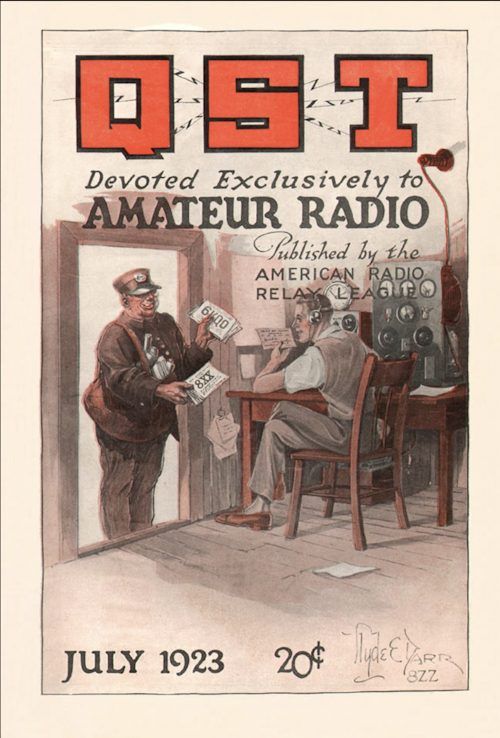
July 1923

The article that I chose from this issue is “Electric Filters” by F.S. Dellenbaugh, Jr. He writes, “Most thing in amateur radio have gotten beyond guesswork; reliable information is available. A glaring exception is the electric wave filter…” He then goes on to give a relatively rigorous explanation of LC filters in many different forms. This is all good stuff and still relevant today.

Also notable in this issue are the articles:

  • Why Inflict Keying Thumps on Your Neighbor? This is perhaps one of the first articles on RFI.
  • Bureau of Standards Explores Short-Wave Region. Early amateurs were relegated to wavelengths below 200 meters, which at that time were thought to be useless for wireless communications. It wasn’t long, however, before radio amateurs proved that to be incorrect.

July 1973

You might thing that the article, A Simple Computing SWR Meter, describes one of the first amateur radio applications of a microprocessor, but  you’d be wrong. Instead, the article gives plans for an SWR/power meter that uses op amps to perform analog computations. The beauty of this approach, according to the authors, is that the SWR reading are independent of the forward power.

July 1998

Two articles in this issue are aimed at helping clubs:

  • Where Radio is Fun. This article brings home the point that to be a successful club, members have to have fun. If your  club is failing, perhaps it’s because you’re not having enough fun.
  • Anatomy of a Special Event Station. I like special event stations, so I’m highlighting this article. The deck reads, “Is your club stuck in a rut? Looking for a project to pep things up? Putting a special event station on the air will definitely pick up the pace….” This article gives a bunch of good advice about running a special event station that’s as relevant today as it was 25 years ago. One such bit of advice is, “Design QSL cards and certificates early in the process—and determine how and when they’ll be printed.”


Filed Under: Clubs, Electronic components, EMI/RFI, Special Events, Test Equipment Tagged With: filters, SWR

ICQ Podcast Episode 389: Hams assist law enforcement, ask a ham for EMI/RFI help, Taiwanese hams prepare for war

November 7, 2022 By Dan KB6NU Leave a Comment

In this episode, I  join Martin Butler M1MRB, Caryn Eve Murray KD2GUT, Edmund Spicer M0MNG and Ed Durrant DD5LP to discuss the latest Amateur / Ham Radio news, including:

  • Amateur Radio Club Members Assist Law Enforcement

  • RSGB Construction Competition

  • Ham Radio’s News Information Channels Shrink By Two

  • Got a Problem? Ask a Ham!

  • If China declares war, These Ham Radio Enthusiasts Could be Crucial

This episode’s feature is Part two of the RSGB National Hamfest Round-up.

Filed Under: Building/Homebrew, EMI/RFI, Podcasts Tagged With: Taiwan

You could be the next IARU Monitoring System coordinator

January 13, 2022 By Dan KB6NU Leave a Comment

I’ve written before about how seriously IARU Region 1 seems to be monitoring for intruders in our ham bands. I’ve also wondered why Region 2 didn’t have its own monitoring system. Well, now IARU R2 is getting serious about recruiting a Monitoring System Coordinator.

Here’s the posting:

IARU R2 is looking for a volunteer to be its Monitoring System Coordinator (MSC). The MSC is R2’s liaison with the IARU Monitoring System and serves as R2’s representative on the IARU Monitoring System Committee. The Coordinator acts as a single point of contact for collecting and disseminating information on harmful interference to Amateur operations in the region.

Qualifications: The IARU Region 2 Monitoring System Coordinator shall be a licensed amateur radio operator residing in Region 2, and a member of and nominated by her/his national society. The MSC shall have the necessary and appropriate knowledge and experience to make recommendations to the Region 2 Executive Committee regarding interference related issues, be able to assist Member Societies with appropriate information as they may request, and participate in the IARU Monitoring System Committee as Region’s 2 representative. Facility in both Spanish and English is required.

For a full description of the Monitoring System Coordinator role, please see the IARU R2 Standard Operating Procedures, Section X:

https://www.iaru-r2.org/en/reference/standard-operating-procedures/

https://www.iaru-r2.org/referencias/procedimientos-operacionales-normales/

Interested candidates should address a letter indicating their qualifications and support of their society to: [email protected] or [email protected] All inquiries will be acknowledged.

Filed Under: EMI/RFI, IARU Tagged With: IARU R2, Intruders

ARRL weighs in on insulin pump story

September 3, 2021 By Dan KB6NU 10 Comments

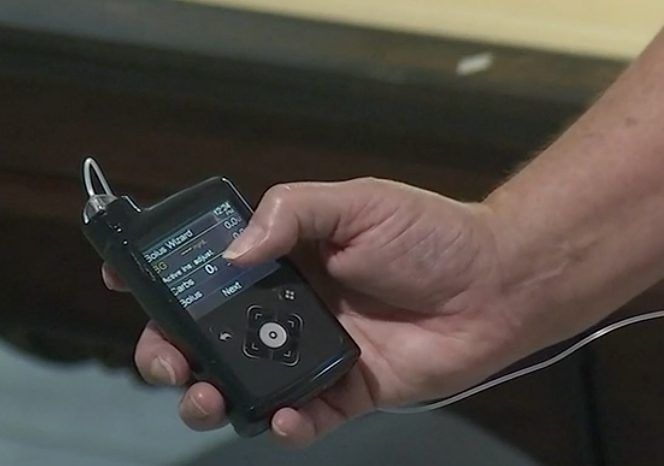
The infamous insulin pump.

About a week and a half ago, I blogged about a Florida TV news report that took to task a radio amateur living a  few doors down from a woman using an insulin pump. She claimed that his operation caused the pump to malfunction, putting her health at risk.

After hiring a consultant to look into the matter, the homeowner’s association ordered the ham to cease operation, even though the consultant’s findings were inconclusive. The report from Sublight Engineering, PLLC, of Arlington, VA, states, “It is possible that HF amateur radio operations described herein could create fields that exceed manufacturers (sic) limits.” (Italics are mine.)

In my original post, I wrote, “This report is troubling for many reasons. I hope that the ARRL is aware of this, and is looking into it.” Well, they did and reported on their findings. As expected, they wrote, “It also became apparent that there is no actual evidence connecting the amateur’s transmissions to operation of the insulin pump.”

Ria, N2RJ, the ARRL Hudson Division director, also produced a video on this situation:

What I don’t understand is why no one contacted the manufacturer, Medtronic. Wouldn’t they want to know if one of their devices was faulty, or if their manufacturing and testing procedures were faulty?

With no real conclusion to this story, it’s bound to pop up again. You know that someone somewhere is going to claim that a ham is interfering with his or her insulin pump and a Google search is going to turn up this story on the Florida TV station’s website. I think it would have been a good idea to completely debunk this story, so that when it does come up again, we can just point to this case and blow off the complainer. As it stands, however, we really can’t do that.

Filed Under: ARRL, EMI/RFI Tagged With: insulin pump

Amateur radio in the news: TV edition

August 24, 2021 By Dan KB6NU 3 Comments

This report is troubling for many reasons. I hope that the ARRL is aware of this, and is looking into it…..Dan

Woman fights to have ham radio operations banned after potential interference with insulin pump

MARION COUNTY, Fla. — A Marion County woman is taking on her neighborhood association, in a matter she said puts her health at risk.

Michelle Smith, a Type 1 Diabetic, and a consultant determined that her neighbor’s ham radio hobby might have interfered with the doses of insulin being pushed out from her pump.

The 55+ community where she lives hired that consultant and told the neighbor to shut down his amateur radio station.

…see the TV news reort


Ham Radio Operators Helping Family Members Locate Caldor Fire Evacuees

In El Dorado County, ham radio operators are using there skills and communications gear to assist deputies in the search for Caldor Fire evacuees.

..see the TV news report


East Greenbush Amateur Radio Association meet up to celebrate radio operators

EAST GREENBUSH (WRGB) — A bunch of hams gathered in East Greenbush today to celebrate their hobby — and by that, I mean amateur radio operators.

Saturday was the East Greenbush Amateur Radio Association meet up, bringing in people from all over the greater capital region.

The operators, or “hams” say it’s a great way to mingle and buy and sell radio equipment and supplies.

…see the TV news report

Filed Under: Amateur Radio in the News, Emergency Communications / Public Service, EMI/RFI, Hamfests

EMC applications for software-defined radio

May 21, 2021 By Dan KB6NU Leave a Comment

This is a talk given to the IEEE Southeast Michigan Section’s EMC Society by Karen Burnham, KE8GVH. While there is a short commercial for the presenter’s company, it’s a pretty good explanation of software-defined radio (SDR) and how SDRs compare to superheterodyne radios. Over half of the talk explains how SDRs work and what you can do with them.

While the presenter says that she’s not going to talk about ham radio applications, the applications she does talk about certainly are useful for amateur radio operators. For example, one of Burnham’s demonstrations is the spectral purity of an FRS radio. You could also get a feel for how pure your HT signal is, realizing that what you get out of a cheap SDR dongle is not really calibrated.

Filed Under: EMI/RFI, Software-Defined Radio (SDR)

Amazon to require FCC certification

February 21, 2021 By Dan KB6NU 2 Comments

Here’s an interesting notice from Amazon:

Action required for radio frequency device listings on Amazon.com

This article was originally published February 1, 2021, and it has been adjusted to reflect a new estimated date for this change.

As part of our ongoing efforts to protect our customers and enhance the customer experience, Amazon is updating the requirements to offer radio frequency devices. This will affect some products you offer or have previously offered.

Starting in Q2 2021, in order to create new listings or update existing listings of radio frequency devices you will need to fill in the FCC Radio Frequency Emission Compliance attribute. In the attribute, you must do one of the following:

Provide evidence of Federal Communications Commission (FCC) authorization – either an FCC certification number or contact information for the Responsible Party, as defined by the FCC.
Certify that the product is exempt from FCC requirements.
As a reminder, per Amazon policy, all radio frequency devices must comply with FCC regulations and all applicable state and local laws, including registration and labeling requirements. Amazon also requires you to provide accurate information about your products on the product detail page.

You may not be aware that you are selling products the FCC considers radio frequency devices. The FCC broadly classifies as radio frequency devices any electronic or electrical product that is capable of emitting radio frequency energy. According to the FCC, almost all electronic or electrical products are capable of emitting radio frequency energy. Examples of products that are regulated by the FCC as radio frequency devices include, but are not limited to: Wi-Fi devices, Bluetooth devices, radios, broadcast transmitters, signal boosters, and devices with cellular technology. FCC guidance on what is considered a radio frequency device can be found on the Equipment Authorization – RF Device page on the FCC website.

We will follow-up with additional information, including a help page, closer to attribute launch.

For more information, see Amazon’s Radio Frequency Devices policy. You can also bookmark this article for future reference.

Some are saying that this is an effort to control the sales of Baofengs. Others point to other radiators, such as LED lights and solar charge controllers. The reddit discussion of this new policy pretty much dismisses this new policy. One comment notes, “This has nothing at all to do with buying radios, it’s just Amazon trying to cover their @$$es over the likes of ‘Rugged radio'(and others) selling uncertified radios as something they’re not.”

I think that this could be interesting if Amazon really got serious about this. I’m not sure that even Amazon has the wherewithal to really do this kind of policing, though.

Filed Under: EMI/RFI Tagged With: Amazon

From my Twitter feed: RPi Pico, scope probes, reducing noise in the shack

January 26, 2021 By Dan KB6NU Leave a Comment

digikey's avatar
Digi-Key Electronics  @digikey

@Raspberry_Pi launches their new #PicoBoard featuring their own #silicon. What that means and more >>> dky.bz/3c1KC2P


eevblog's avatar
Dave Jones @eevblog

NEW EEVblog Video! EEVblog #1367 – 5 Types of Oscilloscope Passive Probes COMPARED youtu.be/rzo4Ntxqu1E


mw0ian's avatar
Ian @mw0ian

Replying to @K5PO @_M0JJF and 4 others

Have you guys seen GM3SEK noise video, well worth a watch youtu.be/LSL1h6MJbaI

Filed Under: EMI/RFI, Microcontrollers, Test Equipment Tagged With: oscilloscopes, RaspberryPi

100, 50, and 25 Years Ago in the July QST

June 26, 2020 By Dan KB6NU Leave a Comment

Here are some articles in the QST archives that I think you will find not only amusing, but useful.

July 1920

CW for the Amateur, Howard L. Stanley, 2FS. A fanciful look at the author’s experiments with vacuum tubes. This at a time when most amateurs were still using spark-gap transmitters.

July 1970

The Ultimate Transmatch, by Lew McCoy, W1ICP. This article was part of the “Beginner and Novice” series, published in QST in those days. These articles are still a wealth of information for hams, both new and old. This article describes why an antenna tuner might be desirable, and how to build one that will tune coax-fed antennas, balanced-line-fed antennas, and random wire antennas.

Also notable: Power Line Interference: Its Causes and Methods of Location, by Robert G. Hollowell, W4USQ.

July 1995

A Wideband 80-Meter Dipole, by Rudy Severns, N6LF. This antenna is a folded dipole with a “resonator wire” inserted between the two folded dipole elements. By lengthening or shortening the wire, you can tune the antenna so its feedpoint impedance is 450 Ω. Connect that to a 9:1 balun, and you get an impedance of 50 Ω. The author shows that his antenna has an SWR of 1.6:1 or less across the entire 80-meter/75-meter band.

Also notable: Amateur Radio on the World Wide Web, Part 2, by Steve Bible, N7HPR.


Filed Under: Antennas, Building/Homebrew, EMI/RFI, On the Internet Tagged With: W1ICP

  • Page 1
  • Page 2
  • Page 3
  • Interim pages omitted …
  • Page 5
  • Go to Next Page »

Primary Sidebar

No Nonsense Technician Class License Study Guide (for tests given between July 2026 and June 2030)

New No Nonsense Technican Class Study Guide now available!

The 2026 version of my Tech Class study guide is now available, and as always, the PDF version is FREE!. The ePub version costs $11.97, and a Kindle version and paperback version will be available on Amazon shortly.

Click here to get all of my "No Nonsense" study guides.

Also available: The CW Geek's Guide to Having Fun with Morse Code

W5SWL.Com
Retevis Ailunce H1 DMR Radio
DXpander: Cobweb antennas, Laser Cutting

You’ve got mail!

Enter your email address below and get an email every time I publish a new post.

Email


I frequently teach classes to help newcomers get their licenses. The next class will take place on Saturday, February 7, 2026 on the University of Michigan campus. Click here for more information.

If you can't make the class, subscribe to the mailing list to be notified of when the next class will be held.

You can always download my free study guide, and if you have any questions about the classes, or amateur radio in general, please feel free to email me directly.

Support KB6NU.Com

Donate $7.30 and get two of these cool stickers. Measuring 4.25-in. W by 2.75-in. H, it's perfect for your car, your shack, or wherever!

Contact me

If you have a question or comment about one of my blog posts, or a question about any of the material in my study guides, or just a question about ham radio in general, you can email me at [email protected].

Blogs You Should Also Read

  • AE5X: A CW-centric blog from Kingswood, Texas
  • K0LWC Blog
  • LA3ZA Ham Radio Blog
  • Little Radios, Big Fun – WB3GCK
  • Mr. Vacuum Tube's Blog
  • Radio Artisan – K3NG
  • The K0NR Weblog
  • VE3WDM's QRP Ham Radio Blog
  • W2LJ’s Blog

Ham Radio Websites

  • Dashtoons – The Hammin' Comedy by Jeff K1NSS

Podcasts

  • ICQ Podcast
  • Linux in the Ham Schack
  • No Nonsense Amateur Radio Podcast
  • Resonant Frequency Amateur Radio Podcast

Recent Comments

  • Dan KB6NU on Finally, a Loop for 10m.
  • Dan KB6NU on 1930s cards for my collection of QSLs from stations whose callsigns spell words
  • Sean on Finally, a Loop for 10m.
  • Bill Waslo on 1930s cards for my collection of QSLs from stations whose callsigns spell words
  • C M Wetzel KD8TNF on The Wesco BN-1

Meta

  • Log in
  • Entries feed
  • Comments feed
  • WordPress.org

Footer

Copyright © 2026 Daniel M. Romanchik, KB6NU · Log in