• Skip to primary navigation
  • Skip to main content
  • Skip to primary sidebar
  • Skip to footer

KB6NU's Ham Radio Blog

KB6NU's Ham Radio Blog
  • HOME
  • Study Guides
  • Teach a One-Day Tech Class
  • W8SRC Repeater Guide
  • Advertise
  • Hire Me

Kids

From the December 19, 2014 ARRL Letter

December 19, 2014 By Dan KB6NU Leave a Comment

This week’s ARRL Letter had many items worth mentioning here. You can read the entire issue on the ARRL website.  Here are the items I think are worth passing along:

Boy Scouts Recognize ARRL Amateur Radio Service to Scouting Award

BSA-CommOrganThe Boy Scouts of America’s National Awards and Recognition Committee has officially recognized the ARRL “Amateur Radio Service to Scouting Award” as part of its family of Community Organization awards. The ARRL award recognizes actively involved Scouting leaders who make a significant contribution to providing Scouts with a memorable and valuable Amateur Radio experience. This program allows Scouting leaders to wear the Community Organization Award square knot on their uniform, in recognition of their service within their community organization.

“This is yet another step in ARRL-BSA cooperation, one that will recognize the Scouting leaders who have worked tirelessly to introduce the science, technology, fun, and excitement of Amateur Radio to the youth involved in Cub Scouting, Boy Scouting, and Venturing,” the Boy Scouts organization said in announcing its formal recognition of the League award.

This award was officially established through a resolution adopted by the ARRL Board at its 2013 Annual Meeting. It builds on the long-standing relationship between the BSA and ARRL, which began with the development of the Wireless Merit Badge in 1918 (now called the Radio Merit Badge). This relationship was formally recognized through a 2011 Memorandum of Understanding (view a video of the signing).

Nominations for the Amateur Radio Service to Scouting Award are made through the appropriate ARRL Section Manager. Read more.

Kids Day is January 4!

The next Kids Day, sponsored by the ARRL and The Boring (Oregon) Amateur Radio Club, will be Sunday, January 4, 2015, from 1800 to 2400 UTC. This is an excellent opportunity to showcase Amateur Radio and Amateur Radio satellites to youngsters and even to hand over the keys so they can get some hands-on experience. For youngsters, their positive ham radio experience may foster an interest in getting licensed one day. For veteran radio amateurs, it’s a chance to share their stations and affection for Amateur Radio with the next generation. Call “CQ Kids Day.” The suggested exchange is name, age, location, and favorite color. There is no limit on operating time, and stations may work each other more than once if the operator has changed. Observe third-party traffic restrictions when making DX contacts. Post stories and photos to the Kids Day Soapbox page and download a colorful certificate.

New Element 3 (General Class) question pool released

NCVECThe Question Pool Committee of the National Conference of Volunteer Examiner Coordinators (NCVEC) has released the 2015-2019 Element

3 (General Class) question pool. The new question pool becomes effective for all Element 3 examinations administered on or after July 1, 2015, and it remains valid until June 30, 2019. The question pool files are available in PDF, Microsoft Word (.doc), and ASCII text formats. Section G7A requires the use of one illustration, a schematic identified as G7-1. This drawing file is published separately. — Thanks to Roland Anders, K3RA, NCVEC Question Pool Committee Chairman

Filed Under: Classes/Testing/Licensing, Kids

Classified ads you may have missed in the January 2015 QST

December 13, 2014 By Dan KB6NU Leave a Comment

For a while there, the classified ad sections in ham magazines were getting kind of sparse. After all, it makes little sense to sell your used gear   through a classified ad in QST when it’s cheaper and quicker to sell that gear online. Lately, though, I’ve been noticing that the classified ad section in QST has been growing. In the January 2015 issue that I received the other day, there were nearly four columns of ads.

There are a lot of  cool products, services, and organizations who advertise there. Here are some that you might want to look up in the January issue:

  • Antique Wireless Association (AWA). I belonged to the AWA for a while, and found them to be a great organization. I enjoyed getting their newsletter, and they run a museum in upstate NY that I’d like to visit one of these days.
  • Southern Appalachian Radio Museum. I used to have a friend who lived in Asheville, NC, where this museum is located, and I have actually visited this museum the last time I was in Asheville, which was at least five years ago. I enjoyed my visit then, and I’m sure the museum’s gotten even better since then.
  • HamRadioKids.Com. This is the first time I’ve seen the ad for HamRadioKids.Com. According to their website, “Ham Radio Kids.com is a program of Albert Partlow Science Foundation. Our mission is to support the science departments of small and underprivileged schools.” It certainly seems like a mission worth supporting. I just wish they had more “case studies” on their website.

These are the ads that caught my eye this month. If I’ve left off one of your favorites, please comment below.

Filed Under: Clubs, Kids, Vintage Radio

Amateur radio in the news: ham radio goes to the moon, sisters 9 and 11 pass General test

October 5, 2014 By Dan KB6NU Leave a Comment

Amateur radio payload on lunar-orbiting 4M-LXS to transmit messages from the Moon. With the right equipment you may be able to receive messages from the moon sometime late this October! The Amateur Radio payload on the lunar-orbiting 4M-LXS spacecraft will carry up to 2,500 thirteen-character digital messages to lunar orbit for retransmission using the JT65B mode on 145.990 MHz.

Norton is connected around the world. Throughout his lifetime, Richard Norton has had some unusual acquaintances.  One was TV news anchor Walter Cronkite.  Another was actor Marlon Brando.  To the list you could add country singer Ronnie Millsap, King Hussein of Jordan, military legend Gen. Curtis Lemay, and Yuri Gagarin, Russia’s first cosmonaut.

Ratcliff sisters among youngest amateur radio license holders in the U.S. Most children will say another test is the last thing they want to add to their schedules. Estee and Rebecca Ratcliff did just that earlier this month, when they took and passed the ham radio general license test. “They are among the youngest in the nation,” mom Jennifer Ratcliff said. Estee is 11 and Rebecca is 9.

Filed Under: Kids, People, Satellites

Cleaning off my desk: “F” is for frequency

September 1, 2014 By Dan KB6NU Leave a Comment

I make lots of notes as I Twitter and read my e-mail. I have so many notes about interesting things piled up on my desk, that I really need to start cleaning it up and moving the notes either here to my blog or maybe to Evernote.

Having said that, I’ve written in the past about the need for a study guide for kids. We still need something like this in amateur radio, but there are now books and videos that can teach kids about electronics. One of the books available is The Manga Guide to Electricity.

As far as videos go, Adafruit, has published a number of YouTube videos they call the Circuit Playground. I’ve just watched the video “F is for frequency” (see below). It’s really pretty good, and there is a whole series of them. Adafruit also has a coloring book, E is for Electronics, to go along with the videos. If you have kids, you should check them out.

Filed Under: Electronics Theory, Kids

Operating Notes: 7/3/14 – 7/6/14

July 7, 2014 By Dan KB6NU 1 Comment

I’ve had an enjoyable Fourth of July weekend from an operating point of view and thought I’d share it with you.

Thursday, 7/3:
Thursday evening, after considerable internal debate, I got over my laziness and walked down to the Hands-On Museum to work WA2HOM. As it turns out, I was glad I did.

Thursday evenings are usually pretty slow there, meaning that the ambient noise level is such that I can actually hear myself think. I rarely get visitors in shack, but this week, I had two families visit with me for a while.

The first was a complete family: father, mother, two daughters (ages 10 and 12, I’m guessing), and grandma! I don’t know if they were just being polite, or were actually interested, but they endured about 15 mins of my babbling on about amateur radio. I tried to find someone calling CQ, and actually called CQ myself a couple of times, but was unable to make a contact to get the kids on the air. I gave them a WA2HOM QSL card, and they seemed pretty happy about the visit in spite of not being able to talk to someone.

After they left, I struck up a CW QSO with a fellow in Findlay, OH. In the middle of the contact, an older women poked her head over the railing and asked, “Are you talking to someone in outer space?” I told her no, but that we had indeed talked to someone in outer space before and pointed out our QSL card from the International Space Station.

About that time, she was joined by three people that I’m guessing were here daughter and two grandsons, Michael and Vernon, who are eleven-year-old twins. They seemed a little interested in what I was telling them about ham radio, and how I could actually copy Morse Code (I was copying on paper for their benefit), so I told them to come around into the shack.

The ham I was in contact with said hello to the twins, and they seemed pleased by that. When the contact ended, I sent them away with the paper that I used to copy the code on. Both of these encounters were a lot of fun, even though I wasn’t able to get any kids on the air.

Saturday, 7/5:
On Saturday, I once again headed down to the museum. Around 10:30 am, Ed, KD8OQG, joined me for a bit. He mentioned that he’d been playing around with a website he’d discovered that lets users communicate with one another by Morse Code – morsecode.me.

When you access the website, you’re assigned a random, four-character “callsign.” You can then send code to other users online by using the “.” key or the mouse button as a straight key.  It takes a while to get used to sending, and it’s a bit slow at about 15 wpm, but it’s amusing, and if it gets people interested in Morse Code, I’m all for it.

After we quit playing around with MorseCode.me, we got on 15m, where we heard ER4DX booming in. I put Ed in front of the microphone, and we worked him. It was like working someone local, and after looking at his QRZ.Com page, you’ll see why. He has a serious antenna farm!

This is the ER4DX antenna farm. No wonder he sounded like a local here.

Sunday 7/6:
Sunday, we had guests over for dinner, but after they left, I headed down to the shack to get on the University of Michigan Amateur Radio Club Net. It meets every Sunday at 8pm Eastern time on the 145.23 repeater. You can also check in via W8UM-R on Echolink.

I guess our usual net control, Chris, KA8WFC, was enjoying some holiday festivities, so in his absence I took over as net control. Despite it being a holiday, we had a pretty good turnout, with checkins from KD8OQG, N8PMG, WS8U, W8SRC, WD8DPA, KD8PIJ, WD0BCF, and WA4CJX. Larry, WD0BCF was checking in from Houston, while Bruce, WA4CJX  checked in from Honolulu. Topics of discussion included the 6m opening that day and the upcoming UMARC fox hunt.

After the net, I fired up the HF rig and had some fun on 30m and 40m. I hadn’t been trying to work the Original Thirteen Colonies Special Event this weekend, but nevertheless, I managed to work  K2J, K2C, and K2H in quick succession on 40m CW.

Then, I moved up to 30m. My first contact there was with SN0LOT, a special event station commemorating the flight of two Lithuanian airmen, Steponas Darius and Stasys Gir?nas. They crashed after flying 6,411 kilometers from New York, only 650 km short of their destination, Kaunas. At the time, it was the second longest flight over Atlantic Ocean without landing. 

After that contact, I called CQ and got a reply from W1DIG. How about that? Two QSOs with stations whose callsigns spell words in a row! Not only that, I have neither “LOT” or “DIG” in my collection. That was a great way to end the weekend.

Filed Under: Antennas, CW, Hands-On Museum, Kids, QSLs

Invite a kid to Field Day

May 10, 2014 By Dan KB6NU Leave a Comment

Field Day is still six weeks away, but I want you to think about inviting a kid to Field Day this year. Instead of just complaining that kids aren’t interested in amateur radio anymore, do something about it.

Invite them to help you set up antennas.

Show them how you power the rigs with a generator, or even cooler, by charging a battery with a solar panel.

Let them sit in front of the rig, show them how to make contacts, and log for them. To make it easier for them, make up a cheat sheet with the callsign spelled out phonetically and the exchange, also spelled out phonetically.

Let them operate for as long as they’re interested. When they’re done, thank them on contributing to your club’s total score.

Answer every single one of their questions.

This may not win them over immediately, but I can assure you that it will make an impression on them. To increase your chances of success, find a kid that’s already technically inclined. Invite a bunch of them from the high school’s robotics team, for example.

If you don’t have any plans for Field Day, then make some. Then, go find that kid. If you don’t, then you don’t have any right to complain that there are no kids in ham radio.

Filed Under: Clubs, Kids

Amateur radio in the news: School Club Roundup, Berkeley ARC turns 100, Morse Code wall

March 3, 2014 By Dan KB6NU Leave a Comment

For Two Rivers School students, amateur transmission brings a window on a wider world. Two Rivers School in North Bend (WA) became a ham radio station for a day, Feb. 12 during the nationwide School Club Roundup event. Middle school teacher Joe Burgener, with assistance and equipment from parent volunteer Stephen Kangas, introduced students to the world of amateur radio, from the science of radio waves, to the regulations for amateur operators, to the hands-on work of hanging antennae, and finally, to the actual operation of the radio equipment. Students spoke with several operators in California and one at the North Pole during the day.
Students at Two Rivers School in North Bend, WA participate in the School Club Roundup.
UC Berkeley Radio Club going strong at 100. The Bay Area might be a hotbed of high technology, but low technology has its fans, too. Just ask the UC Berkeley Amateur Radio Club. It’s been around 100 years, and its members don’t mind a little dust and rust on their tech. “I think the old equipment is really cool and retro,” says club member and electrical-engineering major Andy Hu. “I’m still fascinated by the profundity that an electrical signal can leave the radio in front of me, travel up a wire to an antenna outside, and someone halfway around the world with an antenna outside connected to their radio can hear my voice and talk with me,” says club member Bill Mitchell, a chemistry graduate student.
Union Station Wall Represents Song Lyrics in Morse Code. An interesting-looking bumpy, yellow structure inside Union Station in D.C. represents a lot more than the naked eye might notice. As it turns out, the bumps are morse code representations of the lyrics from Death Cab for Cutie tune “Soul Meets Body.”
 

Filed Under: Clubs, CW, Kids

Amateur radio in the news: HS ham club, hamfest (rally) in Harwell

February 13, 2014 By Dan KB6NU Leave a Comment

Brad’s Beat: Joplin High School Ham Radio Club. Students at Joplin High School are embracing a technology more than 100 years old. More than 20 students have enrolled in the Ham Radio Club. They’re all studying how to get their license to broadcast. Their teacher is Richard Banks, who has been broadcasting (sic) for more than 25 years. He says many students tend to embrace technology, even if it’s a bit older. The students say talking on ham radio is a lost art of communication, which is better than texting. 

Headwaters Amateur Radio Club makes air waves. Technology is a great thing, but of course, sometimes it can have its flaws. For instance, what if your car breaks down, but you can’t call a tow truck because there is no cell phone service? What if a large storm knocks out all power and there are people who need help? The solution to the problem, and many other communication related issues, is an easy one, and one that may not be on the top of everyone’s minds: amateur radios.

Radio hams put faces to voices at electronics rally (that’s what they call a hamfest in the UK). More than 500 radio fans better used to speaking to each other over the airwaves met face-to-face in Didcot. The radio enthusiasts from all over the UK gathered at Didcot Leisure Centre in Mereland Road for an amateur radio and electronics rally on Sunday.

Filed Under: Amateur Radio in the News, Clubs, Kids

Amateur radio in the news: Hong Kong, Wales, young hams, and more

December 30, 2013 By Dan KB6NU Leave a Comment

Lots of ham radio items in the news lately, so this post is longer than usual….Dan

hong-kong-amateurs

Hong Kong’s ham radio enthusiasts lend a helping hand. More than just a hobby and a way to socialise, amateur radio provides vital communications to ensure the safe running of Hong Kong’s charity events.

Gwent radio hams ready to help in emergency. They are helping to guard the public in the event of a disaster, but you may not have even heard of them. Gwent’s RAYNET group – a bunch of licensed amateur radio enthusiasts who help the emergency services in the event of a communications meltdown – is part of a national organisation celebrating its 60th anniversary this year.

Lake amateur radio operator gets top marks. Lake County amateur radio operators, often called hams, brought home the bacon in a national Field Day event held earlier this year, it was announced Thursday.

young-hamsYoung hams make the grade.  Surrounded by radio gear, Gene Clark sat in his chair and listened intently as his two sixth grade proteges were interviewed by a reporter recently. Dalton Duggers, 11, and Jordan Sirmans, 12, recently earned their radio technician’s licenses, making them two of the youngest licensed ham radio operators in Georgia. The two friends are are members of the Albany Amateur Radio Club (AARC) and are in the Gifted Program at Merry Acres Middle School.

Okanogan Amateur Radio Club recognizes first concrete pouring at Grand Coulee Dam. Dec. 6th, 1935, was the first “ceremonious pour” of concrete at Grand Coulee Dam. It was the first of a total of 12 million yards, which is enough to pour a sidewalk around the world at the equator twice. The Okanogan County Amateur Radio Club W7ORC sponsored a special event to celebrate the anniversary of the that pouring. Club members used their home radio stations, commonly referred to as “HAM SHACKS,” starting at 4 p.m. Dec 6, and ended at 4 p.m. Sunday, Dec 8.

Family saved by ham radio and Good Samaritan after car accident. On a cold, bitter night earlier this month, the actions of a Good Samaritan and a ham radio probably saved the lives of a family. It began at about 7 p.m. Dec. 6 when Cody Fowler and his wife, Tina, and their two sons, Jacob and Timmy, were on their way home from Pueblo. Because of the bitter cold temperatures and the icy roads, Cody turned around and drove back down the road, where he discovered that a red SUV had slid off into a ditch. The five people in the car had climbed back onto the road….

Filed Under: Amateur Radio in the News, Kids, Public Service, Special Events

Take a break from DXing and contests with these two operating events

December 26, 2013 By Dan KB6NU 1 Comment

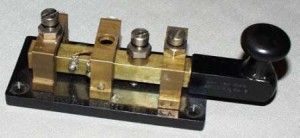
I'll be using a Bunnel #9 key like this one on Straight Key Night.
I’ll be using a Bunnel #9 key like this one on Straight Key Night.

There are two operating events coming up in the next couple of weeks that I’d like to suggest that you participate in – Straight Key Night (January 1) and Kid’s Day (January 5). Straight Key Night, or SKN, runs from 0000Z – 2359Z on January 1. First started to promote the use of straight keys, its charter has been expanded to include the use of bugs and vintage radio gear.

As you probably know, I’m not a big fan of straight keys, but in the spirit of the day, I’ll be using one on January 1, probably my Bunnel Nr. 9, shown at right. When I purchased it, it did not have a knob, but thanks to the machining skills of Lake, AL7N, it’s now back in service. There’s not much on the Internet about this key, but the Bunnell Company history page notes that the #9 key was made by several different companies.

I like using it more than any other straight key that I own. It has a nice light feel to it.

Kid’s Day
The winter version of Kids Day, sponsored by the ARRL and The Boring (Oregon) Amateur Radio Club (which, oddly enough, doesn’t seem to have a website), will be Sunday, January 5, from 1800 to 2359 UTC. The suggested HF frequencies are 28.350 to 28.400 MHz, 24.960 to 24.980 MHz, 21.360 to 21.400 MHz, 18.140 to 18.145 MHz, 14.270 to 14.300 MHz, 7.270 to 7.290 MHz, and 3.740 to 3.940 MHz. Of course, you can operate the repeaters or even EchoLink, whatever it takes to give kids a taste of amateur radio.

I will, of course, be operating this event from WA2HOM, our club station at the Ann Arbor Hands-On Museum. We’ll probably operate mostly on 20m phone, but you can look for us via EchoLink, too, via W8UM-R, the University of Michigan Amateur Radio Club’s repeater.

We’d be happy to set up a sked with you, if you’d like. E-mail me and we can arrange this. Unfortunately, we will only be operating until 2200Z, as that’s when the museum closes.

Filed Under: CW, Kids, Operating

  • « Go to Previous Page
  • Page 1
  • Interim pages omitted …
  • Page 7
  • Page 8
  • Page 9
  • Page 10
  • Page 11
  • Interim pages omitted …
  • Page 15
  • Go to Next Page »

Primary Sidebar

No Nonsense Technician Class License Study Guide (for tests given between July 2026 and June 2030)

New No Nonsense Technican Class Study Guide now available!

The 2026 version of my Tech Class study guide is now available, and as always, the PDF version is FREE!. The ePub version costs $11.97, and a Kindle version and paperback version will be available on Amazon shortly.

Click here to get all of my "No Nonsense" study guides.

Also available: The CW Geek's Guide to Having Fun with Morse Code

W5SWL.Com
Retevis Ailunce H1 DMR Radio
DXpander: Cobweb antennas, Laser Cutting

You’ve got mail!

Enter your email address below and get an email every time I publish a new post.

Email


I frequently teach classes to help newcomers get their licenses. The next class will take place on Saturday, October 10, 2026 on the University of Michigan campus. Click here for more information.

If you can't make the class, subscribe to the mailing list to be notified of when the next class will be held.

You can always download my free study guide, and if you have any questions about the classes, or amateur radio in general, please feel free to email me directly.

Support KB6NU.Com

Donate $7.30 and get two of these cool stickers. Measuring 4.25-in. W by 2.75-in. H, it's perfect for your car, your shack, or wherever!

Contact me

If you have a question or comment about one of my blog posts, or a question about any of the material in my study guides, or just a question about ham radio in general, you can email me at [email protected].

Blogs You Should Also Read

  • AE5X: A CW-centric blog from Kingswood, Texas
  • K0LWC Blog
  • LA3ZA Ham Radio Blog
  • Little Radios, Big Fun – WB3GCK
  • Mr. Vacuum Tube's Blog
  • Radio Artisan – K3NG
  • The K0NR Weblog
  • VE3WDM's QRP Ham Radio Blog
  • W2LJ’s Blog

Ham Radio Websites

  • Dashtoons – The Hammin' Comedy by Jeff K1NSS

Podcasts

  • ICQ Podcast
  • Linux in the Ham Schack
  • No Nonsense Amateur Radio Podcast
  • Resonant Frequency Amateur Radio Podcast

Recent Comments

  • Bulin 47 AI on ICQPodcast Episode 485 – World Cup Special Event Station
  • Jesse Alexander on What do you think of this artwork for the ham radio EMF Explorer
  • CADProps on My first go at 3D printing not quite a success
  • Dan KB6NU on A Media Guide to Amateur Radio
  • Steve Stroh N8GNJ on A Media Guide to Amateur Radio

Meta

  • Log in
  • Entries feed
  • Comments feed
  • WordPress.org

Footer

Copyright © 2026 Daniel M. Romanchik, KB6NU · Log in