New Brochure for Kids

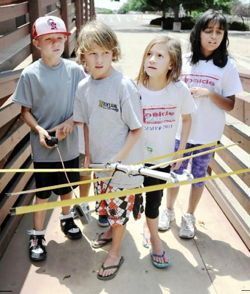
I am a member of the Institute of Electrical and Electronics Engineers (IEEE). They’ve just come out with a brochure designed to inform 11-13 year olds about engineering careers. I think it’s notable because it’s so simple, yet gets the message across. There’s a short news item about the brochure on the IEEE website. You can also download a PDF version the brochure. They do list amateur radio clubs as resources to help kids find out if they might like engineering.

Overall, I think this is a good example of how to design something that would appeal to kids.

Two Approaches to Getting Your Tech License Quickly

I’m not normally a fan of cram-type courses for the Tech license, but under some circumstances it’s appropriate. For example, I would be in favor of holding such a class with a group of Red Cross volunteers so that they could be licensed quickly, if there are experienced amateurs who will be working with them in the future. It would also be in favor of cramming in the case of a family where one parent is an amateur.

In both cases, you can be assured that the new hams will have an Elmer to help them and guide them. Without such Elmering, chances are that the new ham will quickly get bored with ham radio and eventually drop out.

Having said that, I recently came across HAM CRAM, a Technician Class license course designed to be given in two, 3-hour sessions. Richard W9PE, the author of the course, has made his set of PowerPoint slides available for free downloading from his website.

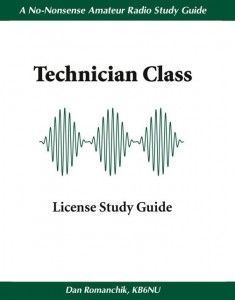
As far as written materials go, I’ve developed a bare-bones license manual that you can use to study for the Technician test. It’s based on a method developed by Bruce W8BBS. What he did for the earlier question pool is to rephrase each question in the form of a statement and then organize the statments to make them readable.

Because Bruce was unable to update his manual for the new question pool, I’ve done it instead. If you have any interest in it at all, please download it and have a look. I’d be interested in any comments, questions, compliments, or complaints that you have. E-mail me!

UPDATE 11/1/06
The Triangle East Amateur Radio Association has published a Tech study guide in PowerPoint format. They say that it can be used by individuals for self-study as well as by instructors teaching a class.

The Elmer Kit

In amateur radio circles, we often hear of “jump kits” or “go kits.” These kits contain supplies and gear that amateur radio operators will find useful if called upon to provide emergency communications.

They include not only radio gear, but personal items, such as toothpaste and toilet paper. The idea is to have this stuff prepared so that in an emergency you can just pick up the kit and go.

In that same spirit, I’d like to propose that Elmers have their own jump kits. Some of the stuff you might carry with you all the time (or at least to all amateur radio events), and then the rest of the stuff you’d have on hand to help other hams when required.

For example, whenever I go to an amateur radio club meeting, I always carry copies of the K7QO Code Course on CD-ROM. You never know when you’ll run into someone that claims he or she wants to learn the code. You get the jump on them if you can pull out a CD-ROM and hand it to them.

You might also want to carry a General Class license manual around with you. Then, when you identify a Technician who is likely to upgrade with a little prodding, you can hand him the manual and tell him to get cracking. To keep your costs down, you can ask people who have taken your General Class courses to donate their license manuals to the cause after they pass their test. If they protest that they want to keep their license manual as a reference, steer them towards the ARRL Handbook, which is a much better reference and probably something they should have anyway.

I have also started collecting equipment that I can loan out or resell at very low cost. I think making available low-cost, but decent quality, gear could spur someone to try a new mode or even upgrade their licenses. For example, in March, I found a Bencher BY-1 at a hamfest for $40. I promptly re-sold this paddle (for the same 40 bucks) to a ham in our club who expressed an interest in working CW. I picked up another one at Dayton, and hopefully, it will find a new home soon, and help someone get on CW.

Earlier in the year, I sold my old Icom IC-735 to a guy who had been in my General Class license course. I made him a deal he couldn’t refuse ($250) with the proviso that once he upgraded, he sell it back to me for the same price. I have since used the money to purchase another IC-735 (I paid $275 for this one) that I hope will find its way into the shack of some other ham who has recently upgraded to General.

I think the IC-735 makes a great starter rig. It has a great receiver, is simple to operate, and if you shop around, the price is certainly right. Not only that, it’s a radio that the average ham can work on, and there’s a great mailing list on which you can ask questions.

Finally, there is some gear that you’ll want to have on hand for use in helping other guys get on the air. One of these is an antenna analyzer. I always encourage guys to get one, but if they don’t, then you can help them tune up their antennas. You might also want to have an EZ-Hang, or some similar device to help them get their antennas up into the trees.

I’m interested in what else I might include in my “Elmer Kit.” Any ideas?

My Shack Looks Like a Ham Radio Repair Shop

These last couple of days, my shack has started to look like a radio repair shop.

On Saturday, I attended a hamfest in the Grand Rapids area, and on the way back, stopped in Greenville to pick up some gear that the family of a Silent Key graciously agreed to donate to my middle school project.

The hamfest, though on the small side, was a lot of fun. At one table, I picked up an air variable capacitor for $2. At another, a crystal for 7.050 MHz for $3. The variable cap is for my regen receiver. The crystal for the matching transmitter. These two babies are going to form the basis of my homebrew station.

The guy who sold me the crystal was fun to talk to. He was a real tinkerer, and we had fun chatting about the various projects we have worked on. While we were chatting, a guy with a MI QRP Club hat came up and joined the conversation. The second guy already had a box full of junk that he said was destined for new projects. Just chatting with those guys made the drive worthwhile.

My New/Old IC-735
I also acquired an Icom IC-735 for $275. There were actually two IC-735s there, and the two guys selling them were situated right next to one another. The first one was a very clean unit and had a $285 price tag on it. I have purchased stuff from the seller before, and I know him to be a very reputable guy. The only negative that I could see was that he did not have a microphone for the radio.

The second IC-735 did not have a price tag, but it did have a microphone, and it even had the little plastic door covering the slide controls. It was dirtier than the first unit, which did give me some pause. At 9:45, both units were still available, and I decided to ask the second seller how much he wanted for his. He said, “Make me an offer.” When I offered $275, he grumbled a bit, but sold it to me anyway. As a bonus, he pulled out the original manual from a pile on the table. With that, I was done for the day, and headed to Greenville.

It’s always sad visiting the families of Silent Keys. This is the third time I’ve done this in the last couple of years. Fortunately, the families have been generally upbeat, and what I try to do is to explain how we will use their donations to help more kids get into amateur radio.

This gentleman had a collection of older gear including:

  • a 2m handheld,
  • three 2m mobile radios,
  • a couple of power supplies,
  • an Icom IC-730 (the predecessor of the IC-735), and
  • some miscellaneous odds and ends

KB6NU Plays Radio Tech
So, now my shack is full of this old equipment, and I’ve been sorting through it all. I first tackled the 2m radios. Oddly enough, the handheld actually turned on, but the battery charge was so low that it quickly died. A trip to Batteries Plus should get this radio back on the air.

The three mobile radios were a mixed bag. After crimping some terminals on the power cord for the Icom IC-28A, I tried turning it on, only to find out that while it turned on, it wouldn’t stay on. Apparently, the detent in the power switch must have failed. I have an e-mail in to Icom to see if a replacement switch is available.

Update 6-9-06: The switch is indeed still available, and it only costs $9.73, plus $4 shipping. From all reports, this is a nice little radio, so investing 14 bucks in it is worth it.

The second one I tried was a Kenwood TM-2530A. This radio turned on, and stayed on, but when I tried to access the repeater, I got nothing, even though I believe that I programmed the PL tone correctly. After doing some research on the Net, I discovered that this radio had an optional tone board. I haven’t cracked it open, but my guess is that it either does not have the TU-7 tone board or the one in it has failed. I did find a company that makes a drop-in replacement, but they’re asking $60 for it!

The third time was the charm. This unit, an ADI AR-146, worked perfectly. A bonus is that it uses the same power connector as the Kenwood. So, one out of three isn’t bad, and the other two units are easily repairable.

Uh Oh
Sunday evening, I finally got around to hooking up the new/old IC-735. After crimping some Power Pole terminals to the end of the power cord and plugging it in, I was relieved to find it light up, and then even more relieved when I heard the receiver come to life.

I was less than relieved, however, when I tried to transmit. After connecting a straight key to the rig, and keying down, the lights dimmed, and even the side tone sounded chirpy. Uh-oh. I hooked up the dummy load and got exactly the same results. Since it was getting late, I disconnected everything and set it aside. The next day, I put out a query on the IC-735 mailing list.

I got a couple of responses, but both asked more questions rather than give answers. This was completely appropriate. One of the questions, for example, asked if this happened on low power as well as high power. Since I hadn’t tried this, I hooked it all back up Tuesday night.

This time, the problem was obvious. As usual, the problem was the operator, namely me.

I have one of those fancy Astron VS-35M power supplies, which not only has current and voltage meters, but also current and voltage controls. Since lately I’ve only been using it to power my VHF/UHF radio, I set the current control down fairly low. When I connected the IC-735, it didn’t complain with just the receiver drawing current, but when I tried to transmit, I hit the current limit, and the voltage dropped. Hence, the lights dimming and transmitter chirping.

I didn’t notice this the other evening when I first hooked it up because the power supply is behind my laptop and the meters weren’t readily visible. Tuesday evening, I moved the laptop, so I could see what the meters were actually doing. When I saw what was happening, my problem was immediately obvious.

All I had to do was crank up the current limit pot, and now everything seems to be working just fine.I tuned to 7.042 MHz last night, called CQ, and got a response from WB2JUF to the very first call. We had a nice half-hour long QSO, and he said the rig sounded good. Needless to say, I now feel much better about my purchase.

The last radio to get some attention was the Icom IC-730. After making a couple more contacts with the IC-735, I hooked up the IC-730. This time, I hooked up the Heathkit keyer so I didn’t have to use the straight key.

Again, the first time I called CQ, I got a reply, this time from KO1K. I mentioned to him that this was my first QSO with an IC-730 that I’d just acquired over the weekend, and he replied that he was also using an IC-730! Now, what’s the chances of that happening??

I went on to work a couple of DX stations after that – XE3ARV on 30m and EA6UN on 40m. So, overall, I’d say that the rig is working.

There are a couple of things that need some attention, though. First, it looks like the preamp relay has died. When I press the preamp button, the radio goes silent. This is, apparently, a common problem with the radio.

Second, it doesn’t hear quite as well as the IC-735. So, my guess is that it just needs some tweaking. I think this is going to make a great radio for the school station.

This Weekend on the Radio at KB6NU

I had a great time on the radio this last weekend here at KB6NU.

First off, was the Fists Spring Sprint. The Fists Sprint is a relatively low-key contest, and it’s a lot of fun.

One reason I like it is that it’s pretty short, It’s called a “sprint” because it only lasts four hours from 1300Z to 1700Z. So, right about the time I’m getting tired of operating, it’s over. :)

This time, I scored 10,556 points (74 QSOs, 364 QSO points, 29 multipliers). While not as good as my score of 11,500 in the Winter Sprint, I’m hoping that it will be good enough for a top ten finish.

Later that evening, I was kind of burned out on CW, so I actually tuned around the 40m phone band for a while and heard K3LBQ calling CQ. We got to talking about how very few people seem to call CQ on 75m anymore. In the middle of our chat, K3DOS broke in and joined us. He agreed that 75m operators seemed to be a cliquish lot.

Somehow–probably because I mentioned that I had just passed the Extra Class test–we got talking about the licensing process. That, of course, led to my rant on how we don’t do a very good job of Elmering Technicians up the ladder, and that my Op-Ed piece on this topic is due to be published in the July QST. We ranted and raved on this topic for about an hour before I pulled the plug, and it was a heckuva QSO.

A Lesson (Plan) Learned

As you may know if you’ve been reading this blog, you know that I’ve been working with a group of middle school kids. Things were going along pretty well until three weeks ago. Then, as I was trying to teach them about frequency and frequency bands, I just lost them. They started talking amongst themselves and that was it for the day. No matter what I did, I just couldn’t regain their attention. It was all very frustrating.

At that point, I appealed to the teacher. She said, “What you need is a lesson plan!” Then, she asked what I was trying to cover, and proceeded to walk me through the process of creating a lesson plan. “Remember the five Es,” she told me, “engage, explore, explain, elaborate, evaluate.”

She then sketched out the plan and said that she’d work on it for the next class. Here’s what she came up with:

  • Engage (five minutes). For this portion of the class, we passed out a worksheet with the key terms being covered in the lesson. We had the kids read the words out loud, and then she asked, “OK, what do all these words have in common?” After the kids answered, she wrote it on the board.
  • Explore (ten minutes). Then, the teacher asked, “How can we find out what these words mean?” The students came up with about five different ways to find the definitions, and the the teacher instructed them to go look up the definitions and write them on the worksheet. Some looked up the words in the dictionary, some got on the Internet, and one collared me and asked me to define them for her.
  • Explain (ten minutes). This part of the lesson is the lecture. I explained the concepts of voltage, current, resistance, conductors and insulators, and Ohm’s Law.
  • Elaborate (ten minutes). In this part of the lesson, I gave practical examples. We talked about solar cells, light bulbs, and the kids came up with some interesting questions and observations.
  • Evaluate (ten minutes). The teacher created a little quiz from some questions that are on the Tech license exam. The quiz sheet also had spaces for students to write down what they learned that day and a spot for them to ask a question.

This lesson plan worked amazingly well. The kids did stay engaged for the most part throughout the entire class, and I think they actually learned something. I know that I walked away from that session a lot more enthusiastic than I did the previous class.

Now, I’m concerned that we won’t have enough time to cover all the material before the end of the year. This is something I’m going to have to go over with the teacher, and come up with a plan to fit it all in.

An EchoLink Perspective

Ralph KB8ZOY emailed me:

My EchoLink alarm went off. The connection was from [a high school student] in Camp Hill, PA. She said she got her ticket as a project in her Physics class at Trinity High School. Part of the assignment was to contact 10 hams. Looks like she is making all the contacts over the internet.

I think it’s very cool that she was able to get her license as part of her high school physics class. I also applaud her ingenuity in thinking of using EchoLink to fulfill the ten-contact requirement. I hope, though, that she’ll continue on and make some on-the-air contacts as well. I’m not one of those guys who doesn’t think EchoLink is ham radio, but it shouldn’t be all there is to one’s experience of ham radio.

This Weekend in Radio at KB6NU

This weekend, I spent a lot of time doing my taxes, but that, of course, is not radio-related. :)

What I did do on Saturday that was radio related is to help Colin KD8CCQ put up an HF antenna and get him on the air. We actually took a crack at this a couple months ago, but our efforts didn’t work out too well.

Colin had purchased an SG-239 automatic antenna tuner, and I had the bright idea to set up a doublet fed with ladder line. I had most of the the parts, and Colin had about 80 feet of antenna wire, so we gave it a go. I went over there one day, and we threw some rope up into a couple of trees he has at his place and hauled up the doublet.

Unfortunately, the thing never worked. The SGC-239 could just not tune the antenna. Colin’s guess is that something’s wrong with the antenna tuner. I now have it in my shack awaiting testing. A thought just occurred to me that perhaps I didn’t do such a great job connecting the ladder line to the antenna wire. I used the Emtech Ladder Grabber, and I don’t think I actually checked for continuity after putting it all together.

In the meantime, Colin’s been off the air. Also, in the meantime, he decided to upgrade his rig from an IC-706 to an IC-756PROIII. And, after our unsuccessful attempt with the doublet, he decided to purchas an Alpha-Delta multiband dipole antenna.

Now, all we needed to do was get this antenna up in the air. To help with this task, I called on Jack, AB8RK. He’d put together a homebrew EZ Hang, a device that combines a slingshot and fishing reel to more easily launch ropes into trees. The first line went pretty smoothly, but the second was a bit more problematic.

One reason for this is that the second tree was a spruce, and there wasn’t really a clear shot. We got the line over an outstretched branch, but it didn’t look all that secure. We tried pulling the line in closer to the trunk, and when we didn’t have much success with that, we decided to try another shot. That shot wasn’t much better than the first one, so Jack tried it again. Unfortunately, on this attempt, the plastic molding holding the slingshot together broke. So, in the end, we had to settle for the first line.

Overall, we goofed around with this for a couple of hours, but eventually, we got the antenna up about thirty-five feet. While the other two guys cleaned up outside, I went inside and put the antenna analyzer on the antenna. On 40m, the SWR was less than 2.0 across the whole band, on 10m, the SWR was pretty good, too. As expected, on 80m the SWR was less that 2.0 over about 100 kHz, centered on 3850. On 20m, the SWR seemed a bit high, but usable with the 756PRO’s internal antenna tuner.

After a little pizza and beer, we fired up the radio and worked a special event station in Florida. I had to take off at this point, but Colin reports that he’s made a bunch of QSOs in the last couple of days. Some of those contacts were Georgia QSO Party contacts.

I also worked the Georgia QSO Party. I made about 21 contacts total, with three of them being phone contacts. There certainly wasn’t as much activity as there was for the VA QSO Party last month. In the VA QSO Party, I made 51 contacts for just about the same amount of time operating.

ARISS Video

Here’s a cool video of an International Space Station contact at the Bradley Bourbonnais Community High School in Illinois.

Thanks to Charlie Sufana, AJ9N, the ARISS mentor for the high school.

NOTE: If you’re using a Mac, you may have to jump through some hoops to get this WMV file to open up.

More Kids and Ham Radio

For the last couple of months, I’ve been working on getting kids more involved with ham radio. I’ve started teaching some kids at a local middle school and have given talks at several schools here in Southeastern Michigan. I’ve also talked to some of the local ham clubs. Here’s the outline of talk I’m giving Tuesday evening to the General Motors Amateur Radio Club.

As always, comments are appreciated.

Getting Kids Into Ham Radio

  • Some recent events
    • Summer 2005: Part of my platform is getting more kids involved in ham radio.
    • Fall 2005: I lose the election.
    • December 2005: At the invitation of Ig, N0EXF, I speak at Scarlett Middle School. Ig is trying to arrange a QSO with NA1SS, the Intl. Space Station.
    • February 8: At the invitation of a science teacher, Sam KC8QCZ and I give a talk on ham radio to 6th, 7th, and 8th graders at the Ann Arbor Learning Community, a charter school in Ann Arbor.
  • A2 Learning Community
    • Feb. 15: We’re invited back to discuss setting up an amateur radio club.
    • March 1: We hold first club meeting.
    • Different than normal Tech classes:
      • More electronics: these kids want to learn how to build stuff.
      • They’re hot to learn Morse Code.
      • First project: no-solder code practice oscillator (http://www.arrl.org/news/features/2003/10/30/1/).
      • Second project: regen SW receiver.
  • Random Thoughts
    • I think it’s hogwash that kids are no longer interested in ham radio.
    • Somehow, ham radio has lost the ability or the will to relate to kids.
    • There is more competition, but we just have to be more proactive.
    • We need courses tailored to kids.
    • Kids want to do things, not learn things.
    • We need to work with parents and teachers as well as kids.
    • I think targeting our efforts at middle schools, rather than high schools, will be more productive.
    • Charter schools and private schools might afford better opportunities than public schools.
  • Web Resources
    • HamKids – www.hamkids.com
      Site run by Gordie, KD8CDP, and his father, Mike, KD8BUS.
    • AARC Jr. – www.ki3ds.org
    • K3ASK – www.kidshamradio.com
    • Tuesday night net on EchoLink. Connect to KD8BUS.
    • ICOM Kids Section – http://www.icomamerica.com/amateur/kids/
    • ham_instructor Yahoo Group – http://groups.yahoo.com/group/ham_instructor/

I really don’t know where all this is going. When I’ve talked this up, at clubs or on the air, I get a lot of people nodding their heads, but what we really need is to get more people interested in working with kids. If that’s you, get in touch.