• Skip to primary navigation
  • Skip to main content
  • Skip to primary sidebar
  • Skip to footer

KB6NU's Ham Radio Blog

KB6NU's Ham Radio Blog
  • HOME
  • Study Guides
  • Teach a One-Day Tech Class
  • W8SRC Repeater Guide
  • Advertise
  • Hire Me

Contests

A busy weekend at KB6NU

March 16, 2021 By Dan KB6NU 1 Comment

This last weekend was a very busy on here at KB6NU. I attended the QSO Today Virtual Expo, chatted with some local ham friends on Zoom, and worked three state QSO parties.
On Friday night, I checked into the QSO Today Virtual Ham Expo. There wasn’t a lot going on, but I sat in on the live streaming of the Ham Radio Workbench and Ham Radio 2.0 podcasts and wandered around the booths a bit. As you might expect, there weren’t many people in the booths. The busiest one that I dropped in on was the CWops booth. I think there were four or five of us in there.

On Saturday morning, before the Virtual Expo got started, I dropped into a Zoom meeting that takes place every Saturday morning. Before the pandemic, this meeting used to take place at a local bagel shop, but now we do it online. For some reason, it’s called “The Clinic.” The Clinic got started when some guys would join Dik, KC8UXT, at his favorite breakfast spot, Barry Bagels, every Saturday morning.

Sadly, Dik is now an SK, but the Clinic continues. We get started about 9 am Eastern time and BS about ham radio for a couple until about 11 am.  Feel free to drop in and join the Zoom meeting.

This Saturday, I left the Clinic at 10 am to make some contacts in the Oklahoma QSO Party, the first of three state QSO parties over the weekend. By the time I got set up it was 10:15, and over the next half hour, I managed to make five QSOs. That was enough to qualify my participation for the State QSO Party Challenge.

At 11 am, it was back to the Virtual Expo. Over the next 5-6 hours, I attended presentations and did some booth duty in both the ICQPodcast booth. I say booth duty, but it was really just chatting with the ICQPodcast guys and the occasional listener.

As you may have heard, there were some software problems with the Virtual Expo. Some attendees had problems with their login credentials and some of the sessions didn’t work quite right. The sessions on ionospheric propagation and machine learning were two that I wanted to attend, but unfortunately, they never started.

Several sessions did work correctly, though, including the session on amateur radio branding. That session was moderated by Martin, M1MRB, of the ICQPodcast, and was quite a good discussion. Fortunately, all of the presentations were pre-recorded and will be available to attendees for the next 30 days on Virtual Expo website. After that, they’ll be uploaded to the Virtual Expo YouTube channel.

After eating some dinner, it was back to the shack, to make some contacts in the Idaho QSO Party. After making a couple of contacts on 40m, I switched to 80m and made a third one. Since I don’t do very well to the west, I figured that was enough, and shut down the station for the day.

More troubles on Sunday

At 11 am Sunday morning, it was back to the Virtual Expo. Unfortunately, the Expo’s software woes continued. I think that what happened in the session that I was “hosting” was a great example of how things went wrong.

I’m not sure exactly why the organizers did this, but they decided to tack on a title screen to each video and run that screen along with some elevator music for three minutes. That got old pretty fast, so the speaker and I decided to start the video before making the session go live, then making the session live after it had run for two minutes. Bad move. When we did make the session live, no one could see the video. Stopping and re-starting the video did not work.

Someone in the audience suggested ending the session and restarting it. That sounded good, but I didn’t have a good feeling about this. One of the sessions that I had wanted to attend on Saturday had ended prematurely, and I was guessing they had a similar problem with their video and tried the same maneuver. That session never took place. I said as much, but the speaker wanted to try it so we did. Of course, we couldn’t get the session re-started after doing that.

The speaker had a link to the online support, so we tried that. I was going to say that these guys were pretty clueless, but would be unfair. They were being asked to support a system that was poorly designed and had lots of bugs. They did the best they could, but they just really couldn’t do much. After about a half hour, they decided just to add a session with the same title. A little more than 35 minutes after the session was to start, we were able to start the second version of the session. The rest pretty much went off without a hitch.

EXCEPT, my presentation on teaching online classes was to start an hour after this session that I was hosting. Since the session started late, I told the speaker that I was going to have to cut out early and head over to my session. WRONG! A host could not leave a session that he or she was hosting until the session ended. Nor, could the support people transfer the host status from me to the speaker. I even tried quitting the browser and then signing in to the Virtual Expo again. As soon as I signed in, the software put me in the session that I was hosting. ARRRGGGGHH.

Fortunately, I had the phone number for the host of my session. I phoned him and told him to start the video, and I would join the session as soon as I could. Fortunately, there were not many questions in the first session, and as soon as I ended the session, the software transferred to my session, where the video was just finishing up. So, I was able to field questions there. All’s well that ends well, I guess. :)

After giving my presentation, I hung out in the ICQPodcast booth for a while, but I had one more QSO party to work this weekend: the Wisconsin QSO Party. Over the next hour and a half, I logged nearly 50 QSOs for a score of just over 3,000 points.

At that point, I’d had plenty of ham radio over the weekend. My wife had been itching to wash our car, so we hopped in and went to one of those wash-it-yourself places. After getting the car looking like new (well, almost like new), we got some takeout and had a nice dinner. All in all, it was a great weekend!
Filed Under: Clubs, Contests, Hamfests, Operating Tagged With: Virtual Expo

Operating Notes: Cold shack, contesting for fun, WB0ISG

February 23, 2021 By Dan KB6NU 1 Comment

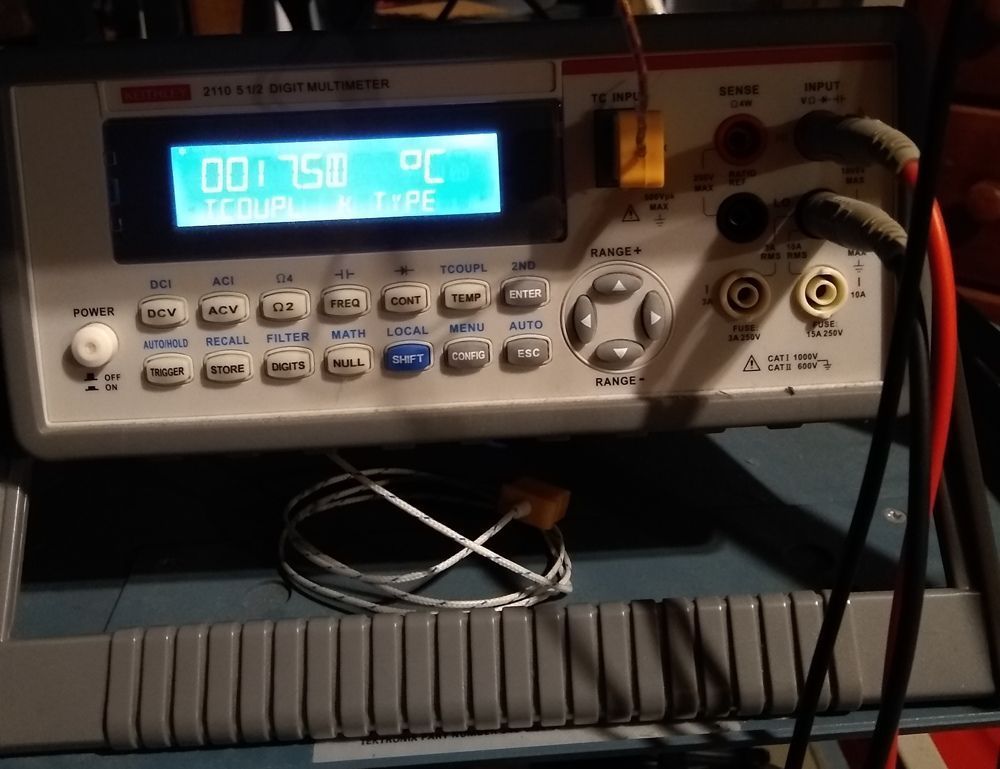
This time of year, it’s cold down in my basement, where my shack is located. To measure just how cold it is, I stuck a K thermocouple into my Fluke 5-1/2 digit DMM. After a fair amount of settling time, it measured 17.5°C, or 63.5°F.

It’s supposed to be 40 degrees outside today, so maybe the basement will also warm up a little.

Contesting for fun

I played around a little in last weekend’s ARRL International DX CW Contest. I operated for about two hours total, making 40 contacts in 30 different DXCC entities. This coming weekend, I plan to participate in the South Carolina QSO Party on Saturday and the North Carolina QSO Party on Sunday. For more information on upcoming state QSO parties—which are a great way to get started in contesting because they’re very low stress events—go to the State QSO Party Challenge Calendar.

WB0ISG keeping his grandfather’s call on the air

A couple of days ago, I worked Don, WB0ISG. I was pleasantly surprised when I looked him up on QRZ.Com that, despite having a call that dates back to the 1970s, he’s a relatively young guy. (These days, I’m pleasantly surprised any time I work someone on CW that’s younger than I am.)

As it turns out, WB0ISG was his grandfather’s call sign. He writes:

I started out my ham career as KG5LKO, but changed to WB0ISG once I found my grandpa’s old call. It hadn’t been used since 1985, before I was born. Nice to have it back out in the ether. If you knew my grandpa, please send me a message. I’d love to hear from you.

Don is also a blogger. His site, WB0ISG.Com, includes the following sections:

  • Learn the code
  • QRP is for beginners
  • Techs on HF
  • Build your gear
  • Operate outside

Check it out.


Filed Under: Contests, On the Internet, Operating Tagged With: QSO parties

Operating notes: Slow down to bust contest pileup, panadapter helps work DX, HW U?

February 14, 2021 By Dan KB6NU 2 Comments

Slow down to bust a contest pileup

In the Minnesota QSO Party last weekend, there was a big pileup trying to work a station in some remote county. The operator was working about 23 – 25 wpm, so I replied at that speed. I even sped up a little thinking that I might be able to slip my call in before the others.

Well, after several unsuccessful calls, and hearing the MN station reply to several slower stations, I decided to slow down myself. Bingo! I got a reply to my first call at the slower speed. My guess is that the slower speed made my call easier to copy and to stand out from the others. I don’t know if this tactic would work in a bigger contest, but I’m going to use this tactic again in a future QSO party.

Panadapter helps work DX

Last night, I was trying to squeeze another QSO out of 40m, but not having a lot of success calling CQ just below 7030 kHz. Scanning the panadapter, I saw a lone signal down on 7012 kHz. From the pattern, I guessed that the station was calling CQ. Sure enough, I tuned down there (actually clicked on the signal in the panadapter) and found a YV5 calling CQ. We each gave each other 579 reports, and I had another DX QSO in the log.

HW U?

At the end of the first transmission, it’s customary to send HW? short for “how copy?” Well, if the signals are good, and I’ve worked the other station before and know the operator, I’ve started sending HW U? instead. This is short, at least in my book for, “How are you?”

This is a little more personal than just HW? and seems to elicit a more personal response. It’s definitely a better conversation starter, and you’ll certainly make a better impression on the operator at the other end. Give it a try. You never know what you’ll learn.

Filed Under: Contests, CW, Gear/Gadgets, Operating

ARRL extends Field Day rules wavers, sets class D and E power limit

February 11, 2021 By Dan KB6NU 1 Comment

From the ARRL website…


The COVID-19 pandemic-modified ARRL Field Day rules from 2020 will continue this June with the addition of a power limit imposed on Class D (Home Stations) and Class E (Home Stations-Emergency Power) participants. The news from the ARRL Board’s Programs and Services Committee comes as many clubs and groups are starting preparations for Field Day in earnest. Field Day 2021 will take place June 26 – 27.

“This early decision should alleviate any hesitancy that radio clubs and individual Field Day participants may have with their planning for the event,” said ARRL Contest Program Manager Paul Bourque, N1SFE.

For Field Day 2021:

  • Class D stations may work all other Field Day stations, including other Class D stations, for points. This year, however, Class D and Class E stations will be limited to 150 W PEP output.
  • An aggregate club score will be published — just as it was done last year. The aggregate score will be a sum of all individual entries that attributed their score to that of a specific club.

ARRL Field Day is one of the biggest events on the amateur radio calendar. Last summer, a record 10,213 entries were received.

“With the greater flexibility afforded by the rules waivers, individuals and groups will still be able to participate in Field Day, while still staying within any public health recommendations and/or requirements,” Bourque said.

The preferred method of submitting entries after Field Day is via the web applet. The ARRL Field Day rules include instructions on how to submit entries, which must be submitted or postmarked by Tuesday, July 27, 2021.

The ARRL Field Day web page has complete rules and entry forms, as well as any updated information as it becomes available. Join the ARRL Field Day Facebook page.

Filed Under: ARRL, Contests Tagged With: Field Day

Amateur radio in the news: Kids discover new (old?) way to communicate, training scouts

February 8, 2021 By Dan KB6NU 5 Comments

Young students discover a different form of communication

In a year that has often been isolating, eight students from Foxboro are exploring a different way to communicate. They are taking a virtual course in Morse code through the [CWops] CW Academy.

Liam Polis, 11, a sixth-grader who is home-schooled this year, said his mother signed him up for the class, and at first, he wasn’t sure about it, but then found it to be fun. “It’s different than other classes because we learn on our own and then check in with the teacher, but it’s fun. I learned a lot about the history and use of Morse code and also the letters: a, e, i, o, s, t, n, m, y, l and number 1 for week one,” Liam said.

…read more

When Scoutmasters Got Trained to be Amateur Radio Operators

Did you know that amateur radio supplies can come in handy when the grid is down? In case you didn’t realize this fact before, now you do! Scott deMasi, the assistant scoutmaster, knew the right way to respond to such an alarming situation with the power down in Kingwood’s subdivision in Texas. In 2017, the devastating Hurricane Harvey (Category 4) had wreaked havoc in many parts of the region, including Scott deMasi’s subdivision.

After the water level decreased, the two assistant scoutmasters, David Godell and Scott deMasi, sat down and worked for a solution to effectively communicate with their troop of a hundred scouts. Scott deMasi had spent 15 years as an amateur radio operator and knew the effectiveness of the ham radio in times where one’s survival is at risk. The task left was to train their troop of 100 scouts and their parents to maneuver ham radios. With the power down and roads flooded with water, operating a ham radio was indeed a lifesaving skill.

…read more

Mississippi Valley Amateur Radio holds training in WXOW’s parking lot

LA CRESCENT, Minn. – The Mississippi Valley Amateur Radio Association set up camp in the WXOW parking lot on Saturday for the day. Vice President Bill Klein-Schmidt explained they can set up anywhere they want and they try to do it as often as they can.

“Basically what we are doing today is what they call the Minnesota QSO party and what that consists of is us trying to contact as many counties in the state of Minnesota that we can in a certain period of time,” said Klein-Schmidt.

He said trainings also help them practice setting up their gear quickly and in cold, bad weather. It is important because if communication were ever to go down, they would still be able to communicate with people through ham radio.

…read more

Filed Under: Contests, CW, Kids Tagged With: CWOps, MN QSO Party, scouting

Amateur radio in the news: lots of hams in eastern IA, Winter Field Day in MA, reaching out to law enforcement

February 3, 2021 By Dan KB6NU Leave a Comment

Who’d a thunk it? But, eastern Iowa is where Collins is located……Dan

2nd-largest per-capita group of amateur radio operators in the world call Eastern Iowa home

When a derecho packing winds of 80 to 100 miles per hour — and gusts topping 140 miles per hour — hit Eastern Iowa in August, about 400,000 Iowans were left without power and many had no cell service. That meant no television news, no cable updates, and for many that rely heavily on cellphones rather than landlines, limited phone access. The Cedar Valley Amateur Radio Club has a motto for those times: “When all else fails, radio.”

…read more


Local radio club braves cold to compete in international contest

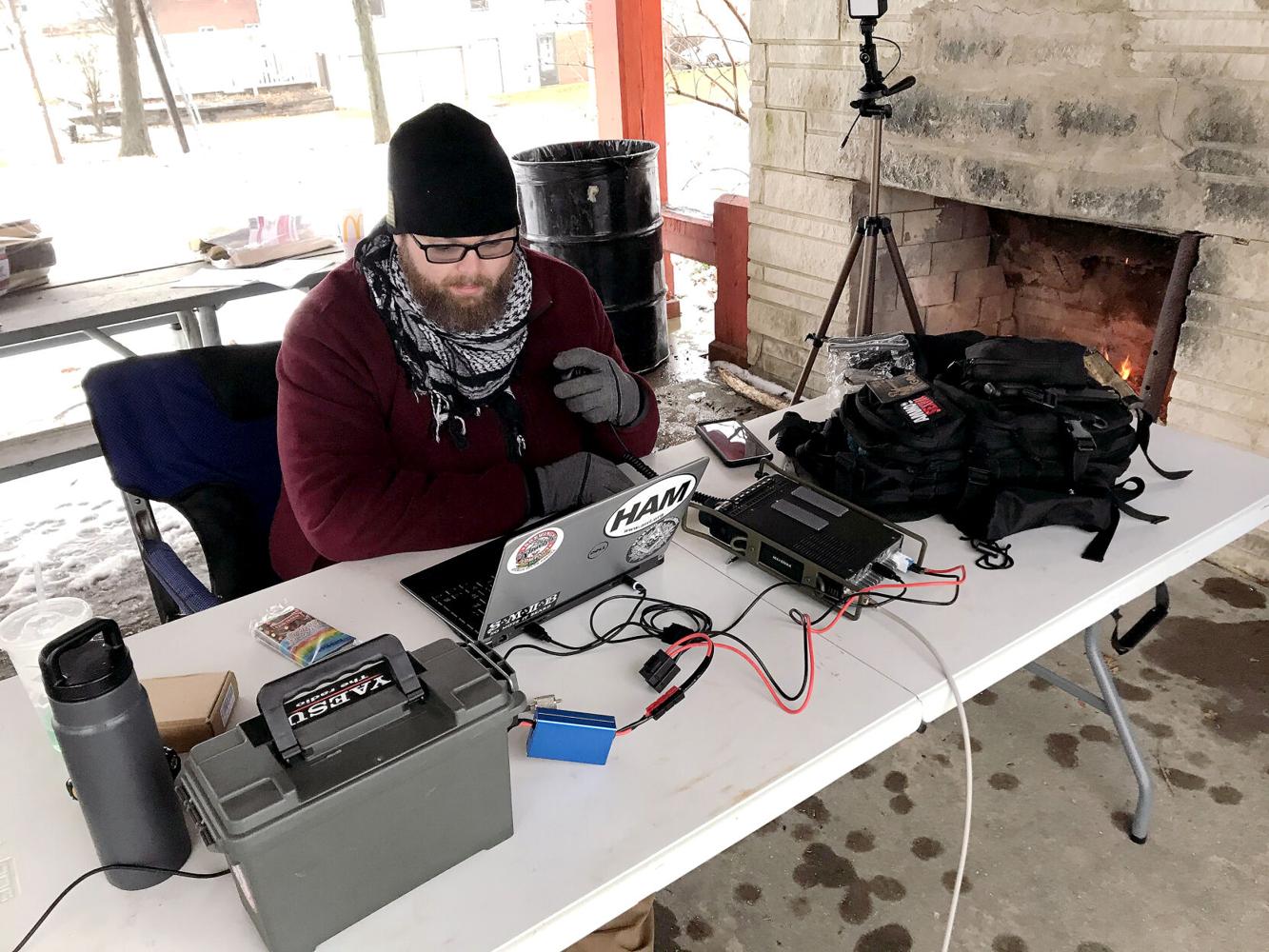
On Saturday, people huddled around radio transmitters in Community Park in Effingham to participate in a worldwide competition put on by ham radio enthusiasts. The event is called Winter Field Day and was organized by the Winter Field Day Association. Running 24 hours, from 1 p.m. on Saturday to 1 p.m. Sunday, the event is centered around making connections with other people. Throughout the event, radio operators turned their dials to different frequencies, searching for other radio operators. If they find someone calling “CQ,” which is a radio-style invitation to talk, they briefly exchange information like their call sign and location and then get back to hunting for others.

…read more


Reaching out to community groups is always a good idea….Dan

President and VP of Lawrence County Amateur Radio Club speak at BRTC

Glendall Floyd and Ray Maynard, president and vice president of the Lawrence County Amateur Radio Club, were guest speakers for the Law Enforcement Training Academy at Black River Technical College on Jan. 11. Floyd and Maynard discussed the uses of amateur radio, also known as ham radio, and provided a list of “22 things you can do with amateur radio.” Among those listed, the speakers emphasized that ham radio can be used for public service.

…read more


Filed Under: Clubs, Contests, Operating, Promotion & PR

Have more fun in state QSO parties with the State QSO Party Challenge

January 20, 2021 By Dan KB6NU 1 Comment

I have always been a fan of QSO parties. There are several reasons for this:

  1. They are a lot more laid back than most contests. Operators will often take an extra ten seconds or so to wish you good luck or joke with you a bit, especially on phone.
  2. You can be a “big fish in a small pond.” Since there are fewer contestants in a state QSO party than say in the CQ World Wide DX contest, you have a better chance of being up towards the top than down towards the bottom.
  3. You get to learn a lot of cool county names such as Snohomish (WA) and Rio Arriba (NM).

In 2020, operating state QSO parties got even more fun with the advent of the State QSO Party Challenge. According to the website,
The annual State QSO Party Challenge recognizes all radio amateurs’ participation in the U.S. State and Canadian Province QSO parties. It is open to any radio amateur who participates in any of the approved State QSO Parties (SQPs). Participants must simply submit their scores to 3830Scores.com to be included in the Challenge.

There are 45 QSO parties included in the Challege:

  • 7th Call Area QSO Party
  • Alabama QSO Party
  • Arizona QSO Party
  • Arkansas QSO Party
  • British Columbia QSO Party
  • California QSO Party
  • Colorado QSO Party
  • Delaware QSO Party
  • Florida QSO Party
  • Georgia QSO Party
  • Hawaii QSO Party
  • Idaho QSO Party
  • Illinois QSO Party
  • Indiana QSO Party
  • Iowa QSO Party
  • Kansas QSO Party
  • Kentucky QSO Party
  • Louisiana QSO Party
  • Maryland/DC QSO Party
  • Michigan QSO Party
  • Minnesota QSO Party
  • Mississippi QSO Party
  • Missouri QSO Party
  • Nebraska QSO Party
  • Nevada QSO Party
  • New England QSO Party
  • New Hampshire QSO Party
  • New Jersey QSO Party
  • New Mexico QSO Party
  • New York QSO Party
  • North Carolina QSO Party
  • North Dakota QSO Party
  • Ohio QSO Party
  • Oklahoma QSO Party
  • Ontario QSO Party
  • Pennsylvania QSO Party
  • South Carolina QSO Party
  • South Dakota QSO Party
  • Tennessee QSO Party
  • Texas QSO Party
  • Vermont QSO Party
  • Virginia QSO Party
  • Washington State Salmon Run
  • West Virginia QSO Party
  • Wisconsin QSO Party

Participants are recognized for reaching five levels of achievement–Bronze, Silver, Gold, Platinum and Diamond—and this year, you must participate in at least 50% of the SQP Challenge approved contests and submit a log with at least two valid contacts to the contest manager in addition to the 3830scores.com scores submission. Visit their website for the complete rules. There’s also a video explaining the Challenge:

According to ContestCalendar.Com, it looks like the first state QSO party of 2021 is the Minnesota QSO Party on February 6, 2021. The Vermont QSO Party follows right behind on February 7, 2021. February, March, and April are big months for state QSO parties. I count 14 total during these three months.

This year, I’m going to make a more concerted effort to participate in these contests. So, if you’re going to be operating the state QSO party in your state, be listening for me.

Filed Under: Contests Tagged With: QSO parties

ARRL changes rules for 2020 Field Day

May 29, 2020 By Dan KB6NU Leave a Comment

Since many of us are still hunkering down, and that doesn’t look like it’s going to change much by the end of June, the ARRL has modified the Field Day rules for this year. The biggest change is that Class D stations, that is home stations using commercial power, can now work other Class D stations for points. Previously, this wasn’t allowed.

The second change is that the ARRL will publish aggregate club scores this year. In previous years, this was only done for Class A and Class F entries. Remember, though, Field Day isn’t a contest (yeah, right!).

Here’s the official announcement:

Temporary Rule Waivers for ARRL Field Day 2020

5/28/2020

With one month to go before 2020 ARRL Field Day, June 27-28, the ARRL Programs and Services Committee (PSC) has adopted two temporary rule waivers for the event:

1) For Field Day 2020 only, Class D stations may work all other Field Day stations, including other Class D stations, for points.

Field Day rule 4.6 defines Class D stations as “Home stations,” including stations operating from permanent or licensed station locations using commercial power. Class D stations ordinarily may only count contacts made with Class A, B, C, E, and F Field Day stations, but the temporary rule waiver for 2020 allows Class D stations to count contacts with other Class D stations for QSO credit.

2) In addition, for 2020 only, an aggregate club score will be published, which will be the sum of all individual entries indicating a specific club (similar to the aggregate score totals used in ARRL affiliated club competitions).

Ordinarily, club names are only published in the results for Class A and Class F entries, but the temporary rule waiver for 2020 allows participants from any Class to optionally include a single club name with their submitted results following Field Day.

For example, if Podunk Hollow Radio Club members Becky, W1BXY, and Hiram, W1AW, both participate in 2020 Field Day — Hiram from his Class D home station, and Becky from her Class C mobile station — both can include the radio club’s name when reporting their individual results. The published results listing will include individual scores for Hiram and Becky, plus a combined score for all entries identified as Podunk Hollow Radio Club.

The temporary rule waivers were adopted by the PSC on May 27, 2020.

ARRL Field Day is one of the biggest events on the amateur radio calendar, with over 36,000 participants in 2019, including entries from 3,113 radio clubs and emergency operations centers. In most years, Field Day is also the largest annual demonstration of ham radio, because many radio clubs organize their participation in public places such as parks and schools.

Due to the COVID-19 pandemic, many radio clubs have made decisions to cancel their group participation in ARRL Field Day this year due to public health recommendations and/or requirements, or to significantly modify their participation for safe social distancing practices. The temporary rule waivers allow greater flexibility in recognizing the value of individual and club participation regardless of entry class.

ARRL is contacting logging program developers about the temporary rule waivers so developers can release updated versions of their software prior to Field Day weekend. Participants are reminded that the preferred method of submitting entries after Field Day is via the web applet. The ARRL Field Day rules include instructions for submitting entries after the event. Entries must be submitted or postmarked by Tuesday, July 28, 2020.

Personally, I plan to operate 1B-Battery. I’m going to set up my KX3 on the deck and my 20m/40m fan inverted-V antenna in the yard. I’ve just acquired a couple of solar panels, too, and plan to get the 100 point bonus for alternate power. In addition, I’m going to shoot for other bonus points, too:

  • copy the bulletin—no brainer
  • promote my location on social media—I am going to get on NextDoor and invite neighbors over to watch from an acceptable “social distance.”
  • put some literature down at the bottom of the hill near the street and claim a public information table.
  • send a press release to the local online paper and claim a media publicity credit.
  • perhaps get someone under 20 to come and operate while I coach from an acceptable “social distance.”

For more ideas on what you can do for Field Day, take a look at this presentation by Anthony, K8ZT. It has a lot of great ideas.

I’m really going to miss helping newcomers operate the GOTA station,  the food, and all the camaraderie, but this should be fun, too.

Filed Under: ARRL, Contests, Operating Tagged With: Field Day

Operating notes: Hamvention QSO Party, QRP, FRLogger

May 17, 2020 By Dan KB6NU 3 Comments

As many of you know, this was Hamvention weekend, and because the event was cancelled, it was a sad weekend for many of us. To help us get over our disappointment the World Wide Radio Operator’s Foundation (WWROF) sponsored the first Hamvention QSO Party yesterday.

It was a fun event. I made 150 contacts in 3-1/4 hours and scored 168 points. (You got 10 points for contacting W8BI, the Dayton ARA station, and I was fortunate enough to get them twice.) Here’s the breakdown:

Band  CW Q s Phone Qs
80 17
40 97 26
20 10
Total Qs 126 24 150
Total Score  168

The exchange was a signal report (599 or 59) and the year that you first attended the Dayton Hamvention. Other than W8BI (1952, the first year for the Hamvention), the station that gave me the earliest year was K4AVX, who gave me a “59.”

Life’s too short for QRP?

Speaking of the Hamvention QSO Party, there’s been some chatter on the Flying Pigs QRP mailing list. Mostly, it was complaining about the poor conditions. My feeling is that if conditions aren’t good for QRP, crank it up to at least 100 W. Why miss out on the fun being had because you’re not running enough power.

FRLogger

And now for something completely different….

While perusing the FlexRadio Community message board, I came across a link to FRLogger, a logging program designed to work with the FlexRadio. It sounded like a great program, and you can’t beat the price (FREE!), so I downloaded it.

At first, I had problems importing the ADIF from ACLog. This was completely my fault. First of all, ACLog didn’t have a QTH field, so when I set that up, I defined a “City” field. I thought I could simply change the ADIF field name to QTH, and then import it. I was flummoxed when that didn’t work. I enquired about this on the FRLogger mailing list and was assured that it would work, so I gave it another go.

What I discovered is that Notepad didn’t like such a big file (>10 Mbytes). When I told it to search and replace, the little blue wheel whirred, but not replacements were made. I took the file up to my Mac, edited the file with BBEdit, and it imported without any problems.

With FRLogger, I can do things with the FlexRadio that I don’t think that the SmartSDR software can do. For example, you can smooth S-meter readings by averaging a number of readings. Another example that I really like is that you can digitally record the audio. I don’t have to muck around with my little hand-held recorder.

It’s not perfect, but the author, WS7M, is working on it, and I’ve offered to help him with the documentation. I think I’m really going to enjoy using it.

Filed Under: Contests, Operating, Software Tagged With: FRLogger, Hamvention QSO Party

Operating notes: activity down?, New England QSO Party, new speakers

May 7, 2020 By Dan KB6NU 2 Comments

After most of the country went on lockdown, I noticed an increase in activity on the CW bands. I had high hopes that this level of activity would not only persist through the pandemic, but also keep increasing.

Unfortunately, that early burst of activity seems to have waned. We’re not back to pre-lockdown activity, but it seems to have peaked. Please prove me wrong. I want to hear more of you on the air.

NEQP 2020

Last weekend, I participated in the New England QSO Party. I like this one because there are lots of stations on the air, and there are lots of multipliers. Also, I seem to get into New England pretty well from here.

I was only able to get on for about an hour on Saturday. I was a little disappointed with that, but then found out that there was also a session on Sunday. I got to operate a little more on Sunday, and made a decent number of contacts on Sunday. I even made some phone contacts.

New speakers for the Flex

I’ve mentioned this before, but one of the things that disappoints me about my Flex 6400 is that I cannot use my Motorola communications speaker with it. You must use an amplified speaker.

I tried a couple of cheap PC speakers that I had in the shack, but both of them suffered from a severe case of RFI, making them unusable. So, I needed to find a set of speakers that would work properly in the RF environment that is my shack. On the FlexRadio community website, I found just the information that I was looking for.

Most of the guys who replied to the item seem to be using $99 Bose speakers. That seemed a bit expensive to me, so I chose the second most popular choice, the Creative T20 Series II speakers. I bought mine from Amazon, and I was going to include a link, but it looks like Amazon isn’t selling them any more.

They seem to be a good choice. They sound pretty good, and I don’t hear a peep out of them when I’m transmitting. The sound is different, and it took a little getting used to, but now I’m pretty happy with them.

Filed Under: Contests, Operating

  • « Go to Previous Page
  • Page 1
  • Page 2
  • Page 3
  • Page 4
  • Interim pages omitted …
  • Page 16
  • Go to Next Page »

Primary Sidebar

No Nonsense Technician Class License Study Guide (for tests given between July 2026 and June 2030)

New No Nonsense Technican Class Study Guide now available!

The 2026 version of my Tech Class study guide is now available, and as always, the PDF version is FREE!. The ePub version costs $11.97, and a Kindle version and paperback version will be available on Amazon shortly.

Click here to get all of my "No Nonsense" study guides.

Also available: The CW Geek's Guide to Having Fun with Morse Code

W5SWL.Com
Retevis Ailunce H1 DMR Radio
DXpander: Cobweb antennas, Laser Cutting

You’ve got mail!

Enter your email address below and get an email every time I publish a new post.

Email


I frequently teach classes to help newcomers get their licenses. The next class will take place on Saturday, October 10, 2026 on the University of Michigan campus. Click here for more information.

If you can't make the class, subscribe to the mailing list to be notified of when the next class will be held.

You can always download my free study guide, and if you have any questions about the classes, or amateur radio in general, please feel free to email me directly.

Support KB6NU.Com

Donate $7.30 and get two of these cool stickers. Measuring 4.25-in. W by 2.75-in. H, it's perfect for your car, your shack, or wherever!

Contact me

If you have a question or comment about one of my blog posts, or a question about any of the material in my study guides, or just a question about ham radio in general, you can email me at [email protected].

Blogs You Should Also Read

  • AE5X: A CW-centric blog from Kingswood, Texas
  • K0LWC Blog
  • LA3ZA Ham Radio Blog
  • Little Radios, Big Fun – WB3GCK
  • Mr. Vacuum Tube's Blog
  • Radio Artisan – K3NG
  • The K0NR Weblog
  • VE3WDM's QRP Ham Radio Blog
  • W2LJ’s Blog

Ham Radio Websites

  • Dashtoons – The Hammin' Comedy by Jeff K1NSS

Podcasts

  • ICQ Podcast
  • Linux in the Ham Schack
  • No Nonsense Amateur Radio Podcast
  • Resonant Frequency Amateur Radio Podcast

Recent Comments

  • Dan KB6NU on The EMF Explorer: A badge for ham radio?
  • Travis Good on The EMF Explorer: A badge for ham radio?
  • MARTIN ROBERT ROTHFIELD on The EMF Explorer: A badge for ham radio?
  • Mike Chen on Operating Notes, January 5, 2026
  • Rob W4ZNG on The EMF Explorer: A badge for ham radio?

Meta

  • Log in
  • Entries feed
  • Comments feed
  • WordPress.org

Footer

Copyright © 2026 Daniel M. Romanchik, KB6NU · Log in