DX QSLs spell words, too

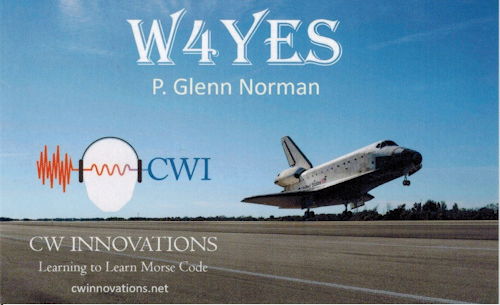
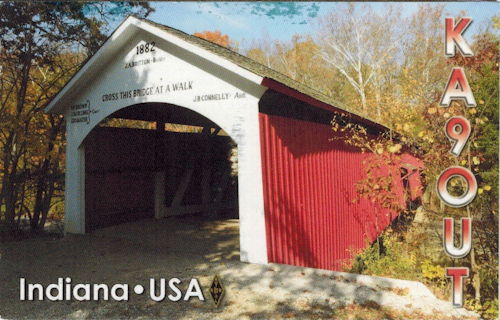
These are for WA2HOM, but I had to post them here because the QSLs are so cool. The VE7TUB QSL is especially cool because it’s from a special event station set up for a bathtub race.

ve7tub-qsl

ea3box-qsl

Sometimes the ARRL just doesn’t get it

ARRLWhen I renewed my ARRL membership, I must have submitted the order twice because there were two charges for $76 on my credit card bill. At first, I was going to ask for a refund from the ARRL, but then thought, what the heck, I’ll just let it go and have four years of membership, not just two.

I wanted to make sure, though, that I had actually gotten four more years of membership. So, I went to arrl.org, logged in, and went searching for my membership expiration date. I must have wasted about 15 minutes looking for it. Finally, it occurred to me that it might be printed on the electronic membership card that you can print out. Sure enough, it was there, and I was able to confirm that I was good for another four years.

I emailed the ARRL about this, noting that this should be shown on the member’s profile somewhere. I shortly received a reply from a member services representative, “Thank you for your inquiry. The IT Dept are working on adding the expiration date to the web site. If you log in, then click on edit profile, then edit groups, the number of days left on your membership is listed there.”

I replied to that e-mail, noting that having to go to the groups page for this information is definitely not the most intuitive thing to do. Not only that, it doesn’t really say explicitly when my membership expires. All it really tells me is that I am a member of the “full members” group for another 1,500 days or so.

Now that I was on the groups page, I noticed some other things. This page tells me that I am a member of the following groups:

  • Volunteer Examiners
  • Michigan
  • Assistant Section Managers
  • Teachers
  • Instructors
  • Great Lakes
  • Michigan
  • Full Regular
  • Members

This raised a number of questions:

  1. Why am I in the Michigan group twice?
  2. What’s the difference between instructors and teachers?
  3. Why do most of these groups have no information on the page I get taken to when I click the “Go Now!” link.
  4. Why can’t I “unjoin” these groups if I want to?

I hate to sound harsh, but it seems to me that this page is pretty close to being useless. It certainly is useless to me. When I e-mailed the ARRL this list of questions–noting that these were rhetorical questions–I got an e-mail back offering to “help with your questions.”

<SIGH> Sometimes the ARRL just doesn’t get it.

IS it TEA for me?

More QSLs from stations whose calls spell words:

n6tea-qsl

I worked N6TEA during our W8P End Polio Now special event.

k9is-qslI worked Steve, K9IS, during the WI QSO Party a couple of weeks ago.

On the air this weekend at WA2HOM

WA2HOM is our club station at the Ann Arbor Hands-On Museum. I go down there nearly every weekend and operate for anywhere from two to eight hours. This weekend, I had a lot of fun down there.

This photo, from the Boy Scouts of America website, shows one Cub Scout sending code to another.

Late last week, I was contacted by a woman who was a Cub Scout pack leader, asking if she could bring some Scouts by. Silly question. Of course, she could! We arranged to meet around 1:45 on Saturday. Well, right on time, she arrived with three Cub Scouts in tow.

Fortunately, I had just made contact with Jim, K0JIM, and he had a really solid signal here in Ann Arbor. That’s important because it’s sometimes difficult for inexperienced operators to hear a weak signal or one that’s accompanied by a lot of noise. When signals are weak or hard to copy for any reason, the kids get frustrated.

We were doubly fortunate in that Jim was just great with the kids. He asked each their name and got them to tell him a little bit about themselves. And, none of the kids were mike-shy, so it was a good experience for everyone involved. In addition to having them talk on the air, I took them over to our Morse Code display and showed them how to send their names in Morse Code.

I really hadn’t planned to go down on Sunday, but after doing some things around the house, I decided to zip down there about 2:30 pm to check into the Rotarians on Amateur Radio net. It’s so much easier to do from down at the museum because of the beam antenna. I didn’t hear a peep on the net frequency (14287 kHz) at either 3 pm or 4 pm (2000Z, which is the time listed on the ROAR website), though, so I’m not sure what’s going on there.

When I’m at the museum, I’m usually also tweeting. (I’m @kb6nu on Twitter.) I tweeted that 20m sounded kind of quiet, and got a reply from @hamradioireland, EI2KC, suggesting that we give it a try. After agreeing on a frequency, I pointed the beam northeast and gave him a call. Unfortunately, the propagation didn’t cooperate, and we could barely hear one another. Even so, it was still pretty cool using Twitter to arrange a DX QSO.

Tuning around after my short QSO with EI2KC, I found a couple of interesting nets. The first was the Collins Collectors Association Net on 14263 kHz. I could really only hear the net control station, but it sounded as though everyone checking in was running some kind of Collins gear. It was interesting to listen to, but not being a Collins operator, I didn’t check in.

Around 4 pm, I started looking for the ROAR net again. I never did find that net, but I did find the Heathkit Net on 14293 kHz. According to the Web page Heathkit Resources, the net starts at 2030Z, but I’m guessing that it really started at 1930Z.

Since I have a bunch of Heathkits—several that I still use regularly—I did check into this net. They’re a great group of guys, and I will definitely be checking into this net again. Who knows? It may even spur me to get my HW-101 back on the air.

Ads of note from the April 2013 QST

I couldn’t sleep this morning, so rather than just lie in bed, looking at the ceiling, I got up and made myself a (very) early breakfast. Whilst eating my eggs and cantaloupe, I scanned the ads from the latest QST. Here’s what caught my eye:

The TT1A costs $129, and that doesn’t include the 200 V power supply. Yipes!

  • YouKits (page 128). YouKits is offering a new kit this month – the TT1A two-band, two-tube CW transmitter. It’s very cute, but according to the YouKit website, it costs $129 (plus $29 shipping), and even at that, you have to buy or build a 250V supply to power the thing. Call me crazy, but I think that’s a bit much for a 4W transmitter, don’t you? I think I’d rather spend that money on the Funk Amateur SDR kit (see below). TenTec is YouKits U.S. distributor, but I don’t find this kit on the TenTec website yet.
  • Mosley Electronics (page 132, 153). Mosley has been making quality antennas for many years. In the April 2013 QST, they are running a very small ad on pages 132 and 153. I guess they have such a good reputation that they really don’t need a big ad. You’d think that I’d be more familiar with their products (since I’ve been a ham for many years), but I’m not really. Their ad prompted me to go to the Mosley website, where I found out that they not only made beam antennas, but verticals and dipoles as well. In addition to information about their products, there is information about antennas in general. I particularly liked the short article on “SWR-itis.”
  • Funk Amateur (page 147). A lot of amateur radio operators are funky, but “funk” in this case is German for radio. This German company is offering two kits: the FiFi SDR kit, which is a 0.1 – 30 MHz SDR receiver for $169, and a voice keyer kit for $55. Both prices include shipping to the U.S. I’m going to contact them and see if they’re going to be at Dayton. If not, I might just pop for one or both of the kits.

From my Twitter feed: Sports Illustrated, free shipping, daughter helping with QSLs

w0sun
Ham Radio in 1958 Sports Illustrated #Hamr#Hamradio - The Article -http://t.co/h7hCkdzeJx

kQ2RP
Need parts? Jameco is offering free ground shipping in continental US with Code OLP05951Y until April 12.

oh3ggq
My daughter helping me with QSL cards.#hamr http://t.co/Gm1S6XjUVU

U-M ARC needs antenna ideas

W8UM

The University of Michigan Amateur Radio Club is celebrating their 100th anniversary this year. The recently reinvigorated club has a great station, W8UM, in the Electrical Engineering and Computer Science (EECS) Building on U-M’s North Campus.

The University of Michigan Amateur Radio Club is celebrating their 100th anniversary this year. To celebrate, they’re planning to operate a special event station from the Diag, an open space in the heart of the campus.

The problem they’re having are all the rules for such an event. For example, the event can’t be too noisy, even though it’s outside.

The biggest problem they’re having though is trying to come up with an antenna setup that the powers that be will approve. They can’t, for example, drive any stakes into the ground. Supposedly, that will damage the lawns. That rules out the 40m/20m inverted-V setup supported by the surplus fiberglass masts that we often use for these kind of temporary operations.

There’s also a rule that whatever structure is erected be no higher than eight feet tall. That also rules out the use of the fiberglass mast.

There are some trees near where they want to set up the station, but the grounds department have concerns about ropes in trees. That kind of rules out dipoles.

This morning, it occurred to me that we probably could use BuddiPoles and/or BuddiSticks. We could easily keep them under eight feet, and if operated vertically, they could be decent antennas. Using an insulated wire for the counterpoise should be safe enough.

I’d like to hear what you think, though. What kind of antennas have you used for this type of operation? Do they meet the restrictions these guys must meet?

Operating notes: DX, OKQP, U-M net, LOTW

DX, DX, DX. I’ve been working a lot of DX lately. It’s almost as if I can’t avoid working DX. About half my recent contacts have been DX contacts, when you subtract the 50 Qs I made in the WI QSO party last weekend. A lot of these have been made calling CQ. It’s still a rush when a DX station answers my CQ.

Working the OK QP at WA2HOM. The Russian DX contest just swamped the Oklahoma QSO Party yesterday. I worked a few OK stations on 20m CW yesterday from WA2HOM, but just about as soon as I worked them, they were gone, as stations working the Russian DX contest took over the frequencies. Phone operation was about the same.

10m was dead yesterday. I only made one contact, EA5BY (which I can hopefully add to my QSL collection as I don’t have a “BY” yet). I called CQ TEST for about ten minutes 3 kHz below EA5BY, but never got any replies.

LOTW. I don’t know what I did differently, but I just got the N3FJP ACLog program to upload my log to Logbook of the World (LOTW). Not only that, LOTW processed the upload in a matter of minutes. So, it looks like the ARRL folks really nailed those LOTW problems…at least for now.

There were four new entities in this latest upload, including Uganda, Oman, and Burundi. This brings my DXCC total up to 118 now, and that doesn’t include my contact with TX5K on Clipperton Is.

U-M ARC Net.  The University of Michigan Amateur Radio Club Net meets every Sunday night at 8pm on the W8UM repeater on 145.23 MHz. It can also be accessed via EchoLink (W8UM-R). It’s a very eclectic net, and you never know who will join us. One guy checks in from Honolulu, mainly to gloat about the weather. Another is  U-M astronomy professor, who sometimes checks in from Chile, when he’s working at a telescope facility down there.

Tonight, I put out a call on Twitter, and Flo, @WM6V joined us from Livingston, TX. Flo is the first of my followers to check in to the net as a result of my Tweets. That was pretty cool.

How well is your amateur radio club’s website working?

When I stepped down as our club’s president a couple of years ago, I also gave up responsibility for the club website. At that time, it was decided to move the website from the web hosting company I was using to a server connected to the network at a local community college, where one of our members taught part-time. The rationale was that since there would be no web hosting fees, the club would save money.

Unfortunately, this has proven to be a case of being “penny wise, but pound foolish.” About every six months, the site seems to go down for a week or so. The first time this happened, there was a problem was with the community college’s network, and because this use of the network wasn’t a high priority for the college’s IT staff, the site was down for quite a while.

The most recent outage was due to memory failure. The failure was first reported a week ago, and as I’m writing this, the site has yet to be fully restored. The timing of this was unfortunate, as our monthly meeting was held on Wednesday, March 13, and since the website was down, there was really no way for anyone to get details.

My intent here is not to disparage the volunteers running the website. Having done it myself for a couple of years, I know it’s a thankless job, and I thank them for their service. Even so, I think website hosting is one of those things best not left volunteers, especially when suitable web hosting services can be had for less than $100/year.

The website is, after all, your club’s biggest PR piece, and if it’s not working, or if the information is out of date, or if the design is lousy, you’re not making a very good good case for your club. Seriously, would you consider patronizing a business whose website was out of date or that you couldn’t access at all?

Several members got their hackles up over this last outage, and it’s looking like we’ll be moving the site back to a web hosting service again. Not only that, several members, including me, have offered to help out in some way with the website. So, over all, I think this latest outage has proven to be a good thing. If we do it right, we might even have several people submitting content.

I’ll update this post in about six months and keep you apprised of our progress. Of course, you could just go to the website and see for yourself.

HamRadioWebsites.Net
Coincidentally, a fellow posted a link to HamRadioWebsites.Net in a message to the AmateurRadioLeadership Yahoo Group. This looks like a relatively new service that helps clubs set up websites and produces e-mail newsletters for clubs.

While I think this is an interesting idea, I have several questions about taking this approach:

  1. Can a service like this really be effective if those that are creating the website and newsletter are not part of the club? After all, someone still has to come up with the club-related content.
  2. If there aren’t some members engaged enough to do these kinds of things (we call them “club service” in Rotary), are they going to be engaged enough to do anything at all?

What do you think? Will HamRadioWebsites.Net be successful? How does your club handle its website and newsletter needs?

Solar cycle 24 may have two peaks

From the March 14 edition of the ARRL Letter:

The current solar cycle may have two peaks, according to a NASA scientist.

According to NASA, the current solar cycle — Solar Cycle 24 — should hit its “solar max” sometime in this year, but so far, solar activity has been relatively low. According to an article by NASA’s Dr Tony Phillips, this period of quiet has led some observers to wonder if forecasters missed the mark. But solar physicist Dean Pesnell of NASA’s Goddard Space Flight Center has a different explanation: “This is solar maximum. But it looks different from what we expected because it is double peaked.” Pesnell noted similarities between the current cycle and Solar Cycle 14, which happened between February 1902 and August 1913 and experienced a double peak. If the two cycles are in fact twins, he said that “it would mean one peak in late 2013 and another in 2015. Read more here.