
Carolina This Week: The Grand Strand Radio Club. Gordon Mooneyhan, W4EGM, with the Grand Strand Radio Club, talks with Trey Paul about the role that amateur radios play in the community, especially during the Great American Solar Eclipse back in August.
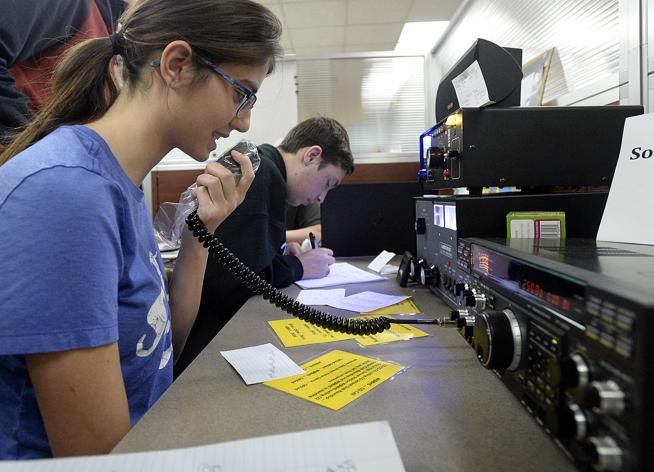
This ham radio operator could save your life one day. When the Big One hits — and that’s when, not if — you might as well kiss your cellphone goodbye. It’s more than likely emergency officials will shut down all use except for first responders. We’ve already seen the chaos of jammed phones when people rush to check on loved ones during wildfires and debris flows. But a big quake will topple cell towers and that means zero cell calls. That is when you might find yourself thanking Josifek, 75, and the other volunteers who run something launched when William Howard Taft first became president in 1909. These men and women — as well as an increasing number of teens; who knew? — call themselves amateur radio enthusiasts. Trained and licensed, they are the volunteers for our country’s Radio Amateur Civil Emergency Service.

 Manager reopens Jefferson City RadioShack
 Back in the 1980s, I taught a Novice class at Doric Scientific, the company I was working for then. At that time, of course, you had to pass a 5-wpm code test. To teach the code, I brought in a key and a speaker and connected them to a fancy Wavetek frequency generator, which probably cost about $2,000. I like to joke that it was the most expensive code practice oscillator ever.
 While you could probably learn the code by just using the CW Academy materials and Morse Trainer, it’s more effective in a class setting. I think the students motivate one another, and, of course, it’s useful to have an experienced CW guy on hand to give advice and answer questions. (If you’re an old hand like me, and you’re interested in teaching a CW class, you can find