• Skip to primary navigation
  • Skip to main content
  • Skip to primary sidebar
  • Skip to footer

KB6NU's Ham Radio Blog

KB6NU's Ham Radio Blog
  • HOME
  • Study Guides
  • Teach a One-Day Tech Class
  • W8SRC Repeater Guide
  • Advertise
  • Hire Me

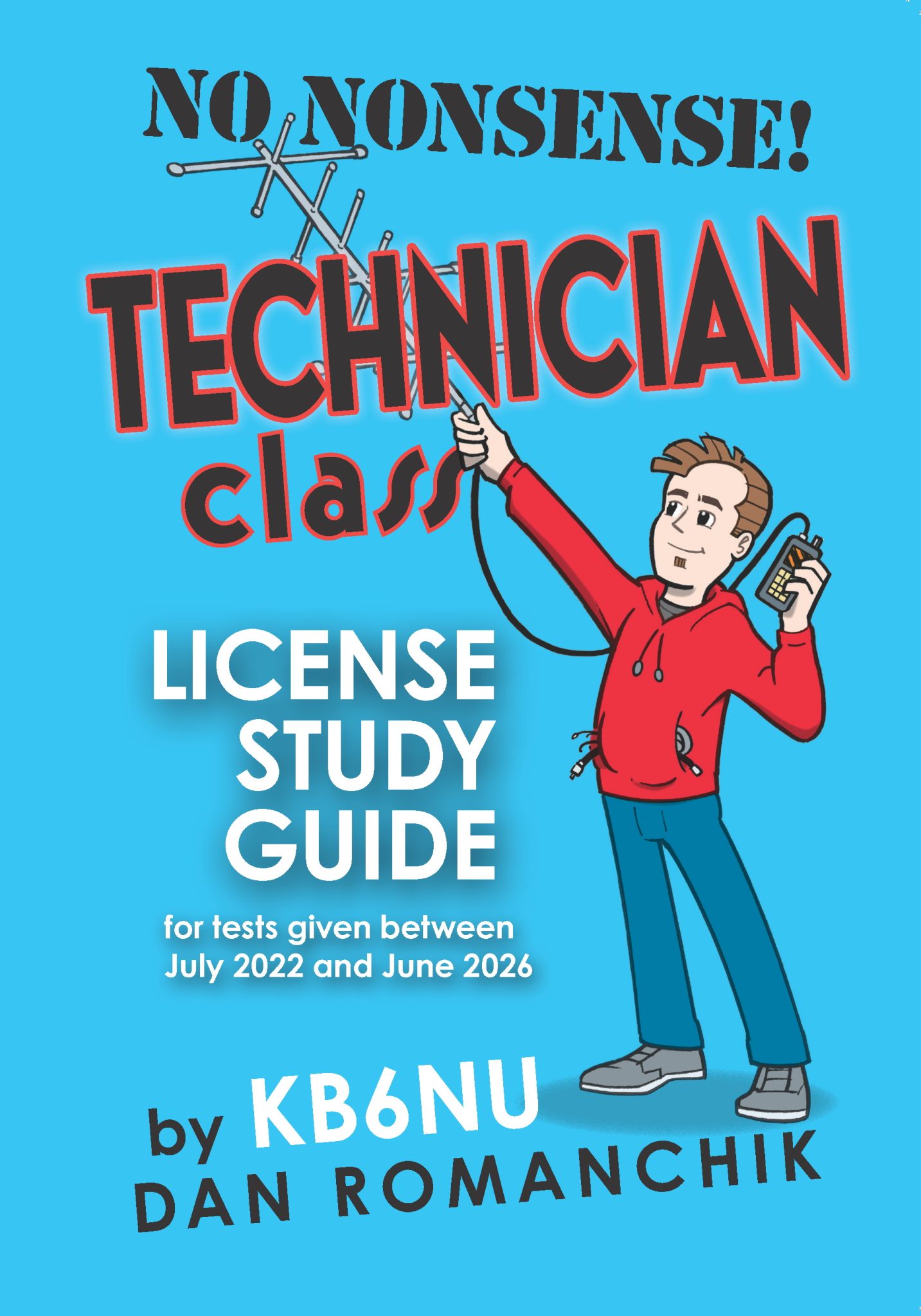
This is why I keep producing study guides

February 10, 2026 By Dan KB6NU 3 Comments

When I first started publishing my No Nonsense license study guides, there were really only three of us producing amateur radio license study guides: the ARRL, Gordon West, and me. Now, there are many more. If you do a search on Amazon for “Technician Class license study guide,” you’ll see that there are at least a dozen other study guides out there.

As a result, of course, I’m making a lot less money. All these study guides have really eaten into my profits. And, on top of that, I’m a better author and radio amateur than I am a business man.

So, this year, when the NCVEC updated the Technician Class question pool, I seriously debated if I should update my study guide or just get out of the business.

Then, I received this email:

Dan, I very much appreciate your study guides. I have gone through your Tech guide a few times, and a few sections of it several times. I played with CB radio in the ’70’s and have experimented with various commercial and home made antennas for 11 meters and other applications over the years. I used a Radio Shack antenna book as my guide.

Due to the government shutdown I have not been able to take the Tech test since I began my ham study, but I have been able to very successfully pass online practice tests. I have purchased a Yaesu FT 710 radio and have been monitoring mostly 40-meter and 10-meter bands with my home made end-fed, half-wave (EFHW), 40-meter antenna with a loading coil for 80 meters and a 49:1 unun.

I like 40 meters the best, which is why I want to get my General asap. I have used another study guide for General, but found it lacking in formulas and algebraic explanation. Where the other guide left me frustrated and lost, yours clarified concepts that were difficult for me. Thank you.

Well, that did it. After reading this email, I decided that I had to keep doing my study guides. I replied:

Thanks for your kind words. Honestly, it’s emails like yours that keep me doing the study guides. If you have any questions about any of the material, please feel free to contact me. As far as operating goes, I am also a big fan of 40 meters, and because I’m mostly a CW operator, 30 meters. If you ever hear me on the air, please give me a call.

About a week and a half later, I got another email from this fellow titled, “Passed my Tech and General exams this morning.” He wrote:

Your study guides were a great help.  I think I might have gotten 1 or 2 wrong on the Tech exam, but I think I got 100% on the general. I am excited to start working on the Extra Class material to give me more confidence on working on my equipment and exploring the amazing analog and digital electromagnetic world out there.

Then, this morning, I got the following:

I decided to try to apply the information that I have gained so far in your Tech and General study guides and put off Extra until I have more experience.  My fairly extensive work and testing on my home-built antenna systems has paid off.

I have been working on tuning my 40-meter EFHW, and as a result, have made several 20- and 40-meter contacts, with 100 watts, between 200 and 800 miles. The antenna is made of old-schoo,l galvanized, electric fence wire and is only about 10 feet above my deck then 12 feet above the ground. I also have another antenna, which is C-shaped in the loft of my barn.

Both have proven effective. I might try using my metal barn roof as a reflector and string an EFHW above it, as per a suggestion from someone at NOSWR.net.

Thanks again for the courses and moral support. I still feel too much of a noob and outsider to say this, but here goes:   73

To which, I replied:

Hah! I see that you’re getting into the spirit of ham radio. Ham radio is a learn by doing kind of adventure, and I’m sure that all this tinkering with your antenna will certainly pay off in the end. It seems to me that you’ve learned every right to heartily say “73.”

I really love getting emails like this. It makes me feel like I’m really making a difference. So, I guess I’ll be publishing study guides until they pry the keyboard from my cold, dead hands.

Filed Under: Books and Magazines, Classes/Testing/Licensing

How to help others help you

January 27, 2026 By Dan KB6NU Leave a Comment

Cartoon panda exclaiming, "Help Me"
We all need help now and then.

Even though I am now retired, I am still a member of the Institute of Electrical and Electronic Engineers (IEEE) and subscribe to their Career Alert newsletter. The latest issue features a short article from Rahul Pandey, founder of Taro, a platform for helping software engineers manage their careers. The article is about asking better questions to get the help you need in order to do your job better.

While the article is geared towards software engineers, I think it also has some good advice for radio amateurs asking for help with their stations or their projects.


The #1 rule about asking questions

As engineers, continuous learning is a fundamental part of the job. A huge part of learning comes from trying something, getting stuck, and then asking a question to your teammates.

Here’s what is often overlooked in that process: The quality of your question determines the quality of the answer. So it’s worth thinking about how you can level up your question-asking skills.

The guiding principle when it comes to asking a question is simple: Make it easy for others to help you. Let’s break down what that means.

Include the necessary information. In the software engineering world, for instance, asking something like “Can you explain why the app is crashing?” puts an enormous burden on the question recipient to collect more info before they can help you. They’ll need to know:

  • What action caused the app to crash?
  • Does the issue reproduce?
  • What do the logs reveal?

It’s usually not hard to anticipate what follow-up questions you may receive after you ask a question. Include those details in your question!

Show your work. One of the most common replies to a question is “What have you tried?” This is critical information to include in order to (1) improve the chances that the recipient can help you and (2) prove that you did the necessary homework.

Common details to include are: prior team discussions, code snippets, and relevant data. But be careful not to overdo it. Including too much code in your question will overwhelm anyone who’s trying to help you. You should spend time identifying the snippet that captures the essence of your issue. Remember, the golden rule is to make it easy for others to help you, which requires your judgment on the right level of backstory to include.

Explain your goal. The backstory is deceptively important in any question, especially for technical topics. For example, you may think it’s obvious why you’re trying to add a parameter to a function, but it’s probably not clear to your teammates. An error I’ve seen frequently is that the question is asked at the wrong “altitude”—the asker made some incorrect assumptions that led them to ask the wrong question.

To get the best answers, include a brief explanation of your goals at the beginning of your question to set the context.

Address the right audience: A personal pet peeve of mine from when I worked at Facebook was when an engineer would ping me individually with a generic question that others could have benefited from. Instead of messaging me directly, I wish they had posted in a group forum. By posting to a broader audience, others could have learned from the answer, and there may have been fruitful follow-up discussions. Moreover, asking the group will lead to faster resolution; it removes a single person (me) as the bottleneck.

The question of the 1:1 vs. group forum is just one element to consider. Is your question best handled verbally or in writing? Could your question be answered by a junior colleague, or do you need feedback from your team lead or manager?

By considering the above criteria, the quality of your questions will improve significantly, leading to more effective interactions and learning.

Filed Under: Everything Else

ICQPodcast Episode 475 – Expanding portable ops on 70cm/2m

January 25, 2026 By Dan KB6NU Leave a Comment

ICQ Podcast logo.In this episode, I join Martin Butler M1MRB, Caryn Eve Murray KD2GUT, Edmund Spicer M0MNG, and Ed Durrant DD5LP to discuss the latest Amateur / Ham Radio news, including:

  • Biggest solar storm in 20 years hits Earth
  • Can Ham Radio Help Taiwan Survive?
  • UK Regulator Eyes Frequency-Sharing By Devices
  • German Amateurs’ Access To 70 Mhz Band In Limbo
  • SOTA 2026 Challenge Brings Back Activity to 2m/70cm SSB/CW

This episode’s feature is “Expanding portable ops on 70cm/2m.”


Filed Under: ICQ Podcast, Podcasts Tagged With: Germany, SOTA, Taiwan, United Kingdom

Amateur radio in the news: AD2HS, N9UKS, W5XU SK

January 25, 2026 By Dan KB6NU Leave a Comment

Man smiling.
Terry Gilpatrick, AD2HS

Terry Gilpatrick, AD2HS

Terrence “Terry” M. Gilpatrick, of Westtown, NY, died unexpectedly on January 14, 2026. He was 75. Terry was a Ham radio enthusiast and was a member of the Orange County Amateur Radio Club and a past member of Minisink Hose Co. #1 Unionville Fire Department, Unionville, NY. For those who were lucky enough to be on his Christmas list, he was the maker of the best peanut brittle in the world, which he lovingly crafted with his family for over 40 years.

read more…


Older man with beard.
John Lawler, N9UKS

John Lawler, N9UKS

John Dennis Lawler, 87, of Kokomo, passed away peacefully Wednesday evening, January 14, 2026, at Community Howard Regional Health Hospital in Kokomo with his family by side.

John enjoyed electronics, home stereo systems, and listening to classic rock and bluegrass. John loved tinkering and repairing things. He amused and annoyed his wife and kids with his frugalness, letting projects drag on for years because he wouldn’t buy all the required pieces at one time. He was a huge fan of sports cars, especially Jaguar E-types and Camaros.

John had his amateur radio license, was a member of the Kokomo HAM radio club, and enjoyed the storm chaser classes. Although he didn’t like to transmit, he loved listening to his friends on radio and was very grateful to the guys who strung up a new antenna in the backyard for him. John loved going to HAMfests, both to shop and just hang out with the guys.

read more…


Man smiling.
David Assaf, III, W5XU

David Assaf III, W5XU

Taken too soon from family and friends, David Assaf, III departed this world on January 18, 2026.

In 1963, [his high school] newspaper noted that David had his “own home workshop in which he performs experiments in the phases of science.” Indeed, it was during high school that he began a lifelong hobby as an electronics tinkerer and amateur radio operator, aka a “ham”.

For the rest of his life, David would continue to keep a workshop (affectionately called “the shack”) in every place he called home, chock full of radios and electronics in various phases of repair, especially his favorite Drake brand transmitters and receivers. With his radios, his trusted Morse code keyer, a thousand watts, and a modified Yagi antenna of his own design, he would bounce radio waves off the ionosphere to communicate with other hams on the other side of the planet, a practice known as “DX” in ham parlance. During Hurricane Betsy in 1965, he provided emergency communication via his amateur radio station, a service for which he was recognized by the city of New Orleans.

…read more

Filed Under: Amateur Radio in the News Tagged With: SK

AI still not ready for prime time…at least not ready for my study guides

January 24, 2026 By Dan KB6NU 2 Comments

Yesterday, someone on the ARRL_Education mailing list asked if anyone is using AI to generate images for educational presentations. That got me thinking that perhaps I could use an AI to generate more images for my study guides. So, I signed up for an account on OpenArt.AI.

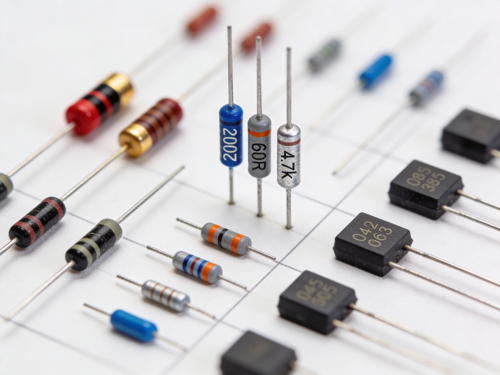
I asked it to generate an image with a “variety of resistors.” This is what I got:

AI-generated image of resistors.


As you can see, it’s almost right, but not right enough to put into the study guide. I guess that’s the thing about AI in general. It’s “almost right,” but really still not good enough. Not good enough for a study guide, for sure.

Satya Nadella, the CEO of Microsoft, might want us to quit using the term “AI slop,” but for that to happen, AI is going to have to actually quit producing slop like what we have above.

Filed Under: Classes/Testing/Licensing Tagged With: AI, study guides

Operating Notes: QRP signals, using the BK prosign, QSY protocol

January 21, 2026 By Dan KB6NU 5 Comments

Does it seem to you that low power (QRP) signals are more affected by fading (QSB) than higher power signals? It does to me. If any of you know what mechanism is producing this effect, please let me know.

Speaking of QRP signals, I suggest that stations running QRP should follow the 3 x 3 protocol when responding to a CQ. By 3 x 3, I mean sending the CQing station’s call sign three times, then the QRP station’s call sign three times.

Several times lately, I’ve had a QRP station call me with only their call sign and only send it once or twice. The last time this happened, conditions were marginal, and I just wasn’t able to copy the other station’s call correctly. In addition to that, I’m never 100% sure that the station calling is calling me.

So, if you’re replying to my CQ, please send your call three times, followed by “DE” then your call three times. It doesn’t take that much extra time to send, and I’ll be sure that you’re calling me as well as copy your call sign properly.

QSY protocol

A couple of nights ago, I was working a station on 7028 kHz. He wasn’t very strong  and when another station popped up on frequency, I couldn’t copy him at all. I tried calling him 1 kHz up, but he didn’t follow me there.

With this in mind, I’d like to suggest the following protocol for dealing with this situation. First, tune up 1 kHz, and if the frequency is free, call the other station a couple of times. If no reply, listen 2 kHz down (1 kHz down from the original frequency), and if the frequency is free, call the other station a couple of times.

Having an agreed-upon protocol like this  might help stations reconnect when their QSO is interrupted by interference.

Using the BK prosign

I’ve noticed more stations using the BK prosign to denote that they’ve finished a transmission and to invite the other station to transmit. They’re using this instead of the more traditional “<your call> DE <my call> K,” or more simply “DE <my call> K”. I think that perhaps this is catching on because this is the accepted method for POTA contacts.

I think this is an entirely appropriate thing to do. The BK prosign is well understood, and the rules say that you only have to identify every ten minutes, so you’re not breaking the rules if you operate this way. And, in a ragchew, it might even be a more natural way for a conversation to flow.

I haven’t started doing this during all of my contacts, but I’m starting to do this more and more. If sending BK seems natural during a contact, I’ll just send it and let the other station take over. If it seems like it might be too abrupt, I might send “BTU BK” instead.

Filed Under: CW, QRP

Amateur radio in the news: Can ham radio help Taiwan survive?, repeaters now solar-powered, ham radio connects

January 17, 2026 By Dan KB6NU Leave a Comment

Young woman holding a handheld ham radio.
Could ham radio help Taiwan survive wartime internet outage?

In Taiwan, a nonprofit civil defense group, Ganghu, has started training people on how to communicate using amateur radio, also known as ham radio, if the internet is unavailable. This comes as Beijing, which claims democratically self-governed Taiwan as its own territory, faces allegations of sabotaging and damaging Taiwan’s undersea internet cables.

…read more


Ham radio repeater now powered by solar

The Fredericksburg Repeater Operators Group (w5fbg.com), a group of licensed amateur radio operators in Gillespie County, announces its 2-meter, 1.25-meter, and 70-centimeter amateur radio repeaters are now operational on solar power.The solar power system was provided by a grant from the American Radio Relay League (ARRL) Foundation. Dee Hester (K7UD), Dennis Robertson (W5FBG), Barb Schuyler (N9NM), Pete Schuyler (N9OF), Keith Jenkins (KI5DFU), J.B. Neans (KL5GR) and Jim Lindley, (K5EWS) were all contributors. This team designed and implemented the repeaters and the solar power system.

…read more


Ham radio operators meet over a shared hobby that becomes a lifeline during emergencies

A field of large parabolic antennas, followed by a constant piercing sound lingering in the background, is a classic combo in science fiction movies, especially when earthlings receive a message from outer space. On screen, it builds uneasiness and suspense for the viewer.

But for amateur radio (or ham radio) operators, the radio waves around the Earth create connectivity. People use antennas and transceivers to communicate with each other without Wi-Fi or phones. Non-commercial radio not only connects people worldwide but it can be an important tool in emergencies, when other means of communication, such as phones and internet, go down.

…read more


Filed Under: Amateur Radio in the News, Clubs, VHF/FM/Repeaters Tagged With: solar power, Taiwan

A thrift shop find

January 11, 2026 By Dan KB6NU 1 Comment

My wife, Silvia, and I occasionally visit the Kiwanis Thrift Sale here in Ann Arbor. Over the years, I’ve purchased all manner of things there that have proven useful in my amateur radio operations.  I have purchased computer keyboards for $2, hand weights that I use to anchor the ends of my inverted-V doublet on POTA activations, and a roll of 300 Ω twinlead.

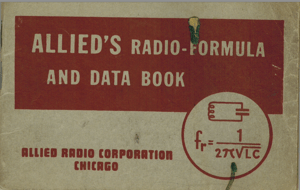
Cover of the book Allied's Radio-Formula and Data Book.
My latest Kiwanis Thrift Sale find cost me only 50 cents.

My latest purchase, as you can see from the photo at right is the 1953 edition of Allied’s Radio-Formula and Data Book. This little booklet contains a wealth of information, much of it still very useful, and it only cost 50¢! The table of contents list the following:

  • Bare copper wire table, which lists the dimensions, resistivity, and weight for copper wire from 1 gauge to 44 gauge.
  • Resistor and condenser color codes
  • Algebraic formulas, trigonometric relationships and a three-place log table. There were no electronic calculators back in 1953@
  • Decibel table
  • and much more

For example, on the page titled “Miscellaneous Formulas, there is a formula for calculating the capacitance of a vertical antenna shorter than a quarter wavelength. There is also a page for calculating the characteristic impedance, capacitance, inductance, and attenuation of two-wire, open-air transmission lines:

Page showing equations for calculating the characteristic impedance, inductance, capacitance, and attenuation of two-wire, open-air transmission lines.

Click here to download a scanned version of the book. It’s 35 Mbytes, so be warned that it could take some time to download.


Filed Under: Books and Magazines, Electronics Theory Tagged With: Allied, Handbook

ARDC updates funding priorities

January 10, 2026 By Dan KB6NU Leave a Comment

A couple of days ago, I received an email from Rebecca, KO4KVG, ARDC’s Communications Manager. She writes:

We’d love your help in spreading the word about our funding priorities, which we introduced last year. We’re especially interested in projects that align with these three areas:
  • Research & Development (R&D): open hardware and software systems that enable learning and experimentation (e.g. SDRs, open codec technologies, new modulation techniques).
  • Space-Based Communications: projects that create or expand access to satellite communications for amateur radio (AR) and digital communications (DC), engaging communities in wireless experimentation (e.g. GEO or HEO programs, repurposed commercial satellites, space-based tools for learning).
  • Open Source Education: scalable, open educational materials and hands-on projects that make amateur radio and digital communications more accessible, especially for new learners and clubs (e.g. curricula, videos).
While we welcome proposals across the full range of amateur radio and digital communications, projects that align with these areas remain a priority in our grantmaking decisions.
So, there you have it. Fire up your word processor and get some grant money. The next deadline for grant applications is February 1, 2026.

Filed Under: ARDC

QSLs: W8SHY, AI5BE

January 7, 2026 By Dan KB6NU Leave a Comment

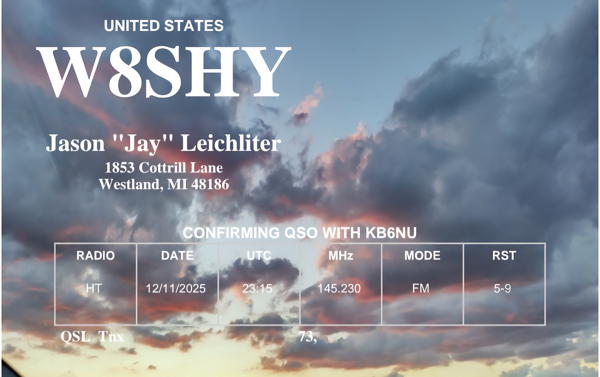
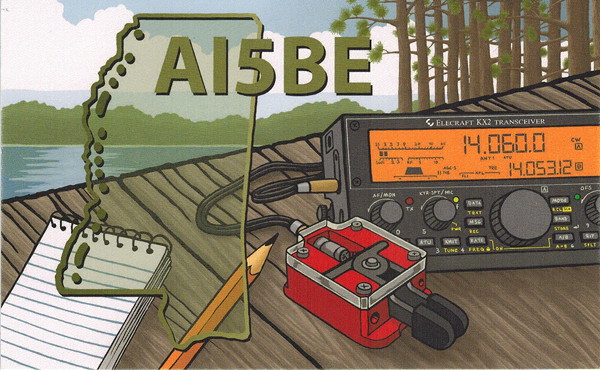
Two more cards for my collection of QSL cards from stations whose call signs spell words…


Jay, W8SHY, lives only 18 miles from me, as the crow flies, but his QSL is still a welcome addition to my collection.

Tim, AI5BE, is obvioiusly a POTA op. I love the KX3 illustration.

Filed Under: QSLs Tagged With: AI5BE, W8SHY

  • « Go to Previous Page
  • Page 1
  • Page 2
  • Page 3
  • Page 4
  • Page 5
  • Page 6
  • Interim pages omitted …
  • Page 469
  • Go to Next Page »

Primary Sidebar

No Nonsense Technician Class License Study Guide (for tests given between July 2026 and June 2030)

New No Nonsense Technican Class Study Guide now available!

The 2026 version of my Tech Class study guide is now available, and as always, the PDF version is FREE!. The ePub version costs $11.97, and a Kindle version and paperback version will be available on Amazon shortly.

Click here to get all of my "No Nonsense" study guides.

Also available: The CW Geek's Guide to Having Fun with Morse Code

W5SWL.Com
Retevis Ailunce H1 DMR Radio
DXpander: Cobweb antennas, Laser Cutting

You’ve got mail!

Enter your email address below and get an email every time I publish a new post.

Email


I frequently teach classes to help newcomers get their licenses. The next class will take place on Saturday, February 7, 2026 on the University of Michigan campus. Click here for more information.

If you can't make the class, subscribe to the mailing list to be notified of when the next class will be held.

You can always download my free study guide, and if you have any questions about the classes, or amateur radio in general, please feel free to email me directly.

Support KB6NU.Com

Donate $7.30 and get two of these cool stickers. Measuring 4.25-in. W by 2.75-in. H, it's perfect for your car, your shack, or wherever!

Contact me

If you have a question or comment about one of my blog posts, or a question about any of the material in my study guides, or just a question about ham radio in general, you can email me at [email protected].

Blogs You Should Also Read

  • AE5X: A CW-centric blog from Kingswood, Texas
  • K0LWC Blog
  • LA3ZA Ham Radio Blog
  • Little Radios, Big Fun – WB3GCK
  • Mr. Vacuum Tube's Blog
  • Radio Artisan – K3NG
  • The K0NR Weblog
  • VE3WDM's QRP Ham Radio Blog
  • W2LJ’s Blog

Ham Radio Websites

  • Dashtoons – The Hammin' Comedy by Jeff K1NSS

Podcasts

  • ICQ Podcast
  • Linux in the Ham Schack
  • No Nonsense Amateur Radio Podcast
  • Resonant Frequency Amateur Radio Podcast

Recent Comments

  • Dan KB6NU on Finally, a Loop for 10m.
  • Dan KB6NU on 1930s cards for my collection of QSLs from stations whose callsigns spell words
  • Sean on Finally, a Loop for 10m.
  • Bill Waslo on 1930s cards for my collection of QSLs from stations whose callsigns spell words
  • C M Wetzel KD8TNF on The Wesco BN-1

Meta

  • Log in
  • Entries feed
  • Comments feed
  • WordPress.org

Footer

Copyright © 2026 Daniel M. Romanchik, KB6NU · Log in