• Skip to primary navigation
  • Skip to main content
  • Skip to primary sidebar
  • Skip to footer

KB6NU's Ham Radio Blog

KB6NU's Ham Radio Blog
  • HOME
  • Study Guides
  • Teach a One-Day Tech Class
  • W8SRC Repeater Guide
  • Advertise
  • Hire Me

Pixie

Interesting stuff I found in my inbox

December 30, 2020 By Dan KB6NU Leave a Comment

I’m on a lot of ham radio mailing lists, and people are constantly sending me interesting things to read and to watch. Here are some of the coolest from the past couple of weeks…..Dan

Smallest transceiver ever?

This is very cool. Adam, K6ARK, has designed a surface-mount version of the Pixie transceiver. (There are many different designs, but to get an idea of what a Pixie is, here’s a circuit description of a more recent design.) What’s really amazing about this video is the number of contacts that Adam makes with this little radio out in the boonies. I mean we’re talking less than a watt output and a receiver that’s as wide as a barn door. Very impressive.

Beginner’s Guide to the NanoVNA

The Absolute Beginner’s Guide to the NanoVNA by Martin Svaco, 9A2JK is a wonderful introduction to this cool, little instrument. It not only includes instructions on how to use a NanoVNA, there is a short history of the instrument and the different version out there as well as a brief theory of operation. If you have a NanoVNA, you should get this guide.

Easy ISS SSTV Reception

I know that this is a little late for this series of ISS SSTV transmissions, but I’m sure that they’ll do it again sooner or later.
Filed Under: Gear/Gadgets, QRP, Test Equipment Tagged With: ISS, nanoVNA, Pixie

More Pixie notes

August 18, 2015 By Dan KB6NU 2 Comments

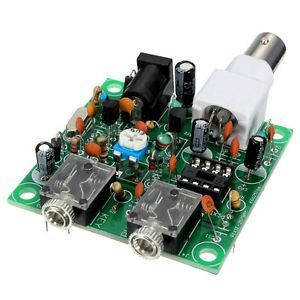
pixieOn Sunday night, I made up a power cable, and powered by a 9V battery, I connected the Pixie to my wattmeter and a dummy load. Lo and behold, when I keyed the transmitter, the wattmeter deflected a little. The lowest range on the meter is 20 W, and the lowest division on that range is 0.5 W, and the needle deflection didn’t quite make that mark, so I’m guessing that it’s outputting 300 mW or so into the dummy load.
After that, I connected one of my keyers to the KEY input, and my 40m dipole to the ANT output. When I applied power, I was greeted by a cacophony of signals. The little Pixie can really hear! The problem is that it’s not very selective and I’m hearing signals probably 5 kHz above and below the center frequency. Even so, it was pretty cool to hear.

Finally, I listened for a  while and heard K2MMW calling CQ. I answered him, and he actually came back to me. My first QSO with the Pixie. Unfortunately, my euphoria was short-lived as he failed to come back a second time. My signal either faded on him, or I was overpowered by another station.

Last night, I tried again around 7:30 pm. Perhaps it was too early in the evening, or there just wasn’t anyone on, but I had no luck either answering CQs or calling CQ myself. I did get several ReverseBeacon spots, though, and one of the spots from K1TTT was a 16 dB SNR, which I would guess would be good enough for a QSO. So even though, I didn’t make contact, at least I know that I’m getting out.

What’s next?

I think my next step is to change the crystal in the Pixie to either 7030 kHz or 7114 kHz. I bought crystals for these frequencies from KC9ON for about a buck each. That should put me more in the middle of things. Along with the crystals, he sent a header that will allow me to change frequencies by swapping out the crystals.

I’ve been Tweeting back and forth with KC9ON, and he plans to build a 30m version of the Pixie and offer  some 30m crystals. Operating the Pixie on 30m could be interesting.

To make the thing work on 30m, you have to change the inductor and capacitor in the output filter circuit. KC9ON pointed me towards a blog post that gives values for these components for the different amateur radio bands. That got me to thinking about whether you could make a multi-band version of the Pixie, either by building a board with multiple filters and switching them or by building a tunable pi output circuit. This certainly seems doable, but I’m wondering if it’s worth the effort.

Filed Under: Building/Homebrew, QRP Tagged With: Pixie

More on the Pixie

August 12, 2015 By Dan KB6NU 3 Comments

Yesterday, I blogged about working a couple of guys with Pixies. Then, I found this Tweet:

Story imageLA3ZA's avatarSverre Holm, LA3ZA @LA3ZA
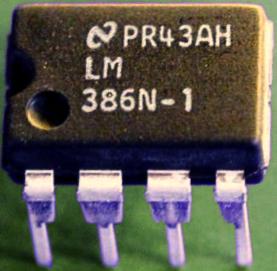
The LM386 Pixie challenge la3za.blogspot.no/2015/08/the-lm… pic.twitter.com/wpX6cgzvyx

This, like most of Sverre’s posts are well worth reading.

Then, there was some discussion about the frequency of the Pixie. It comes with a 7023 kHz crystal, limiting its use in the U.S. to Extra Class licensees. WA7WNP (@wa7wnp) Tweeted, “Super cool…Now if only they had a Pixie with a crystal in the Tech band segment instead of the Extra class allocation.”

I replied, “True. You can buy a crystal for a different frequency, but that would probably cost more than five bucks!”

In response to that, John, KC9ON, tweeted:

kc9on's avatarJohn Clements @kc9on
@kb6nu @wa7nwp around 5 bucks will get you a 3 pack of 7110 7114 & 7122 (novice/tech) shipped with socket headers. kc9on.com/hc-49s-crystal…

I just ordered ten – five 7030 kHz crystals and five 7114 kHz crystals. He sells some other interesting stuff on his website, so have a look at it.


Filed Under: Building/Homebrew, QRP Tagged With: Pixie

Operating Notes: PIxies on the air, calling CQ in QSO parties, Carnation Days

August 11, 2015 By Dan KB6NU Leave a Comment

pixieSunday night and last night, I happened to be tuning around on 40m and ran into stations using cheap Chinese Pixies near 7023 kHz. I worked Mike, N9MS, on Sunday night. He e-mailed me, “Tom — K9CJM — gave me his Pixie to fix. He had a couple resistors switched and the Pi-Network loading capacitor seemed to be faulty. I clipped out the capacitor and the power came right up.”

Mike was cheating a little bit. He was using a PennyWhistle amplifier, which was putting out about 15 W. Mike has produced a short video on his Pixie

Last night, I worked John, AG3N. He said that I was his first contact with the Pixie! He was running his Pixie barefoot (about 300 mW, I think) into a full-wave loop antenna, and he was S4 – S5 here in Michigan.

All this has encouraged me to get my Pixie on the air. I built the kit, but just haven’t hooked up the antenna to it yet. I gotta get this on my list of things to do. If you’re an Extra, listen for me and the other guys using Pixies down on 7023 kHz.

CQ /MI

Over the weekend, I spent an hour or so working the MDC QSO Party. As you might expect, this is a pretty small contest, so after working the stations that I could hear, I started calling CQ MDC de KB6NU/MI, hoping to attract a few MDC stations that were searching and pouncing. While I did work a few of these stations, I also got calls from stations who thought I was in MD or DC.

Wrong! If you hear someone signing with state qualifier, such as “/MI”, you should realize that they are probably not in the area of interest, but instead trying to work stations in the area of interest. Calling them is a waste of time for both you and them.

Carnation Days

gacf_logoSeeing as how I live in Ann Arbor, MI (home of the University of Michigan), I’m not normally an Ohio booster. I would, however, like to give a shout out to the Alliance (OH) Amateur Radio Club, who will be operating a special event station at the Greater Alliance Carnation Festival.  I do like special event stations, and Frank, WA8WHP, a loyal blog reader, and a co-mentor for the Extra Elmer Net, will be one of the station operators.

Frank writes, “Next Saturday (August 15) we will be on as W8LKY, special event for Carnation Days. Alliance was the home of Mr. Lamborn, who developed the red carnation, the state flower of Ohio. I’m not sure what frequencies we will be on, but just look around. You can also contact us via our repeater, which is on Echolink 24/7, W8LKY/R.”

I suppose that you could give them a shout on the repeater , find out what frequencies they happen to be on at the time, and then try them on HF.

Filed Under: Contests, Kits, Special Events Tagged With: Pixie, QSO party

Primary Sidebar

No Nonsense Technician Class License Study Guide (for tests given between July 2026 and June 2030)

New No Nonsense Technican Class Study Guide now available!

The 2026 version of my Tech Class study guide is now available, and as always, the PDF version is FREE!. The ePub version costs $11.97, and a Kindle version and paperback version will be available on Amazon shortly.

Click here to get all of my "No Nonsense" study guides.

Also available: The CW Geek's Guide to Having Fun with Morse Code

W5SWL.Com
Retevis Ailunce H1 DMR Radio
DXpander: Cobweb antennas, Laser Cutting

You’ve got mail!

Enter your email address below and get an email every time I publish a new post.

Email


I frequently teach classes to help newcomers get their licenses. The next class will take place on Saturday, February 7, 2026 on the University of Michigan campus. Click here for more information.

If you can't make the class, subscribe to the mailing list to be notified of when the next class will be held.

You can always download my free study guide, and if you have any questions about the classes, or amateur radio in general, please feel free to email me directly.

Support KB6NU.Com

Donate $7.30 and get two of these cool stickers. Measuring 4.25-in. W by 2.75-in. H, it's perfect for your car, your shack, or wherever!

Contact me

If you have a question or comment about one of my blog posts, or a question about any of the material in my study guides, or just a question about ham radio in general, you can email me at [email protected].

Blogs You Should Also Read

  • AE5X: A CW-centric blog from Kingswood, Texas
  • K0LWC Blog
  • LA3ZA Ham Radio Blog
  • Little Radios, Big Fun – WB3GCK
  • Mr. Vacuum Tube's Blog
  • Radio Artisan – K3NG
  • The K0NR Weblog
  • VE3WDM's QRP Ham Radio Blog
  • W2LJ’s Blog

Ham Radio Websites

  • Dashtoons – The Hammin' Comedy by Jeff K1NSS

Podcasts

  • ICQ Podcast
  • Linux in the Ham Schack
  • No Nonsense Amateur Radio Podcast
  • Resonant Frequency Amateur Radio Podcast

Recent Comments

  • Dan KB6NU on Finally, a Loop for 10m.
  • Dan KB6NU on 1930s cards for my collection of QSLs from stations whose callsigns spell words
  • Sean on Finally, a Loop for 10m.
  • Bill Waslo on 1930s cards for my collection of QSLs from stations whose callsigns spell words
  • C M Wetzel KD8TNF on The Wesco BN-1

Meta

  • Log in
  • Entries feed
  • Comments feed
  • WordPress.org

Footer

Copyright © 2026 Daniel M. Romanchik, KB6NU · Log in