• Skip to primary navigation
  • Skip to main content
  • Skip to primary sidebar
  • Skip to footer

KB6NU's Ham Radio Blog

KB6NU's Ham Radio Blog
  • HOME
  • Study Guides
  • Teach a One-Day Tech Class
  • W8SRC Repeater Guide
  • Advertise
  • Hire Me

Books and Magazines

DMM tips, anyone?

November 25, 2012 By Dan KB6NU 8 Comments

Now that I’ve published the No-Nonsense Extra Class License Study Guide, I’ve been thinking about what my next book should be. At this point I’m leaning towards The No-Nonsense Guide to Digital Multimeters. I have even started outlining the book:

  • What is a digital multimeter?
    • Compare to analog multimeter
  • Digital multimeter basics
    • Measurement types
    • Inputs
    • Range
    • Zero
    • Safety
  • Making measurements with a DMM
    • Simple DC circuit
      • voltage
      • current
    • AC measurements
      • true RMS
    • Resistance
  • Tips for Choosing a DMM
  • Hints and Kinks

I’d love to get your feedback on this.

What else should I add to this outline?

What would you like to know about DMMs?

Do you have any tips for using DMMs that you’d like to share with others? (If I use your tip in the book, I’ll send you a free copy when it’s finished.)

Filed Under: Books and Magazines, Test Equipment

Ads of Note from the December 2012 QST

November 18, 2012 By Dan KB6NU 3 Comments

When I was a kid, I used to religiously pore over the ads in the Electronics Illustrated, Popular Electronics, and later on, QST issues that I received. I don’t do that every month nowadays, but I think it is a worthwhile exercise to do every two-three months. New products are always being introduced, and some of them can be quite useful and fun.

This month, I went through the ads in QST. Here are some that I highlighted.

  • Using Your Meter. This is a new book from The W5YI Group. It’s notable to me because I’ve been thinking that a simliar book might be my next publication. The No-Nonsense Guide to Using Your DMM—my working title—would be a lot cheaper than the $24.95 that W5YI is asking for this book, though.

    Got any tips for using a DMM? If so, e-mail me and I’ll include it in the book.

  • Bonito RadioJet 1102S. This is a software-defined receiver made in Germany and imported by a small company, Computer International, in Michigan. Unfortunately, the company’s website is a real disaster. I spent about ten minutes looking for a price for this radio without any luck.  So many small companies’ websites are so poor that I think it actually hurts, rather than helps their business.
  • MastrAnt. This company sells synthetic guy ropes. We’re going to need some of this down at the museum. I think the metal guy wires are detuning our 40m inverted Vee.

Do you peruse the ads in QST and other ham radio magazines? Which ones have you found interesting lately?

Filed Under: Antennas, Books and Magazines, Software-Defined Radio (SDR)

Interesting stuff on the Internet – 8/21/12

August 21, 2012 By Dan KB6NU Leave a Comment

Here are three more interesting links that I’ve gleaned from the mailing lists and ham radio groups that I belong to:

  • G8MNY Technical Bulletins. G8MNY has been providing these technical bulletins over the packet network in Europe for many years. They were written by many different authors and cover many different topics including aerials, baluns, filters, microphones, and more.

These last two are from the LinkedIn amateur radio groups. If you’re on LinkedIn, send me a connect request and I’ll add you.

  •  Tubebooks.org. This site has PDFs of many older electronics books. Among them:Audels Radiomans Guide, Edwin P. Anderson, 1945, 880 pages
    An odd book, about 4-1/2″ x 6-1/2″ and a whopping 880 pages, “covering theory, construction, and servicing including television electronics”.  It covers everything from sounds waves through basic electronics, PA systems (including a little info on a WE theatre amp), transmitters, car and aircraft radio, troubleshooting – you name it, it’s in here.  Not a college text, this looks like it could be a handbook for the radio technician or advanced hobbyist of the 1940’s.  Lots of good vintage info!
  • Slim Jim antenna calculator & Slim  Jim information. I always thought that “Slim Jim” was just another term for J-pole. I was wrong. This site not only explains the difference, but has a calculator that lets you design your own. Now, I’m going to have to build one of these!

Filed Under: Antennas, Books and Magazines, On the Internet

From the trade magazines – 8/18/12

August 18, 2012 By Dan KB6NU 1 Comment

Protect your fortress from ESD. Let’s get a better understanding of what actually happens in an ESD strike, and from there, figure out how to architect a system to deal with it.

How to Create and Program USB Devices. What does USB have to do with ham radio? How do you think the audio gets from your rig to your computer when operating digital modes? Even if you’re never going to design a USB interface, you should know how it works.

Surge protection—Stop fried electronics. Surges and spikes on data lines can fry your communications boards and garble data. This article describes the operation, installation and selection of what is probably the most common method of data line protection. Surge suppressors divert excess energy away from the port being protected into a ground connection. The operation of these devices relies on a high quality ground connection in order to safely shunt away unwanted energy.

Filed Under: Books and Magazines, Building/Homebrew

Books, Books, Books

August 12, 2012 By Dan KB6NU 6 Comments

Putt Putt at Elkin, 2012
One of our traditions when we go to Elk Lake is to play Putt-Putt at a course in nearby Traverse City.

I spent the better part of this last week up at Elk Lake with my extended family, including my parents, my three sisters (for some reason my two brothers never come), Their husbands, their kids, their kids’ kids and friends. We were missing some this year. One of my nephews is in Peru, serving in the Peace Corps, and one of my nieces is in the middle of planning her wedding (and the rest of her life, for that matter). Even so, it was a great vacation. There’s plenty of time to eat, to play in the water, and read books.

This year, I only took one print book, The ABCs of Software-Defined Radio by Martin Ewing, AA6E. This is the book I purchased with my $10 birthday coupon from the ARRL. To be honest, I didn’t even take it out of my briefcase. I’ll do a full review later, but my initial impression of it isn’t that good. It’s only 50 pages—not counting the glossary—and looks to be very basic. I was even tempted to send it back.

What I did take was my Nook Tablet. I loaded it up with 31 different books, including books on radio, website developement (I’m a freelance website developer by trade), and business development.

Reading a book on my Nook next to the lake.

I really like the Nook Tablet. It’s not an iPad, but it does have a lot of functionality of the iPad at a fraction of the price. In addition to the books, it has Evernote, a note-taking app; and Get it Done Tasks, a to-do app; and QuickOffice, which can open and edit Word files and Excel spreadsheets. It’s really pretty cool.

One of the books in my Nook was Radio for All by Hugo Gernsback. This book is available for free on the Barnes&Noble website for the Nook.

Gernsback was one of the movers and shakers in the early days of radio. He published several magazines, including Modern Electrics, the world’s first electronics magazine, and founded the Wireless Association of America, one of the ARRL’s early competitors. He was also one of the first publishers of science fiction. The Hugo Award for science fiction achievement are named in his honor.

In Radio for All, published in 1922, Gernsback describes the marvels of radio. It’s about this time that radio technology was switching over from spark-gap transmitters to transmitters and receivers using vacuum tubes. He writes:

Today, by means of our super-sensitive vacuum tubes, it is possible to hear a one-inch spark coil perhaps a hundred miles and over. As a matter of fact, it can be proved theoretically that a one-inch spark coil connected to six dry cells, and providing we have a sufficiently large aerial, may be heard as far as it is possible to go on this globe, which is 12,000 miles.

You might say he was the first QRPer!

Free Science Fiction
Another free book that I had loaded on my Nook was Little Brother by Cory Doctorow. You can download this book for free by going to Doctorow’s science fiction website. Doctorow gives away all of his books, so check those out, too. In addition to penning some very entertaining science fiction, Doctorow is one of the authors of BoingBoing.

The story is about a high-school kid, Marcus, who finds himself being held by the Department of Homeland Security after a terrorist attack on San Francisco, his hometown. After some pretty rough treatment, he uses his hacking skills to take on DHS, which has turned San Francisco into a police state. It’s a real thriller and quite a good read.

It even has some ham radio in it. Zeb, one of the other DHS prisoners, describes how he would communicate with Darryl, one of Marcus’s best friends, “At night, when we were in our cots, we would softly tap out messages to each other in Morse code (I knew my ham radio days would come in useful sometime).”

Back Home
We left Elk Lake Saturday morning, getting home about 12:30 pm. That afternoon, we decided to visit the Friends of the Ann Arbor District Library Book Shop. Normally, books are $2 each, but today, everything was free!

I picked up about a dozen books, including books on cats, glass, retirement, and diet and health. My big—and I do mean big—acquisition, though, is the sixth edition (1958) of Marks’ Mechanical Engineers Handbook. This book is nearly three inches thick and has thousands of pages on various ME topics. Here’s a random sampling: atomic power, bearings, friction, lubricants and lubrication, machine-shop practice, mechanics of fluids, refrigeration, strength of materials, and welding. That should keep me busy for a while.

Like I said, I had a bunch of other books on web-development and business topics, but I won’t bore you by talking about those books. Let’s just say that some were good, while others have now been deleted from the Nook. Overall, though, it was a great reading vacation.

Filed Under: Books and Magazines

From Trade Magazines – 7/11/2012

July 13, 2012 By Dan KB6NU Leave a Comment

Here are three of the latest items from the electronics engineering trade magazines that amateur radio operators will find interesting and useful.

Introduction to Electronics. Design News magazine and DigiKey are presenting this five-session class starting on July 23. Don’t worry if you can’t make the live webcast. The sessions will be recorded and available on the Web later.

EETimesHow to select power line protection diodes. While written for automotive engineers, this article has lots of good info for amateur radio operators.

Top Ten RF & Microwave Stories. Listed here are the ten most popular RF & microwave stories that EE Times published for the first half of 2012. Included are Eight ways to improve RF spurious performance  and A short history of spread spectrum.

Filed Under: Books and Magazines, Electronics Theory

Got a book inside you?

April 27, 2012 By Dan KB6NU Leave a Comment

I just received an e-mail from one of my readers commending me on the idea for 21 Things to Do After You Get Your Amateur Radio License. When that’s ready to go, I’ll have published four books—the Tech and General study guides, the compilation Having Fun with Ham Radio: Letting my inner geek out, and 21 Things. Last month, I netted almost $400 from the sales.

Being the tech geek that I am, I do all the production myself. I compose the text in the Mac word-processing program Pages, turn it into an ePub using Calibre,  and then touch up the formatting using Sigil. It’s not hard to do, but it does take a while to get everything just right.

As I was composing the e-mail to my reader—whom I now consider a friend—it occurred to me that I could do the same thing for him, if he was interested in writing a book. And not only him, but for any of you who might be interested in writing a book. Here’s what I propose:

  1. I would do all the editing and production of the e-book.
  2. I would assign an ISBN number to the book from my stock of numbers.
  3. I would handle all the interface with Amazon and B&N, and send you reports and checks monthly or quarterly.
  4. I’d pay you 50% of the sales price and get 20% of the sales price on Amazon sales. On B&N sales, I’d get only 15% as they pay only 65%. This assumes that the book is priced at $2.99 or above. It’s probably not a great deal for either of us if your book can’t sell for at least $2.99.

So, f you think you have a book rattling around there, and are interested in this kind of proposition, let’s talk. I think that I’m actually a pretty good editor, and could even help you focus/outline a book. It doesn’t even have to be on ham radio. In fact, it might be a good thing if it’s not a ham radio book since hams are so notoriously cheap. :)

Filed Under: Books and Magazines

21 Things to Do: Subscribe to mailing lists, blogs, and podcasts

April 19, 2012 By Dan KB6NU 1 Comment

21 Things to Do After Getting Your Amateur Radio LicenseWhen you’re just starting out in amateur radio, you want to learn as much as you can about the hobby. One way to do this is to find an Elmer (see chapter 1). In this age of the Internet, another great way to do this is to join ham radio mailing lists and subscribe to ham radio podcasts. These resources give you access to hundreds, if not thousands, of Elmers.
One mailing list that I always suggest to new hams is the HamRadioHelpGroup. The purpose of this group is to help “those who are interested in getting started in Amateur Radio or upgrading their license.” This mailing list has a good mix of beginners and experts, and most questions are answered quickly and correctly. One thing that I really like about this group is that the moderators do a good job of keeping the discussions on track, and will squelch them when they stray off topic or threaten to turn into flame wars.

In addition to the HamRadioHelpGroup, you might also want to join a more targeted mailing list. For example, if you’re interested in learning Morse Code (hint, hint), you might join the SolidCpyCW list. If you just bought a Yaesu FT-60 hand-held transceiver, you might want to join the FT-60 list. Chances are that no matter what your interest, there’s probably a mailing list to discuss that interest.

I’m subscribed to a lot of amateur radio mailing lists and could probably spend most of my day just reading and replying to them. In order to get the most out of them, without them taking away from my on-air time, I only read those threads that I am really interested in, and even then, I quit reading them once they have started to drift off-topic. I also un-subscribe myself from lists that cover topics that I’m no longer interested in.

Blogs, podcasts and videos
In addition to getting on a few mailing lists, you might want to read a few blogs and subscribe to podcasts. These are also great sources of information about amateur radio. I blog about amateur radio at www.kb6nu.com, and lots of hams find it a good source of information. You can find a list of other ham radio blogs that I’d recommend on my home page.

Podcasts are also a good source of information. One podcast that you might want to check out is the Practical Amateur Radio Podcast (www.myamateurradio.com). Since 2008, Jerry, KD0BIK, has been producing PARP, and currently has more than 50 different episodes online. For other podcasts, consult the list on Jerry’s home page.

Finally, there are literally thousands of amateur radio videos on the net. On YouTube alone, there are approximately 32,000 of them. The American Radio Relay League has its own channel, but perhaps the most popular amateur radio video channel is the K7AGE channel. K7AGE has more than 6,200 subscribers and his videos have garnered more than 2.1 million views!

Whatever source or sources of information you select, remember to not let them take up too much of your time. Ham radio is about more than just reading, listening, or watching. It’s about doing!

Filed Under: 21 Things to Do After You Get Your Amateur Radio License, Books and Magazines

From trade magazines: GE Transistor Manual, analog circuit design, HF op amp filters

April 12, 2012 By Dan KB6NU Leave a Comment

This time, I have two items from EE Times and one from MicroWaves&RF…..Dan


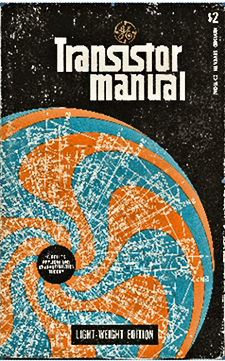
GE Transistor Manual
Master the first 170 pages of the venerable GE Transistor Manual and you’ll be a transistor expert.

The GE Transistor Manual. This editorial by Jack Ganssle reminisces about the old GE Transistor Manual. He notes, “It explains transistor theory in a level of detail that my college classes almost a decade later never approached. Read – and understand – the first 170 pages and you’ll be a transistor expert. But no attempt is made to make the subject easy.” One of the comments contains a link that you can use to download your own copy.

UPDATE 5/11/25: Unfortunately, this article doesn’t appear to be online any longer. Fortunately, the GE Transistor Manual still is. Click here.

Book excerpt: Analog Circuit Design— A Tutorial Guide to Applications and Solutions, Part 1. Based on the Application Notes of Linear Technology, this book covers the fundamentals of linear/analog circuit and system design to guide engineers with their design challenges. It includes a broad range of topics, including power-management tutorials, switching-regulator design, linear-regulator design, data conversion, signal conditioning, and high-frequency/RF design. VERY good stuff.

Fabricating HF Opamp Filters. Until recently, op amp filters have generally been restricted to circuits operating below 1 MHz. Recent advances, though, are enabling op amps to amplify at frequencies up to 1 GHz.This article explains how to use them for lowpass filters to 150 MHz.

Filed Under: Books and Magazines, Circuit Design, Electronic Components, Electronics Theory Tagged With: analog, op amps, transistors

21 things to do after you get your ham radio license

April 2, 2012 By Dan KB6NU 15 Comments

This book is now available! You can purchase it from Amazon (Kindle) or Barnes&Noble (Nook). You can also purchase it here on this website. See the links in the right-hand column for more information. The price is $2.99.

I’ve been getting a lot of free Kindle books after I subscribed to a couple of mailing lists published by Free Kindle Books. One of my recent downloads was 21 Ways to Promote Your Book on Twitter. The book was actually pretty good, and it gave me the idea to write a book titled 21 Things to Do After You Get Your Ham Radio License.

So, I started building a list. Here’s what I’ve come up with so far. If the list items below are clickable, it means that I’ve already written that chapter. Click on them and enter your comments about that particular item there.

  1. Join a club.
  2. Find an Elmer.
  3. Buy your first radio.
  4. Build a kit.
  5. Set up a shack.
  6. Join the ARRL.
  7. Learn the lingo.
  8. Upgrade to General.
  9. Go to a hamfest.
  10. Build an antenna.
  11. Participate in a contest.
  12. Go to Field Day.
  13. Take a SkyWarn class.
  14. Participate in a fox hunt.
  15. Learn Morse Code.
  16. Buy a DMM.
  17. Buy some QSL cards

Each of these would be a small chapter with an explanation why I think this is important and links to some sites and books for more information.

You see that I’m short a couple of items.  That’s where you come in. What would you add to this list? What would you delete?

Filed Under: Books and Magazines

  • « Go to Previous Page
  • Page 1
  • Interim pages omitted …
  • Page 14
  • Page 15
  • Page 16
  • Page 17
  • Page 18
  • Go to Next Page »

Primary Sidebar

No Nonsense Technician Class License Study Guide (for tests given between July 2026 and June 2030)

New No Nonsense Technican Class Study Guide now available!

The 2026 version of my Tech Class study guide is now available, and as always, the PDF version is FREE!. The ePub version costs $11.97, and a Kindle version and paperback version will be available on Amazon shortly.

Click here to get all of my "No Nonsense" study guides.

Also available: The CW Geek's Guide to Having Fun with Morse Code

W5SWL.Com
Retevis Ailunce H1 DMR Radio
DXpander: Cobweb antennas, Laser Cutting

You’ve got mail!

Enter your email address below and get an email every time I publish a new post.

Email


I frequently teach classes to help newcomers get their licenses. The next class will take place on Saturday, October 10, 2026 on the University of Michigan campus. Click here for more information.

If you can't make the class, subscribe to the mailing list to be notified of when the next class will be held.

You can always download my free study guide, and if you have any questions about the classes, or amateur radio in general, please feel free to email me directly.

Support KB6NU.Com

Donate $7.30 and get two of these cool stickers. Measuring 4.25-in. W by 2.75-in. H, it's perfect for your car, your shack, or wherever!

Contact me

If you have a question or comment about one of my blog posts, or a question about any of the material in my study guides, or just a question about ham radio in general, you can email me at [email protected].

Blogs You Should Also Read

  • AE5X: A CW-centric blog from Kingswood, Texas
  • K0LWC Blog
  • LA3ZA Ham Radio Blog
  • Little Radios, Big Fun – WB3GCK
  • Mr. Vacuum Tube's Blog
  • Radio Artisan – K3NG
  • The K0NR Weblog
  • VE3WDM's QRP Ham Radio Blog
  • W2LJ’s Blog

Ham Radio Websites

  • Dashtoons – The Hammin' Comedy by Jeff K1NSS

Podcasts

  • ICQ Podcast
  • Linux in the Ham Schack
  • No Nonsense Amateur Radio Podcast
  • Resonant Frequency Amateur Radio Podcast

Recent Comments

  • Bulin 47 AI on ICQPodcast Episode 485 – World Cup Special Event Station
  • Jesse Alexander on What do you think of this artwork for the ham radio EMF Explorer
  • CADProps on My first go at 3D printing not quite a success
  • Dan KB6NU on A Media Guide to Amateur Radio
  • Steve Stroh N8GNJ on A Media Guide to Amateur Radio

Meta

  • Log in
  • Entries feed
  • Comments feed
  • WordPress.org

Footer

Copyright © 2026 Daniel M. Romanchik, KB6NU · Log in