• Skip to primary navigation
  • Skip to main content
  • Skip to primary sidebar
  • Skip to footer

KB6NU's Ham Radio Blog

KB6NU's Ham Radio Blog
  • HOME
  • Study Guides
  • Teach a One-Day Tech Class
  • W8SRC Repeater Guide
  • Advertise
  • Hire Me

Software-Defined Radio (SDR)

Amateur radio in the news: Wireless and steam museum, Halifax amateurs get on the air, SDR tunes in new world of broadcasting

January 8, 2021 By Dan KB6NU 1 Comment

Finally, a good reason to visit Rhode Island (just kidding, just kidding)….Dan

Wireless Steam Museum reaches out
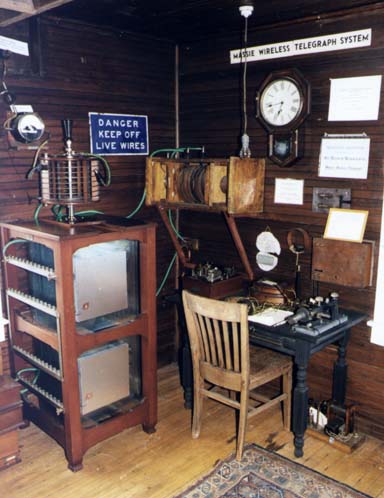
Massie Spark Station at the NE Wireless and Steam Museum, East Greenwich, RI.

E. GREENWICH, RI – For nearly 60 years, a small sign on Frenchtown Road has led visitors to a historic collection of ancient machines, one of East Greenwich’s best-kept secrets. This just-passed fall, the New England Wireless and Steam Museum turned outward – using a new technology (the internet) to share its collection of communication devices and steam engines with the wider world.

Museum director Randy Snow says he hopes the new video program will spread appreciation for mechanics and engineering: “We’re trying to hold onto those tangible skills, those lost arts, that aren’t taught anymore.”

…read more


This sounds like a good activity for any club…..Dan

Open frequencies: Halifax amateur radio operators make contact for Get on the Air

HALIFAX, NS — With the sound of Saturday’s noon gun from atop Citadel Hill, John Bignell was off and running. Or at least his handheld radio set was as the Halifax Amateur Radio Club’s Get on the Air winter event got underway. Dozens of radio operators around the city switched on their home transmitters or took to the snow-covered streets with portable units to make as many contacts as possible before the 4 p.m. deadline.

…read more


Software-defined radio tuning in new world of broadcasting
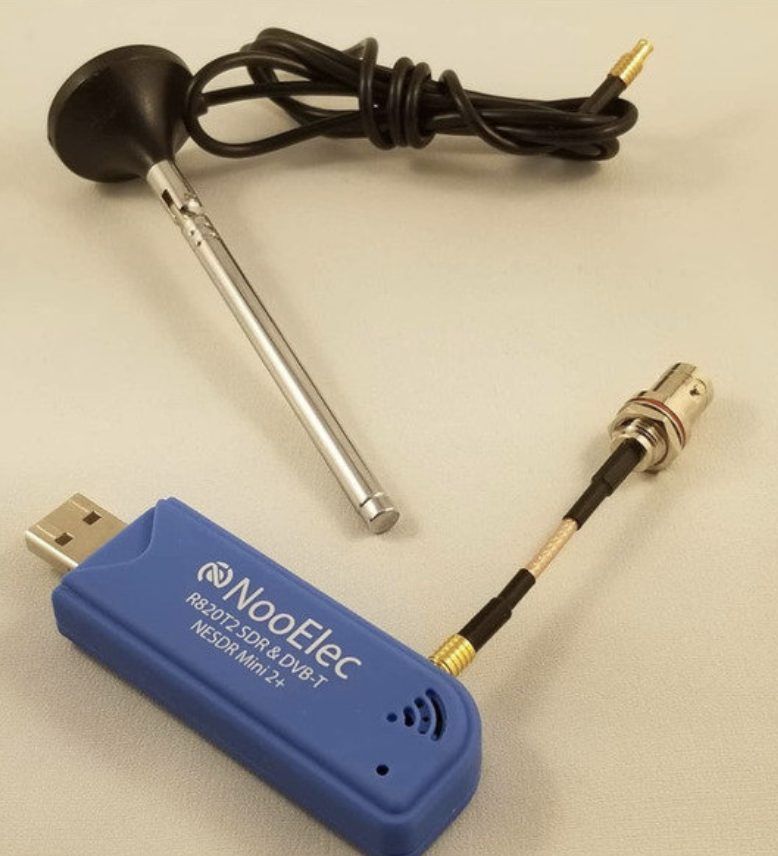
About two years ago a friend handed me a small blue device that plugs into the USB port of a computer. As he handed it to me he said it would completely change the way I thought of radio. I grew up in a household where radio was important. It enabled my immigrant parents, who had left western Europe for the Antipodes in the wake of the Second World War, to listen over shortwave to broadcasts from their home country. As such, radio and antennas were commonplace to me, and I remember building crystal sets to pull in whatever signals I could. Eventually that led me to getting my amateur radio operator certificate in Canada.
…read more

Filed Under: History, Operating, Software-Defined Radio (SDR)

HamPi and GNURadio

December 20, 2020 By Dan KB6NU 5 Comments

Ham Pi is a distribution for the Raspberry Pi produced by Dave Slotter, W3DJS.  It’s notable because it includes more than 100 ham radio apps, including  apps for running digital modes, antenna modeling apps, logging app, Morse Code apps, and software-defined radio apps.

It’s the SDR apps that I’m most interested in. Shortly after I installed HamPi, I purchased an RTL-SDR dongle from Amazon. 

I plugged it into the RPi and shortly after I was receiving FM broadcast stations with gqrx, an open-source SDR program. Next, I tried it with CubicSDR, and it worked just fine with with this program as well. HamPi also includes CuteSDR and SDRAngel, but I haven’t tried running those yet.

GNU Radio

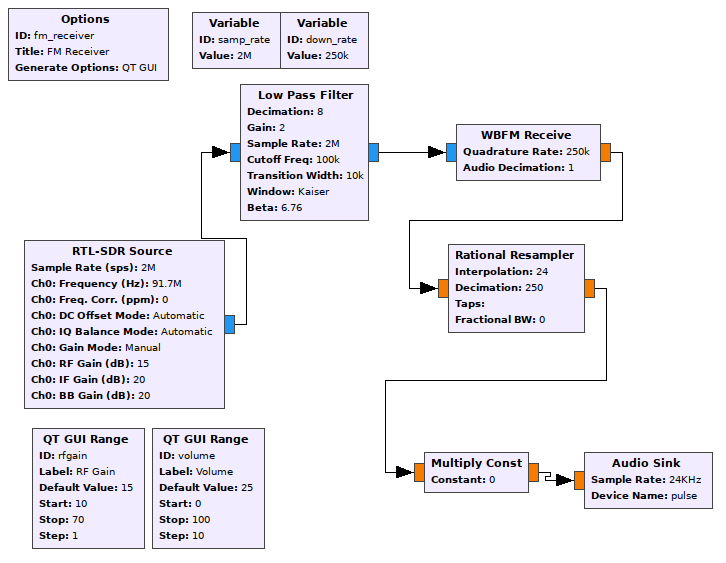
HamPi also includes a build of GNU Radio. GNU Radio isn’t an SDR program, per se, but a set of tools that allows you to build your own SDR application. You’re provided with a set of functional blocks that you connect up to create an application. For example, the diagram below creates an FM broadcast receiver.

Click to see the full-size image.

I got this flowgraph (that’s the GNU Radio term for the diagram) from VE6EY. As he puts it, an FM receiver is like the “Hello, world” program in other programming languages.

I ran into several problems. The first problem is that I wasn’t getting any sound output. Rightly so, I guessed that I hadn’t set up the audio sink correctly. After playing around a short time with settings, I finally got that to work.

The second problem is that the performance is terrible. I’m now getting sound, but the sound is distorted, and it appears as if the chain just can’t handle the data fast enough. It sounds kind of like when a DMR radio is dropping packets.

I thought it might be because the flowgraph was using the wxWidgets GUI library. So, I changed the WX blocks to QT blocks, but that had no effect. That was kind of disappointing.

I next tried getting some help from the discussion-gnuradio mailing list. I got a bunch of replies—including one really snooty one—but none of the solutions was readily implementable. I was hoping that someone would say something like, “Oh, yeah. Go into this file and change this parameter” or “Run this command and everything will be fine.” Instead, I was told that I really should be running a 64-bit Linux and/or I’m going to have to re-build GNU Radio.

I really would like to get GNU Radio up and running on this Raspberry Pi 4, so I’ll probably end up doing something along those lines, but it’s going to be more work than I anticipated.


Filed Under: Computers, Software, Software-Defined Radio (SDR) Tagged With: GNU Radio, HamPi

GNU Radio Conference (GRCon) goes online for 2020, main talks and discussion rooms are free

September 9, 2020 By Dan KB6NU 1 Comment

GNU Radio is one of those things that I keep threatening to learn, but never get around to doing. According to their website:

GNU Radio is a free & open-source software development toolkit that provides signal processing blocks to implement software radios. It can be used with readily-available low-cost external RF hardware to create software-defined radios, or without hardware in a simulation-like environment. It is widely used in research, industry, academia, government, and hobbyist environments to support both wireless communications research and real-world radio systems.

GNU Radio has been around for quite a while, and this year marks the tenth GNU Radio Conference (GRCon20), which is a “week-long conference that includes high-quality technical content…and highlights design, implementation, and theory.” This year’s event starts next Monday, September 14, 2020 online as a virtual event.

Like other virtual events, GRCon is making many of the presentations free and open to the public. The main talk track and discussion rooms are free, but the workshops cost $50. The conference schedule lists a number of interesting (to me, at least) talks, including:

  • Monday, 9/14
    • 1400-1430: How strong is my SDR signal?
  • Tuesday, 9/15
    • 10:00 – 11:00: Architecture Update – Marcus Mueller. GNU Radio Project Architect Marcus Mueller updates the community on the current state of and future plans for GNU Radio software architecture. 
    • 16:30-17:00. GNU Radio in a Direct-RF World. We are at the point of a third architecture for the masses, typically referred to as Direct-RF, with super high-speed data converters. In this presentation, the landscape of these new devices, and their applications will be discussed, as well as how they can be used with GNU Radio.
  • Thursday, 9/17
    • 11:00 – 11:30. RadEOT: The Radio Education Outreach Tool. The Radio Educational Outreach Tool (RadEOT) is an open-source, handheld, portable, low-cost multi-purpose education tool that utilises highly-configurable software defined radio (SDR), other commercial off the shelf (COTS) technologies, and a bespoke python-based interface to collect and process freely-available radio sources, such as aircraft transponder signals and radio astronomy. The tool is used for educational purposes in subjects including physics and mathematics. Each task can be tailored to the needs of the individual student, and allows them to conduct experiments, collect data and answers question in real time to make science lessons more dynamic.
  • Friday, 9/18
    • 13:00 – 14:00. Using GR in Amateur Radio. A breakout session for anyone interested in chatting with others about using GR in amateur radio, including CW, FSK, FM and other modulation/demodulation methods.

There are lots more, and I’d urge you to take a look at the complete schedule. To register, and it appears that you have to register even for the free talks, go to the registration page.

By the way, if you do want to learn how to use GNU Radio, there’s an online tutorial that purports to take you from beginner to developer. I searched Amazon for books on GNU Radio, but only found one in English, and that book was published in 2008 and out of print! There is one in Spanish and others in Japanese, though.

Filed Under: Software, Software-Defined Radio (SDR) Tagged With: GNU Radio

From my Twitter feed: How to remove battery corrosion, how to use your NanoVNA, another Chinese SDR

June 5, 2020 By Dan KB6NU Leave a Comment

Here are some things I found useful or interesting on Twitter in the last couple of days…Dan


If you’re like me, you’ve had batteries leak in one or more devices. Here’s the tl;dw version:

  1. Brush off loose corrosion.
  2. Add lemon juice or vinegar and continue brushing.
  3. Scrape off what’s left.
  4. Clean battery compartment.
  5. Wipe with a clean cloth.

NanoVNA presentation

Wondering what you can do with one of these neat, little devices besides measure SWR? Well, this presentation from Dan, KW4TI, will give you some ideas, including:

  1. Find the electrical length of a piece of coax.
  2. Measure the value of components.
  3. Measure the impedance of a balun.
  4. Make antenna measurements like you would with an antenna analyzer.

Chinese SDR

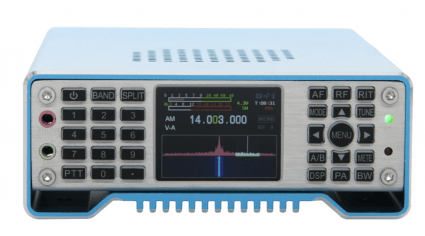
Ailunce is giving folks a sneak peak at their HS2 HF VHF UHF SDR Transceiver. It boasts a frequency range of 300 kHz – 1.6 GHz, a built-in network port for remote operation, and an output power of 30 W on HF among a host of other features. And the price? Only $500.

If this thing actually works, it could be a very attractive purchase. We’ll find out in September.


Filed Under: Gear/Gadgets, Repair/Maintenance, Software-Defined Radio (SDR), Test Equipment

Videos worth sharing from the ARROW mailing list: Surface-mount construction, breaking into SDR

May 28, 2020 By Dan KB6NU Leave a Comment

I’m fortunate to belong to a great club, ARROW, here in Ann Arbor. It’s not a really big club, but we have a lot of very smart, engaged members. We don’t have a newsletter, but we do have a fairly active mailing list. In the last couple of days, members suggested a couple of videos that I wanted to share with all of you as well.

The first was suggested by Payton, WA8G. He writes:

I found this video about a technique for making modular prototype boards for SMT only components that seems quite easy and robust. Maybe it’s already common practice but it was new to me and seemed worth a share especially with the recent club builds.

This next video was suggested by Ed, AB8OJ. He writes:

The talk was given at DERPCON, so the audience is tech-minded (to say the least) but many are probably not radio-savvy.

The beginning in particular is pretty basic stuff, which many hams might find a bit redundant. Starting about 20 minutes in, the presenter gets into a few open source tools that I found interesting. What I like best is that she goes right into a practical example—decoding a key fob.

Filed Under: Building/Homebrew, Software-Defined Radio (SDR), Surface-Mount Devices

2019 Contest University videos online

August 8, 2019 By Dan KB6NU 2 Comments

Videos from the May 2019 Contest University held at Dayton are now on line. Here are the videos that are available:

  • Radio Contesting – Contesting with Integrity – K5ZD
  • Session 1 – 2BSIQ & SO3R Riding the Edge of Human Capabilities – N6MJ
  • Session 2 – No Compromise Remote Contesting – KL9A
  • Session 3 – Solar Cycle Impacts on Radio Propagation: Forecasting Cycle 25 – WX6SWW
  • Session 4 – Eyeball Sprint Contest – K1DG
  • Session 5 – Contest Station Optimization – K3LR
  • Session 6 – Waterfalls, Recordings, and Reverse Beacon Network – N6TV
  • Session 7 – Improving your Contest Scores – K5ZD
  • Session 8 – Contest Radio Comparisons & Hybrid Architecture Explained – NC0B

I watched a portion of the “Solar Cycle Impacts”  and all of the “Contesting with Integrity” and “Contest Radio Comparisons & Hybrid Architecture ” videos.  Of the three, I found the radio comparison video to be the most useful to me, as I’m not a big contester, but I think all of them are worthwhile.

Filed Under: Contests, Propagation, Receivers, Software-Defined Radio (SDR) Tagged With: contest university

More Dayton 2019 videos from ICQPodcast: MFJ, SDRPlay

May 26, 2019 By Dan KB6NU Leave a Comment

Here are a couple more videos produced by the ICQPodcast team from the 2019 Dayton Hamvention.

The first video, called the RigPi, is a Raspberry Pi-based shack computer that allows you to operate remotely using any web browser on your mobile phone, iPad, tablet, laptop, desk-top or even Kindle. It’s available from MFJ, and in this video, Martin, M1MRB/W9ICQ, interviews Martin F. Jue, the founder of MFJ and Howard, W6HN, the developer of the RigPi.

In the second video, Chris, M0TCH/N4CTH, interviews Andy from SDRPlay. They discuss updates to SDRUno, their SDR software. This new release includes scanning, which our presenter, Chris, has found to be a really nice feature.

Filed Under: Computers, Software-Defined Radio (SDR)

From my Twitter feed: TujaSDR, connectors, soldering physics

May 3, 2019 By Dan KB6NU Leave a Comment

vielmetti's avatar
Ed Vielmetti @vielmetti
Tuja SDR transceiver tujasdr.com – Cyclone FPGA + Raspberry Pi 3. Work in progress but very interesting design! #hamradio

Saelig's avatar
Electrical_Engineer @Saelig

Know your connector types! electronics-notes.com/articles/elect…


Digi-Key Electronics

@digikey

Get To Know The Physics Behind #Soldering And The Packaging Of #Ics via @hackaday dky.bz/2PJJW4V

Filed Under: Building/Homebrew, Connectors, Software-Defined Radio (SDR) Tagged With: soldering, TujaSDR

Stuff from my inbox: MIT talks, JS8 basics, shielded cables

March 10, 2019 By Dan KB6NU Leave a Comment

Learn about radio from the brainiacs at MIT

In January, the MIT Radio Society (W1MX, MIT’s Amateur Radio Club) and the Electrical Engineering and Computer Science Dept. hosted a lecture series on everything radio, taught by speakers from the MIT Haystack Observatory, CWRU, and Nokia. The talks cover covered a wide variety of topics, including signal modulation, radio propagation, software-defined radio, radar, radio astronomy, cellular communications, and 5G. I haven’t watched them all, but the ones I have watched are pretty good.

On this page, you’ll find links to videos of all the topics. The video below is titled, “The Ionosphere, Shortwave Radio, and Propagation.”


Like FT8? Try JS8CALL

I am really enjoying JS8CALL and wish more of you guys would get on so I have more people to talk to. This video will show you how to use the software.


If you have an amateur radio station, chances are you’ll have an RFI problem at some point. All that RF floating around is one reason why we use shielded cables. The basic idea is to keep unwanted RF from affecting signals that we don’t want to be affected and to keep signals in the cables from affecting signals in other cables and devices.

This Nuts and Volts article by Ward Silver, N0AX, explains how shielding and shielded cables work and how to use them. Here’s one bit of practical advice to keep in mind:

NEVER bring a shield through a shielded enclosure. A shield should always be connected to the outside of a metal enclosure. By bringing the shield through the wall of the enclosure, you create a terrific pathway for RF to get in and out. And it will!


Filed Under: Building/Homebrew, Digital Communications, Software-Defined Radio (SDR)

Videos: Canadians on antenna fundamentals, PLUTO SDR, Fluke standards lab

February 5, 2019 By Dan KB6NU Leave a Comment

Antenna Fundamentals: Propagation

If you’re not quite sure how an antenna radiates a signal, this video should help you visualize that. If you’re of a certain age, tell me that you don’t think of The Outer Limits when the narrator starts talking.

PLUTOSDR Tutorial

The Analog Devices ADALM-PLUTO SDR Active Learning Module (PlutoSDR) is a module that introduces the fundamentals of software-defined radio (SDR), radio frequency (RF), and wireless communications to electrical engineering students.It looks like a very cool device to me. Mouser has them for $140.


A visit to the Fluke standards lab

Being a bit of a measurement nerd, I love calibration and standards labs.  This video focuses on the calibration of cable testers, but the principles apply to other electronics instrumentation as well. It’s a bit hypey, but I found it pretty interesting as well.


Filed Under: Antennas, Software-Defined Radio (SDR), Test Equipment

  • « Go to Previous Page
  • Page 1
  • Page 2
  • Page 3
  • Page 4
  • Interim pages omitted …
  • Page 6
  • Go to Next Page »

Primary Sidebar

No Nonsense Technician Class License Study Guide (for tests given between July 2026 and June 2030)

New No Nonsense Technican Class Study Guide now available!

The 2026 version of my Tech Class study guide is now available, and as always, the PDF version is FREE!. The ePub version costs $11.97, and a Kindle version and paperback version will be available on Amazon shortly.

Click here to get all of my "No Nonsense" study guides.

Also available: The CW Geek's Guide to Having Fun with Morse Code

W5SWL.Com
Retevis Ailunce H1 DMR Radio
DXpander: Cobweb antennas, Laser Cutting

You’ve got mail!

Enter your email address below and get an email every time I publish a new post.

Email


I frequently teach classes to help newcomers get their licenses. The next class will take place on Saturday, October 10, 2026 on the University of Michigan campus. Click here for more information.

If you can't make the class, subscribe to the mailing list to be notified of when the next class will be held.

You can always download my free study guide, and if you have any questions about the classes, or amateur radio in general, please feel free to email me directly.

Support KB6NU.Com

Donate $7.30 and get two of these cool stickers. Measuring 4.25-in. W by 2.75-in. H, it's perfect for your car, your shack, or wherever!

Contact me

If you have a question or comment about one of my blog posts, or a question about any of the material in my study guides, or just a question about ham radio in general, you can email me at [email protected].

Blogs You Should Also Read

  • AE5X: A CW-centric blog from Kingswood, Texas
  • K0LWC Blog
  • LA3ZA Ham Radio Blog
  • Little Radios, Big Fun – WB3GCK
  • Mr. Vacuum Tube's Blog
  • Radio Artisan – K3NG
  • The K0NR Weblog
  • VE3WDM's QRP Ham Radio Blog
  • W2LJ’s Blog

Ham Radio Websites

  • Dashtoons – The Hammin' Comedy by Jeff K1NSS

Podcasts

  • ICQ Podcast
  • Linux in the Ham Schack
  • No Nonsense Amateur Radio Podcast
  • Resonant Frequency Amateur Radio Podcast

Recent Comments

  • Dan KB6NU on The EMF Explorer: A badge for ham radio?
  • Travis Good on The EMF Explorer: A badge for ham radio?
  • MARTIN ROBERT ROTHFIELD on The EMF Explorer: A badge for ham radio?
  • Mike Chen on Operating Notes, January 5, 2026
  • Rob W4ZNG on The EMF Explorer: A badge for ham radio?

Meta

  • Log in
  • Entries feed
  • Comments feed
  • WordPress.org

Footer

Copyright © 2026 Daniel M. Romanchik, KB6NU · Log in