• Skip to primary navigation
  • Skip to main content
  • Skip to primary sidebar
  • Skip to footer

KB6NU's Ham Radio Blog

KB6NU's Ham Radio Blog
  • HOME
  • Study Guides
  • Teach a One-Day Tech Class
  • W8SRC Repeater Guide
  • Advertise
  • Hire Me

Kids

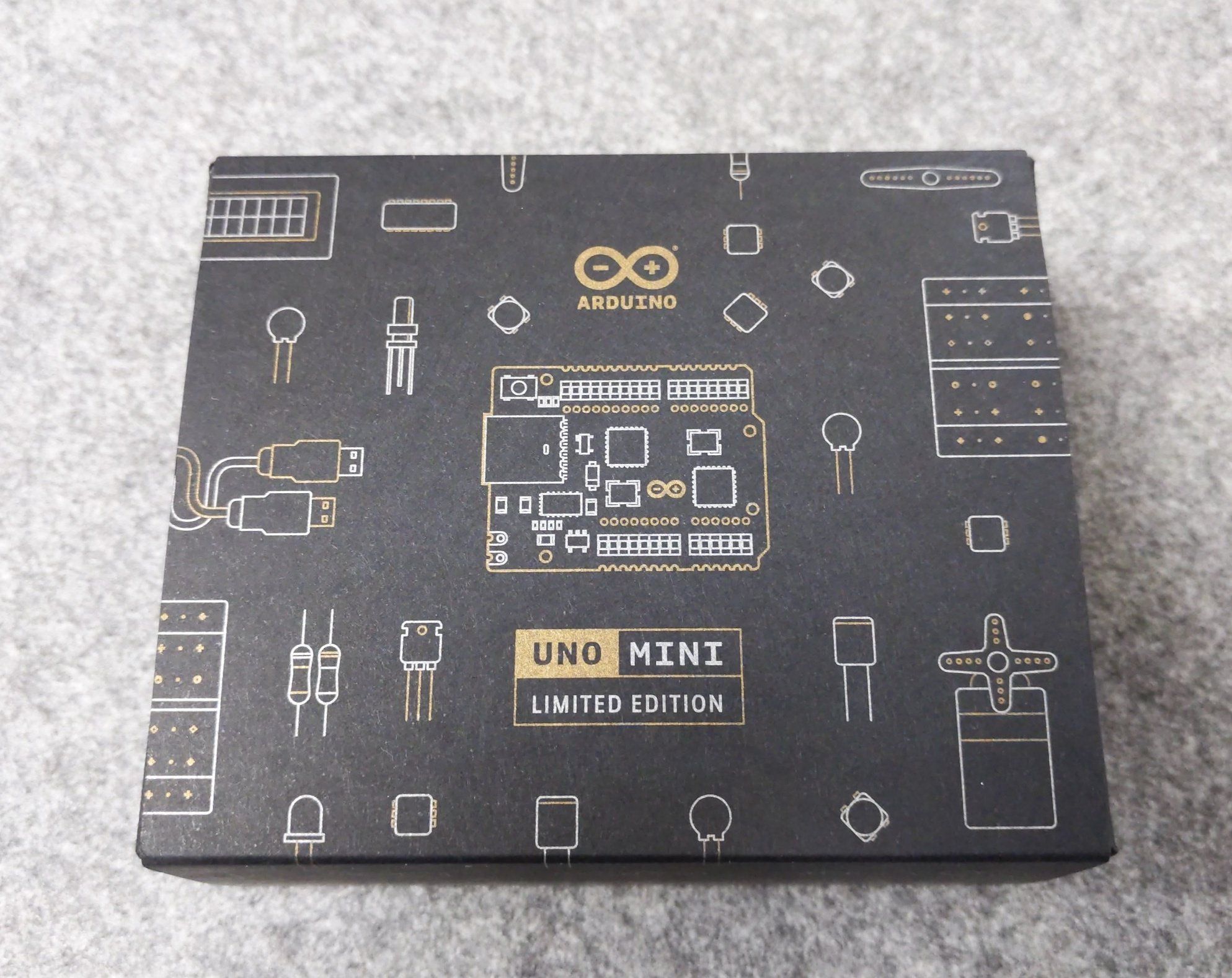
#hamradio needs something like the Arduino

December 11, 2021 By Dan KB6NU 11 Comments

About a week ago, this Tweet flashed across my feed:

lifeonunicorns's avatar
mia :) 🌈
@lifeonunicorns

Happy 10 million UNOs, @arduino 🥳 My first UNO was one of the things motivating me to get into electronics as a child. As an older child I’m now happily studying Computer Science in Uni and you are one of the reasons. Very happy to hold this in my hands now! 🎉

I retweeted and added the comment, “#hamradio needs something like the Arduino.” The more I think about this, the more I think this is true. An UNO is something that is affordable and simple to set up and something that kids and newcomers can have fun with almost right out of the box.

Someone commented:

Yeah, if only we had a software defined transceiver and does-it-all software. Oh… wait… analog.com/en/design-cent… and gnuradio.org. Point being, we have the hardware + software – we just need to popularize it.

This is not a bad idea, but I think that this solution is still too expensive (a PLUTO SDR costs more than $200). And, GNURadio is certainly not for beginners.  My reply was:

A PLUTO costs $200. An Arduino costs less that $20.

To which, I got this reply:

OK. For a transmitter, how about $35 for a Raspberry Pi + github.com/F5OEO/rpitx? For a receiver, $30 for rtl-sdr.com/buy-rtl-sdr-dv…

I said:

Now, you’re getting closer, but you can’t just dump this on them and expect them to magically create a working set. They’ll need some instructions and/or some coaching.

And my friend’s reply:

We’re in violent agreement. Arduino didn’t succeed because it was good hardware, it succeeded because of the vast ecosystem – books, classes, video tutorials, etc. We need the same thing for Software Defined Radio, especially “training wheels” for GNU Radio.

So, my question—or challenge, really—is how do we come up with something that lets beginners get started in radio for less than $100 and offers a similar experience to the UNO?
Filed Under: Building/Homebrew, Kids

ICQ Podcast Episode 365 – The Right Tool for the Job

December 6, 2021 By Dan KB6NU Leave a Comment

In this episode, I joined Colin Butler, M6BOY; Martin Butler, M1MRB; and Ed Durrant, DD5LP to discuss the latest amateur radio news. We discussed:

  • Using an Arduino to Upgrade a 1970s Ham Radio

  • New Law Hits AIS Beacons

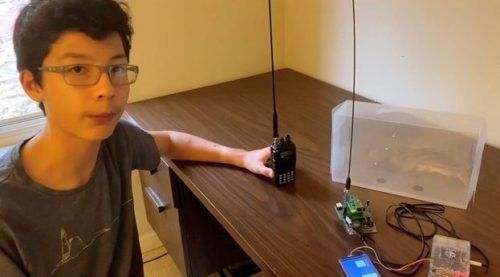
  • 10-year-old Radio Ham Launches his 3rd High-Altitude APRS Balloon

  • US Virgin Island Amateur Radio Group Bolsters Repeater Infrastructure

  • Indonesian Radio hams sign MoU with Defense University

  • Norway Introduce Programs to get Kids into Ham Radio

  • Spain Seeks to Attract Youngsters to Amateur Radio

This episode’s feature is “The Right Tool for the Job.”

Filed Under: Computers, Emergency Communications / Public Service, Kids Tagged With: Arduino, Indonesia, Norway, Spain, Virgin Islands

ICQ Podcast #363: The Lost Tribe, the Pied Piper and the Executive

November 8, 2021 By Dan KB6NU 2 Comments

In this episode, I joined Martin Butler (M1MRB), Edmund Spicer M0MNG, Ed Durrant DD5LP and Leslie Butterfield G0CIB to discuss the latest Amateur / Ham Radio news. We discussed:

  • VP0 New Prefix

  • Laboratory Test Model of ‘Sputnik 1 EMC/EMI’, 1957.
    The starting bid on this puppy is €85,000!

  • You can now order Pizza with Morse Code
    While it’s amusing that you can order pizza using Morse Code, there are two problems with this promotion:

    • This is only good in the U.K.
    • It’s Papa John’s pizza!
  • ARRL Clean Signal Initiative on the Horizon
    Read about my coverage of this initiative here.

  • Broadcaster in Ham Radio 40m Band
    We must certainly be constantly vigilant.

  • High School Students Learn how to use Ham Radio
    I liked this story because the organizers of a simulated emergency test recruited high school students to be part of the exercise. That’s something that other emergency coordinators might consider doing.

This episode’s feature is The Lost Tribe, the Pied Piper and the Executive.

Filed Under: Emergency Communications / Public Service, Kids, Podcasts

Amateur radio in the news: Clubs celebrate 80th anniversaries, MI sisters get their tickets

October 6, 2021 By Dan KB6NU Leave a Comment

In November 1941, the Muskegon Area Amateur Radio Council was established. 80 years later, the membership continues to grow and fill the ham radio airwaves.


Amateur radio group marks 80 years of community service during disasters

PITTSBURGH >> After eight decades of providing emergency backup communications during some of the region’s worst disasters, members of the Steel City Amateur Radio Club hit the airwaves to sing their own praises.

The club of about 60 members hosted a special event each day at its clubhouse in Collier. Members spent the week taking turns sending messages to other amateur radio ­operators around the world, sharing the news of their 80-year anniversary and their volunteer work.

read more >>


Midland sisters earn amateur radio licenses

Two years ago, Kanushi Desai, always an inquisitive youngster, decided to join the Jefferson Middle School Electronics Club. The then sixth grader took an immediate liking to the activity.

“Kanushi was so young, she had no idea of any of these things,” said Pranali Desai, Kanushi’s mother. “Even when she was little, she was always exploring, always doing something.”

The first thing she built in the club was a flashlight, and the megawatt smile that lit up Kanushi’s face following this success is something her mother won’t soon forget.

“The happiness on her face when she saw all these elements come together told me, as a parent, that we should continue to support this new interest,” said Pranali Desai. “She started learning more and more and soon got her older sister, Jashvi, interested. She started learning from Kanushi.”

Today the pair of sisters are proud owners of amateur radio licenses after passing both the FCC Technician Class and General Class Amateur Radio exams.

read more >>

Filed Under: Amateur Radio in the News, Clubs, Kids Tagged With: Midland, Muskegon, Pittsburgh

Random stuff: Circuits for kids, replace a 555 with a PIC microcontroller, HF sports net

September 28, 2021 By Dan KB6NU 1 Comment

Circuits for kids

A reader writes:

I wanted to thank you for putting together your links page. My daughter MaryAnne’s Girl Scout troop is currently working on their ‘Think Like an Engineer’ Badge as part of the STEM series, and the radio schematics resources on your page helped us a bunch!

MaryAnne’s troop leader encouraged the parents to work with our girls at home to ensure we stay on track! The girls will be building a working radio, so the troop leader wanted the girls to learn the basics about simple electronics, circuits and electricity. She asked the girls to do some research online and to share their findings with the troop. Your page led us to some great websites to check out, so MaryAnne and I wanted to make sure we thanked you :)

And if it’s not too much trouble, I was hoping you could include a contribution from MaryAnne on your website. She found this circuits guide that I was very impressed with…

All About Electronic Circuits
https://www.speedwaymotors.com/Info/All-About-Electronic-Circuits-for-Kids

I’d love to show MaryAnne and her troop leader! Encouraging girls in the field of science and engineering is so important! And MaryAnne would be thrilled to know she could help! (She really got into tinkering during COVID, so she was very excited to work on this project!)

There you go, MaryAnne. Thanks for the tip and good luck to your troop.

Use a PIC microcontroller to replace a 555

Speaking of circuits, Nuts and Volts has been running a series of articles on how to use a PIC microcontroller in place of a 555 timer chip. Here’s how the first article in the series compares the two:

Some of the advantages of this implementation as compared to a 555 or 556 are:

  • No capacitors
  • Very linear response for pulse width
  • Delayed pulse capability independent of the pulse width
  • Independent control of pulse width and off-time in astable operation
  • Very wide range of pulse width and off-time/delay
  • Output pulse width is independent of the triggering pulse width

Some disadvantages:

  • Shortest trigger to output delay is about 1 µs
  • Shortest pulse is about 3.3 µs
  • Longer minimum time between triggers due to reading the ADC (analog-to-digital converter) and other processing
  • Pulse width and delay use the same range

Some advantages of the 555:

  • Lower cost
  • Very low delay time between the trigger and the output pulse
  • Narrower pulses possible: <500 ns

As of this writing, these are the approximate prices for single pieces:

  • PIC12F1572 (DIP and SOIC) = $0.60
  • NE555PSR (SOIC) = $0.37
  • NE556DR (DIP) = $0.45
  • CSS555 (SOIC) = $1.55

HF sports net?

On the subreddit /r/amateurradio, someone asked if there were any HF sports nets. I don’t know of any, but I think something like that might be fun. If you known of any, please leave a comment.

Filed Under: Electronic Components, Everything Else, Kids, Microcontrollers, Operating

From Nuts and Volts: How old is old enough?, repairing circuit boards

May 4, 2021 By Dan KB6NU 1 Comment

Every week, I get an email from Nuts and Volts, one of the few electronics magazines still around. It contains links to articles on their website, and there’s almost always something that I want to read. Here are a couple of articles from recent issues that you might want to read….Dan


How old is old enough?

This is a question we almost all have faced. How young is too young to get a kid interested in electronics. Of course, it depends on the kid, but the author says that even 8 or 9 years old is old enough:

If you’re looking to introduce electronics to an eight or nine year old, I’m a big fan of the Snap Circuits series which is sort of like LEGOs with embedded components. The entry-level model is around $30 from Amazon. With color-coded LEGO-like components, you and your youngster can build over a hundred different circuits — from a water alarm to a timer.

I started playing around with stuff when I was about 10 or 11, with some guidance from my dad, who built a couple of hi-fi kits, and a raft of Popular Electronics and Electronics Illustrated magazines.


Repairing circuit boards

Repairing the complex circuit boards in our transceivers may be beyond the skills of most hams, but there’s still an awful lot of electronics that we use on a regular basis that is fixable. This article explains how to do that.

For example, the author points out that performing a visual inspection should be your first step:

Visual inspection is an essential first step in troubleshooting. Check for loose connectors or components in sockets, which can often get dislodged in shipping. Look for burned or damaged parts, or solder bridges causing a short circuit of signal or power lines.

You might be surprised at how many problems you will find by just looking!

I’m a big proponent of trying to fix something before just tossing it.  You’ll learn something by doing so, and if you can fix whatever it is you’re trying to fix, you’ll save money in the process, too.

Filed Under: Building/Homebrew, Kids, Repair/Maintenance

Amateur radio in the news: Youth edition

April 16, 2021 By Dan KB6NU 2 Comments

Beam Intermediate club teaches students how to use amateur radio

A new club at W.B. Intermediate School in Cherryville connects its members to people across the globe using technology that is more than 100 years old.

Mark Reep, a longtime counselor at the school, picked up an interest in amateur radio back in 2006 when he earned his radio operator license. He recalls getting his license because he enjoyed communicating with people in far-away countries and learning about their cultures.

Now, he is sharing that interest with students.

…read more


CVCS student gets FCC license

It was something that he thought would be fun. Eleven-year-old Keller Ford is now a licensed amateur radio operator. He earned his Technician Class FCC License after passing a test involving FCC rules and regulations and the basic operation of radios.

A short ceremony was held at Cottonwood Valley Charter School where ham enthusiast Jon Spargo presented Keller with a hand-held BaoFeng radio.

…read more


W5AC continues A&M’s amateur radio tradition

Texas A&M’s amateur radio club, W5AC, was founded in 1912 and has the oldest active call sign in the fifth district. Courtesy of Theresa Williams, W5AC

As the first public institution of higher education in Texas, Texas A&M is a pioneer in many ways.

A&M’s amateur radio club, called W5AC, is an example of this.

The club was involved with the 1921 play-by-play broadcast of an A&M-University of Texas football game — the first of its kind by an amateur radio station. However, a commercial station in Pittsburgh beat it out to be the first in the nation.

But the club’s history runs deeper than that.

Founded in 1912 in Bolton Hall, W5AC is the oldest college radio club that is currently operating under its original call sign, though there is some debate surrounding that fact.

Harvard claims its radio club, W1AF, was founded in 1909, but W5AC historian David Gent, Class of 1975, said there are issues with that claim.

“They did not have a station, they didn’t operate, they didn’t have a call sign in 1909,” Gent said. “What they did is they had some of their students that were interested in what was called wireless telegraphy and they met and talked about it, and they said that was the beginning of their club.”

…read more

Filed Under: Amateur Radio in the News, Kids

Amateur radio in the news: Young ham wins Congressional App Challenge

February 13, 2021 By Dan KB6NU 1 Comment

Concord Student Wins Congressional App Challenge

CONCORD, CA — A Concord teen won the 2020 Congressional App Challenge – CAC – for California’s 11th District. The CAC is a public initiative to encourage young people to learn how to code in an effort to inspire creativity and encourage interest in STEM — Science, Technology, Engineering and Mathematics — education. The winner of the challenge was Sean Donelan, who lives in Concord and attends Northgate High School. Donelan designed and created, “NetHam: The Public Service Event Coordinator’s Third Hand.”

…read more


How Wendell King Found His Frequency in Erie

It was June of 1917 and the United States was at war. The first American infantry troops had arrived in Europe that month and stateside manufacturers were working around the clock to keep up with wartime demand. In Schenectady, N.Y., the sprawling General Electric plant, which employed 20,000 workers, hired a few dozen students from nearby Union College for the summer. This included Wendell Wilford King, a brilliant 20-year-old North Troy local who had just finished his freshman year studying electrical engineering. Instead of having him work in the yard like most college hires, he was put on a drill press.

…read more


World Radio Day: How Heroic Ham Operators Use Radio Waves to Carry Out Post-Disaster Rescue Ops

Imagine this: you have just encountered an intense cyclone—a storm so strong that it has damaged buildings, uprooted trees, brought down electric poles and power lines, and destroyed everything in its path. The electricity is already down, and all your usual modes of communication—cell phones, landlines, the internet—have stopped functioning. What do you do in such a situation? How do you make those emergency calls for medical assistance? How do you seek immediate help after being completely cut-off from the rest of the world?

Be it natural disasters like cyclones and earthquakes, or man-made ones like bomb-blasts or terror attacks, the loss of communication in such times can often push a delicate situation from bad to worse; it can often be the difference between life and death.

But even in such blacked-out circumstances, a glimmer of sunshine can be found, and contact with the outside world can be established through a mode of communication that many wrongly believe to be obsolete: radio. On the occasion of the 2021 World Radio Day—an international United Nations observance held on February 13 every year—let us explore the underappreciated yet ever-so-crucial role played by amateur radio and the supermen that operate it, in saving lives during calamities.

…read more

Filed Under: Emergency Communications / Public Service, History, Kids

Amateur radio in the news: Kids discover new (old?) way to communicate, training scouts

February 8, 2021 By Dan KB6NU Leave a Comment

Young students discover a different form of communication

In a year that has often been isolating, eight students from Foxboro are exploring a different way to communicate. They are taking a virtual course in Morse code through the [CWops] CW Academy.

Liam Polis, 11, a sixth-grader who is home-schooled this year, said his mother signed him up for the class, and at first, he wasn’t sure about it, but then found it to be fun. “It’s different than other classes because we learn on our own and then check in with the teacher, but it’s fun. I learned a lot about the history and use of Morse code and also the letters: a, e, i, o, s, t, n, m, y, l and number 1 for week one,” Liam said.

…read more

When Scoutmasters Got Trained to be Amateur Radio Operators

Did you know that amateur radio supplies can come in handy when the grid is down? In case you didn’t realize this fact before, now you do! Scott deMasi, the assistant scoutmaster, knew the right way to respond to such an alarming situation with the power down in Kingwood’s subdivision in Texas. In 2017, the devastating Hurricane Harvey (Category 4) had wreaked havoc in many parts of the region, including Scott deMasi’s subdivision.

After the water level decreased, the two assistant scoutmasters, David Godell and Scott deMasi, sat down and worked for a solution to effectively communicate with their troop of a hundred scouts. Scott deMasi had spent 15 years as an amateur radio operator and knew the effectiveness of the ham radio in times where one’s survival is at risk. The task left was to train their troop of 100 scouts and their parents to maneuver ham radios. With the power down and roads flooded with water, operating a ham radio was indeed a lifesaving skill.

…read more

Mississippi Valley Amateur Radio holds training in WXOW’s parking lot

LA CRESCENT, Minn. – The Mississippi Valley Amateur Radio Association set up camp in the WXOW parking lot on Saturday for the day. Vice President Bill Klein-Schmidt explained they can set up anywhere they want and they try to do it as often as they can.

“Basically what we are doing today is what they call the Minnesota QSO party and what that consists of is us trying to contact as many counties in the state of Minnesota that we can in a certain period of time,” said Klein-Schmidt.

He said trainings also help them practice setting up their gear quickly and in cold, bad weather. It is important because if communication were ever to go down, they would still be able to communicate with people through ham radio.

…read more

Filed Under: Contests, CW, Kids Tagged With: CWOps, MN QSO Party, scouting

YOTA Month a Success in the Americas

January 21, 2021 By Dan KB6NU 2 Comments

Audrey, KM4BUN operates SSB during a shift as K8O from the McElroy home near Atlanta, GA, USA

December YOTA Month 2020, a worldwide special event celebrating youth in amateur radio, was a great success in the Americas! 24 operators under the age of 25 used special event callsigns to promote youth in amateur radio here in the Americas.

In the U.S., four 1×1 special event callsigns were used: K8Y, K8O, K8T, and K8A (Y O T A). Twenty-four youth operators across the U.S. rotated these calls throughout the month of December. They made 14,699 QSOs using SSB, CW, digital modes, and satellites. This is an 11.3% increase in QSOs from their total in 2019 (12,487). Some operators used the callsigns during contests such as CWops CWTs, FT Roundup, and the RAC Winter contest.

We asked the U.S. operators for their favorite aspect of YOTA Month. Michael, W3MLJ said, “My favorite part of YOTA month was running 5 radios at once. They were all on digital modes. Running the big FT8 pileups was very fun and to see the rate of the contacts being logged was really cool.”  Calin, K8MTJ commented, “In general I liked making a bunch of QSOs in a short period of time.  In particular, I had a really nice conversation with KC9CUK, Erich, on 40M.  I also got a kick out of working ZR1ADI, South Africa, on 20M FT8.”

Calin, K8MTJ enjoyed his time using the K8O callsign on FT8 from his station in Columbus, OH, USA.

Youth from the Americas enthusiastically spread the word about youth in amateur radio and made 14,699 QSOs in the process.  The event was a great prelude for the first ever camp to be hosted in the western hemisphere, which is still planned for July 11-16, 2021.

Bryant Rascoll, KG5HVO, who coordinated the efforts of the twenty-four operators and the logs for the USA stations, said, “Using lessons from YOTA Month 2019 made organizing more streamlined and flexible for our operators this year.” As part of his responsibilities, Bryant also managed Logbook of the World accounts for the US stations, the QRZ.com pages for all the callsigns, maintained an operator schedule, worked with YOTA month manager Tomi, HA8RT, and reported in to the YOTA camp committee in the Americas.

Globally, over 137,000 contacts were logged using 46 callsigns, all operated by hams under the age of 26.  That total surpassed last year’s record number of 129,029. The USA placed second, behind Croatia, in the total number of contacts made during the event.  Over 2,100 operators (both youth and adults) requested and received an award based on the number of YOTA contacts made as of January 19.

Awards that have not yet been claimed can be downloaded from events.ham-yota.com. Additional statistics are also available there. All YOTA Month QSL cards should be requested by OQRS.  More information about YOTA in the Americas can be found at YouthOnTheAir.org.

Filed Under: Kids, People, Special Events Tagged With: YOTA

  • « Go to Previous Page
  • Page 1
  • Page 2
  • Page 3
  • Page 4
  • Page 5
  • Interim pages omitted …
  • Page 15
  • Go to Next Page »

Primary Sidebar

No Nonsense Technician Class License Study Guide (for tests given between July 2026 and June 2030)

New No Nonsense Technican Class Study Guide now available!

The 2026 version of my Tech Class study guide is now available, and as always, the PDF version is FREE!. The ePub version costs $11.97, and a Kindle version and paperback version will be available on Amazon shortly.

Click here to get all of my "No Nonsense" study guides.

Also available: The CW Geek's Guide to Having Fun with Morse Code

W5SWL.Com
Retevis Ailunce H1 DMR Radio
DXpander: Cobweb antennas, Laser Cutting

You’ve got mail!

Enter your email address below and get an email every time I publish a new post.

Email


I frequently teach classes to help newcomers get their licenses. The next class will take place on Saturday, October 10, 2026 on the University of Michigan campus. Click here for more information.

If you can't make the class, subscribe to the mailing list to be notified of when the next class will be held.

You can always download my free study guide, and if you have any questions about the classes, or amateur radio in general, please feel free to email me directly.

Support KB6NU.Com

Donate $7.30 and get two of these cool stickers. Measuring 4.25-in. W by 2.75-in. H, it's perfect for your car, your shack, or wherever!

Contact me

If you have a question or comment about one of my blog posts, or a question about any of the material in my study guides, or just a question about ham radio in general, you can email me at [email protected].

Blogs You Should Also Read

  • AE5X: A CW-centric blog from Kingswood, Texas
  • K0LWC Blog
  • LA3ZA Ham Radio Blog
  • Little Radios, Big Fun – WB3GCK
  • Mr. Vacuum Tube's Blog
  • Radio Artisan – K3NG
  • The K0NR Weblog
  • VE3WDM's QRP Ham Radio Blog
  • W2LJ’s Blog

Ham Radio Websites

  • Dashtoons – The Hammin' Comedy by Jeff K1NSS

Podcasts

  • ICQ Podcast
  • Linux in the Ham Schack
  • No Nonsense Amateur Radio Podcast
  • Resonant Frequency Amateur Radio Podcast

Recent Comments

  • Bulin 47 AI on ICQPodcast Episode 485 – World Cup Special Event Station
  • Jesse Alexander on What do you think of this artwork for the ham radio EMF Explorer
  • CADProps on My first go at 3D printing not quite a success
  • Dan KB6NU on A Media Guide to Amateur Radio
  • Steve Stroh N8GNJ on A Media Guide to Amateur Radio

Meta

  • Log in
  • Entries feed
  • Comments feed
  • WordPress.org

Footer

Copyright © 2026 Daniel M. Romanchik, KB6NU · Log in