
 For ICQ Podcast Episode 397, I joined Martin Butler M1MRB, Edmund Spicer M0MNG, Ed Durrant DD5LP and Chris Howard M0TCH to discuss the following topics:
This episode’s feature is 23cm Antenna review and ISP Trouble.
For ICQ Podcast Episode 397, I joined Martin Butler M1MRB, Edmund Spicer M0MNG, Ed Durrant DD5LP and Chris Howard M0TCH to discuss the following topics:
This episode’s feature is 23cm Antenna review and ISP Trouble.
 Odd propagation
A couple of weeks ago, I turned on the rig, tuned up on 30 meters, and called CQ. The first station I worked was KB8FCG. According to QRZ.Com, KB8FCG is 28.8 miles away from me. The signal was S9 here in Ann Arbor. That seems a little too far for ground wave, but a little too close for sky wave.
The second station I worked that even was S57V. QRZ.Com says that S57V is is 4,600 miles away. He gave me a 579 report.
Zero beating is the practice of matching your transmitting frequency to that of the station you’re calling or are in contact with. Because most new rigs have DSP filtering, zero beating is more important than ever. If you call a station calling CQ, and your transmit frequency is off by more than 100 Hz, the station calling CQ may never hear you because you’ll be outside the passband.
I had this happen twice the other night. The first station to answer my CQ was 250 Hz up, the second was 250 Hz down. If I hadn’t seen these two stations on my bandscope, I never would have heard them.
The moral of the story is that if you’re answering a CQ, get as close to the station’s transmit frequency as you can. You do this by matching the frequency of the incoming signal to the frequency of your sidetone. That is to say that if you have your sidetone set to 500 Hz, the frequency that you hear when you’re receiving should also be 500 Hz.
There are a bunch of good YouTube videos on the topic. Here’s a good one:
So, I’ve been on the air quite a while now, and have contacted many stations many times. That being the case, I generally don’t need them to send me their name and location. I’d like to propose a new Q signal that will tell the other station that there’s no send this information again.
My first thought was to use QHI. There’s already a definition for QHI, but it’s not used at all in ham radio, and I bet that we could get away with it. WATSA OMs?
This year, at the Dayton Hamvention, they once again held Contest University in person. They also livestreamed and recorded the presentations. Here’s the video:
Recordings of previous years’ Contest University presentations are also online.
The very upper layer of our atmosphere is electrically charged and sometimes the electrons up there clump up and form giant waves larger than Texas that zip around the Earth faster than a jet plane! A team of researchers from NASA’s Ham Radio Science Citizen Investigation (HamSCI) has observed these giant waves, called Large-Scale Traveling Ionospheric Disturbances, or LSTIDs, for the first time. Volunteers from the amateur radio community collected the data.
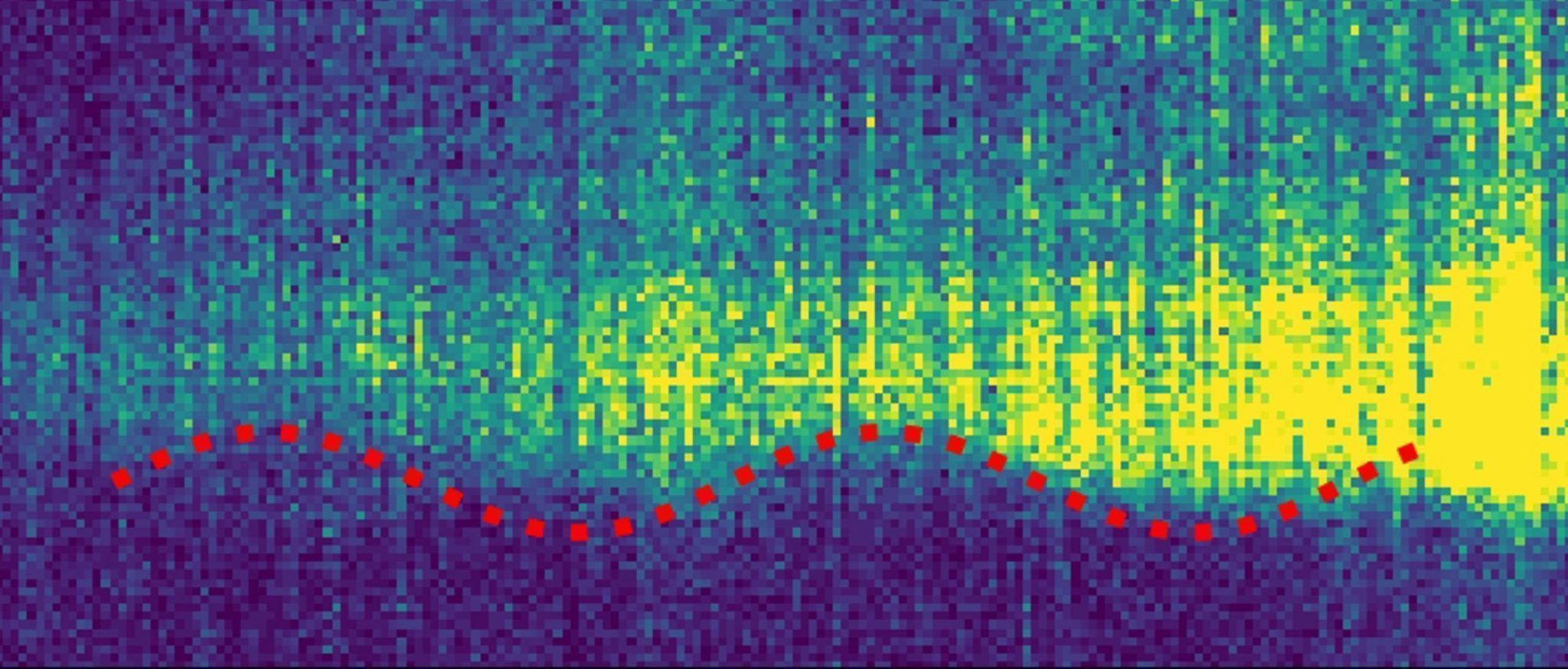
The distance that amateur radio operators can communicate
with each other changes over time, tracing a wave-like
pattern (red dots). Credit: Frissell et al. 2022. http://dx.doi.org/10.1029/2022GL097879
This new technique for observing these LSTIDs and vividly demonstrates their effect on radio communications. It can help us understand where these waves come from, and how the layers of our atmosphere interact. These results were published in the American Geophysical Union journal Geophysical Research Letters. If you love amateur radio and like to get involved with the HamSci citizen science project, visit https://hamsci.org/.
Support from all over Maine is being sent to Ukraine as residents of the Pine Tree State pitch in with donation drives, benefit dinners and concerts to help the victims of the Russian invasion of its Eastern European neighbor.
One Gorham resident has lent moral support through direct contact with a Ukrainian man. Ham radio buff Bob Parsons got through this week to Volody Leshkulich, who was somewhere in the area of Kyiv, the capital city under attack by Russian forces. Leshkulich speaks English.
“They are hanging in there. That’s just about all he said. He wasn’t going to elaborate,” said Parsons, who broadcasts from his home via an antenna on a 55-foot tower using the call letters KA1KSQ.
When natural disasters hit, amateur radio operators can be the first to transmit calls for help to the rest of the world. But in recent weeks, radio amateurs in flood-affected areas have watched helplessly as all their vital gear has been washed away.
However, a club on the New South Wales-Victoria border has stepped up to help. “We saw a need,” North East Victoria Amateur Radio Club (NEVARC) secretary Frank Scott VK2BFC said.
“So we’ve created a fund to try and assist these operators who may have lost all their equipment and in some way try and replace it.”
 Back to Basics: Impedance Matching By Lou Frenzel, W5LEF
The term “impedance matching” is rather straightforward. It’s simply defined as the process of making one impedance look like another. Frequently, it becomes necessary to match a load impedance to the source or internal impedance of a driving source. A wide variety of components and circuits can be used for impedance matching. This series summarizes the most common impedance-matching techniques.
The entire series is available as a downloadable ebook.
While I’m not sure, I’d guess that something similar happens on 160 meters or even the HF bands….Dan
 AM Radio ‘Flutter’
Sometimes I like to listen to a couple of AM radio stations that transmit from southern New Jersey, which is rather far from here on Long Island. Their signals are pretty strong during the daytime but now and then there is a rapid in-and-out fading effect, which sounds very much like a flutter.
I’ve sometimes heard that same effect when listening to shortwave radio and I initially assumed it was an ionosphericphenomenon but now I don’t think so. There seems to be an alternative explanation.
I haven’t tried these yet, but they look like fun….Dan
There’s plenty of low-cost hardware out there feasible for implementing deep learning training and (especially, along with being your likely implementation focus) inference, as well as plenty of open source (translation: free) and low-priced software, some tied to specific silicon and other more generic. Tying the two (hardware and software) together in a glitch-free and otherwise robust manner is the trick; select unwisely and you’ll waste an inordinate amount of time and effort wading through arcane settings and incomplete (and worse: incorrect) documentation, trying to figure out why puzzle pieces that shouldfit together perfectly aren’t.
That’s where Google’s AIY (which stands for “Artificial-Intelligence-Yourself,” a play on DIY, i.e., “Do-It-Yourself) Project Kits come in. They’re targeted at hobbyists and professionals alike: in Google’s own words, “With our maker kits, build intelligent systems that see, speak, and understand.
The bands finally seem to be heating up. I’ve managed to make European contacts nearly every day for the past week. Just last night, I called CQ on 40m just before 0000Z and got a reply from an LZ3. He was S5 here, but since I wasn’t expecting a DX call, I had to get him to repeat his call for me. Of course, it didn’t help that he’d only sent it once—DX style—in the first place.
Also, last night, the bands were open to the west. That’s an indication of good band conditions here, as I don’t usually do well to the west because of the way my antennas are situated. I worked both a CO and a CA station.
As I noted in a previous post, I picked up an Icom IC-2820H at a recent hamfest. It’s an older radio, but I’m really starting to like it. For example, it has a dual-watch feature, meaning that I can monitor two frequencies at the same time.
It has a couple of other unique features, too. For example, there is a second antenna input, and if you connect a second antenna to the radio, it can do diversity reception. It also has a bandscope feature. I don’t think I’ve seen that on any other VHF/UHF radio. I haven’t used either feature yet, but they might be fun to play with.
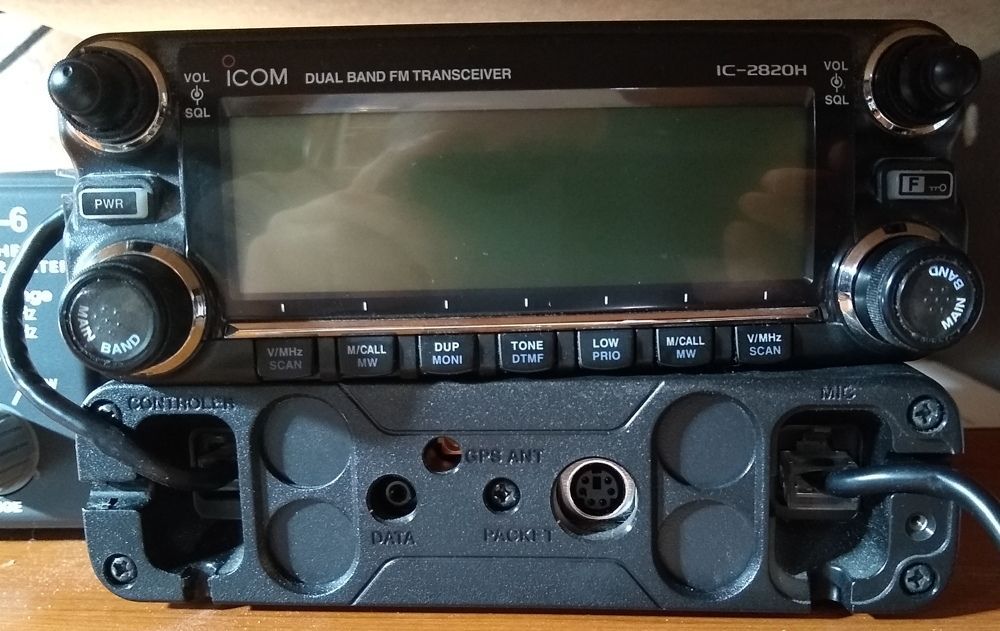
It has a detachable head for mobile installation, which is a nice feature, but if you’re not using it detached, connecting the control head and microphone is a bit kludgey, as the connectors are behind the control head (see photo above). The data port is also hidden behind the control head. One of the reasons I bought this radio was that it had a data port. Now, I have to find the little DIN connector to use it.
The unit I bought has the optional UT-123 D-STAR board. Apparently, these are a bit rare and sought after. I have no intention of using it, so if you’d like to purchase it, let me know. I even have the original box for it.
Last December, I tried to get CW Skimmer working with my Flex 6400. Unfortunately, I wasn’t successful, and being both impatient and ambivalent about paying $75 for the program, I gave up on it after a little while.
Last night, I decided to give CW Skimmer another go. After reading several posts in the Flex Radio Community Forum, it looked like the thing to do was to get a third program called Slice Master 6000, which configures and launches third party applications, such as CW Skimmer, GRITTY, WSJT-X, and flDigi, automatically. By the way, it’s called Slice Master because Flex refers to their receivers as “slices.”)
I installed and ran Slice Master, but it failed to connect. Consulting the forum again, someone noted that the problem was probably with Windows Defender. Sure enough, after adding a rule to allow Slice Master to connect, it did indeed connect, and now I have CW Skimmer running.
I don’t really need CW Skimmer myself, but I would like to provide some input to the Reverse Beacon Network (RBN). I use RBN all the time, so it will be nice to give something back. I’ll probably pay for the full version of CW Skimmer tonight and then see about connecting to RBN.
 DX ragchew
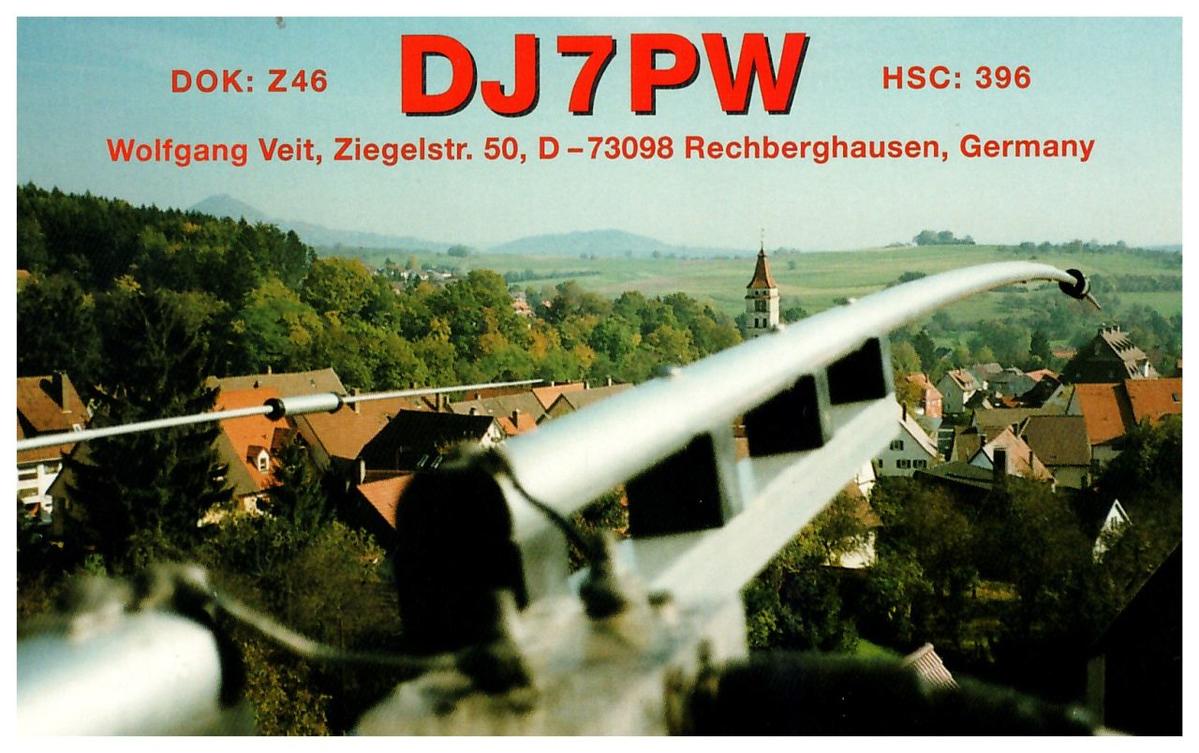
A couple of days ago, I had a rare experience—a ragchew with a DX station. Wolf not only told me about his station, but a little bit about his town and the area he lives in. As you can see from the photo at right, it’s quite a lovely place.
How can you tell if a DX station might be up for more than just a quickie, canned QSO? Look them up on QRZ.Com. If they have a lot of information—written in English as Wolf has—then there’s a chance that they might be interested in a ragchew.
On Monday’s 2-meter club net, I got a call from Jack, KE8SWM. He was a bit weak into the repeater, and it took me a couple of tries before I got the call right. And even then, I wasn’t sure. You see, I looked him up on QRZ.Com, but the call wasn’t in the database. Jack’s new call had only been assigned that afternoon!
So, as it turns out, I was his first contact. I’ve dispatched a QSL card, also his first.
 Bands heating up
The bands have been pretty hot the last couple of days. I’ve worked a bunch of Europeans, including DJ7PW as described above, on 30 meters.
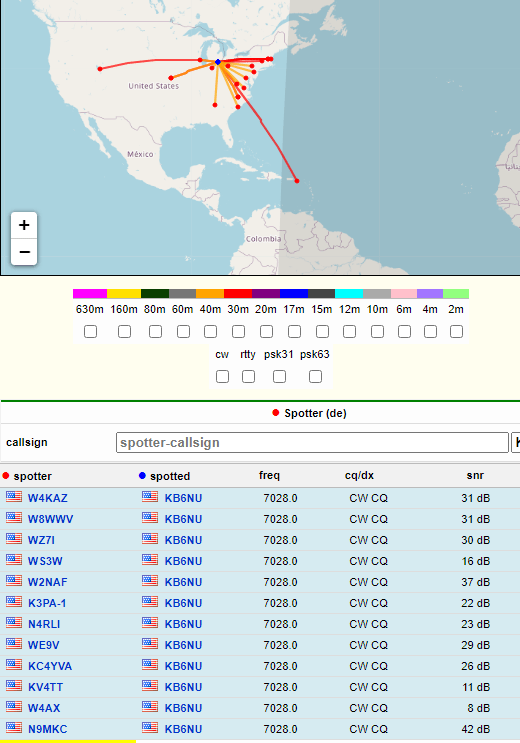
Tonight, 40 meters was was really hot. At right is a screen shot of my spots earlier this evening. What’s remarkable about this are the number of 30+ dB and 40+ dB spots. The band is still looking good here at 0230 UTC.
If this keeps up, we could be in for a pretty good fall and winter.
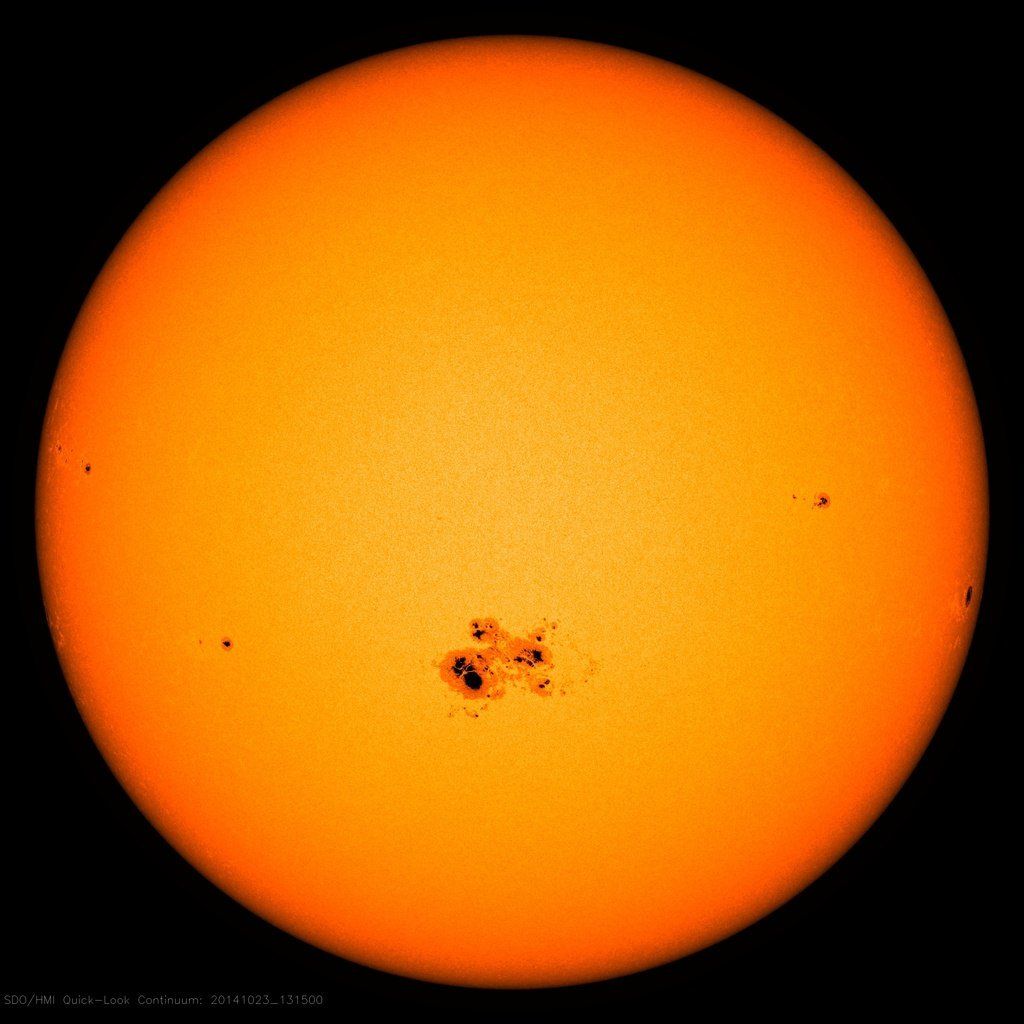 A new solar cycle 25 forecast predicts that the cycle will be big, while a second predicts that it will be early.
NASA Heliophysicists have released a revised prediction for Solar Cycle 25. The report generated by Ricky Egeland, a solar physicist working in the NASA Space Radiation Analysis Group now calls for the peak of Solar Cycle 25 to top out at a value of 195 ± 17 based upon the new scale for calculating Smoothed Sun Spot Number. For reference Solar Cycle 21 peaked at an SSN 233 (new scale) while Solarcycle 23 peaked at an SSN of 180 (new scale). If this predictions holds up Ham Radio will see Excellent Worldwide F Layer Conditions on 10 Meters for several years around Solar Max. 6 Meters conditions should be good in the Equinox Periods before and after Solar Max with consistent openings on Medium Haul Polar Routes. 6 Meter routes traversing the equator should experience consistent openings ± 9 months from Solar Max.
That sounds pretty good, doesn’t it?
The second report appears on SpaceWeather.Com:
SOLAR MAX MIGHT COME A YEAR EARLY: Solar Cycle 25 is heating up faster than expected. The latest sign may be found in sunspot counts from July 2021. Continuing a trend that started last year, they overperform the official forecast:
Issued by the NOAA/NASA Solar Cycle 25 Prediction Panel in 2019, the official forecast calls for Solar Cycle 25 to peak in July 2025. However, a better fit to current data shows Solar Cycle 25 peaking in October 2024. This is just outside the 8-month error bars of the Panel’s forecast.
Predictions like these really have little practical use for amateur radio operators. We all know that propagation will get better as we get into Cycle 25, and there’s nothing that we can do to make it better. I suppose that if you have been thinking of putting up some kind of directial antenna—I’ve been thinking about putting up a hex beam—this information might spur you to do it sooner, rather than later. For the most part, though, we just have to go with the flow.

This popped into my inbox yesterday:
Hello Contest University participant:
You registered for Contest University 2020 which was held in May 2020.
Contest University is hosting a Propagation Summit 2021 on January 23, 2021 starting at 11 AM EST.
You can view the Propagation Summit outline: http://contestuniversity.com
There is still time to register for the Propagation Summit here: Zoom Webinar Signup
There will be a drawing for an Icom IC-705 donated by Icom America. Winner must be present on Zoom to win.
Hope you can join us on January 23, 2021
73,
Contest University
Here’s the schedule:
Looks interesting to me!
Online learning isn’t the same as in-person learning, but one good thing about it is that many organizations are offering it for free or at very low cost. Here are two opportunities that I’ve recently found out about:
 The 22nd annual Ham Radio University (HRU) educational conference will be held online on Saturday, January 9, 2021, from 8 AM to 4 PM EST (1300 – 2100 UTC) as a GoToWebinar online video conference. HRU’s 14 informational presentations include:
Participation in HRU 2021 is free, with a suggested donation of $5. Advance registration is required for each presentation. More information and how to sign up can be found at hamradiouniversity.org.
On January 23rd, Contest University will be hosting a free Propagation seminar. Sponsored by DX Engineering and Icom America, this webinar is being done via Zoom. The schedule is as follows:
There will be a drawing for an Icom IC-705 donated by Icom America and DX Engineering after the seminars. The winner must be present on Zoom to win. To register, go to https://zoom.us/webinar/register/WN_dfLvFDxaTyakOWd_C7_puwt.