• Skip to primary navigation
  • Skip to main content
  • Skip to primary sidebar
  • Skip to footer

KB6NU's Ham Radio Blog

KB6NU's Ham Radio Blog
  • HOME
  • Study Guides
  • Teach a One-Day Tech Class
  • W8SRC Repeater Guide
  • Advertise
  • Hire Me

Electronics Theory

Introducing the League of SI Superheroes: The New Champions of Metric

November 17, 2015 By Dan KB6NU Leave a Comment

This is from the  NIST Tech Beat: October 6, 2014. I’ve been meaning to run this for over a year…..Dan

To celebrate Metric Week (Oct. 5-11), the National Institute of Standards and Technology would like to introduce you to the League of SI Superheroes. The League of SI Superheroes use their incredible powers of measurement to perform amazing feats of science and engineering.

Measurement is an incredibly powerful tool. Measurements are how we describe what we know, uncover what we don’t know, ensure quality and enable creativity.

Rear Admiral and computing pioneer Grace Hopper famously said, “One accurate measurement is worth a thousand expert opinions.” What she meant is that opinions are fine, and expert opinions are even better, but they aren’t knowledge until there are measurements to back them up.

The customary units in the United States grew out of our everyday experience. Gallons, feet and pounds were conveniences based on prescientific notions of accuracy and repeatability that served, and continue to serve, people’s everyday needs adequately enough (though their continued use does act as a barrier to trade and can occasionally lead to mishaps).

It was around the time of the Enlightenment that people began to get serious about measurement. Scientists realized that they needed a rational set of interrelated measures rooted in natural constants if they were going to make any further progress. This was the driving force behind the creation of the International System of Units, or SI, which, even though its use is not mandatory, serves as the foundation for all the traditional units with which we in the United States are most familiar.

Some of the most famous figures in science have lent their skills (and their names) to the SI, and the drive to improve those and related measurements has led to groundbreaking scientific and technological achievements, including four Nobel Prizes (and counting) for NIST scientists.

Today, we welcome the newest champions of measurement, the League of SI Superheroes. Emerging from their environmentally shielded headquarters around the globe, the superheroes are dedicated to the fight against uncertainty, imprecision and inaccuracy and to improving the quality of our lives and the things we build.

The League of SI Superheroes was designed to encourage students to learn about metric measurements as they consider science, technology, engineering and mathematics (STEM) careers. SI familiarity and fluency must be developed along the STEM career pipeline to prepare the future workers with essential measurement skills.

Educators are encouraged to use this resource in their classrooms when introducing the seven base SI units to students.

Ms. AmpereThe League of SI Superheroes are:

Meter Man: With his laser interferometer eyes, graduated arms and extendable body, no dimension is too big or too small for Meter Man to measure.

The Mole: Able to sniff out and count the atoms of every element, the Mole is a master of chemistry.

Professor Second: By reading the vibrations of her laser-cooled cesium atoms, Professor Second can synchronize any frequency and calibrate any clock.

Monsieur Kilogram: Monsieur Kilogram loves lifting weights, and it shows. With his balance scale arms, no mass is too big or too small for him measure.

Ms. Ampere: Ms. Ampere rules the flow of electrons—electrical current—and makes sure that the right amount gets where it needs to go.

Dr. Kelvin: Dr. Kelvin heats up or cools down objects by speeding up or slowing down the particles inside them. He can also measure the temperature of anything in the universe with his trusty thermometer.

Candela: Don’t let her small size fool you. Candela’s power over light helps to brighten the whole world.

The League of SI Superheroes’ work is never done. They toil tirelessly behind the scenes to make sure the measurements that interweave our lives are as accurate and precise as possible. And they hope to release another of their harrowing adventures to the public soon.

In the meantime, watch their pilot episode, Desperate Measures, and let them know what you think about their work. And be sure to let them know if you are in need of their assistance.

If you would like to learn more about the SI, check out these fine resources:

  • Becoming Familiar with the SI
  • Education Resources
  • Everyday Estimation
  • Metric Units of Measurement
  • Unit Conversions
  • Measurements in Sports

Teachers can also request a classroom set of SI educational materials by submitting their contact information and grade level to [email protected].

More information about Metric Week can be found at these sites:

  • National Council of Teachers of Mathematics (NCTM)
  • NCTM Position – Teaching the Metric System for America’s Future
  • National Science Teachers Association (NSTA) Position – Use of the Metric System
  • U.S. Metric Association – Metric Week

See you soon!

Filed Under: Electronics Theory

From IEEE Spectrum: Maxwell’s Equations, QRN, Li-Fi

September 22, 2015 By Dan KB6NU Leave a Comment

Spectrum is the magazine of the Institute of Electrical and Electronic Engineers (IEEE). Think of it as the IEEE’s QST. There are often articles in Spectrum that are of interest to radio amateurs. Here are three that were recently published:

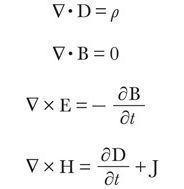
maxwells-equations
…and there was light (and radio)!

The Long Road to Maxwell’s Equations. Maxwell’s equations are the four equations you see at right. They describe how radio—all electromagnetic radiation, actually—works. This article describes the how Maxwell built upon the work of scientists such as Faraday and Ampere and Oersted in devising his theories, and how those that followed, sometimes called the Maxwellians, developed this work. For example, while we call the four equations at right Maxwell’s equations, it was actually Oliver Heaviside who took the 20 equations that were in Maxwell’s original work and boiled them down to the four equations that we now know as Maxwell’s Equations.

Electronic Noise is Drowning Out the Internet of Things. RF noise pollution is everywhere, and while this article is aimed at the problems noise can cause to Internet of Things devices, which use wireless, i.e. radio, connectivity, RF noise pollution causes problems for radio amateurs, too. What’s more alarming, is that fueled by an irrational political view that any kind of regulation is bad, the FCC is being cut back exactly when it will be needed the most. Make sure that you read the comments—from practicing engineers with EMC experience—as well as the article.

Disney Seeks to Make Visible Light Communication Practical. If anyone can make visible light data communications work, it’s the Disney “imagineers.” This might be something to consider if you’re looking for some kind of ground-floor opportunity. It might be one way that Internet of Things devices connect to one another.

Filed Under: Digital Communications, Electronics Theory, EMI/RFI Tagged With: Internet of Things, light, Maxwell's equations

From my Twitter feed: soldering SMDs

August 4, 2015 By Dan KB6NU Leave a Comment

DIYEngineering's avatarDIY Engineering @DIYEngineering
How to Solder surface mount IC chips – This is the “pin sweep” method of soldering small SMD (surface mount) IC ch… ow.ly/31U7xI


ke9v's avatarJeff Davis @ke9v
I operate QRP but my antenna is a little larger than most… youtu.be/iOdhneE3l6Q –> Just kidding, life’s too short for QRP!


EarnKnowledge's avatarLearn Something @EarnKnowledge
The relationship between sine and cosine. pic.twitter.com/SmH73W3XXU

https://www.kb6nu.com/wp-content/uploads/2015/08/sine-cosine.mp4

Filed Under: Building/Homebrew, Electronics Theory, QRP

From the trade magazines: LabView, DigiKey, mixers

July 22, 2015 By Dan KB6NU 4 Comments

30LabVIEW_200xDIY Makers, Hobbyists, and Experimenters Get Professional Software. National Instruments has come out with a $49 version of LabView. According to the article, “Called the LabVIEW Home Bundle, this is a fully operational version of the core NI product that can be used to speed up and simplify experimentation by making programming less of a problem.” I’m not having much success with the software bundled with my new digital scope (more on that later, but it’s been very disappointing), and I know LabView is quality software, so I’m seriously thinking about purchasing this package. NOTE: If you’re a student, you can buy a Student Edition of LabView for as little as $20!

Q&A: Digi-Key’s Larson Looks Back—And Ahead. I found this interesting as DigiKey actually started out as a place for hobbyists to get parts. The CEO says, “In the early days, Ron was a graduate student at the University of Minnesota, and he was a very active ham radio enthusiast. While he was still in school, he put together a kit [of electronic parts] for sending Morse code, and he would sell these kits at ham radio fairs.” Now, of course, it’s a major electronic components distributor.

Understanding Mixers and Their Parameters. While written for engineers, not radio amateurs, it’s not heavy on the math and just might give you a better understanding of mixers and some of the terminology associated with them.

Filed Under: Electronic Components, Electronics Theory, Software, Test Equipment

Getting beyond the question pool

June 26, 2015 By Dan KB6NU 7 Comments

A couple of weeks ago, I received an e-mail from David, WD5BZN:

I was looking around for a book on radio math and came across some online discussion from about 10 years ago, in which you said you were contemplating writing such a book, and were soliciting ideas from people about what it should cover.

I was curious if you ever took a stab at that? If not, is there another book on the market that you recommend that covers the same topics?

Thanks, and 73, David

I replied:

I  never wrote one myself, but W5JCK has written one that covers the mathematics on the Extra Class exam – W5JCK Math Guide for Amateur Radio Extra Class Exam 2012-2016. Do you have a question about a particular topic?

David wrote back:

Thanks for the reply Dan.

No particular question at this point. Like many of the people who replied to your question about whether such a book would be helpful, I just have a general interest in beefing up my knowledge. I have a General license. Honestly, I passed that test by memorizing-not truly understanding-many of the questions and answers. So now that I have licensing out of the way, I want to actually learn some of the science behind radio. And I think math is required. Math seems to be the dividing line between “pop” science and real science.

I don’t come from a math/science background. My dad was a college history professor. My education was liberal arts all the way down the line. So, I don’t expect to be able to educate myself up to the level of someone  with, for example, a degree in electrical engineering. But I would like to do what I can. That was the motivation for my question.

To which, I replied:

I don’t know that I’d say that math is the difference between pop science and real science, but knowing the math gives you a better understanding of the technology. The mathematics describe how the technology really works. When you understand the math, you have a better understanding of the technology.

Having said that, the math we use in ham radio is no where near the math that engineers study. There isn’t a hint of calculus in ham radio, for example.

He then asked:

I am curious what your background is? I’ve always wanted to learn some calculus, whether or not its really needed for ham radio. I just think it would be cool to learn and I have always regretted stopping my math education with high school algebra.

I answered:

Well, I hate to say this, but I do have an electrical engineering degree. I got my ticket, though, when I was 16 years old, and had been interested in shortwave radio since the age of ten. And, I was always pretty good at math going through high school and college.

Having said that, I just Googled “calculus for non-mathematicians” and came up with the Web page, “A Gentle Introduction to Learning Calculus.. While I’ve only skimmed it, it does seem like a good introduction to the concepts of calculus. If you do get a chance to read it, I’d be interested in your reaction to it.

He e-mailed back:

No need to apologize! I sometimes wish I had gone in that direction. One thing about being a lawyer is that very often there just isn’t a single correct answer to a problem. I think that is what has always intrigued me about math/science—that there really is a correct answer. If you don’t do the math correctly, the bridge you are building, or the circuit you are designing, just won’t work. There is something very straightforward about that, that is lacking in my business.

I will definitely check out the resource you linked to below, and let you know what I think.  A couple of other books that I have had recommended to me are The Calculus Lifesaver: All the Tools You Need to Excel at Calculus (Princeton Lifesaver Study Guides) and Engineering Mathematics​. The latter was recommended to me by a friend who was a math major. You may know of it, being an EE. It is apparently very popular in England. I’ve started reading it. It is interesting because it purports to contain all the math a first/second year engineering student would need. He has another book with more advanced math for those wanting to pursue graduate studies. Stroud’s book begins at the literal beginning, with basic arithmetic, goes through algebra, trig, calculus and ends up with an introduction to differential equations. It may be an ambitious project for me to get through, but what the heck-I’m approaching it like a hobby and going very slowly. If you are able to check out the table of contents I’d be interested in what you think.

Anyway, thanks again. Good stuff. What can I say-some guys manifest their midlife crises by buying motorcycles or speedboats. Apparently I am dealing with mine by trying to learn math.

I replied:

I understand what you’re saying about the certainty of mathematical solutions, but that’s really true only in the purely mathematical world or for cases that can be treated as such. Unfortunately, most of engineering, including amateur radio, cannot be treated this way.

Let me give you an example. The equation for calculating the resonant frequency of an LC circuit is f = 1 / (2π√(LC)). Simple enough, right?

It’s simple enough on paper, but in practice it can be quite another matter. For one thing, components have tolerances. You may think that you have a 100 pF capacitor, but depending on the type of capacitor and the individual capacitor that you pick out of the pile, that capacitor may actually be 93 pF or 110 pF. In addition, the component leads have both resistance and inductance, and there’s some amount of capacitance between coil windings. So, depending on how accurate you want that resonant frequency to be, you have to take all that into consideration. That’s why circuits have trimmer capacitors and trimmer resistors.

Even then, what’s to say that those component values are going to remain constant? In practice, what happens is that component values change as they heat up. When the capacitor heats up, the capacitance changes, meaning the resonant frequency of the circuit changes as well. That’s why when you hear guys on the air using older tube rigs, you hear them drift all over the place.

One of the characteristics of a good engineer is that he or she not only knows how to use the mathematics, but also knows the shortcomings of simply using the mathematics. Like most things in life, there’s more to it than is apparent.

David then wrote:

Thanks for keeping this discussion going. It’s very interesting and helpful for me.

Your example about the resonant frequency of an LC circuit illustrates your point nicely. And, it also indicates why I probably would have preferred to be an engineer as opposed to a pure math guy. For my money, it’s more rewarding to solve problems than to get bogged down in theory.

Of course, I didn’t pursue either of those goals—I went to law school instead, which is why we are having this exchange in the first place! And your example is also a perfect instance of the kind of stuff I want to learn. In addition to the math, I’d like to truly understand the electronics of radio.

As I mentioned, I think there is a good deal more memorizing than understanding when it comes to passing license exams. At least that was true for me-maybe I should not make that assumption about others. Anyway, now that I have licensing out of the way, I want to figure out what the heck is really happening from soup to nuts, from the insides of the radio all the way out to the radio waves propagating through space. Your LC circuit example fits perfectly with this discussion—it was probably covered somewhere in study materials for the test, but I honestly have no idea what such a circuit does, which piece of equipment in the shack it plays a role in, etc……..

And, I replied  just now:

Actually, while there might be a question or two on the test regarding LC circuits and how they work, my study guides do not cover material like that in any depth. There’s really no way that I can do that. Too get that kind of information, you need to purchase some books that cover RF circuit design. One book that gets good reviews is Experimental Methods in RF Design from the ARRL.

You should also get the ARRL Handbook, if you don’t have one already. In fact, I’d suggest looking for older editions of the Handbook as well as purchasing the new edition. The older editions cover many of the basics in more depth than the later editions.

As for Stroud’s Engineering Mathematics, I searched our local library’s catalog for it, but no luck. Here in Michigan, though, many libraries participate in what’s called the Michigan eLibrary. Because the Ann Arbor library participates, I can search for and then request books from just about anywhere in the state of Michigan. Searching through the Michigan eLibrary catalog, I found the sixth edition at Andrews University in Berrien Springs. It arrived in Ann Arbor yesterday, and I just picked it up about a half hour ago.

At over 1,200 pages, it’s quite formidable. When the librarian got it off the shelf behind the desk, I joked with her that this certainly isn’t light reading! You’re right, too, about this book starting at the very beginning. The first chapter covers arithmetic!

I skipped over to the chapter on differentiation and was quite impressed at the explanation. Stroud starts out by showing how the derivative of a straight line is its slope (it’s called “gradient” in this book, though, the author being English), then proceeds to show how the derivative of a curve is the slope of the tangent at a particular point, then generalizes it again further to explain how to calculate the derivatives of polynomials. It’s a very logical and a very good explanation.

If you haven’t purchased this book yet, I think that I can safely say that it’s worth the $60 Amazon is charging for it.

So, that’s where we’re at right now in this discussion. I probably should have mentioned that a lot of this radio stuff is stuff you only learn by experience. You actually have to build some circuits  and antennas or troubleshoot some gear to really learn this stuff. That’s part of the fun of amateur radio, though, isn’t it? You’re always learning.

Filed Under: Books and Magazines, Electronics Theory

From the trade mags: why circuits don’t work, dB or not dB,

May 6, 2015 By Dan KB6NU 2 Comments

Here are a few interesting articles from the electronics trade magazines that I think hams would find interesting…Dan

Why don’t your circuits work?

James Bryant, G4CLF, and European applications manager for Analog Devices, gives us some insight on how to get circuits working.

dB or not dB?

Why does 1% work out to be -40 dB one time but then 0.1 dB or 0.05 dB the next time? These questions sometimes leave even experienced engineers scratching their heads. Decibels are found everywhere, including power levels, voltages, reflection coefficients, noise figures, field strengths and more. What is a decibel and how should we use it in our calculations? This application note is intended as a refresher on the subject of decibels.

Filed Under: Building/Homebrew, Electronics Theory

From NIST: spectrum-charing, timing signals

April 2, 2015 By Dan KB6NU 1 Comment

Here are a few items from the April 1, 2015 issue of NIST Beat from the National Institute of Standards and Technology….Dan

microwave-towerNIST, NTIA, DOD Agree to Facilitate Testing and Evaluation of Wireless Spectrum-Sharing Methods
NIST, NTIA and DOD have signed a memorandum of agreement that establishes a new collaborative framework to facilitate access to a wide range of laboratory and test facilities that support development of improved methods for sharing wireless spectrum. The National Advanced Spectrum and Communications Test Network established under the agreement is an important adjunct of the new Center for Advanced Communications (CAC), a joint effort of the two Commerce Department agencies.

Lack of Effective Timing Signals Could Hamper ‘Internet of Things’ Development
Our fast-approaching future of driverless cars and “smart” electrical grids will depend on billions of linked devices making decisions and communicating with split-second precision to prevent highway collisions and power outages. But a new report from NIST warns that this future could be stalled by our lack of effective methods to marry computers and networks with timing systems.

Filed Under: Electronics Theory Tagged With: NIST, spectrum sharing, timing

From my Twitter post: choosing baluns, RaspPi streams SDR, the myth called ground

December 18, 2014 By Dan KB6NU Leave a Comment

ke9v's avatarJeff Davis @ke9v
Baluns: Choosing the Correct Balun – by W8JI dxengineering.com/techarticles/b… @DXEngineering #hamradio


IK6REB's avatarIK6REB – W2DZZ @IK6REB
Using the Raspberry Pi as an RTL-SDR streaming server #RaspberryPi #rtl-sdr #sdr eliaselectronics.com/using-the-rasp…


EDNcom's avatarEDN.com @EDNcom
Ground” is probably the most misunderstood and misused term in electrical engineering: ubm.io/1qZZhiM

Filed Under: Antennas, Computers, Electronics Theory

NIST quantum probe enhances electric field measurements

November 4, 2014 By Dan KB6NU 2 Comments

From NIST Tech Beat, 10/07/2014

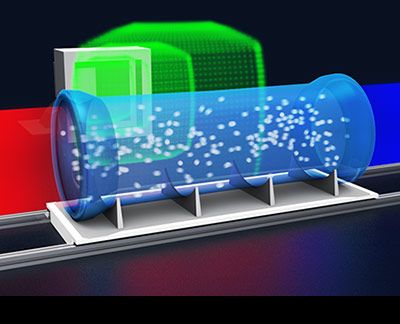
NIST's new method for measuring electric field strength is based on the quantum properties of atoms. The technique works for abroad range of frequencies, 1-500 gigahertz, and directly links measurements to the International System of Units. The method could improve the sensitivity, precision and ease of tests and calibrations of antennas, sensors, and other systems. Credit: Sean Kelley/NIST
NIST’s new method for measuring electric field strength is based on the quantum properties of atoms. The technique works for abroad range of frequencies, 1-500 gigahertz, and directly links measurements to the International System of Units. The method could improve the sensitivity, precision and ease of tests and calibrations of antennas, sensors, and other systems.
Credit: Sean Kelley/NIST

Researchers at the National Institute of Standards and Technology (NIST) and the University of Michigan have demonstrated a technique based on the quantum properties of atoms that directly links measurements of electric field strength to the International System of Units (SI).

The new method could improve the sensitivity, precision and ease of tests and calibrations of antennas, sensors, and biomedical and nano-electronic systems and facilitate the design of novel devices.

Conventional electric field probes have limited frequency range and sensitivity, often disturb the field being measured, and require laboratory calibrations that are inherently imprecise (because the reference field depends on the geometry of the source). Furthermore, linking these measurements to SI units, the highest level of calibration, is a complex process.

NIST’s new electric-field probe spans enormous ranges. It can measure the strength of fields from 1 to 500 gigahertz, including the radio, microwave, millimeter-wave and sub-terahertz bands. It can measure fields up to 100 times weaker than conventional methods can (as weak as 0.8millivolts per meter, the SI unit of measure). Researchers used the new method to measure field strengths for a wide range of frequencies, and the results agreed with both numerical simulations and calculations.

Importantly, the new method can calibrate itself, as well as other instruments, because it is based on predictable quantum properties: vibrations in atoms as they switch between energy levels. This self-calibration feature improves measurement precision and may make traceable calibrations possible in the millimeter and sub-terahertz bands of the spectrum for the first time.

Read more and watch video …

Filed Under: Electronics Theory, Test Equipment Tagged With: electric fields

Where did the “1.2” come from?

September 8, 2014 By Dan KB6NU 8 Comments

Recently, a reader asked:

On question E8C06 and E8C07 the formula uses 1.2. Where did the 1.2 come from and what does it represent?

I wasn’t sure what he was referring to since my study doesn’t mention how to calculate that value at all. Instead, it reads:

The bandwidth needed for ASCII digital transmissions increases as the data rate increases. The bandwidth necessary for a 170-hertz shift, 300-baud ASCII transmission is 0.5 kHz. (E8C06) The bandwidth necessary for a 4800-Hz frequency shift, 9600-baud ASCII FM transmission is 15.36 kHz. (E8C07)

I e-mailed him, asking him, “”Is the formula you’re referring to perhaps in another license manual? If so, and if you can send that to me, perhaps I can explain it to you.”

He replied, “This was out of the Gordon West Extra Class book page 81.” He attached a copy of the page, and it did indeed refer to the formula:

BW = baud rate + (1.2 x f shift)

Now, I had never run across this particular formula, but I decided to do a little Googling. What I turned up was interesting. It appears that the 1.2 number basically comes from some version of the ARRL Extra Class License Study Guide. Where they got it from I don’t really know.

In my Google search, I turned up one source that simply says that:

BW = baud rate + the frequency shift

Perhaps someone along the line said, “Well, that’s the theoretical value. Practically, if we increase that by 20% to 1.2 times the frequency shift then the signal will definitely fit in that bandwidth.” I’m just guessing here. I’m not really sure.

I told my reader that, for what it’s worth, there’s a lot of this in amateur radio. The formula used to calculate the length of a half-wave dipole antenna is perhaps the biggest example of this. There’s no real science behind the formula length in feet = 468 / frequency in MHz. It’s just a rule of thumb.

While it may be disappointing that the science behind this is perhaps a bit shaky, the good news is that using these rules of thumbs produce circuits and systems that generally work.

Filed Under: Digital Communications, Electronics Theory

  • « Go to Previous Page
  • Page 1
  • Interim pages omitted …
  • Page 5
  • Page 6
  • Page 7
  • Page 8
  • Page 9
  • Interim pages omitted …
  • Page 13
  • Go to Next Page »

Primary Sidebar

No Nonsense Technician Class License Study Guide (for tests given between July 2026 and June 2030)

New No Nonsense Technican Class Study Guide now available!

The 2026 version of my Tech Class study guide is now available, and as always, the PDF version is FREE!. The ePub version costs $11.97, and a Kindle version and paperback version will be available on Amazon shortly.

Click here to get all of my "No Nonsense" study guides.

Also available: The CW Geek's Guide to Having Fun with Morse Code

W5SWL.Com
Retevis Ailunce H1 DMR Radio
DXpander: Cobweb antennas, Laser Cutting

You’ve got mail!

Enter your email address below and get an email every time I publish a new post.

Email


I frequently teach classes to help newcomers get their licenses. The next class will take place on Saturday, February 7, 2026 on the University of Michigan campus. Click here for more information.

If you can't make the class, subscribe to the mailing list to be notified of when the next class will be held.

You can always download my free study guide, and if you have any questions about the classes, or amateur radio in general, please feel free to email me directly.

Support KB6NU.Com

Donate $7.30 and get two of these cool stickers. Measuring 4.25-in. W by 2.75-in. H, it's perfect for your car, your shack, or wherever!

Contact me

If you have a question or comment about one of my blog posts, or a question about any of the material in my study guides, or just a question about ham radio in general, you can email me at [email protected].

Blogs You Should Also Read

  • AE5X: A CW-centric blog from Kingswood, Texas
  • K0LWC Blog
  • LA3ZA Ham Radio Blog
  • Little Radios, Big Fun – WB3GCK
  • Mr. Vacuum Tube's Blog
  • Radio Artisan – K3NG
  • The K0NR Weblog
  • VE3WDM's QRP Ham Radio Blog
  • W2LJ’s Blog

Ham Radio Websites

  • Dashtoons – The Hammin' Comedy by Jeff K1NSS

Podcasts

  • ICQ Podcast
  • Linux in the Ham Schack
  • No Nonsense Amateur Radio Podcast
  • Resonant Frequency Amateur Radio Podcast

Recent Comments

  • Michael Burkhardt on One lump or two (or three)?
  • Eric on POTA notes, 7/27/26
  • Steve KB3JC on How to “ragchew” on CW
  • Dan KB6NU on Yaesu FT-710: What’s the big deal?
  • Andrei on Yaesu FT-710: What’s the big deal?

Meta

  • Log in
  • Entries feed
  • Comments feed
  • WordPress.org

Footer

Copyright © 2026 Daniel M. Romanchik, KB6NU · Log in