• Skip to primary navigation
  • Skip to main content
  • Skip to primary sidebar
  • Skip to footer

KB6NU's Ham Radio Blog

KB6NU's Ham Radio Blog
  • HOME
  • Study Guides
  • Teach a One-Day Tech Class
  • W8SRC Repeater Guide
  • Advertise
  • Hire Me

Gear/Gadgets

Random stuff: Even MIT gets it wrong, DIY Layout Creator, Astron power supplies with PowerPoles

February 19, 2024 By Dan KB6NU Leave a Comment

Even MIT News gets it wrong

In a recent article, MIT News reported on a recently-developed tamper-proof ID tag. The gist of the story is that some researcher at MIT has developed a system that irradiates a small tag with THz waves and uses the reflections from the tag to identify an object.

In the second paragraph, the author writes, “This tiny tag, which offers improved security over RFIDs, utilizes terahertz waves, which are smaller and travel much faster than radio waves.”

This is, of course, incorrect. Terahertz waves are radio waves, and as such, travel no faster than radio waves at lower frequencies, namely the speed of light. If these waves did travel much faster than radio waves, that would be the real story, not the ID tags!

DIY Layout Creator

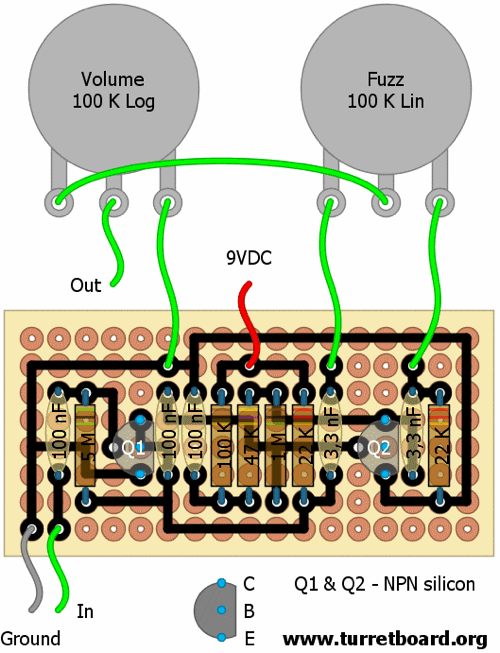
On a recent episode of the ICQ Podcast, Martin, M1MRB, discussed the DIY Layout Creator.  The website says that this application “provides a simple interface and enough power to let the user draw schematics, board/chassis layouts and guitar wiring diagrams quickly and without a steep learning curve.”

It doesn’t actually do PCB trace routing, but it will let you arrange the components on a board. It seems like it would be the perfect tool for building small circuits on perf board. Here’s an example from their website:
Astron power supplies with PowerPoles!

This probably isn’t news to anyone but me, but I found out recently that the Astron RS-20M and the RS-35M power supplies now come with Anderson PowerPoles on the front panel.
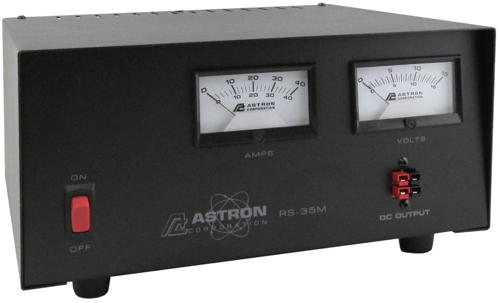
 

I think that I’d prefer them to be on the rear panel, near the binding posts, but PowerPoles on an Astron supply is still pretty cool. It looks like the PowerPoles are only available on the M models and not the A models. The M models have voltage and current meters, while the A models do not.

Filed Under: Building/Homebrew, PCB Design, Power Supplies Tagged With: Astron, DIY Layout Creator, MIT News

Random ideas and observations: Ice on the antenna, what happens to a signal in a scope, the Anarchist Radio Relay League.

January 19, 2024 By Dan KB6NU 2 Comments

Ice on antennas

Last Friday, we got about six inches of snow here. That was followed by the rain, covering everything— including antennas—with a coating of ice. Ice, in general is not a good thing on antennas or feedlines.

We noticed this last Monday night on our weekly club net. Stations that were not really strong into the repeater, including yours truly, sounded scratchy. Those that were marginal before, were unreadable.

The temperature hasn’t gotten above freezing here since then, and I can still see ice on my 2m antenna. That being the case, I hope it warms up enough to melt the ice by this coming Monday evening.

Understanding the Journey of a Signal

What happens between the tip of a scope probe and the scope screen?

This white paper explains everything that happens to your signal inside a digital storage oscilloscope (DSO). Having this fundamental knowledge will help you make accurate measurements by correctly selecting the probes and oscilloscope that will work best for your test needs.

You do have to fill out a form with some personal information, but you can easily fake the information if you’re skittish about it.

Anarchist Radio Relay League

Radio amateurs tend to be very conservative, but not all of us are. Case in point: the Anarchist Radio Relay League. On their website, you’ll find their zine, For an Anarchist Radio Relay League.

It’s really not a zine, per se, but rather an introduction to the radio world for those whose politics may be a little to the left of the average radio amateur. It does a good job of explaining what radio waves are, the different frequency bands, how to get a license, what’s the difference between HF and VHF/UHF, how to build some basic antennas, etc.

What makes it anarchist? Well, the zine compares the two ARRLs. It says,

An Anarchist Radio Relay League, we think, would have a similar function to the original ARRL, but in the spirit of mutual aid and solidarity, and with an explicit anticapitalist and anti authoritarian orientation.

This has the potential to take many forms.

I’ll let you read the rest for yourself.

Filed Under: Antennas, Clubs, Test Equipment Tagged With: Anarchist Radio Relay League, ice, oscilloscope

Interesting stuff from Mastodon: Olivia website, SDRs all over the world, Pico-based Palm Pilot

January 15, 2024 By Dan KB6NU 2 Comments

I’ve recently given up Twitter for Mastodon, which bills itself as a “free and open-source, self-hosted, and federated social network service.” I have a lot fewer followers than I do on Twitter, but the followers that I do have are certainly more engaging. So much so, I don’t think that I’m going back.

There are plenty of servers out there that will let you join Mastodon for free. I’m on a server set up by a radio amateur: mastodon.radio. You can find me there as @[email protected].

Here are some interesting things I’ve found on Mastodon.

Website promotes Olivia

I found several posts on Mastodon relating to Olivia, so I thought I’d check it out. I downloaded fldigi, and with the help of the Olivia Digital Mode on HF website, I’ve actually made some Olivia contacts. The website seems to be the brainchild of NW7US. On the website, you’ll find this presentation that he gave on Olivia to the Raleigh Amateur Radio Society:

I’ve been having fun operating Olivia, and I think you will, too.


World of Receivers and Transmitters

The World of Receivers and Transmitters links you to more than 1,200 software-defined radios around the world. For example, I just accessed and an SDR in Caligari, Italy and listed to a UA2 station work an SV5 station on 40-meter CW. There are SDR radios all over the world.

I think that the next time I see myself spotted on RBN in Europe, I’m going to sign in to one of the receivers in say France or Germany and see how well that receiver can hear me. It should bring a whole new dimension to my HF operating.


Palm Pilot Reborn

The rePalm is being powered by a Raspbery Pi Pico.

I used to have a Palm Pilot, which back in the 1990s was billed as a “personal digital assistant.” Basically, it was supposed to do all the things that a smart phone does now without the phone functionality. I thought it was pretty hot stuff.

A fellow named Dmitry has now brought back the Palm Pilot, but now it’s being powered by a Raspberry Pi Pico. You can find all the information on how to create your own Palm Pilot on the rePalm web page.


Filed Under: Building/Homebrew, Software-Defined Radio (SDR) Tagged With: Mastodon, Olivia, Palm Pilot, SDR

Random stuff: a little ham humor, handheld EMF meter, repeat customer

January 12, 2024 By Dan KB6NU 5 Comments

A little—and I do mean little—ham humor

I got this from /r/amateurradio:

What do you call an apology written in dots and dashes?
Re-Morse Code.

HF-B3G Triple Axis HF RF Analyzer

Handheld EMF meter

On the Tech test, question T0C06 reads:

Which of the following is an acceptable method to determine whether your station complies with FCC RF exposure regulations?
A. By calculation based on FCC OET Bulletin 65
B. By calculation based on computer modeling
C. By measurement of field strength using calibrated equipment
D. All these choices are correct

The correct answer is D. All these choices are correct.

When I teach classes, after giving the students the answer, I quickly qualify it by saying that calculation based on computer modeling is usually impractical because the software is generally pretty expensive and requires some expertise to use effectively. The same is true of measuring the field strength using calibrated equipment.

But, maybe it isn’t. I recently came across the HF-BG3 Triple-Axis HF RF Analyzer on Amazon. The product description says that is has a frequency range 50 MHz to 3.5 GHz and a measurement range of 38 mV/m to 20 V/m. If this meter cost $30, I would have bought one to play with, but  at $165, it’s a little outside my “what the heck” range.

It’s still an interesting possibility, though. Have any of you ever purchased or used a similar instrument?

I love repeat customers!

I love getting feedback from readers and repeat customers. This message appeared in my inbox a couple of hours ago:

Hi Dan –

Last year we purchased 15 of your Tech guides to teach a class. We had three instructors, and did a 1-day tech license class. Of our 13 students, 12 are now licensed and have radios… and a good number of those are planning to operate during Winter Field Day with our club!

This year we’d like to help a few of those new hams move up to General by teaching a more extensive course.

How can we place an order for [15] of your No-Nonsense General Class License Study Guide?

First of all, it’s great that they had 12 of 13 pass the test, second that many of them want to get Generals, and third, they’re going to use my study guide to take the course! I replied that the deal is the same for the General Class study guide as it is for the Tech study guide. And that deal is that they can order as many copies as they’d like for $10 per copy, shipping included. If you have a class coming up, consider taking advantage of this deal yourself.

Filed Under: Classes/Testing/Licensing, Test Equipment Tagged With: humor

100, 50, and 25 Years Ago in QST

December 19, 2023 By Dan KB6NU 1 Comment

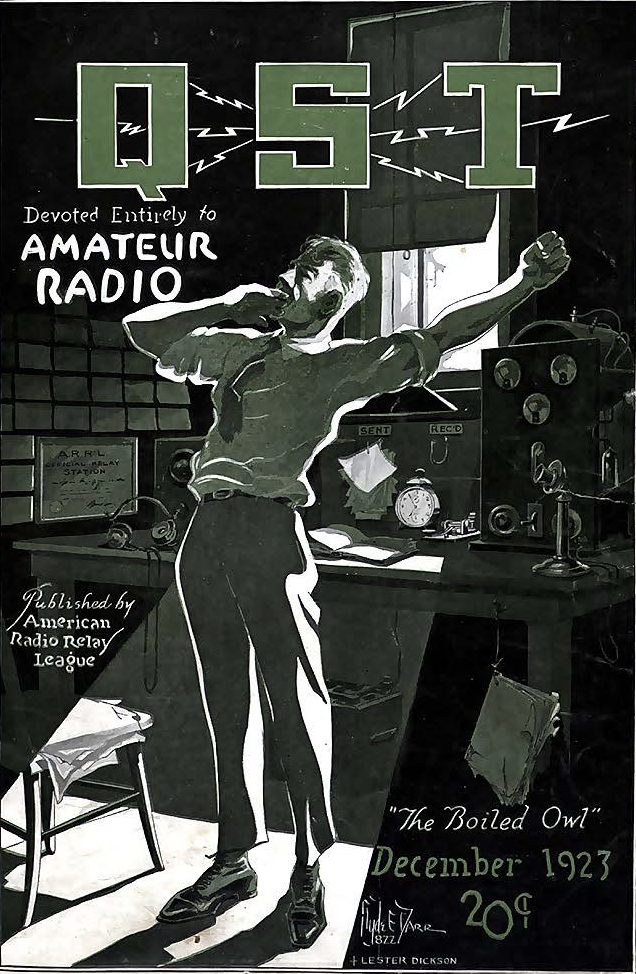
Here are some interesting articles from QST in December 1923, 1973, and 1998.

December 1923 QST

Shortwave Tuner Design by K.E. Hassel, 9ZN

Most, if not all new designs, are now software-defined, digital radios, but if you ever decide to build your own receiver, this might be a good article to consult. 9ZN gives a lot of good advice on how to make good coils and variable capacitors. This article caught my eye because of the call 9ZN because Bill Crane, W9ZN, a fellow who was a great CW operator, recently became an SK.

A High-Performance 20-, 40-, and 80-Meter Vertical System by J. Sevick, W2FMI

Jerry Sevick, W2FMI, wrote many articles and books about short vertical antennas. Here, he describes his design for a three-band antenna system consisting of one vertical for 80 meters and one for 20 meters/40 meters. He notes that they could be built separately. This article is worthwhile reading if you’re considering how to work more DX, especially on 80 meters.

Low Power, Crummy Antenna by Rob Henderson, KB7PWJ

Rob writes, “Ingenuity compensated for a limited budget in the Golden Age of Radio, and it’ll do the same today. The tools and techniques to make radio magic are everywhere. If your wallet is a bit thin, it’s time to indulge your creativity. According to Rob’s QRZ.Com page, he’s still using crummy antennas 25 years later.

Filed Under: Antennas, Building/Homebrew, Circuit Design, QRP, Receivers Tagged With: 9ZN, KB7PWJ, W2FMI

TAPR Mini-DCC Video Now Online

December 17, 2023 By Dan KB6NU Leave a Comment

TAPR held what they called a virtual Digital Communications Conference, or “mini-DCC,” on Saturday, December 9. The recording of this event is now on YouTube, but you can play it right here, if you like.

All of the talks are included in this 4+ hour video. They include (with the times at which they start):

  • 14:00 – TAPR Issues and Updates, Dave Larsen KV0s
  • 26:50 – Moving to High Throughput Interfaces, Dave Witten KD0EAG
  • 53:50 – GERT: A Low-Cost GNSS Frequency Reference, John Ackerman N8UR, George Byrkit K9TRV
  • 1:09:45 KA9Q-Radio: Update and Demonstration, Phil Kart KA9Q
  • 2:12:30 Digital Voice Over HF: Codec2 and FreeDV, Walter Holmes K5WH
  • 3:15:15 Introducing ezDV, Moorer Salem K6AQ
  • 3:54:00 ESP32-APRS Tracker, APRS Mini-Tracker, and LoRA, Jason Rausch K4APR

These talks are all pretty interesting and worth watching if you’re interested in some of the new things going on in digital communications.

Filed Under: Digital Communications, Software-Defined Radio (SDR) Tagged With: APRS, Codec2, ezDV, FreeDV, KA9Q, TAPR, TAPR DCC

TAPR to hold mini Digtal Communications Conference on Saturday, December 9

November 22, 2023 By Dan KB6NU Leave a Comment

TAPRUnable to hold its traditional, in-person Digital Communications Conference (DCC) this year, Tucson Amateur Packet Radio (TAPR) will hold a one day online Mini-DCC on December 9 followed by the annual TAPR membership meeting. So mark your calendars for Saturday, December 9, from 1700 to 2230 UTC (1200 to 1730 EST, 0900 to 1430 PST). Login details for the meeting will be available on the TAPR website prior to December 9.

Planned presentations include:

*    TAPR SDR Development Progress and Challenges by David Larsen, KV0S

*    Developments in ka9q-radio by Phil Karn, KA9Q

*    An Open Source Wideband HF Receiver Design by David Witten, KD0EAG

*    An Inexpensive GPSDO for HF Receivers by John Ackermann, N8UR

*    Current Open Source Digital Voice Techniques by Walter Holmes, K5WH

*    A Low Cost FreeDV-based ESP32 Radio Interface by Mooneer Salem, K6AQ

*   ESP32 APRS and LoRA Hardware by Jason Rausch, K4APR

The annual TAPR membership meeting will occur following the presentations.

Filed Under: Digital Communications Tagged With: DCC

Random thoughts: DLARC on Radio Survivor podcast, open-source software packaging, speed key test

November 15, 2023 By Dan KB6NU 1 Comment

Podcast peeks behind the scenes at DLARC

Radio Survivor is a podcast that covers anything related to radio, including amateur radio. In a recent episode, they interview Kay, K6KJN, curator of the Digital Library of Amateur Radio and Communications (DLARC).

SatDump Gains Notable Updates

I found this on Amateur Radio Daily:

SatDump, a popular piece of software used to decode imagery from weather satellites such as NOAA-18 and others, has gained significant updates to the way it processes and projects received images on maps. Imagery projections are much more accurate as a result of recent code refactors. A detailed deep-dive into the changes have been published.

SatDump is available for all major platforms.

This looks like a pretty cool program. I’ve added this to my list of projects to get up and running one of these days.

Speed key test

I forget on which mailing list or forum this came up, but the talk rolled around to the poor fists of some operators who use bugs and cootie keys. Someone mentioned that Navy radio operators had to pass a “speed key” test before they were allowed to use a bug on the air, and when they passed the test, they were given a certificate, like the one at right. Then, someone, with tongue firmly in cheek, suggested that hams should have to pass a similar test.

I realize that the logistics of developing and administering a speed key test for radio amateurs—not to mention enforcing it fairly—would make it an impossibility. Even so, I would encourage straight key users and cootie key users to test their fists. You can use either fldigi or a a program called Precision FistCheck to do this. Improving one’s sending not only makes it easier for the other operator to work you, but should also help you make more contacts.

Filed Under: CW, On the Internet, Software-Defined Radio (SDR) Tagged With: bug, DLARC, SatDump, speed key

Random thoughts and ideas: If I’d only…, embedded Python programming, get a free email.radio email address

November 8, 2023 By Dan KB6NU 5 Comments

If I’d only kept my butt in the chair a little longer…

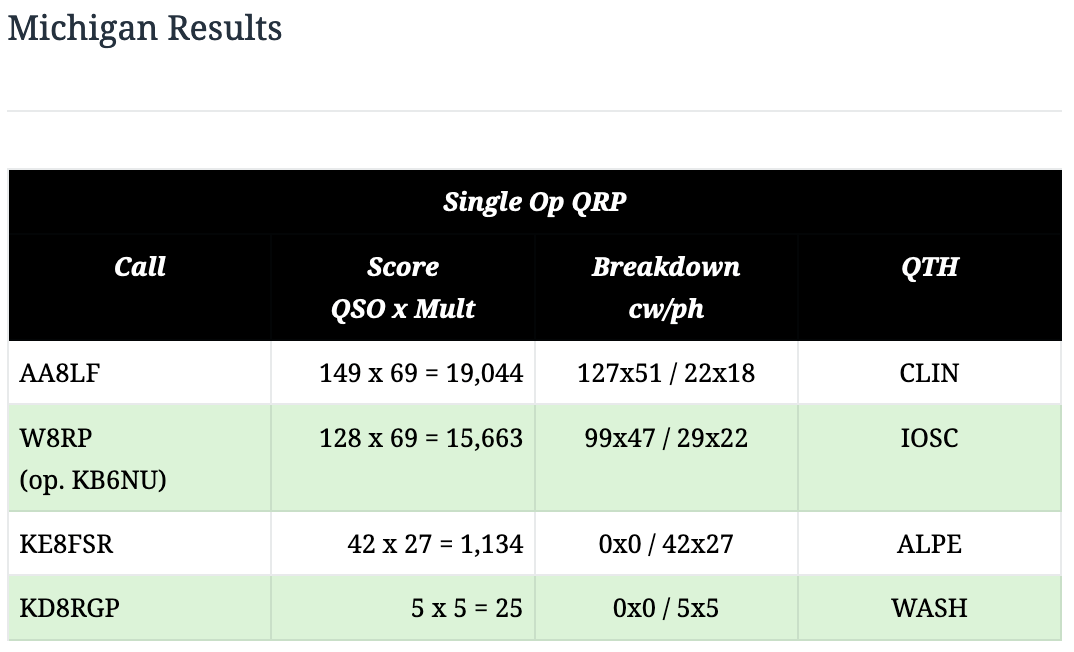
…I might have come in first in the QRP category for the 2023 Michigan QSO Party. I only operated for 7-1/2 hours, not all 12 hours.

Embedded Python programming resources

Python programming is popular for AI, web, and amateur radio applications, and it can also be used for embedded applications. Here’s a list of articles from electronic design on programming in Python:
  • The Best Python Compilers and Interpreters for Developers
    Oct. 24, 2023
    The Python programming language and its applications can be supercharged by these leading compilers and interpreters.
  • What’s the Difference Between Python and MicroPython?
    April 17, 2023
    The differences between the Python and MicroPython programming languages are minute, but they make a powerful difference.
  • How to Program Hardware with MicroPython: A Beginner’s Guide
    June 4, 2020
    C isn’t the only programming language for microcontrollers. This article covers the compatible hardware and workflow steps when programming with a different option—MicroPython…
  • An Introduction to MicroPython and Microcontrollers
    May 14, 2020
    Microcontrollers don’t have to be programmed in C. MicroPython works just fine.
  • Python’s Big Push into the Embedded Space
    Aug. 29, 2018
    Python is very popular in many areas from machine learning to powering websites, but it’s also great for embedded applications.

Get a free email address from email.radio

The email.radio website says,

email.radio is dedicated to providing free email hosting for all licensed ham radio operators (globally). You will get a (free!) email @email.radio address, that is 1GB, which you can ask to expand later on.

Unlike the ARRL forwarding service this appears to be a real email account. I’ve just applied for an address, and I’ll post here with my experience once I’ve got it.

Filed Under: Building/Homebrew, Computers, Contests, Microcontrollers Tagged With: email, MI QSO Party, Python

Is amateur radio technology too sophisticated?

September 17, 2023 By Dan KB6NU 8 Comments

Back in April, a friend of mine sent me this excerpt from a NY Times Opinion piece that tries to explain why gun ownership has become such a big thing:

I suspect that part of the reason for the rise of AR-15 fandom is the decline of other American hobby cultures: auto repair, darkroom photography, ham radio operation and the like. Automobiles have become hulking mobile computers that often can be repaired only by manufacturer-approved dealerships; anyone with a smartphone can now take high-quality pictures; no one needs limited-frequency radio bands anymore to talk with people on the other side of the world. Gun ownership is among the last preserves of community for those who might once have enjoyed the opportunities for the innocent pursuit of mastery and refinement afforded by those innocuous pastimes.

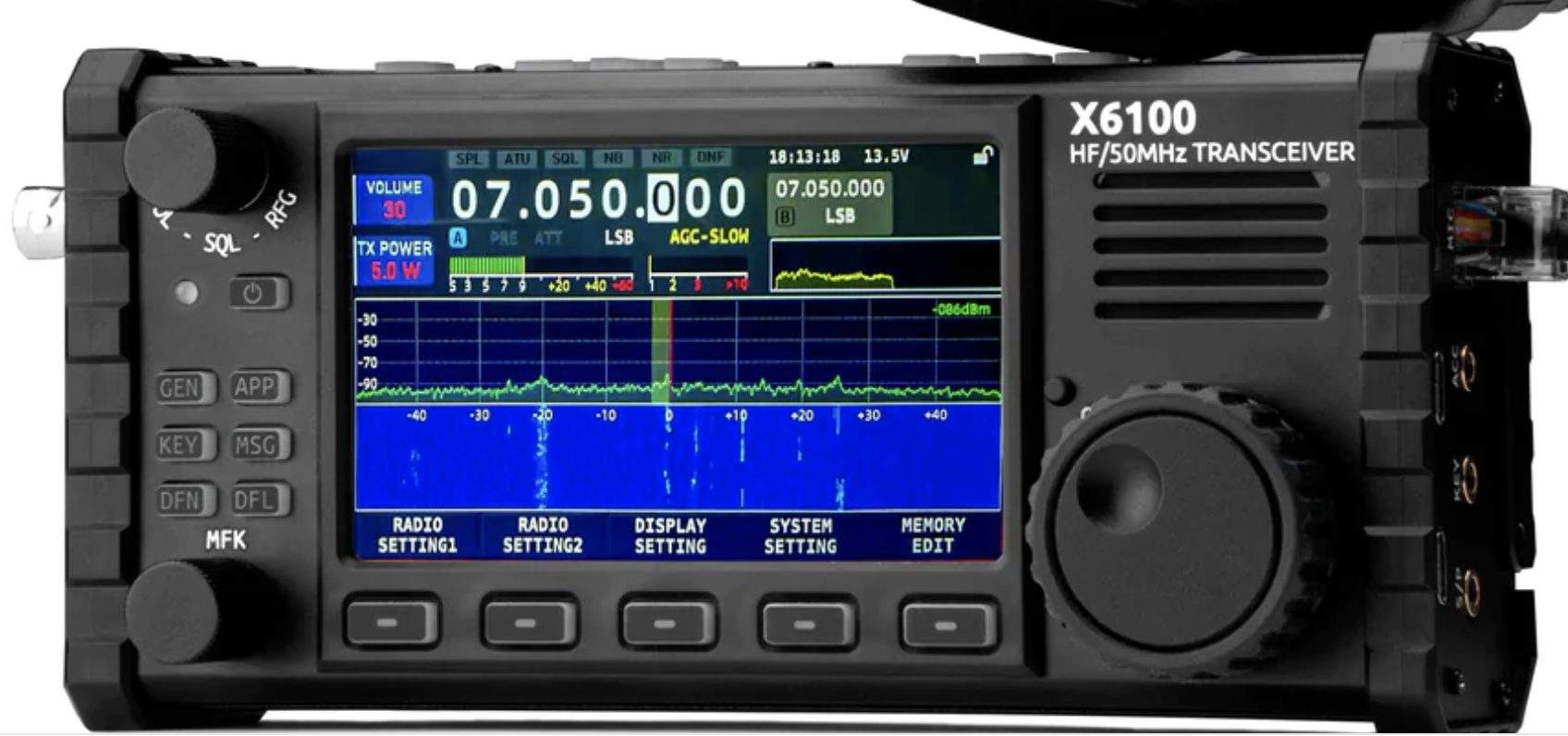
Is the technology in this X6100 too sophisticated to tinker with?

Is our technology too sophisticated?

First, I’m not sure that I would characterize auto repair and amateur radio as “innocuous pastimes.” That characterization belittles the value of these hobbies. Fixing your own car helps save money and amateur radio still provides society with a number of benefits.

Secondly, there are now more licensed radio amateurs per 1,000 people in the U.S. than there were when I was kid. I can’t say whether or not there are more shade-tree mechanics now than there were in the 1970s or 1980s, but there seems to be no shortage of auto parts stores. That would seem to argue that home auto repair is just as big a thing now as it was back in the good, old days.

What I have been wondering about, though, is if the technology we have today has advanced beyond what most people are capable of dealing with, at least on a casual basis. In ham radio, many DIY projects use surface-mount components and sophisticated software. Consider the (tr)uSDR. This little QRP rig uses many surface-mount parts and is powered by digital signal processing software!

It’s the same with cars, isn’t it? One of the reasons that there are now perhaps fewer shade tree mechanics than there were before is that automotive technology has advanced beyond what most people are capable of dealing with. There aren’t that many people who have the skills or the desire to tinker with the algorithms used in today’s engine control modules.

One way that ham radio might deal with this is by encouraging a company to come out with a radio that can really be tinkered with along with tools to do this. TenTec took a stab at it with the 506 Rebel, but as I recall, all you could really do was to change some of the control functionality. You couldn’t really change the way that the radio worked.

More recently, the Xiegu X6100 has been hacked, and because the radio is run by an embedded Linux computer, at least one fellow—R1CBU—has developed third-party software to control the radio. Of course, to be able to do this requires a big investment. To tinker with the X6100, one needs to invest the time and energy into learning Linux. That may be asking too much from most hams.

So, I ask again, is the technology we have today has advanced beyond what most people are capable of dealing with, at least on a casual basis? You tell me.

Filed Under: Building/Homebrew, Everything Else, Gear/Gadgets Tagged With: trusdr, X6100, Xiegu

  • « Go to Previous Page
  • Page 1
  • Page 2
  • Page 3
  • Page 4
  • Page 5
  • Page 6
  • Interim pages omitted …
  • Page 60
  • Go to Next Page »

Primary Sidebar

No Nonsense Technician Class License Study Guide (for tests given between July 2026 and June 2030)

New No Nonsense Technican Class Study Guide now available!

The 2026 version of my Tech Class study guide is now available, and as always, the PDF version is FREE!. The ePub version costs $11.97, and a Kindle version and paperback version will be available on Amazon shortly.

Click here to get all of my "No Nonsense" study guides.

Also available: The CW Geek's Guide to Having Fun with Morse Code

W5SWL.Com
Retevis Ailunce H1 DMR Radio
DXpander: Cobweb antennas, Laser Cutting

You’ve got mail!

Enter your email address below and get an email every time I publish a new post.

Email


I frequently teach classes to help newcomers get their licenses. The next class will take place on Saturday, October 10, 2026 on the University of Michigan campus. Click here for more information.

If you can't make the class, subscribe to the mailing list to be notified of when the next class will be held.

You can always download my free study guide, and if you have any questions about the classes, or amateur radio in general, please feel free to email me directly.

Support KB6NU.Com

Donate $7.30 and get two of these cool stickers. Measuring 4.25-in. W by 2.75-in. H, it's perfect for your car, your shack, or wherever!

Contact me

If you have a question or comment about one of my blog posts, or a question about any of the material in my study guides, or just a question about ham radio in general, you can email me at [email protected].

Blogs You Should Also Read

  • AE5X: A CW-centric blog from Kingswood, Texas
  • K0LWC Blog
  • LA3ZA Ham Radio Blog
  • Little Radios, Big Fun – WB3GCK
  • Mr. Vacuum Tube's Blog
  • Radio Artisan – K3NG
  • The K0NR Weblog
  • VE3WDM's QRP Ham Radio Blog
  • W2LJ’s Blog

Ham Radio Websites

  • Dashtoons – The Hammin' Comedy by Jeff K1NSS

Podcasts

  • ICQ Podcast
  • Linux in the Ham Schack
  • No Nonsense Amateur Radio Podcast
  • Resonant Frequency Amateur Radio Podcast

Recent Comments

  • Dan KB6NU on The EMF Explorer: A badge for ham radio?
  • Travis Good on The EMF Explorer: A badge for ham radio?
  • MARTIN ROBERT ROTHFIELD on The EMF Explorer: A badge for ham radio?
  • Mike Chen on Operating Notes, January 5, 2026
  • Rob W4ZNG on The EMF Explorer: A badge for ham radio?

Meta

  • Log in
  • Entries feed
  • Comments feed
  • WordPress.org

Footer

Copyright © 2026 Daniel M. Romanchik, KB6NU · Log in