Tip of the Day: Collect tech books from the 1970s

1974-arrl-handbookTodays tip is from Kenneth Finnegan. Thanks, Kenneth!

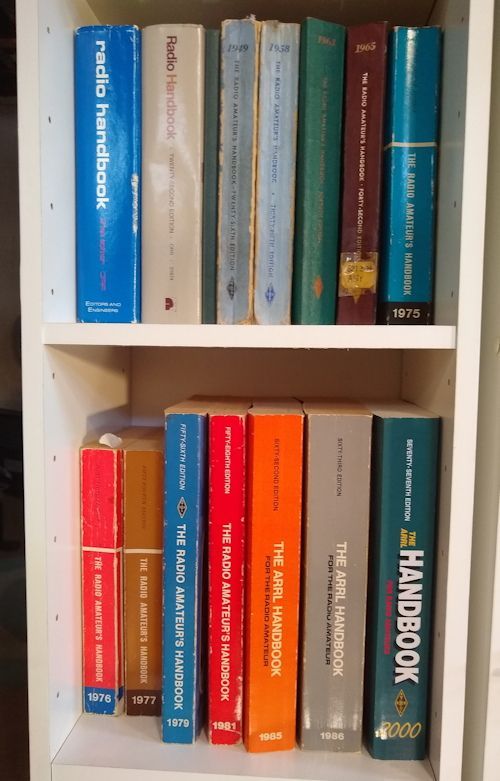
Collect as much technical literature from the 1970s as possible, including ARRL Handbooks, magazines, etc. This was the decade when transistors and basic ICs were affordable, but monolithic ASICs for every problem didn’t exist yet. I’ve found literature from this era to be the most educational for discrete electronics design and understanding how contemporary one-chip-solutions work.

Why you should upgrade to General Class

While getting a Tech license is no small feat, one of the first things you should do as a Technician is to start studying for the General Class license. Oh, I can hear the complaints and excuses already. “I’m never going to get on HF, so why should I get my General?” “I only care about emcomm and public-service communications, so why should I bother?” “I just don’t have the time right now to study for the General Class exam.”

Well, if you ask me, all of that is just hooey. If you don’t upgrade to General (and steadfastly refuse to learn code), then it’s a certainty that you’ll never operate on the HF bands. It’s a self-fulfilling prophecy. Why deny yourself that capability before you even try it?

Similarly, saying that all you intend to do with your ham radio license is to participate with your local CERT or SkyWarn group is fine and dandy, but public-service and emergency communications do take place on HF as well as on VHF/UHF. Why limit your usefulness as an emergency communicator by not having HF privileges?

And, if you don’t have time now, when will you have time? It’s a matter of priorities, and while the material on the General Class exam is more difficult than the material on the Tech exam, it shouldn’t take you all that much more time to study for the General Class test than it did for the Technician Class test. Not only that, waiting is only going to make it that much harder to start studying again when you do decide to do it.

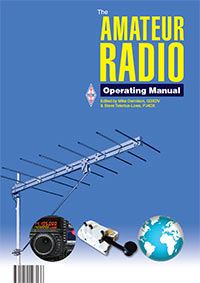
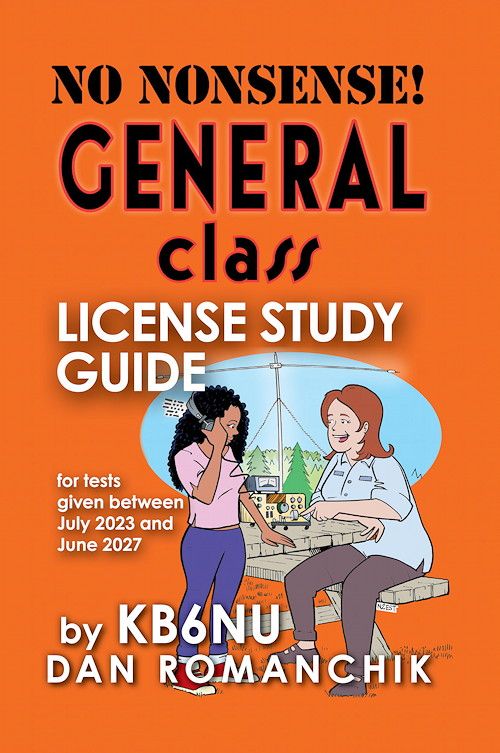
Here are three great resources to help you upgrade to General Class.

Here are three great resources to help you upgrade to General Class.

Resources
One excuse that you can’t make is that there aren’t any resource available. There are more than you could ever use. My favorite, of course, is The No-Nonsense General Class License Study Guide. It’s my favorite because I wrote it! A PDF version is available for free from my website. E-book versions are available for $7.99 from Amazon or Barnes&Noble.

Another resource is the ARRL General Class License Manual. When you buy this book, you also get practice exam software. This Windows software allows you to take randomly-generated practice exams using questions from the actual examination question pool.

Also popular is the General Class Manual by Gordon West, WB6NOA. “Gordo,” as he is known in the ham world, has been around a long time and does a great job explaining the answers and highlighting keywords. This study is also available as an audio book.

There are many more resources out there. To find them, simply Google “amateur radio general class license study guide.”

There really is no excuse not to upgrade. Once you do, you’ll be more knowledgeable about our great hobby, be a more effective communicator, and have a lot more fun with amateur radio.

From my inbox: 43 years of 73 magazine, SP DX contest, useless answer

I found these three items in my inbox this past week…Dan

73-apr-67-cover43 years of 73 on-line
Wayne Green has now released all back issues of 73 to the public domain. Although the last issue was published more than ten years ago, there’s still lots of good stuff to be found in them. You can download individual issues by going to archive.org. Indexes can be found on these web pages…

The first lists the contents of each issue. The second has direct links to the to the issues at archive.org.

The cover shown at right, a takeoff on MAD Magazine, is one of my favorite covers. Take a closer look at the soldering job Al Freddy is about to attempt. Click on the image to get a larger version if you can’t quite make it out.

Wayne Green actually published the first article that I ever wrote, “Assembling Robots with a TRS-80.” I was 23 or 24 at the time. It was published in Byte, arguably the first widely-read magazine for computer hobbyists. The article was a short one on how to program in assembly language on the TRS-80. It displayed a robot-like thing on the screen using the blocky graphics available on the TRS-80.


SP DX Contest actually wants my log
A month ago, I made a few contacts in the SP DX Contest. It was only 20 contacts or so, and I had meant to submit the log, but I soon forgot about it. Well, this morning, I go this e-mail:

The first review of logs received for the SP DX Contest 2013 shows that your callsign KB6NU apears in many logs. However you propably have not submitted your log.

The SP DX Contest took place during the first weekend of April (2013.04.06-07). This year we are celebrating 80th Anniversary of the SP DX Contest as it was organized for the first time in 1933. We would like to make the log checking process as accurate as possible. It will also be a honour for us to list your callsing in the final results.

We would kindly ask to send your log to the SP DX Contest Committee, even if you made only a few contacts, even if perhaps you are a causal contester.

Well, how can I refuse? I’ll have to do this as soon as I can get down to the museum again.


Useless answer department
I’ve been doing writeups for the product pages on AmateurRadioSupplies.Com. (Yes, that’s a plug for them, but they’re paying me to do these writeups, and they’re even advertising here on KB6NU.Com.) For the past week, I’ve been working on coax descriptions.

In doing this, one question that came up is why does marine grade coax have a white jacket? I e-mailed a question to Marinco tech support, and got the following answer, “It’s hard to say but I think it is to distinguish it  as marine grade vs. house cable.”

Seriously? That’s all there is to it? Does anyone know the real answer?

From the trade magazines, impedance matching, EMI basics, open-source hardware

elelctronic-design-logoBack to Basics: Impedance Matching. electronic design editor (and amateur radio operator) Louis Frenzel is the author of this short e-book on impedance matching. Note: this e-book was intended for engineers and does use a fair amount of math, but nothing you can’t figure out if you work at it.

EMI Basics. This article  comes from the book Signal Integrity Issues and Printed Circuit Board Design by Douglas Brooks. I like the discussion of how twisted pair wire helps prevent radiation.

Interview With SparkFun’s Director Of Engineering. Peter Dokter is director of engineering for SparkFun, one of the major suppliers of open source hardware. SparkFun designs and sells things useful and interesting to the aspiring electronics tinkerer, including microcontroller boards, Bluetooth, GPS, Wi-Fi, LCD displays, e-textiles components, robots and robotic parts, motors, motor drivers, buttons and switches, tools, and books.

From my Twitter feed: software-defined scanner, TAPR in Seattle, the art of electronics

n0rc
How to get started using the #rtlsdr as a scanner for as little as $19http://t.co/VK3qKdpMJS #sdr #hamr

This looks like fun…..Dan


HamBeat1
Seattle Will Host the 32nd Digital Communications Conference:http://t.co/0xGJUpjw1C #hamradio #hamr

I should have gone last year, when it was a lot closer……Dan


o0ToTOm0o
The Art of Electronics – Horowitz & Hillhttp://t.co/4p2rYYfcvV

A classic! Get it. It’s free……Dan

From my Twitter feed: kits, cool transmitter, new CW book

MW0IAN
Tim Walford G3PCJ does a nice bunch of radio kits and accessories http://t.co/ZgIdxUc2aj


This brings new meaning to “having a cool one.”

kc5fm
“A new “Cool Transmitter” from W5IG.”http://t.co/vtxAwfsWar #ARRL #hamradio


The ARRL stole my idea! (just kidding)

ke9v
NEW book from the @ARRL – Morse Code Operating for Amateur Radio ~ Don’t Just Learn Morse Code, Master It!http://t.co/kzlgAQJSUN #hamr


From my Twitter feed: old book, HAMcurmudgeon, mountain topper radio

ke9v
Really? Everything? I somehow doubt it.http://t.co/3CKO04H3pO

Screen shot 2013-03-30 at Sat, Mar 30 - 10.06AM 1

What Jeff is referring to is the book above, All About RADIO and Television. I love books like this and tweeted Jeff about that. Being the great guy that he is, he actually bought the book and sent it to me. THANKS, Jeff! If I see you at Dayton this year, I owe you a beer….Dan

HAMcurmudgeon
U might be a HAM if when U tell your wife that 20 meters is dead she sighs & asks, “How much will that cost to fix?” #hamradio

W2MDW
First blog post in a while. My MTR arrives!http://t.co/ABZCKSU9oH


From my Twitter feed: Sports Illustrated, free shipping, daughter helping with QSLs

w0sun
Ham Radio in 1958 Sports Illustrated #Hamr#Hamradio - The Article -http://t.co/h7hCkdzeJx

kQ2RP
Need parts? Jameco is offering free ground shipping in continental US with Code OLP05951Y until April 12.

oh3ggq
My daughter helping me with QSL cards.#hamr http://t.co/Gm1S6XjUVU

EE Times Top 15 Hot Technologies

Mojo 3D printer

According to EE Times, 3D printing will be one of the hot technologies in 2013.

Lots of magazines publish articles such as EE Times’ “Top 15 Hot Technologies for 2013″ at the beginning of the year. Below, are a selection of what I found interesting or applicable to amateur radio.

  • Soluble ICs. Eventually, you may be able to wear these ICs like temporary tattoos, and after doing whatever they do, they will dissolve into the skin. Researchers think that they may be able to use the devices as miniature heaters to keep bacteria off a wound or as bio-monitors for use in  both sports and medicine.
  • 3D printing. EE Times says, “The transition to digital manufacturing crossed a line in the sand in 2012, proponents said. Desktop manufacturing with 3-D printers is now becoming practical for a range of products.”
  • Solid-state lighting. 2013 might be the year, LED lighting becomes practical for homes.
  • Improved solar cells using black silicon. Researchers in Germany have improved the efficiency of solar cells using black silicon by irradiating them with a laser using a specific pulse shape. This technology still needs to be commercialized, however.

You can read the complete article here.

DMM tips, anyone?

Now that I’ve published the No-Nonsense Extra Class License Study Guide, I’ve been thinking about what my next book should be. At this point I’m leaning towards The No-Nonsense Guide to Digital Multimeters. I have even started outlining the book:

  • What is a digital multimeter?
    • Compare to analog multimeter
  • Digital multimeter basics
    • Measurement types
    • Inputs
    • Range
    • Zero
    • Safety
  • Making measurements with a DMM
    • Simple DC circuit
      • voltage
      • current
    • AC measurements
      • true RMS
    • Resistance
  • Tips for Choosing a DMM
  • Hints and Kinks

I’d love to get your feedback on this.

What else should I add to this outline?

What would you like to know about DMMs?

Do you have any tips for using DMMs that you’d like to share with others? (If I use your tip in the book, I’ll send you a free copy when it’s finished.)