• Skip to primary navigation
  • Skip to main content
  • Skip to primary sidebar
  • Skip to footer

KB6NU's Ham Radio Blog

KB6NU's Ham Radio Blog
  • HOME
  • Study Guides
  • Teach a One-Day Tech Class
  • W8SRC Repeater Guide
  • Advertise
  • Hire Me

Books and Magazines

From the trade magazines: On-off keying gets the job done, what you should know about RMS and communications electronic

March 10, 2020 By Dan KB6NU Leave a Comment

Here’s a smattering of links to articles in the engineering trade magazines that I thought you might find interesting….Dan


On/off keying gets the communications job done.

Written by Bob, K0NR, this is a brief review of some of the keying techniques used in communications, including Morse Code, Baudot, ASCII, and more.


Five things you should know about RMS.

TL;DR:

  1. RMS is a specific property of a defined segment of signal
  2. Filtering is not the same thing as averaging
  3. RMS is not always about power
  4. RMS is better than Mean in a sampled system
  5. You can’t filter successive RMS results to improve accuracy


How Much Do You Really Know About Communications Electronics?

As communications wends its way into virtually every electronic product, having a solid understanding of the technology becomes essential. Here are steps you can take to achieve that goal. [HINT: Getting an amateur radio license is one of them.]

Filed Under: Books and Magazines, Electronics Theory

Book review: A Family Affair – The R. L. Drake Story

February 10, 2020 By Dan KB6NU 3 Comments

This is a guest post by Hue Miller, K7HUE. Hue posted a version of this to the Glowbugs mailing list. Having grown up when Drake was a big name in ham radio, I enjoyed the review, and I thought that you all might be interested in it as well.

As a kid, I never had a lot of  money, but I did purchase a Drake DL-300 dummy load for $30 in the early 1980s. I often joke that it’s the only piece of Drake gear that I could afford. I still have it and it still works as well as when I purchased it……Dan


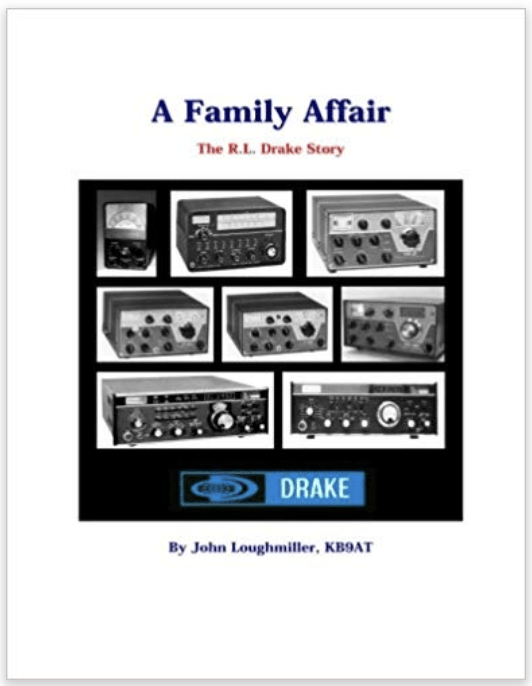
A Family Affair – The R. L. Drake Story by John Loughmiller, KB9AT,  2001. Published by Universal Radio Research, Reynoldsburg, Ohio.

I bought this book because I wanted to learn about the rise and demise of this manufacturer so important for some decades. I also learned some more about all the complications in how raw metal and components enter one door of the factory and exit another door as a fine looking, high-tech product. The book also describes some the unique characters who powered the company. Much of the book is about development of the TR-7, Drake’s final big product.

The chapters are one to four pages each, so you can easily jump in and out whenever you feel like. The book compares the various Drake receivers and revisions and has  a lot of info on repairs and some modification discussion. There’s a catalog section in back. The book is quite thick and profusely illustrated. I recommend it to all Drake enthusiasts.

As for my own personal experience with Drake gear, I resisted buying an SPR-4 when they first came out. I probably was just too cheap to buy one, and later, there were more appealing options for my money.

Good  SPR-4s still cost a fair amount, and with the difficulty now of getting new crystals to add bands now, I am now over wanting to get an SPR-4. Drake didn’t make it easy to install crystals either, as the SPR-4 band crystals all end in 9, not 0. This makes it harder to find the frequencies in surplus crystals.

There was also a time when I was interested in getting an R-7A, the receive only version of the TR-7, but after reading about the complexity of the mother board and the need to find board extenders, I have decided against buying one. I don’t need more complication in my life, and I have other equipment that does the job for me. It may not do it as well, but good enough for me.

I do have one “token Drake”. This is the shortwave listener market,  SSR-1  receiver – but this late exception to the rule was made in Japan, and sold here under the Drake name!

 The book is direct  and honest about the cause of Drake’s demise and that of the other old – name U.S. radio manufacturers, demolishing  our colloquial  explanations:

 ….it is interesting to see how much the amateur community blamed the Japanese and their cheaper radios for what happened to companies like Collins and Drake. It would have been far more accurate and honest to concede that the market shrank. The declining customer base killed amateur radio for U.S. manufacturers. The Japanese simply picked up a larger and larger share of a smaller and smaller market, because they offered radios that were perfectly adequate for most buyers.

….amateur radio wasn’t cool or hip…The kids could read the future. Not so Drake management. The executives were preoccupied with the Japanese invasion of ‘their’ turf.

The decision [ to leave radio ] probably saved R. L. Drake from bankruptcy…The entire production run of the TR-7 was about 10,300. For the TR-7A, the total was around 2,500. Peak production of the satellite receivers reached about 15,000. Not total. Per month.”

 The back of the book also has pages of photos of  ham shacks with Drake gear. Now I have to admit that I have always doubted the interest value of shack photos without any human being in them, at least for ham shacks with common equipment. If you have a photo showing a shack with an uncommon radio, say a rare HRO variant, an RCA AR-1496, maybe a Lakeshore SSB transmitter paired with a Drake 1A, or maybe a shot of a Navy radio room circa 1911, fine. Otherwise, why be shy;  show yourself with the gear you’re proud of owning;  this also sets your photo in a definite time and place.

Also I have to admit, I wonder about the continuing monetary value of all those fine Drake radios. Well, not only Drake radios, but nearly all collectibles. Hobby preferences may change over time; economics also enters into it: will more people be living smaller, in apartments or condos? Will the future of employment be less stable, requiring more frequent relocation? “How to keep the hobby healthy and growing” is something I have seen discussed with unease and perplexity in different hobby groups.

If you are interested in the history of the American radio industry, or if you are interested in the high – standard products of this company, or if  you have Drake equipment you cherish, you will find this book well worth the $30.

Filed Under: Books and Magazines

Operating Notes: A comment from a reader

January 3, 2020 By Dan KB6NU 5 Comments

A couple of days ago, I worked a fellow who had used my study guide to get back into ham radio. Yesterday, I got this email:

Roughly five years ago my wife and I were downsizing and decided to sell our house.  I was googling something about homes and for an unknown reason, a link was presented to me about a Technician Class PDF study guide.  I hadn’t had my license for twenty years and had no interest in ham radio until I looked at the study guide, your study guide.

At that time, I had recently lost my father to brain cancer.  His call was NZ3U and before that, he was WA3MWT.  Ham radio was a huge part of his life and mine as a youngster.  I guess I was feeling nostalgic at the time and also feeling guilty that he and I no longer shared the hobby before he passed.  When I looked over the study guide, I realized I knew most of the material.  So, I used your guide and decided to go for the exam. You know the rest of the story.  I did it to satisfy my dad’s warning to me when I let my license lapse.  He said “You’ll regret it someday” and he was right.

Shortly after I passed the exam and got my General ticket  and we moved to a location in the woods.  A perfect spot for wire antennas.  So I threw up a home made dipole, bought a IC7200 and was up and running.  The rest is history.

So in short, your study guide was solely responsible for my return to ham radio.  That’s another reason it’s always a thrill to work you.

How cool is that?


SKN with the Flex

On New Year’s Eve and New Year’s Day, I participated for a little while in Straight Key Night (SKN). Overall, I made five contacts before my wrist gave out on me. As I was making contacts, though, it occurred to me that it was somewhat amusing to be using what is arguably the most modern radio on the market with nearly the most ancient mode.


Should I tell this guy about his signal?

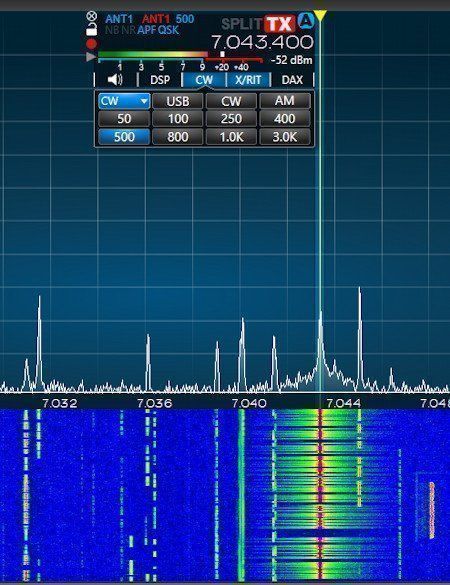
One of the signals that I encountered on Straight Key Night was the signal below. This is the widest signal I’ve ever seen on the Flex panadapter. As you can see, it’s nearly 4 kHz wide, while the others are more like 100 Hz wide.

My question is, should I send the guy this screenshot? I’m thinking that if I were him, I’d want to know that perhaps something is wrong with my transmitter.

Filed Under: Books and Magazines, CW, Gear/Gadgets, Operating Tagged With: FlexRadio, SKN, study guides

More Radio Fun?

December 9, 2019 By Dan KB6NU 1 Comment

So, I recently wrote about Radio Fun, a publication by Wayne Green, W2NSD (SK). Billed as “The beginner’s guide to the exciting world of amateur radio,” the tabloid was published for several years in the early 1990s.

It’s a decent publication, and some of the wit and wisdom contained therein is still relevant today. Wayne’s advice on ragchewing is a good example. The technology may change, but advice like this is still worth reading today.

When Steve, KB9MWR, read my first post on Radio Fun, he emailed me:

I had a hand in digitizing 73 magazine some years back.  If you ever want to part with those Radio Fun magazines, I’d be interested in buying them and also placing them in the public domain.

I sent him—without charge—the seven issues that I had: March 1992, May 1993, August 1993, October 1993, December 1993, January 1994, and April 1994. These issues are now online at archive.org.

Steve and I would like to see the whole collection online. The April 1994 issue is #32, so there must be at least 25 issues that I didn’t have. If any of you have the missing issues, please consider sending them to Steve.

Filed Under: Books and Magazines Tagged With: Radio Fun, W2NSD, Wayne Green

How to get “plugged in” to the amateur radio community

October 28, 2019 By Dan KB6NU 3 Comments

The ICQPodcast is one resource you might want to consider to help you keep up with what’s happening in #hamradio.

This morning, I found this email in my inbox:

Thank you for your website and great content.   I passed the Tech and General tests on Saturday, and I will be taking the Extra exam in November. Your “No Nonsense” guides were very helpful.

I do have a question, though. How do I stay current on what’s happening in the ham world? For example the CQ WW SSB contest was this weekend.  How do newbies know this kind of thing?  How do we find local or regional hamfests and other events?

This is a great question. Like any special interest, it can seem daunting to get plugged in (pun intended) to the community. Here are a few of my suggestions:

Join the ARRL. The American Radio Relay League (ARRL) is really the place to start for information related to amateur radio. QST, the ARRL’s monthly magazine, includes news about upcoming contests and ARRL-sanctioned hamfests. It also reviews new amateur radio products and provides a wealth of technical information.

In addition to QST, the ARRL publishes many email newsletters that members can subscribe to. For example, Contest Update biweekly newsletter that not only lists upcoming contests, but also includes tips on operating contests. The ARES E-Letter is a monthly public service and emergency communications newsletters. There are also email newsletters for ham radio instructors, those interested in DX, legislative matters, and satellite operation.

Join your local club. While the ARRL will help you keep abreast of amateur radio news and events nationally and internationally, if you want to know what going on in amateur radio in your area, you should join your local club. To find clubs near you, go to http://www.arrl.org/find-a-club.

Visit the WA7BNM Contest Calendar. This contest calendar has become my go-to resource for any and all contest information. This site provides detailed information about amateur radio contests throughout the world, including their scheduled dates/times, rules summaries, log submission information and links to the official rules as published by the contest sponsors. Its features include an 8-Day calendar, a 12-Month calendar, and separate calendars for state QSO parties, CW contests, and QRP contests.

You can also get a weekly e-mail of contests taking place in an 8-day period (Monday through Monday), as well as a list of contests scheduled for the next week and a list of log submission information for recent contests. To subscribe to this service, send an e-mail to Bruce, WA7BNM.

Ham radio blogs. Blogs are also a good way to keep up with what’s going on in amateur radio. I like to think that I do a good job of covering what’s going on in amateur radio, but, of course, I can’t do it all. That being the case, you might also want read other blogs. Other amateur radio blogs that you might want to check out include:

  • The K0NR Radio Site
  • QRP–When you care to send the very least
  • Everything Ham Radio

There are a bunch of other good ones out there. Find the ones you like and subscribe to them, so that you get a notification when new items are posted.

Mailing lists. Mailing lists are kind of old school, but if  you have a special interest, chances are that there is a mailing list for it. For example, I own an Elecraft KX-3, so I subscribe to the Elecraft KX User Group mailing list. Many amateur radio mailing lists are migrating to the Groups.io. To find a list, just click on the “Find or Create a Group” link at the top of the page. I just did a search for “amateur radio” and found 910 different amateur radio mailing lists.

Podcasts and videocasts. Podcasts are also another great way to stay up with amateur radio. I’m partial to the ICQPodcast because I am on the panel once a month. The podcast not only includes a discussion of what’s new in amateur radio, but also a feature, which digs a little deeper into a particular topic. Other great podcasts are Ham Radio Workbench, and Linux in the Ham Shack. Internet video shows that are worth checking out are Ham Radio 2.0, Ham Radio Now, and Ham Nation.

This is by no means an exhaustive list. If you have an amateur radio information resource that you find particular helpful, please let me know. Email me or enter a comment below.

Filed Under: ARRL, Books and Magazines, On the Internet, Online Resources, Podcasts

General Class study guide now available as an audio book!

October 24, 2019 By Dan KB6NU 2 Comments

Well, it’s taken a while, but my No Nonsense General Class study guide is now available as an audio book! In addition to Amazon and Audible, it will also be available on iTunes.

Filed Under: Books and Magazines, Classes/Testing/Licensing

ARRL to implement yet another Wayne Green idea

October 19, 2019 By Dan KB6NU 15 Comments

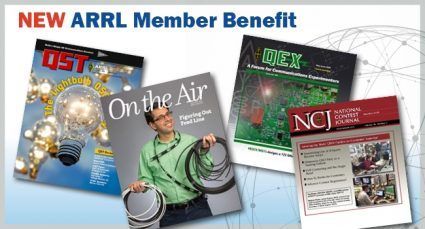
I got a little bit of a chuckle when I read the article about the ARRL’s newest publication, On the Air. According to the article,

ARRL is launching a new magazine, On the Air, in January 2020. To be published on a bimonthly basis, On the Air will offer new and beginner-to-intermediate-level radio amateurs a fresh approach to exploring radio communication. Each issue will include advice and insights on topics from the variety of Amateur Radio interests and activities: radio technology, operating, equipment, project building, and emergency communication. The goal of this new magazine is to be a vital resource in helping new and newer radio amateurs get active and involved in radio communications.

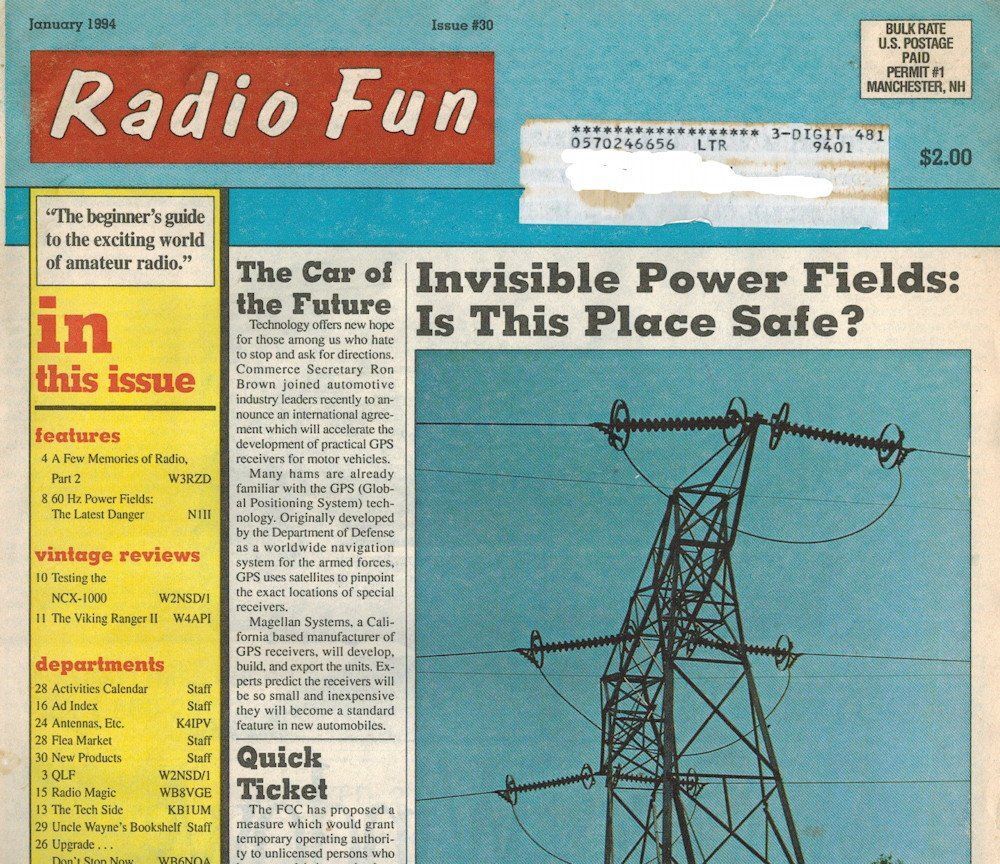
The reason I chuckle is that Wayne Green, W2 Never Say Die, the curmudgeonly publisher of 73 and Byte magazines published something similar in the 1990s: Radio Fun: The beginner’s guide to the exciting world of amateur radio. Here’s the cover of the January 1994 issue:

It was printed on newsprint in tabloid format. This issue is only 32 pages—with easily half of them being ads—and is a quick read. There isn’t a lot of heavy theory, and there are a couple of DIY projects.

Of course, there’s the obligatory Wayne Green rant column. In this month’s QLF column, Wayne Green tackles the issue of restructuring amateur radio, ranting yet again that incentive licensing almost killed amateur radio.

His proposal for restructuring is that we need only one level of license, and that it should be relatively easy to get. He writes,

Remember, before you can operate on CW, you have to be able to send and receive code. Before you can get on packet you need a station, a computer, and the know-how to use ’em. We don’t need exams for things like that. So, let’s decide what we think is really important as an entry exam for the hobby and get rid of the stuff that’s a waste of time.

Who can argue with that?

Anyway, getting back to this idea of a magazine for newcomers, I’d suggest that the whoever is in charge of On the Air at the ARRL get hold of all of the back issues of Radio Fun that they can. (Unfortunately, they don’t seem to be available online…at least I wasn’t able to find them.) It will certainly make for some interesting reading, and it may even give them an idea or two.

Filed Under: ARRL, Books and Magazines

Spotted at the UK National Hamfest

September 30, 2019 By Dan KB6NU Leave a Comment

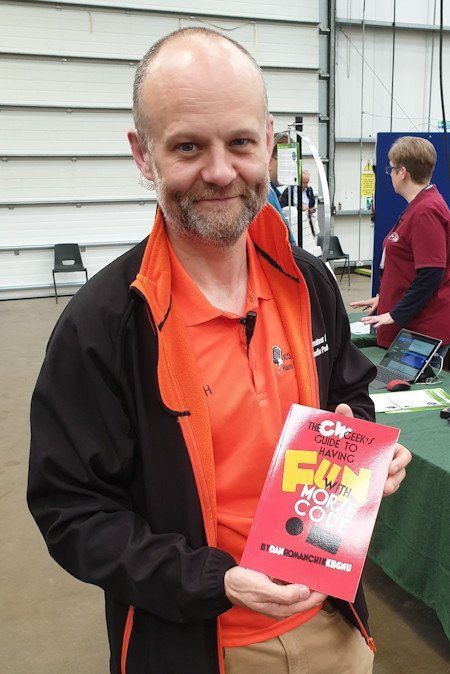
My ICQPodcast colleagues visited the UK National Hamfest over the weekend. Lo and behold, they spotted a copy of my CW Geek’s Guide to Having Fun with Morse Code at the Kanga Products booth. (Kanga is an advertiser here on KB6NU.Com. Click on their icon at right.)

Chris, M0TCH, holding a copy of my CW Geek’s Guide at the UK National Hamfest.

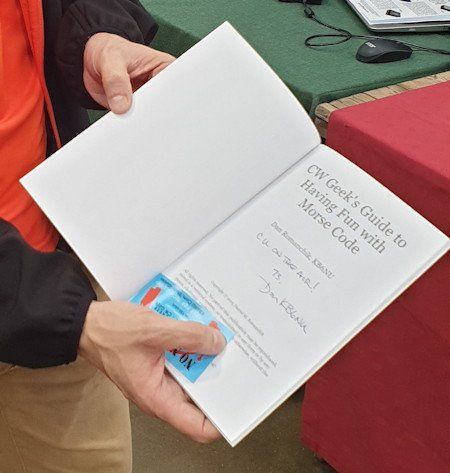
Dennis, G6YBC, the proprietor of Kanga purchased a bunch of the books at Dayton last year, and has been selling them ever since. Unfortunately, he had me sign the books. My friend Ralph, AA8RK, says that defacing them like that makes them less valuable. :)

Kanga carries a number of interesting kits and components, including the Foxx3 CW transceiver. Kanga has also partnered with my friend, John, KC9ON, who is the proprietor of 3rd Planet Solar. Kanga is now offering 3rd Planet Solar kits and vice versa.

For the complete ICQPodcast on the UK National Hamfest, go to the ICQPodcast website.

Filed Under: Books and Magazines, Kits Tagged With: 3rd Planet, Kanga

Help me create my next book, Ham Radio for Hackers

September 21, 2019 By Dan KB6NU 32 Comments

The Raduino module is used in the uBITX.

I’ve been working with a major publisher on a book with the working title, Ham Radio for Hackers. It’s been an on again, off again kind of project for the past two years. Well, now it seems to be on again.

I’m going to revise the outline I created back in 2017 (see below) and then re-submit my proposal. It obviously needs to be revised. For example, we now have the Raspberry Pi 4, which could lend itself to a number ham radio hacking projects. We now also have Parks on the Air (POTA) in addition to WWFF.

I’d love to get your input on the outline, especially what else I might want to include in this book. Please contact me directly or comment below.


Ham Radio for Hackers

  • Hams were the original hackers
    • Ham radio history
    • An explosion of technology
    • Getting a license
    • Let the hacking begin!
  • Arduino Projects
    • DDS Signal Source/VFO. Inexpensive modules based on the Si5351 Clock Generator (www.etherkit.com/rf-modules/si5351a-breakout-board.html) coupled with an Arduino allow ham radio hackers to create very accurate signal sources at frequencies up to 160 MHz. These signal sources can be used in test equipment, such as antenna analyzers, or as replacements for crystals in in amateur transmitters.
    • K3NG Arduino Keyer. Anthony Good, K3NG, has developed an Arduino-based keyer, which is device that electronically produces the dits and dahs of Morse Code. The source code is open source, and other ham radio hackers have taken that code and built their own keyers on top of that. One example is the NanoKeyer (nanokeyer.wordpress.com). Designed by Oscar Diez, DJ0MY, it uses an Arduino Nano, which plugs into the keyer board. There are many other examples of projects that use this code.
    • UBITX 40 transceiver. The BITX40 transceiver (hfsigs.com) is a two board, single-sideband transceiver kit that’s perfect for hacking. Its frequency is controlled by a module called the Raduino, an Si5351 synthesizer controlled by an Arduino Nano. The software is open source, allowing users to to write code to add functionality such as adding more bands, receiver incremental tuning (RIT), dual VFOs, and CW and RTTY modes.
    • K6BEZ Antenna Analyzer. An antenna analyzer is an instrument amateur radio operators use to find the resonant frequency of an antenna and how well an antenna is tuned. Beric Dunn, K6BEZ, developed an inexpensive design based on the AD9850 modules (see above) and an Arduino (http://www.hamstack.com/hs_projects/k6bez_antenna_analyzer.pdf), and other hams have hacked that design, adding features, such as a full-color display (https://www.riyas.org/2015/04/a-simple-standalone-antenna-analyzer-with-ili9341tft.html)
    • Sidebar: The different flavors of Arduino. This sidebar will discuss the different flavors of Arduino-compatible boards that are out there, and give readers some guidance on which Arduino to choose for a particular task.
    • Sidebar: “Sketching” Arduino programs. This sidebar will discuss the Arduino software environment and give readers some guidance on how to write “sketches,” which is the term used to describe Arduino programs.
  • Raspberry Pi Projects
    • Software-defined radio (SDR). Many ham radio hackers are using Raspberry Pis running open-source software, such as gqrx (gqrx.dk/download/gqrx-sdr-for-the-raspberry-pi) or gnuradio (www.gnuradio.org) along with RTL-SDR dongles (www.rtl-sdr.com) to develop a wide range of software-defined radio projects.
    • WSPR transmitter. Weak Signal Propagation Reporter, or WSPR, is a digital mode ham radio hackers use for sending and receiving low-power transmissions to test propagation on the MF, HF, and VHF/UHF bands. Users with Internet access can watch results in real time at wsprnet.org. The RaspberryPi makes an excellent WSPR transmitter with a few added components (www.kb6nu.com/with-just-a-wspr/) and a simple antenna. Hackers can create their own shields or buy an assembled and tested shield (www.tapr.org/kits_20M-wspr-pi.html).
    • DSTAR/DMR hotspot. When coupled with a Raspberry Pi, the DV4mini USB stick (http://wirelesshold.com/) allows hackers to create their own D-Star, DMR, Fusion, or APCO25 hotspot.
    • Satellite Network Open Ground Station (SatNOGS). The SatNOGS project (satnogs.org) uses a Raspberry Pi 3 to create an open-source, networked ground station for amateur satellite operation. SatNOGS is a modular, scalable, and fully based on open source technologies and open standards, it provides interoperability with existing or future subsystems.
    • Sidebar: Let a Raspberry Pi run your shack
      • Packaging a Raspberry Pi
      • Logging software
      • Digital modes software
    • Sidebar: The different flavors of the Raspberry Pi. This sidebar will discuss the different versions of the authentic Raspberry Pi and some of the knockoffs that are available.
  • Hardware Hacking
    • The QRP “subculture.” In ham radio lingo, QRP means low-power operation, and there are many hams that operate only QRP transmitters (less than 5W output), finding it a real challenge. A characteristic shared by many of these QRP operators is that they are tinkerers, aka hackers. This section will talk about the QRP mindset and how to become part of this QRP subculture.
    • Finding parts. Now that Radio Shack is long gone where do you find parts? There are several electronics distributors online from whom you can purchase parts—and pay full price—but there are also a number of other sources for parts that can save you big bucks. These include hamfests eBay, and even Amazon.
    • Sidebar: Cheap Inexpensive Chinese parts and kits. In the past five to ten years, a number of Chinese companies have begun selling amateur radio kits on eBay. The prices for some of these kits is extremely low. So low that sometimes the price of the kit is actually less than one or two of the parts! That being the case, savvy ham hackers are buying the kits and repurposing the parts.
    • Schematic capture and circuit analysis tools. This section will discuss some of the online and standalone schematic capture and tools available for hackers. This will include, but is not limited to kicad, Digikey SchemeIt, and Fritzing.
    • Construction techniques. This will be a review of different construction techniques used by ham radio hackers. This will include protoboarding, vector boarding, and Manhattan style breadboarding techniques. In addition to these prototyping techniques, I’ll discuss how it’s gotten much easier and cheaper to have printed circuit boards made for your projects.
    • Hacking batteries. Batteries are an essential part of a ham’s equipment list, especially for portable and emergency operation. We’ll look at a few ways to save money on batteries and how to maintain them so that you can get the most out of them.
    • Tools and test equipment. This section will include a list of tools and test gear that every ham hacker should have.
    • Create custom enclosures with a 3D printer. Once a project is up and running, you gotta put the circuit board in some kind of enclosure. With a 3D printer, ham hackers can create custom enclosures on the fly for their ham radio projects.
    • Sidebar: Online and in-print resources to help you learn more about electronics.
  • Hacking Antennas. Antennas are some of the easiest projects to tackle. This section will discuss several different DIY antenna projects.
    • 2m quarter wave vertical antenna (kb6nu.com/21-things-to-do-build-an-antenna/). This is often the first antenna that a ham hacker will build. It consists of a single SO-239 connector and five short pieces of stiff wire or welding rod. When properly mounted, if offers much better performance than the “rubber duck” antennas that come with most handheld radios.
    • Cheap Yagi antenna for satellite operation. You can buy a satellite antenna for $100 or more, but you can building one for a lot less (www.wa5vjb.com/references/Cheap%20Antennas-LEOs.pdf).
    • HF antennas. HF antennas are equally hackable, and you’ll be surprised what you can do with a spool of wire and some plastic insulators.
      • Dipoles and doublets
      • End-fed wires
      • Making your own open-wire feedline
  • Operating for the Ham Radio Hacker
    • Portable operation. Portable operation is a favorite of ham hackers. They pack up their stations and hit the road. To make operations more interesting there are a couple of organizations that encourage portable operation by offering awards to both “activators” who operate from remote locations, and “chasers,” who mostly operate from home, but try to contact as many activators as possible.
    • Summits on the Air (SOTA). SOTA encourages portable operation in mountainous areas. Their website—sota.org.uk—lists the summits that can be activated and has a spotting service that allows chasers and activators to more easily find one another.
    • Worldwide Flora and Fauna (WWFF). Like SOTA, WWFF encourages portable operation, but instead of summits, WWFF operators head to designated nature parks and protected nature areas. One of the goals of WWFF is to draw attention to these areas, while at the same time, providing ham radio operators with an interesting activity to pursue.
    • QRP operation. As mentioned above, QRP operation is all about the challenge of using low power. It’s no wonder then that so many ham hackers are QRPers.
    • CW? Yes, CW. Low-power operation requires that you get the most our of every milliwatt, and CW is a great mode for doing that. Not only is it an efficient mode, it doesn’t require the use of a computer, like the digital modes.
    • Digital modes. Digital modes do require a computer, but it’s almost magical what a computer can do. That’s why ham hackers are drawn to digital modes, such as JT9 and JT65. These modes allow the computer to literally pull a signal out of the noise.
    • Satellite operation. With a cheap, homebuilt Yagi antenna and a couple of handheld FM transceivers, ham hackers can make contacts via the low-Earth orbit (LEO) satellites.
  • The Future of Ham Radio Hacking
    • Digital modes. Even though the number of digital modes has exploded in recent years, hackers will continue to work on ways to cram more data into the available bandwidth.
    • Data networking. Since the future is digital, data networking is going to be very important. As an example of this, I’ll take a look at what Faraday RF (faradayrf.com) is currently doing. They say, “We’ve developed Faraday and all necessary code to provide the hardware and software necessary to enable the shift towards a data-centric amateur radio.” And, it’s all open source.
    • Artificial Intelligence. Artificial intelligence is going to play role, not only in receiving and analyzing signals, but also in the human-radio interface. It won’t be long before some hams are saying, “Alexa, tune to 7.195 MHz, lower sideband mode” or “Alexa, find W1ABC on 40 meters and give him a call.”


Filed Under: Books and Magazines, Building/Homebrew Tagged With: Ham Radio for Hackers

Operating Notes: Ham radio instructors, 13 Colonies controversy?, LOTW stats

July 24, 2019 By Dan KB6NU 7 Comments

A couple of weeks ago, I worked Dave, AB0DK on 40 meters. As it turns out, he’s also a ham radio instructor and uses my study guides for his classes. Thanks, Dave, for sharing the joy of amateur radio with others and for using my books.

Lately, it seems like I’ve been making more instructor sales. If you’re an instructor, I do offer an instructor discount. You can order as many copies of any of the three study guides for only $10/copy. Email me directly for more details.


I worked the 13 Colonies operating event this year. This is a fun event. You work stations in all of the 13 original colonies, plus special stations in PA and Great Britain, and you can get a certificate, if you like.

A couple of years ago, I worked all 13 on both phone and CW. I missed the GB station, though. This year, I worked them all using a combination of both voice and phone and even bagged GB13COL.

There seems to be a bit of a controversy, though. This morning, when I tried to get the URL for the 13 Colonies website, I found this message:

13 Colonies WEB SITE is down as of 07/14/2019

After many years and hundreds of hours of web design and free hosting, I have decided NOT TO BE A PART OF 13 Colonies any longer.

I have discovered many things regarding 13 Colonies, and I will not share my opinion of this event.

MANY peole have e mailed me questioning the motives of this event, which I will not comment on.

I have nothing to do with the operation of this event, creation of this event, printing or delivering of any certificates or the collection of money sent in.

I personally have not collected any money from this event, and will not and have not taken any payments for my services.

I unlike others have NOT made a profit on this event.


I’m now up to 162 DXCC entities confirmed, thanks to OJ0AW, one of the many Market Reef DXpeditions this summer. If  you haven’t worked them yet, there’s still time. A press release on DXNews.Com notes:

The activity is in several phases throughout the summer and may even extend to the hard winter season in order to capture the best low-band openings. It all starts this Saturday June 8t with OJ0AW and OJ0JR. Next, following the international week of July.06 will be OJ0A and OJ0Z. Then the IARU Contest weekend of June 13/14 with OJ0B and then turning to Youth Week of OJ0C from July.15 and IOTA week of July.27 (OJ0DX) and Light House weekend of August.17 – 24 (OJ0O). The OJ0-regulars Pasi, OH3WS/OJ0W, Henri, OH3JR/OJ0JR; Martti, OH2BH/OJ0BH and Pertti, OG2M/OJ0MR will take the slots along with their official duties.

There are twenty-one valid OJ0 licenses. More than 50% are expected to be active during this year. If you work five of them (5) in 2019, a special award will be released. If you work ten (10) of them in 2019, you will qualify for a special award and a symbolic key to the light house. Your log extract should be submitted to Pasi, OH3WS, the contact person between the FLS and the global ham fraternity.

Go get ’em!

Filed Under: Awards, Books and Magazines, Classes/Testing/Licensing, DX, Special Events

  • « Go to Previous Page
  • Page 1
  • Page 2
  • Page 3
  • Page 4
  • Page 5
  • Interim pages omitted …
  • Page 18
  • Go to Next Page »

Primary Sidebar

No Nonsense Extra Class License Study Guide: for tests given between July 2024 and June 2028

New No Nonsense Extra Class Study Guide now available!

The 2024 version of my Extra Class study guide is available in PDF, ePub, Kindle, and print versions.

Click here to get all of my "No Nonsense" study guides.

Also available: The CW Geek's Guide to Having Fun with Morse Code

W5SWL.Com
Retevis Ailunce H1 DMR Radio
DXpander: Cobweb antennas, Laser Cutting

You’ve got mail!

Enter your email address below and get an email every time I publish a new post.

Email


I frequently teach classes to help newcomers get their licenses. The next class will take place on Saturday, February 7, 2026 on the University of Michigan campus. Click here for more information.

If you can't make the class, subscribe to the mailing list to be notified of when the next class will be held.

You can always download my free study guide, and if you have any questions about the classes, or amateur radio in general, please feel free to email me directly.

Support KB6NU.Com

Donate $7.30 and get two of these cool stickers. Measuring 4.25-in. W by 2.75-in. H, it's perfect for your car, your shack, or wherever!

Contact me

If you have a question or comment about one of my blog posts, or a question about any of the material in my study guides, or just a question about ham radio in general, you can email me at [email protected].

Blogs You Should Also Read

  • AE5X: A CW-centric blog from Kingswood, Texas
  • K0LWC Blog
  • LA3ZA Ham Radio Blog
  • Little Radios, Big Fun – WB3GCK
  • Mr. Vacuum Tube's Blog
  • Radio Artisan – K3NG
  • The K0NR Weblog
  • VE3WDM's QRP Ham Radio Blog
  • W2LJ’s Blog

Ham Radio Websites

  • Dashtoons – The Hammin' Comedy by Jeff K1NSS

Podcasts

  • ICQ Podcast
  • Linux in the Ham Schack
  • No Nonsense Amateur Radio Podcast
  • Resonant Frequency Amateur Radio Podcast

Recent Comments

  • Mike on Map your contest QSOs
  • Phillip Cardwell on J-Poles
  • Dan KB6NU on Dayton Hamvention 2026: Day 1, Wednesday, May 13
  • Randy Shake on Dayton Hamvention 2026: Day 1, Wednesday, May 13
  • John Hislop on New edition of my No Nonsense Technician Class License Study Guide now ready for review

Meta

  • Log in
  • Entries feed
  • Comments feed
  • WordPress.org

Footer

Copyright © 2026 Daniel M. Romanchik, KB6NU · Log in